
Basil Chimichurri Recipe
This post may contain affiliate links.
Brighten up any meal with my easy recipe for Basil Chimichurri Sauce! This fun, summery twist on the classic Argentinian condiment is the perfect accompaniment to all your grilling favorites, from steak, grilled chicken, fish, to tofu and veggies.
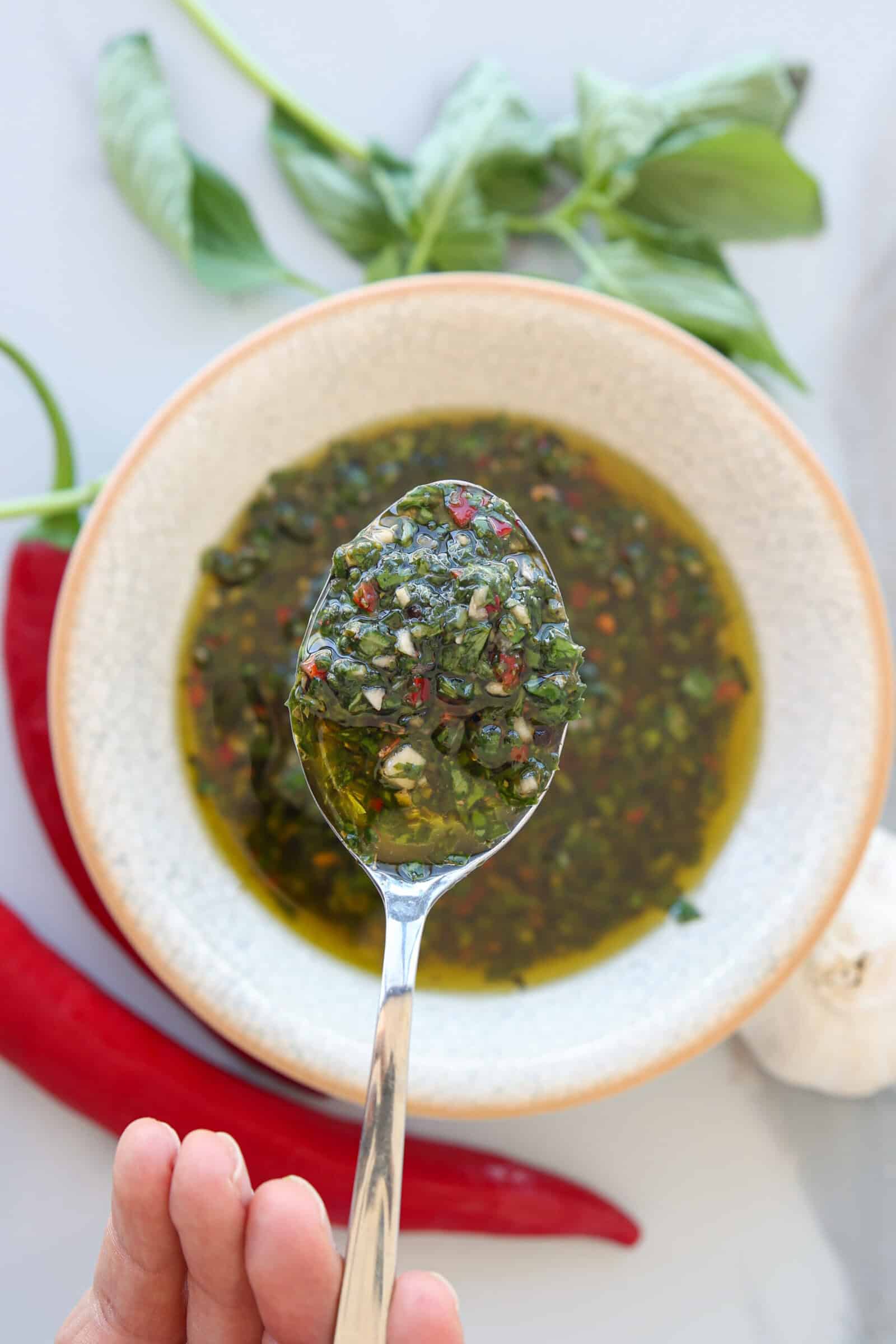
DIY kitchen basics like this basil chimichurri sauce are some of my favorite things to make because they make such a huge difference in flavor with very little effort! Mix up a batch on the weekend to keep your dinners exciting all week long.
Whether you drizzle it over shrimp skewers, use it as a dip for chicken patties, or add it to Buddha bowls, this gorgeously green, tangy, garlicky herb sauce is sure to become a family favorite.
What is Chimichurri?
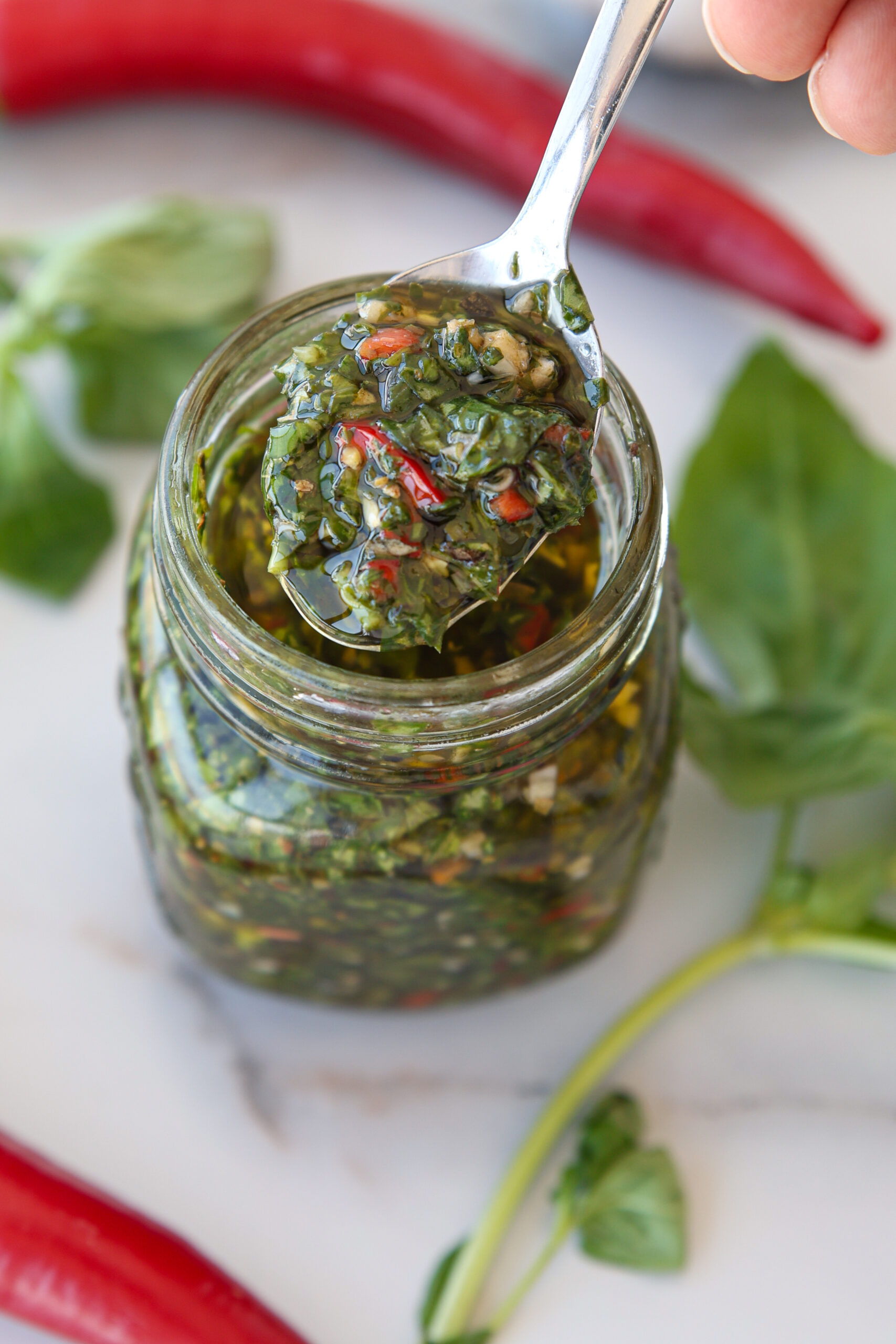
Chimichurri is a vibrant, uncooked sauce originating from Argentina and Uruguay, traditionally served alongside grilled meats like steak. It’s made by combining fresh herbs, garlic, olive oil, vinegar, and a touch of red pepper flakes into a bold, tangy condiment that cuts through the richness of grilled dishes.
It’s worth noting that this isn’t a traditional Argentinian chimichurri. Classic chimichurri is usually made with fresh parsley as the main herb, giving it a grassy, slightly peppery flavor. This basil chimichurri recipe replaces the parsley with fresh basil for a sweeter, more aromatic flavor while keeping the bold, tangy character that makes chimichurri so popular.
Ingredients & Substitutions
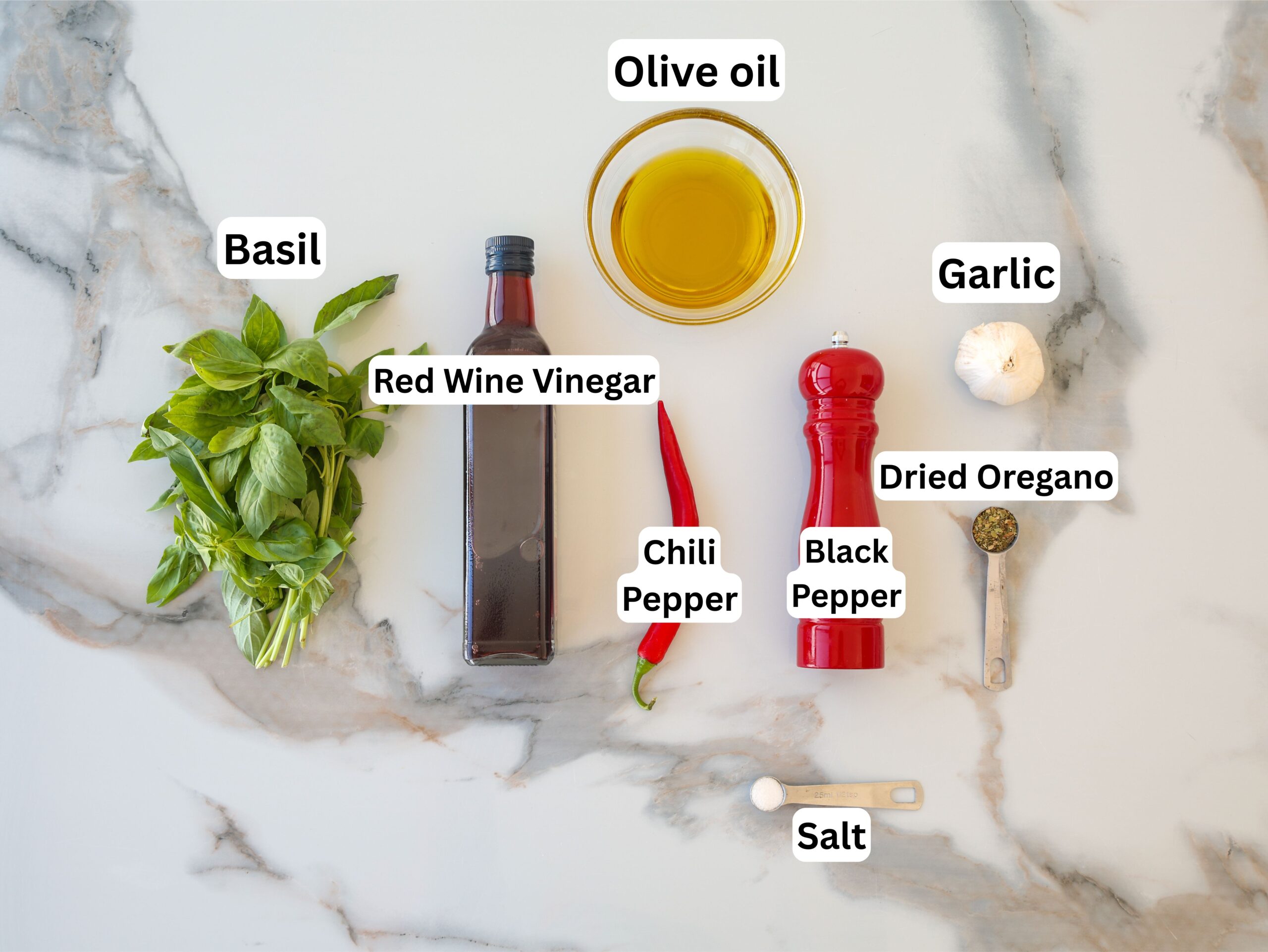
- Fresh Basil Leaves – The heart of our basil chimichurri recipe! Make sure you pack them in good and tight—we want plenty of herby goodness to go around.
- Garlic Cloves – This is one spot where you absolutely must use fresh garlic cloves, not the jarred minced kind. Trust me, it’s worth the little bit of extra effort!
- Dried Oregano – Dried oregano has a potent, almost spicy flavor. If you only have fresh, use 3x as much for the same punch.
- Small Red Chili Pepper -Fresh chili peppers can pack very different levels of heat, so it’s a good idea to taste as you go. If you’re aiming for a milder chimichurri, simply remove the seeds and membranes before mincing, since that’s where most of the spice lives. Craving more heat? Leave some of those seeds in, or toss in an extra chili pepper. No fresh chilis on hand? Red pepper flakes work great as a substitute. Just start with about 1/2 teaspoon and adjust from there.
- Red Wine Vinegar – This is what gives this chimichurri its signature tang, so it’s worth reaching for a good quality bottle if you can. White wine vinegar makes a great substitute with a slightly milder flavor, or you can use apple cider vinegar for a touch more sweetness. Just steer clear of harsher vinegars like distilled white vinegar, which can overpower the fresh herbs and throw off the balance of the sauce.
- Olive Oil – A good extra virgin olive oil really makes this chimichurri shine, so it’s worth using one you actually enjoy the taste of. Avoid anything labeled “light” or “pure,” as those are more processed and lack the rich, fruity flavor we’re after.
- Salt & Black Pepper – Just the basics!
How to Make Basil Chimichurri Sauce
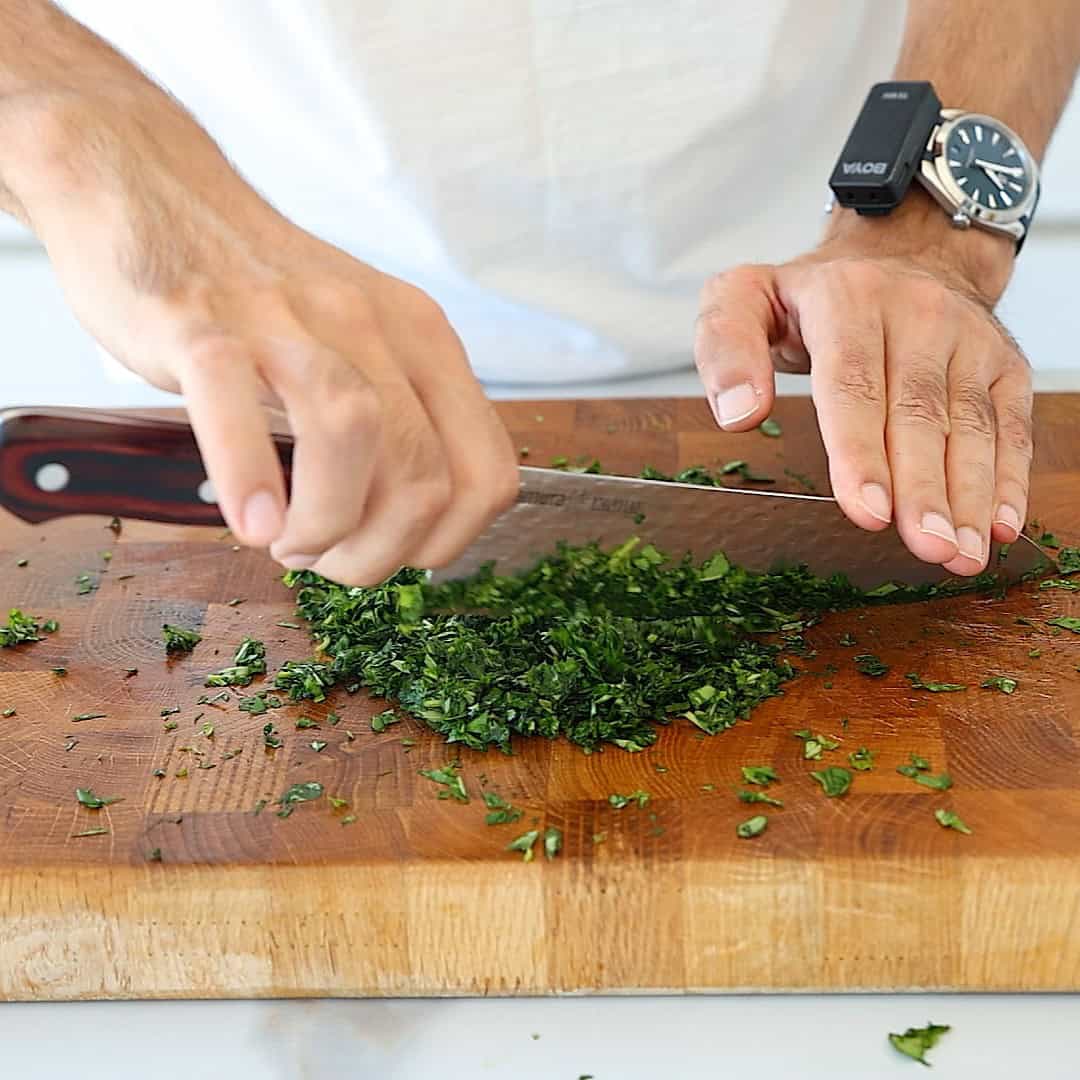
1. Chop the herbs and aromatics: Finely chop the basil and the red chili pepper, then mince the garlic cloves. For the best texture, chop everything by hand or pulse briefly in a food processor; just don’t turn it into a paste.
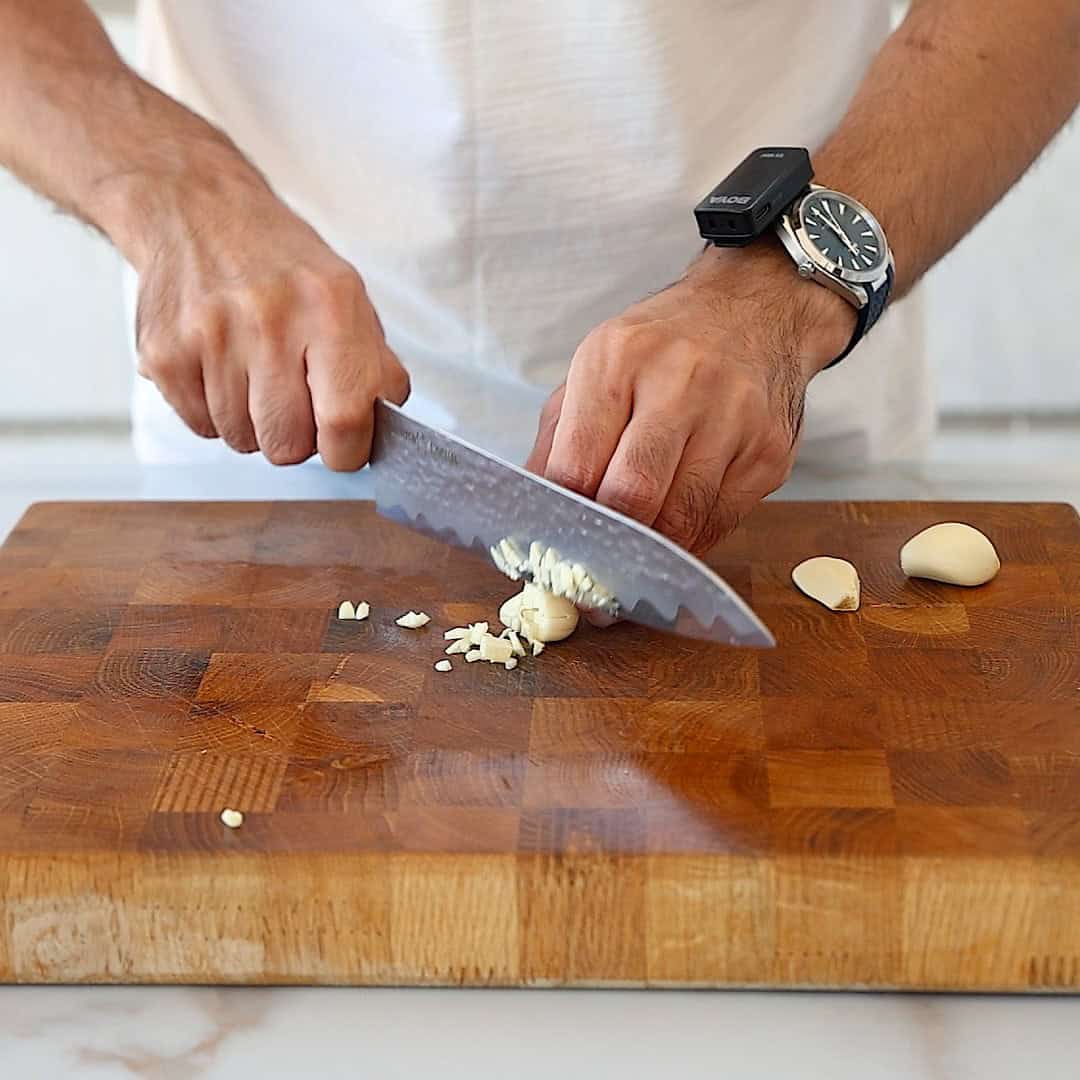
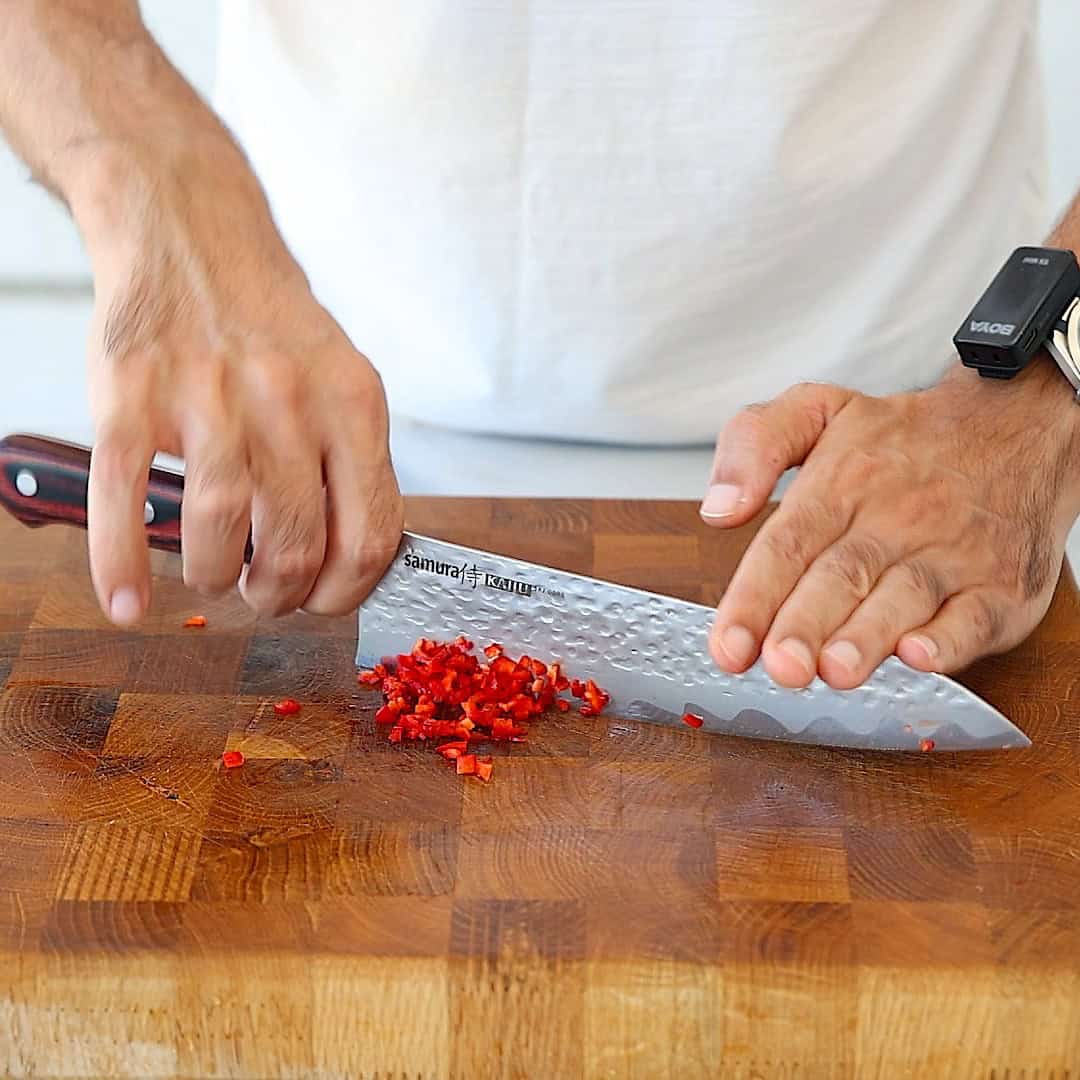
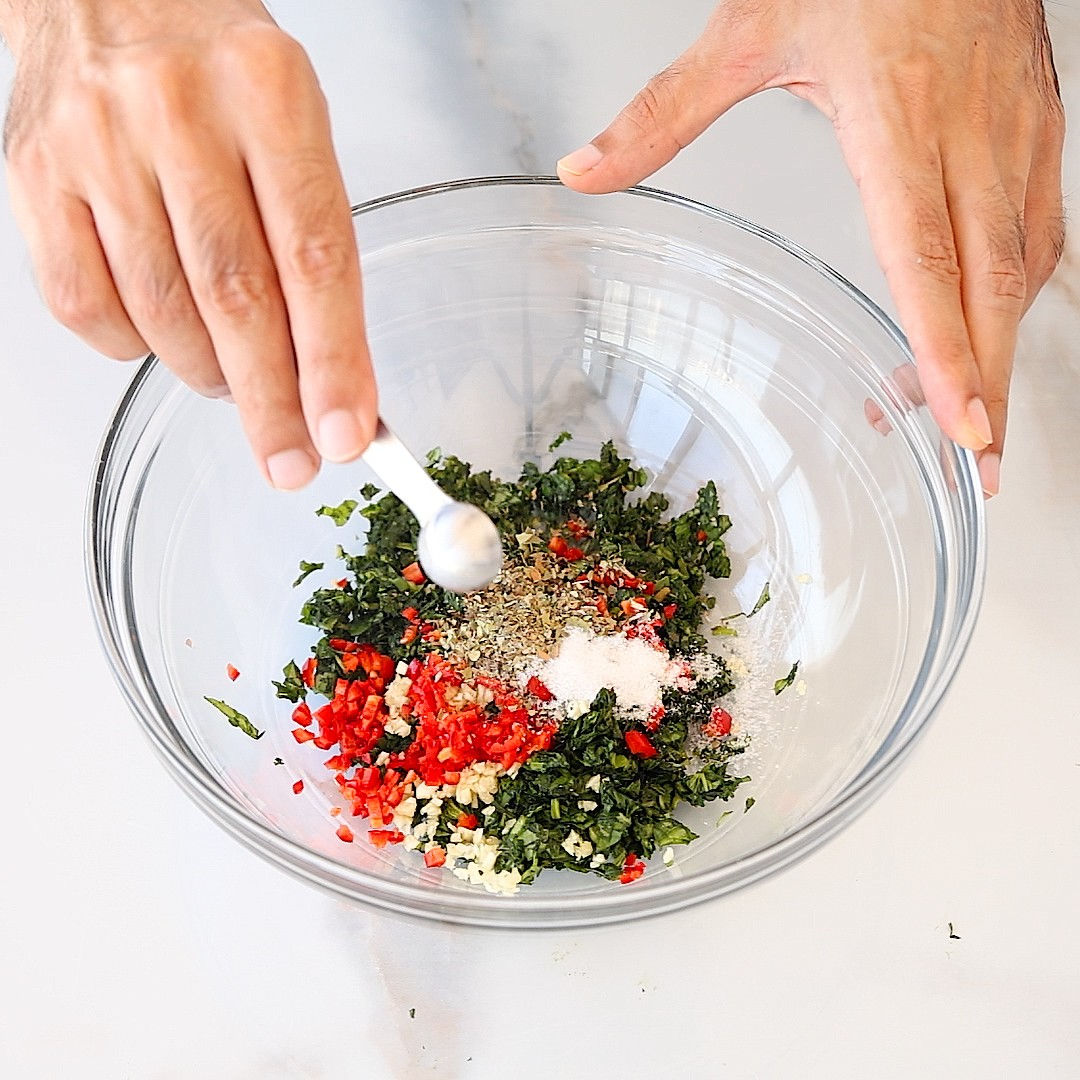
2. Add the seasonings: Transfer the basil, garlic, and chili to a bowl, then add the oregano, salt, and black pepper.
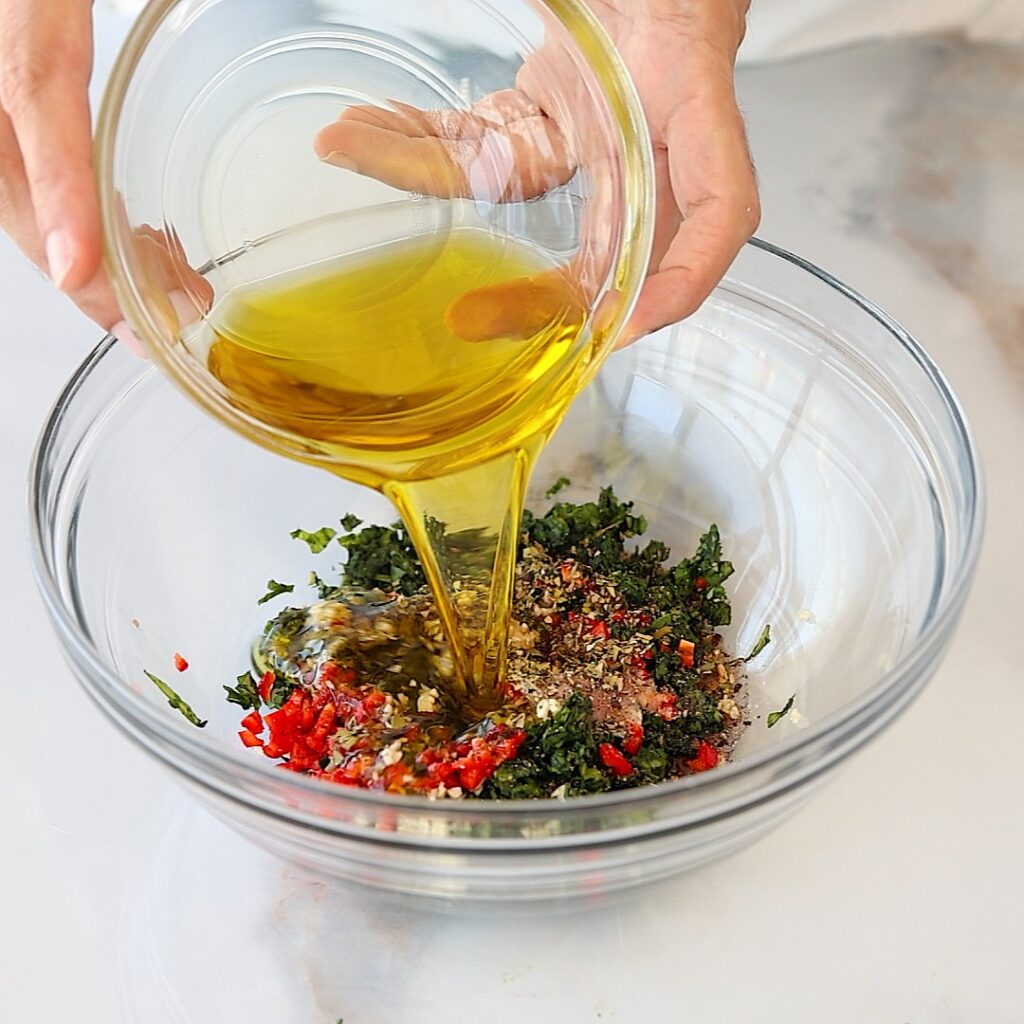
3. Pour in the liquids: Add the red wine vinegar and olive oil, then stir until everything is evenly combined.
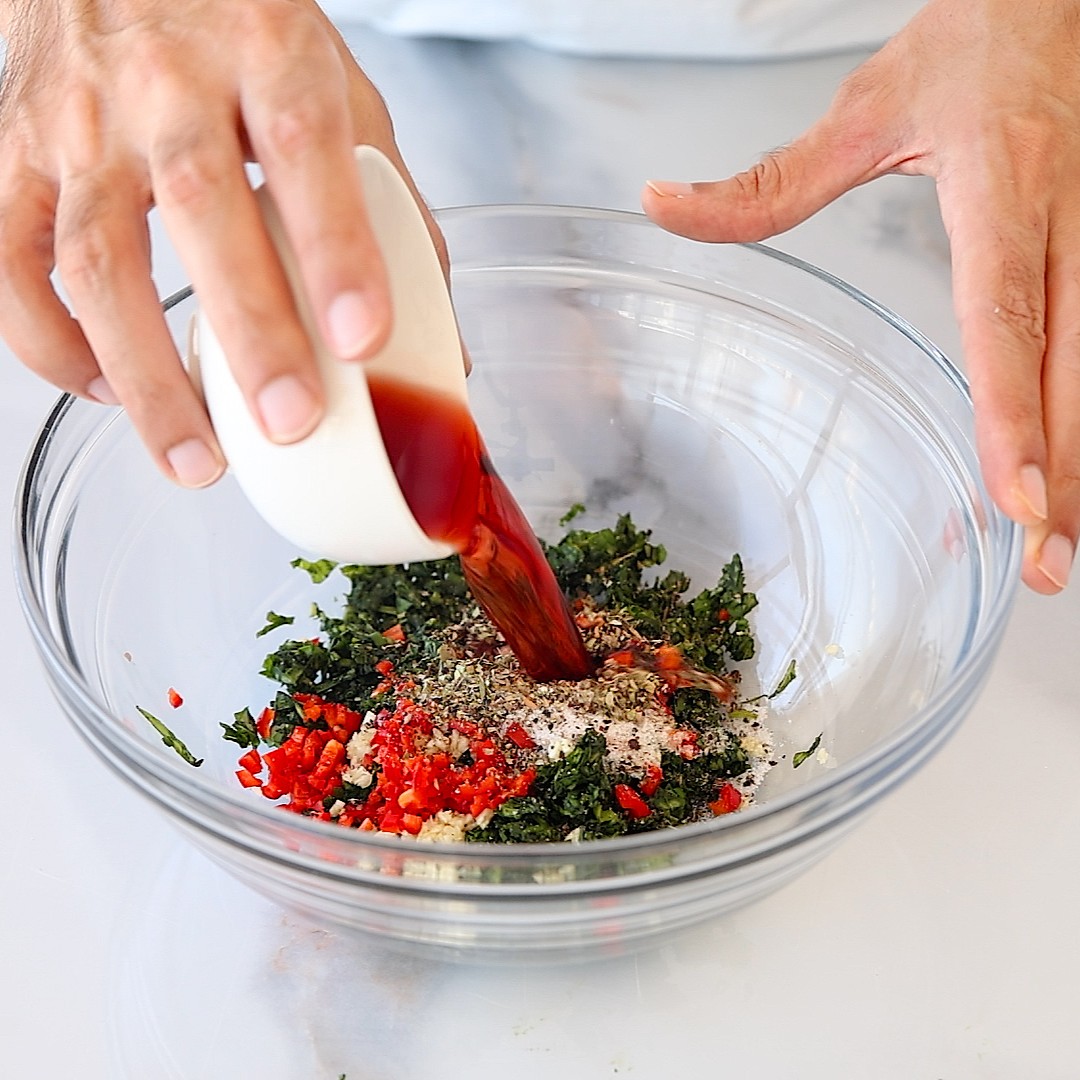
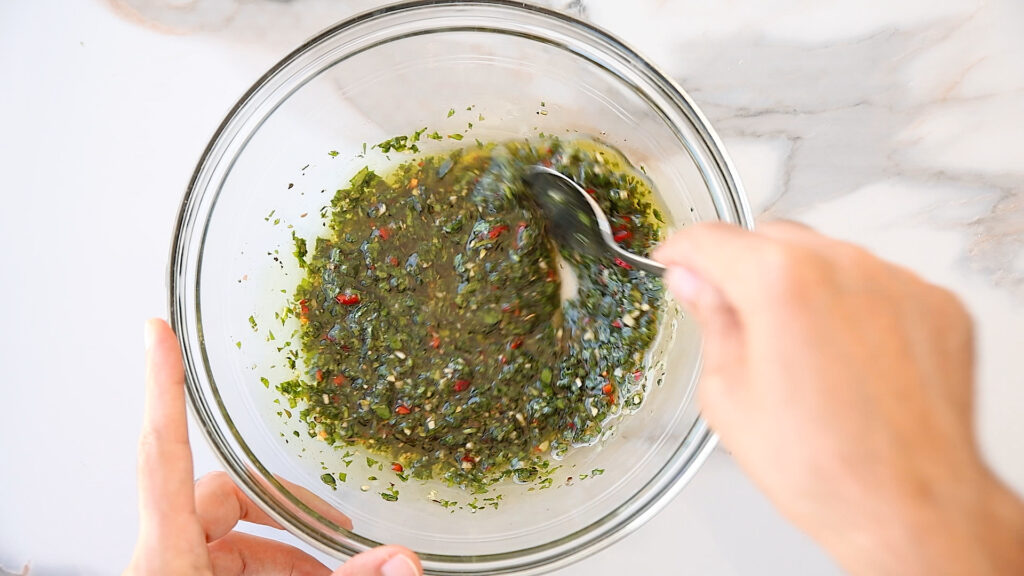
4. Let it rest: Mix well and let the chimichurri rest for 15-30 minutes before serving to allow the flavors to meld together.
Why Basil?
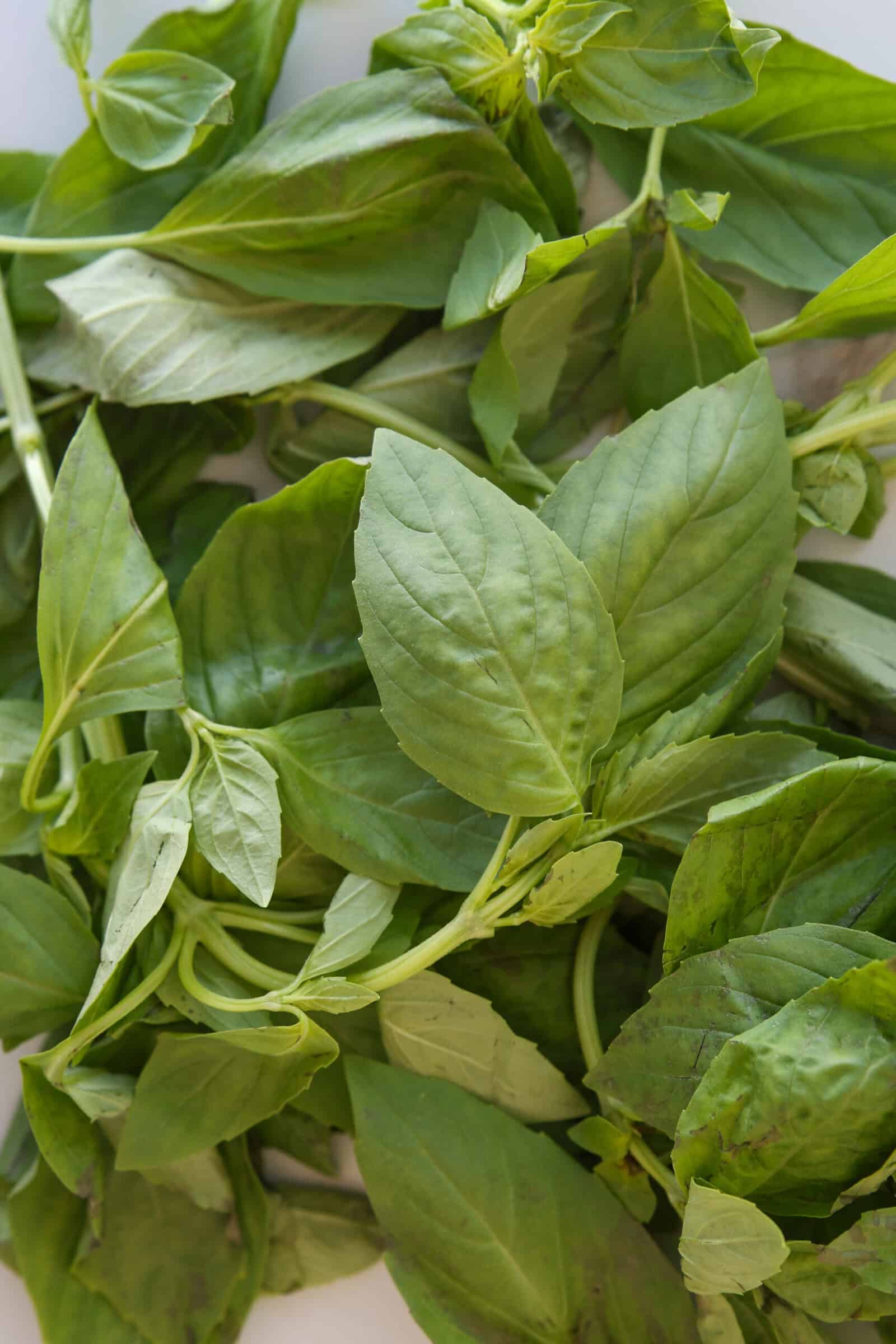
Traditional chimichurri is made with fresh parsley, giving it a bold, grassy flavor. This chimichurri with basil swaps the parsley for fresh basil, creating a sweeter, more aromatic sauce with a softer, summery flavor.
Basil Chimichurri: Video Recipe
Watch the full video recipe to learn how to make the BEST Chimichurri with Basil.
Prefer the written recipe? Scroll down to the recipe box 👇
Chop By Hand For The Best Texture
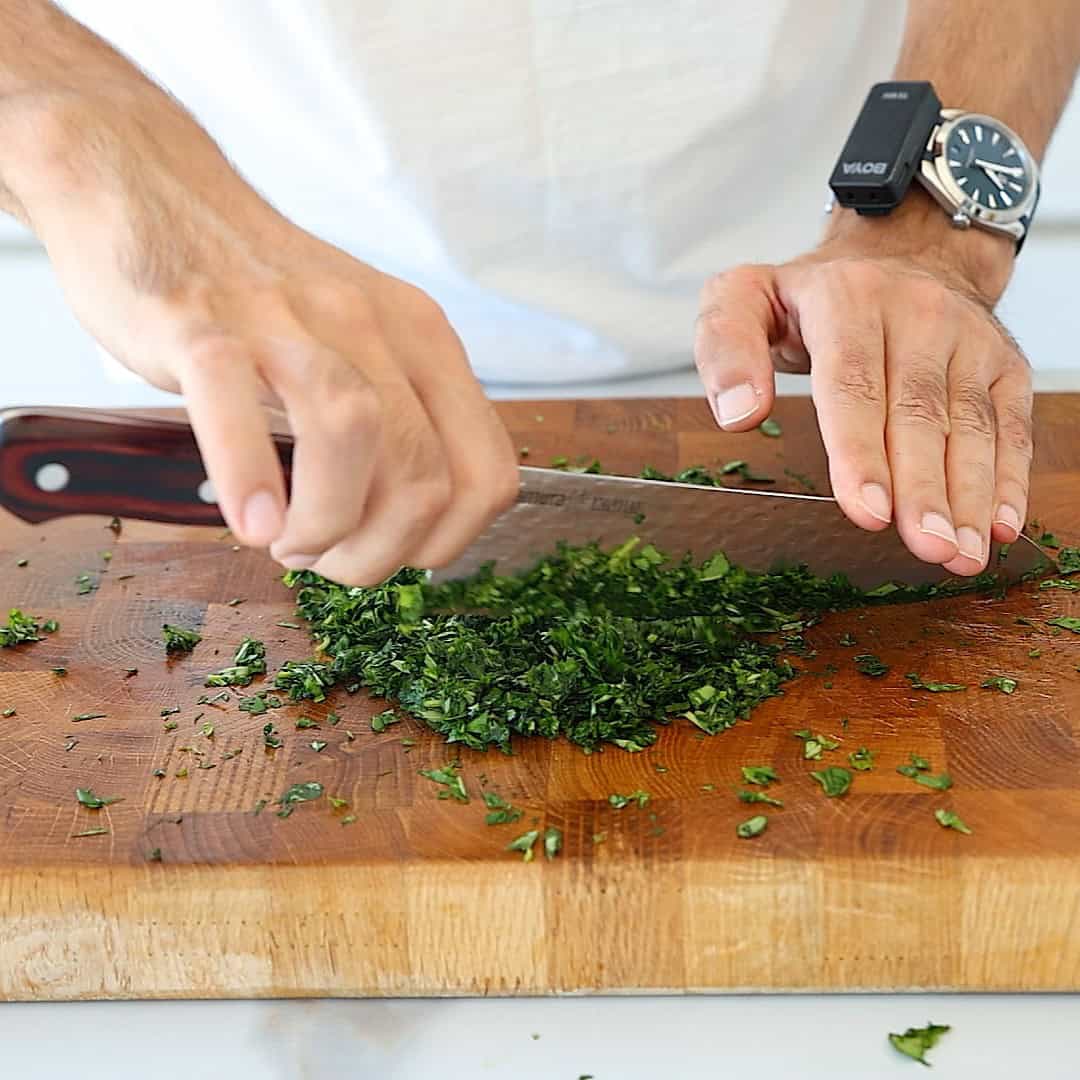
While it’s tempting to toss everything in a food processor, hand-chopping the basil and garlic gives you that classic, slightly chunky chimichurri texture. If you do use a food processor, pulse it gently and stop before it turns into a paste.
Expert Tips & Tricks
- Let it rest before serving. Chimichurri tastes best after sitting for at least 20-30 minutes, or even a few hours in the fridge. This gives the flavors time to meld and the garlic and chili a chance to mellow slightly.
- Taste and adjust as you go. Since ingredients like chili peppers and dried oregano can vary in strength, taste your chimichurri before serving and adjust the salt, acid, or heat to your liking.
- Use a non-reactive bowl. Because of the vinegar, it’s best to mix and store your chimichurri in a glass or stainless-steel bowl rather than aluminum, which can react with the acid and affect the flavor.
- Bring it to room temperature before serving. If you’ve made your chimichurri ahead of time and stored it in the fridge, let it sit out for about 10-15 minutes before serving so the olive oil loosens back up and the flavors can shine.
Optional Variations & Dietary Adaptations
- Try other herbs: For a different flavor profile, replace part of the basil with fresh parsley, cilantro, mint, or a combination of herbs. Each variation pairs well with different proteins and vegetables, so feel free to experiment based on what you’re serving.
- Adjust the texture: This recipe is easy to customize depending on how you like your chimichurri. Use a little less olive oil for a thicker, more herb-packed sauce, or add an extra tablespoon or two for a looser, more spoonable consistency.
- Add a citrus twist: A squeeze of fresh lemon or lime juice can brighten things up even more, adding a fresh, zesty note that pairs beautifully with the basil.
- Make it cheesy: Stir in a tablespoon or two of grated Parmesan for a subtle nod to pesto, adding a touch of richness without overpowering the herby, tangy flavor.
How to Serve Basil Chimichurri
This basil chimichurri recipe is one of the most versatile condiments you can think of. Use it on:
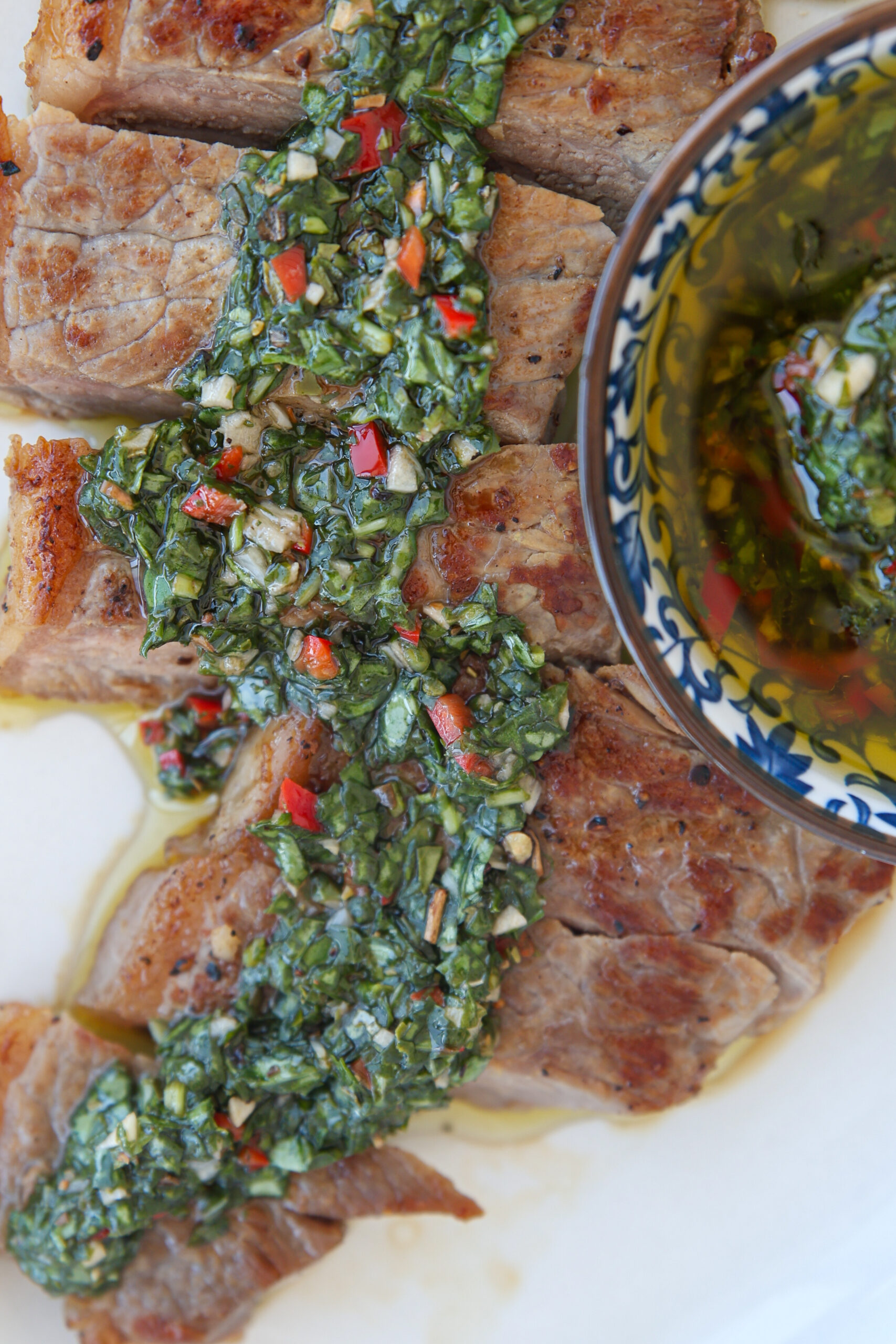
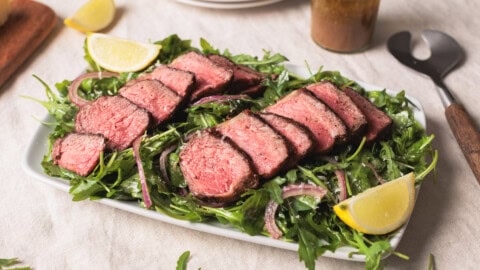
- Meats: Basil chimichurri is the perfect basil sauce for steak, baked chicken skewers, or pork. It can also be used as a dressing for my arugula steak salad! The bright acidity and fresh herbs cut through the richness and smokiness beautifully.
- Seafood: Spoon it over shrimp cakes, pistachio crusted salmon, or panko crusted cod for a fresh, herby punch.
- Vegetables: Drizzle it over roasted potatoes, cauliflower cheese balls, crispy zucchini fritters, or roasted eggplant for a simple way to dress up your veggie side dishes.
- Sandwiches and wraps: Use it as a spread on crispy chicken sandwiches, burgers, or chicken wraps in place of mayo or mustard for a zippy twist.
- Eggs: Spoon a little over fried or scrambled eggs for a quick way to dress up breakfast.
- Bread and appetizers: Serve it alongside your favorite bread recipes or healthy seed crackers as a simple, flavorful dip. You can also mash it into a stick of softened butter for a delicious chimichurri butter spread.
- Grain bowls: Stir it into rice, quinoa, or farro bowls for an easy way to add brightness and herbaceous flavor to a simple grain-based meal.
How to Store Chimichurri
- Refrigerator: Store your basil chimichurri in an airtight container or a mini mason jar in the refrigerator for up to 5 days. The olive oil may solidify slightly when chilled, so let it sit at room temperature for 10-15 minutes before serving, and give it a good stir to bring it back together.
- Freezer: Chimichurri also freezes well for up to 3 months. Pour it into an ice cube tray for easy, portioned servings, then transfer the frozen cubes to a freezer bag once solid. Thaw a cube or two in the fridge whenever you need a quick burst of flavor.
- Note: For the brightest flavor and color, chimichurri is best enjoyed within the first 2-3 days, though it will still taste great throughout the week.
More DIY Kitchen Basics
Basil Chimichurri
Equipment
Ingredients
- 1 cup (30 g) Fresh basil leaves packed
- 3 cloves Garlic minced
- 1 teaspoon Dried oregano
- 1 teaspoon Salt
- ¼ teaspoon Black pepper
- 1 small Red chili pepper finely minced *or Red pepper flakes (see notes)
- 3 tablespoons (45 ml) Red wine vinegar
- ⅓ cup + 1 tablespoon (95 ml) Olive oil se notes
Instructions
- Prepare the basil: Finely chop the basil leaves and transfer them to a medium bowl. Alternatively, pulse the basil a few times in a food processor until finely chopped, being careful not to puree it.
- Add the seasonings: Add the minced garlic, dried oregano, salt, black pepper, and finely minced red chili pepper. Stir until evenly combined.
- Add the liquids: Pour in the red wine vinegar and olive oil. Stir until well combined and evenly distributed.
- Let it rest: Allow the chimichurri to sit for at least 15–30 minutes before serving. This gives the flavors time to meld and develop.
- Taste and adjust: Taste the chimichurri and adjust the seasoning as needed. Add more salt, vinegar, or chili pepper to suit your taste.
- Serve: Spoon over grilled meats, chicken, seafood, roasted vegetables, sandwiches, or serve as a dipping sauce with crusty bread.
Video
Notes
- Adjust the heat: The spiciness of fresh chili peppers can vary significantly. For a milder chimichurri, remove the seeds and membranes before mincing. For extra heat, leave some of the seeds in or add an additional chili pepper. If using red pepper flakes instead, start with 1/2 teaspoon and add more to taste.
- Let it rest: Chimichurri tastes even better after 30 minutes as the garlic and herbs infuse the oil.
- Use good olive oil: Since olive oil makes up a large portion of the sauce, choose a good-quality extra virgin olive oil for the best flavor. You can also adjust the amount depending on your preferred texture: use a little less oil for a thicker, more herb-packed chimichurri, or add an extra tablespoon or two for a looser, more spoonable sauce.
- Try other herbs: For a different flavor profile, replace part of the basil with fresh parsley, cilantro, mint, or a combination of herbs. Each variation pairs well with different proteins and vegetables.
- Don’t over-process: If using a food processor, pulse just until the ingredients are finely chopped. Over-processing can turn the sauce into a puree and dull the fresh texture that makes chimichurri unique.
- Traditional Argentinian chimichurri is typically made with parsley. This version replaces the parsley with fresh basil for a sweeter, more aromatic flavor while keeping the bold, tangy character that makes chimichurri so popular.
- Storage: Store in an airtight container in the refrigerator for up to 4–5 days. The olive oil may solidify when chilled; let it sit at room temperature before serving.
Nutrition
FAQs
Yes! Basil makes a delicious twist on traditional chimichurri. While classic chimichurri is usually made with parsley, swapping in basil gives the sauce a sweeter, more aromatic flavor while keeping the same tangy, garlicky base. You can use basil as a full replacement for parsley or mix the two for a flavor that’s somewhere in between.
The secret is getting the ratio of acid, oil, garlic, and salt right so no single element overpowers the others. Fresh, high-quality herbs and good olive oil matter too, as does leaving it a bit chunky and letting the sauce rest for a bit before serving so the flavors have time to meld together.
Yep! Hop up to the storage instructions for more details.
Absolutely. If you’re looking for a fresh steak sauce with basil, this chimichurri is a great alternative to traditional steak sauces. The basil, garlic, olive oil, and vinegar add brightness that pairs beautifully with grilled beef.






Your basil chimichurri sauce was easy and delicious. It goes with everything fish, pork, chicken… a great use of my garden basil. Thanks David
I have been dying to try this over steak strips, and I made it exactly as the recipe states which I seldom do. It’s amazing!!! And a great way to use up some of my garden basil. I will be making this FOREVER!!!
Would have given more stars if possible 🤤
Thank you so much! 😊 That means a lot to me! I’m so happy you gave it a try and loved it. Fresh basil from the garden is exactly what inspired this recipe, and I agree, it pairs so well with steak.
OMG! I LOVE chimmichurri, but giving an upgrade with basil has changed my life. This will always be in my fridge from now on! (Also made white bean chimmichrri with it-mind blowing!)
Thank you 🙏🏼
May the kitchen witches continue to bless you
I just made it and served it with grilled chicken. So fresh! Perfect with chicken.
I used chili flakes instead of fresh chili.
I’ve tried the classic version of chimichurri several times, and I love it with grilled meat! I never thought of making it with basil, such a great idea. I’ll be making this next time we have a BBQ.