
The Best Homemade Tomato Sauce
This post may contain affiliate links.
My easy recipe for Homemade Tomato Sauce with Fresh Tomatoes promises to turn your garden’s bounty into a freezer or pantry staple you can use all year long. All you need are 8 simple ingredients and 30 minutes of prep time to make a pot of fresh tomato goodness that can be used as spaghetti sauce, pizza sauce, and more!
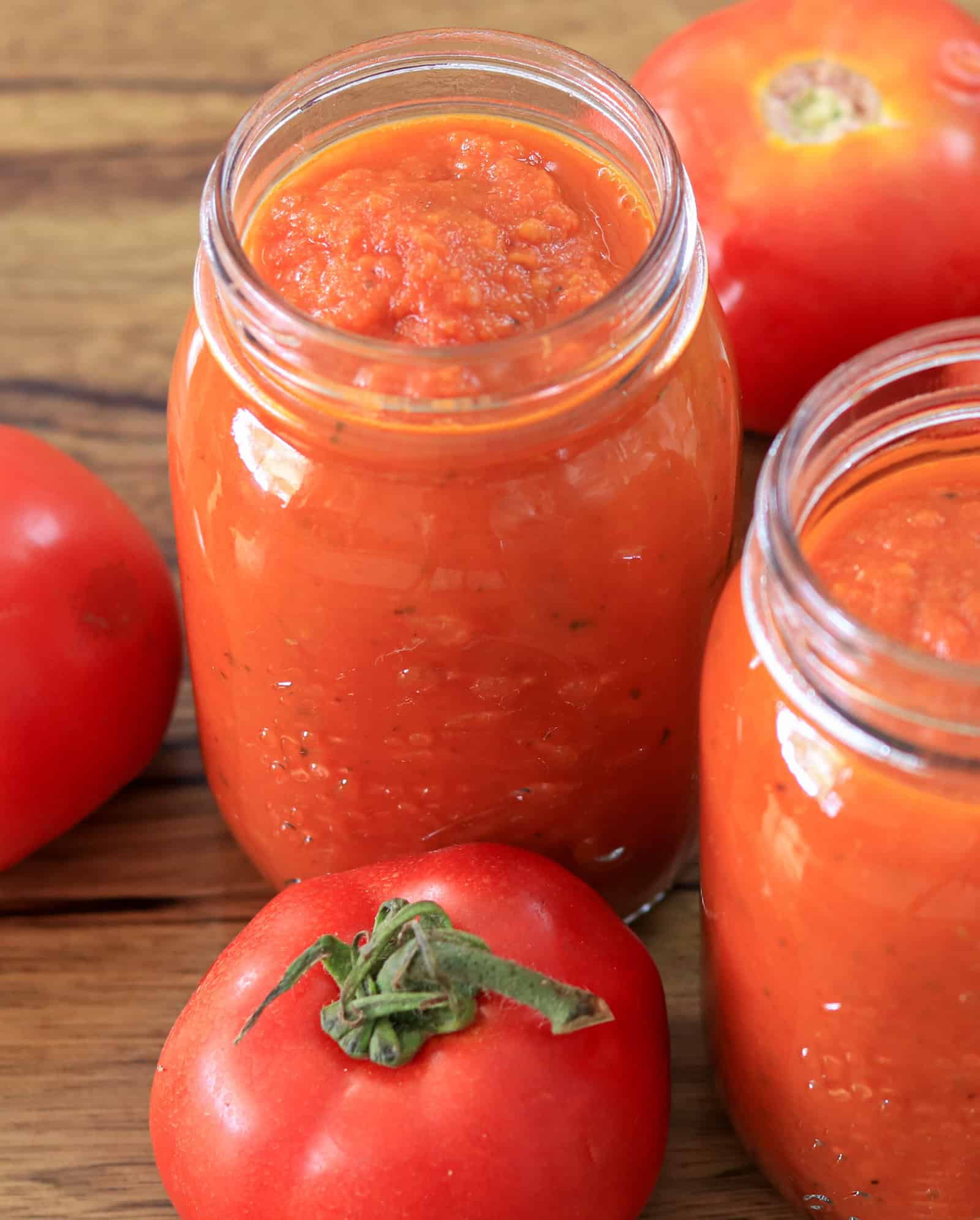
Come late summer, there’s always an explosion of activity on my tomato plants that leaves me with more fresh produce than I can possibly use. My solution? This homemade tomato sauce recipe! Each batch yields 6 jars of flavorful marinara sauce that are perfect for canning or freezing so the taste of sunshine is never far from reach.
Why You’ll Love This Easy Homemade Tomato Sauce
- With over 1.3 million views and 17,000 likes on my YouTube video for this recipe, you can rest assured that it’s been tried, thoroughly tested, and well-loved by thousands of home cooks like you.
- Since each batch makes about 6 cups, this versatile homemade pasta sauce is perfect for meal-prepping. Better yet, it’s easy to can for shelf-stable storage. Homemade Hanukkah gifts, anyone?
- There are literally dozens of ways to use this tomato sauce, so you’ll never get bored. Whether you’re craving authentic shakshuka, tender gnocchi in tomato sauce, or classic chicken parmesan, this recipe has you covered. Read on for even more inspiration!

How To Make Homemade Tomato Sauce With Fresh Tomatoes
Watch the full video recipe to learn how to make the Best Homemade Tomato Sauce. This step-by-step tutorial simplifies the process, offering tips and tricks to guarantee perfect results every time.
Prefer the written recipe? Scroll down to the recipe box 👇
Ingredients & Substitutions
- Plum or Roma Tomatoes – Meaty, low-seed varieties are ideal for making this flavorful sauce. Feel free to use San Marzano tomatoes as a premium upgrade.
- Olive Oil – No need for anything fancy here. Just your normal cooking oil is perfect!
- Onion & Garlic Cloves – Alliums are an optional addition, but highly recommended. They add a lovely sweetness and complexity.
- Dried Oregano – Another optional addition for adding interest. Dried oregano is more intensely flavored than fresh, but either works just fine. If you use fresh, use 3x the amount.
- Fresh Basil – Tomatoes and basil are a natural pair. As they say, if it grows together, it goes together! Feel free to omit if you prefer a tomato sauce that is closer to store-bought.
- Fresh Lemon Juice or White Vinegar – A little extra acidity helps boost the tangy tomato flavor and protect the color for freezing. Use extra if you plan on water bath canning it for shelf storage to prevent botulism.
This is just a short review of the ingredients; for the complete recipe, including quantities, scroll down to the recipe card 👇
Best Tomato Varieties for Making Tomato Sauce
Not all tomatoes are created equal. Juicier types like cherry or slicing tomatoes (like Beefsteak or Early Girl) are delicious for eating fresh, but contain more water and seeds. This means longer cook times and thinner sauce, not what we’re after.
For a thick, rich tomato sauce meatier varieties like Roma or San Marzano are your best bet. These plum-style tomatoes have fewer seeds, lower water content, and dense, flavorful flesh that cooks down quickly into a smooth, velvety sauce with no need for added thickeners.
Optional Variations & Dietary Adaptations
- Extra Quick & Easy – Looking for a speedier, smaller-batch tomato pasta sauce recipe? My burst cherry tomato sauce is just the thing.
- Allium-Free – Simply omit the onions and garlic for an allium-free tomato sauce. To replace some of the garlicky flavor, feel free to add a few pinches of asafoetida (hing).
- Spicy Tomato Sauce – Add red chili flakes to the mix for a spicier version that’s closer to pasta arrabiata.
Expert Tips & Tricks
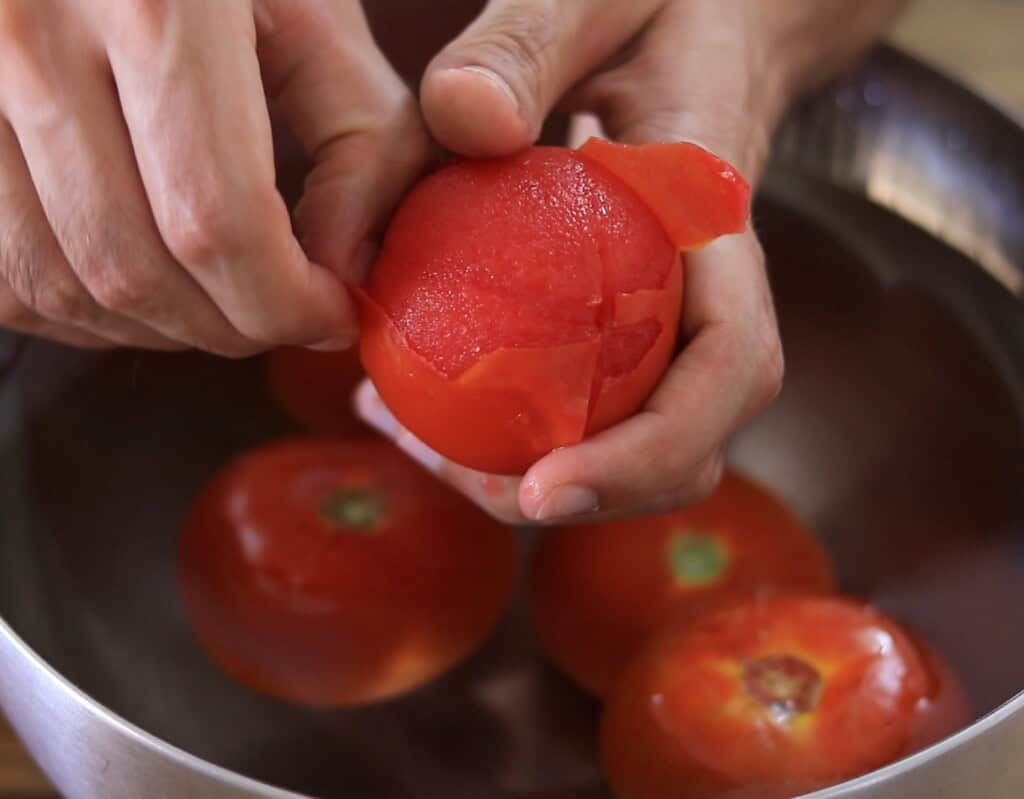
- Blanch like a pro. Scoring a shallow “X” on each tomato and blanching for 30–60 seconds helps the skins slip right off. If the skins don’t start to curl, give them a few more seconds in the water. For more details, watch the video recipe.
- Ice bath = easy peeling. Don’t skip the ice bath! It halts the cooking and makes peeling a breeze. That said…
- Peeling is optional. If you don’t mind a more rustic texture, feel free to leave the skins on. They’ll soften during the long simmer, and some folks actually prefer the extra texture.
- Boost the flavor (if you want). Onion, garlic, oregano, basil, or a pinch of chili flakes can take your sauce to the next level. But honestly? It’s still great with nothing more than tomatoes, salt, olive oil, and a splash of acid.
- Simmer low and slow. The longer it simmers, the more concentrated and flavorful it gets. Keep the heat low, stir occasionally, and let time do the heavy lifting.
- Taste before you call it done. Tomatoes vary in sweetness and acidity, so always taste your sauce at the end and adjust the seasoning as needed.
- Don’t forget the acid. Stir in a couple tablespoons of lemon juice or vinegar to brighten things up and help preserve the sauce in the fridge or freezer. If you’re planning to can it for shelf storage, bump that up to ¼ cup to ensure safe acidity.
- Smooth or chunky? You decide. Use an immersion blender if you prefer a silky smooth sauce, or leave it chunky for a more rustic, hearty texture.
- Sterilize your jars. Even if you’re just refrigerating or freezing the sauce, it’s a good idea to pour boiling water into your jars, let them sit for 5 minutes, then drain and dry before filling. If freezing, remember to leave plenty of headroom for expansion. Using glass jars? The straighter edges of wide mouth jars are less likely to crack.
- Make extra. Your future self will thank you! This sauce freezes beautifully, so go ahead and make a double batch while tomatoes are at their peak. You’ll be glad to have it on hand for cozy dinners down the line.

How to Serve
This homemade tomato sauce is incredibly versatile and can be used in countless ways, making it a staple worth stocking up on. Its rich, savory flavor and smooth (or rustic!) texture make it the perfect match for so many dishes.
Start with the obvious: toss it with pasta for a quick weeknight dinner. It works beautifully with spaghetti (and tuna!), penne, rigatoni, or stuffed pastas like ravioli and tortellini. Add sautéed vegetables, cooked sausage, or meatballs for a heartier meal. Speaking of, simmering homemade meatballs in tomato sauce makes them extra yummy!
It’s also a fantastic base for classic lasagna. Just spread it between layers of noodles, ricotta, and mozzarella for a cozy baked dish that feeds a crowd. Or use it as a pizza sauce, whether you’re making classic margherita, veggie-loaded flatbreads, or deep-dish style pies.
Beyond the classics, this sauce also shines in Middle Eastern-style dishes like shakshuka or baked eggs. It’s also a handy shortcut for soups and stews—use it as a flavor-packed base for lentil curry, minestrone, or oven baked beef stew. The acidity and richness help bring depth to slow-cooked dishes without hours of work!

Storage & Reheating
- Refrigerator – Let the sauce cool completely, then transfer it to clean, airtight jars or containers. Store in the fridge for up to 5–7 days. For best flavor, use within a week. Reheat gently on the stovetop or in the microwave before serving.
- Freezer – This homemade spaghetti sauce freezes beautifully! Allow it to cool fully, then ladle it into freezer-safe containers or jars. Just be sure to leave about 1 inch of headspace to allow for expansion. Label with the date and freeze for up to 4–6 months. Thaw overnight in the fridge before reheating.
- Canning (Water Bath Method) – To store your sauce at room temperature, you’ll need to use proper water bath canning techniques to ensure food safety:
- Sterilize jars by boiling them in water for 10 minutes.
- While the sauce is still hot, fill jars, leaving about ½ inch of headspace. Wipe the rims clean, place sterilized lids on top, and screw on the bands until fingertip tight.
- Submerge the filled jars in a boiling water bath, making sure they’re covered by at least 1 inch of water.
- Process for 35–40 minutes (adjusting for altitude if needed).
- Carefully remove jars and let them cool undisturbed for 12–24 hours. You’ll hear a pop when the lid seals!
- Store sealed jars in a cool, dark pantry for up to 12 months. Any unsealed jars should be refrigerated and used within a week.
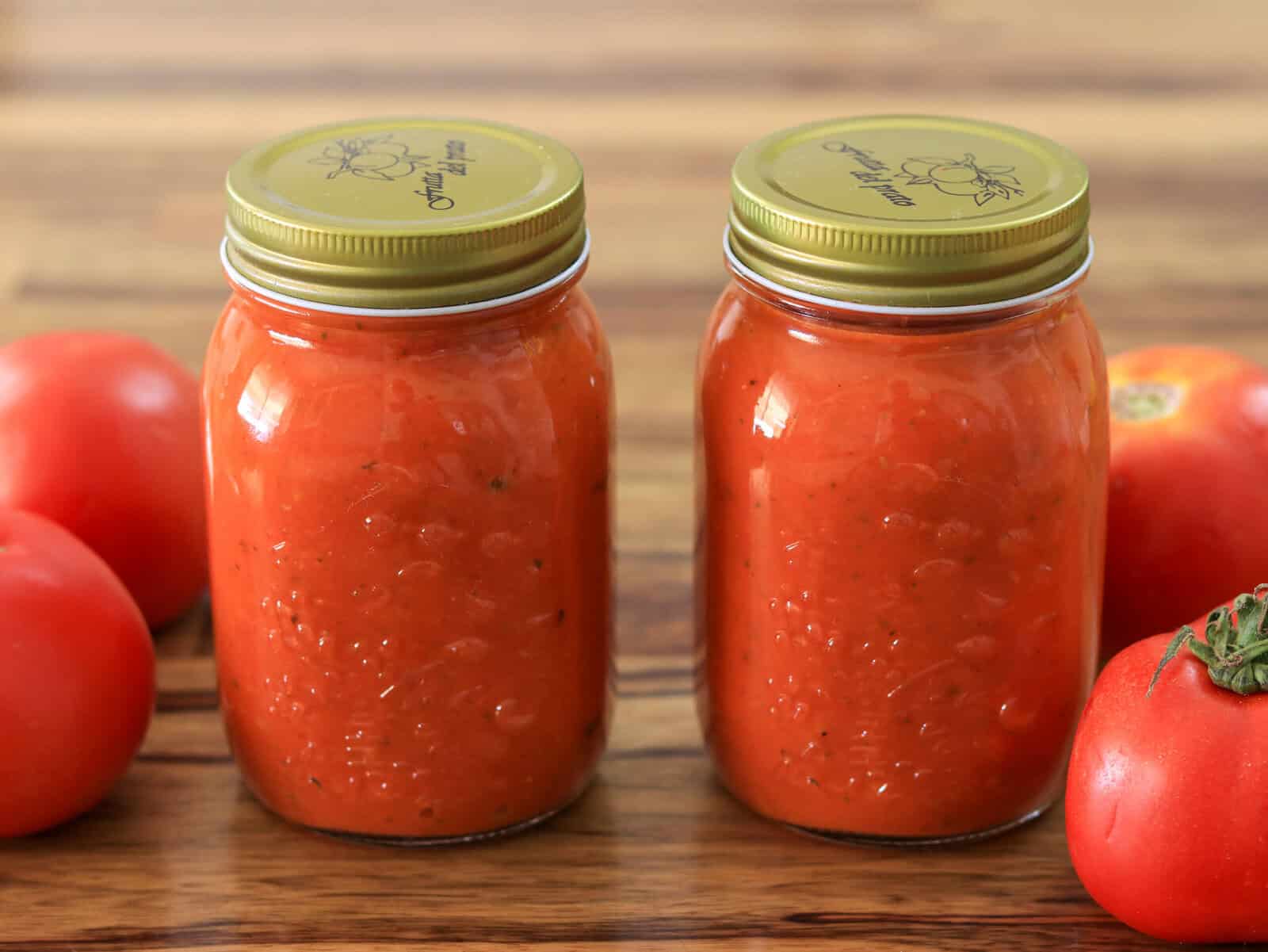
More Recipes Using Tomato Sauce

The Best Homemade Tomato Sauce Recipe
Ingredients
- 6.5 lbs (3 kg) Plum or Roma tomatoes
- 2-3 tablespoons Olive oil
- 1 Onion Large, chopped (optional)
- 3 Garlic cloves crushed (optional)
- Salt to taste
- 1-2 teaspoons Oregano optional
- 7-8 leaves Fresh basil optional
- 2 tablespoons lemon juice or vinegar for flavor or freezing (Use ¼ cup if you plan to can the sauce for shelf storage)
Instructions
- Prep the Tomatoes: Bring a large pot of water to a boil. Meanwhile, prepare an ice bath in a large bowl. Core the stems out of the tomatoes and score a shallow “X” on the bottom of each.
- Blanch & Peel: Working in batches, blanch tomatoes in boiling water for 30–60 seconds, just until the skins start to loosen. Transfer immediately to the ice bath. Once cooled, peel off the skins and discard.
- Chop & Set Aside: Roughly chop the peeled tomatoes into small chunks. Set aside.
- Sauté Aromatics (Optional): In a large, heavy-bottomed pot, heat olive oil over medium-low. Add chopped onion and cook for 7–8 minutes, until golden and soft. Stir in garlic and cook for 2 more minutes, until fragrant. (Skip this step if making plain sauce.)
- Cook Down the Sauce: Add chopped tomatoes to the pot. Season with salt. Add oregano and basil, if using. Stir well.
- Bring to a boil, then reduce heat to low and simmer 60–90 minutes, stirring occasionally, until the sauce has thickened and most of the liquid has evaporated.
- Finish & Blend (Optional): Stir in lemon juice or vinegar. This brightens the flavor and helps preserve the sauce. Read notes.
- If you prefer a smooth texture, blend with an immersion blender directly in the pot.
- Let cool slightly, then transfer to jars or containers.
Video
Notes
- Best Tomatoes: Plum or Roma tomatoes are ideal—they’re meaty, low in moisture, and have fewer seeds. San Marzano tomatoes are a premium option.
- Peeling the Skin: Peeling the tomatoes creates a smoother sauce, but it’s completely optional. If you don’t mind a more rustic texture, you can skip this step.
- Jar Sterilization: If you’re storing the sauce in jars (even for the fridge or freezer), pour boiling water into the jars, let sit 5 minutes, then drain and dry before filling. Always leave some headroom when freezing.
- Double Batch: This sauce freezes beautifully, consider making a double batch while tomatoes are in season.
- Optional Add-Ins: Onion, garlic, oregano, basil, or chili flakes can enhance flavor, but the sauce is still delicious with just tomatoes, oil, salt, and lemon juice or vinegar.
- Storage: Refrigerate cooled sauce in airtight jars or containers for up to 5–7 days. For longer storage, freeze in airtight containers or freezer-safe bags for up to 4 months. Make sure the sauce is completely cooled before freezing.
- Preservation Tip: Adding 2 tablespoons of lemon juice or vinegar boosts acidity, which helps preserve the sauce in the fridge and freezer. If you’re canning the sauce for pantry storage, increase to ¼ cup to ensure safe acidity levels.
- Uses: Perfect for pasta, lasagna, pizza, shakshuka, baked eggs, meatballs, or as a base for soups and stews.
Nutrition
Common Questions
The secret to good tomato sauce lies in using ripe, flavorful tomatoes and patience. A touch of olive oil and salt enhances the flavor, while a splash of acid (like lemon juice or vinegar) balances it all out. Optional aromatics like onion, garlic, or herbs can add depth, but the real magic comes from letting the sauce cook low and slow until it thickens naturally and tastes like summer in a jar.
Follow along with the recipe above! The basic gist: blanch and peel fresh tomatoes, then roughly chop them. In a large pot, heat olive oil over medium heat and sauté aromatics like onion and garlic. Add the chopped tomatoes and a generous pinch of salt, then simmer the mixture over low heat for 60–90 minutes, stirring occasionally, until it thickens and the flavors deepen. Finish with a splash of lemon juice or vinegar to brighten the sauce and help preserve it. From there, you can blend it smooth or leave it chunky
Yes! Peeling gives a smoother sauce, but leaving skins on works fine if you prefer a rustic texture.
Absolutely. Use two large (28 oz) cans of whole peeled tomatoes for a quicker version.
Definitely! For pizza, simmer the sauce a little longer until extra thick.
Plum or Roma tomatoes are best, as they are thick, meaty, and low in water. San Marzano is the top choice if available.



Very useful recipe, making a big batch every year. Thanks for all the tips and tricks, love your recipes!
Well I am a first time canner of sauce. I found this recipe was so easy to follow and I canned 11 pints of tomato sauce using Roma’s. Well the taste was different than what i thought it would be, it was soooo much better. Will continue to use this recipe and tweak as I go along. Thank you!
That’s amazing to hear! Congrats on your first time canning . So glad you enjoyed the recipe and ended up with 11 pints, Roma tomatoes are perfect for it. Love that you’re planning to tweak it to your taste, that’s the beauty of homemade sauce. Thanks for sharing!
Very similar to mine except I cut way back on the onions if it’s going to be for pizza. And I always add a spoonful of sugar and a tablespoon of tomato paste if the tomatoes are not dead ripe.
Quick question. In the fall we blanched and froze a bunch of tomatoes, but not sure exactly how much. How many cups would 6lbs of tomatoes be? Approximately.
Thanks!
6 pounds of tomatoes equals about 10–11 cups chopped (around 8–9 cups if peeled/seeded). That’s roughly 5 pints (since 1 pint = 2 cups).