
Easy Pistachio Crusted Salmon Recipe
This post may contain affiliate links.
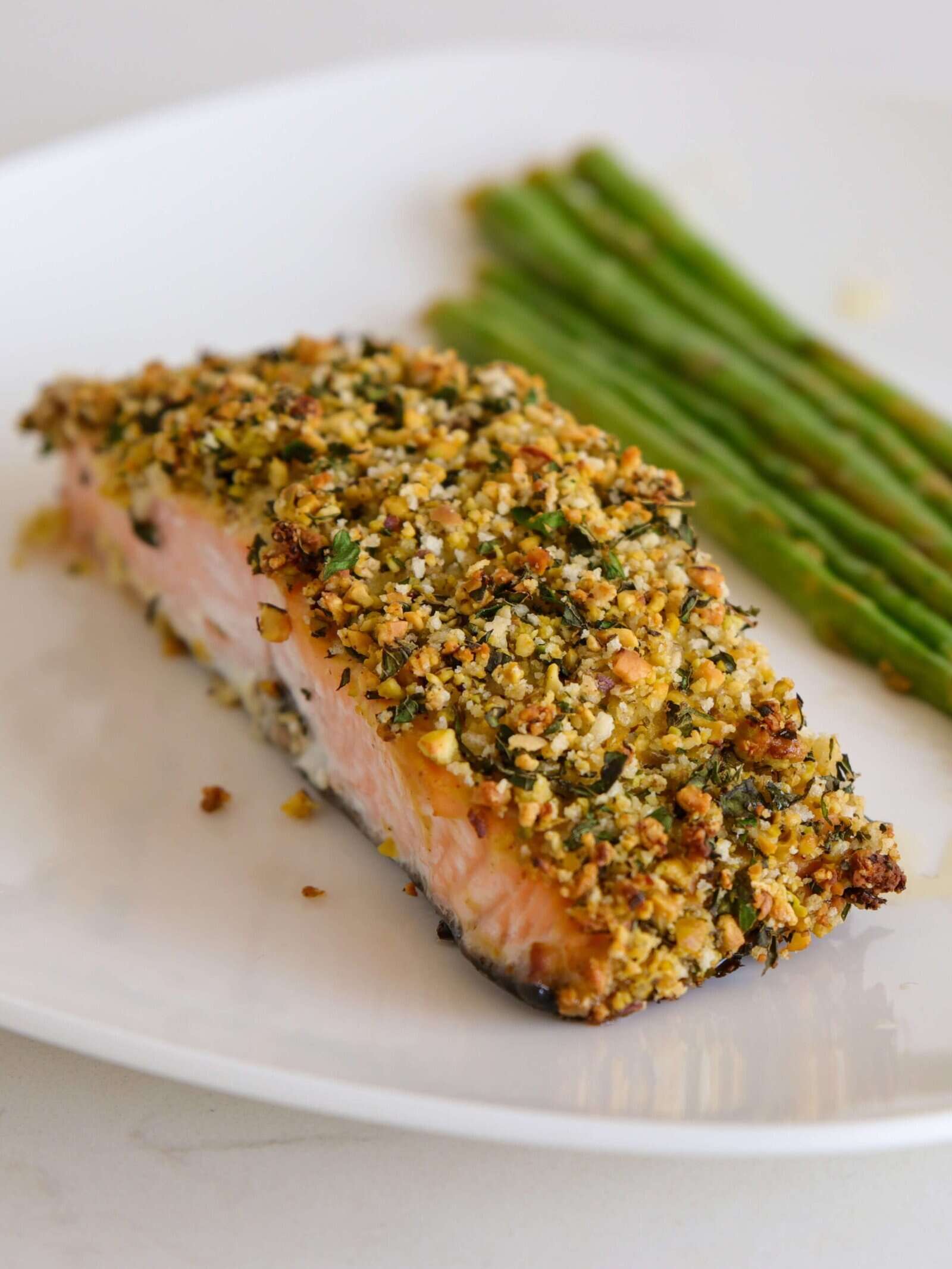
If you’re looking for a deliciously simple, restaurant-worthy entrée, look no further than my easy Pistachio Crusted Salmon recipe. Tender, flaky fish is topped with a delightfully crunchy crown of herbed breadcrumbs and buttery nuts for an easy, elegant meal that’s guaranteed to impress. Perfect for dinner parties and date nights at home!
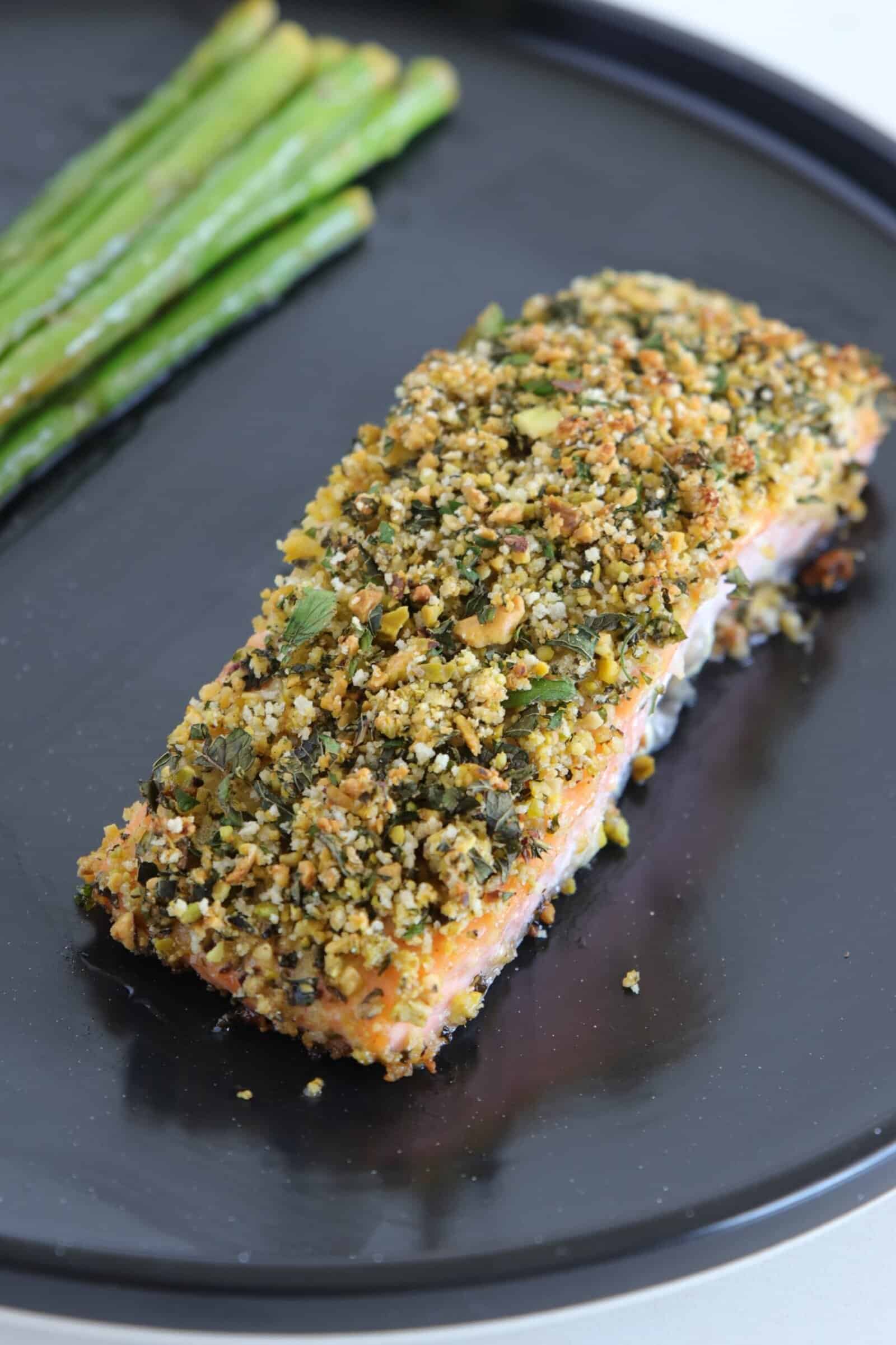
As a Cooking Foodie, I’m always shocked at restaurant prices. I bet this pistachio crusted salmon would command $25+ per serving at my local bistro, but making it at home is so much cheaper! Better yet, you get to choose the company, the music, the lighting, and you don’t have to tip at the end. To really wow your honey, don’t forget to close out the meal with one of my 50 favorite Valentine’s Day dessert recipes, because love deserves to be celebrated with something sweet!
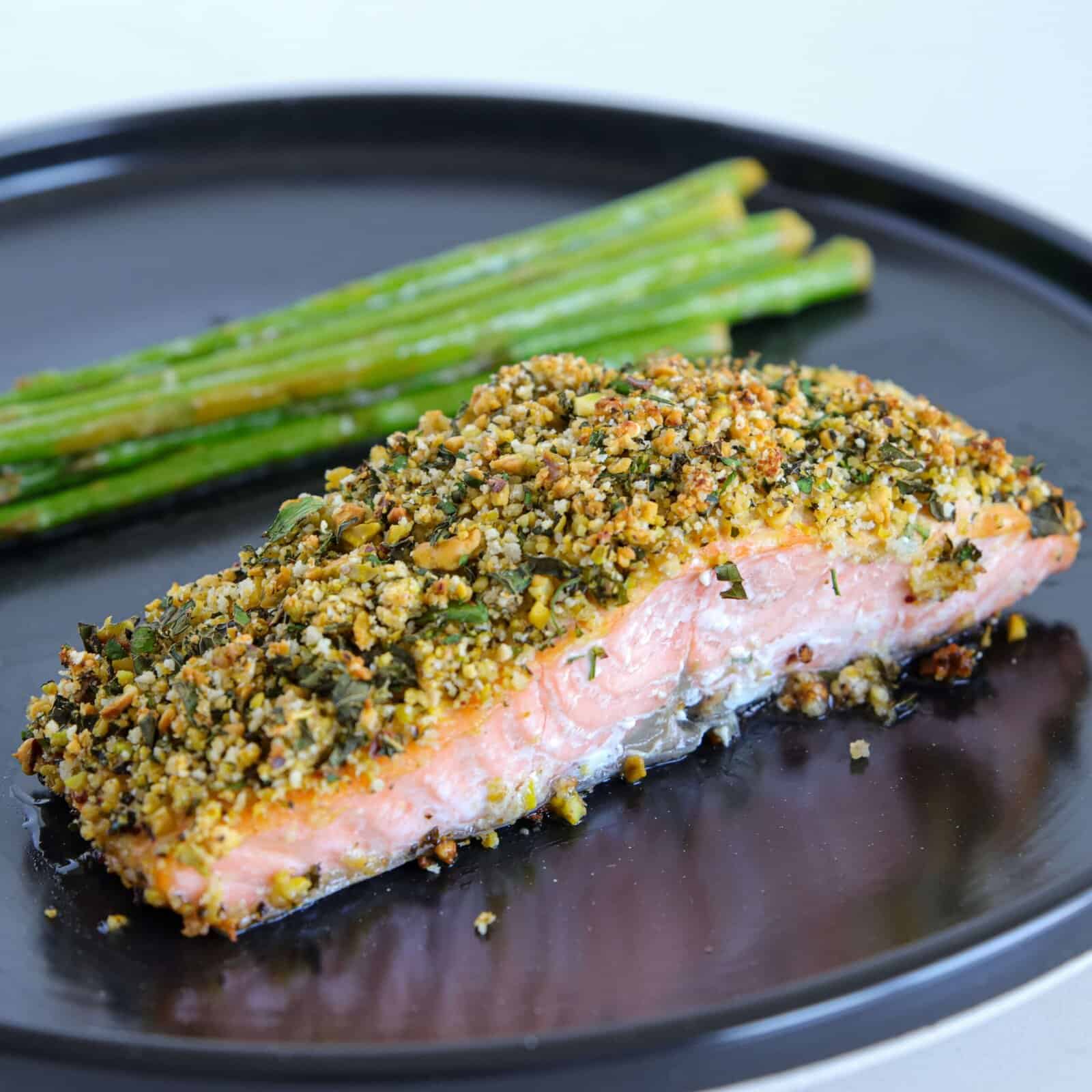
How to Make Pistachio Crusted Salmon
Watch the full video to learn how to make the BEST Crusted Pistachio Salmon recipe.
Prefer the written recipe? Scroll down to the recipe box 👇
Ingredients & Substitutions
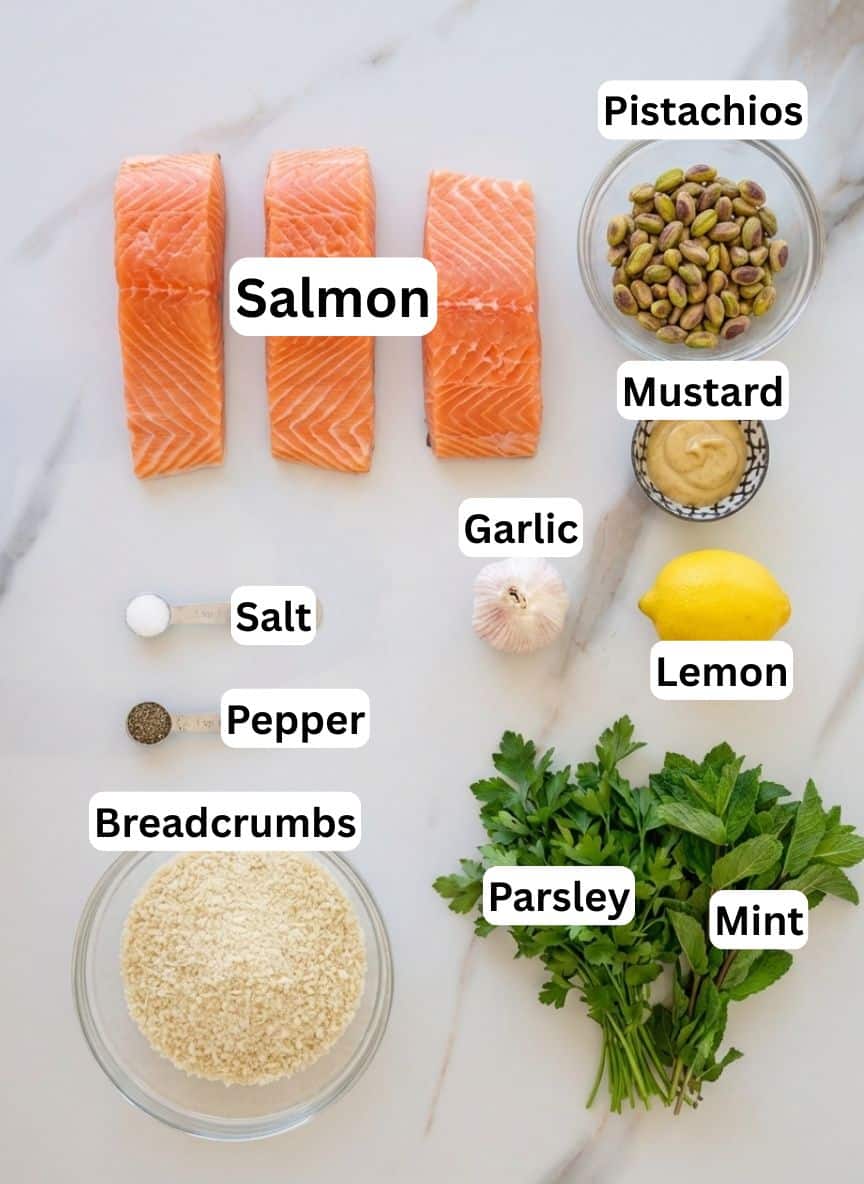
- Salmon Fillets – Feel free to swap in your favorite fillets for a pistachio crusted fish dish that isn’t salmon.
- Pistachios – These gorgeous green nuts add buttery richness and crunch. You’re welcome to swap in any other nut you prefer.
- Fresh Cilantro & Mint – Fresh herbs brighten the pistachio crust, both in terms of color and flavor. If you’re not a fan of cilantro, parsley is a great alternative.
- Garlic – While I prefer using fresh, you can swap in ¼ teaspoon of garlic powder for each clove.
- Fresh Lemon Juice – Lemon and seafood are a natural pairing. The zippy acidity helps accentuate the naturally rich flavor of salmon. Just make sure you’re reaching for fresh citrus; the bottled juice tastes a bit bitter and murky.
- Breadcrumbs – I used regular breadcrumbs, but feel free to swap in panko (Japanese breadcrumbs) for a lighter, crispier topping.
- Dijon Mustard – Mustard pulls double duty, adding another layer of flavor and acting as the glue for our pistachio crust. If you don’t have any on hand, try using mayonnaise instead. It won’t have the same kick as mustard, but works just as well as an adhesive and will add extra richness.
- Salt & Black Pepper – Just the basics! Use kosher salt or sea salt and freshly cracked black pepper for the best results.
This is just a short review of the ingredients; for the complete recipe, including quantities, scroll down to the recipe card 👇
A Deep Dive on Salmon
Salmon is one of those proteins that feels both weeknight-easy and dinner-party worthy, especially when you dress it up with a flavorful crust (hello, pistachios!). But if you’ve ever stood at the seafood counter wondering which salmon to grab, you’re not alone. Between different varieties, wild vs. farmed options, and multiple cuts, salmon can be a little confusing.
Different Types of Salmon
You’ll usually see a few main varieties in stores, and each one has its own flavor and texture:
- Atlantic Salmon: This is the most common type sold in grocery stores and is typically farm-raised. It has a mild flavor, a buttery texture, and a higher fat content, which makes it very forgiving to cook.
- Sockeye Salmon: Sockeye is usually wild-caught and known for its deep red color and bold salmon flavor. It’s leaner than Atlantic salmon, so it cooks a bit faster and can dry out if overbaked, but it’s delicious when handled gently.
- Coho Salmon: Coho falls somewhere in the middle: a medium-fat salmon with a clean flavor and tender texture. It’s a great “all-purpose” choice if you want something flavorful but not too strong.
- King Salmon (Chinook): This is the most luxurious option. It’s rich, buttery, and high in fat. If you want the most melt-in-your-mouth salmon, King is the splurge pick.
- Pink Salmon: Pink salmon is lighter in color and flavor, and it’s often used in canned salmon. It’s not as common for fillets, but it can still work if that’s what you find.
Wild vs. Farmed Salmon
Wild salmon tends to be leaner, firmer, and more deeply flavored, while farmed salmon is fattier, milder, and softer in texture. For crusted salmon recipes, both work well—farmed salmon stays especially moist, while wild salmon offers a more robust flavor and cleaner finish.
Different Cuts of Salmon
Salmon can be sold as whole sides, steaks, or fillets. This recipe uses salmon fillets, which are cut lengthwise from the fish and are ideal for even cooking and easy portioning. Fillets also provide a flat surface, making them perfect for holding onto a pistachio crust so it bakes up golden and crisp.
No matter which type you choose, look for salmon that’s vibrant in color, smells fresh (not fishy), and has firm flesh for the best results.
Optional Variations & Dietary Adaptations
- Gluten-Free – Use your favorite gluten-free breadcrumbs, or swap in crushed pork rinds for a keto-friendly version.
- Seafood Swap – Not in the mood for salmon? This crust works beautifully on other fillets like cod, halibut, tilapia, or mahi mahi. Just keep in mind that thinner fish will cook faster, so start checking for doneness a few minutes early.
- Different Nuts – Pistachios are gorgeous and buttery, but you can easily switch them out for almonds, walnuts, pecans, or cashews. Each nut brings a slightly different flavor. For example, almonds are mild and crunchy, while walnuts and pecans add a deeper, toastier vibe.
Expert Tips & Tricks
- Pat the salmon dry first. Before seasoning or adding the mustard, use paper towels to blot the fillets dry. This helps the crust stick better and encourages a crispier finish.
- Choose evenly sized fillets. Similar thickness = even cooking. If one fillet is much thinner than the others, it may cook faster and dry out before the thicker pieces are done.
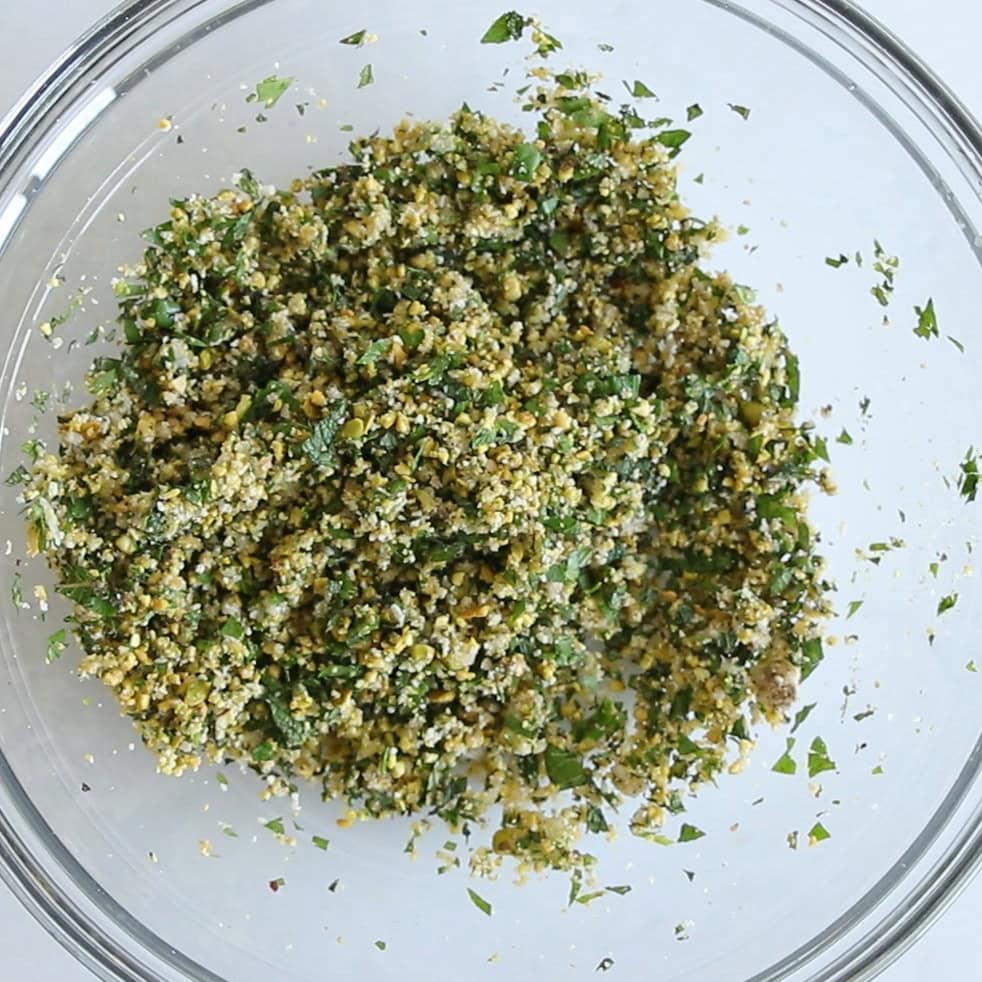
- Chop the pistachios finely (but don’t turn them into dust). You want small pieces that press into the mustard easily and bake up crunchy, but still have enough texture to feel like a true crust.
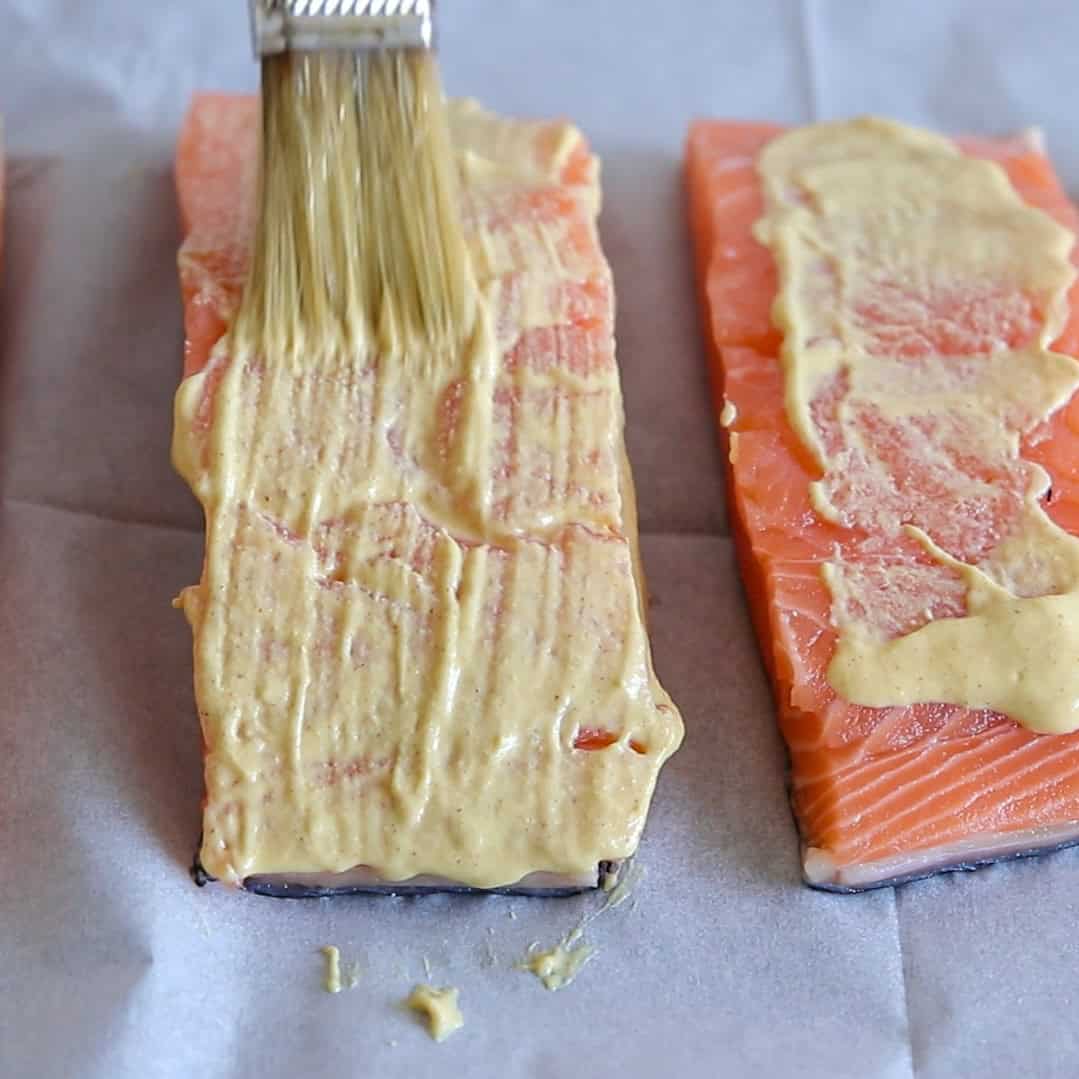
- Use Dijon as the “glue.” Spread it in a thin, even layer over the top of each fillet so the pistachio breadcrumb mixture sticks well and doesn’t slide off while baking.
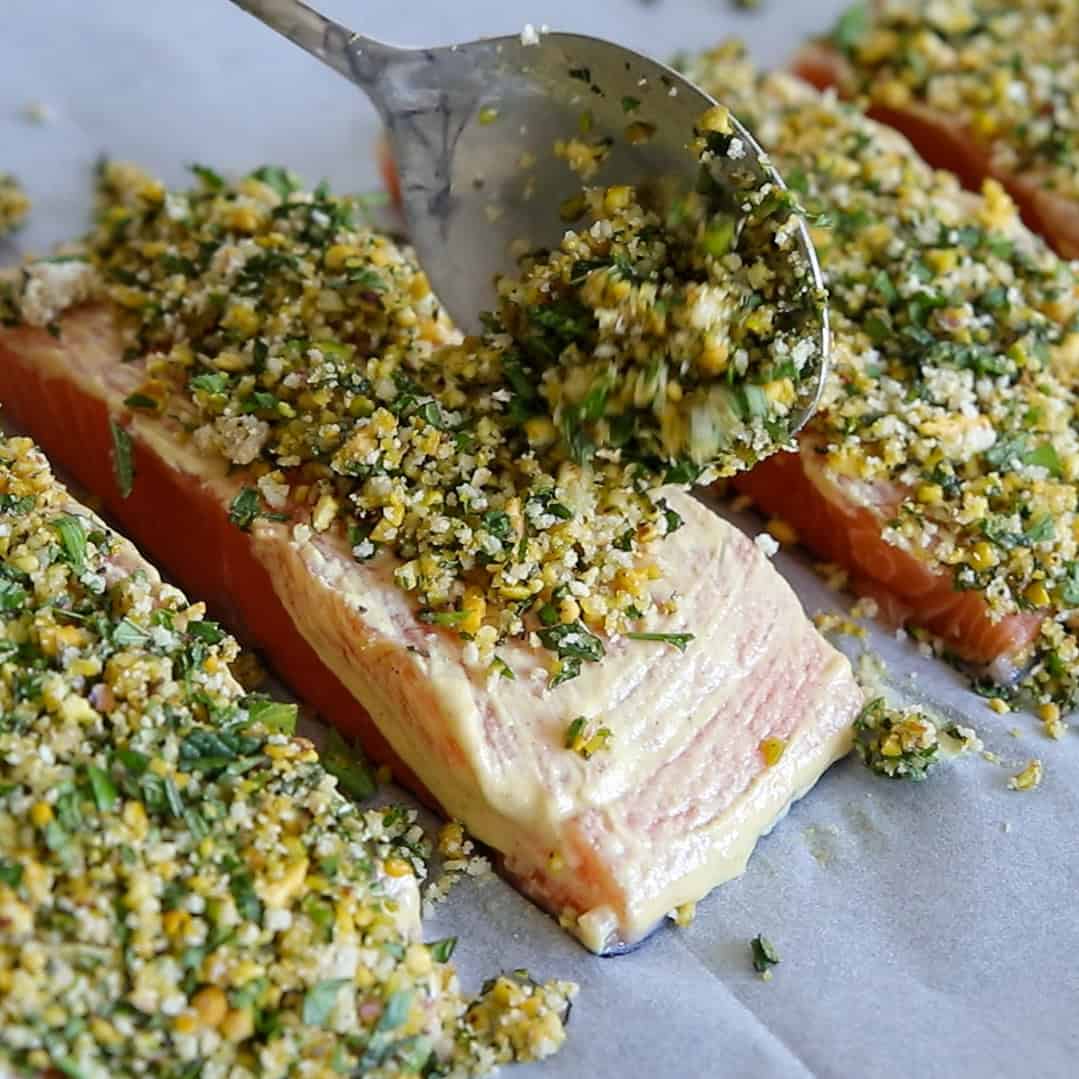
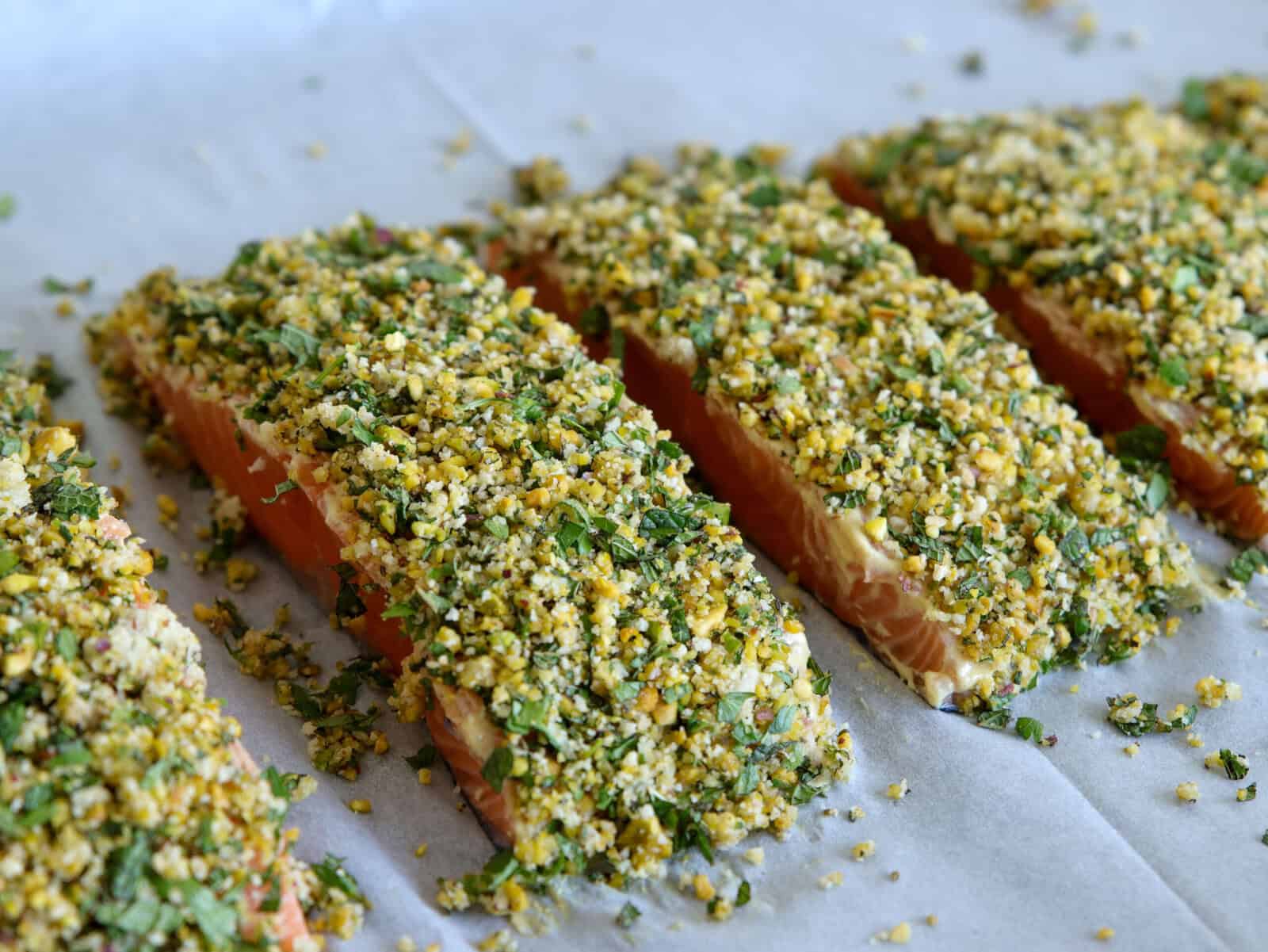
- Press the crust on gently. Instead of sprinkling it loosely, lightly press it into the top of the salmon so it holds together once it hits the heat.
- Don’t overload the topping. A thick crust can insulate the salmon and prevent it from cooking evenly. A generous but even layer gives you crunch without weighing the fish down.
- Bake on a lined sheet pan for easy cleanup. Parchment paper (or foil) keeps the salmon from sticking and makes it easier to lift the fillets out without losing the crust.
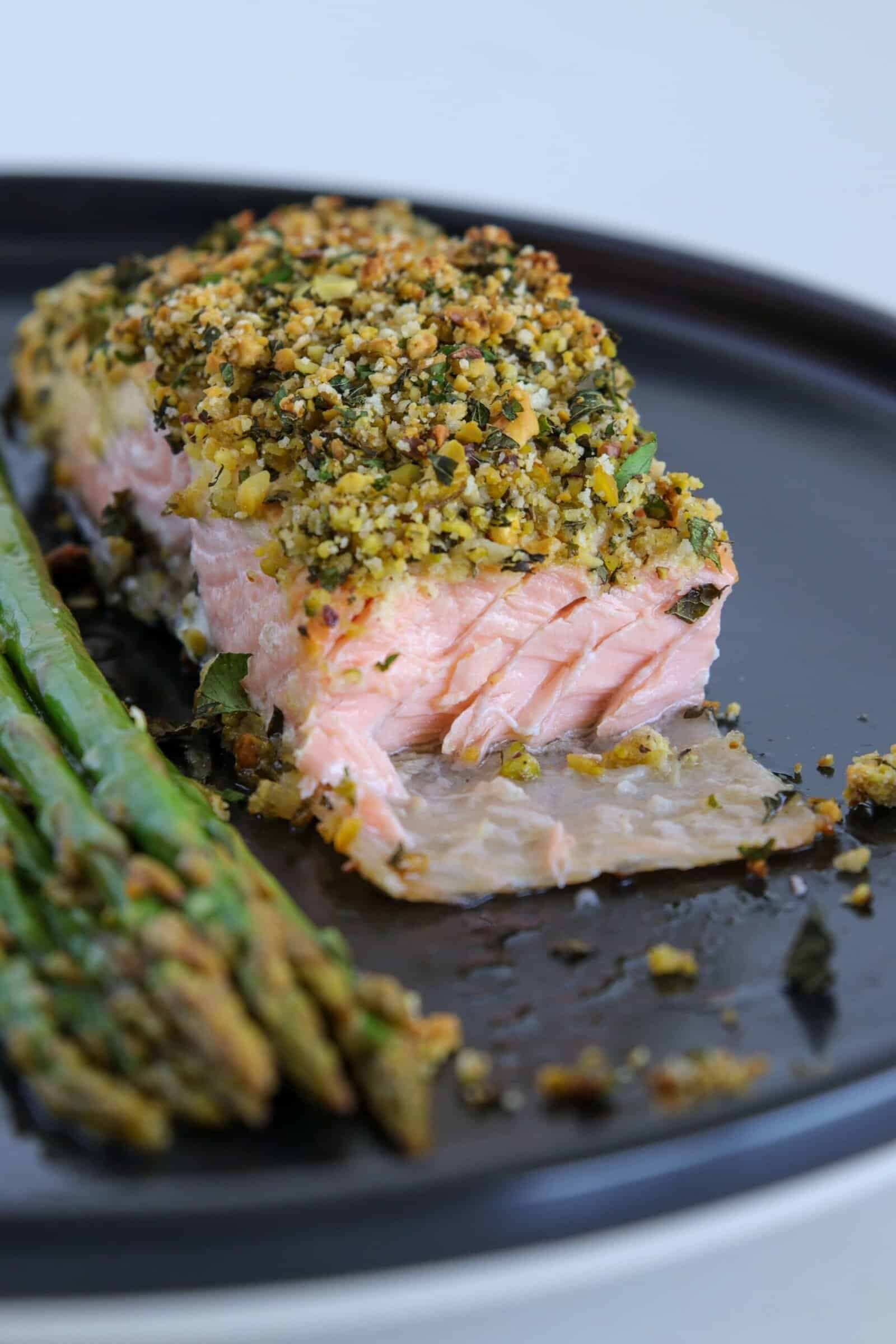
- Watch the cook time closely. Salmon can go from perfectly flaky to dry quickly. Pull it when it flakes easily and reaches about 125-130°F for medium (my preference) or 135-145°F for well done, depending on your preference.
How to Serve Crusted Salmon
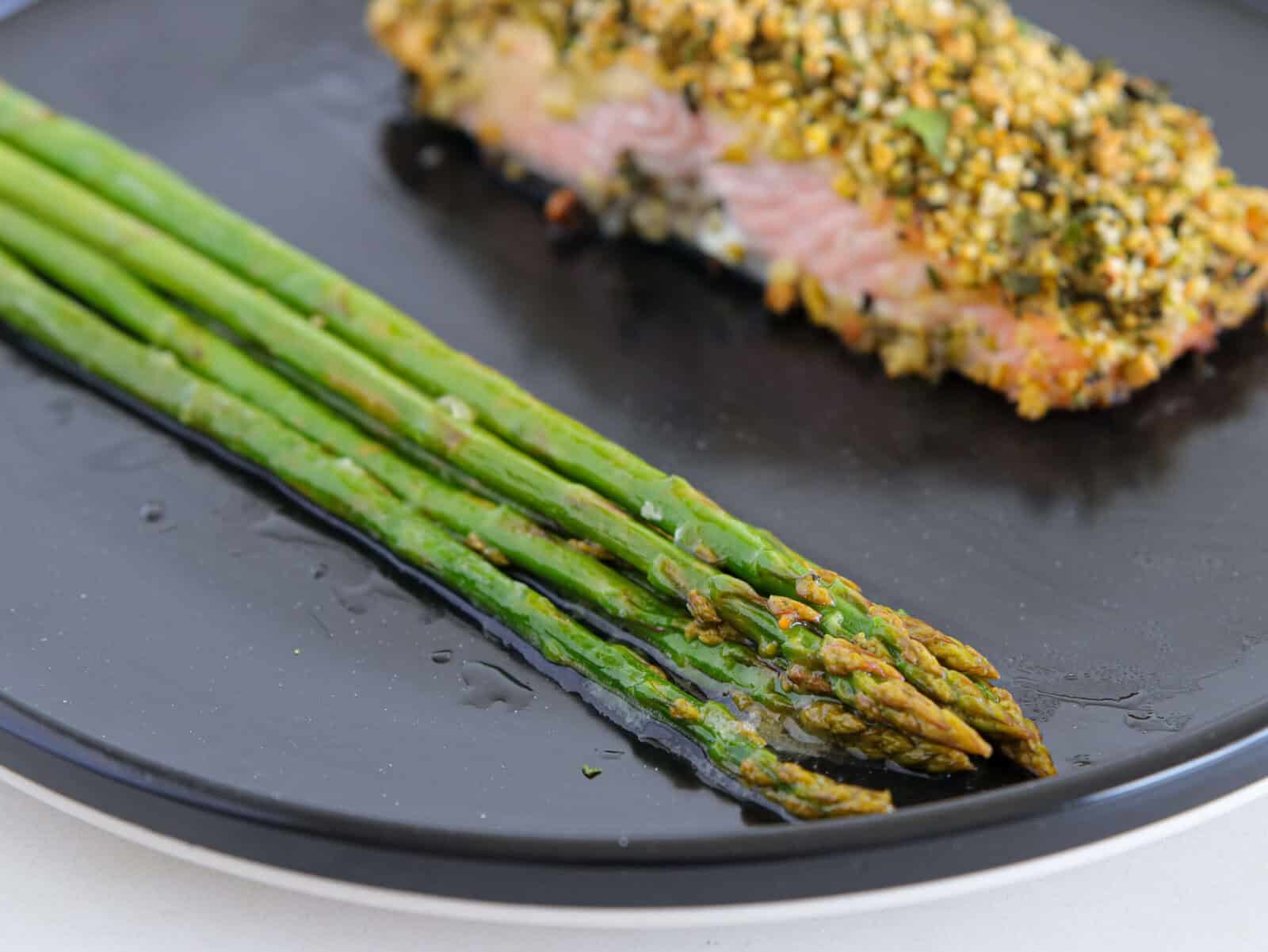
This pistachio encrusted salmon recipe makes a beautiful main dish and pairs well with simple sides that let the nutty, herby crust shine. Serve it with roasted vegetables like asparagus, green beans, broccolini, or carrots for an easy, balanced plate.
For something lighter and fresher, pair the salmon with a bright salad, like arugula with lemon vinaigrette, a simple cucumber salad, or if you’d like a heartier entrée salad, use the crusted salmon as the meat for your Niçoise salad. The acidity helps balance the richness of both the salmon and the pistachio crust.
For something a little more filling, this salmon is delicious with rice, couscous, quinoa, or orzo. The grains soak up any lemony juices on the plate and make it feel like a complete, restaurant-style meal without much extra effort. And if you want a cozy comfort-food vibe, try serving it alongside creamy mashed potatoes or crispy roasted potatoes.
To finish things off, add an extra lemon wedge on the side and, if you like, a spoonful of plain yogurt or tzatziki sauce for a cool, creamy contrast to the crunchy crust.
Storage & Reheating
- Refrigerator: Let the pistachio crusted salmon cool completely, then store leftovers in an airtight container in the refrigerator for up to 3 days.
- Freezing is not ideal because the crust can lose its crunch and the texture may change, but it can be done if needed. Freeze in an airtight container for up to 1 month, thaw overnight in the fridge, then reheat in the oven for best results.
- Reheating (Best Method): For the crispiest crust, reheat the salmon in the oven or air fryer at 350°F for about 6-10 minutes, or until warmed through. This helps the topping stay crunchy instead of turning soft.
- Microwave Option: You can microwave it in short bursts, but the pistachio crust will soften. If you go this route, use 50-70% power and heat gently so the salmon doesn’t dry out.
More Easy Date Night Recipes
More Seafood Recipes
Easy Pistachio Crusted Salmon Recipe
Ingredients
- 5 Salmon fillets skin-on or skinless
- ½ cup Pistachios shelled and unsalted, read notes
- 2 tablespoons Parsley or coriander, chopped
- 2 tablespoons Mint leaves chopped
- 2 garlic cloves minced
- Salt to taste
- Pepper to taste
- 2 tablespoons Lemon juice
- ⅓ cup Breadcrumbs
- 1-2 tablespoons Dijon mustard
Instructions
- Prepare the Oven: Preheat the oven to 375°F (190°C). Line a baking sheet with parchment paper.
- Make the Pistachio Crust: Place the pistachios in a food processor and pulse until fine crumbs form (or finely chop with a knife). Transfer to a bowl and mix with breadcrumbs, garlic, parsley, mint, lemon juice, salt, and pepper.
- Assemble the Salmon: Arrange the salmon fillets on the prepared baking sheet. Season lightly with salt and pepper. Brush the tops with Dijon mustard, then generously sprinkle the pistachio mixture over each fillet, pressing gently so it adheres.
- Bake: Bake for 15 minutes, or until the salmon is opaque and flakes easily with a fork. Thicker fillets may need an extra 3-5 minutes.
- Serve immediately.
Video
Notes
- Pistachios: Unsalted pistachios work best, so you can control the seasoning.
- Nut swap: Use almonds, walnuts, or pecans instead of pistachios.
- Gluten-free: Use gluten-free breadcrumbs.
- Storage: Keep leftovers in an airtight container in the fridge for up to 2 days.
Nutrition
FAQs
Some of my favorite herbs for salmon include dill, parsley, cilantro, mint, chives, and basil, plus seasonings like garlic, black pepper, paprika, cumin, and lemon zest. For toppings, try Dijon mustard, pesto, honey glaze, teriyaki sauce, breadcrumbs/panko, crushed nuts (like pistachios), or a squeeze of fresh lemon.
I’m not a registered dietician, but salmon is packed with high-quality protein and omega-3 fats, and pistachios add heart-healthy fats, fiber, and crunch without needing heavy sauces. Plus, fresh herbs and lemon bring a lot of flavor with minimal extra calories. The main thing to watch is portion size, side dish choices, and how much breadcrumb/oil you use in the crust, but overall it’s a balanced, nutrient-rich dish you should feel good about eating.
Pistachio crusted salmon goes best with fresh, simple sides that balance the rich, nutty topping, think roasted veggies like asparagus or broccolini, a crisp salad with a lemony dressing, and an easy carb like rice, quinoa, couscous, or roasted potatoes. Finish it off with extra lemon wedges (and even a little yogurt sauce or tzatziki) for a bright, creamy contrast.


I made this last night for a last-minute dinner and it turned out amazing. The pistachio crust added so much flavor and crunch without overpowering the salmon. I used panko and parsley instead of cilantro, and it still worked perfectly. Even my husband, who usually “isn’t a salmon person”, went back for seconds. This one’s definitely going into our regular rotation!
Won’t drizzling the salmon with lemon before adding the crust make it to moist for it to septics properly?
A light drizzle of lemon won’t make it too moist, it just adds flavor. The crust will still stick perfectly once baked.