
Easy Homemade Peanut Butter Recipe (No Added Oil or Sugar)
This post may contain affiliate links.
Whether you like it creamy or chunky, making Homemade Peanut Butter will forever change your standards of what this classic spread should be. The rich, nutty taste of freshly roasted peanuts will upgrade even the humblest PB&J to gourmet status, and that’s to say nothing of how yummy all your favorite baked goods will be!
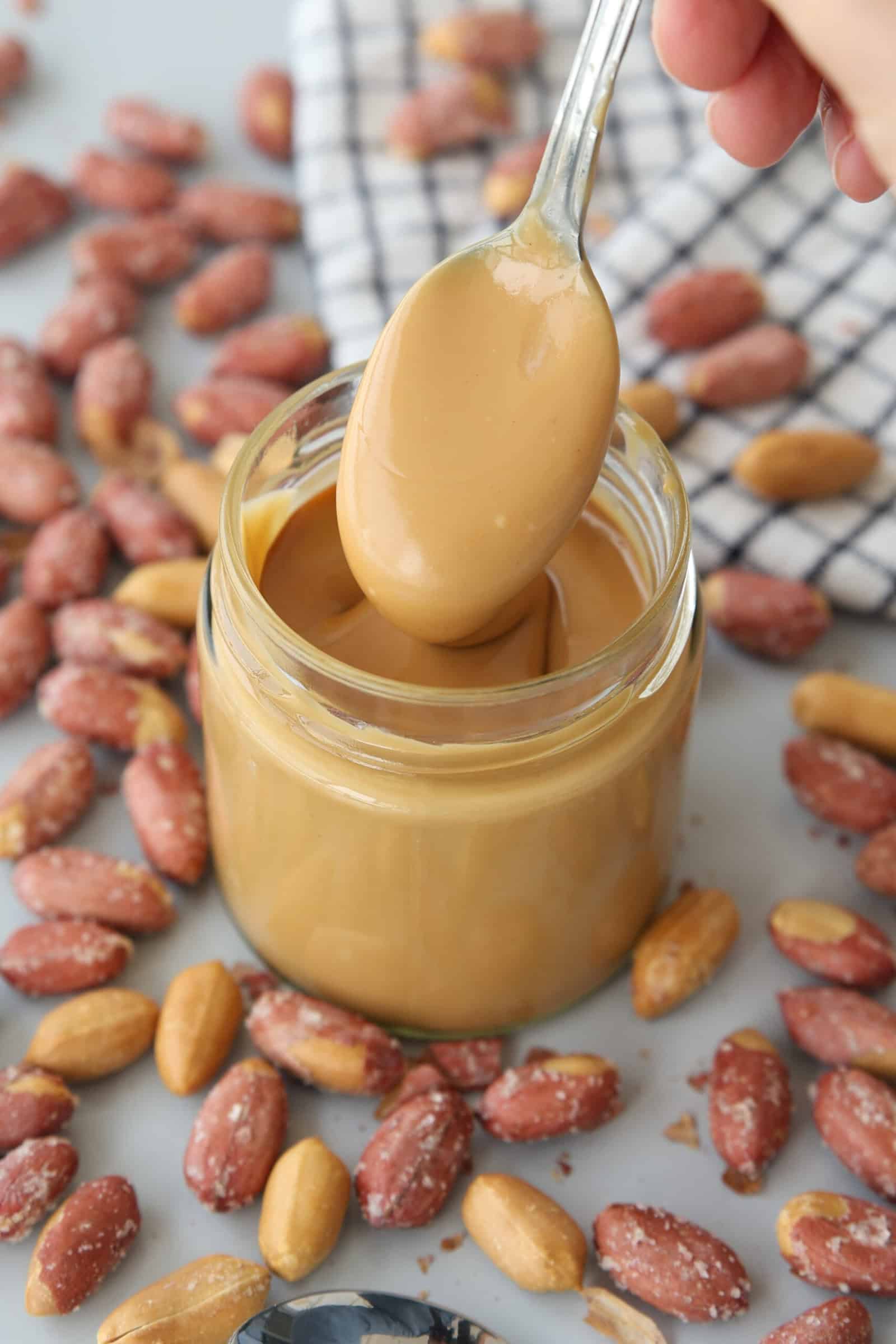
I originally published this recipe in 2021 and have since updated it with new photos, improved instructions, and extra success tips.
If you’ve never tried your hand at making nut butter, this natural homemade peanut butter recipe is the perfect place to start. All you need is one ingredient — peanuts — and maybe a sprinkle of salt or a splash of sweetener if you’re feeling fancy. Then, once you’ve got the process down, expand your repertoire to include homemade Nutella, homemade almond butter, homemade pistachio paste, and more!
Ingredients & Substitutions
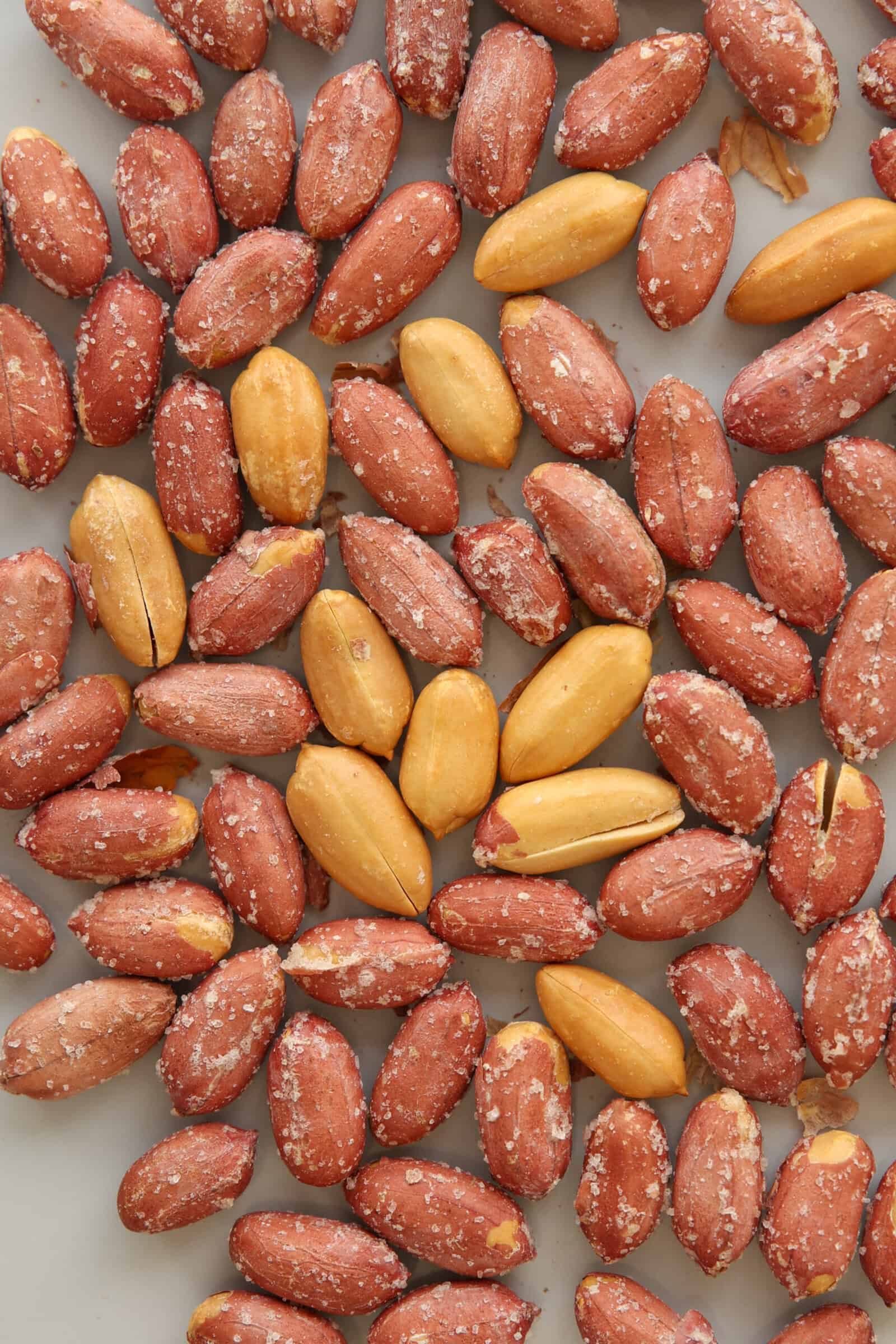
- Raw Peanuts – For best results, start with raw peanuts and roast them yourself for optimal flavor and texture.
- Salt – Optional, but nice for drawing out more peanutty flavor.
- You’ll also need a food processor or high-speed blender to turn the roasted peanuts into smooth, creamy peanut butter.
This is just a short review of the ingredients; for the complete recipe, including quantities, scroll down to the recipe card 👇
Different Types of Peanuts—What’s Best for Peanut Butter?
Not all peanuts are the same, and choosing the right variety can make a big difference in the flavor, texture, and richness of your homemade peanut butter. While you can turn any peanut into a creamy spread, some types naturally produce better results than others.
- Runner Peanuts – These are the most common peanuts used in commercial peanut butter brands, and for good reason. Runner peanuts have a consistent size, a naturally balanced flavor, and a higher oil content that creates an ultra-smooth, creamy peanut butter. If you want classic, nostalgic PB that tastes just like the jarred stuff (but fresher!), runner peanuts are your best pick.
- Virginia Peanuts – These are the big, jumbo peanuts known for their rich, robust flavor and satisfying crunch. Because they’re larger and a bit drier than runners, Virginia peanuts make a slightly thicker, heartier peanut butter. They’re perfect if you prefer a bold, nut-forward flavor or a chunkier texture.
- Spanish Peanuts – These small, red-skinned peanuts are higher in natural oil than most varieties, which makes for extra-smooth, extra-flavorful peanut butter. They have a stronger peanut aroma and a touch more sweetness, making them ideal for dessert-style spreads or sweetened peanut butter.
- Valencia Peanuts – These peanuts are naturally sweet, have a bright, clean flavor and are often sold roasted in the shell. They make a delicious spread with a slightly lighter texture and a candy-like sweetness. If you like your peanut butter on the sweeter side (without adding sugar), Valencia is a great match.
So, which peanut is best for making natural peanut butter? It really depends on your preference! The good news is you can’t go wrong. Any of these varieties will blend into a fresh, flavorful peanut butter far better than store-bought. The beauty of homemade peanut butter is that you can experiment with different varieties, or even blend a few, to create your perfect jar.
How to Make Homemade Peanut Butter
Watch the full video recipe to learn how to make the BEST Homemade Peanut Butter in a food processor (or high-speed blender) step-by-step.
Prefer the written recipe? Scroll down to the recipe box 👇
Optional Variations & Dietary Adaptations
It’s easy to customize your homemade peanut butter by adding salt, sweeteners, flavoring extracts, spices, or other mix-ins. Here are just a few ideas to get you started:
- Classic Honey Peanut Butter – Blend in 1-2 tablespoons of honey for a lightly sweet, golden flavor. Add it after the peanuts have fully turned into butter to prevent seizing. If you want a crunchy version, pulse in some honey roasted peanuts at the end for texture!
- Crunchy Peanut Butter – Pulse in a small handful of coarsely chopped roasted peanuts at the end for texture.
- Chocolate Peanut Butter – Blend in 2-3 tablespoons cocoa powder or ¼ cup melted chocolate for a dessert-like spread you’ll want to eat by the spoonful. Add a pinch of salt and a pinch of instant espresso powder to deepen the chocolate flavor.
- Cinnamon Peanut Butter – Add ½ – 1 teaspoon ground cinnamon for a warm, cozy variation. Great on toast, oatmeal, or apple slices.
- Spicy Peanut Butter – For a fun savory twist, add ½ – 1 teaspoon of cayenne pepper or chili flakes. This spicy peanut butter is great in satay-style sauces, noodle bowls, or as a drizzle over roasted veggies.
- Coconut Peanut Butter – Add 1-2 tablespoons coconut flakes while blending for a subtly tropical flavor and slightly firmer texture.
- Sweet & Salty Peanut Butter – Mix in crushed pretzels, flaky sea salt, and a sprinkle of turbinado sugar for a fun, crunchy finish.
Expert Tips & Tricks
- Warm the peanuts before blending. Lightly roasting or warming the peanuts (even pre-roasted ones) helps release their natural oils faster, making the blending process quicker and smoother.
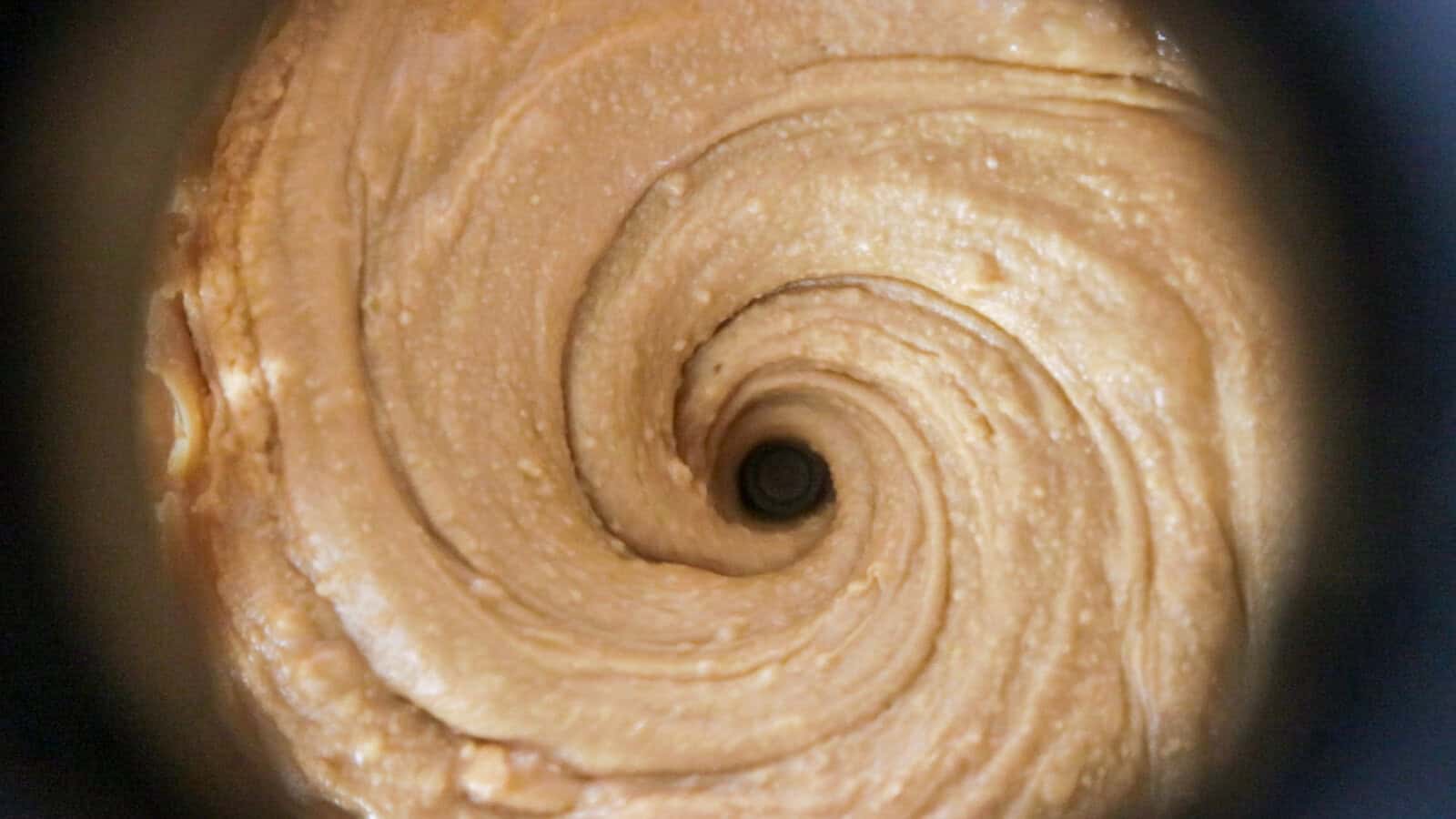
- Be patient—nut butter forms in stages. The peanuts will go from crumbs → thick paste → sticky dough → smooth, glossy peanut butter. Don’t stop too early. Keep processing and scraping down the bowl as needed.
- Avoid adding liquid too soon. Peanuts need time to release their oils. Adding honey, maple syrup, or other liquids too early can cause the mixture to seize and turn grainy. Always add sweeteners after the peanut butter is fully blended.
- Use a powerful food processor or high-speed blender. Weak motors can overheat before the peanuts turn into a smooth peanut butter. If your machine gets warm or you smell an electrical odor, pause for a minute to avoid overheating.
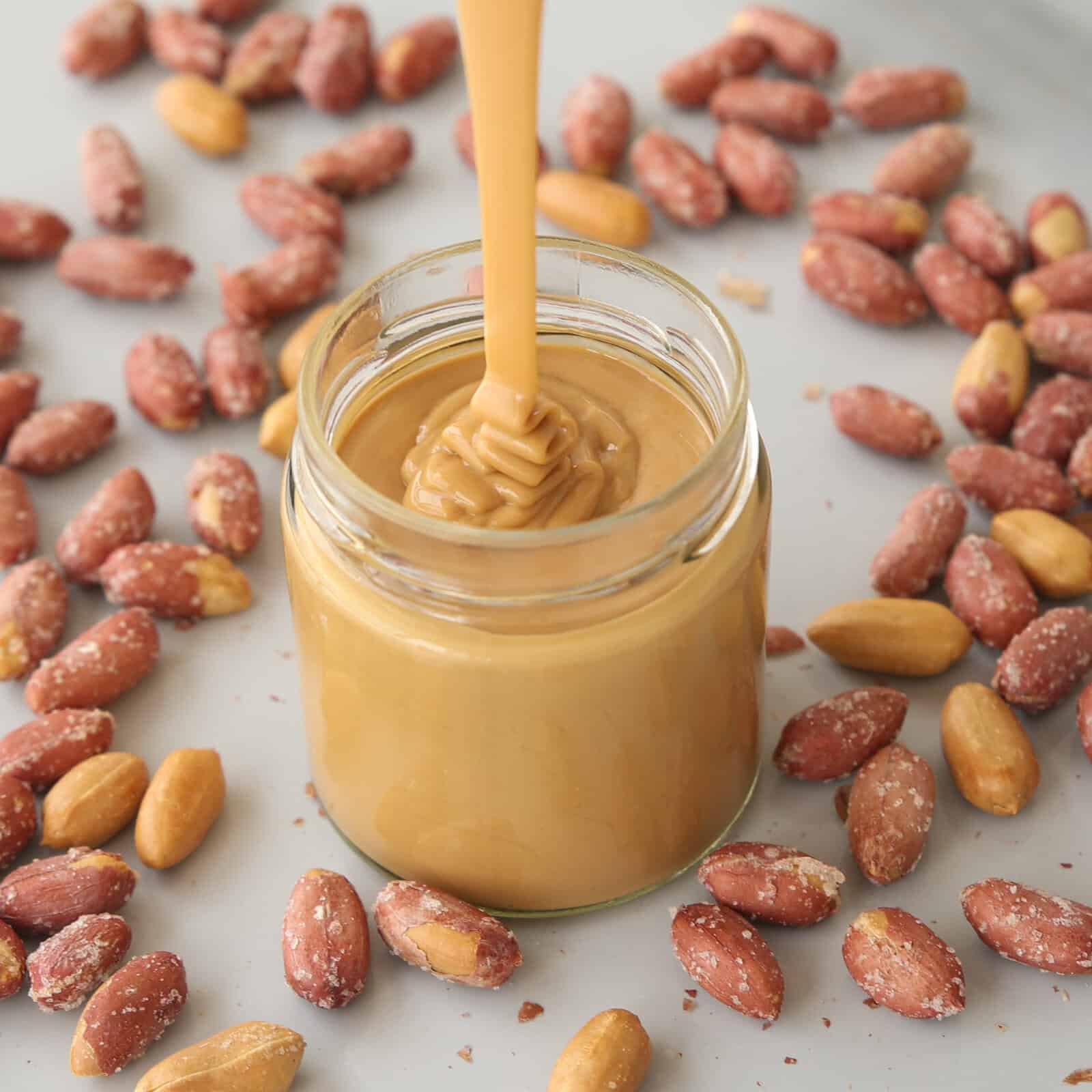
- Adjust the texture to your preference. For thicker peanut butter, stop blending earlier. For drippy, silky peanut butter, keep blending until the oils fully emulsify. A teaspoon of neutral oil (ideally peanut oil) can help achieve an extra-smooth texture.
- Add salt sparingly at first. Salt levels vary depending on whether your peanuts are raw, roasted, salted, or unsalted. Always start with a small amount and adjust to taste.
- Chill add-ins before blending. If you’re adding melted chocolate, toasted coconut, or other warm mix-ins, let them cool slightly before mixing them in to avoid overheating or thinning the butter too much.
Peanut Butter Uses and Recipe Ideas
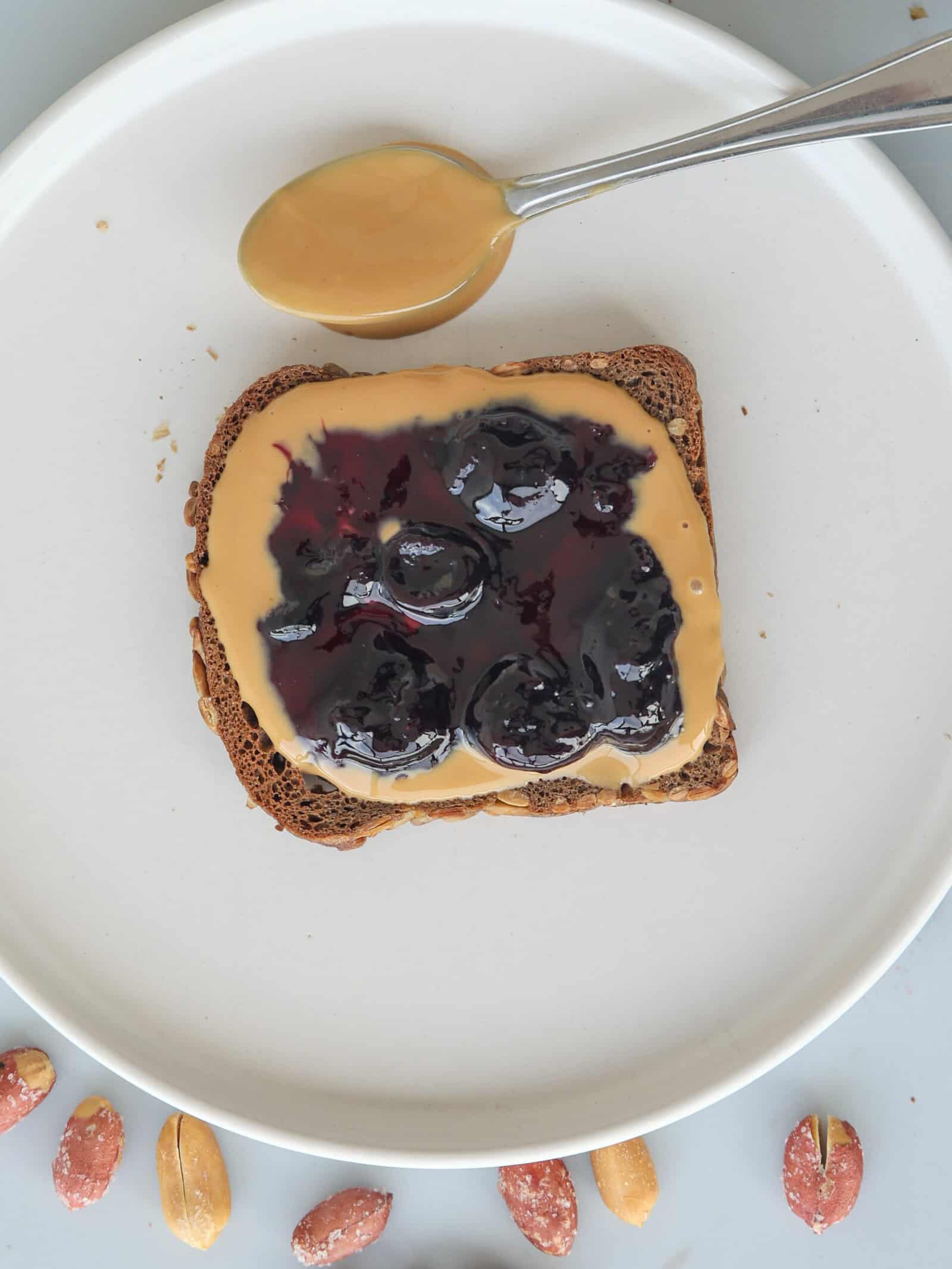
Homemade peanut butter is a magical kitchen staple that feels simple but transforms everything it touches. Start with the basics: spread it on toast, warm English muffins, pancakes, or bagels, or stir it into oatmeal, chia pudding, or yogurt bowls for extra creaminess and flavor.
For desserts, melt it slightly and drizzle over ice cream, waffles, crepes, or milkshakes. It also makes an unbeatable dip for apple slices, bananas, pretzels, celery, or crackers. And these walnut peanut butter-stuffed dates are one of my all-time favorite snacks!
It’s also a powerful baking ingredient. Try using homemade peanut butter for chocolate peanut butter cake, peanut butter cheesecake, 3-ingredient peanut butter cookies, peanut butter tres leches cake, or healthy chocolate oat peanut butter bars.
Too hot to turn on the oven? You can use it to make tons of no-bake favorites like no-churn peanut butter ice cream, peanut butter truffles, no-bake peanut butter pie, and peanut butter mousse.
And don’t overlook the savory side of peanut butter. (To all the skeptics: don’t knock it til you try it!) My peanut butter pasta is the perfect budget-friendly meal for rent week or when your pantry is bare. Oh, and my peanut butter chicken is life-changing!
Frequently Asked Questions
Usually the peanuts are either not roasted/warm enough, your food processor isn’t powerful enough, or you stopped blending too early. Keep processing in short bursts, scrape down the sides, and warm the peanuts slightly before blending. If they’re still dry, add 1–2 tablespoons of neutral oil.
No. In most cases, the natural oils in peanuts are enough to make a smooth, creamy peanut butter without any added oil.
Yes, honey, maple syrup, or agave syrup work well.
Yes, this peanut butter recipe is sugar-free, oil-free, and made without preservatives.
Peanut oil would be my first choice, but any neutral oil (e.g. avocado, grapeseed, or canola oil) will work if your peanuts are a bit dry.
This is personal preference, but I’m not a fan of peanut butter made with hydrogenated oils, preservatives, emulsifiers, or other artificial ingredients. You can keep the shelf-stable no-stir PB; I’d much rather have homemade!
How to Store Peanut Butter
- Store airtight for freshness. Air is the enemy of nut butters. Use a clean, dry jar with a tight-fitting lid to maintain flavor and texture.
- Room Temperature: If your peanut butter contains only peanuts and salt, you can store it at room temperature for up to 2-3 weeks. Keep it in an airtight jar away from heat and sunlight. Natural oils may rise to the top—just stir before using.
- Refrigerator: store your peanut butter in the refrigerator for up to 2-3 months (though it tastes best within the first 4 weeks). The cooler temperature helps prevent the oils from turning rancid and keeps the flavor fresh. The peanut butter will firm up slightly when chilled, so let it sit at room temperature for a few minutes before using for easier spreading.
- Freezer: Peanut butter freezes beautifully. Portion it into small airtight containers or silicone molds and freeze for up to 6 months. Thaw in the fridge overnight, then stir to restore its creamy consistency.
More DIY Nut & Seed Butter Recipes

Easy Homemade Peanut Butter Recipe (+7 Flavors!)
Ingredients
- 3 cups (450 g) Peanuts raw
Optional:
- Salt
- Vanilla extract
- Sweetener read notes
Instructions
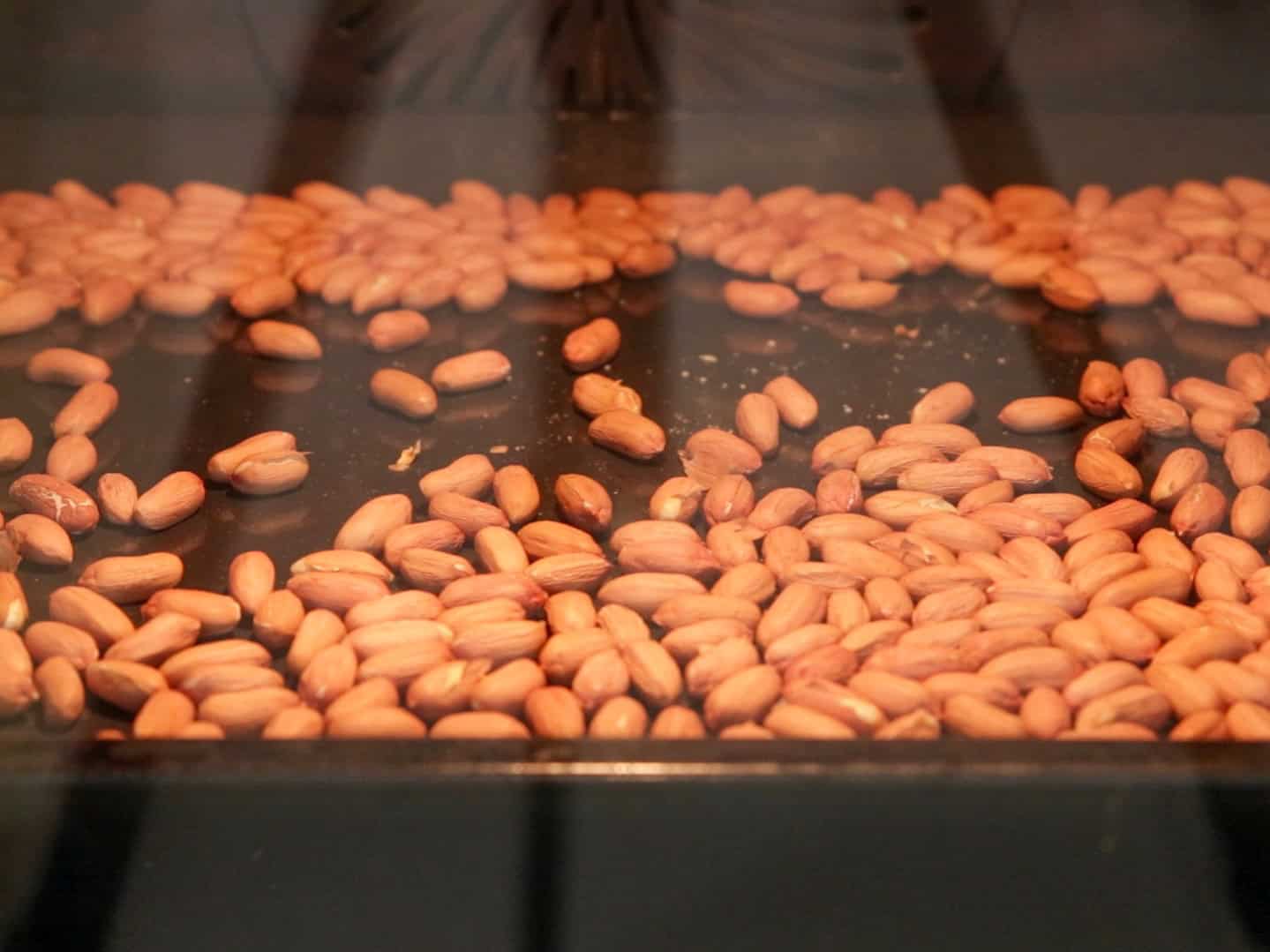
- Preheat oven to 350F (175C).
- Spread peanut in a single layer on a baking try and roast for 10-12 minutes.
- Wrap the peanuts in a kitchen towel and rub vigorously to remove the skin. Let cool slightly.
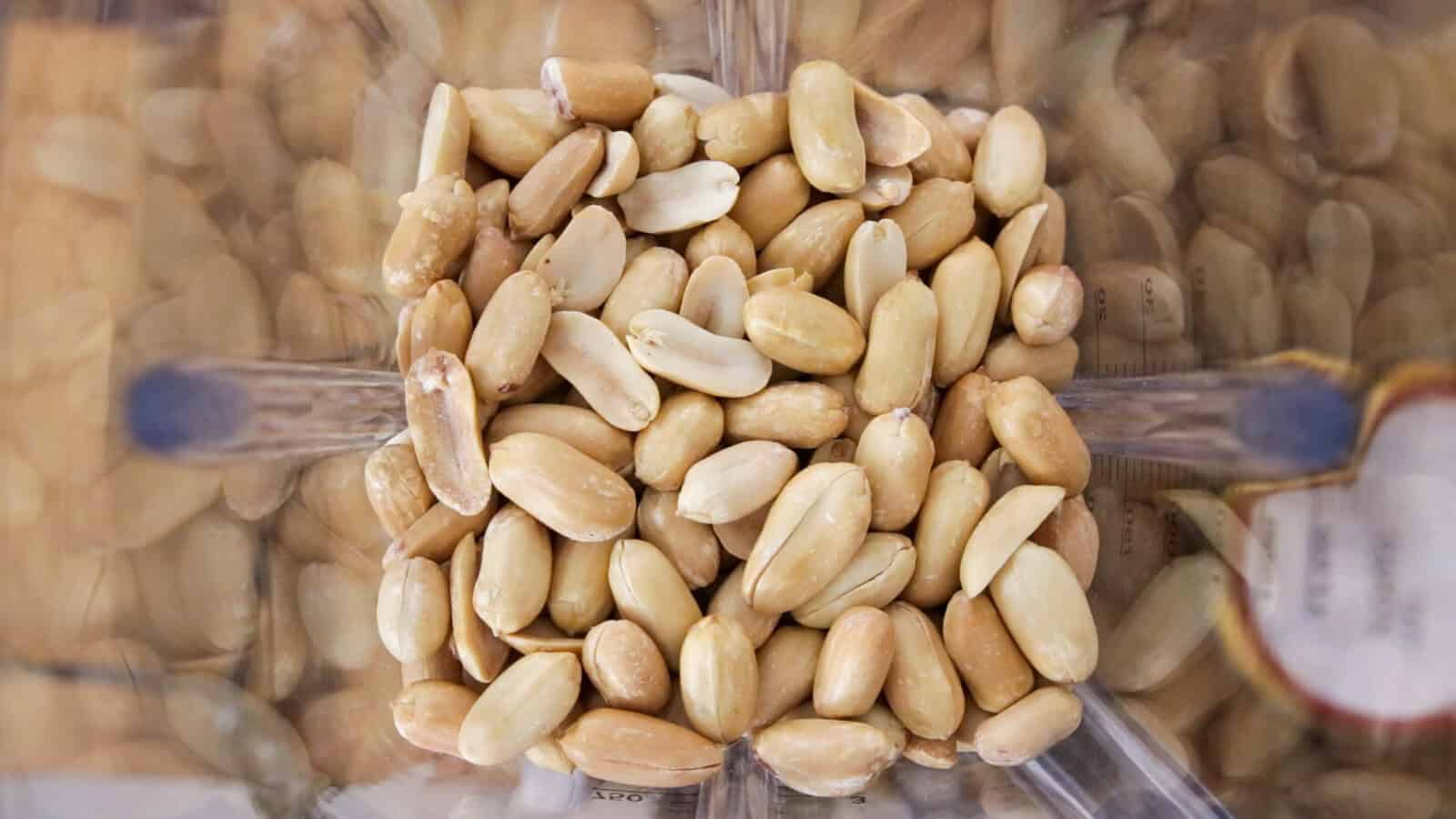
- Place the peanuts into the blender or to a large food processor, add salt (optional) and blend until smooth and creamy, pausing to scrape down the sides as necessary.
- At the beginning it seems like it’s not blending well, but you have to be patient. First it will be crumbly, then it will form a paste, then it will be smooth and creamy. All the process takes about 5-15 minutes (depending on your blender/food processor).
- Transfer the peanut butter to an airtight container or to a mason jar and store in the refrigerator.
Video
Notes
- Why isn’t my peanut butter getting creamy? If your peanut butter stays thick or grainy, it’s usually because:
- The peanuts aren’t warm or roasted enough — lightly warm or re-roast, then blend again.
- You stopped too early — nut butter forms in stages (crumbs → paste → ball → smooth), so keep processing and scrape the sides.
- Your blender/food processor is a bit weak, or the peanuts are dry, add 1–2 tablespoons of neutral or peanut oil and keep blending.
- Use Raw Peanuts – For best results, start with raw peanuts and roast them yourself for optimal flavor and texture.
- Storage – Store homemade peanut butter in an airtight container in the refrigerator for up to 4 weeks.
- Texture Control – Blend longer, scraping down the sides regularly, for a smoother consistency.
- Flavor Variations – Customize your peanut butter by adding salt, honey, vanilla extract, or spices according to your taste preferences.
- Natural Separation – Separation of natural oils is normal. Stir peanut butter before each use.
- For Better Understanding – I recommend watching the video recipe to clearly see each step and the ideal texture.
- Check the FAQs – For questions about ingredient substitutions, storage, or troubleshooting tips, see the FAQs section located below the recipe card.


The recipe says cool peanuts completely and the notes say for best results they should be slightly warm. I’m confused!
Hi Toni,
Great catch, that does sound confusing
What I mean is this: let the peanuts cool down slightly after roasting, but don’t wait until they’re completely cold.
They should be warm to the touch (not hot) when you blend them. At this stage, the natural oils are still fluid, which helps the peanuts break down faster and turn into a smooth, creamy butter much more easily.
If the peanuts are fully cooled, the process still works, but it usually takes longer and can result in a slightly less smooth texture.
I also fixed the recipe to make it clear.
Thanks!
made a batch today, so easy. I love it clean without any preservatives, sometimes I just add a pinch of salt.