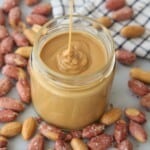
Easy Homemade Peanut Butter Recipe (+7 Flavors!)
Learn how to make one-ingredient homemade peanut butter that’s creamy, smooth, and customizable, plus flavor ideas, tips, and storage.
Servings: 2.5 cups
Calories: 999kcal
Instructions
- Preheat oven to 350F (175C).
- Spread peanut in a single layer on a baking try and roast for 10-12 minutes.
- Wrap the peanuts in a kitchen towel and rub vigorously to remove the skin. Let cool slightly.
- Place the peanuts into the blender or to a large food processor, add salt (optional) and blend until smooth and creamy, pausing to scrape down the sides as necessary.
- At the beginning it seems like it’s not blending well, but you have to be patient. First it will be crumbly, then it will form a paste, then it will be smooth and creamy. All the process takes about 5-15 minutes (depending on your blender/food processor).
- Transfer the peanut butter to an airtight container or to a mason jar and store in the refrigerator.
Video
Notes
- Why isn’t my peanut butter getting creamy? If your peanut butter stays thick or grainy, it’s usually because:
- The peanuts aren’t warm or roasted enough — lightly warm or re-roast, then blend again.
- You stopped too early — nut butter forms in stages (crumbs → paste → ball → smooth), so keep processing and scrape the sides.
- Your blender/food processor is a bit weak, or the peanuts are dry, add 1–2 tablespoons of neutral or peanut oil and keep blending.
- Use Raw Peanuts – For best results, start with raw peanuts and roast them yourself for optimal flavor and texture.
- Storage – Store homemade peanut butter in an airtight container in the refrigerator for up to 4 weeks.
- Texture Control – Blend longer, scraping down the sides regularly, for a smoother consistency.
- Flavor Variations – Customize your peanut butter by adding salt, honey, vanilla extract, or spices according to your taste preferences.
- Natural Separation – Separation of natural oils is normal. Stir peanut butter before each use.
- For Better Understanding – I recommend watching the video recipe to clearly see each step and the ideal texture.
- Check the FAQs – For questions about ingredient substitutions, storage, or troubleshooting tips, see the FAQs section located below the recipe card.
Nutrition
Calories: 999kcal | Carbohydrates: 28g | Protein: 46g | Fat: 87g | Saturated Fat: 13g | Polyunsaturated Fat: 30g | Monounsaturated Fat: 39g | Sodium: 39mg | Potassium: 1303mg | Fiber: 17g | Calcium: 186mg | Iron: 7mg