
Stuffed Onions with Beef and Rice
This post may contain affiliate links.
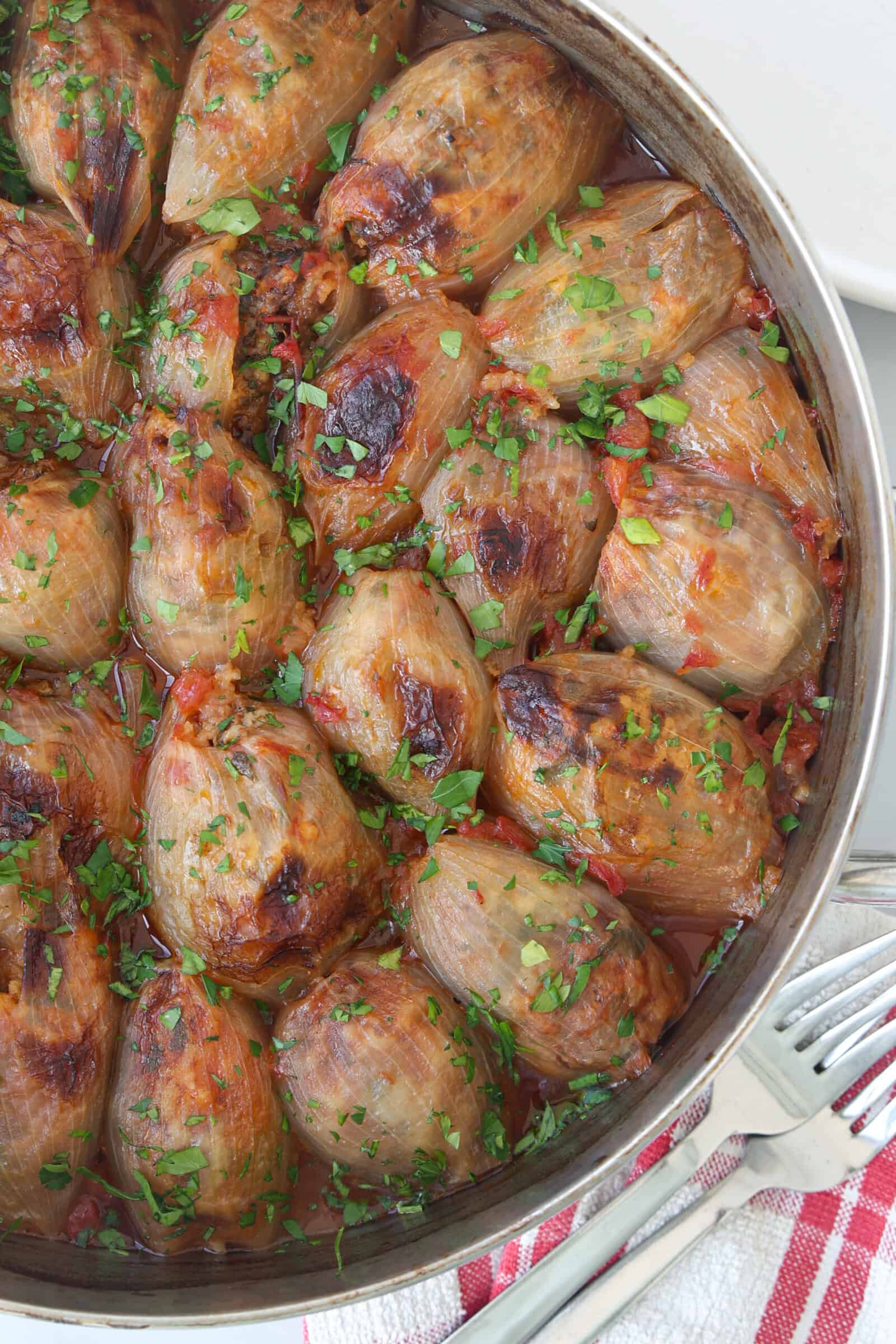
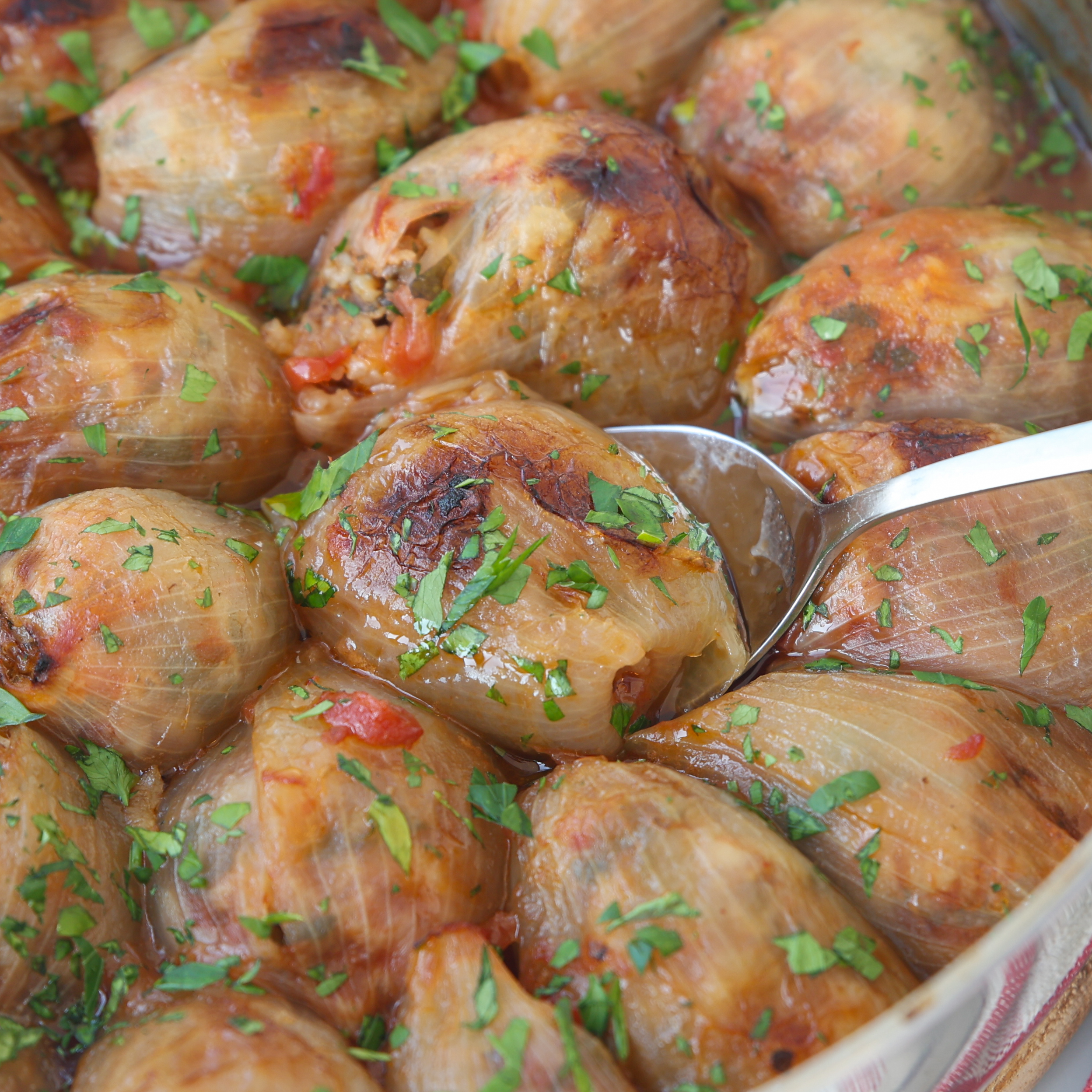
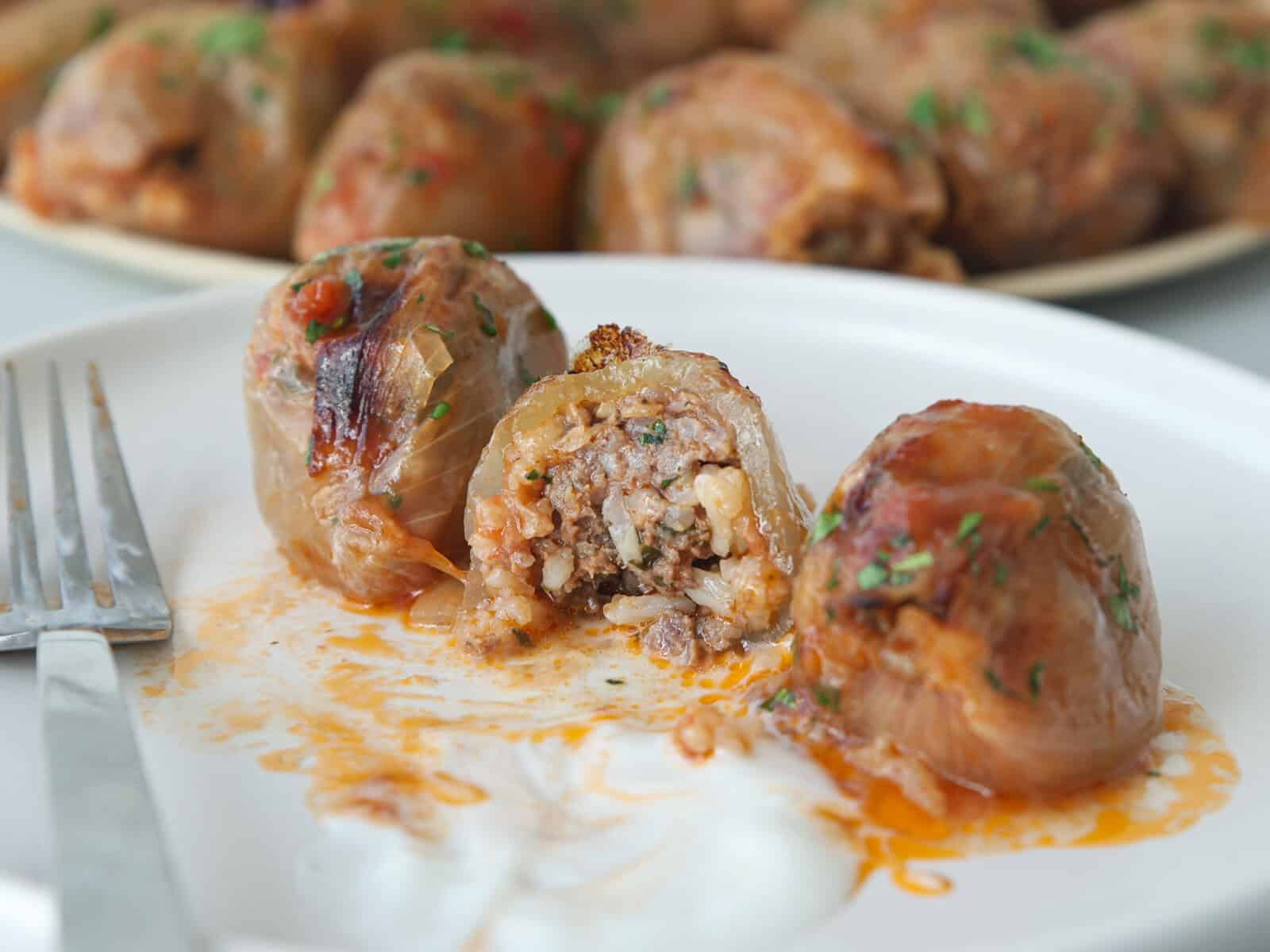
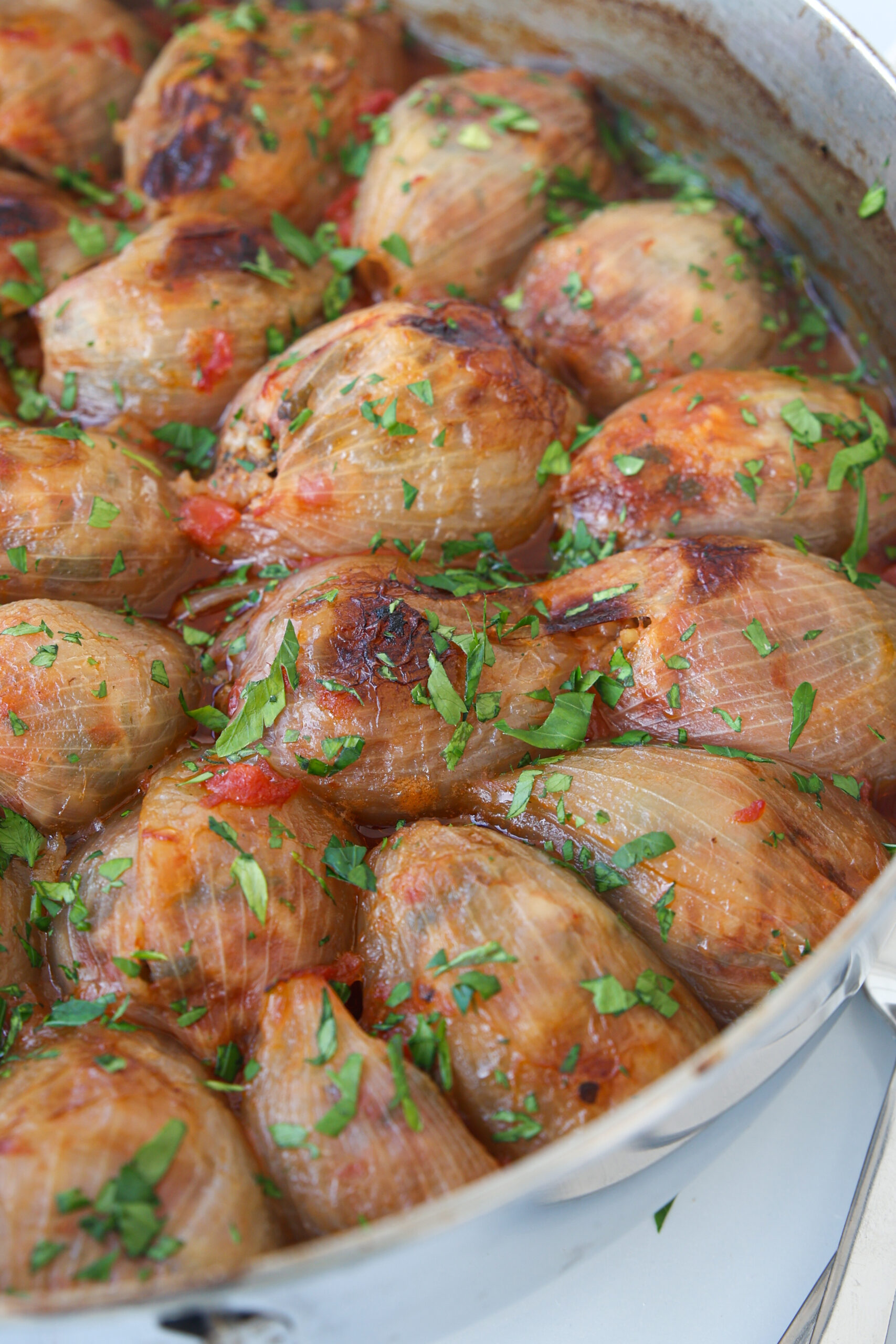
My beef and rice Stuffed Onions recipe has the perfect balance of tangy, sweet and savory flavors with a delightfully starchy, meaty, melt-in-your-mouth consistency. If you’re looking for a meal to impress, this beloved Middle Eastern favorite is for you!
I originally published this recipe in 2019 and have since updated it with new photos, improved instructions, and extra success tips.
These stuffed onions are filled with a delectable mix of juicy ground beef, fresh herbs, warming spices, and fluffy rice and simmered in a zesty cinnamon-tomato sauce. Delightful! If you’re a fan of beef and rice stuffed bell peppers or cabbage rolls, I have a feeling you’ll fall head over heels for this Middle Eastern onion dolma dish.
Ingredients & Substitutions
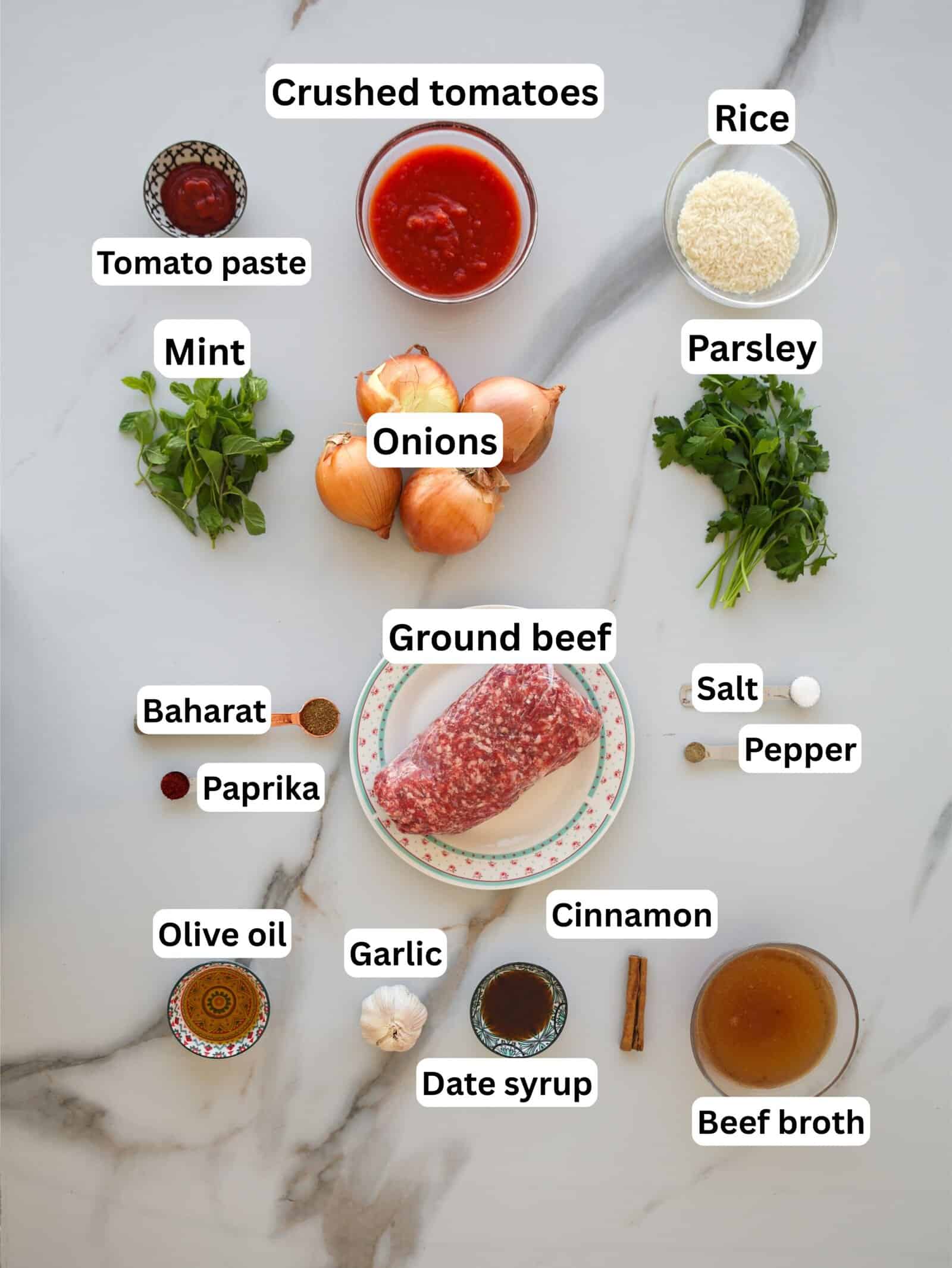
- Onions – Reach for large onions so there’s plenty of room to stuff all the goodness in!
- Ground Beef – 80-85% lean ground beef adds the perfect amount of moisture. If you use leaner beef (e.g. 93/7), you may need to add some olive oil. Ground lamb is also excellent and offers a more authentic flavor profile. Or, use a mix of both.
- Short-Grain Rice – You can use nearly any type of rice here, but short-grain white rice is my top pick.
- Fresh Parsley & Mint – Parsley and mint are the classic pairing for Persian stuffed onion filling. If mint isn’t your favorite, you can reduce the amount, but try not to skip it completely. You can also play around with other herbs like fresh cilantro or dill, using them alongside or in place of the mint to suit your taste.
- Garlic – Fresh is best, but you can use ¼ teaspoon of garlic powder per clove in a pinch.
- Tomato Paste – For the most intense umami flavor, use double- or triple-concentrated tomato paste.
- Paprika & Baharat – Baharat is a Middle Eastern spice blend that includes cumin, coriander, black pepper, paprika, cinnamon, and cardamom. If you don’t have any on hand, you can swap in the same amount of cumin with a pinch of cinnamon, or use garam masala instead.
- Beef Broth & Water – You can swap in chicken or veggie broth if needed.
- Crushed Tomatoes – If you’re using diced tomatoes, run them through a food mill or pulse a few times in a food processor first.
- Date Syrup (Silan) – Honey, maple syrup, or a bit of sugar will also do the job. If you prefer a less sweet filling, feel free to omit it.
- Cinnamon Stick – If you don’t have a whole stick, add ¼-½ teaspoon of ground cinnamon instead.
This is just a short review of the ingredients; for the complete recipe, including quantities, scroll down to the recipe card 👇
What Types of Onions Work Best for Stuffed Onions?
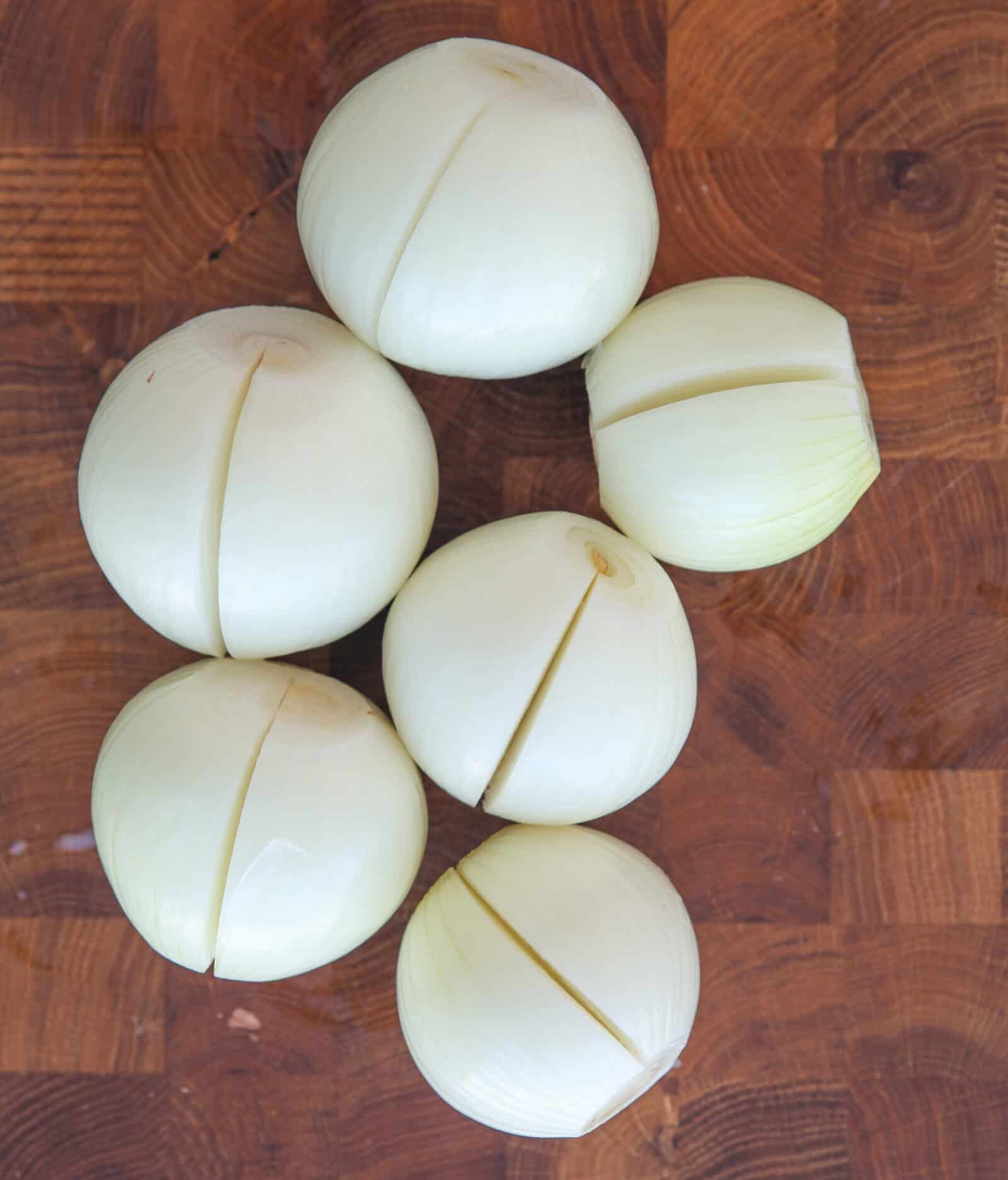
You can technically make stuffed baked onions with almost any variety, but some types work better than others. The goal is to choose onions that are large enough to peel into layers and sturdy enough to hold their shape while cooking.
- Yellow onions are the most reliable choice. They’re widely available, affordable, and become wonderfully sweet and tender as they bake. Their layers separate cleanly after blanching, making them ideal for stuffing.
- White onions also work well. They’re slightly sharper in flavor, but soften in the oven and hold their shape nicely. If you prefer a more pungent, savory onion profile, these are a great pick.
- Red onions can be used, especially if you love their sweetness. They tend to be a bit firmer, so make sure to cook them long enough to soften fully.
- Sweet onions like Vidalia or Walla Walla are delicious but quite soft. They can be used, but handle them gently, as their thin layers can tear more easily when separating.
- Avoid small onions (like shallots or pearl onions) for this particular recipe. Their layers are too tight and delicate to stuff easily.
How to Make Stuffed Onions
Watch the full video recipe to learn how to make the BEST Baked Stuffed Onions.
Prefer the written recipe? Scroll down to the recipe box👇
Optional Variations & Dietary Adaptations
- White Meat – Don’t love beef or lamb? Swap in ground chicken, ground turkey, or ground pork. Just note that the flavor will be a bit less traditional, and you may need to add olive oil to maintain moisture.
- Vegetarian Version – Skip the meat entirely and replace it with an extra 1 cup of short-grain rice plus 1 cup of cooked lentils or finely chopped mushrooms. Add an extra tablespoon of olive oil for moisture. The filling stays hearty, aromatic, and deeply satisfying.
- Add Nuts for Texture – Chopped pine nuts, walnuts, or almonds can be folded into the filling for a pleasant crunch and extra Middle Eastern flair. Toast them lightly first for better flavor.
- Dried Fruit – Want a sweet-salty contrast? Add a small handful of currants, raisins, or finely chopped dried apricots.
- Spicier – Add a pinch of red pepper flakes, Aleppo pepper, or a little harissa paste to the filling for gentle heat without overpowering the aromatics.
- Extra Herby – If you’re a herb lover, increase the parsley and mint or add fresh dill, cilantro, or tarragon to brighten the filling.
- Rice Alternatives – Short-grain rice works best, but you can use medium-grain rice or even bulgur wheat for a slightly nutty, lighter filling. Just reduce the liquid slightly if using bulgur.
Expert Tips & Tricks
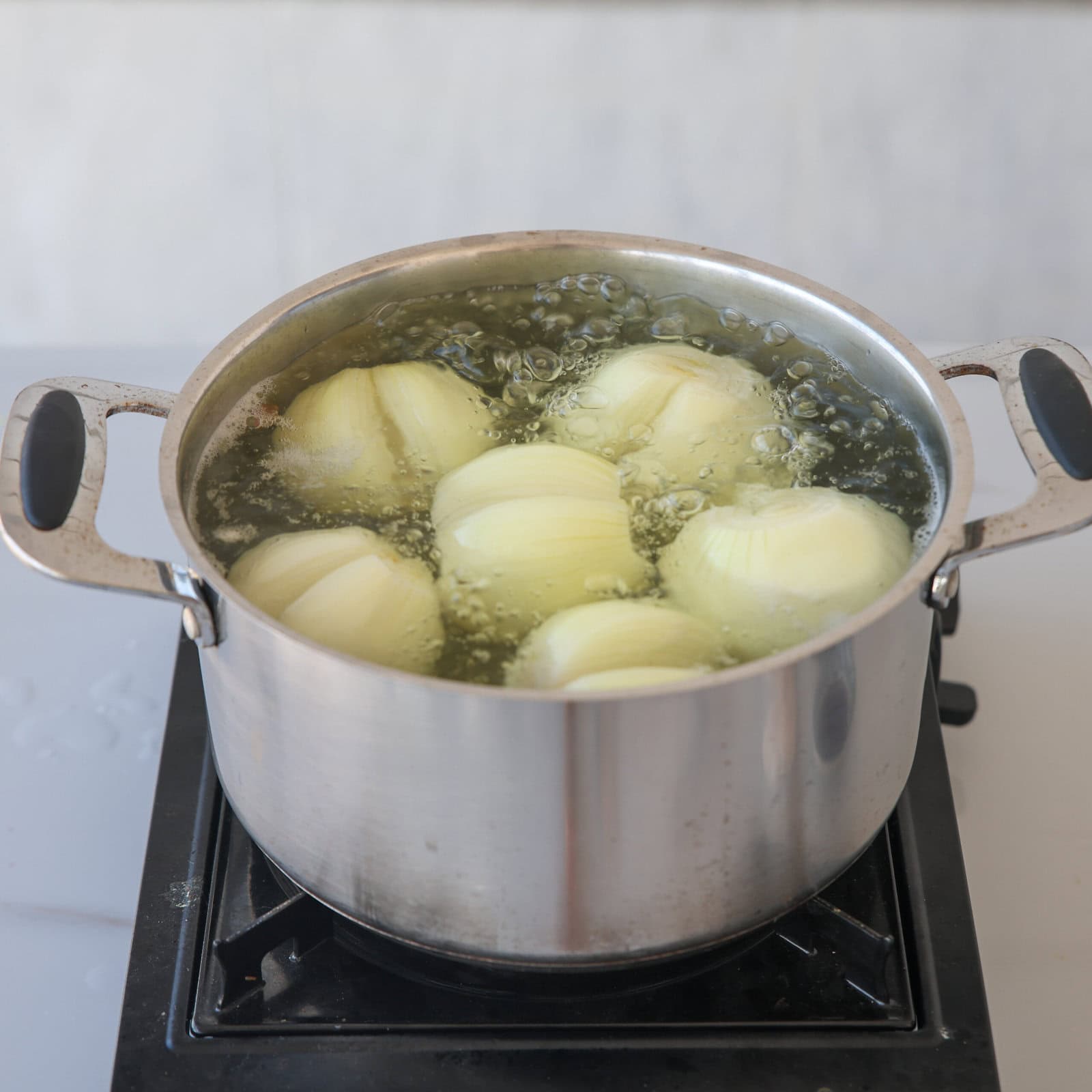
- Soften the onions just enough. Boil the onions until they’re flexible but still sturdy—about 12-15 minutes. If they’re too soft, they’ll tear when rolling; too firm, and they won’t cook evenly.
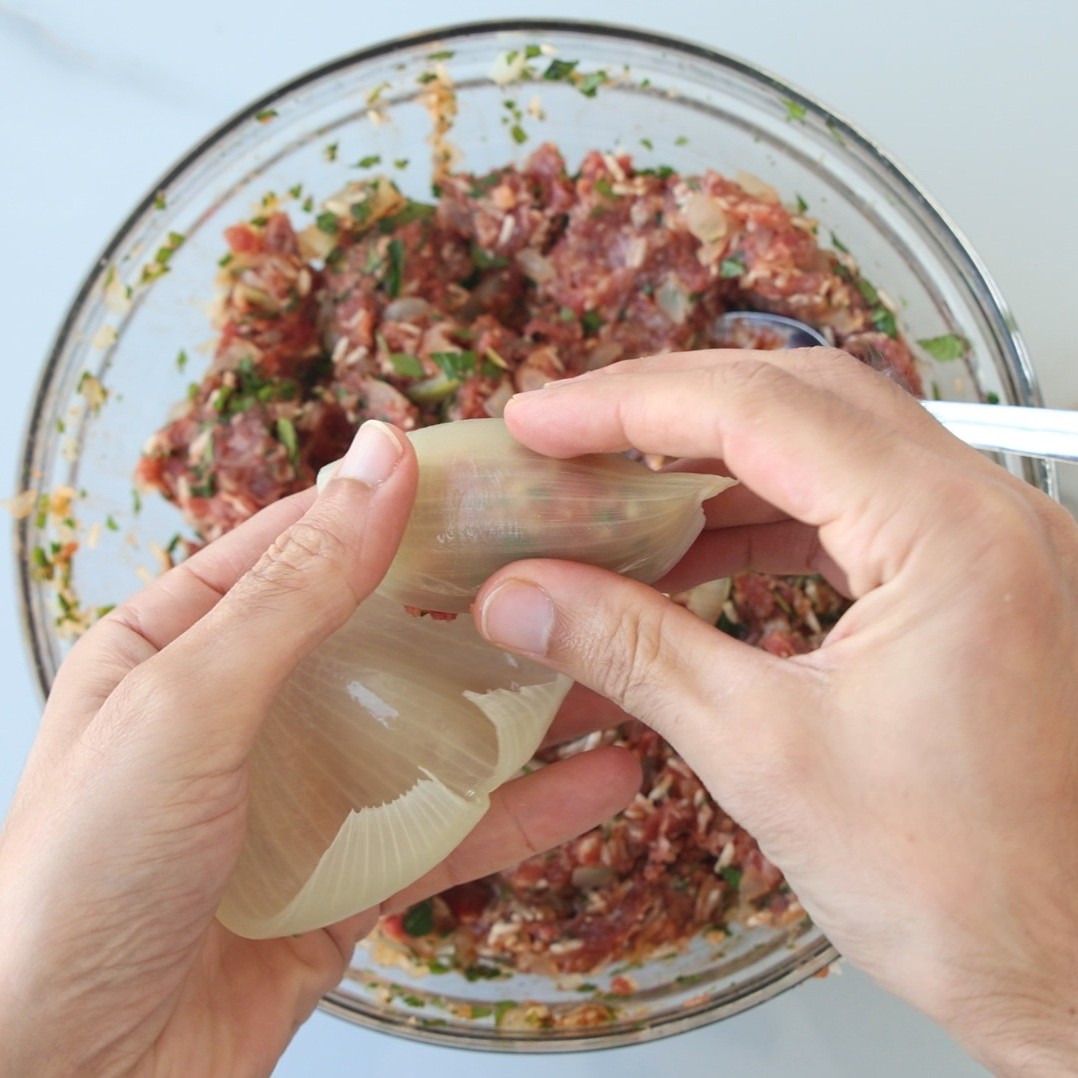
- Don’t overfill the layers. The rice expands as it cooks, so use only 1-2 tablespoons of filling per layer. Overfilling can cause the rolls to burst open or cook unevenly.
- Mix the filling gently. Combine the meat, rice, herbs, and spices just until everything is evenly distributed. Overmixing can make it dense and tough.
- Use the onion cores for extra flavor. Don’t toss the inner pieces—finely chopping them into the filling adds natural sweetness and prevents waste.
- Why the plate matters. Placing a heatproof plate directly on top of the stuffed onions keeps them fully submerged in the sauce and prevents them from unrolling as they simmer.
- Taste and adjust your sauce. Before adding the onions to the pan, taste your sauce and adjust the salt, pepper, or sweetness as needed. A well-balanced sauce is key to deeply flavored onions.
- Use the stovetop for tenderness, the oven for flavor. Simmering on the stovetop ensures the onions become ultra-tender and the rice cooks through. The brief roast caramelizes the tops, concentrates the sauce, and adds a gorgeous depth of flavor.
- Let them rest before serving. Allow the stuffed onions to sit for 10-15 minutes after cooking. This helps the flavors settle and makes them easier to plate.
How to Serve Stuffed Onions
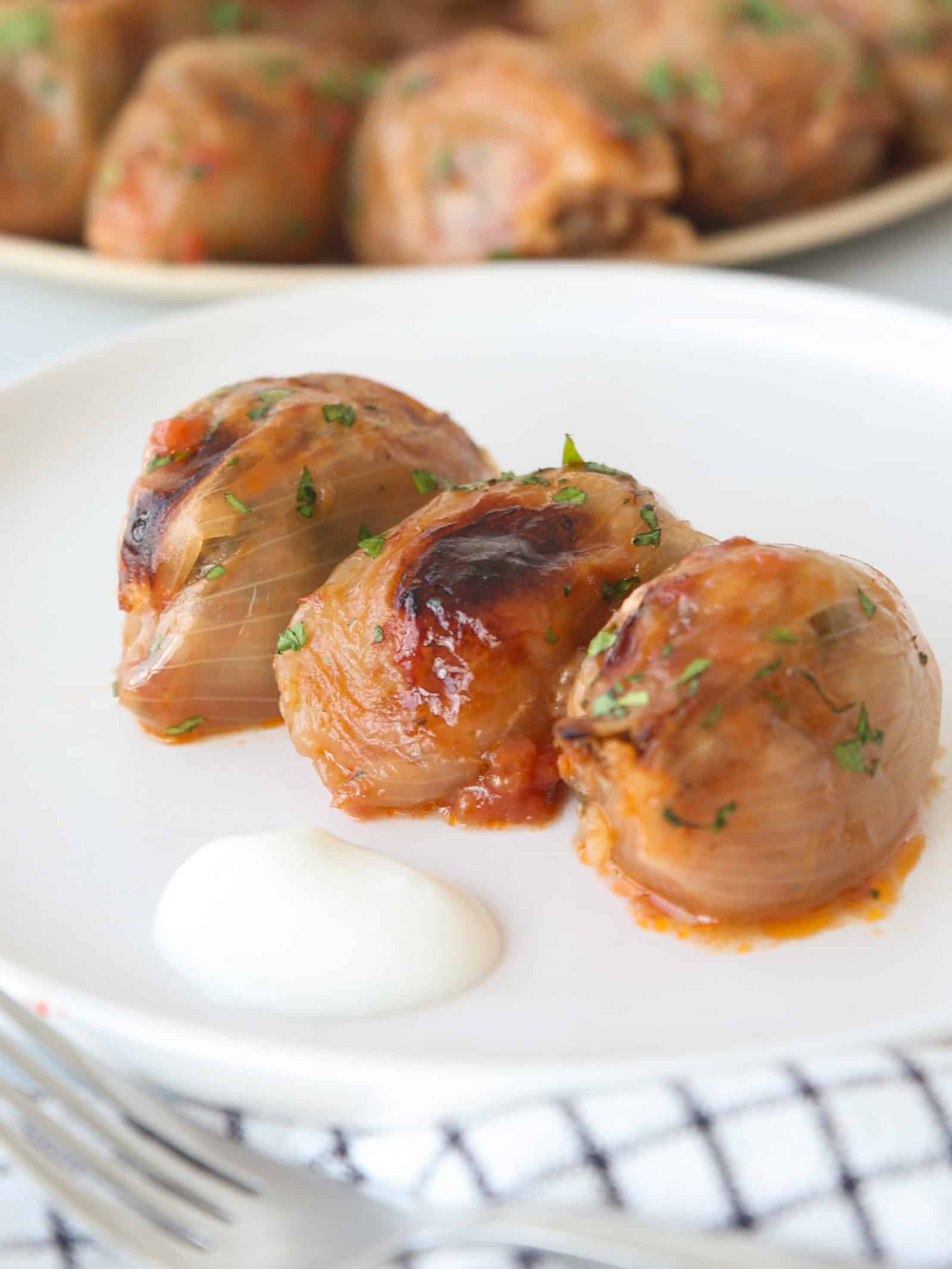
These stuffed onions with beef and rice are a complete experience on their own, offering tender veggies, fragrant rice packed with herbs, warm spices, and savory meat. Serve them straight from the pot with plenty of their rich tomato-broth sauce spooned over the top. A sprinkle of fresh parsley or mint right before serving adds a bright pop of color and freshness.
They pair beautifully with classic Middle Eastern sides. Try serving them alongside yogurt or tzatziki for a cool, creamy contrast to the warm spices. A simple cucumber salad or my chickpea salad offers crisp acidity. I also like to offer fluffy pita bread or garlic naan on the side for soaking up the extra sauce.
For a heartier spread, serve the stuffed onions as part of a Middle Eastern-inspired dinner table. They shine next to dishes like saffron rice, roasted vegetables, grilled kebabs, or herb-forward pilafs. They also make an elegant part of a mezze-style dinner with hummus, baba ganoush, or labneh.
Storage & Reheating
- Refrigerator: These onions are great for meal prep! Store cooled, cooked stuffed onions in an airtight container in the refrigerator for up to 4 days. The flavors deepen over time, making them even more delicious the next day. When you’re ready to serve, reheat gently on the stovetop or in the oven, adding a splash of extra broth or sauce to keep them moist.
- Freezer: Stuffed onions freeze well, just skip the oven caramelization step. Freeze them (with sauce) for up to 2 months. Thaw overnight in the fridge, reheat on the stovetop or in the oven until warmed through, then finish with the optional oven roast for a beautiful caramelized top.
More Stuffed Veggie Recipes
Stuffed Onions with Beef and Rice | Classic Middle Eastern Dish
Equipment
Ingredients
For the onions:
- 6 large Onions
For the filling;
- 450 g (450 g) Ground beef or lamb
- ½ cup (95) Rice short-grain, rinsed
- ¼ bunch Fresh Parsley chopped
- ¼ bunch Fresh Mint chopped
- 6 Onion cores finely chopped (from step 1)
- 2 cloves Garlic crushed
- 2 tablespoons (30 ml) Olive oil use if the meat is lean
- 2 tablespoons (30 g) Tomato paste
- 1 teaspoon Paprika
- 1 teaspoon Baharat Read notes
- Salt to taste
- Black pepper to taste
For the sauce:
- 2 cups (480 ml) Beef broth
- 2 cups (480 ml) Water
- 1 cup (250 g) Crushed/chopped tomatoes
- 1 tablespoons Date syrup
- 1 Cinnamon stick
- ¼ teaspoon Salt
- ¼ teaspoon Black Pepper
Instructions
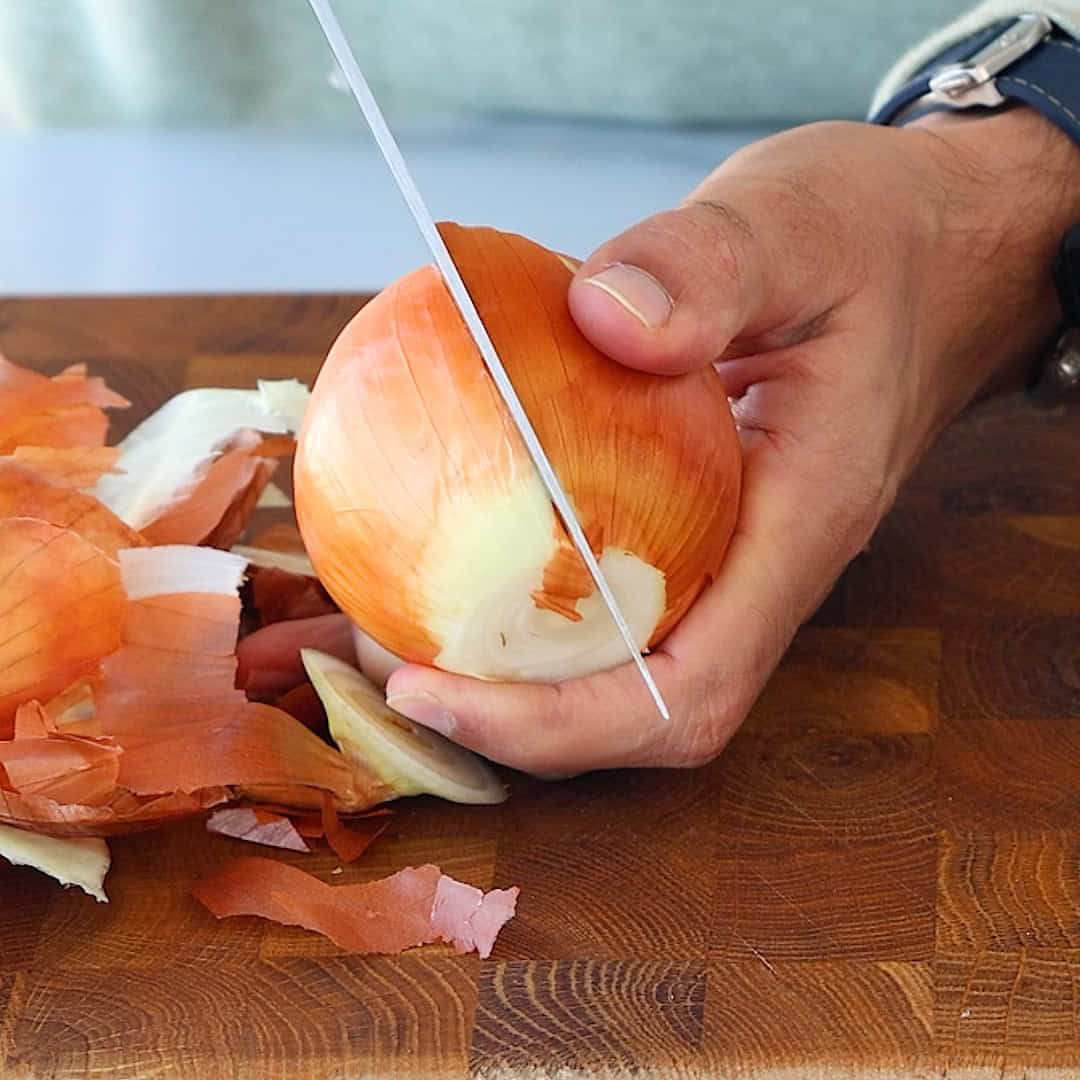
- Prepare the onions: Bring a large pot of salted water to a boil. Peel the onions and trim both ends. Cut a slit from top to bottom on one side of each onion, slicing into the center.
- Boil for 12–15 minutes, until slightly softened. Drain and let cool. Gently separate the onion into layers. Set aside the small inner cores, they’ll go into the filling.
- Make the filling: Finely chop the onion cores, parsley, and mint.
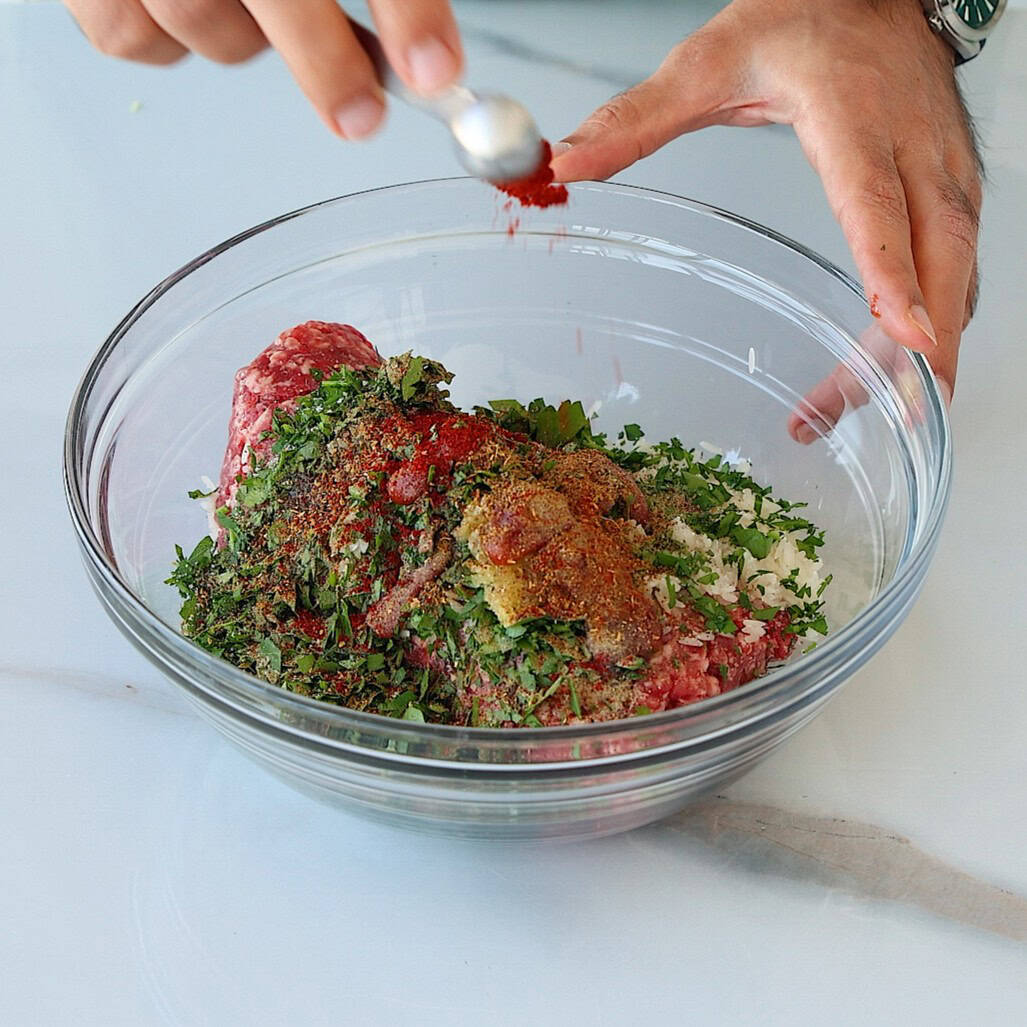
- In a large bowl, mix ground meat, rice, chopped herbs, onion cores, garlic, tomato paste, olive oil, paprika, baharat, salt, and pepper until just combined.
- Stuff the onions: Place 1–2 tablespoons of filling into each onion layer and roll gently (don’t overfill, the rice expands).
- Prepare the sauce: In a bowl, mix beef broth, water, crushed tomatoes, date syrup, salt, and black pepper.
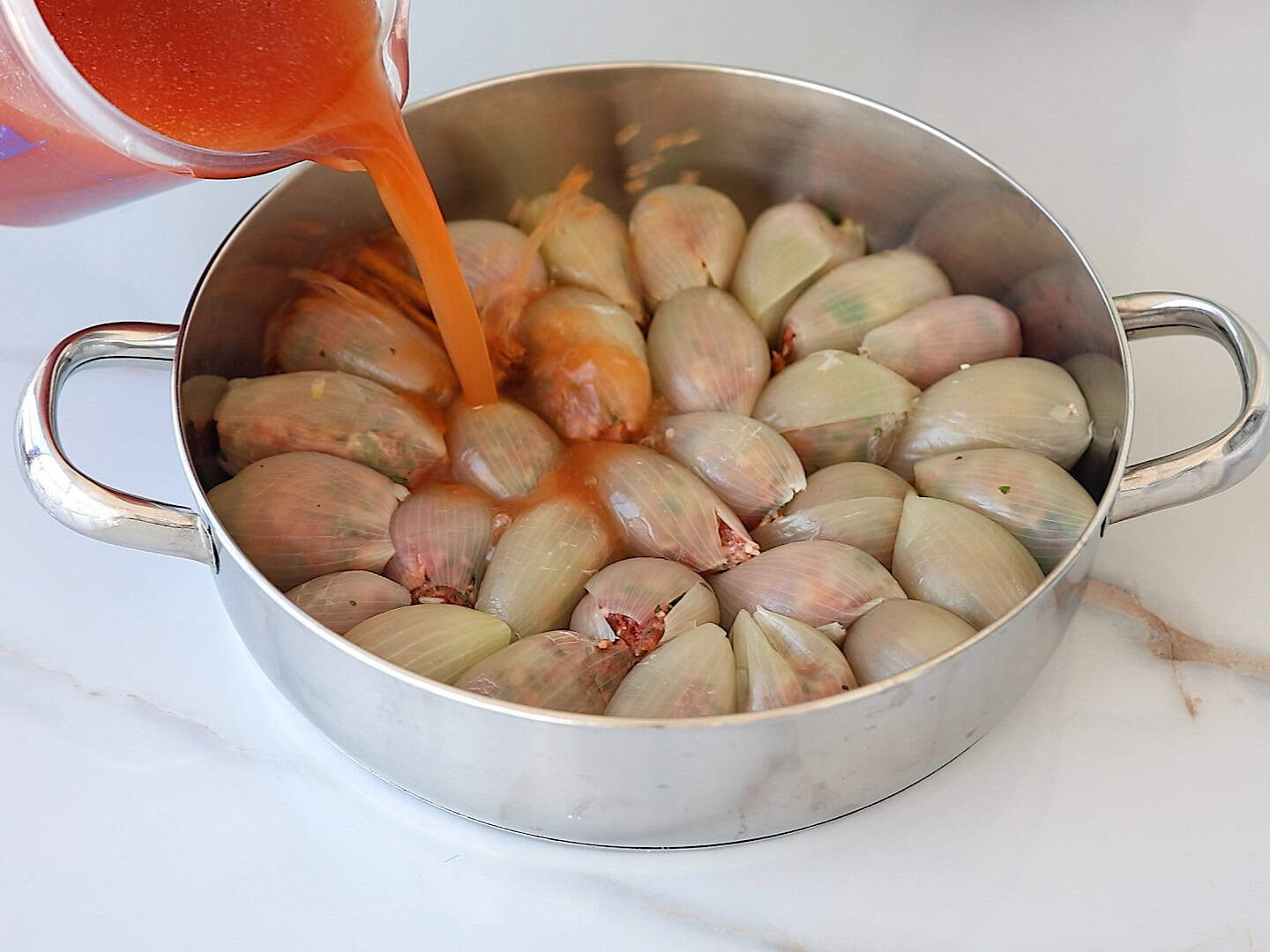
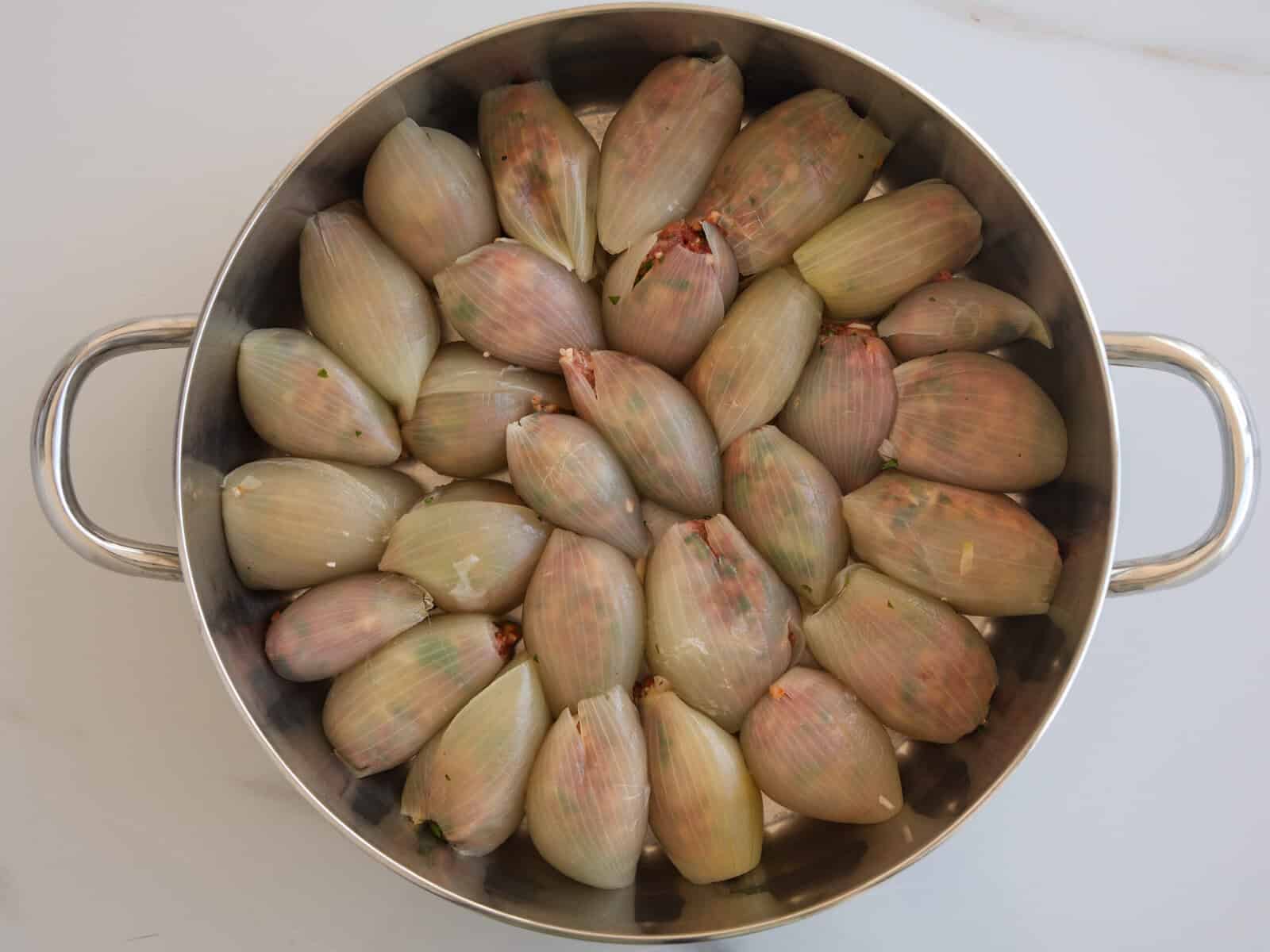
- Cook on the stovetop: Arrange the stuffed onions snugly in a wide, oven-safe pan with the seam side down. Pour the sauce over the onions and add the cinnamon stick.
- Bring to a gentle boil, then reduce heat to low. Place a heat-proof plate directly on top of the onions (to keep them submerged and prevent opening), cover with a lid, and simmer for 45–60 minutes, until the rice is tender and the sauce has reduced.
- Optional oven finish (recommended): Preheat oven to 400°F (200°C). Remove the lid and plate. Transfer the pan to the oven and roast for 10–15 minutes, until the onions are lightly caramelized on top.
- Serve: Serve warm, spooning sauce over the onions.
Video
Notes
- Meat choice: Beef works beautifully; use 80–85% lean for best texture. Lamb gives the most traditional, rich flavor. You can also combine beef and lamb for extra depth.
- Rice: You can use any type of rice. Short-grain white rice is best, it cooks evenly and absorbs flavor.
- Herbs: Parsley and mint are the traditional combination. If you don’t love mint, reduce it by half but don’t skip entirely. Feel free to experiment with fresh coriander (cilantro) or dill, either alongside or instead of the mint, depending on your flavor preference.
- Baharat: A warm Middle Eastern spice blend made from spices like cumin, coriander, black pepper, paprika, cinnamon, and cardamom. If you don’t have baharat, substitute the same amount with cumin plus a small pinch of cinnamon, or use garam masala instead.
- Sweetener: Date syrup (silan) adds depth and balances the onions’ natural sweetness. Honey, sugar, or maple all work. Feel free to skip the sweetener entirely
- Oven finish: Optional but highly recommended.It adds caramelization and a deeper flavor.
- Why the plate matters: Keeps the onions submerged in the liquid and prevents them from opening while cooking.
- Make ahead: Can be fully cooked up to 2 days ahead. Reheat gently on the stovetop or in the oven with extra sauce.
- Storage: Refrigerate up to 4 days in an airtight container.
- Freezing: Freeze cooked stuffed onions (without oven caramelization) for up to 2 months. Thaw overnight, reheat, then finish in the oven
Nutrition
FAQs
Yes! Onions can be stuffed by boiling them until softened, separating the layers, and rolling each one around a flavorful filling. The layers become tender, flexible “wraps” that hold meat, rice, herbs, or vegetables beautifully.
Stuffed onions appear in many cuisines, and each version brings its own flavor profile. In the Middle East, especially Persian, Turkish, and Lebanese cooking, they’re often made by rolling softened onion layers around a mixture of rice, ground meat, herbs, and warm spices, then simmering them in a tomato-based sauce until tender. Greek and Mediterranean versions are similar but often vegetarian, using rice, lentils, pine nuts, and dried fruit for a lighter, aromatic filling. In Europe, large onions are hollowed out and baked “stuffed pepper–style” with sausage, cheese, breadcrumbs, or vegetables. Spanish cebollas rellenas can be filled with ground beef or tuna, while modern plant-based variations use quinoa, chickpeas, or mushrooms.
No, you don’t need to fully cook it first. Use uncooked rice in the filling, because it cooks as the onions simmer in the sauce and soaks up all that flavor. Just make sure the onions stay mostly submerged, keep the simmer gentle, and cook until the rice is tender. If your rice ever turns out a bit firm, it usually means the heat was too high (liquid evaporated too fast) or there wasn’t enough sauce, so add a splash of broth/water and keep cooking.
Stuffed onions have roots across the Middle East and Eastern Mediterranean, with particularly strong ties to Persian, Turkish, and Levantine cuisines. They evolved as part of the broader dolma tradition, where vegetables were stuffed with rice, meat, herbs, and spices using what was locally available.
Traditionally, onion dolma is often made with lamb or a lamb-beef mix, especially in Persian and Turkish kitchens. Beef-only versions are common today and slightly milder in flavor, while lamb adds richness and a more traditional aroma.





This is a easy fantastic recipe I love it so glad I found your website.