
Easy Stuffed Grape Leaves Recipe (Authentic Dolma)
This post may contain affiliate links.
Add some Middle Eastern flair to your table with my easy Stuffed Grape Leaves recipe. Also known as “Dolmas,” these dippable meat-and-rice-stuffed wraps are perfect for game days, gatherings, or anytime you’re craving a hearty snack.
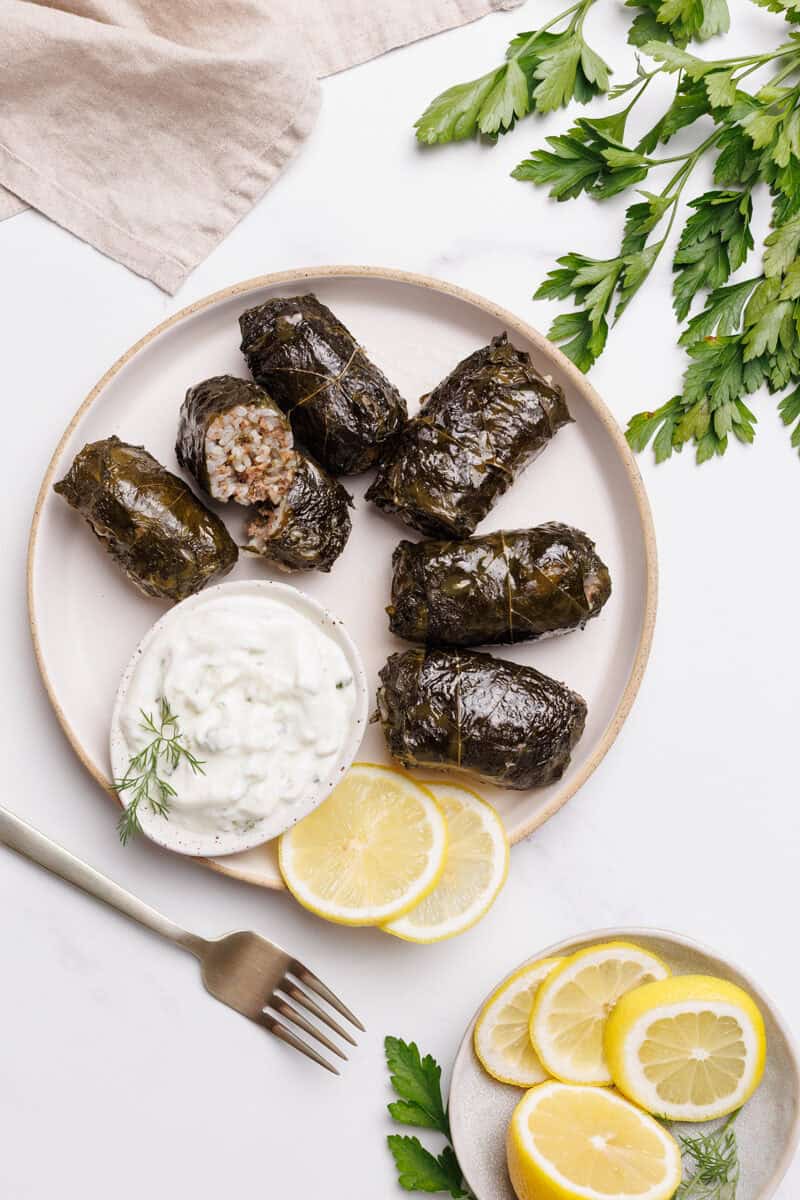
I originally published this recipe in 2018 and have since updated it with new photos, improved instructions, and extra success tips.
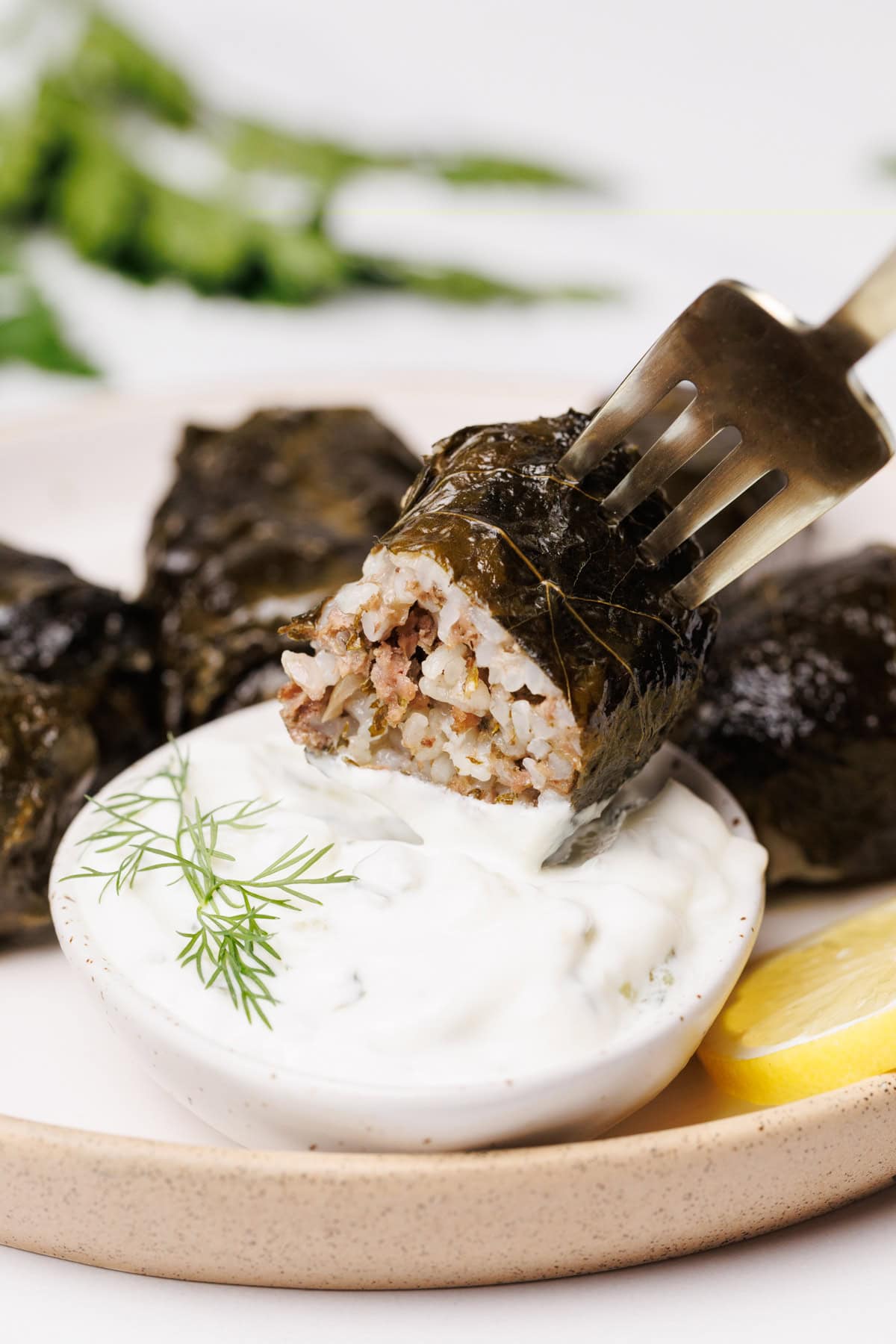
When it comes to my favorite appetizer recipes, anything handheld and ready for dipping typically wins me over. These yummy rice and meat-stuffed grape leaves are just that! When served alongside my 3-ingredient sour cream dip or Greek Tzatziki, lamb dolma stuffed grape leaves go from good to “good gracious, I can’t stop at just one!”
What are dolmas? Everything you need to know.
Dolmas (sometimes spelled dolmades) are a beloved dish found throughout the Mediterranean, Middle East, and parts of Eastern Europe. The word dolma comes from the Turkish verb dolmak, meaning “to stuff.” While stuffed grape leaves are one of the most well-known versions, dolmas can actually be made by stuffing many different vegetables.
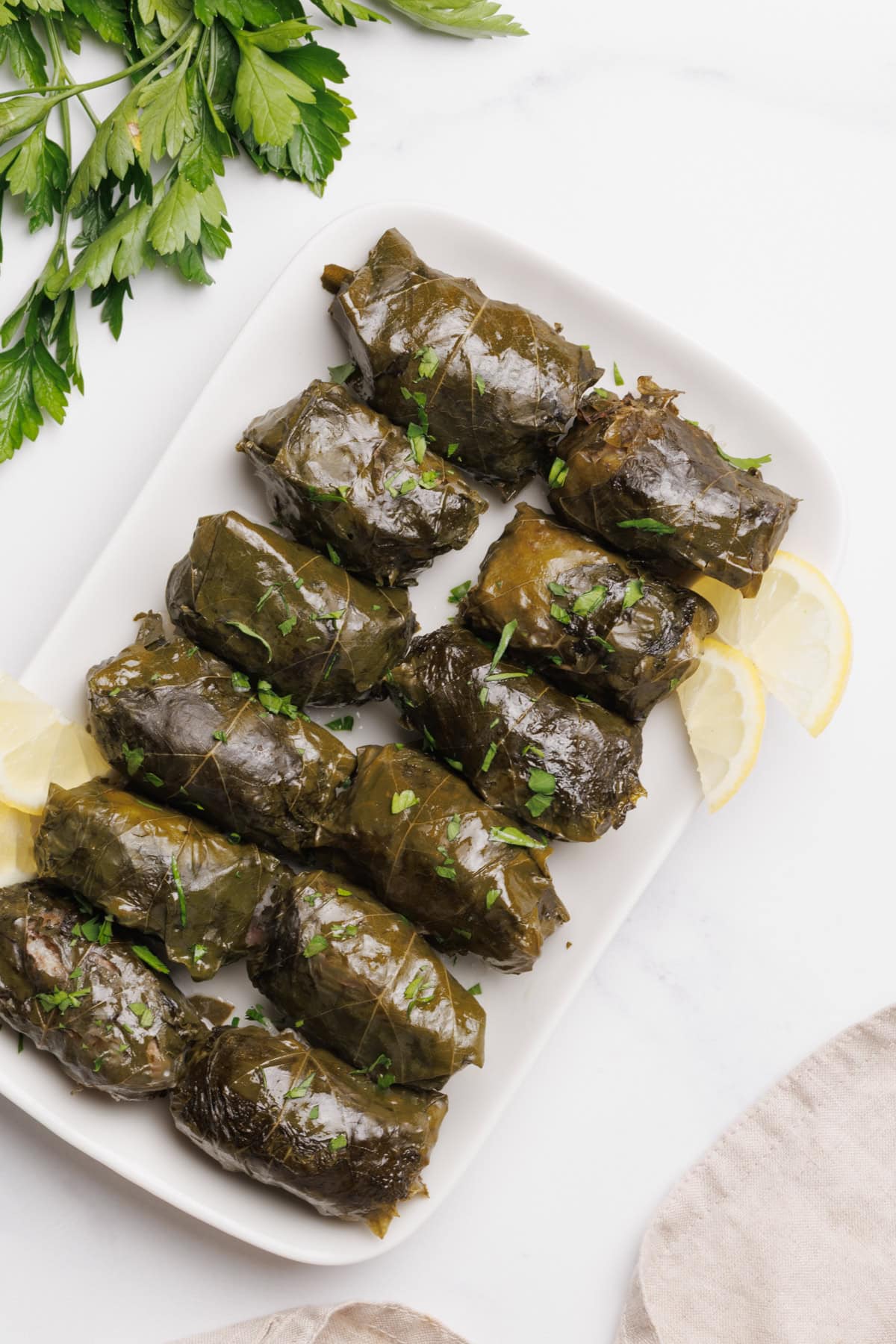
What’s in dolmas?
Traditional grape leaf dolmas are made by wrapping a flavorful filling, usually rice, herbs, and aromatics, inside tender grape leaves, then rolling them into small, cigar-shaped bundles. Common ingredients include rice, onion, parsley, dill, mint, olive oil, lemon juice, and warm spices. Some versions (like this one) include ground meat, making them extra satisfying.
Dolma vs. Dolmades: What’s the Difference?
You’ll often see both names used because they’re very closely related. Dolma is commonly used as the broader term across Middle Eastern and Turkish cuisines, while dolmades is the Greek name often used specifically for stuffed grape leaves. In everyday cooking (and restaurant menus), people use them interchangeably.
Are Dolmas Served Hot or Cold?
Dolmas can be served warm, room temperature, or chilled, depending on the recipe. In many Greek and Middle Eastern styles, rice-filled dolmas are often served slightly chilled or at room temp with a squeeze of lemon. Meat-filled dolmas are more commonly served warm, since they’re a bit richer and heartier.
What Do Dolmas Taste Like?
Dolmas have a unique flavor that’s hard to compare to anything else. The grape leaves are slightly tangy and earthy, while the filling is usually herby, garlicky, and lemony. When they’re cooked, everything melds together into a bite that’s tender, fragrant, and super satisfying.
Ingredients & Substitutions

- Ground Beef – Regular ground beef is easy to source and has a less gamey flavor, but if you can swing it, try making your stuffed grape leaves with lamb for a more authentic experience. Alternatively, use a 50/50 mix for the best of both worlds!
- Grape Leaves – Jarred grape leaves packed in brine are the most common (and most convenient!) option. Just be sure to rinse them well, then soak them in hot water for a few minutes to remove excess salt and help soften them up. If you’re using fresh grape leaves, look for young, tender leaves that are medium-sized (not huge). Blanch them in boiling water for 1–2 minutes until pliable, then transfer to an ice bath, drain well, and use as directed. Try to avoid thick, mature leaves—they tend to be tougher and more bitter once cooked.
- Rice – For the best dolmas, use a short-grain rice like Calrose, arborio, or another “sushi-style” rice. Short-grain rice cooks up slightly sticky and tender, which helps the filling hold together and gives the grape leaves a soft, cohesive texture. Avoid quick-cook or instant rice, and if you use long-grain rice (like basmati or jasmine), expect a lighter, looser filling.
- Onion – For allium depth and sweetness. Feel free to use any variety you have on hand.
- Fresh Parsley, Mint, & Dill – Fresh herbs are what give stuffed grape leaves their signature bright, lemony, “fresh from the garden” flavor. Parsley adds a clean, grassy base, dill brings that classic Mediterranean tang, and mint adds a light, cooling finish that keeps the filling from tasting heavy. While not ideal, you can use ⅓ as much dried herbs in a pinch.
- Fresh Lemon – “Fresh” is the operative word here! The bottled stuff tastes too bitter and a bit murky rather than fresh and bright.
- Salt, Black Pepper, & Olive Oil – Just the basics!
This is just a short review of the ingredients; for the complete recipe, including quantities, scroll down to the recipe card 👇
How to Make Dolmas (Stuffed Grape Leaves)
Watch the full video to learn how to make the BEST Dolmas recipe. This step-by-step tutorial simplifies the process, offering tips and tricks to guarantee perfect results every time.
Prefer the written recipe? Scroll down to the recipe box👇
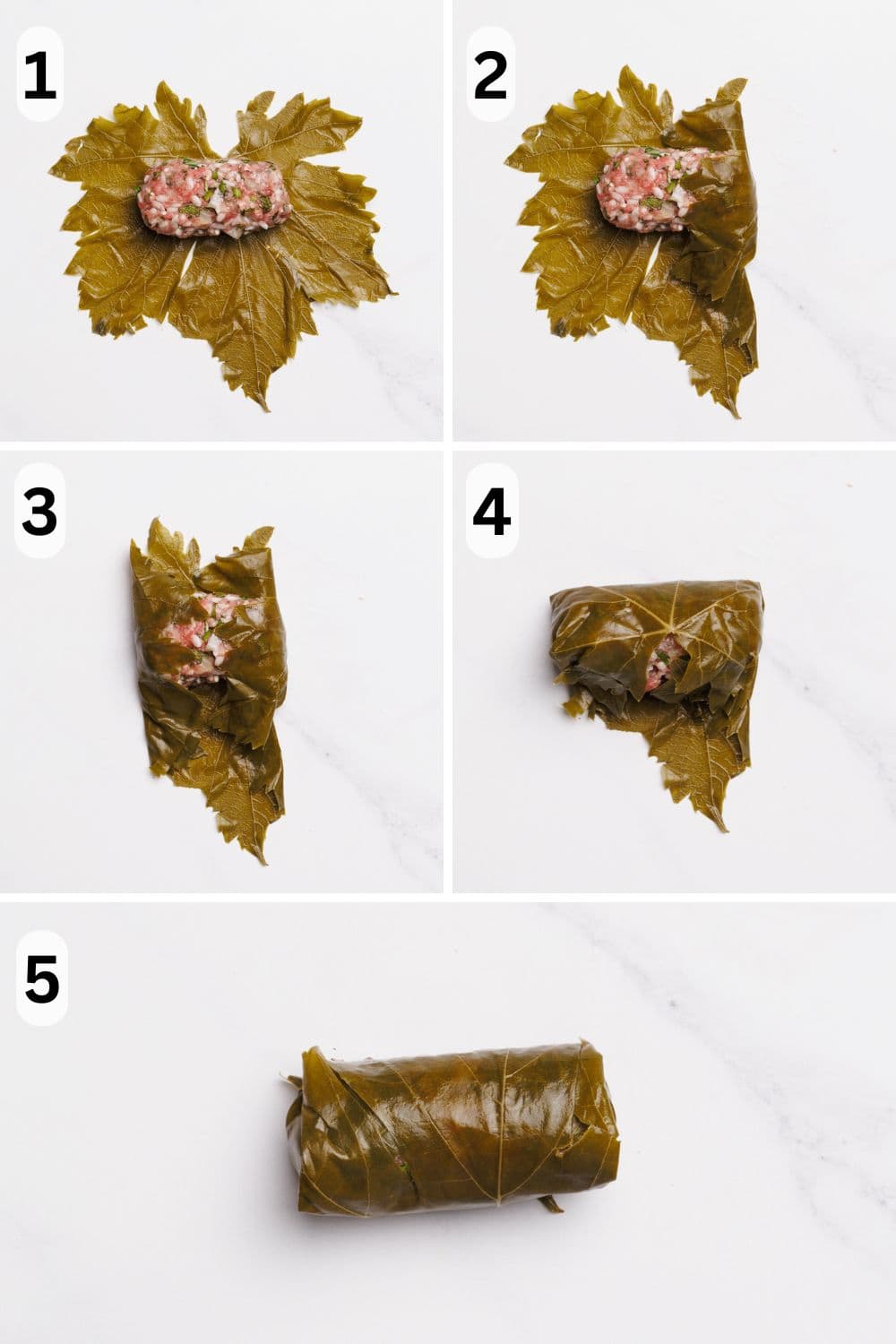
How to Roll Stuffed Grape Leaves
Optional Variations & Dietary Adaptations
- Vegetarian Stuffed Grape Leaves – Skip the meat, sticking to a rice-and-herb forward flavor profile instead. Vegetarian dolmas are usually a little lighter and often served room temperature, making them perfect for mezze platters and make-ahead meals.
- Spiced Dolmas – Want a warmer, cozier flavor? Add a pinch of cinnamon or allspice (or both) to the meat mixture. It’s subtle, but it adds classic Middle Eastern depth that makes dolmas taste extra special.
Expert Tips & Tricks
- Rinse and soak jarred grape leaves first. They’re packed in brine, so a quick rinse plus a short soak in hot water helps remove excess salt and makes them softer and easier to roll.
- Use the right side of the leaf. Lay each grape leaf shiny-side down (veins facing up) so it rolls neatly and holds its shape while cooking.
- Don’t overfill. A little filling goes a long way. If you stuff them too full, the rice will expand as it cooks and can cause the dolmas to split open.
- Roll them snug, but not too tight. You want a firm roll so they don’t unravel, but leave just enough room for the rice to expand as it cooks.
- Keep the size consistent. Try to make the rolls roughly the same size so they cook evenly. This also makes them look extra pretty when you plate them.
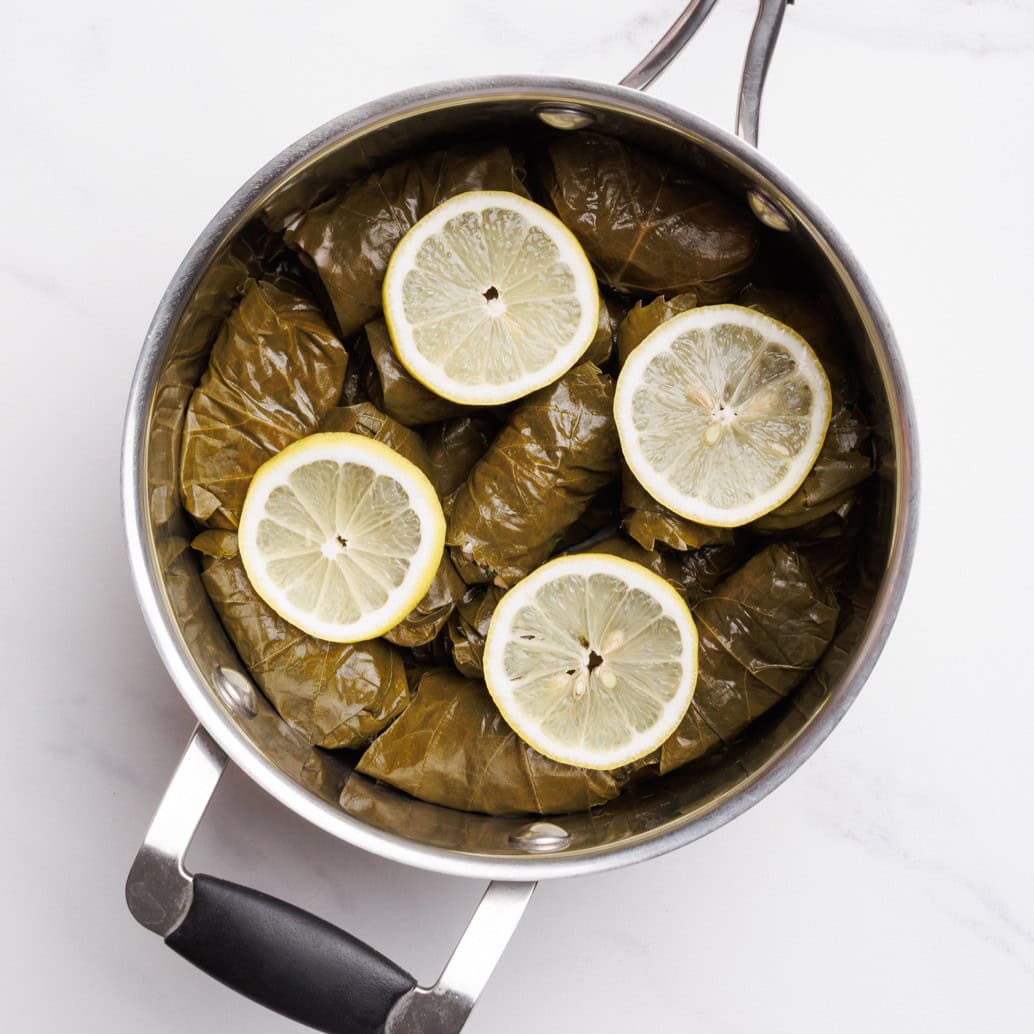
- Pack them tightly in the pot. Arrange the dolmas seam-side down and snugly together so they don’t float around or unroll while simmering.
- Add a “protective layer” on the bottom. Line the pot with a few extra grape leaves (or even sliced onion) to prevent sticking and protect the dolmas from direct heat.
- Weight them down while cooking. Place a small plate on top of the dolmas to keep them submerged and prevent them from unraveling as they simmer.
- Cook low and slow. Gentle simmering gives the rice time to become tender without toughening the grape leaves or drying out the filling.
How to Serve Stuffed Grape Leaves
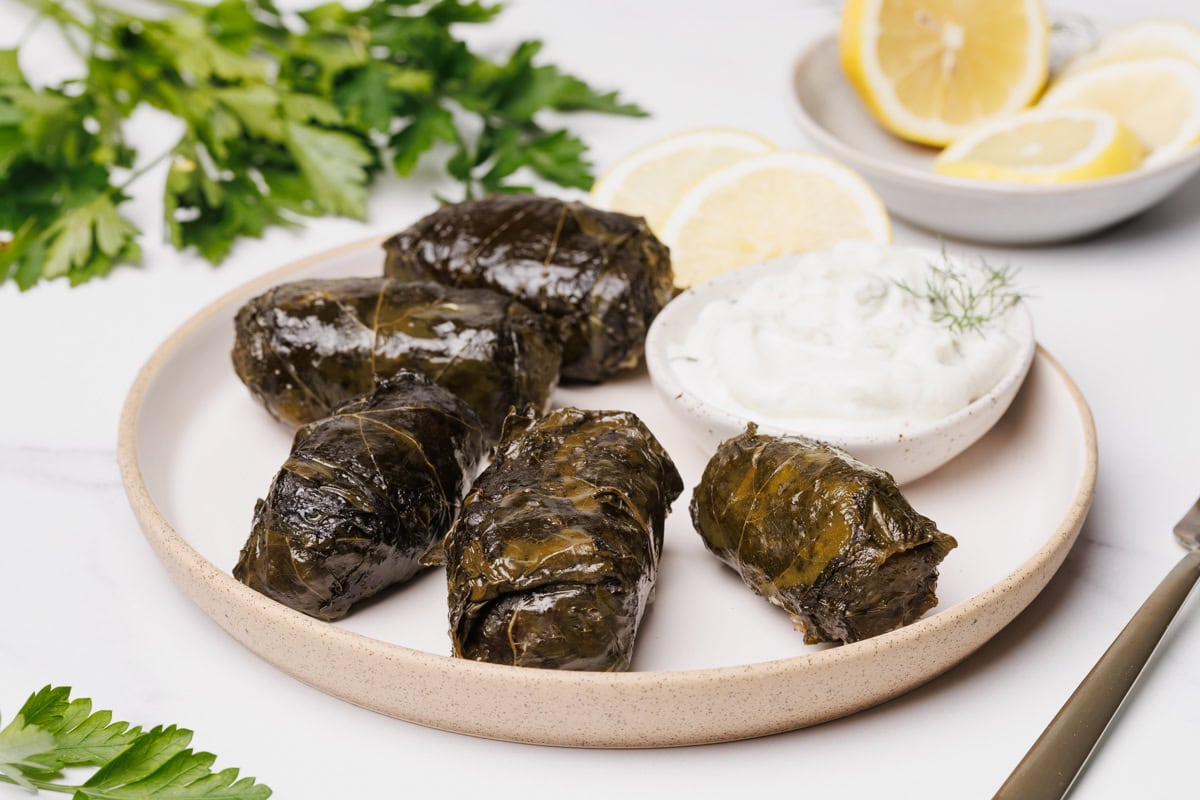
Stuffed grape leaves are perfect as a light appetizer, snack, or side dish, especially when you serve them with plenty of fresh lemon wedges for squeezing over the top. That bright pop of citrus wakes up all the herbs and makes the flavors taste extra fresh.
For a more complete spread, serve your dolmas as part of a mezze platter with things like hummus, baba ganoush, olives, meat-stuffed figs, sliced cucumbers and tomatoes, and warm pita or flatbread. If you want something cool and creamy on the side, dolmas are delicious with a simple yogurt sauce (like tzatziki). You can also serve them as part of a full meal alongside grilled meats like chicken, kofta, or lamb, plus rice or a fresh chopped salad.
Storage & Reheating
- Make Ahead: These stuffed grape leaves taste even better the next day, once the flavors have had time to mingle. Feel free to make them 2-3 days in advance and keep them refrigerated until you’re ready to serve.
- Refrigeration: Store cooked grape leaves in an airtight container in the fridge for up to 4 days.
- Freezing: Cooked grape leaves also freeze well for longer storage. Freeze them for up to 2 months, then thaw overnight in the fridge and reheat gently before serving.
More Middle Eastern Recipes
More Stuffed Veggie Recipes

Stuffed Grape Leaves with Beef and Rice (Authentic Dolma Recipe)
Ingredients
- 1.5 pounds (700 g) Ground beef or lamb (read notes)
- 1 jar Grape leaves about 60-70 leaves
- 1 cup Rice uncooked, rinsed
- 1 Onion Large, grated
- ½ bunch Parsley finely chopped
- ¼ bunch Mint finely chopped
- ¼ bunch Dill finely chopped
- Salt to taste
- Black pepper to taste
- 3 tbsp Olive oil
- 1 lemon
- ¼ cup (60 ml) Water for the filling
- water for cooking
Instructions
- Prepare the grape leaves: Place the grape leaves in a large bowl and pour hot water over them. Let soak for 10 minutes to soften, then drain and set aside.
- Prepare the herbs and rice: Finely chop the onion, parsley, mint, and dill. Rinse the rice thoroughly under cold water until the water runs clear.
- Make the filling: In a large bowl, combine the ground meat, chopped herbs, onion, rice, olive oil, ¼ cup water, salt, and black pepper. Mix gently until just combined; do not overmix.
- Stuff the grape leaves: Lay one grape leaf flat on a work surface, shiny side down. Place 1–2 tablespoons of filling in the center. Fold the sides inward, then roll tightly from the bottom up to form a compact roll. For better understanding, watch the video.
- Arrange in the pot: Place the stuffed grape leaves seam-side down in a wide pot, arranging them tightly in layers. Add the lemon slices on top.
- Cook the grape leaves: Cover the grape leaves with an inverted heat-proof plate to keep them from moving. Pour in enough water to just cover them. Bring to a gentle boil over medium-high heat, then reduce to medium-low, cover, and simmer for about 1½ hours, until tender and fully cooked. Add more water if needed during cooking.
- Rest and serve: Remove from heat and let rest for 10–15 minutes. Serve hot, warm, or cold.
Video
Notes
- Grape leaves: Jarred grape leaves in brine are the most common and convenient option and work perfectly for this recipe. Rinse and soak them in hot water to remove excess salt and soften them.
If using fresh grape leaves, choose young, tender leaves (medium size, not too large). Blanch them in boiling water for 1–2 minutes until pliable, then transfer to ice water, drain well, and use as directed. Avoid thick, mature leaves, as they can be tough and bitter. - Meat choice: Lamb gives a richer, more traditional flavor, while beef is lighter. You can use either, or a 50/50 mix for the best of both worlds.
- Rice: Use short- or medium-grain rice. Do not pre-cook; it cooks inside the grape leaves.
- Herbs: Mint and dill are classic, but you can adjust quantities or lean more heavily on parsley if preferred.
- Packing the pot: The tighter the grape leaves are packed, the better they hold their shape while cooking.
- Make ahead: These taste even better the next day. Make up to 2–3 days in advance and refrigerate.
- Storage: Store cooked grape leaves in an airtight container in the fridge for up to 4 days.
- Freezing: Freeze cooked grape leaves for up to 2 months. Thaw overnight in the fridge and reheat gently.
Nutrition
FAQs
Grape leaves are usually stuffed with a flavorful mixture of rice, onions, fresh herbs (like parsley, dill, and mint), lemon juice, olive oil, and seasonings. Many recipes (like this one) also include ground beef or lamb for a heartier filling.
Generally speaking, yes. They’re typically made with grape leaves, rice, herbs, onion, lemon, and olive oil, and many versions include lean ground beef or lamb for extra protein. That means you’re getting a mix of whole ingredients. The main thing to watch is sodium (especially if you’re using jarred grape leaves in brine) and portion size, since the rice and oil can add up. Rinsing the leaves well and pairing dolmas with a fresh salad and/or yogurt sauce can keep your meal balanced.
It honestly depends on the style. Meat-filled dolmas are usually served warm (or at least warm/room temp), while vegetarian stuffed grape leaves are often served cold or at room temperature, especially when they’re made with olive oil and lots of lemon.


It was my first time making stuffed grape leaves. huge success! Thank you for the recipe.
Love this recipe!
looks YUMMY! cannot wait to try this. thank you for sharing the recips.
Please note the recipe needs a little editing: #3 wash well the rise (rice), and
#5 1-2 Tablespoons or 1-2 teaspoons (video says 1-2 teaspoons)