
Easy Shakshuka Recipe (Traditional & Authentic)
This post may contain affiliate links.
Next time you’re in need of a speedy, flavorful meal, look no further than my Easy Shakshuka recipe! This beautifully colorful, naturally gluten-free, veggie-packed dish requires just 15 minutes of active prep time and can be eaten any time of day, any time of year.
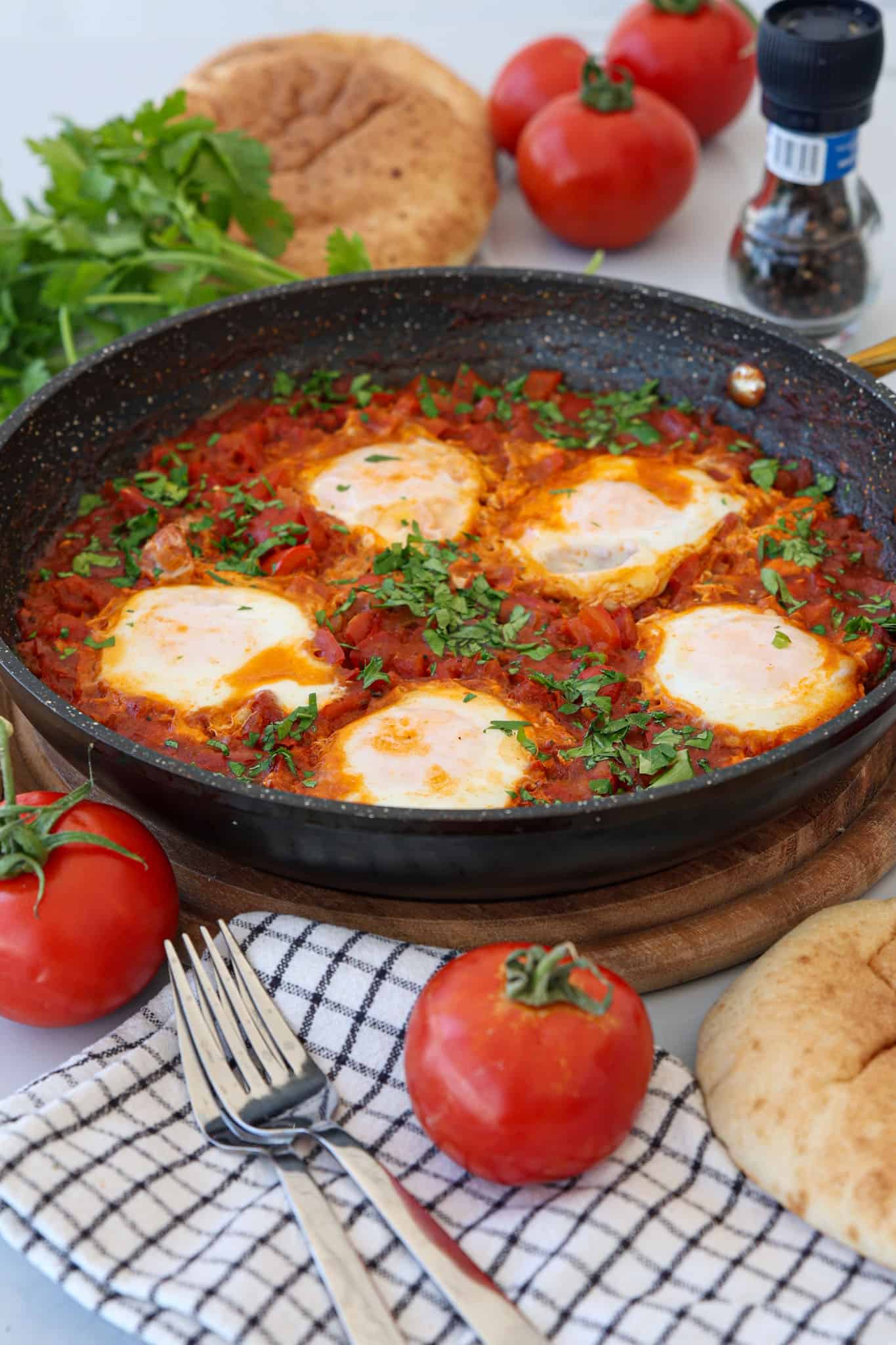
Shakshuka is probably the dish I’ve eaten—and made—more than anything else in my life. I’m talking hundreds of times! It was our ultimate favorite growing up. Our mom used to make it once a week, each time with a different twist or extra add-ins. And of course, we always had it with warm, fluffy pita bread on the side.
What is shakshuka?
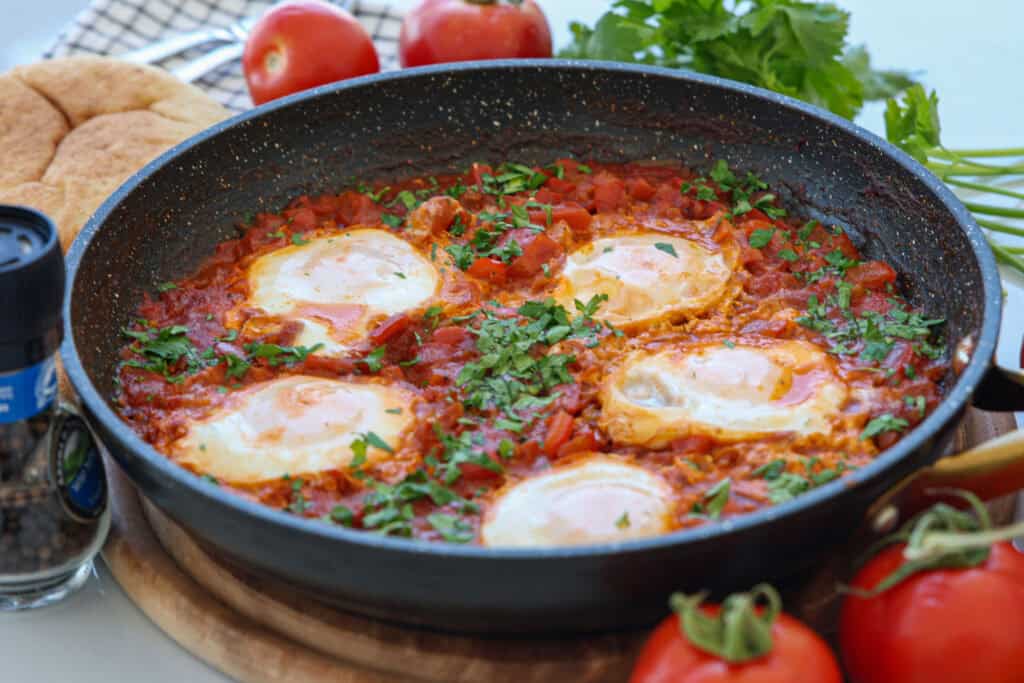
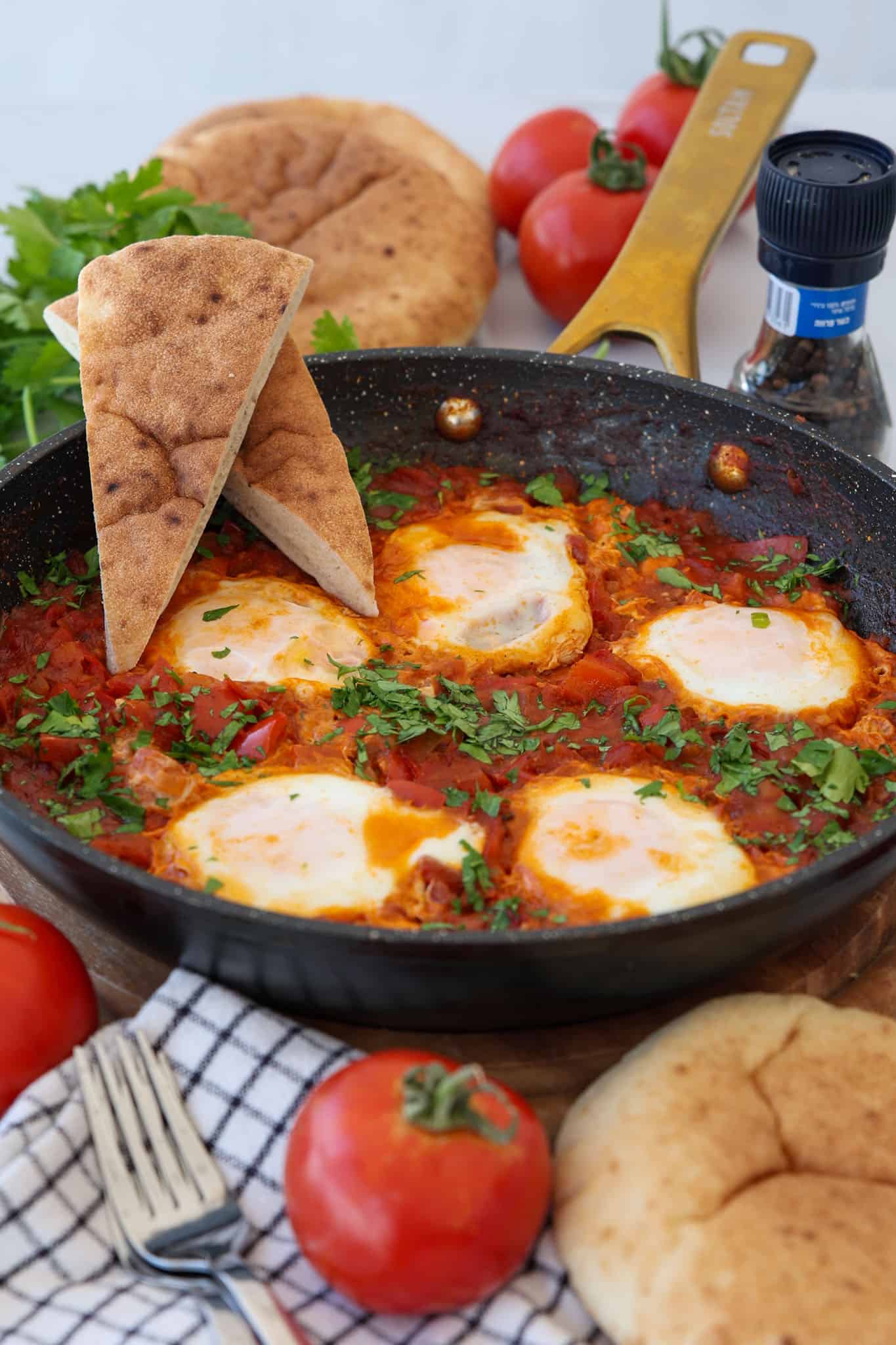
Shakshuka (also spelled “shakshouka” or “chakchouka” means “a mixture” in Arabic—an apt name for eggs poached in a sauce made from tomatoes, onions, bell peppers, garlic, and a blend of spices such as cumin, paprika, and chili powder.
Originally from North Africa during the Ottoman Empire, this vegetarian egg dish has since become a staple recipe throughout the Maghreb and Middle East. Recipes vary by location and even by household—there are probably as many recipes for shakshuka as there are Middle Eastern families!
This particular version is close to the one I grew up eating in Israel, though it’s the kind of dish that I’ll tweak depending on what I have in the fridge that week. 😉
Why You’ll Love My Israeli Shakshuka Recipe
- Whether you’re looking to spice up your Meatless Monday dinner routine or want to impress your friends for a lazy weekend brunch, this versatile shakshuka recipe is here to serve.
- With just over 10 ingredients, 15 minutes of active cooking time, and only one pan, this yummy egg dish is the epitome of quick and easy cooking.
- There are near endless ways to customize your shakshuka, from adding meat or chickpeas for extra protein, or extra veggies to clear out your crisper drawer! Read on below for more ideas.
How to Make Shakshuka
Watch the full video recipe to learn how to make the best shakshuka! This step-by-step video tutorial, including the ingredients, makes the process easy to follow, with tips and tricks to ensure perfect results every time.
Prefer the written recipe? Scroll down to the recipe box 👇
Ingredients & Substitutions
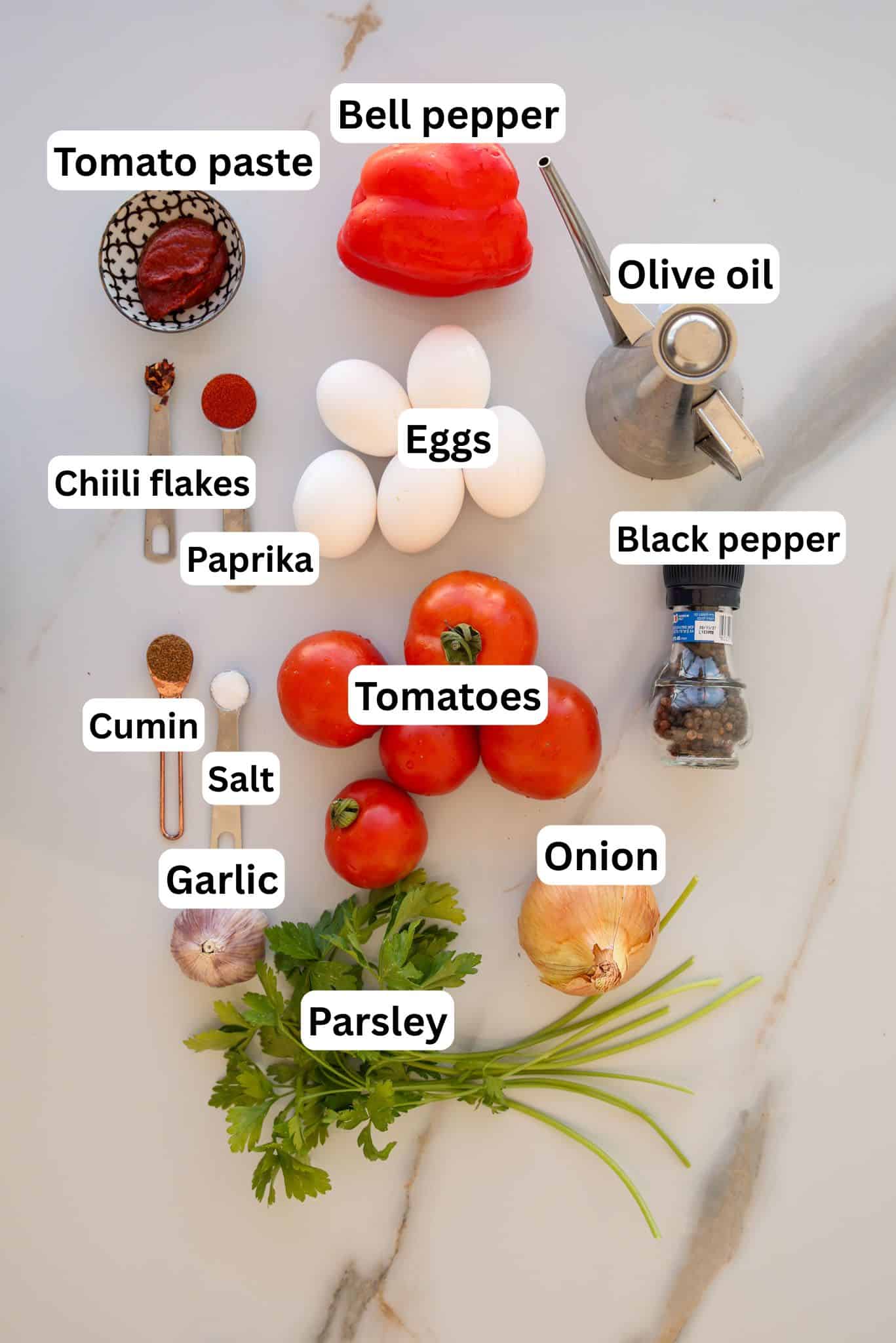
- Onion, Bell Pepper, & Garlic – This trio of aromatics builds the flavorful foundation for our Israeli shakshuka sauce.
- Cumin & Sweet Paprika – These spice cabinet staples are classic shakshuka additions across the diaspora. Feel free to dial up the heat with the optional addition of red pepper flakes or ground cayenne pepper.
- Tomatoes – In addition to fresh chopped tomatoes, I like to use tomato paste for a concentrated tomato flavor and an umami undertone. Working from your pantry? Swap in crushed tomatoes in place of fresh.
- Eggs – If given the opportunity, opt for pasture-raised eggs for the best results. Not only are the vibrant saffron yellow yolks extra beautiful, they also have a richer flavor thanks to a more varied diet.
- Fresh Parsley or Cilantro – Fresh herbs add a pretty pop of green and a touch of vegetal brightness. Don’t have any on hand? Add a bit of dried parsley or cilantro to the sauce. You can also try using colorful scallion greens, radish sprouts, or peppery arugula instead. It’ll also be lovely without!
- Crumbled Feta – Optional, but excellent for adding richness and a touch of salty brininess. Plus, that stark white against the bright red sauce? 🤌Perfection.
This is just a short review of the ingredients; for the complete recipe, including quantities, scroll down to the recipe card 👇
Optional Variations & Dietary Adaptations
- Add Veggies – I particularly like to add sautéed spinach, leftover garlic mushrooms, and/or roasted eggplant to my shakshuka, but feel free to get creative here. It’s a great recipe for cleaning out any bits and bobs leftover from other recipes.
- Boost the Protein – To keep it vegetarian, try adding roasted chickpeas or the seasoned tofu from my Buddha bowl recipe. If you don’t mind having meat on the menu, spicy merguez sausage, browned ground beef, sliced simple chicken breasts, or diced chicken patties are all good additions.
- Manage the Heat – While I offer a few spice cabinet options for bumping up the spice, you can look to fresh peppers, too. If you’re an adventurous eater, feel free to swap out one of the bell peppers for a spicier poblano pepper, or simply add the sautéed chiles of your choice!
Expert Tips & Tricks
- Don’t Overcook the Eggs – In my opinion, an egg with a jammy center and a fully set white is the perfect level of doneness. If you prefer a more set yolk, continue cooking an extra minute or two, but try not to get to the point where the edges of the yolks take on a greenish hue. (Have fussy eaters? You can break their yolks or cover the eggs with the sauce about halfway through cooking to make sure there is no runniness.)
- Prep Ahead – Feel free to make the shakshuka sauce ahead of time, then refrigerate or freeze it for a speedy meal on the fly!
How To Eat Shakshuka
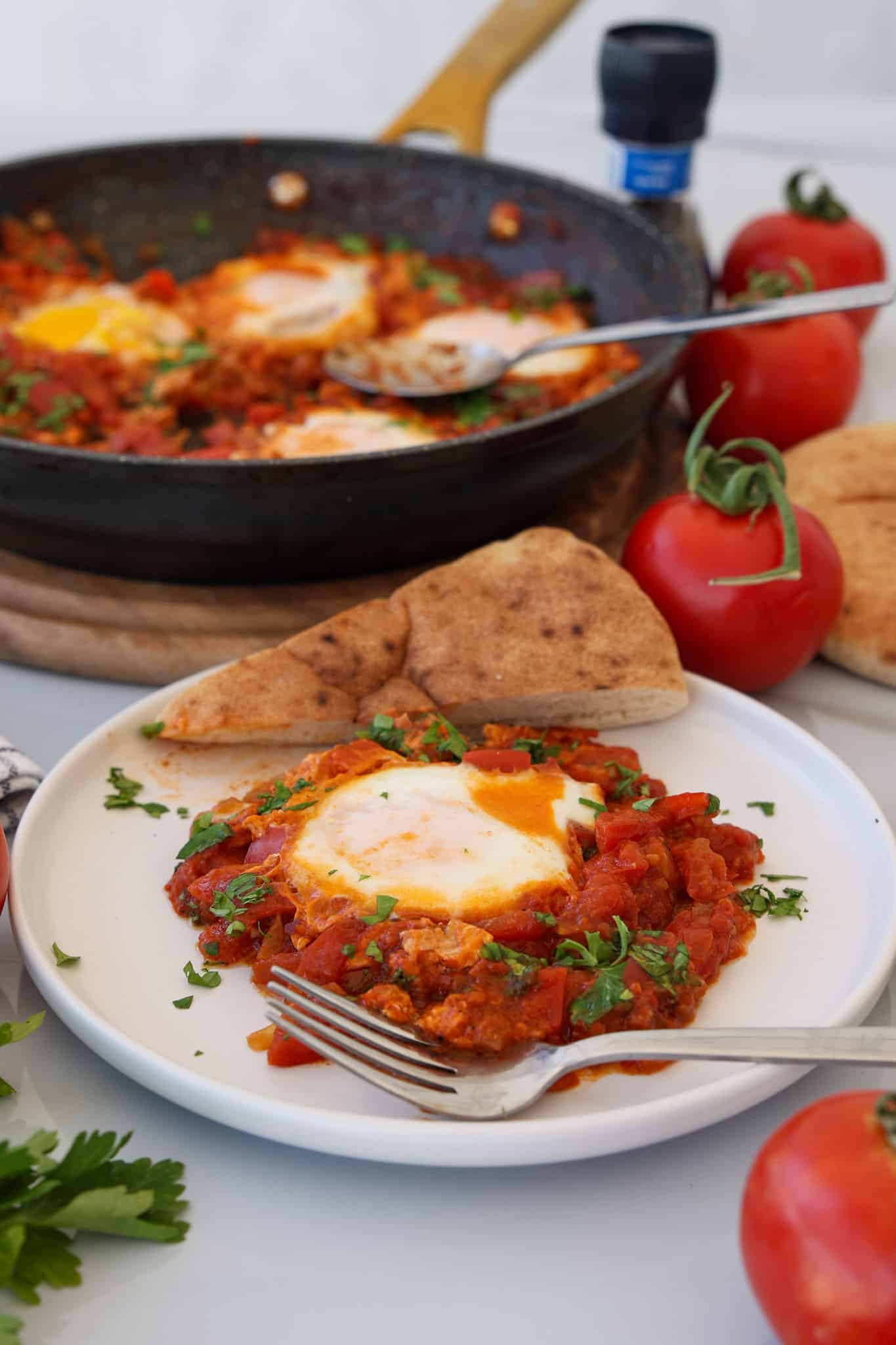
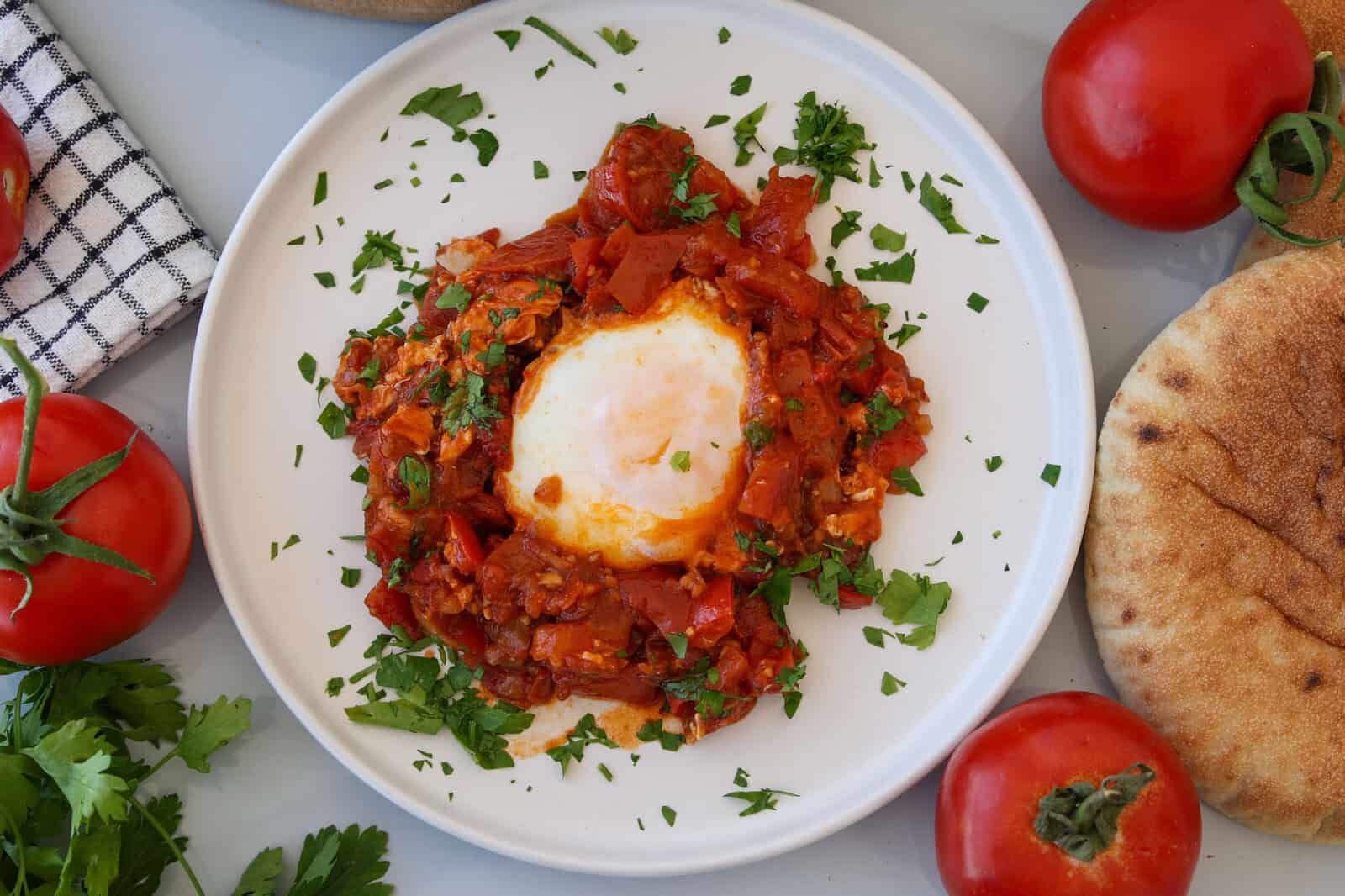
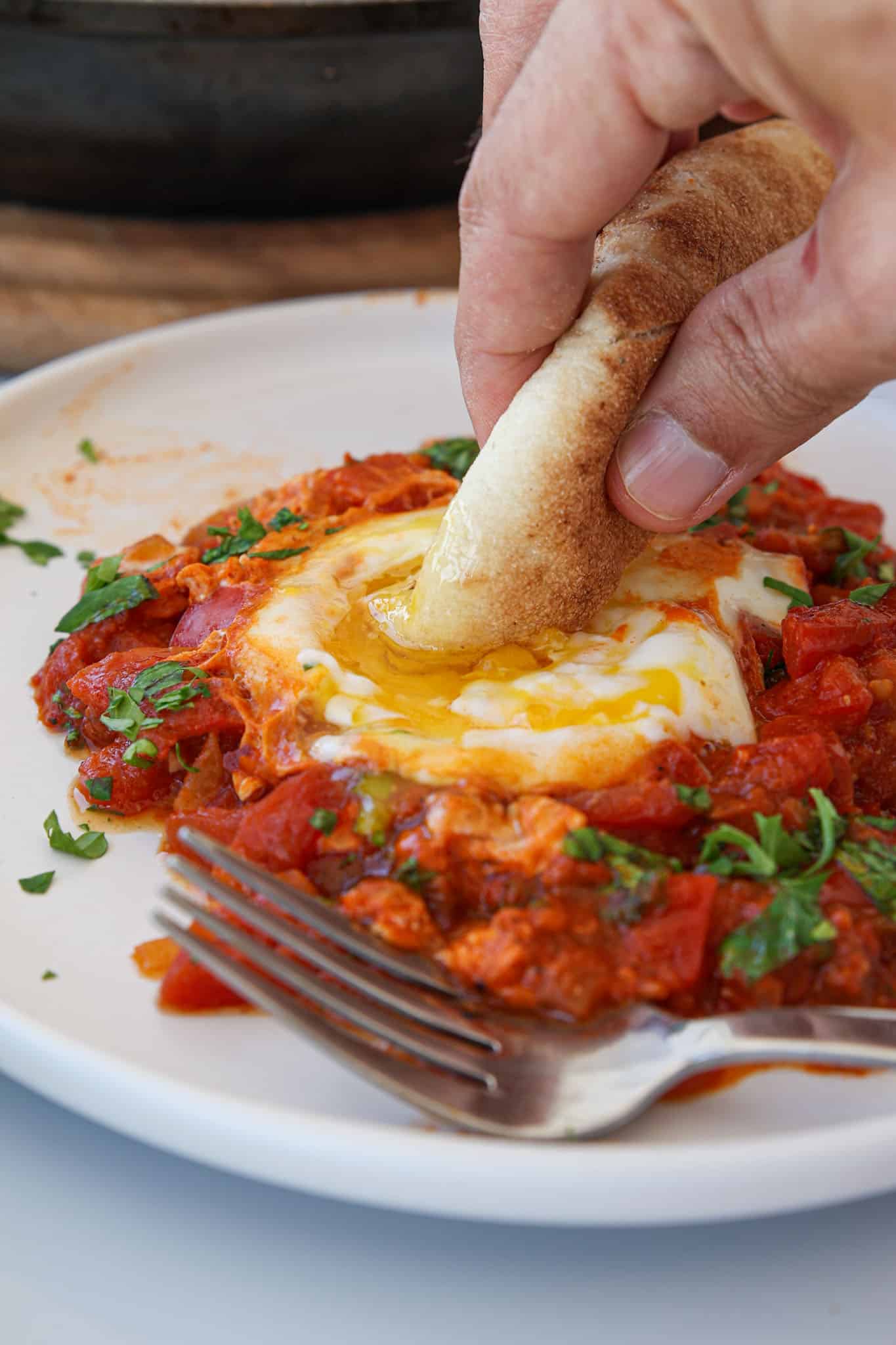
I recommend plating shakshuka in a shallow bowl. Since we already have vegetables and protein under control, the only thing missing is some kind of starchy carb to sop up every last drop of that crave-worthy tomato sauce. I love to serve Israeli shakshuka with feta and fresh, homemade pita bread or garlic naan, or a slice of crusty bread or homemade challah. Need a gluten-free option? Brazilian cheese bread or buckwheat bread are just the thing.
Storage & Reheating
- Cooked eggs are best served fresh, so if possible, try to only make as many as you can eat in one sitting. That said, any leftovers will keep in an airtight container in the fridge for up to 3 days.
- If you’d like to get a head-start, Israeli shakshuka sauce will keep well in an airtight container in the fridge for 5-7 days, or can be frozen for up to 6 months. Simply stop cooking before the step where you’d add the eggs, then pick up where you left off when you’re ready to eat.
- To reheat, I recommend using a skillet on the stovetop. Place the sauce in the pan (nestling any leftover eggs in there if needed), then cover and heat over medium until warmed through. You can also use a microwave, but beware—eggs can get a little rubbery if cooked that way.
More Egg Recipes
Easy Shakshuka Recipe (Traditional & Authentic)
Equipment
Ingredients
- 3 tablespoons Olive oil
- 1 Onion finely chopped
- 1 Red bell pepper diced
- 4 Garlic cloves minced
- 1 teaspoon Ground cumin
- 1 teaspoon Sweet paprika
- ¼ teaspoon Red chili flakes (or ground cayenne pepper) optional, for a kick
- 1 tablespoon Tomato paste
- 6-7 large ripe tomatoes chopped, or 1 can (21 oz/600g) crushed tomatoes
- ½ cup (120 ML) Water
- ½ teaspoon Sugar optional, helps balance acidity
- Salt and pepper to taste
- 4-6 Eggs Largw
- Fresh parsley/cilantro/basil chopped (for garnish)
Optional toppings
- crumbled feta
Instructions
- Sauté the aromatics: Heat the olive oil in a large skillet over medium heat. Add the chopped onion and sauté for about 5-6 minutes, until softened and lightly golden. Stir in the diced bell pepper and cook for another 4–5 minutes.
- Build flavor: Add the minced garlic, cumin, paprika, and cayenne. Stir constantly for about 30-60 seconds, until fragrant. Add tomato paste, stir and cook for another minute.
- Add tomatoes: Pour in the crushed tomatoes, water and stir well.
- Season with salt, pepper, and a little sugar if your tomatoes are very acidic.
- Simmer: Reduce the heat and simmer uncovered for 10–15 minutes, stirring occasionally, until the sauce thickens slightly. And more water if needed.
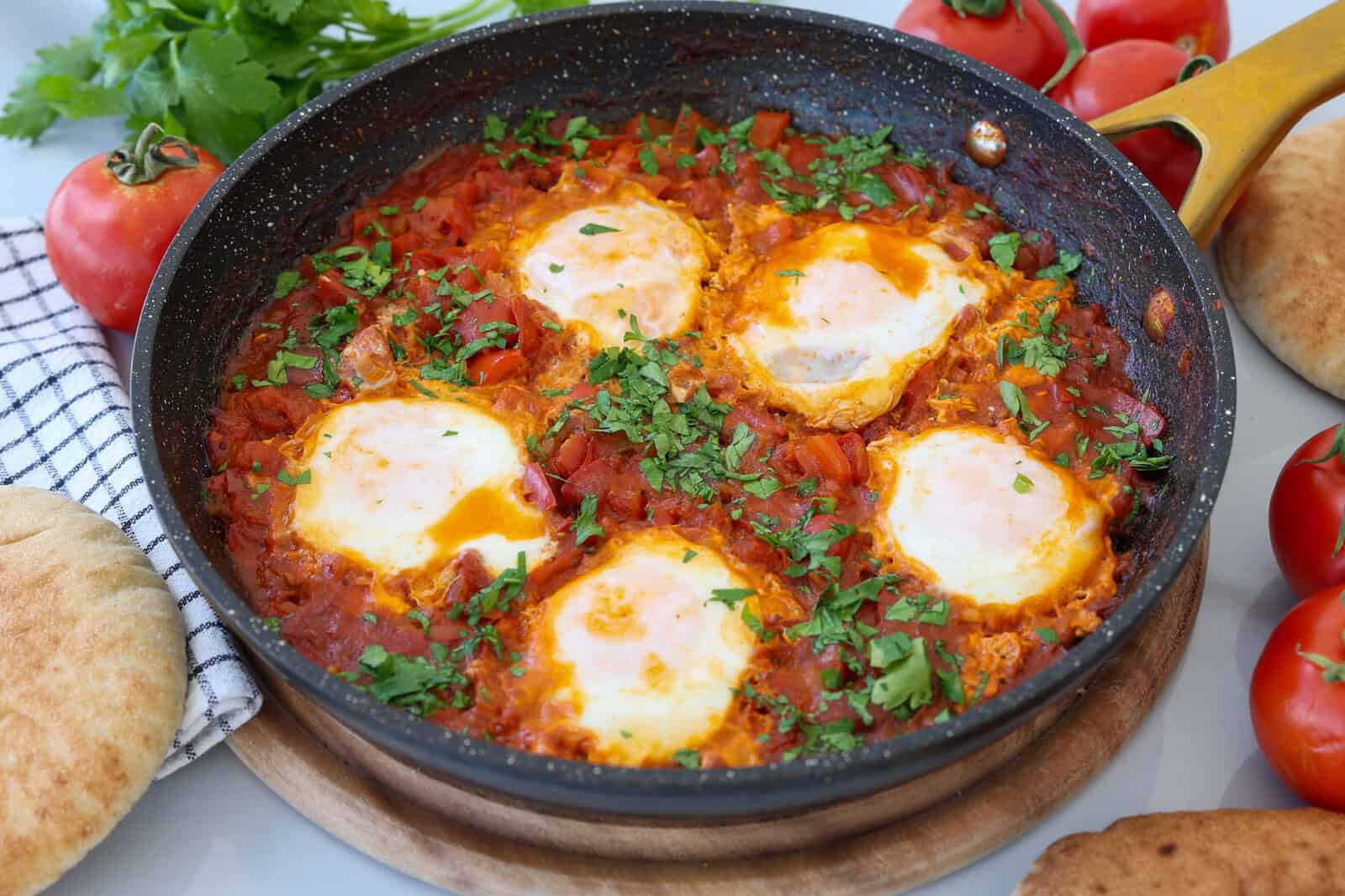
- Make nests and add eggs: Using a spoon, create small wells in the sauce and gently crack an egg into each well. Cover the pan with a lid and cook for 5–7 minutes, or until the egg whites are just set but the yolks are still runny (or cook longer if you prefer fully set yolks).
- Garnish and serve: Remove from heat. Sprinkle with fresh chopped parsley (and crumbled feta if using). Serve immediately with crusty bread, pita, or warm challah to scoop up the sauce!
Video
Notes
- Tomatoes – Fresh or Canned: This recipe works beautifully with both fresh and canned tomatoes. If tomatoes are in season and full of flavor, go with fresh ripe ones like Roma or vine-ripened tomatoes. For convenience or off-season cooking, a good-quality can of crushed tomatoes is perfect and delivers consistent results.
- Spice Level: Feel free to adjust the heat to your preference. The red chili flakes or cayenne are optional, but they do add a nice subtle kick. If you like it spicier, add more; for a mild version, simply leave them out.
- Egg to Sauce Ratio: You can comfortably crack 4–6 eggs into a standard pan of shakshuka, depending on how many people you’re serving. Just make sure there’s enough space and sauce to cradle each egg without overcrowding. The perfect ratio is 1 egg per 100g of tomato sauce.
- Make It Your Own: Top with crumbled feta, dollop with labneh or Greek yogurt, or even sprinkle with za’atar or harissa for extra depth. Add spinach, kale, or mushrooms for a veggie-packed twist.
- Storage & Reheating: Shakshuka is best enjoyed fresh, but you can store leftovers (without eggs) in an airtight container in the fridge for up to 4 days. Reheat the sauce in a skillet and crack fresh eggs in for a quick breakfast or dinner. If storing with eggs, note that the yolks may become overcooked upon reheating.
Nutrition
FAQs
The two dishes are quite similar, featuring eggs poached in a tomato-based sauce. Generally speaking, eggs in purgatory leans more heavily on Italian spices while shakshuka relies on warming spices like cumin and paprika, but I’ve heard the two terms used interchangeably.
In a word, yes! 😉Shakshuka is a widely popular dish with nearly every country across the Middle East and the Maghreb—the recipes may vary a bit from culture to culture, but the basic recipe remains mostly the same.
Covering the pan is recommended to help cook the eggs more evenly and quickly.
I don’t recommend it. That said, you can make your own tomato paste from a can of tomato sauce by cooking it, uncovered, over medium-low heat until thoroughly reduced. Make sure to stir it frequently to prevent scorching. You can also swap in fiery harissa paste for a spicy twist!



great summer brunch recipe.
We’ve been making this shakshuka recipe for awhile. Always delicious.
I was looking for your old shakshuka recipe on YouTube and found this updated one. Fantastic as always! I tend to use fresh tomatoes so your recipe and quantities are always so practical.
I’ve tried several recipes, and this one is the best. Don’t skip the chili pepper, I like it spicy 🙂
This is the best shakshuka I’ve ever made. Easy to follow recipe and so delicious. I use 6 eggs for the same amount and it was perfect for me.
Good old shakshuka. We love this recipe!