
Easy Homemade Lemon Curd Recipe | Only 4-Ingredient
This post may contain affiliate links.
My sweet-tart and sunshiny homemade Lemon Curd recipe is a must-have for any citrus lover. This brightly flavored and delightfully versatile fruit spread is made with just 4 ingredients and about 15 minutes of effort. It’s perfect for everything from your morning toast to bakery-worthy cookies and savory meat dishes.
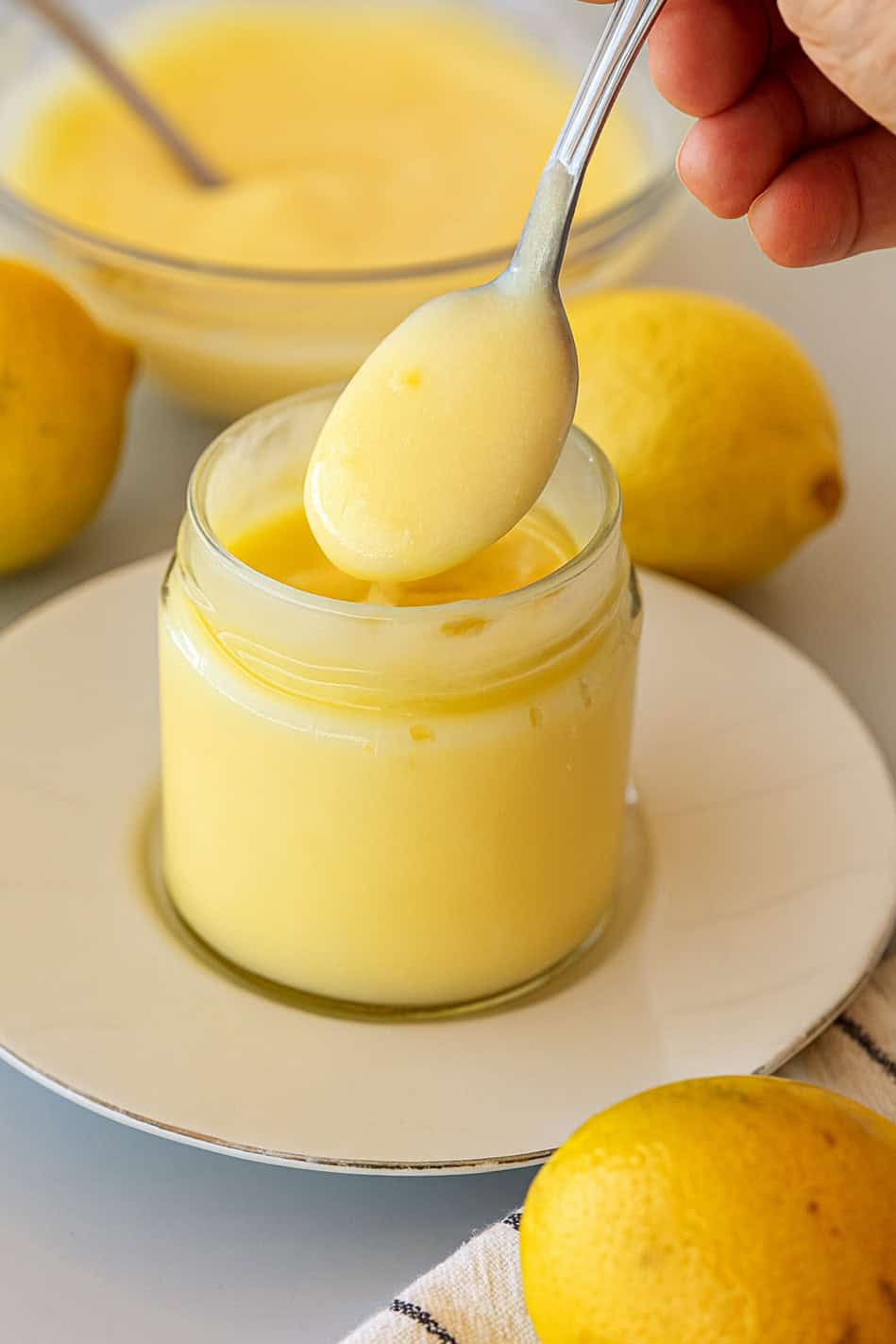
I’ve always loved lemon desserts, but none are as foundational as this easy lemon curd recipe. This classic British fruit spread has dozens of uses, so I nearly always keep a jar in the fridge. Whether you use it to brighten your tea time, fill layer cakes, swirl into ice cream or glaze fried chicken, it’s certain to add a splash of lemony freshness to your day!
What is Lemon Curd?
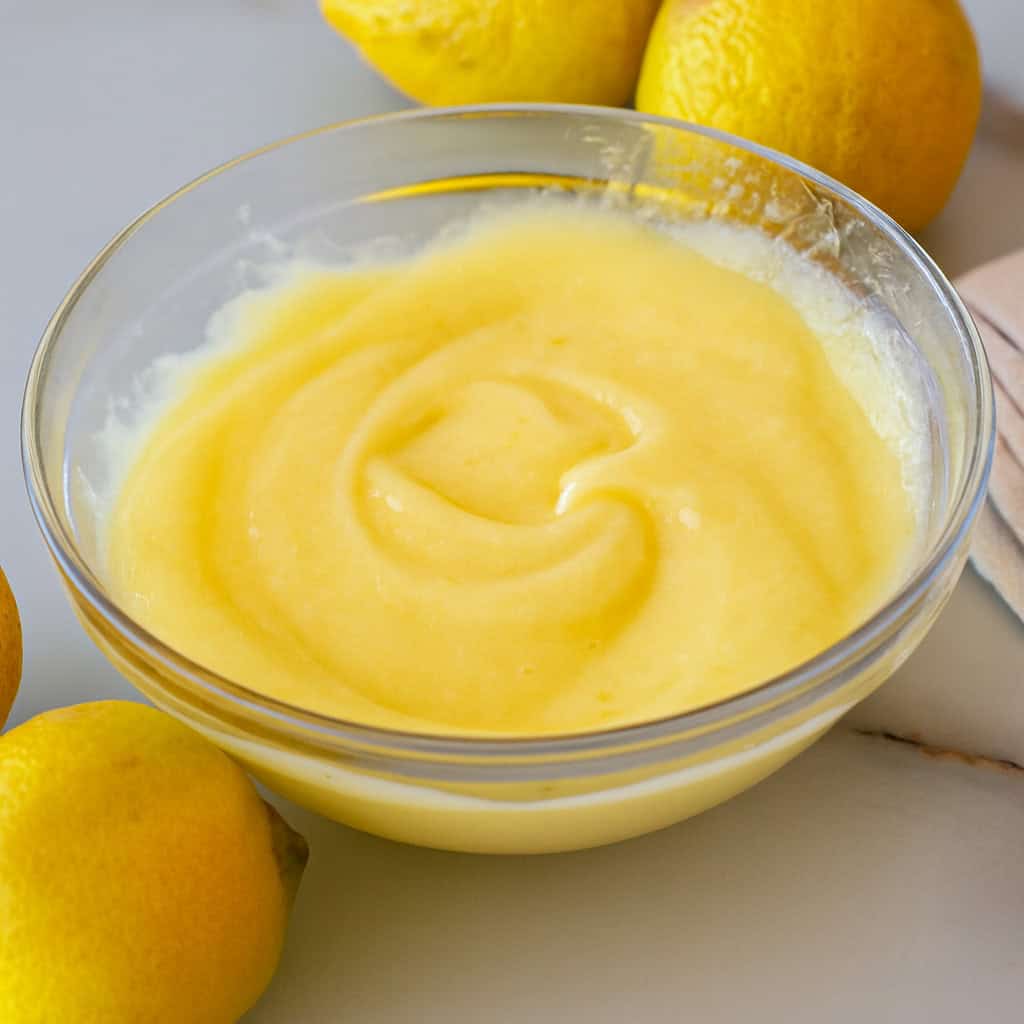
Lemon curd is a smooth, tangy, and creamy spread made from fresh lemon, sugar, eggs, and butter. This delicious condiment traces its roots to 19th-century Britain, where it was originally served alongside tea service as an alternative to jam. Unlike preserves that rely on fruit pectin, lemon curd gets its luscious consistency from egg proteins that thicken as they cook.
While it’s often used as a filling for desserts like tarts and pastries, it’s also lovely spooned over yogurt or slathered on toast, scones, or pancakes.
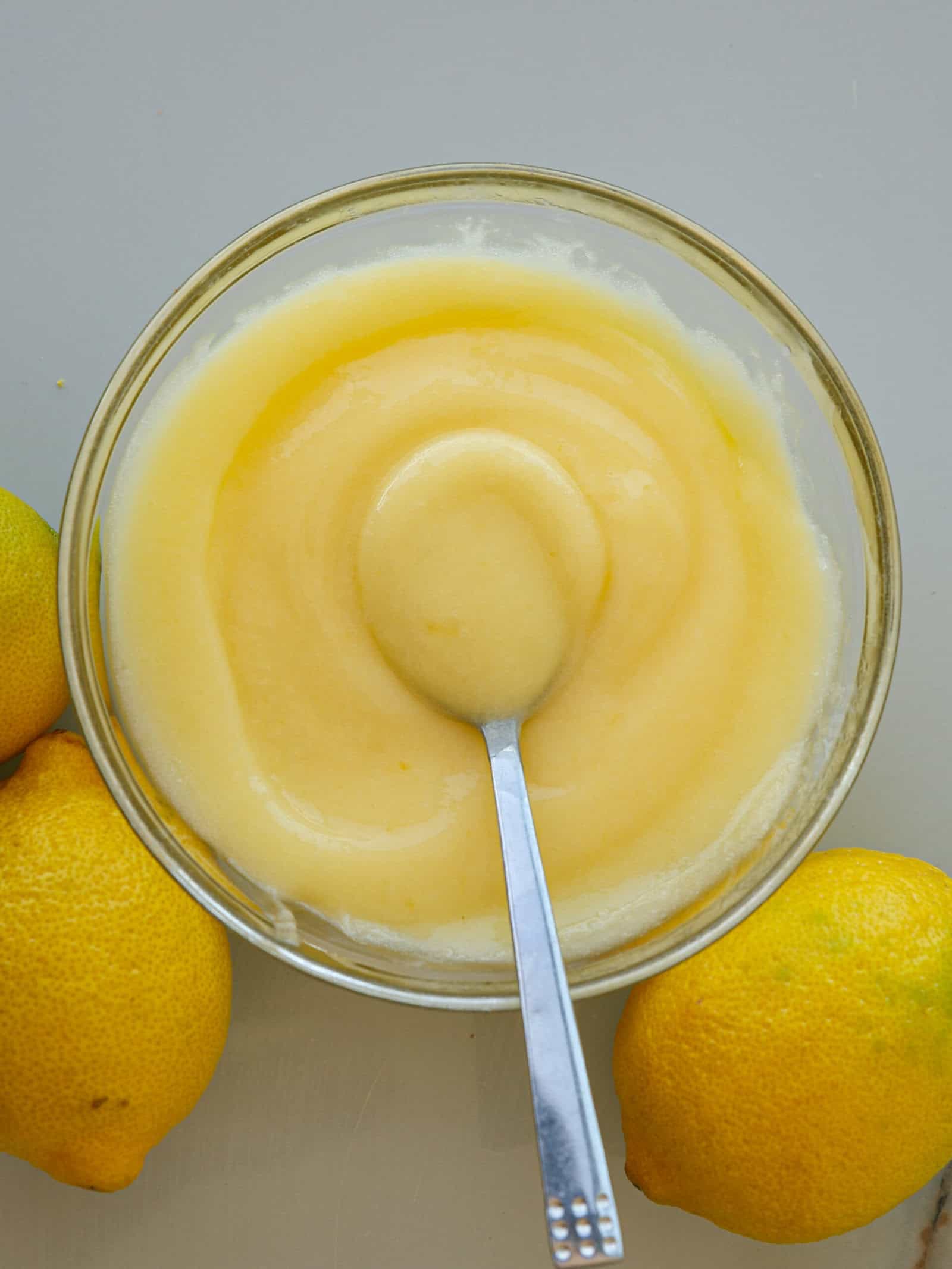
Ingredients & Substitutions

- Eggs & Egg Yolks – Whole eggs provide structure and help the lemon curd thicken to a silky, spoonable texture, while the extra yolks add richness and a beautifully creamy, custardy mouthfeel. Got leftover whites? Check out my guide on What to Do with Leftover Egg Whites for delicious ideas.
- Granulated Sugar – White sugar has a neutral sweetness, ensuring the zippy flavor of fresh lemon shines brightly.
- Fresh Lemon Juice & Zest – Using both the zest and juice from fresh lemons gives our curd a bold citrusy flavor to balance out the sweetness.
- Unsalted Butter – The emulsifying properties of butter helps the curd set into a smooth, glossy spread and tames the vibrant acidity of the lemons.
This is just a short review of the ingredients; for the complete recipe, including quantities, scroll down to the recipe card 👇
How to Make Lemon Curd
Watch the full video recipe to learn how to make the BEST Lemon Curd.
Prefer the written recipe? Scroll down to the recipe box 👇
Double Boiler vs. Direct Pan Method
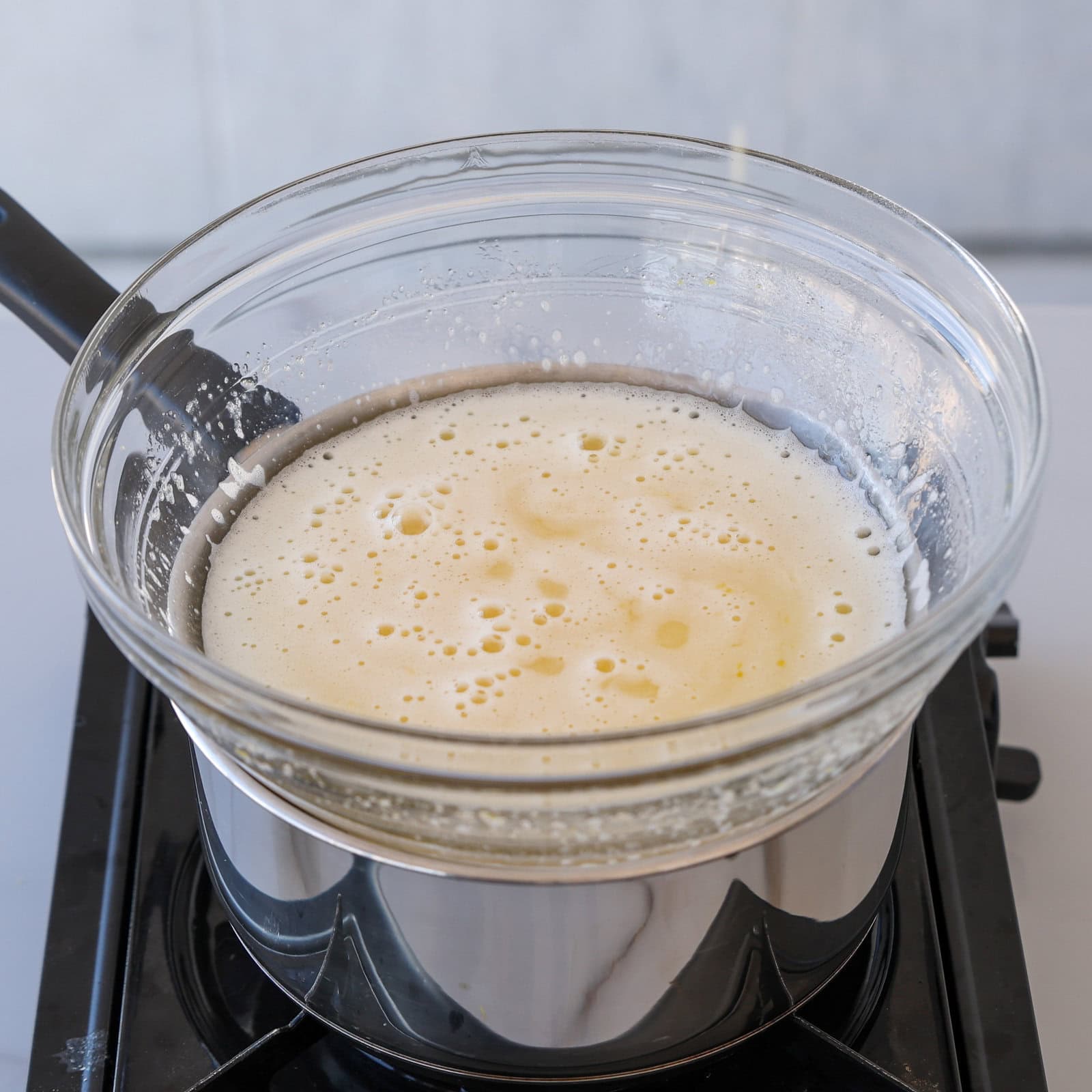
Many recipes call for cooking lemon curd directly in a saucepan, and that’s completely fine, it works well if you’re careful. The main difference lies in how gently the mixture is heated.
I personally prefer the double boiler method (a bowl set over simmering water) because it provides gentle, even heat, which helps prevent the eggs from curdling and gives the curd an ultra-smooth, creamy texture. It may take a few extra minutes, but the results are consistently silky and foolproof.
If you use the direct pan method, keep the heat very low and whisk constantly to avoid cooking the eggs too quickly. A heavy-bottomed saucepan helps distribute the heat more evenly and minimizes the risk of lumps or scrambled bits.
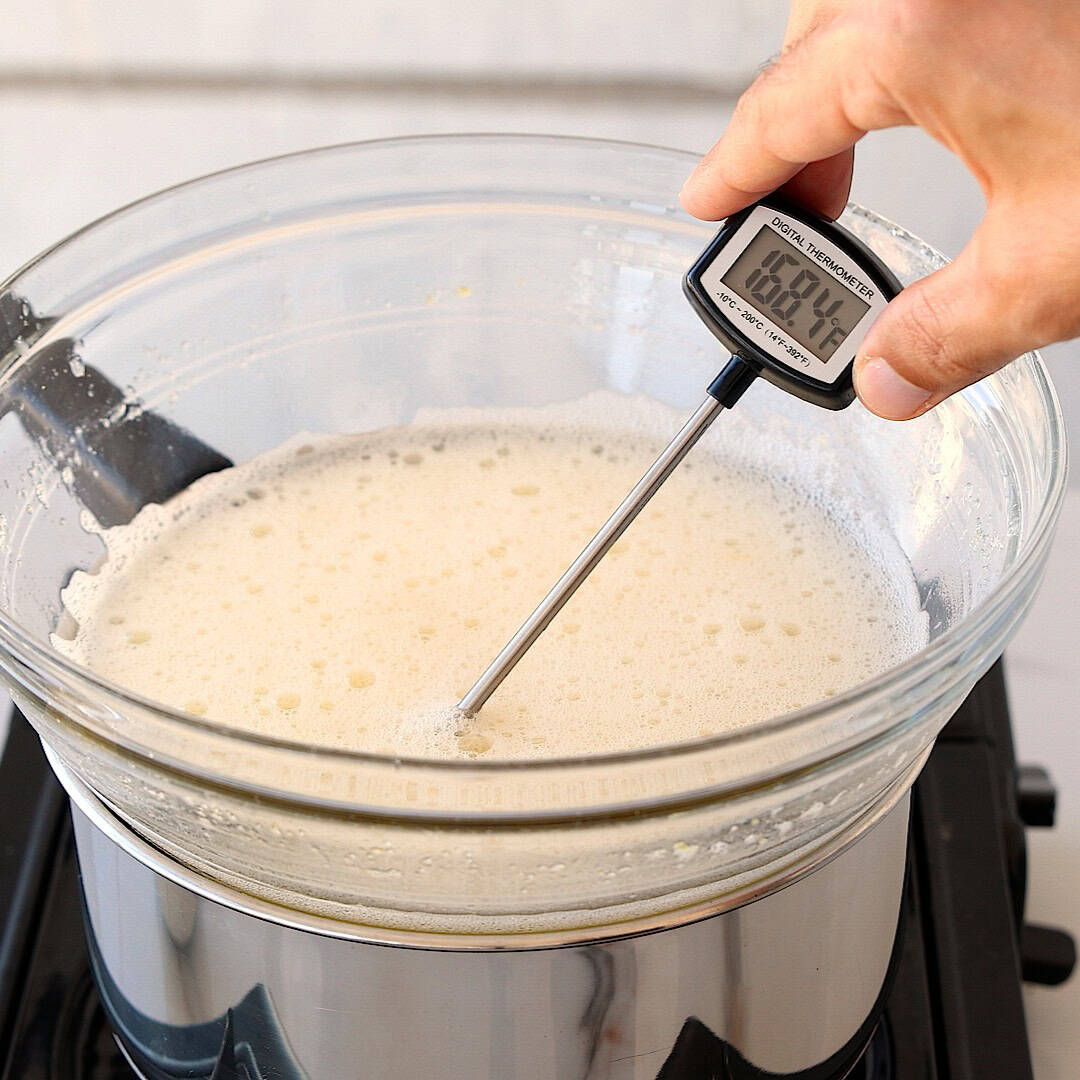
👉 Key tip: No matter which method you use, cook the curd slowly and check that it reaches about 170°F (77°C), the temperature at which it thickens enough to coat the back of a spoon. Avoid letting it boil, or the texture can become grainy.
Optional Variations & Dietary Adaptations
- Dairy-Free – Swap in high-quality vegan butter for a dairy-free version that’s still bursting with lemony goodness.
- Extra Creamy – Using a mix of whole eggs and yolks creates a lemon curd that’s both light and luxurious. If you prefer an especially velvety, custard-like texture, feel free to swap the whole eggs for two additional yolks.
- Other Citrus – Feel free to swap in Meyer lemons for a sweeter curd, or experiment with other citrus varieties like lime or grapefruit.
Expert Tips & Tricks
- Check for doneness. The curd is ready when it’s thick enough to coat the back of a spoon. Not sure what that means? Drag your finger across the spoon—the line should remain clean without the curd running back together.
- Whisk constantly. Keep the mixture moving to prevent the eggs from scrambling and to ensure the curd heats evenly.
- Cook low and slow. Gentle heat is key! If it comes to a boil, the texture can turn grainy instead of silky smooth.
- Strain for perfection. After cooking, pass the curd through a fine-mesh sieve to remove any tiny egg bits, leaving it ultra-smooth.
- Add butter off the heat. Stir in the butter at the end to lock in a glossy finish and creamy texture.
- Use fresh lemons. Bottled lemon juice won’t deliver the same bright flavor that fresh zest and juice provide.
- Chill to thicken. Lemon curd sets as it cools, so give it at least a few hours in the fridge for the ideal consistency.
How to Store Lemon Curd
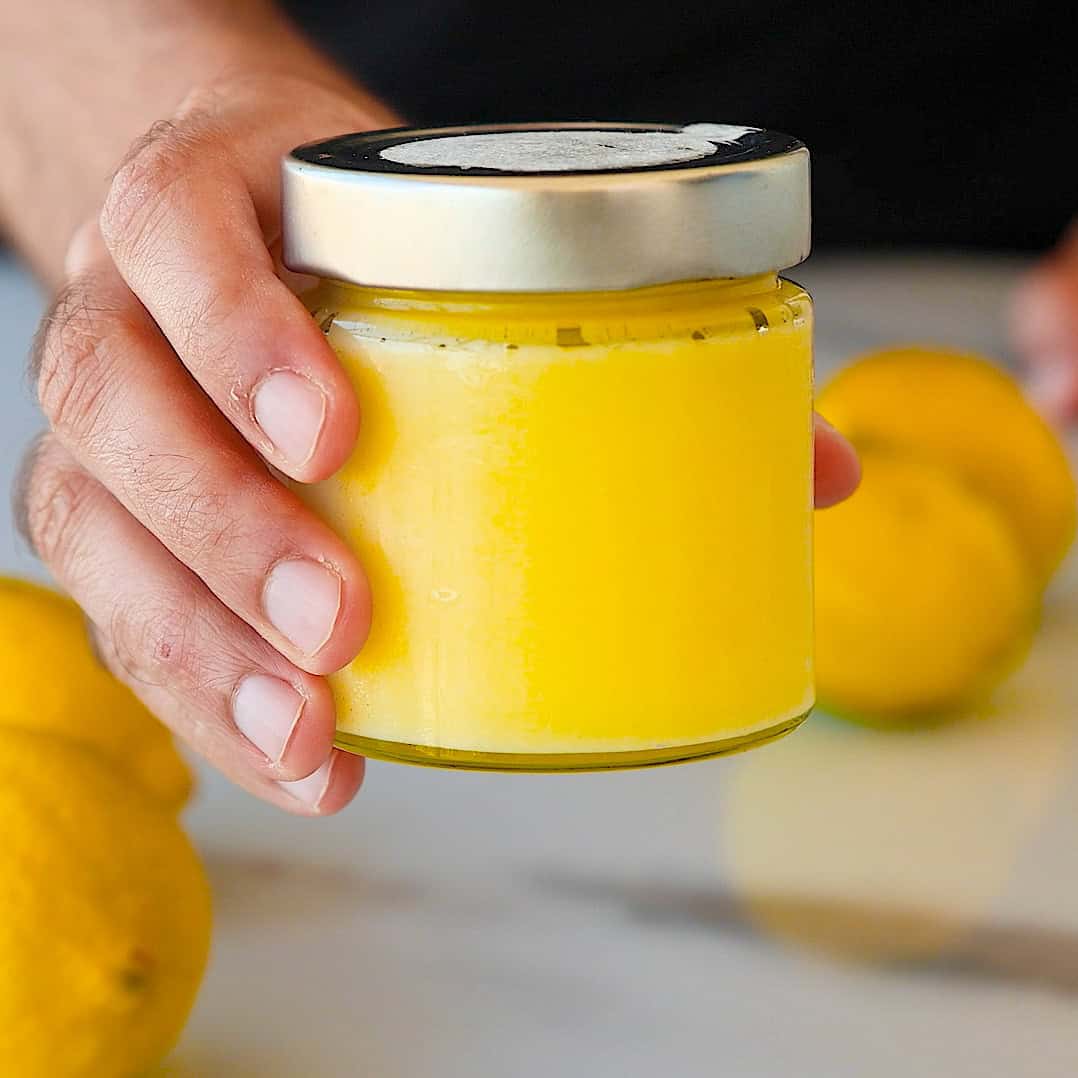
- Refrigeration: Store your lemon curd in an airtight jar or container in the refrigerator for up to 1 week.
- Freezing: For longer storage, freeze it for up to 3 months. Just be sure to thaw it overnight in the fridge before using.
- Pro Tip: Keeping the surface covered (like pressing plastic wrap directly onto the curd) will help prevent a skin from forming and keep it perfectly smooth.
Lemon Curd Uses
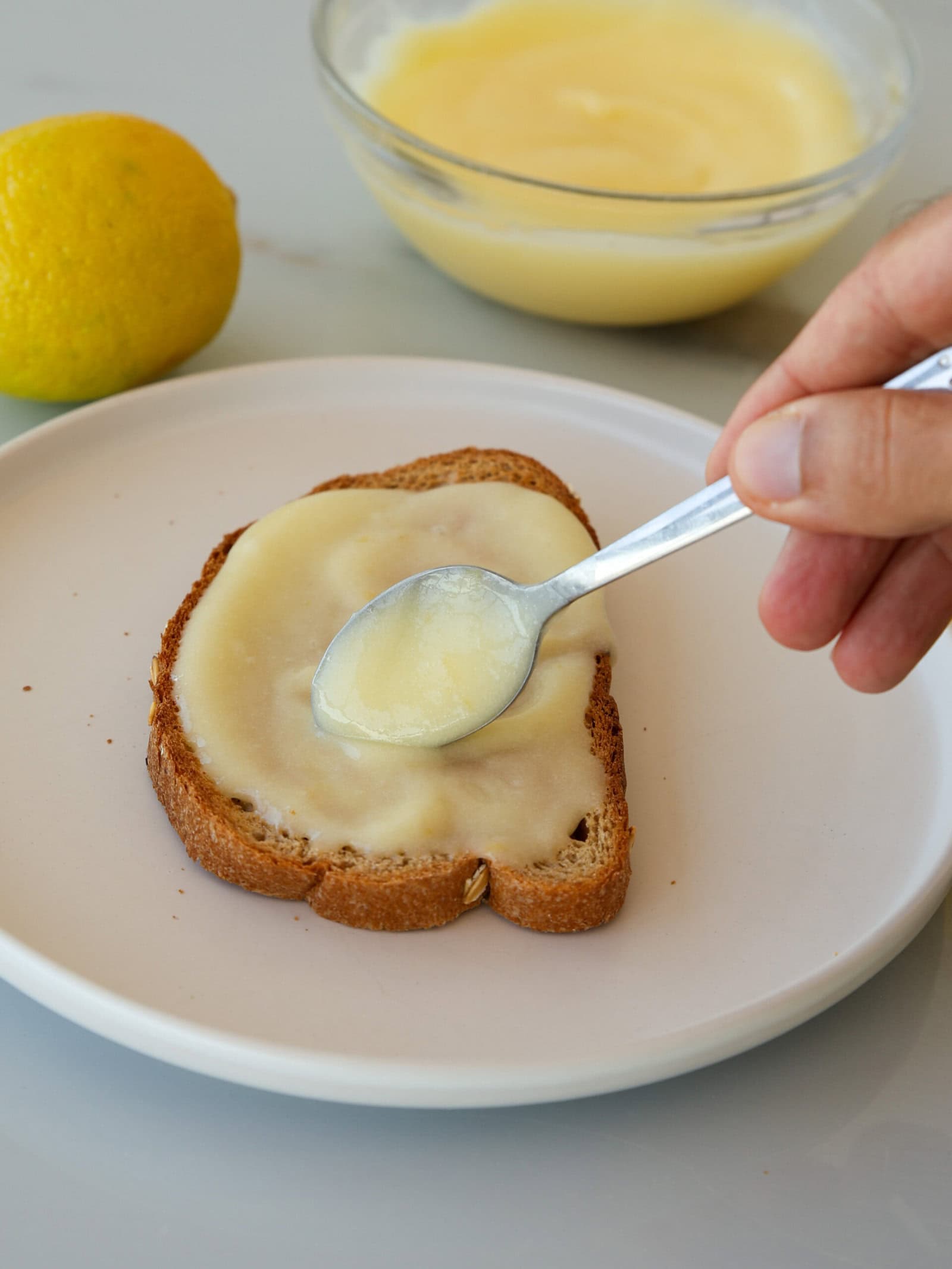
Lemon curd is incredibly versatile, adding a bright pop of citrus to both simple snacks and show-stopping desserts. Try spooning it over yogurt or oatmeal for breakfast, or swirl it into my 3-ingredient lemon ice cream for extra zip. It also makes a beautiful spread for toast, scones, waffles, or French crepes. For a true British experience, pair it with clotted cream.
For baking, the possibilities are endless. Use it as a filling for lemon thumbprint cookies, lemon cupcakes, pipe it into mini tart shells, or layer it into a no-bake lemon cheesecake for a burst of tangy flavor. It’s also fantastic spread atop lemon cheesecake bars, classic baked lemon cheesecake or drizzled over a soft, buttery lemon loaf cake.
You can also use lemon curd as a macaron filling, its smooth texture and zesty flavor balance perfectly with delicate almond shells. Or, swirl a spoonful into whipped cream for an instant lemon mousse, layer it in parfaits, or use it between dessert layers like my refreshing lemon tiramisu. It even makes a refreshing topping for pavlova or mini cheesecakes.
It’s also one of my favorite homemade food gifts for Christmas, just pour it into a pretty jar, add a ribbon, and it’s instantly gift-ready.

Easy Homemade Lemon Curd Recipe | Only 4-Ingredient
Equipment
Ingredients
- 2 Egg yolks
- 2 Whole eggs
- ¾ cup (150 g) Sugar
- 2 tablespoons Lemon zest
- ½ cup (120 ml) Lemon juice fresh
- ¼ cup (60 g) Unsalted butter cut into cubes
Instructions
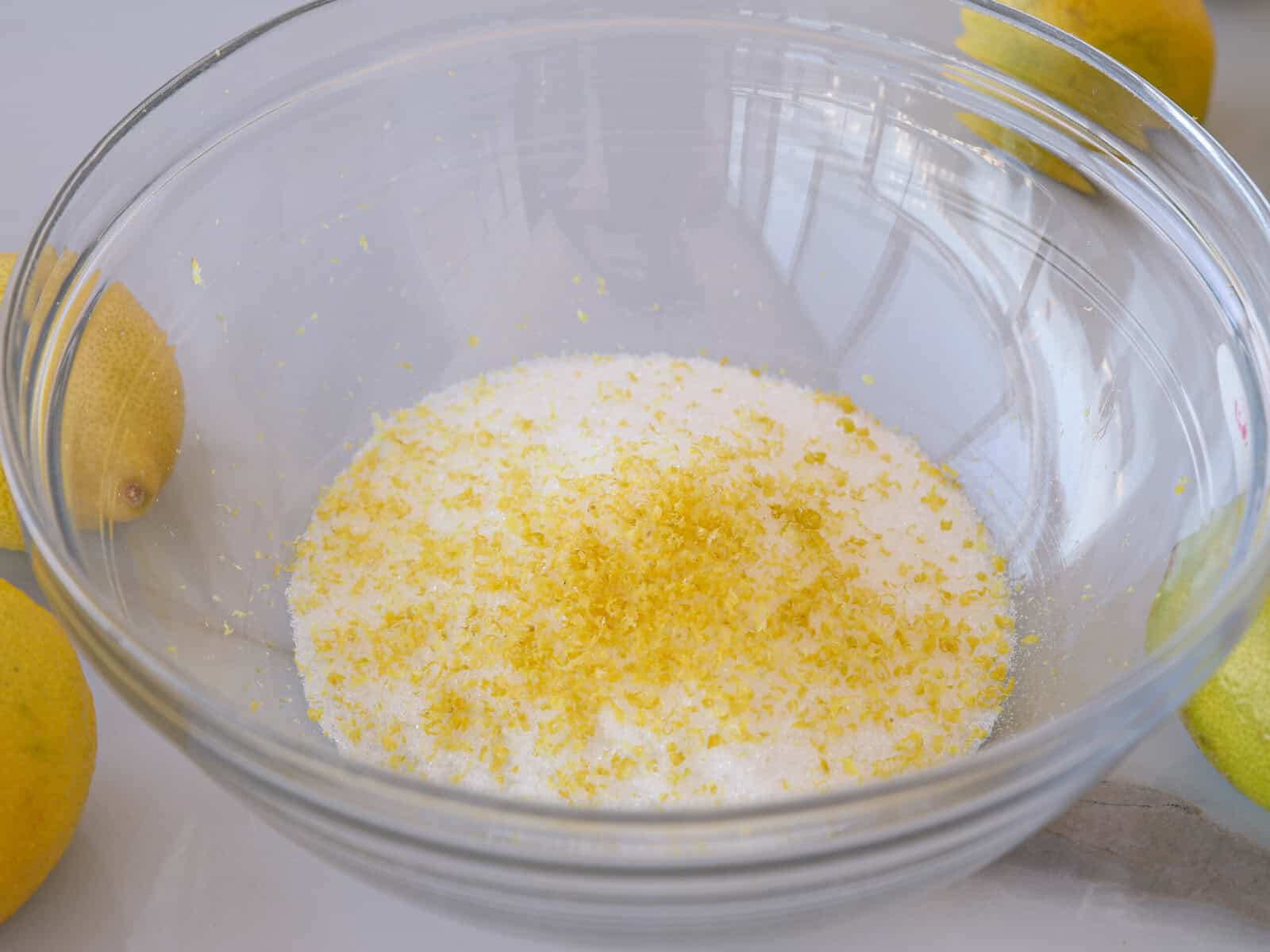
- Infuse the sugar with lemon zest: In a medium heatproof bowl, combine the sugar and lemon zest. Use your fingertips to rub the zest into the sugar until fragrant and slightly moist. This step helps release the natural lemon oils for extra flavor.
- Whisk the base: Add the egg yolks and whole eggs to the bowl and whisk until well combined and slightly thickened. Then whisk in the lemon juice until smooth.
- Cook the curd: Place the bowl over a saucepan with gently simmering water (double boiler method). Cook the mixture, whisking constantly, until it thickens enough to coat the back of a spoon, about 8–10 minutes, or until it reaches 170°F (77°C). Don’t let it boil, or the eggs may curdle.
- Add the butter: Remove the bowl from heat and immediately whisk in the butter, until completely melted and the curd is glossy and smooth.
- Strain for silkiness: Pour the curd through a fine-mesh sieve into a clean bowl or jar to remove any bits of cooked egg or zest. This ensures a perfectly smooth texture.
- Cool and chill: Press a piece of plastic wrap directly onto the surface to prevent a skin from forming. Let cool to room temperature, then refrigerate for at least 2 hours before using. The curd will continue to thicken as it cools.
Video
Notes
- Eggs vs. Yolks: Using both whole eggs and yolks gives this curd a balance of richness and lightness. For an ultra-creamy, custard-like texture, use 4 yolks instead of 2 yolks + 2 eggs.
- Use fresh lemons: Freshly squeezed lemon juice and zest make a big difference in flavor and aroma. Avoid bottled juice, it lacks the brightness and natural oils of fresh lemons.
- Infuse the sugar properly: Rubbing the lemon zest into the sugar helps release essential oils, giving your curd a stronger, more aromatic lemon flavor. Don’t skip this step!
- How to Know It’s Ready: The curd should coat the back of a spoon — if you run your finger across it, the line should stay clean. Avoid overcooking; curd that gets too hot may curdle.
- Strain for smoothness: Straining removes any bits of cooked egg or zest, resulting in a silky texture worthy of a bakery.
- Butter quality matters: Use unsalted butter for better control of flavor. Add it at the end to create a glossy, rich finish.
- Serving size note: This recipe makes about 1½ cups (360ml) of lemon curd, roughly 8 servings (2–3 tablespoons each).
Nutritional information is calculated for the entire batch, so adjust based on your portion size if needed - Storage: Store in an airtight jar in the refrigerator for up to 1 week, or freeze for up to 3 months. Thaw in the fridge overnight before using.
- Leftover egg whites: Don’t throw away your leftover egg whites! You can use them in other recipes like meringues, macarons, or fluffy omelets, see my guide on What to Do with Leftover Egg Whites.
Nutrition
FAQs
Nope! While they’re both lemony and creamy, lemon curd is richer and more intensely flavored, made with butter and eggs for a silky texture. Lemon pie filling usually relies on cornstarch for thickening, making it lighter and more gel-like.
While lemon curd is made with fresh, simple ingredients, it’s still a treat that contains a decent amount of sugar and fat. That said, you’ll get a little pop of vitamin C thanks to the fresh lemon juice, so it’s not all naughty.
Not all stores will carry lemon curd, but if they do, it’s usually near the jams and jellies or in the “international” aisle near the British goods.
Absolutely. You can easily double or triple this 4-ingredient lemon curd recipe, just make sure to use a large heatproof bowl and whisk constantly for even cooking. The cooking time may increase slightly, so keep an eye on the consistency.





I love it!!
I always do Lemon Butter the way my mother done it on the top,tastes better. JMHO.
My kids and granddaughter fight over this!!! It’s delicious, thank you!
I made this recipe – delicious! Thank you.
I’m an experienced home cook and had great success with your recipe. I found it just the proper balance between sweet and tart and, if you follow your instructions, the final product is smooth and velvety. I agree with your suggestion to use a water bath, gentle cooking of the eggs. However, I’m doubling the recipe next time, there wasn’t enough! I hope the larger volume doesn’t destroy the integrity of the formula. Have you done that and how did you find the results?
Hi John,
Thank you so much for your comment, I’m really glad you enjoyed it!
Yes, I’ve doubled this lemon curd many times and it works beautifully without affecting the texture or balance. The key is exactly what you mentioned: gentle heat and patience. When doubling, it may take a bit longer to thicken.
As long as you don’t rush it, you’ll get the same smooth, velvety result.
I also recommend straining the curd at the end to ensure it stays perfectly smooth.
Can ground flaxseed be used in place of the eggs if someone has an allergy to eggs? Also, can either date sugar or maple syrup be substituted for the sugar? I’m anxious to try the recipe; it sounds fabulous.
Thank you! 😊 I haven’t tried making lemon curd without eggs, but since eggs are what make it thick and creamy, flaxseed might not work the same way here. You could look for a vegan lemon curd recipe that uses cornstarch or another thickener instead. As for the sweetener, you can experiment, maple syrup or date sugar would both add a different flavor, but they should still taste delicious!
This lemon curd recipe is absolutely *foolproof* if you follow the steps, especially the crucial cook low and slow part – definitely avoid the urge to speed things up and end up with a grainy mess! I love the tip about infusing the sugar with zest for that extra zing. Using a double boiler seems key to preventing scrambled eggs, though I suspect my stove might try to run away with the heat. The idea of dolloping this creamy delight on cheese boards or even grilled fish sounds surprisingly delicious and like a fun way to impress guests. Just hope they don’t expect it to magically make their veggies taste better! Overall, a perfectly smooth guide to achieving lemony goodness.
Never thought it would be so easy! Great recipe, it’s chilling in the fridge right now. Thank you for this recipe!