
The Best Lemon Curd Thumbprint Cookies
This post may contain affiliate links.
Spread a little sunshine to your nearest and dearest with my easy recipe for Lemon Curd Cookies! Delightfully sweet-tart, chewy-soft cookies are brightly flavored with fresh lemon, then filled with a creamy, tangy citrus spread for a portable treat that tastes like a spring day personified. Just 10 ingredients and 15 minutes of prep required!
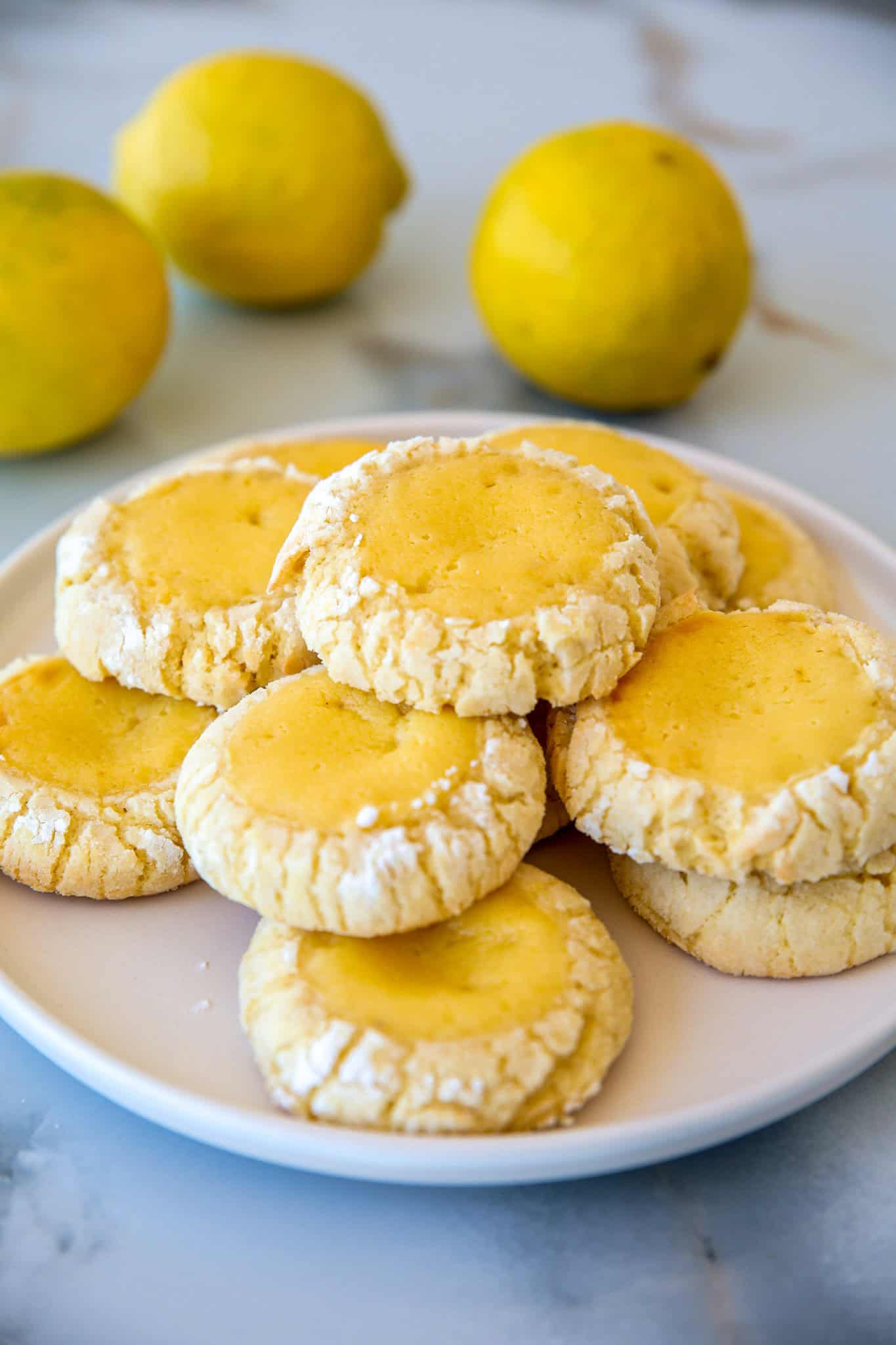
When it comes to year-round treats, lemon desserts are some of my favorites. Whether it’s these cheerful lemon curd thumbprint cookies, my ridiculously simple lemon posset, or my easy 3-ingredient lemon ice cream, the bright zing of citrus always brings a smile to my face. Plus, they’re the perfect palate cleanser after any meal—especially in the cold, dark depths of winter.
Ingredients & Substitutions

- Fresh Lemons – Whenever you make citrus-flavored dessert, starting with fresh fruit is always the move. Not only does fresh lemon juice taste brighter and less bitter than bottled, you also get the benefit of zest!
- Large Eggs & Egg Yolks – Whole eggs are used in the soft cookies, while egg yolks make our lemon curd extra lush. (Because I try to waste as little as possible, here are some creative ideas for What to Do with Leftover Egg Whites.)
- Granulated Sugar – Plain white sugar has a neutrally sweet flavor and neutral pH, which is exactly what we need with lemon’s acidity. Feel free to use an equal amount of caster/superfine sugar or cane sugar.
- Unsalted Butter & Salt – Another pro baking move is starting with unsalted butter and adding salt to taste. If possible, use European-style butter which has a higher milkfat and creamier consistency than conventional.
- Vanilla Extract – Adding a splash of vanilla in the cookies gives them a cozy warmth without dimming the citrus.
- All-Purpose Flour, Baking Powder, & Salt – Only have self-rising flour? You’re in luck, it can replace all three.
This is just a short review of the ingredients; for the complete recipe, including quantities, scroll down to the recipe card 👇
How to Make Lemon Thumbprint Cookies with Lemon Curd
Watch the full video recipe to learn how to make the BEST Lemon Curd Cookies. This step-by-step tutorial simplifies the process, offering tips and tricks to guarantee perfect results every time.
Prefer the written recipe? Scroll down to the recipe box for the full written recipe! 👇
Ingredient Spotlight: Lemons
It’s no secret that lemons are the star of any lemon curd cookie! Their bright acidity and floral zest are what make each bite sing. But not all lemons are created equal, and knowing a little bit about their varieties and seasonality can help you get the very best results in your baking. Here are a few types to look out for:
- Eureka Lemons – These are the classic, supermarket-standard lemons you’ll find year-round. They have a bright, tangy acidity and plenty of zest.
- Lisbon Lemons – Nearly identical to Eureka, but slightly smoother-skinned and a bit juicier. They also thrive year-round.
- Meyer Lemons – A cross between a lemon and a mandarin orange, Meyers are less acidic and more fragrant, with a subtle sweetness that makes them perfect for curd, custards, and desserts. They’re typically available in the winter months, which makes them extra special.
- Pink Lemons – If you’re lucky enough to find pink lemons (with variegated green-and-white striped skin and blush-colored flesh), grab them! They offer a slightly milder flavor (like Meyers) but are particularly gorgeous.
While standard lemons are available all year, their peak season in the U.S. runs from winter through late spring (roughly January to May). That’s when the fruit is juiciest and most flavorful. Meyer lemons, in particular, are usually harvested December through March, so if you spot them at your market during these cooler months, it’s worth stocking up. (You can freeze them whole!)

Substitutions for Lemons in Baking
If you don’t have lemons on hand or you want to experiment, other citrus fruits can step in with similar acidic brightness:
- Limes – More tart and slightly bitter, limes give desserts a sharper punch. They’re a natural swap for lemon juice in curds or glazes.
- Oranges – Sweeter and less tangy, oranges add a softer citrus note. They work beautifully in combination with lemon for layered flavor.
- Grapefruit – Provides a more complex, slightly bitter edge that can make baked goods taste more sophisticated.
- Citric Acid (Powdered) – In a pinch, a tiny bit of citric acid can mimic lemon’s tang in frostings or curds when fresh citrus isn’t available. It’s also a great zing-booster if you use sweeter citrus like oranges.
Optional Variations & Dietary Adaptations
- Gluten-Free – I haven’t tried it, but I think a high-quality all-purpose GF flour blend with xanthan gum should work here. Just make sure to let the dough rest for 30 minutes before baking to allow it to rehydrate, this helps prevent a grainy texture.
- Dairy-Free – Feel free to swap in your favorite vegan butter.
- Mix & Match – Have fun swapping out the base cookie or filling. You can use my jam thumbprint cookie recipe to make lemon curd shortbread cookies. Or, swap the filling with a complementary jam to keep things interesting. (Don’t raspberry lemon thumbprint cookies sound good?)


Expert Tips & Tricks
- Chill the dough. Don’t skip this step! Chilling firms up the butter in the dough, which prevents your cookies from spreading too much in the oven. It also helps the flavors develop for a richer, more balanced taste.
- Use fresh lemons. Always zest and juice fresh lemons rather than using bottled juice. The zest contains essential oils that bring bright, floral notes, while fresh juice delivers that clean citrus zing bottled juice just can’t match.
- Zesting technique. When zesting, only remove the bright yellow outer layer and avoid the bitter white pith underneath. A microplane or fine grater works best for evenly textured zest.
- Curd thickness. Cook your lemon curd slowly over low to medium-low heat, stirring constantly. It should coat the back of a spoon when it’s ready. Avoid high heat or boiling, which can scramble the eggs and create a grainy texture.
- Extra smooth. For a silky, bakery-style lemon curd, strain it through a fine-mesh sieve after cooking. This removes any bits of zest or cooked egg for a perfectly smooth finish.
- Time it right. Fill the cookies only after they’ve cooled completely. Adding curd to warm cookies can cause it to melt and run, instead of setting neatly in the center.
- Dusting with sugar. If you like a bakery-style look, a light dusting of powdered sugar just before serving makes the lemon curd pop visually and and balances the tartness with a touch of extra sweetness.

How to Serve Lemon Curd Cookies
Lemon curd cookies are as versatile as they are delicious, and their bright, tangy flavor makes them a welcome treat for any occasion. On a holiday cookie plate, they shine as a refreshing contrast to richer classics like eggless butter cookies, snickerdoodles, snowflake cookies, edible chocolate pinecones, and chocolate crinkle cookies.
They’re also right at home at an afternoon tea, nestled alongside scones, finger sandwiches, and a pot of Earl Grey or chamomile. For spring and summer celebrations like Easter brunches, bridal showers, or baby showers, lemon curd cookies pair beautifully with other pastel-colored desserts.
When it comes to bigger occasions like weddings, birthdays, or dessert buffets, lemon curd thumbprint cookies look stunning displayed on a tiered stand, where their glossy tops catch the light and draw the eye. Of course, they don’t need a special occasion to be enjoyed; a couple of cookies with an afternoon coffee or after a weeknight meal feels like a small luxury.

Storage & Reheating
- Filled Cookies – Store in the refrigerator in a single layer for up to 5 days. Keeping them chilled helps the lemon curd stay firm and the cookies from getting soggy.
- Unfilled Cookies – Baked cookies without filling can be stored at room temperature in an airtight container for up to 3 days, then filled just before serving for the best texture.
- Make the Curd Ahead – Lemon curd can be prepared up to 1 week in advance. Keep it in the fridge and let it cool completely before filling cookies to avoid melting.
- Freeze the Dough – Unfilled cookie dough can be frozen for up to 3 months. Thaw in the refrigerator before rolling and baking.
- Freezing Tip – While unfilled dough freezes beautifully, filled cookies don’t freeze well since the curd can separate after thawing. For best results, freeze the dough and add the lemon curd later.

More Cookie Recipes
The Best Lemon Curd Thumbprint Cookies
Ingredients
For the lemon curd:
- ½ cup (100 g) Sugar
- 1 Lemon zest from one lemon
- 3 Egg yolks large
- ¼ teaspoon (¼ teaspoon) salt
- ¼ cup (60 ml) Lemon juice
- ¼ cup (55 g) Butter, unsalted unsalted
For the Lemon cookies:
- ¾ cup (150 g) Sugar
- 1 tablespoon Lemon zest
- ½ cup (115 g) Butter, softened
- 2 Eggs large
- 2 tablespoons (30 ml) Lemon juice
- 1 teaspoon Vanilla extract
- 2 cups + 3 tablespoons (275 g) Flour
- ½ teaspoon Baking powder
- ¼ teaspoon Salt
Instructions
- Make the Lemon Curd: In a bowl, combine sugar and lemon zest. Rub together with fingertips to release the oils.
- Whisk in egg yolks and salt until pale and slightly fluffy.
- Heat lemon juice in a saucepan until just boiling. Slowly pour into the egg mixture, whisking constantly.
- Return mixture to saucepan. Cook over low heat, stirring constantly, until thickened (4–5 minutes). Do not boil. Remove from heat, stir in butter until smooth. Strain for a silky texture.
- Chill: Transfer to a bowl, press plastic wrap directly onto the surface, and let cool to room temperature.
- Make the Cookies: In a large bowl, combine sugar and lemon zest. Rub together with fingertips. Whisk in softened butter, eggs, lemon juice, and vanilla until smooth.
- In a separate bowl, whisk flour, baking powder, and salt. Fold into wet mixture until you get a soft, smooth dough. Cover and chill for at least 1 hour (or overnight).
- Assemble & Bake: Preheat oven to 350ºF (180ºC). Line two baking sheets with parchment paper.
- Scoop about 2 tablespoons of dough per cookie. Roll into balls, coat in powdered sugar, and place on prepared sheets.
- Use a ½-tablespoon measuring spoon to make a well in the center of each. Fill with 1 teaspoon lemon curd.
- Bake for 9–12 minutes, until cookies are set, edges crack slightly, and curd puffs up.
- Cool on the tray 5–10 minutes, then transfer to a wire rack.
Video
Notes
- Chill the Dough: Chilling the dough prevents the cookies from spreading too much and helps maintain their shape. Don’t skip this step.
- Fresh Lemons: For the best flavor, always use fresh lemon juice and zest. Bottled juice won’t provide the same zing.
- Curd Thickness: Cook the lemon curd over low heat until thickened, but avoid boiling to prevent curdling.
- Consistency of Curd: Straining is optional but recommended for a smooth, bakery-style finish.
- Storage Tip: Store filled cookies in the fridge for up to 5 days, or freeze unfilled dough for up to 3 months.
- Got leftover egg whites? Here are some creative ideas What to Do with Leftover Egg Whites
Nutrition
🤔 Common Questions
Yes, you can definitely make the lemon curd ahead of time! Lemon curd stores very well and can be kept in the refrigerator for up to one week in an airtight container. Just make sure to cover the surface of the curd with plastic wrap to prevent a skin from forming. You can also freeze it for up to 3 months. Thaw the curd overnight in the fridge before using it to fill the cookies.
Yes! You can make these cookies gluten-free by using a gluten-free flour blend. Make sure to use a blend that includes xanthan gum or guar gum, as these ingredients help to replicate the elasticity that gluten provides. The cookies may be a bit more delicate, so handle the dough gently and make sure it’s well-chilled before shaping and baking.
Absolutely! If you’re short on time or prefer a quicker option, store-bought lemon curd works just fine for this recipe. However, homemade lemon curd offers a fresher, tangier flavor that really elevates these cookies. If you use store-bought, try to choose a high-quality brand for the best results.







One of the best cookies I’ve ever made!