
Creamy Lemon Cheesecake
This post may contain affiliate links.
Add some sunshine to your dessert table with my delectable recipe for Lemon Cheesecake with lemon curd topping. Each bite is bursting with the bright tang of citrus, the creamy richness of baked New York-style cheesecake, and the buttery crunch of a classic graham cracker crust. Delightful!
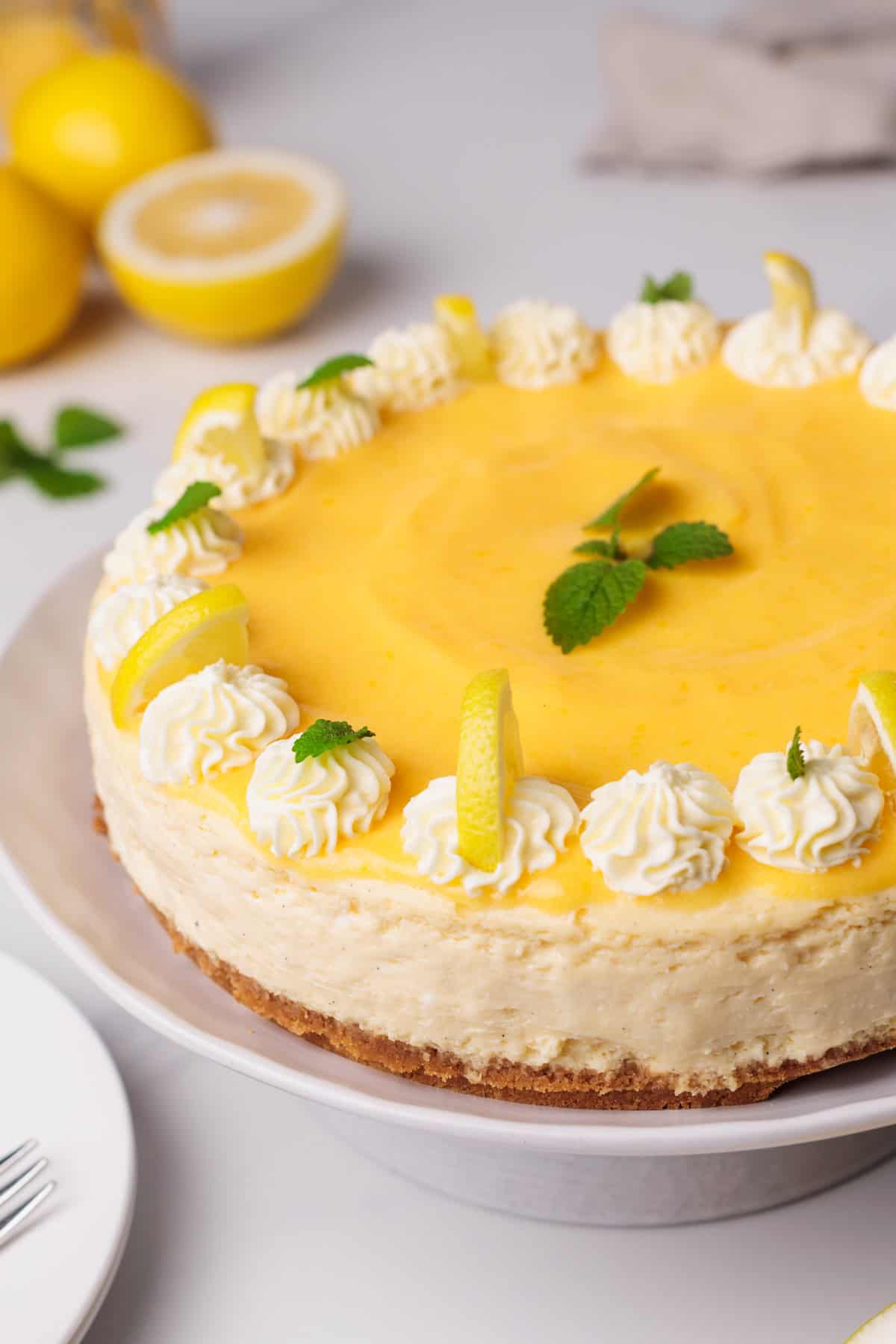
If you’ve followed my blog or YouTube channel for a while, you know cheesecake recipes are one of my specialties. I have dozens of them on the site, including one for a light and lovely no bake lemon cheesecake. This baked version is for fans who prefer more of a classic cheesecake texture rather than the moussy airiness of no-bake options.
Ingredients & Substitutions
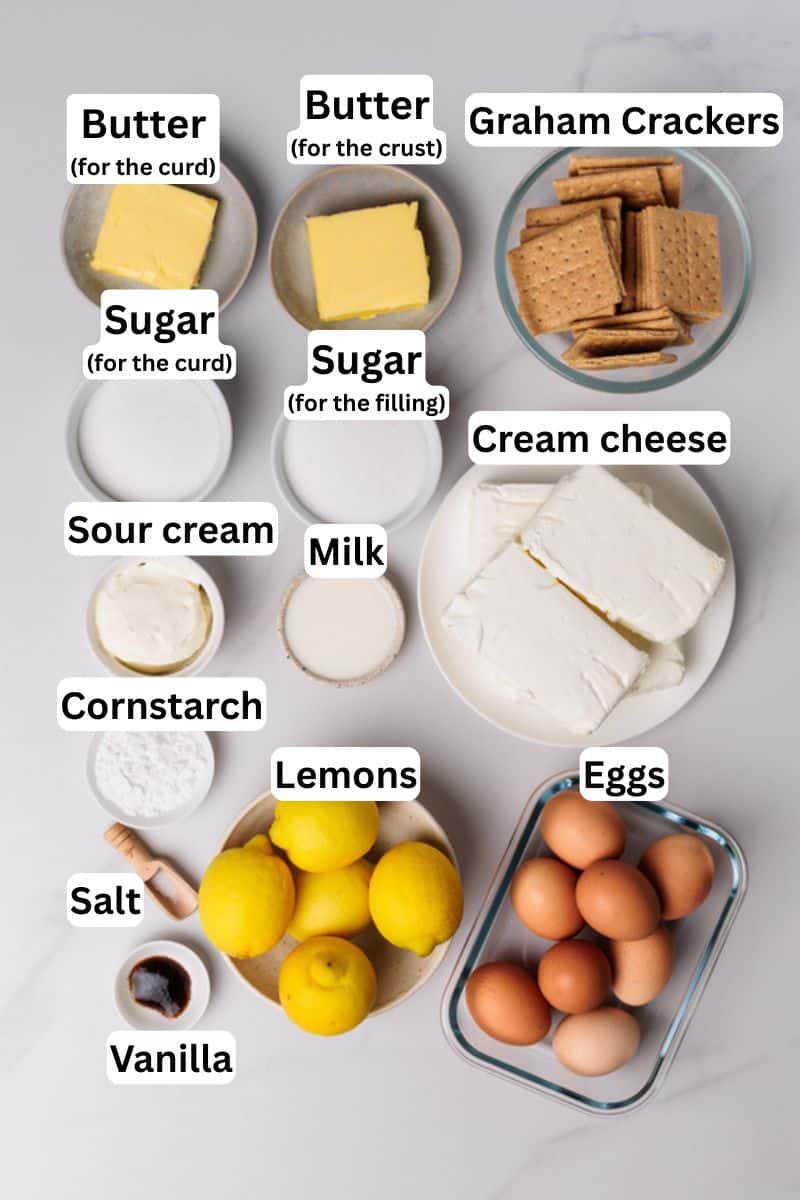
- Graham Crackers – Feel free to use either cinnamon or honey graham crackers. Alternatively, swap in the biscuits of your choice.
- Butter & Milk – For binding the graham cracker crust. Any dairy or plant-based milk works.
- Granulated Sugar – White sugar has a neutral sweetness, which ensures the bright flavor of lemons can shine.
- Fresh Lemon Zest & Juice – “Fresh” is the operative word here. Bottled lemon juice tastes rather bitter on account of extra lemon essential oil, plus you miss out on the extra brightness from the zest.
- Cream Cheese – Make sure you’re reaching for full-fat block-style cream cheese for the best results.
- Large Eggs – If you’re using liquid eggs or a different size of egg, note that each large egg is equivalent to about 3 tablespoons or a scant ¼ cup.
- Vanilla Bean Paste – I love the pretty black flecks vanilla paste adds to the mix, but feel free to swap in an equal amount of vanilla extract instead.
- Sour Cream – Adds tang and creaminess. Use full-fat, or substitute with full-fat Greek yogurt.
- Cornstarch – For thickening the lemon cheesecake filling. If corn is a dietary no-no, potato starch is a perfect 1:1 substitute.
- Lemon Curd – My homemade lemon curd is simple to make with just a handful of basic ingredients, but you’re welcome to use store-bought as a shortcut.
This is just a short review of the ingredients; for the complete recipe, including quantities, scroll down to the recipe card 👇
Lemon Cheesecaake: Video Recipe
Watch the full video recipe to learn how to make the BEST Lemon Cheesecake recipe.
Prefer the written recipe? Scroll down to the recipe box 👇
How to Make Baked Lemon Cheesecake: Step-By-Step
Optional Variations & Dietary Adaptations
If you’re looking to experiment with other citrus, here’s how other fruits compare:
- Limes: The closest substitute in terms of acidity. They’ll give your cheesecake a sharper, slightly more bitter edge and a distinctly different flavor profile. Great if you’re going for a tropical twist.
- Oranges: Much sweeter and less acidic. You can use orange juice and zest, but the result will be softer, sweeter, and less tangy. You may want to reduce the sugar slightly or add a splash of lemon or lime to balance it out.
- Grapefruit: More bitter and less predictable. It can work, but it tends to overpower delicate desserts like cheesecake unless used sparingly.
- Yuzu or other specialty citrus: These can add a unique, gourmet flavor, but they’re often more aromatic than acidic. If using them, consider blending with lemon juice to maintain balance.
- Cheesecake bars: If you’re looking for a quicker, slice-and-serve option, try my lemon cheesecake bars. They have the same creamy texture and bright citrus flavor but are much easier to portion and perfect for parties.
Expert Tips & Tricks
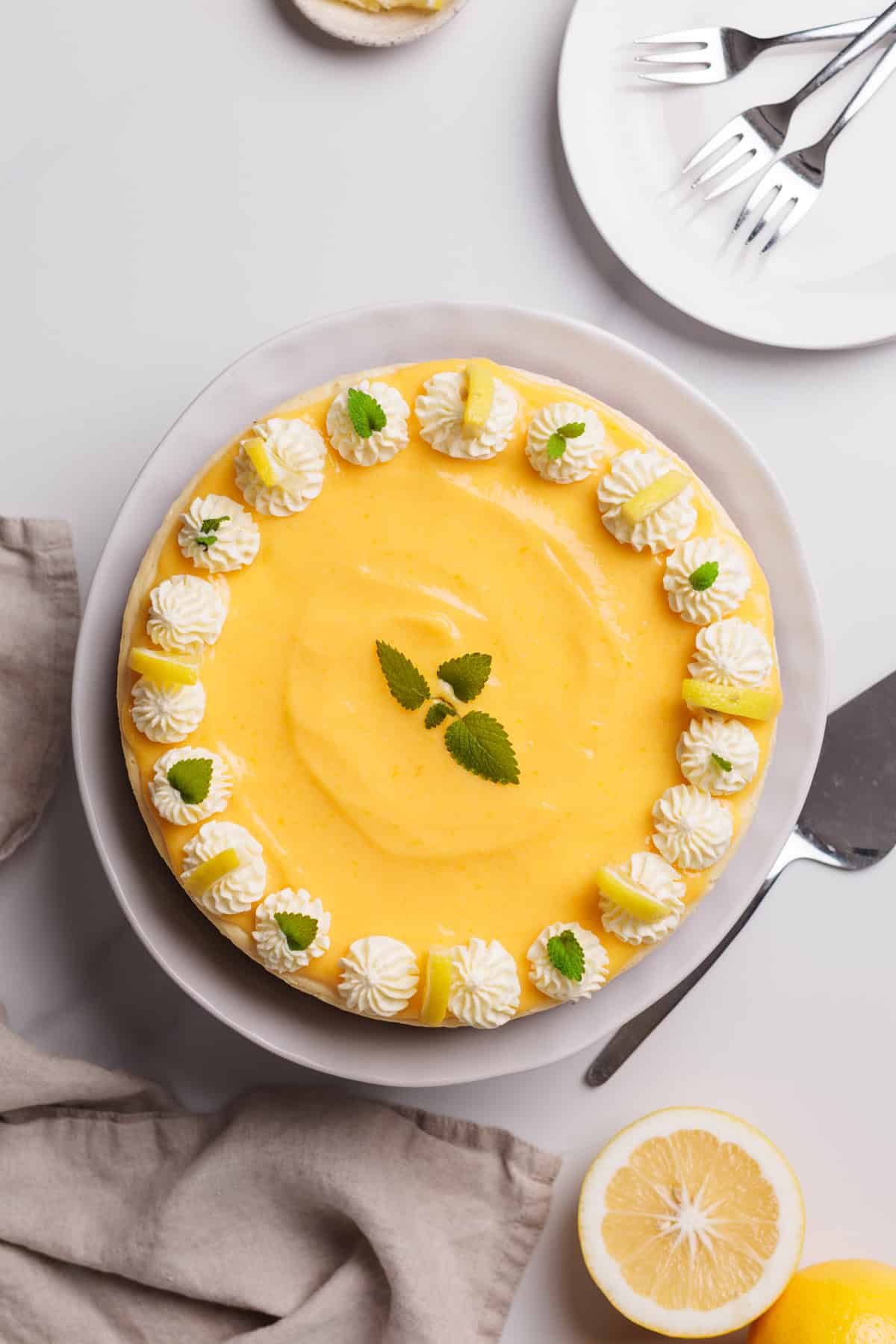
- The Perfect Crust – If the crust mixture feels a little too dry, just stir in 1 tablespoon of milk. This will help everything bind together nicely. Also, be sure to press the crumbs down firmly into the pan, this will prevent the crust from crumbling when you slice into it.
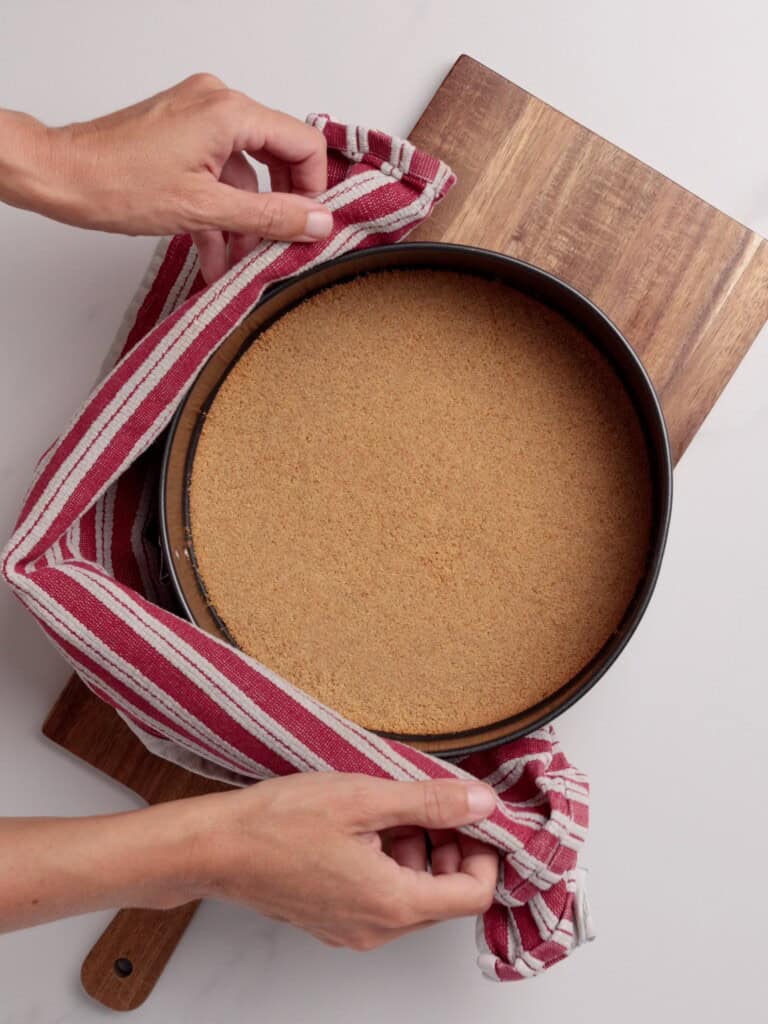
- Water Bath Tip – Using a water bath for baking cheesecake is key for ensuring it bakes evenly and preventing annoying cracks on top. Just wrap your springform pan tightly in foil before lowering it into the water-filled roasting pan. This seals everything up so no water can sneak in.
- No Roasting Pan? No Problem – Place a pan of hot water on the bottom rack to create steam and help the cheesecake bake gently.
- Crack Prevention – Don’t overmix after adding eggs, and avoid opening the oven door, temperature changes can cause cracks.
- Use Up Those Egg Whites – Since the lemon curd needs just the yolks, you’ll have some leftover egg whites. Put them to good use in meringues, pavlova, or macarons. Here are my favorite ideas for using up extra egg whites.
- Time’s Up – The baking time can vary depending on your oven and pan type. The cheesecake is ready when the edges look set but the center still has a gentle jiggle when you shake the pan.
How to Store Lemon Curd Cheesecake
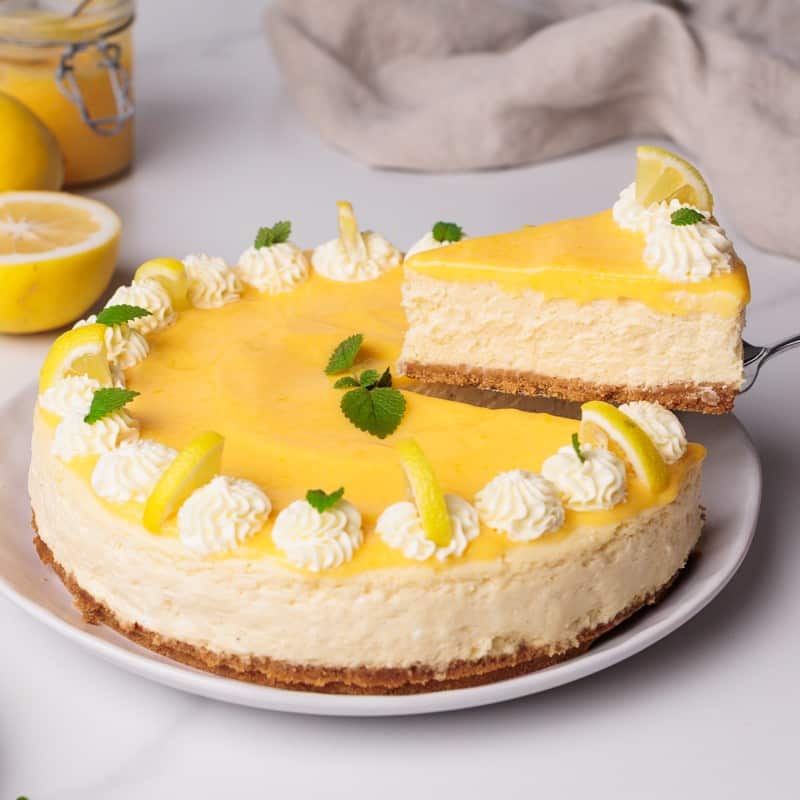
- Refrigerator: Store the baked lemon cheesecake covered in the refrigerator for up to 4 days.
- Freezer: The cheesecake can be frozen (without the lemon curd topping) for up to 2 months. Wrap tightly in plastic wrap and aluminum foil to prevent freezer burn.
- Thawing: When ready to serve, thaw the frozen cheesecake in the refrigerator overnight before adding the fresh lemon curd topping.
More Cheesecake Recipes
- Creamy Pistachio Cheesecake
- Baked Blueberry Cheesecake
- Creamy Peanut Butter Cheesecake
- Salted Caramel Cheesecake
- Crème Brûlée Cheesecake
More Lemon Desserts
Lemon Cheesecake Recipe
Ingredients
For the crust:
- 7 oz (200 g) Graham crackers or any biscuits that you like *read notes
- 6 tablespoons (90 g) Unsalted Butter melted
- 1 tablespoon (15 ml) Milk if needed
For the filling:
- 1 cup (200 g) Sugar
- 1 tablespoon Lemon zest
- 4 cups (900 g) Cream cheese softened
- 4 Eggs large
- 1 teaspoon Vanilla bean paste or extract
- pinch Salt
- ¼ cup (60 ml) Lemon juice freshly squeezed
- ½ cup (115 g) Sour cream
- 2 tablespoons (16 g) Cornstarch
For the topping:
- 1½ cups (360 g) Lemon curd just enough to cover the cheesecake
Instructions
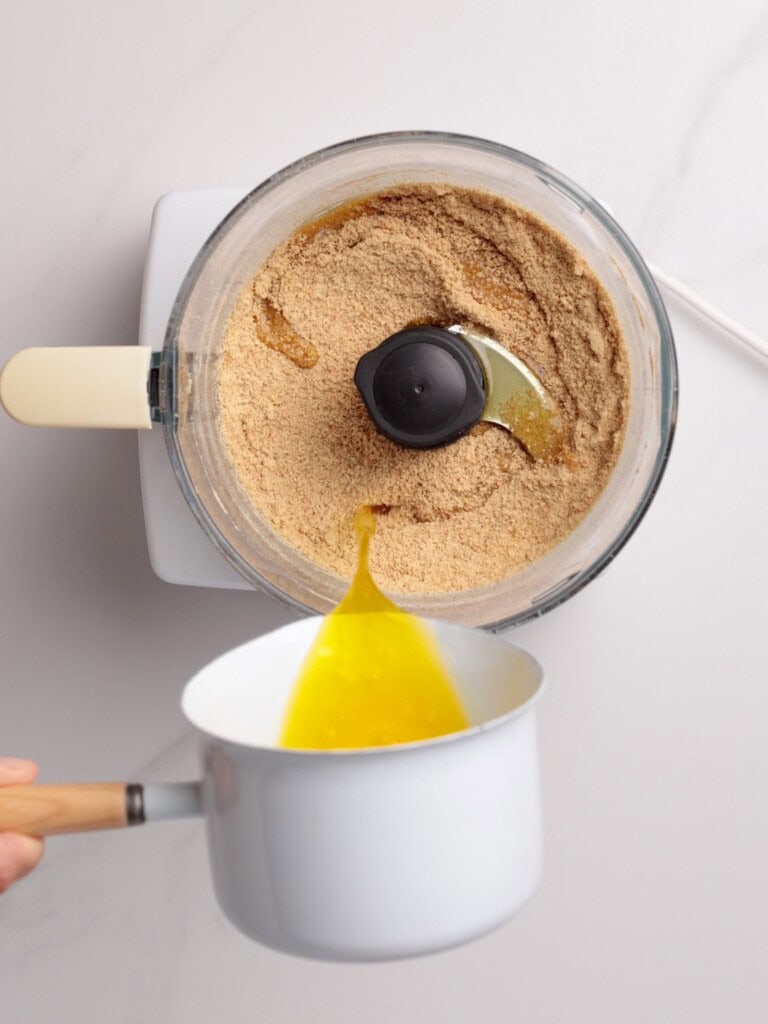
- Prepare the crust: Preheat oven to 325°F (160°C). Pulse the graham crackers in a food processor until fine crumbs form. Add the melted butter and pulse until evenly combined. If the mixture feels dry, add 1 tablespoon of milk. Press the crumbs firmly into the bottom of a 9-inch (23cm) springform pan.
- Bake for 7–8 minutes, then set aside to cool.
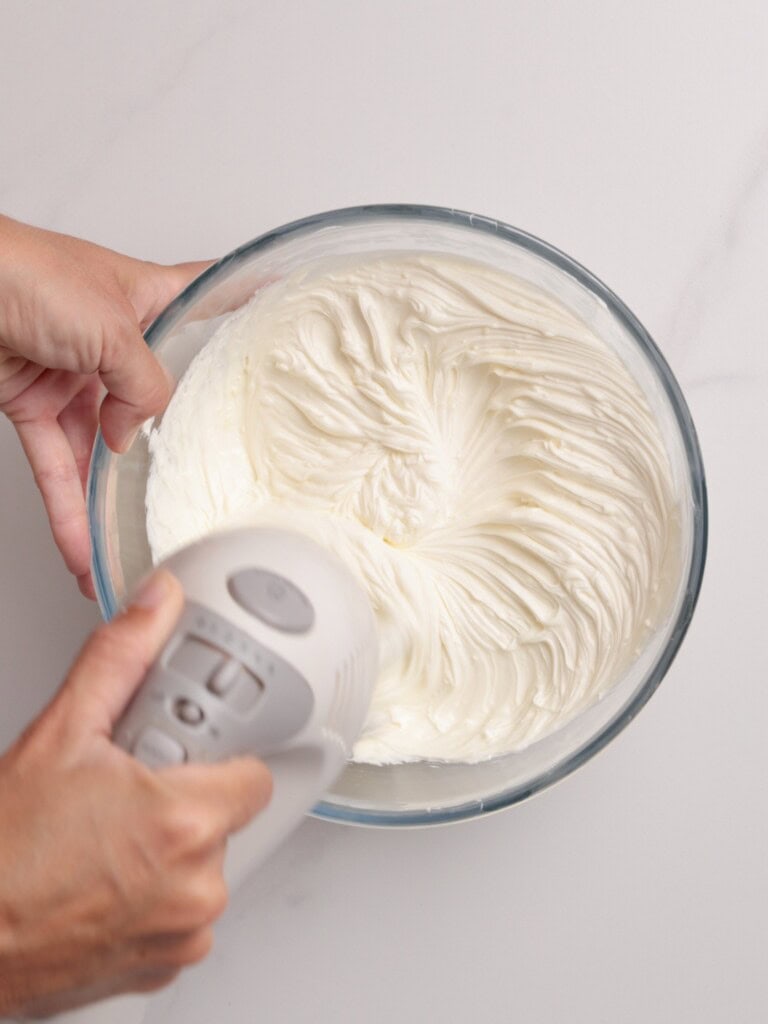
- Make the cheesecake batter: In a large bowl, rub the lemon zest into the sugar using your fingertips until fragrant. This releases the lemon oils and intensifies the flavor. Add the softened cream cheese and beat until smooth and creamy. Add the eggs one at a time, mixing just until incorporated. Add vanilla, lemon juice, sour cream, salt, and cornstarch. Mix on low speed until smooth. Do not overmix.
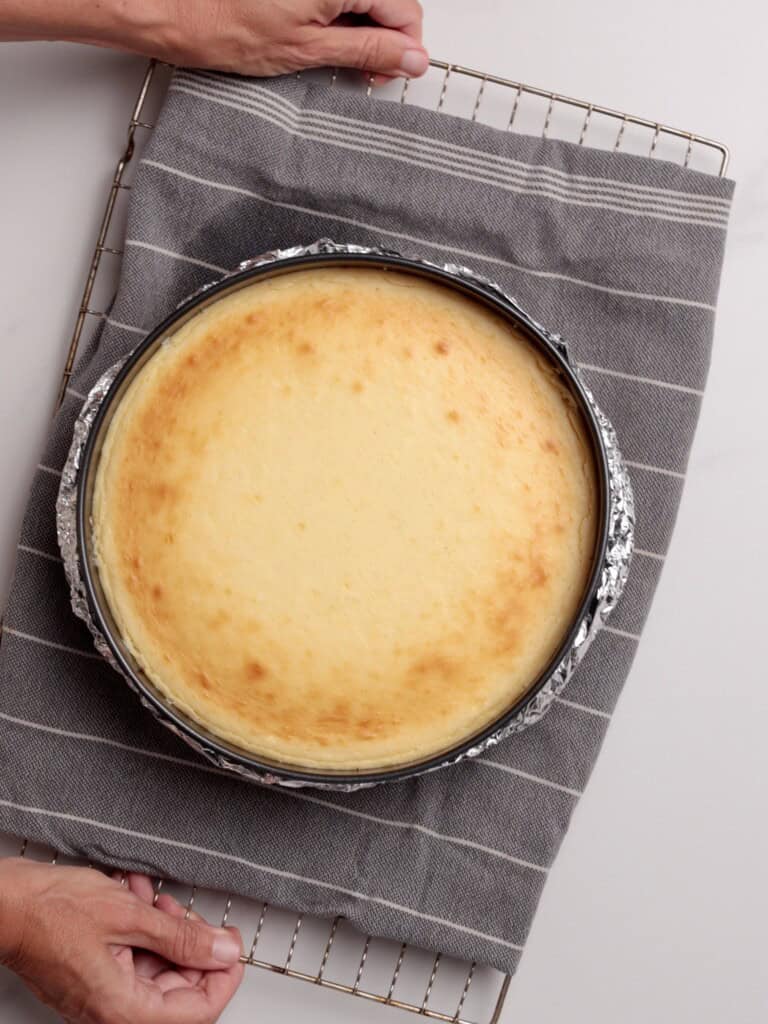
- Prep the pan: Wrap the bottom and sides of the springform pan tightly with aluminum foil (a double layer works best) to prevent water from leaking in during baking. Place the wrapped springform pan inside a large roasting pan. Pour the cheesecake batter over the cooled crust.
- Bake the cheesecake: Carefully place the roasting pan with the cheesecake into the oven. Once it is on the oven rack, pour hot water into the roasting pan until it reaches about halfway up the sides of the springform pan. Bake at 325°F (160°C) for 50–65 minutes, until the edges are set and the center still slightly jiggles.
- Turn off the oven and leave the cheesecake inside with the door closed for 1 hour. Remove and cool at room temperature for another hour, then refrigerate for at least 4 hours, preferably overnight.
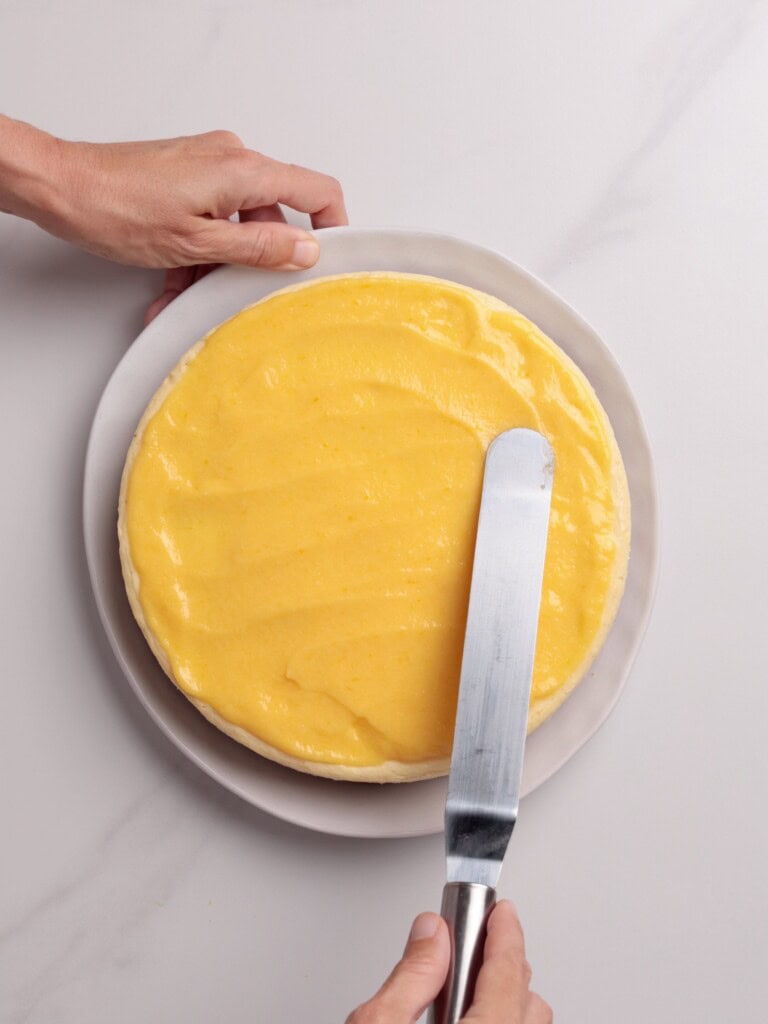
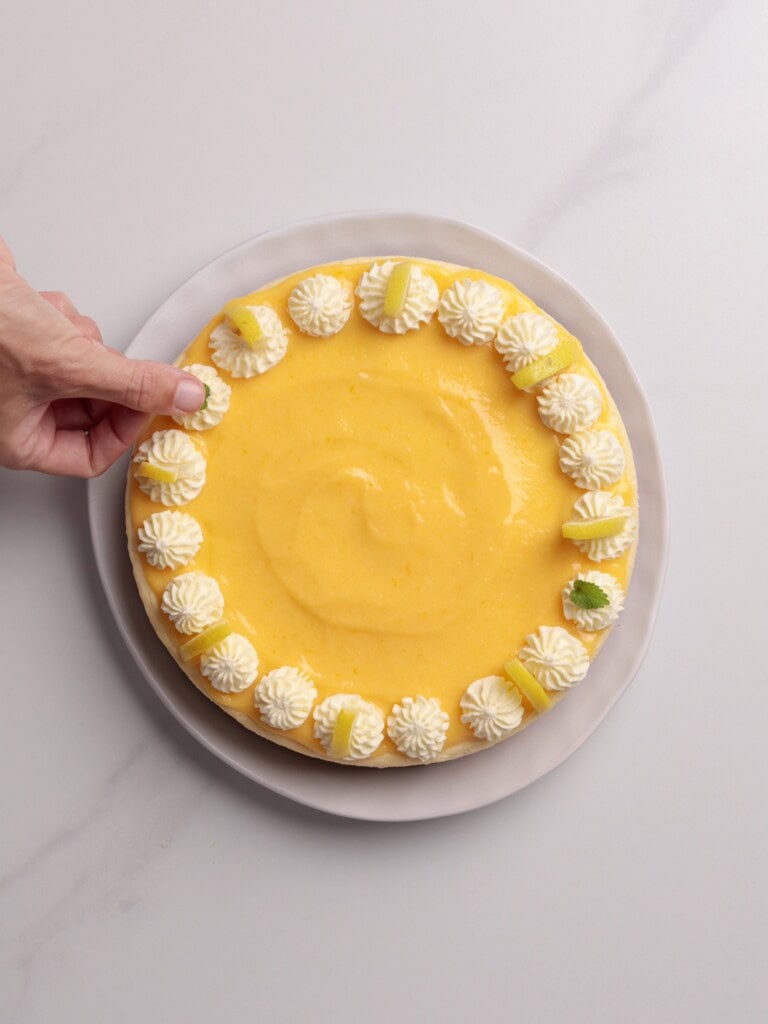
- Assemble the cheesecake: Spread chilled lemon curd evenly over the cold cheesecake. Garnish with lemon slices, whipped cream, or fresh berries if desired. Slice and serve.
Video
Notes
- Crust: If the crumb mixture feels too dry, add 1 tablespoon milk to help bind the crust. Press the crumbs firmly to prevent crumbling when slicing.
- Water bath: A water bath helps the cheesecake bake evenly and prevents cracks. Wrap the pan tightly with foil to avoid water leaking inside.
- Roasting pan: Before starting the recipe, make sure you have a large roasting pan that a 9-inch springform pan can easily fit into for the water bath. If you don’t have a roasting pan, you can place a separate pan filled with hot water on the bottom rack of the oven while the cheesecake bakes. This creates steam in the oven, helping the cheesecake bake more gently and reducing the chance of cracks.
- How to prevent cracks: Do not overmix the batter after adding eggs. Also avoid opening the oven during baking.
- Leftover egg whites: The lemon curd uses extra yolks. Use the leftover egg whites for: meringues, pavlova, macarons. You can find many ideas here: Leftover egg whites recipe ideas.
- Baking time: Baking time may vary depending on your oven and the type of pan you use. The cheesecake is ready when the edges look set but the center still jiggles slightly when gently shaken.
- Make ahead: This cheesecake is best made one day in advance. The flavor and texture improve after chilling overnight.
- Storage: Store covered in the refrigerator for up to 4 days. You can also freeze the cheesecake (without topping) for up to 2 months.
Nutrition
FAQs
The beauty of a lemon cheesecake is that it doesn’t require much fussy decoration. That said, a few simple garnishes can really make your cheesecake shine. Start with thin lemon slices, twists, or candied lemon peel for a pop of color. Fresh berries like raspberries or blueberries pair beautifully and add contrast, while a few dollops of whipped cream can make it feel extra special.
Yes, but a water bath gives the smoothest texture and helps prevent cracks.
The edges should be set while the center still has a slight jiggle. It will firm up as it cools.


Finally got a chance to try your version, David… (except w/gluten free crust…) so light, and as Wanda said… “delicate.” It has perfect texture. My recipe can sometimes be “iffy” in that respect. You remain the “cheesecake master” in my book!
This is the best cheesecake I have ever had. First time making it and I was worried it was going to be very dense since it didn’t rise a lot. Couldn’t be more wrong. Light and delicate and delicious. I will make this again for a special occasion.
Hi, David… I’m a great fan of your recipes. I just wanted to tell you that I developed a similar recipe about 25 years ago, and it has long been my favorite… and most praised cheesecake. I use coconut and almonds for a gluten free crust on this one and fold my lemon curd into the cheesecake batter prior to baking. I’m looking forward to trying your version. Thanks so much for your work in developing and presenting these recipes for us!
Hi Dana
I would like your full recipe if you don’t mind. In return I could share my banana cheese cake. It is the best cheese cake that I ever eat. Monique
Monique… I’m not sure whether my recipe will post here or not… it is rather more lengthy than usual… but I’ll try. I’d be delighted to also try your banana version. Thank you! Dana’s Gluten Free Lemon Custard Cheesecake
Note: This recipe will fill a 13” spring-form pan. A 10” pan may be used, but it is possible, depending on the size of eggs used, that there will be batter left over. In such a case, I simply bake the extra batter in a small ramekin or two.
Ingredients:
Gluten-Free Crumb Crust (Substitute for Graham Cracker Crust)
1 cup slivered or chopped almonds
1 cup shredded coconut
1 Tbsp. gluten-free flour blend (Namaste, Cup 4 Cup, or Better Batter Brands all work well.)
¼ cup granulated pure cane sugar
1 – 2 Tbsps. real butter (not margarine)
Lemon Curd/Custard:
6 large eggs, beaten well with a fork
1 ¼ cups granulated pure cane sugar
1 Tbsp. cornstarch (Arrowroot or Tapioca starch may be used in case of a corn allergy.)
¾ cup lemon juice (Fresh is always best, but bottled juice may be used with decent results.)
½ cup (1 stick) unsalted butter (not margarine) cut in pieces
2 Tbsps. lemon zest (grated rind…fresh is best, but dried peel may be substituted)
Pinch salt
Cream Cheese Filling Mixture:
2 lbs. cream cheese, softened to room temperature (Neufchatel reduced fat cream cheese may be substituted for ½ the overall amount called for.)
1 cup sour cream
1 Tbsp. Brandy + 2 tsps. Good quality vanilla extract
¼ cup lemon juice (fresh or bottled)
¼ tsp. lemon zest (grated rind…fresh is best)
¾ cup pure cane granulated sugar
4 large eggs, at room temperature: separated
1/3 cup granulated pure cane sugar
Directions:
Preheat oven to 3500 F.
Line a 10” or 13” spring-form pan with parchment paper.
For Crumb Crust:
Process almonds in a food processor. When nuts are sufficiently broken into bits, add remaining ingredients and process until mixture resembles graham cracker crumb crust.
Pat crumbs into the parchment-lined spring-form pan, pressing down evenly with a fork, and allowing mixture to rise up the sides of the pan at least ½” in height.
Bake in preheated oven for 8-10 minutes until barely golden-brown. Remove pan from oven and cool in freezer while preparing the remainder of the cheesecake… approximately 30 minutes.
Lemon Curd/Custard:
This is not a “pure” or “classic” lemon curd recipe. If you are more of a purist, you can substitute a more classic recipe for an equivalent amount of lemon curd.
In the bottom of a medium sized saucepan, combine the sugar, salt, lemon zest, and cornstarch. Mix well. You can use your fingers to mix the fresh zest with the sugar first to ensure that the lemon oil is released to combine with the sugar.
Add beaten eggs and lemon juice, and stir well.
Over low-medium to medium heat, bring mixture to a slow bubbling boil, gradually adding butter as mixture heats, and stirring constantly to prevent lumping, scorching, and sticking. (You may use a double boiler if you prefer, to more accurately control the increase in temperature and the heat transfer to the egg mixture.)
When the mixture mounds in custard like thickness when dropped from a spoon back into the mixture in the pan, remove from heat, and allow to cool while preparing the Cream Cheese Filling Mixture.
Cream Cheese Filling Mixture:
In a large mixing bowl, at medium speed, beat the softened cream cheese until smooth, scraping down the sides of the bowl as needed. While continuing to beat, gradually add the sour cream, vanilla, brandy, lemon juice, and lemon zest. Beat until smooth. Gradually add the ¾ cup granulated sugar, and beat until smoothly blended, scraping down the sides of the bowl to ensure thorough mixing.
In a small bowl, lightly beat the 4 egg yolks, and add them all at once to the cream cheese mixture. Beat until smooth.
In a clean dry mixing bowl, with clean beaters…and at high speed…mix the 4 egg whites until frothy and doubled in volume and soft peaks begin to form. Continue beating at high speed, adding the remaining 1/3 cup sugar, until stiff (but not dry) peaks form. Fold the egg white mixture gently into the cream cheese mixture.
Next, fold the lemon curd/custard mix lightly into the cream cheese/egg white mixture, marbling it with a spatula. Pour into the spring-form pan atop the chilled crumb crust.
Note: It is best to bake this cheese cake in a water bath to prevent cracking. In order to do so,
tightly wrap the spring-form pan with heavy duty aluminum foil to prevent leaks, and place the pan within a larger roasting pan. Fill the roasting pan with water to a depth of ½ the height of the spring-form pan, and bake the cheesecake in the preheated oven for approximately 65 minutes, or until top of cake is golden and center is just set, but not solid. (Butter and lemon juice may bleed during cooking and continue to bleed after baking. Don’t be concerned; just mop up the extra juice!) Test the center of the cake with a toothpick or cake tester: it should come out reasonably clean.
Turn off oven. Remove cake from water bath, but leave in the oven with door remaining partly open to cool for another hour. Then remove cake from oven and allow cake to reach room temperature in a draft free location before removing sides of spring-form pan.
Refrigerate cake, uncovered, overnight, or for at least 6 hours. Cake may be loosely covered with plastic wrap for storage in refrigerator after first 6 hours of chilling.
Serve chilled.
This cake is rich, and is good served as is, or if desired, it may be topped with a prepared berry pie filling, or with fresh berries and slightly sweetened whipped cream. Enjoy!
Hi Dana,
This means a lot, thank you so much for sharing.
Your version sounds absolutely delicious, I love the idea of a coconut and almond crust, and folding the lemon curd into the batter must give it such a beautiful flavor throughout.
I hope you enjoy my version too, and I’d love to hear how it compares! 💛
Thank you for your gracious response, David… I’ll reply back as soon as I have a chance to make your version!
Please note that in the recipe I posted below as per Monique’s request, that the oven temperature should read 350 degrees, F……. NOT 3500 degrees! Reformatting error! Thanks!
Made it today and it’s sitting in the fridge as we speak, serving it tomorrow for a weekend gathering. I already tasted the lemon curd topping and it’s so good! Can’t wait to try the whole cake. I’ve made a few of your cheesecake recipes before and they always turn out perfect. I decorated it with whipped cream and fresh blueberries 😊
Hi Bev,
The lemon curd is definitely the hardest part to resist!
Hope it’s a big hit at your gathering tomorrow, enjoy every bite! 💛