
Easy Lemon Bars with a Buttery Shortbread Crust
This post may contain affiliate links.
Despite their decadent sweet-tart flavor, my Easy Lemon Bars recipe is made with fewer than 10 ingredients and just 15 minutes of active work time. Between the buttery shortbread crust and cheerfully bright lemon curd filling, each bite tastes like a slice of pure sunshine.
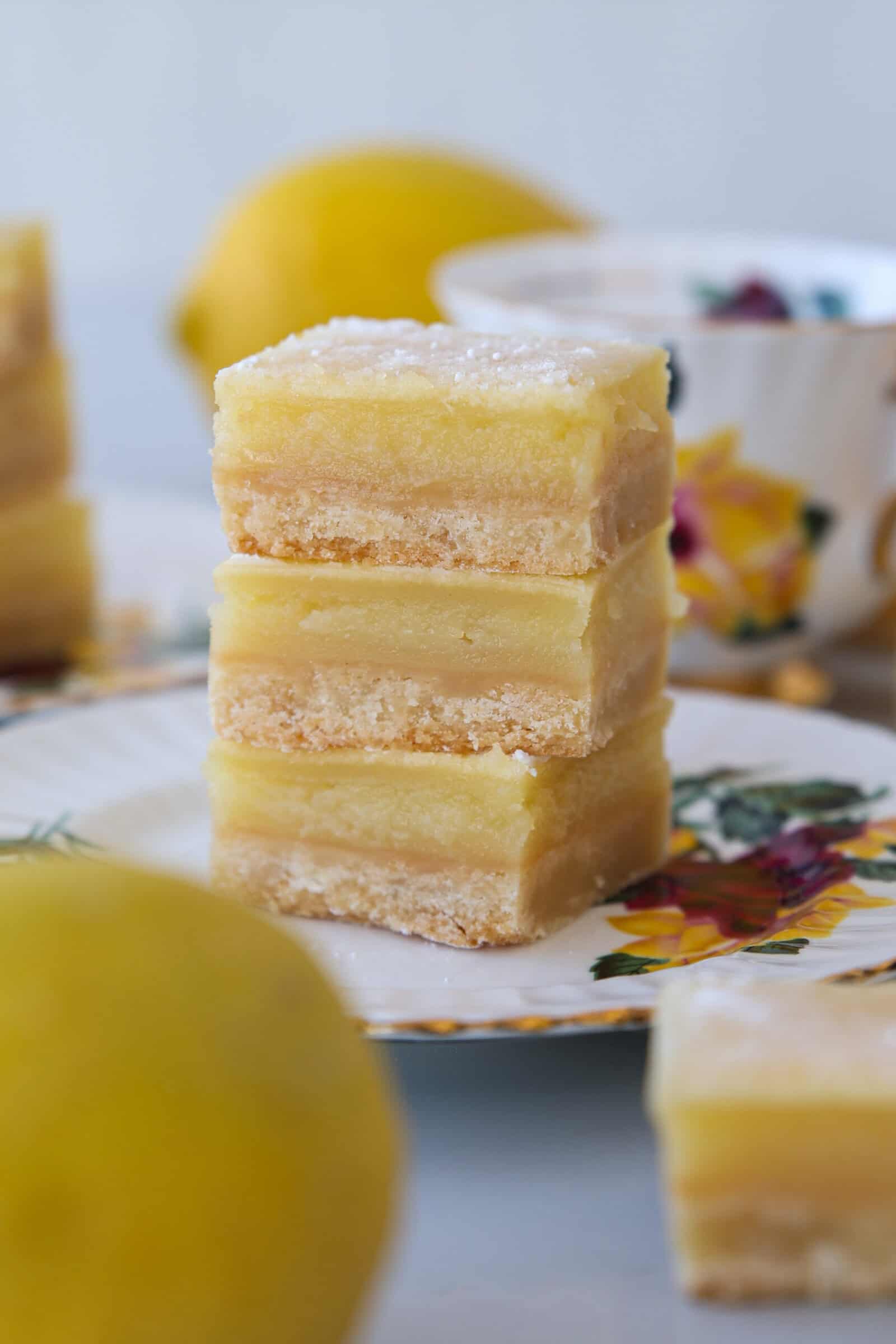
As much as I love making my favorite cookie recipes, sometimes I don’t want to fuss with multiple batches. That’s where one-pan treats like these easy lemon bars come in! Rather than scooping, rolling, baking and filling individual lemon curd thumbprint cookies, I can bake off enough treats to serve a crowd using just one tray.
Ingredients & Substitutions

- All-Purpose Flour – We’ll use plain white flour in both the shortbread and lemon curd layers. Make sure to use a kitchen scale or the spoon-and-sweep method for measuring so you don’t add too much.
- Powdered Sugar – This starchy sweetener helps develop a perfectly crumbly, melt-in-your-mouth shortbread base. If you don’t have any on hand, use a food processor to blitz 1 cup of white sugar with 1 tablespoon of cornstarch.
- Butter & Salt – Starting with unsalted butter and adding your own salt is the best way to ensure consistent results between batches.
- Vanilla Extract – A hint of warming vanilla makes the cookie base even more inviting.
- Milk – This is an “only if you need it” ingredient, for adding to the cookie dough if it feels too dry. Feel free to use any percentage of dairy milk or your preferred plant-based milk.
- Fresh Lemon – We want to use both the zest and juice to get the zingiest lemon flavor.
- Granulated Sugar – White sugar has a neutral sweetness, which allows the lemon to shine.
- Large Eggs – Size matters! If you’re using liquid eggs or a different size of egg, note that each large egg is a scant ¼ cup.
This is just a short review of the ingredients; for the complete recipe, including quantities, scroll down to the recipe card 👇
Ingredient Spotlight: Lemons

Lemons are the heart of any great lemon bar, so choosing the right kind makes all the difference. Regular (Eureka or Lisbon) lemons have that classic bright, tangy acidity that gives lemon bars their signature sharp, zippy flavor.
Meyer lemons are naturally sweeter and more floral, with thinner skins and a gentler tartness. If you prefer softer, more aromatic lemon bars, Meyer lemons are a lovely choice, but they’ll give you a less puckery result than traditional lemons.
If possible, use fresh lemon juice and freshly grated zest. Bottled lemon juice is convenient, but it often tastes flat, bitter, or slightly metallic. The aroma, the brightness, and even the color of your lemon bars will be noticeably better when you use fresh fruit. And don’t forget the zest! It’s packed with oils that add a concentrated citrus flavor you can’t get from juice alone.
If you want to play with other citrus, you can, just keep the acidity in mind. Limes keep things tart and lively, grapefruit adds a subtle bitterness, and blood oranges contribute gorgeous color and a mellow, sweet-citrus flavor. Swap citrus one-for-one, but be prepared to adjust the sugar and/or add some lemon or lime to the mix depending on how sweet or tart your fruit is.
How to Make Lemon Bars with Shortbread Crust
Watch the full video recipe to learn how to make the BEST Lemon Bars recipe.
Prefer the written recipe? Scroll down to the recipe box 👇


Optional Variations & Dietary Adaptations
- Gluten-Free – Swap in your favorite cup-for-cup all-purpose baking blend (preferably one that includes xanthan gum).
- Dairy-Free – Use high-quality vegan butter for all the flavor without any of the dairy!
- Citrus Swap – Hop back up to the Ingredient Spotlight section for ideas of different citrus fruits to try. From there, you can also play with the shortbread base (e.g. add coconut extract if making lime bars) to make them your own.
Expert Tips & Tricks
- Add milk only if needed. The crust dough should feel soft, sandy, and cohesive. If it seems powdery or won’t hold together when pressed, add just 1-2 teaspoons of milk. Too much will make the crust dense or cause it to puff unevenly.
- Chill the crust. Don’t skip this step. A cold crust holds its shape better, preventing shrinkage and helping the bars bake evenly. A warm crust can pull away from the pan, leaving gaps and uneven edges.
- Choose the right pan. Glass or ceramic dishes work best because they won’t react with the acidic lemon filling. Metal pans can sometimes give lemon bars a faint metallic taste. If you do use metal, line it completely with parchment paper to create a buffer.
- Prevent crust shrinkage. After par-baking, don’t pull the crust fully out of the oven. Sudden temperature changes can cause it to contract. Instead, open the oven door and pour the filling directly onto the hot crust while it’s still inside.
- Strain for silky filling. For an ultra-smooth lemon layer with no zest flecks, strain the filling through a fine-mesh sieve before pouring it over the crust.
- Make a richer curd. For a more decadent, custardy filling, swap the 6 whole eggs for 4 whole eggs + 3 yolks. The extra yolks add body and creaminess.
- Adjust sweetness to taste. If you prefer a sharper, extra tangy lemon bar, reduce the sugar in the filling to 1 cup (200 g).
Troubleshooting a pale or soft crust:
- Why it happens: The oven wasn’t fully preheated, your oven runs cool (get an oven thermometer!), you used a glass dish (which heats more slowly), the crust was pressed unevenly, the butter pieces were too large, too much milk was added, or the crust layer was too thick.
- How to avoid it: Bake until the edges turn golden, not just set; add 3-5 extra minutes when using a glass dish; press the dough into an even, level layer; pulse the butter thoroughly into the flour for even baking; and when in doubt, bake 2-4 minutes longer. A well-baked crust stays crisp under the filling.

How to Serve Lemon Bars
For a classic look, dust lemon bars generously with powdered sugar just before serving to balance the tartness. When serving for parties, cut into small squares or triangles for easy, mess-free bites.
For a more colorful spread, plate the bars with a few fresh berries; raspberries, blueberries, or strawberries all pair beautifully with lemon’s bright acidity.
And if you’re looking for a drink pairing, try serving a lemon bar with a cup of Earl Grey, chamomile, strawberry iced tea, homemade lemonade, or strawberry lemonade. Anything that highlights the floral, sunny flavor of the citrus is a good move!

Storage Instructions
- Refrigeration: Store lemon bars in an airtight container in the refrigerator for up to 5 days.
- Freezing: If you want to freeze them, place the sliced bars (without powdered sugar) in a single layer or with parchment between layers and freeze for up to 3 months.
- Serving: When you’re ready to serve, thaw them in the fridge, then dust with powdered sugar just before enjoying.

More Lemon Desserts
More Bar Cookie Recipes

Easy Classic Lemon Bars with a Buttery Shortbread Crust
Ingredients
For the crust:
- 2 cups (250 g) All-purpose flour
- ⅔ cup (90 g) Powdered sugar
- 1 cup (230 g) Butter cold & cubed
- ¼ teaspoon Salt
- 1 teaspoon Vanilla extract
- 1-2 teaspoons Milk only if needed
For the lemon curd:
- 1¼ cups (250 g) Sugar
- 1 tablespoon Lemon zest
- ⅓ cup (42 g) Flour
- 6 Eggs large
- 1 cup (240 ml) Lemon juice fresh
For serving:
- Powdered sugar
Instructions
- Preheat & prepare the pan: Preheat the oven to 350°F (180°C). Line a 9×13-inch (23×33cm) glass or ceramic baking dish with parchment paper, leaving an overhang for easy lifting.
- Make the crust: In a food processor, pulse the flour, powdered sugar, salt, and vanilla. Add the cold butter and pulse until the mixture resembles coarse crumbs. If the dough looks too dry to hold together, add 1–2 teaspoons milk just until it clumps when pressed.
- Press & chill: Transfer the dough to the prepared pan and press it firmly and evenly into the bottom. Prick the surface all over with a fork. Chill in the refrigerator for 30 minutes.
- Bake the crust: Bake for 18–24 minutes, or until golden around the edges. Do not remove from the oven.
- Make the lemon filling: While the crust bakes, rub the sugar and lemon zest together in a bowl to release the oils. Add flour and whisk. Add the eggs, whisking until smooth, then add lemon juice. For an ultra-smooth filling, strain through a fine-mesh sieve.
- Bake the bars: Immediately (and carefully) pull the rack out slightly and pour the filling directly onto the crust while it’s still in the oven. Bake for 20–25 minutes, or until the center is just set and no longer jiggles. (Important: don't let the crust cool, pour in curd immediately.)
- Cool & chill: Let the bars cool completely at room temperature, then refrigerate for at least 1 hour before slicing.
- Serve: Dust generously with powdered sugar. Slice into squares and enjoy!
Video
Notes
- Milk: You may not need it. Only add 1–2 teaspoons if the dough feels powdery and doesn’t hold together when pressed. The dough should feel soft, slightly sandy, and cohesive.
- Chill the crust: Don’t skip this step. A warm crust shrinks in the oven, causing gaps around the edges and uneven bars.
- Pan Choice Matters: Use glass or ceramic. Metal pans can sometimes cause a slightly metallic aftertaste with acidic fillings like lemon. If using metal, line thoroughly with parchment.
- Prevent Crust Shrinkage: After baking, do not remove the crust from the oven. Sudden temperature changes can cause it to contract. Instead, open the oven door and pour the filling directly over the hot crust.
- Filling Texture: For a silky, zest-free filling, strain the mixture through a fine-mesh sieve before baking
- For a richer curd: Use 4 whole eggs + 3 egg yolks instead of 6 whole eggs.
- Sweetness Level: If you prefer a tarter bar, reduce sugar in the filling to 1 cup (200g).
- Lemon Juice: Always use fresh lemon juice. Bottled lemon juice can make the filling overly sharp or bitter.
- Storage: Store lemon bars in an airtight container in the fridge for up to 5 days. They also freeze beautifully, freeze sliced bars (without powdered sugar) for up to 3 months, then thaw and dust before serving.
Nutrition
FAQs
To me, it’s all about a good, buttery base and a nice, tart top. Using fresh lemon juice and zest adds the perfect amount of pucker. And for an extra impressive shortbread, swap in European-style butter which has more fat (i.e. more melt-in-your-mouthiness) than regular butter.
Metal pans can react with the acidic lemon filling, which can give your bars a slightly metallic or bitter taste. If you need to use metal, line it fully with parchment so the metal and lemon don’t mix.
You can leave them out for a few hours at a party, but otherwise lemon bars should be refrigerated or frozen. Hop up to the Storage Instructions section for more details!
You technically can, but I don’t recommend it. There’s nothing like fresh citrus juice to make homemade lemon bars the best they can be!
A metallic taste usually comes from a reaction between the acid in the lemon juice and metal bakeware (especially aluminum). Always use glass, ceramic, or non-reactive metal pans and avoid storing lemon bars in metal containers.



I love lemon desserts, and these bars look phenomenal. I’m going to make them for Christmas!
Can’t wait to hear how they turn out! 🍋