
Classic French Lemon Tart | With Buttery Crust
This post may contain affiliate links.
Get ready to dish up some sunshine with my French Lemon Tart recipe. This bright, sweet-tart stunner comes together with fewer than 10 ingredients and just 30 minutes of prep time. Between the buttery pastry crust, the zippy lemon filling, and the elegant presentation, this dessert is perfect for any occasion!
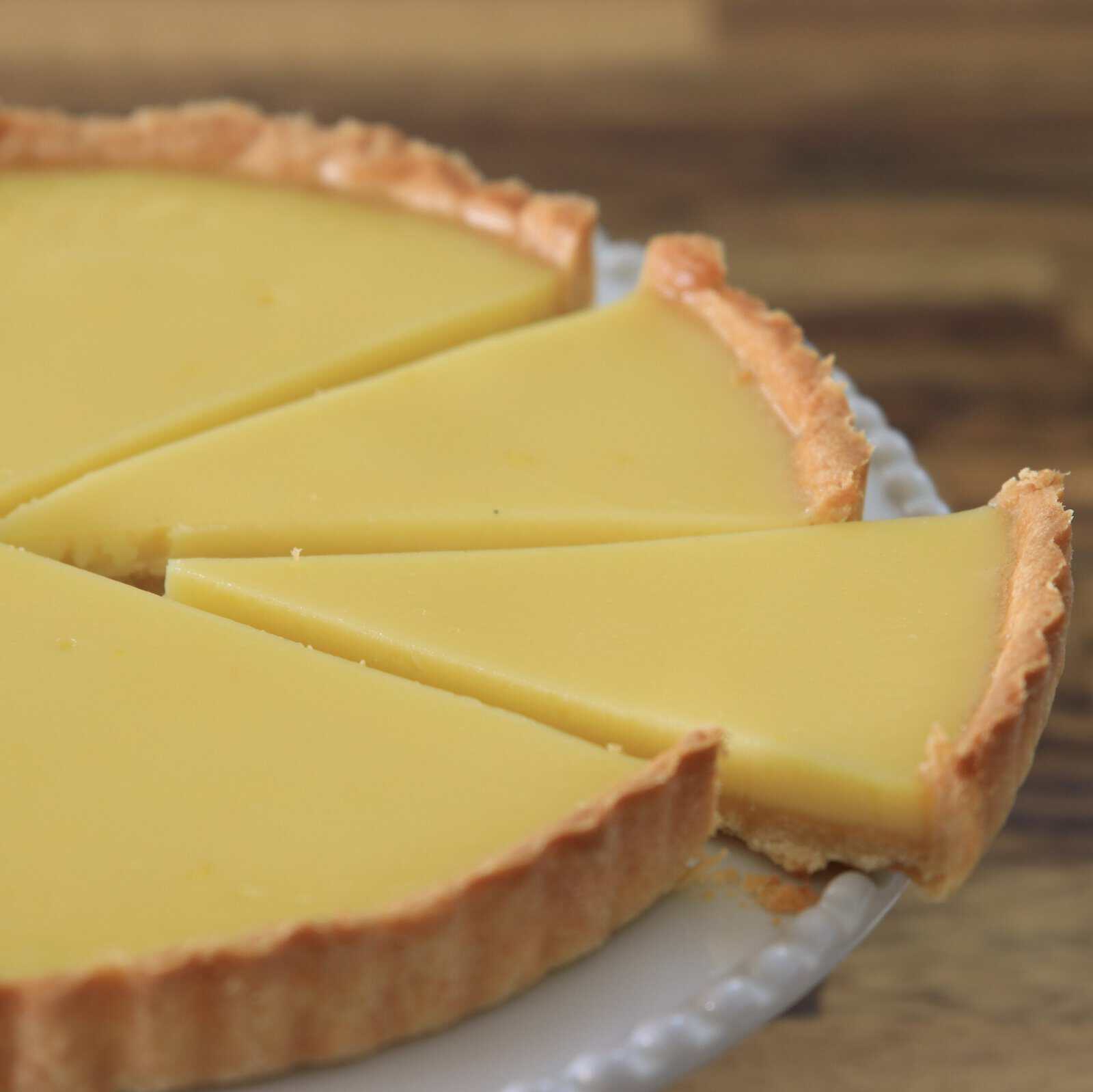
I originally published this recipe in 2019 and have since updated it with new photos, improved instructions, and extra success tips.
Lemon dessert recipes are always a favorite of mine, regardless of the time of year. Whether it’s a showy French lemon tart, creamy lemon cheesecake, or a lofty lemon meringue pie, the puckery-sweet, palate-cleansing flavor of citrus is a lovely end to any meal.
Why You’ll Love This Easy Lemon Tart Recipe
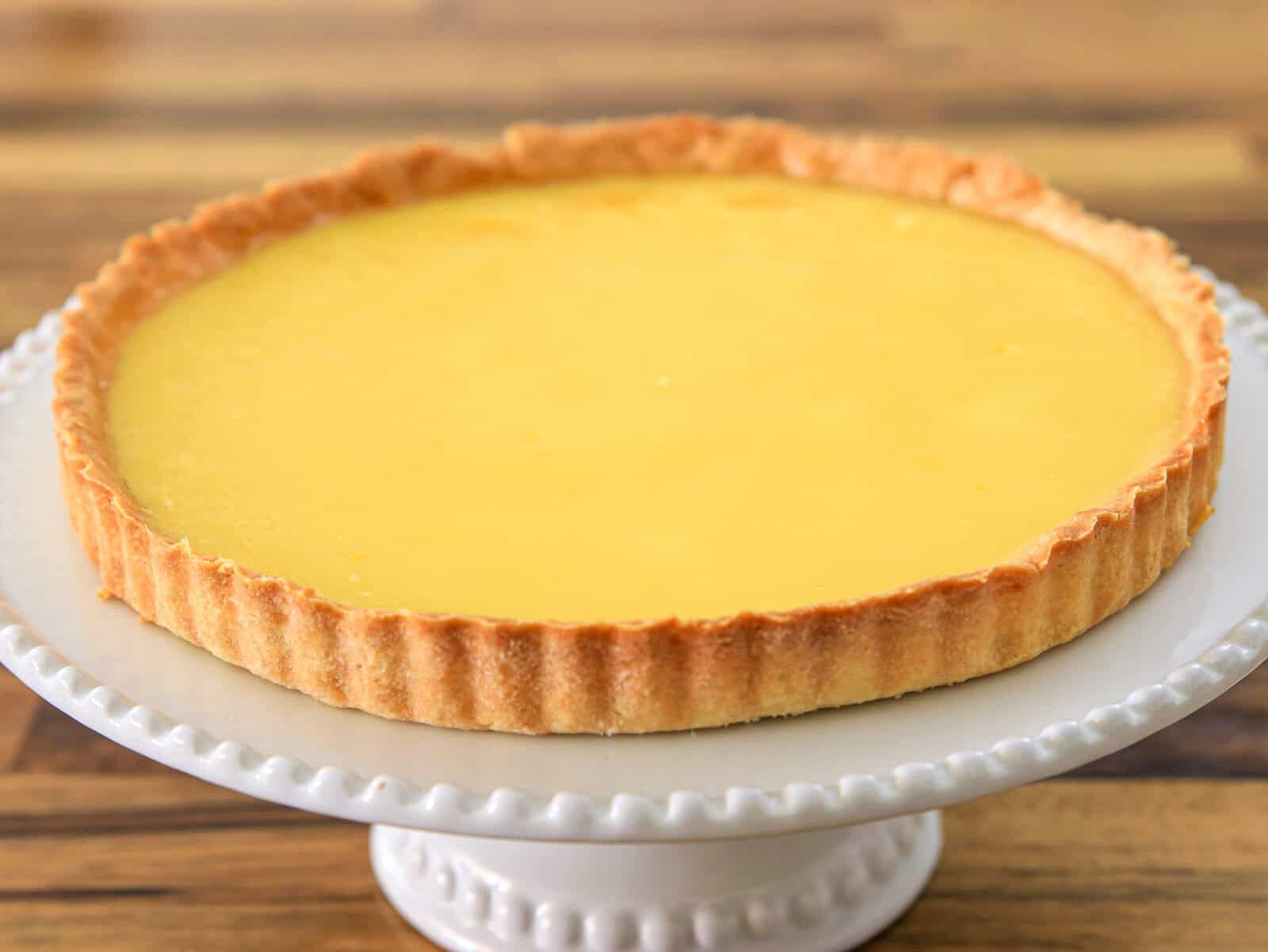
- When I say this dessert recipe is a real crowd-pleaser, I mean it. With over 4.2 million views and more than 67,000 likes on my accompanying lemon tart recipe video, you can rest assured that thens of thousands of your peers give it an enthusiastic thumbs up!
- Despite boasting bold lemon flavor and a rich, buttery crust, you only need 9 ingredients total to make this basic lemon tart. Don’t you just love simplicity?!?
- The beautifully ridged exterior of tart pans makes it easy to make something impressive-looking. This lemony treat takes just 30 minutes of active prep, then the oven and fridge do the rest.
How to Make Lemon Tart: Video Recipe
Watch the full video to learn how to make the BEST Lemon Tart recipe.
Prefer the written recipe? Scroll down to the recipe box 👇
Ingredients & Substitutions
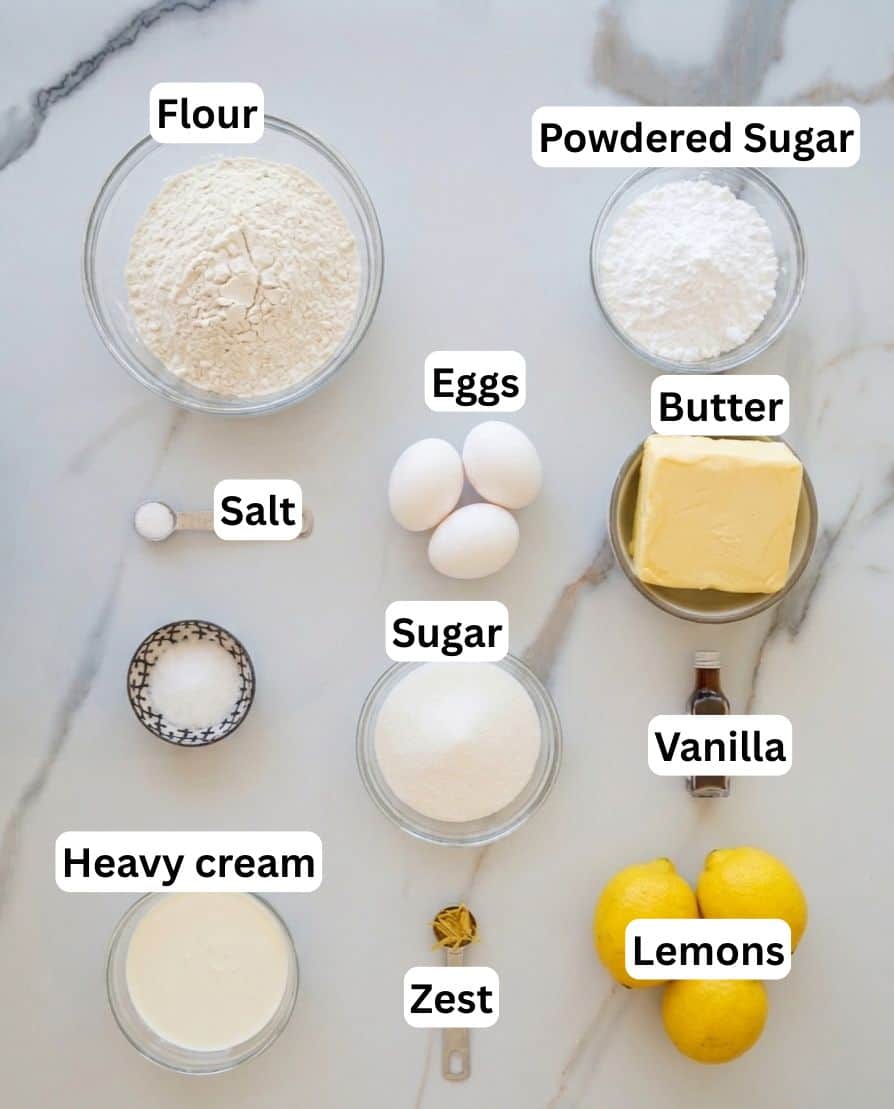
- All-Purpose Flour – Also known as “plain flour.”
- Powdered Sugar – This finely ground starchy sweetener is essential for achieving the perfect pastry consistency.
- Large Egg – For binding the pastry crust.
- Butter – Make sure it’s nice and cold, which ensures a flaky tart crust. If you can swing the extra expense, the flavor of cultured butter and the extra richness of European style butter are worth it.
- Vanilla Extract – For warmth and depth. You can use an equal amount of vanilla paste or powder if needed.
- Granulated Sugar – The neutral sweetness of white sugar allows the bright, zesty citrus flavor to shine. If you prefer a less-refined option, cane sugar is a 1:1 swap.
- Large Eggs & Egg Yolks – I use both whole eggs and extra egg yolks in the lemon tart filling, resulting in a perfectly silky consistency and a delightfully sunny appearance. Remember to separate the eggs while they’re still cold from the fridge to prevent the yolks from breaking, but let them come to room temperature before making the filling.
- Heavy Cream – The richest dairy of them all! If needed, you can use slightly lighter whipping cream instead.
- Fresh Lemon Juice & Zest – Using both the juice and zest from fresh lemons ensures a perfectly puckery lemon flavor. Make sure to only grab the brightest yellow parts of the zest and avoid the bitter white pith.
This is just a short review of the ingredients; for the complete recipe, including quantities, scroll down to the recipe card 👇
Lemon Curd vs. Lemon Tart Filling
While both lemon tart filling and lemon curd share a bright, zesty flavor, they differ in texture and purpose. Lemon curd is a creamy, thick mixture typically made from lemon juice, sugar, eggs, and butter, resulting in a luscious spread that can be enjoyed on its own or used as a filling for desserts. It has a smooth consistency that’s perfect for layering in cakes or dolloped on scones.
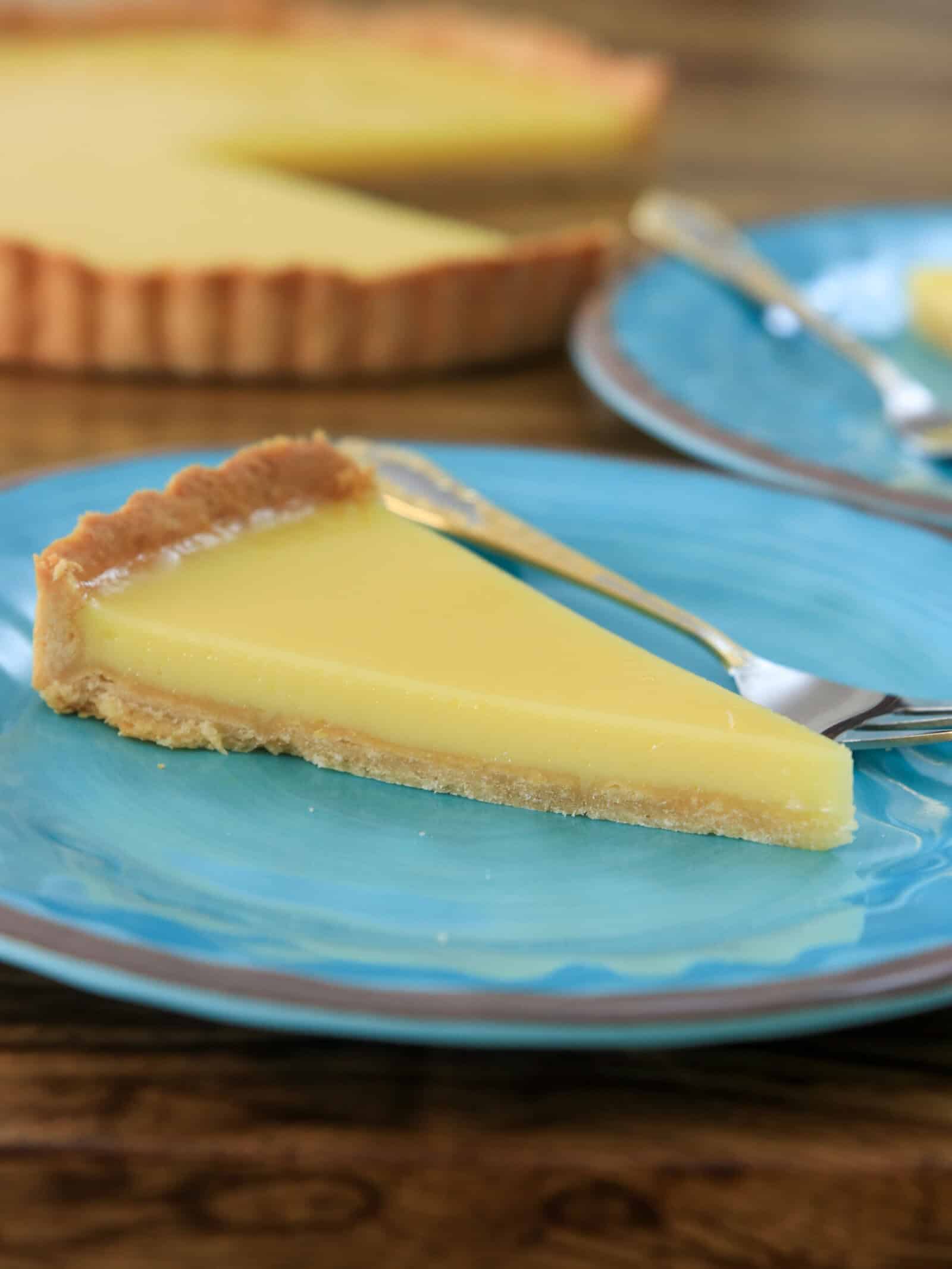
Lemon tart filling, on the other hand, is specifically designed for tarts. My recipe combines what is essentially a basic lemon curd with cream to create a richer, custard-like texture that sets beautifully. So, while lemon curd can be used as a filling for a lemon tart, the tart filling is typically baked to achieve a firm yet creamy consistency that holds its shape once cooled.
Optional Variations & Dietary Adaptations
- Lemon Meringue Tart – For an elegant variation, top your lemon tart with a fluffy meringue. Simply whip egg whites and sugar into stiff peaks, spread over the baked tart using the back of a spoon to make pretty swirls, and broil until the meringue is lightly golden.
- Lemon-Lime Tart – For a slightly tropical twist, use half lemon and half lime (both the juice and zest). If you want to double down on the tropical flavor, use coconut cream instead of heavy cream in the filling.
- Lemon Lavender Tart – Add a teaspoon of dried culinary lavender to the filling to give your lemon tart a floral twist. The delicate lavender pairs wonderfully with the bright lemon flavors.
- Gluten-Free – Swap out the regular flour in the crust with a gluten-free flour blend. Make sure to choose a blend designed for baking (preferably with xanthan gum), as it will provide the best texture.
- Dairy-Free Lemon Tart – Replace the butter in the crust with a plant-based butter or margarine. For the filling, you can use coconut cream or vegan whipping cream.
- Reduced-Sugar Lemon Tart – Use a sugar substitute like erythritol, stevia, or monk fruit sweetener to reduce the sugar content without compromising flavor.
Expert Tips & Tricks
- Chill the Dough: After mixing your tart dough, let it chill for at least 30 minutes. This helps prevent shrinkage during baking and ensures a flaky crust.
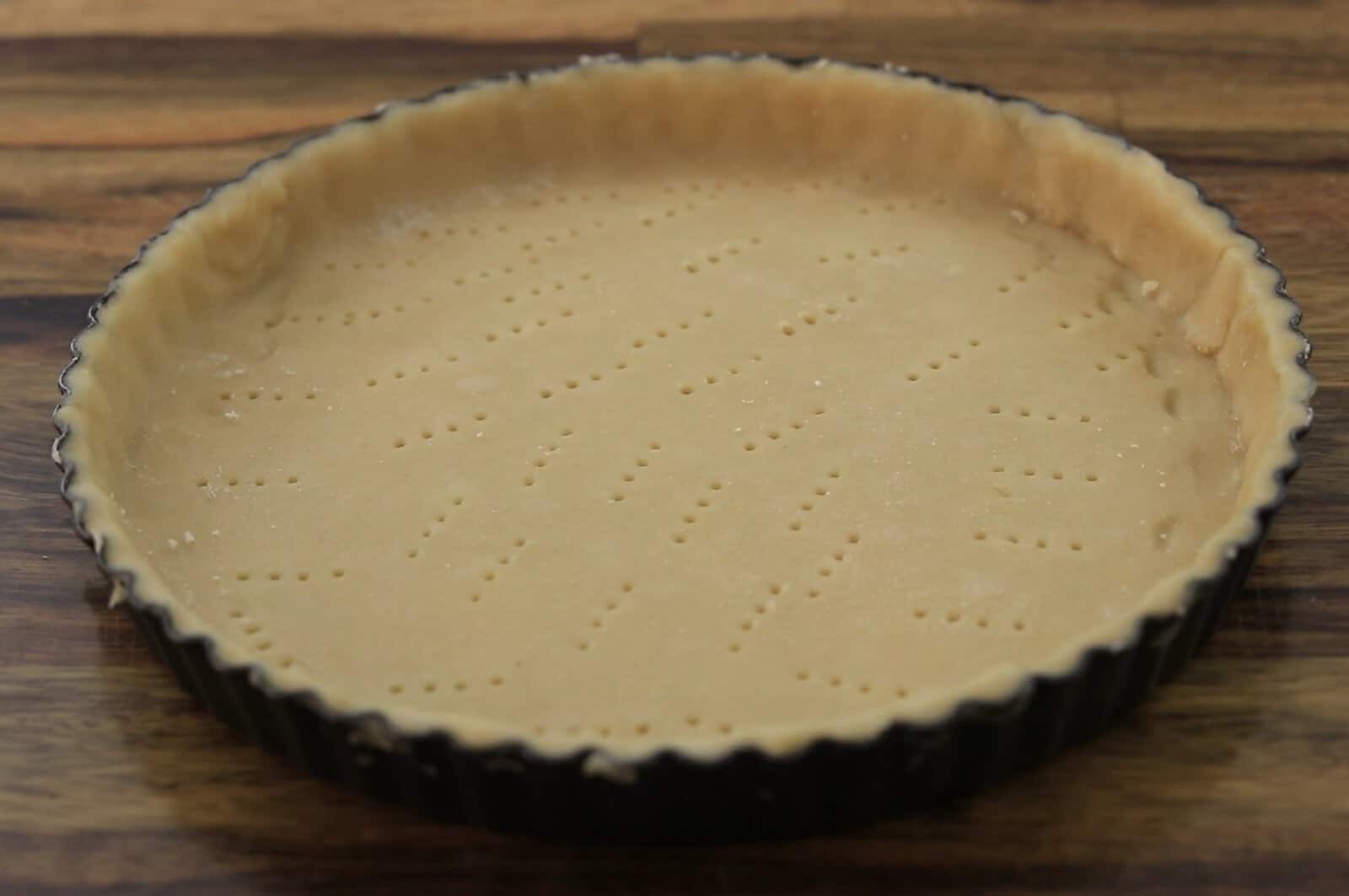
- Freeze the crust before baking: After fitting the dough into the tart pan, freeze it for 20–30 minutes before blind baking. This helps prevent shrinking and keeps the edges neat and sharp.
- Blind bake properly: Use pie weights or dried beans to keep the crust flat and crisp.
- Strain the Filling: Pour the filling through a fine mesh sieve before baking for an extra silky texture.
- Watch the Baking Time: Keep an eye on your tart as it bakes. The filling should be set but still slightly jiggly in the center when you take it out of the oven; it will firm up as it cools.
- Cool Completely: Allow the tart to cool completely at room temperature before refrigerating. This helps the filling set properly so it slices like a dream.
- Garnish Thoughtfully: Consider garnishing your lemon tart with raspberries or other fresh berries, whipped cream, or a dusting of powdered sugar for an elegant presentation and added flavor.
- Waste not, want not! Here are tons of ways to use your leftover egg whites.
How to Store Lemon Tart
- Refrigeration: For longer storage, cover the tart with plastic wrap or aluminum foil and refrigerate. It will stay fresh for up to 3 days.
- Freezing: To freeze, slice the tart and wrap each piece tightly in plastic wrap, then place in a freezer-safe bag. It can be frozen for up to 2 months.
- Thawing: To enjoy frozen slices, transfer them to the refrigerator to thaw overnight before serving.
More Lemon Dessert Recipes
More Tart & Pie Recipes
Lemon Tart Recipe
Ingredients
For the crust:
- 1½ cups (190 g) All-purpose flour
- ¼ cup (50 g) Powdered sugar
- 1 Egg large
- ½ cup (115 g) Unsalted butter cold
- ¼ teaspoon Salt
- 1 teaspoon Vanilla extract
For the filling:
- ¾ cup (150 g) Sugar
- 2 Eggs large
- 3 Egg yolks
- ¼ teaspoon Salt
- ½ cup (120 ml) Heavy cream
- ½ cup (120 ml) Lemon juice fresh
- Lemon zest from 2 lemons
Instructions
- Prepare the crust dough: In a food processor, pulse together the flour, powdered sugar, and salt. Add the cold cubed butter and pulse until the mixture resembles coarse crumbs. Add the egg and vanilla extract and process just until the dough comes together. Do not overmix.
- Chill the dough: Transfer the dough to a work surface, shape it into a ball, then flatten into a disk. Wrap in plastic wrap and refrigerate for 30 minutes.
- Fit the dough into the pan: Place the dough on a lightly floured surface and roll it out to about 1/8-inch (3mm) thickness. Transfer to a 9-inch (23–24cm) tart or pie pan. Gently press the dough into the bottom and up the sides of the pan. Trim off any excess dough from the edges.Dock the bottom of the crust with a fork, then transfer to the freezer for 30 minutes.
- Meanwhile, make the filling: In a large bowl, whisk together the eggs, egg yolks, sugar, and salt until smooth. Add the lemon zest and lemon juice and whisk until combined. Add the heavy cream and whisk again until smooth. Set aside.
- Preheat the oven: Preheat the oven to 350°F (175°C).
- Blind bake the crust: Line the chilled crust with parchment paper and fill with pie weights, dried beans, or rice. Bake for 15 minutes. Carefully remove the parchment paper and weights, then return the crust to the oven for another 10–15 minutes, or until lightly golden.
- Lower the temperature to 300F (150C).
- Bake the tart: While the crust is still hot, carefully pour the lemon filling into the tart shell. Bake for 17–20 minutes, or until the filling is just set with a slight wobble in the center.
- Chill: Let the tart cool completely to room temperature, then refrigerate for at least 2 hours before serving.
Video
Notes
- Blind baking is important: Do not skip blind baking. It prevents the crust from becoming soggy once the lemon filling is added.
- Freeze the crust before baking: Freezing helps prevent shrinking and keeps the tart shell neat and crisp. Don’t skip this step.
- Use fresh lemon juice: Freshly squeezed lemon juice gives the best flavor. Bottled lemon juice can taste dull or slightly bitter.
- Don’t overbake the filling: The tart should still jiggle slightly in the center when removed from the oven. It will continue to set as it cools.
- Cool completely before serving: Cool the tart completely before serving. The filling continues to set as it cools, and chilling helps achieve clean slices and the best texture.
- Storage: Store covered in the refrigerator for up to 4 days
Nutrition
Frequently Asked Questions
Yes! You can prepare the crust in advance. After blind baking, let it cool completely, then cover it tightly and store it in the fridge for up to 2 days. You can also freeze the baked crust for up to 1 month.
If your filling cracked, it may have been overbaked or baked at too high of a temperature. To avoid this, bake the tart at a lower temperature (300F/150C) and remove it from the oven as soon as the filling is set but still has a slight jiggle in the center.
The filling is done when it looks firm around the edges and slightly wobbly in the center. It will continue to set as it cools. Avoid overbaking to prevent cracking.
While you can use bottled lemon juice, the flavor won’t be as bright and fresh. Fresh lemon juice and zest are recommended for the best taste.
To prevent shrinkage, chill the dough in the fridge or freezer before blind baking. Also, don’t overwork the dough when rolling it out, and gently press it into the pan without stretching.
Common lemon tart baking mistakes include undercooking or overcooking the filling, which can lead to a runny or rubbery texture. Not properly blind baking the crust can result in a soggy bottom, while overmixing the filling may incorporate too much air, causing it to puff up during baking. Additionally, failing to strain the filling can leave undesirable bits of cooked egg, affecting the smoothness. Lastly, neglecting to cool the tart completely before slicing can lead to a messy presentation.

I made this for a family dinner and everyone loved it. The filling was smooth and perfectly tangy, and the crust stayed crisp even the next day. Honestly tasted like something from a bakery!
I also served it with whipped cream and berries on top.
Hi – For the crust, in the ingredient list you show 1 egg, but in the directions it says to add egg yolk. Is it a full egg, or just the yolk?
Hi, sorry for the confusion, it’s one egg, not egg yolk.
hello, i was wondering if i can your a hand mixer or a mixer ( that is used to make a dough ) instead of food processor?
Was wondering if I can substitute the heavy cream with fresh cream since heavy cream isnt available in my area….
Hi, what is fresh cream? What is the percentage of fat in this cream?
Fresh cream is I guess single cream and has a fat content of 25%