
Ahi Tuna Poke Bowl Recipe
This post may contain affiliate links.
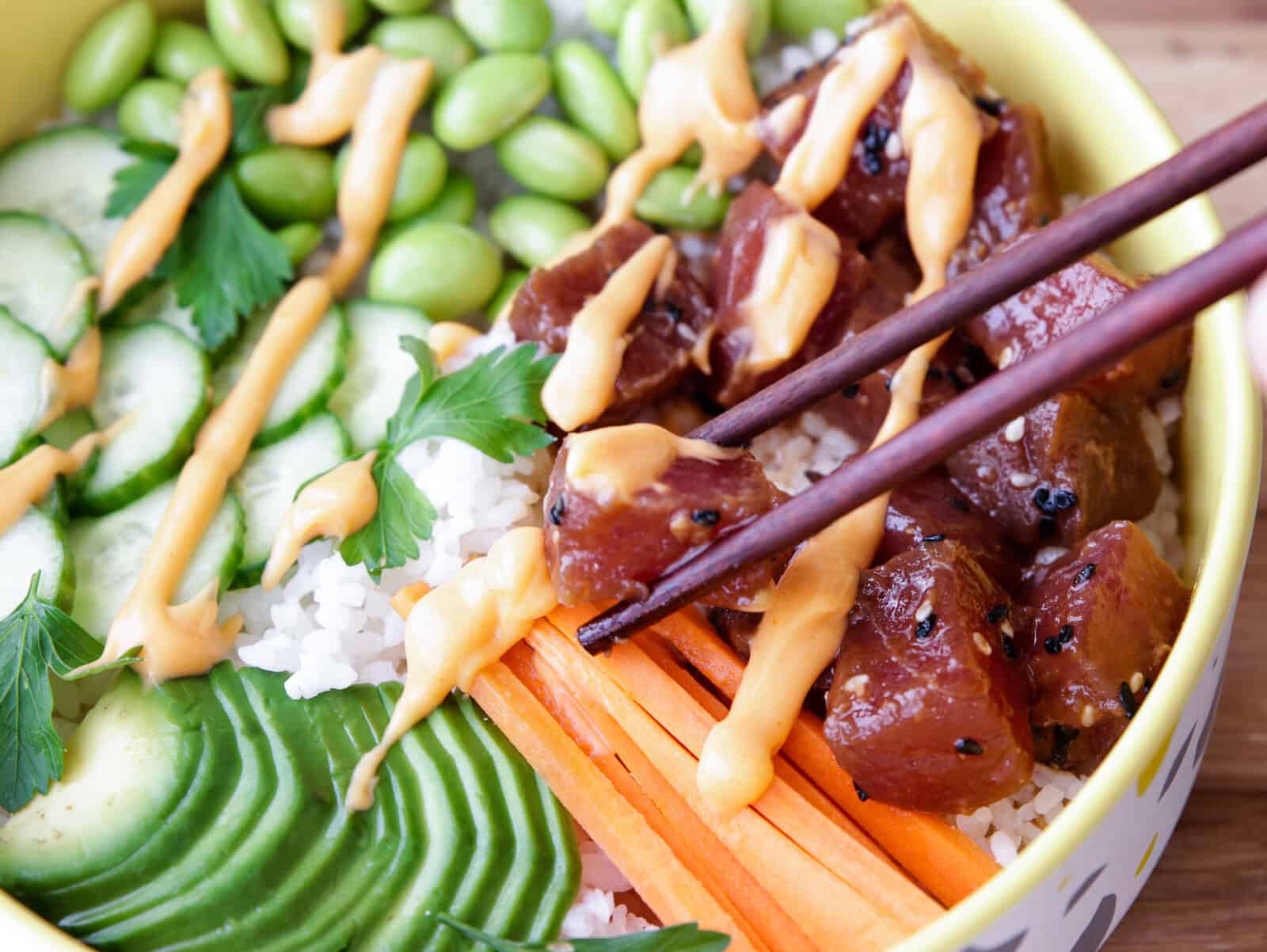
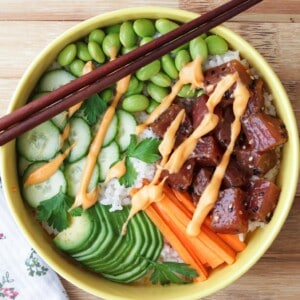
Treat yourself to a classic Hawaiian meal at home with my Ahi Tuna Poke Bowl recipe. Raw tuna is soaked in a zippy ginger-soy marinade then spooned over sticky sushi rice and garnished with colorful veggies for a deliciously refreshing dinner I crave all summer long.
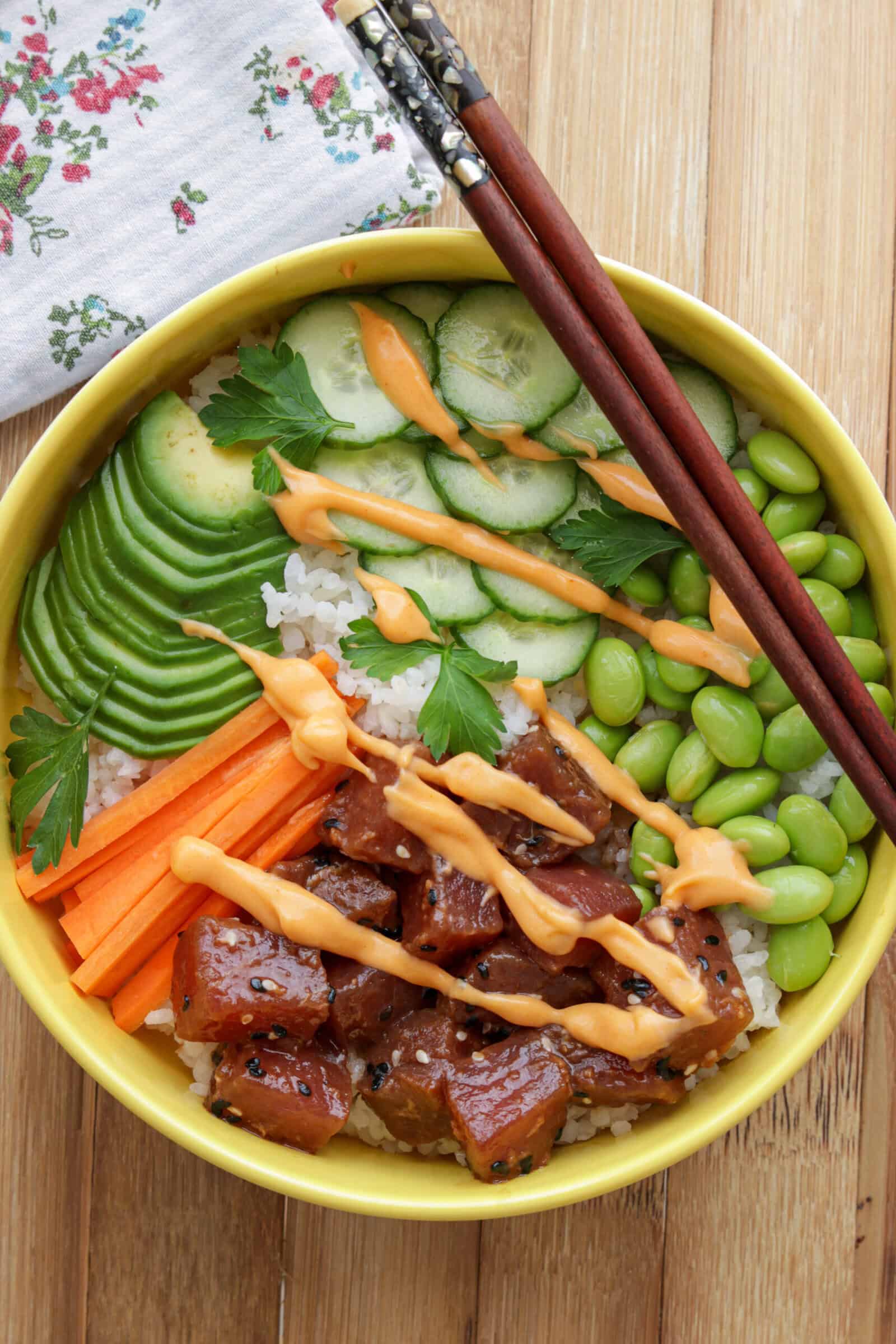
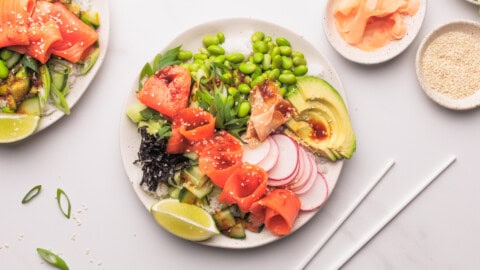
As much as I love the simplicity of my easy smoked salmon poke bowls, there’s something special about a classic ahi poke bowl made with raw fish. The ruby red meat is as enticing to look at as it is to eat! Better yet, when you make a homemade poke bowl at home, you can customize it to your heart’s content. Plus, there’s no need to tip when you’re done!
Ingredients & Substitutions
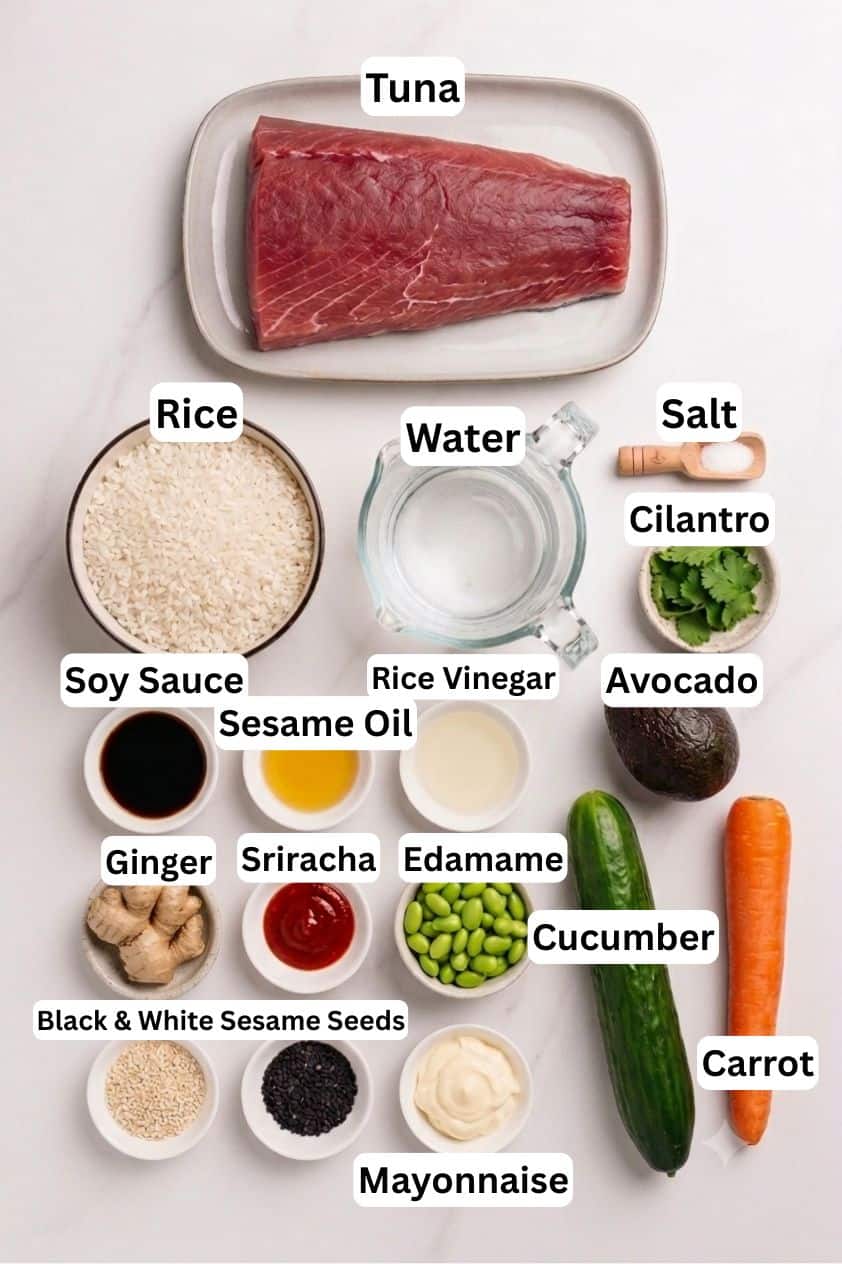
- Sushi Rice – Short-grain Japanese rice is the best choice. Its sticky texture helps hold the tuna sushi bowl together.
- Sushi-Grade Tuna – Because the tuna is served raw, purchase fish labeled sushi-grade or sashimi-grade from a trusted source.
- Soy Sauce – Feel free to swap in tamari, coconut aminos or Bragg’s liquid aminos as needed.
- Toasted Sesame Oil – This nutty finishing oil adds richness and toasty depth.
- Rice Vinegar – Make sure you’re reaching for unseasoned rice vinegar for the best results.
- Fresh Ginger – Jarred ginger paste is a good time saver, if needed.
- Black & White Sesame Seeds – I personally love the visual appeal of using both, but feel free to use whatever you have. You can also swap in furikake, which includes both sesame seeds and small strips of nori.
- Avocado – For creamy richness.
- Cucumber – For crunch. I recommend opting for thin-skinned English cucumbers for the best results with the littlest prep necessary.
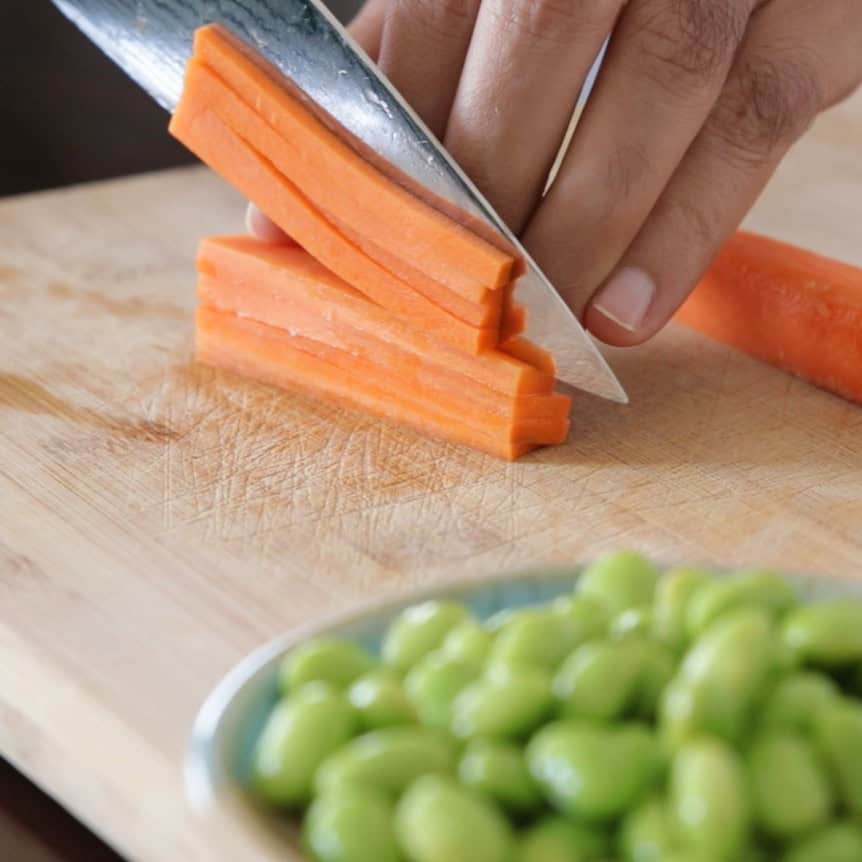
- Carrot – For color and sweetness. Make sure you grate your own carrot. The pre-grated kind from the store is typically a bit too thick and ends up tasting a bit dry.
- Shelled Edamame – For added protein. Look for it in the frozen aisle.
- Fresh Cilantro – For brightness. If you’re not a fan, feel free to omit it.
- Mayonnaise & Sriracha – A quick spicy mayo adds richness and a bit of kick.
This is just a short review of the ingredients; for the complete recipe, including quantities, scroll down to the recipe card 👇
What is the best tuna for poke bowls?
- Yellowfin Tuna (Ahi): The most popular choice for poke bowls and what you’ll find in many Hawaiian restaurants. It has a mild, clean flavor, a firm texture that holds up well when cubed, and a beautiful deep red color. It’s also easier to find and more affordable than other premium tuna, making it my top recommendation.
- Bigeye Tuna: If you want to elevate your poke bowl, bigeye is an excellent upgrade. It’s richer and more buttery than yellowfin, with a slightly softer texture and deeper flavor. The higher fat content gives it a luxurious mouthfeel that melts on your tongue. Bigeye is a bit harder to find and more expensive, but it’s worth seeking out for special occasions.
- Bluefin Tuna: The richest and most luxurious option, prized for its melt-in-your-mouth texture. While it works beautifully in poke, it’s often too expensive for a marinated dish, where its delicate flavor can be overshadowed.
- Sushi-Grade is Essential: Always buy tuna labeled sushi-grade or sashimi-grade from a trusted fishmonger or seafood counter. Since the fish is served raw, quality and proper handling are essential.
- Freshness Matters: Look for tuna that’s deep red (not brown), has a clean ocean smell (not fishy), and feels firm to the touch. Avoid any pieces with rainbow-like discoloration or a dull, dried-out appearance.
- Frozen Can Be Your Friend: High-quality frozen sushi-grade tuna is often fresher than “fresh” fish at the grocery store, since it’s frozen immediately after being caught. Just thaw it slowly in the refrigerator overnight before using.
How to Make Tuna Poke Bowls
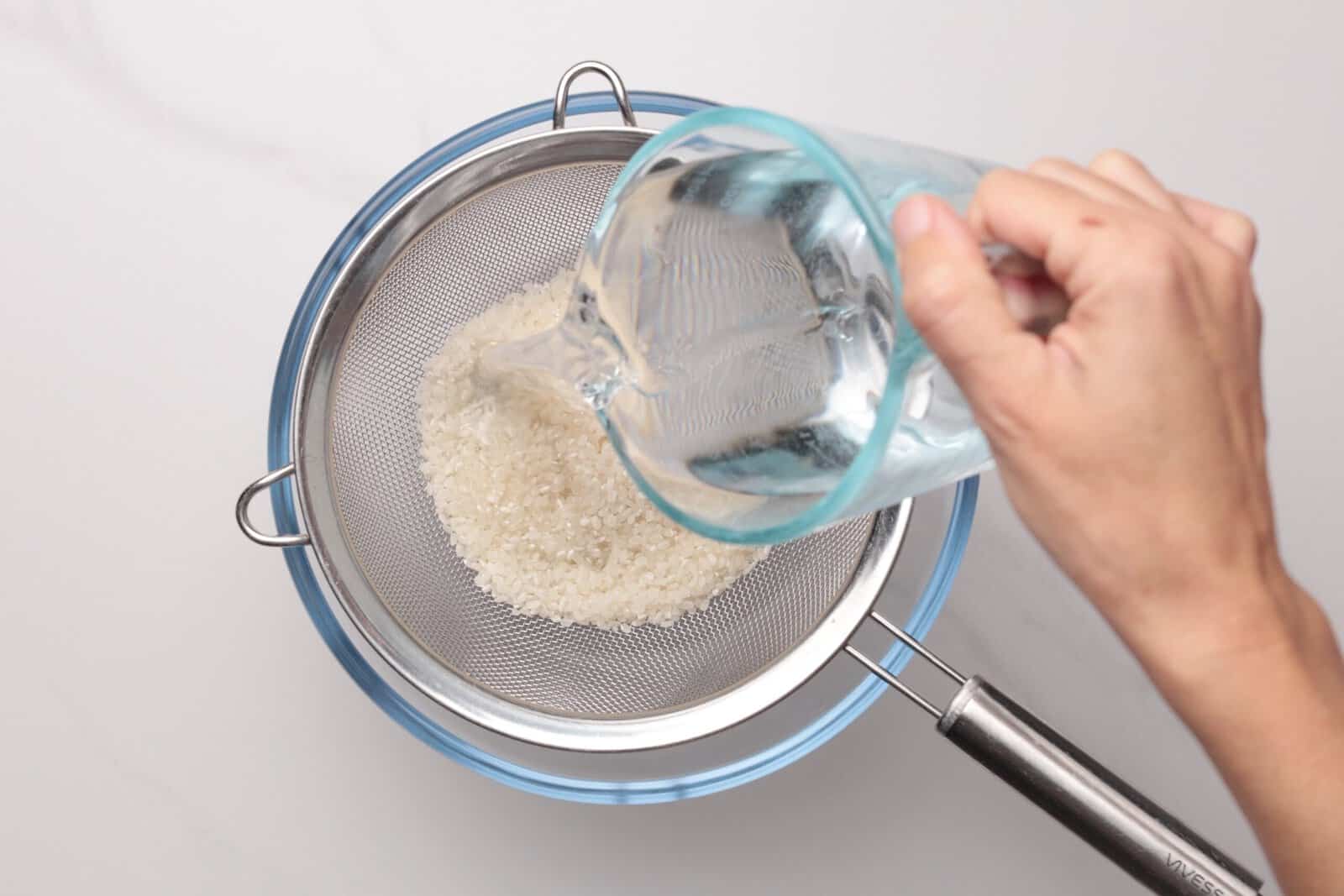
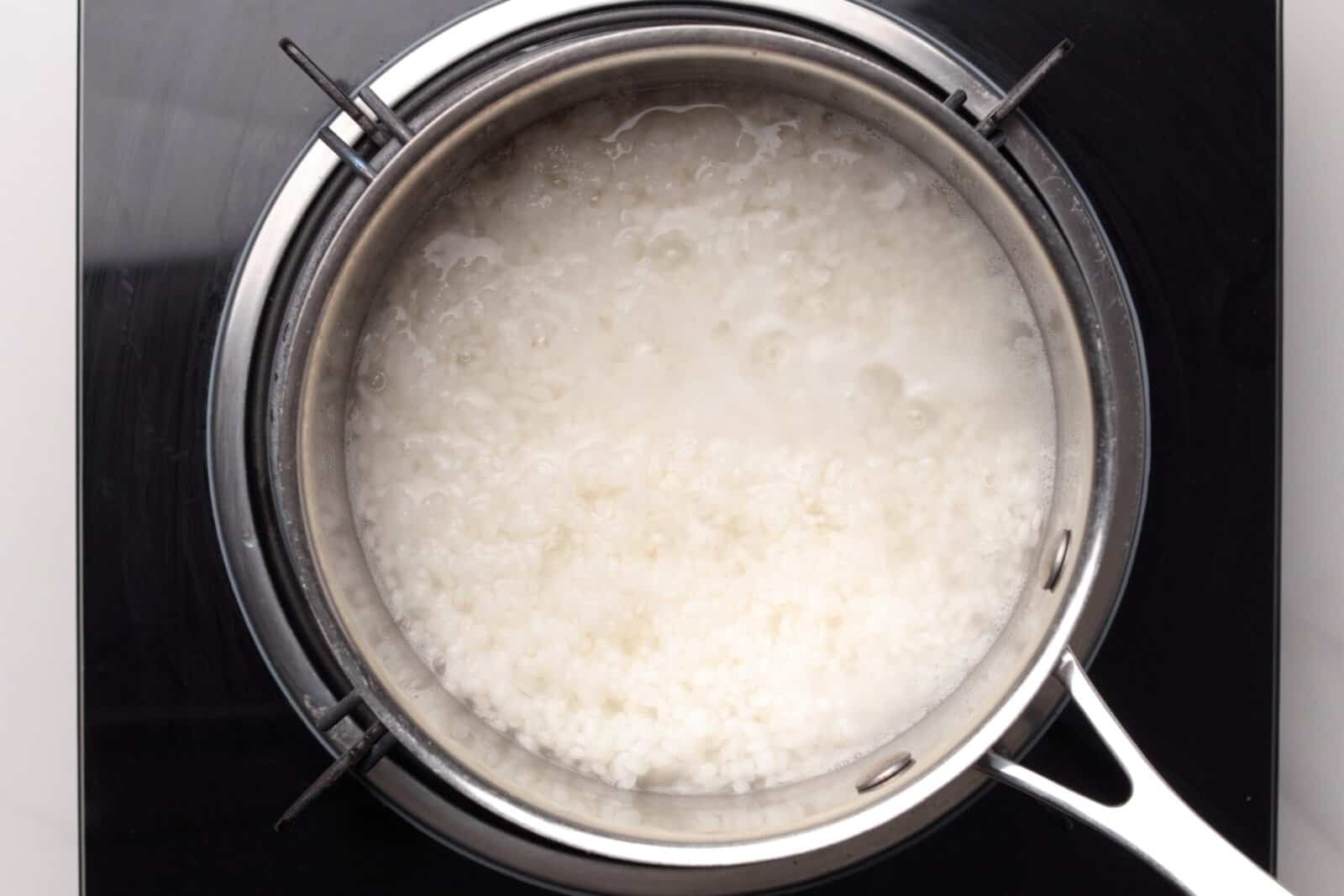
1. Cook the rice: Wash and cook the sushi rice according to the package instructions or in a rice cooker. Let it cool until just warm or room temperature before assembling the bowls.
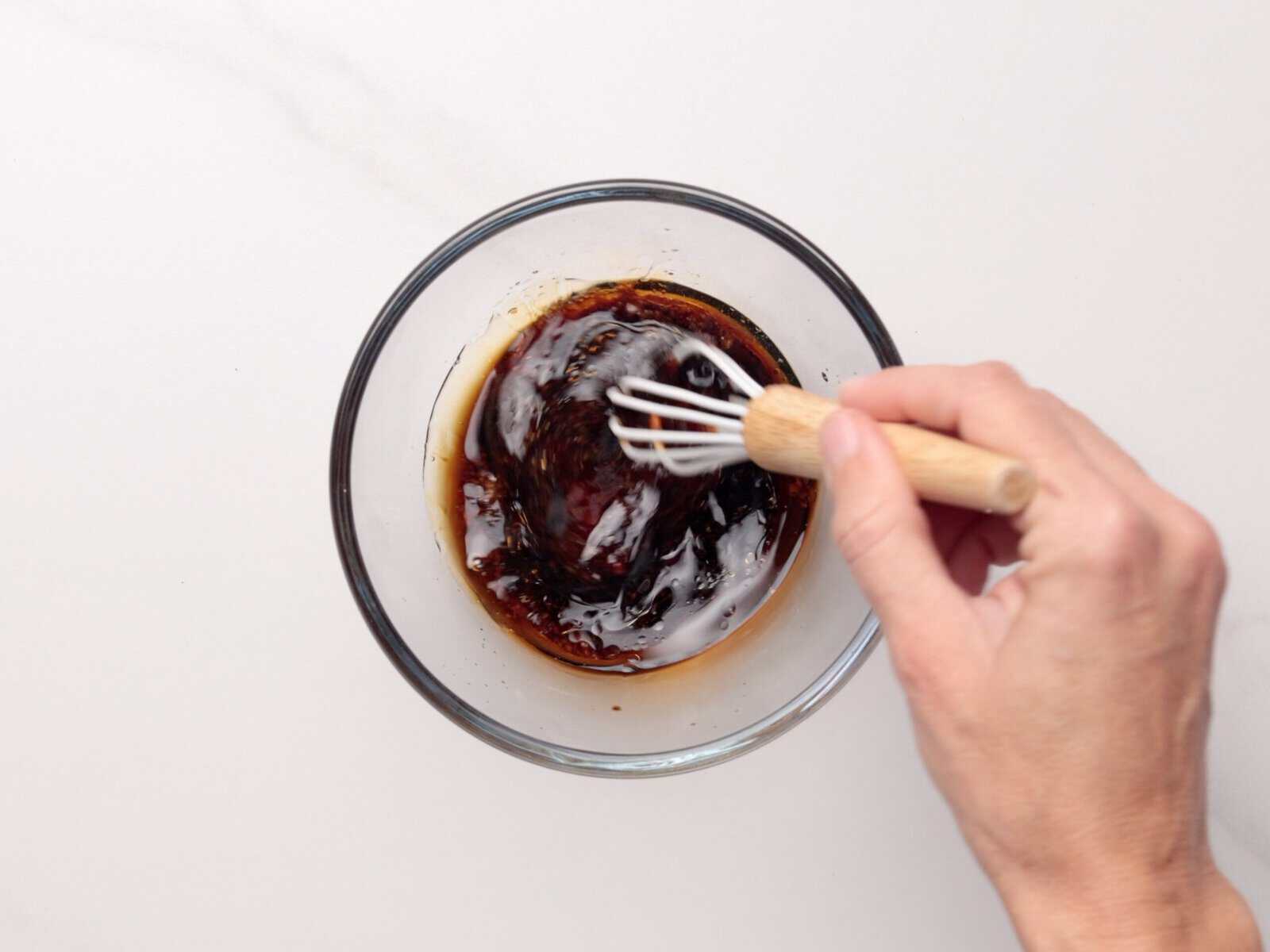
2. Make the marinade: Whisk together the soy sauce, sesame oil, rice vinegar, ginger, garlic, and sesame seeds.
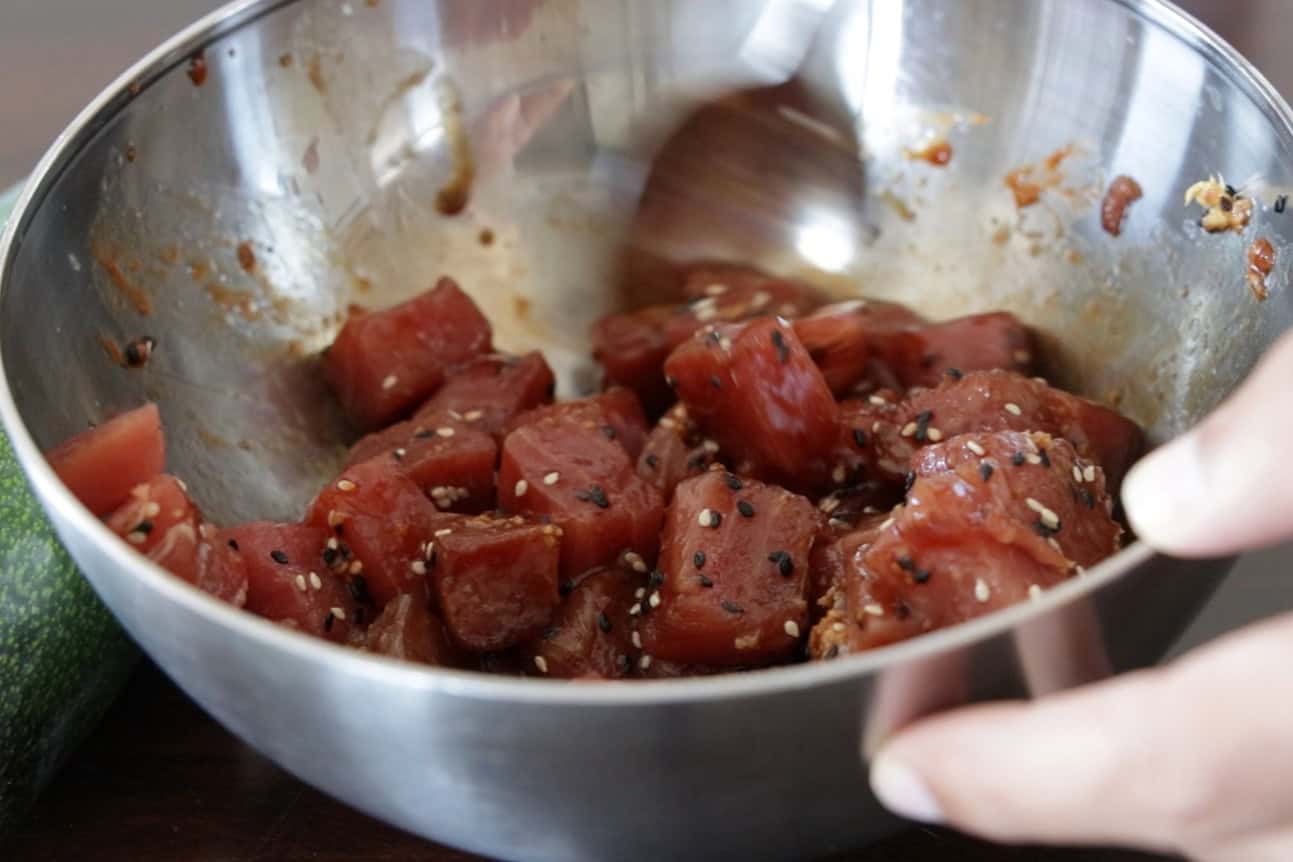
3. Marinate the tuna: Cut the sushi-grade tuna into bite-sized cubes, toss with the marinade, and refrigerate for 15–30 minutes.
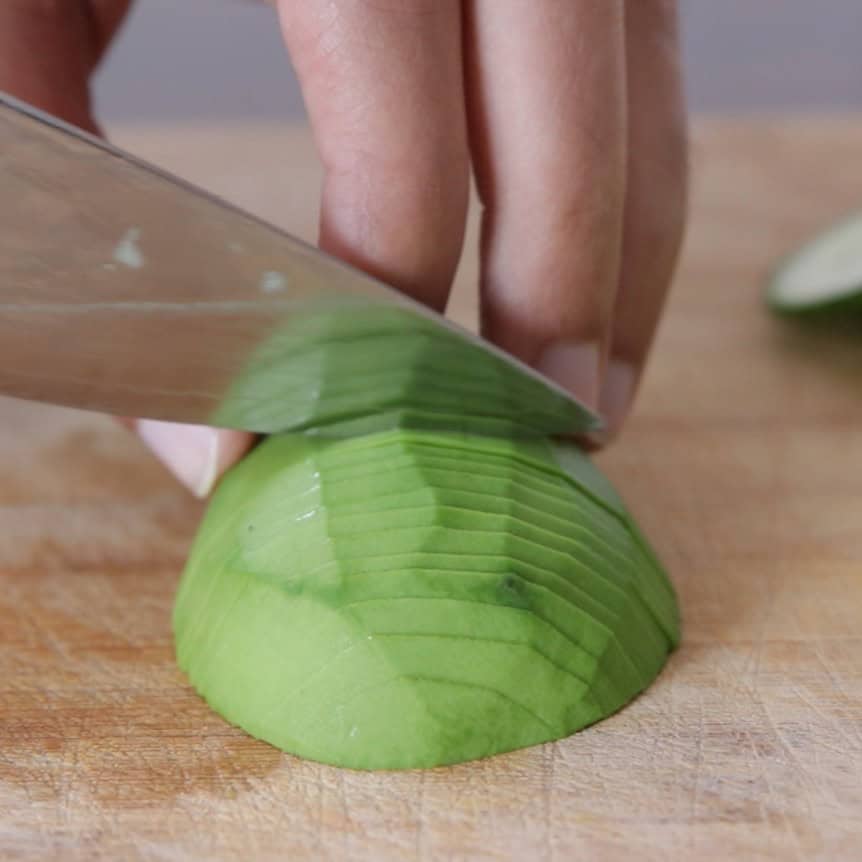
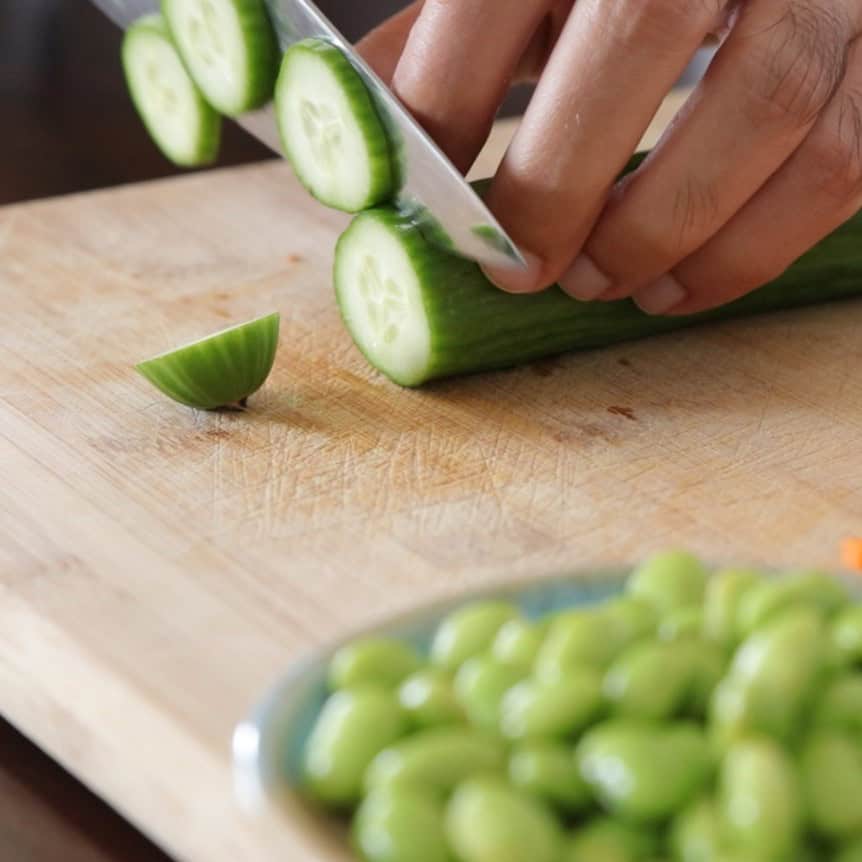
4. Prepare the toppings: Slice the avocado and cucumber, shred the carrot, cook the edamame if needed, and mix the spicy mayo.
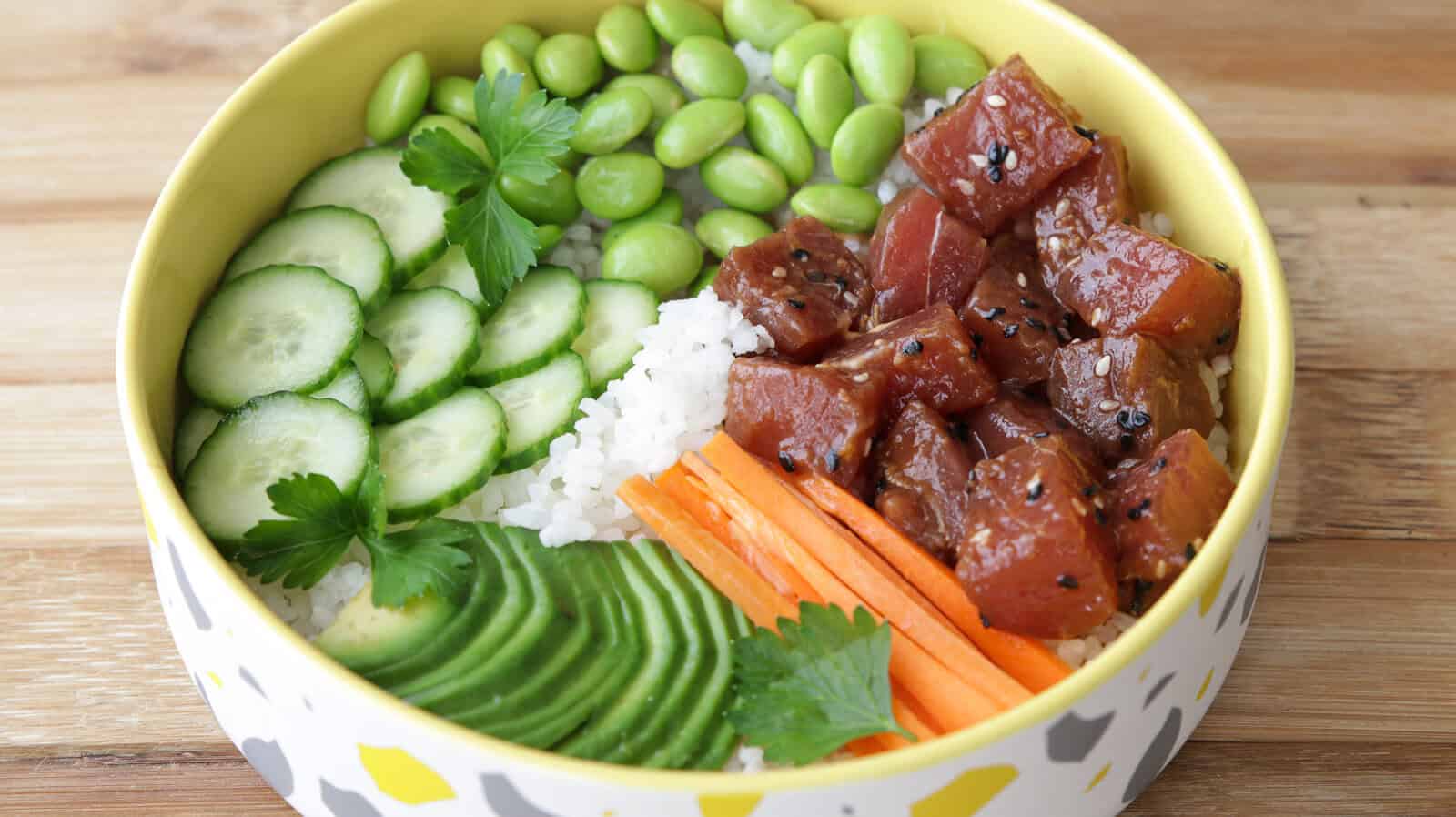
5. Assemble the bowls: Divide the rice between bowls, arrange the vegetables around the edges, add the marinated tuna, drizzle with spicy mayo, and finish with cilantro and extra sesame seeds.
Cut Against the Grain
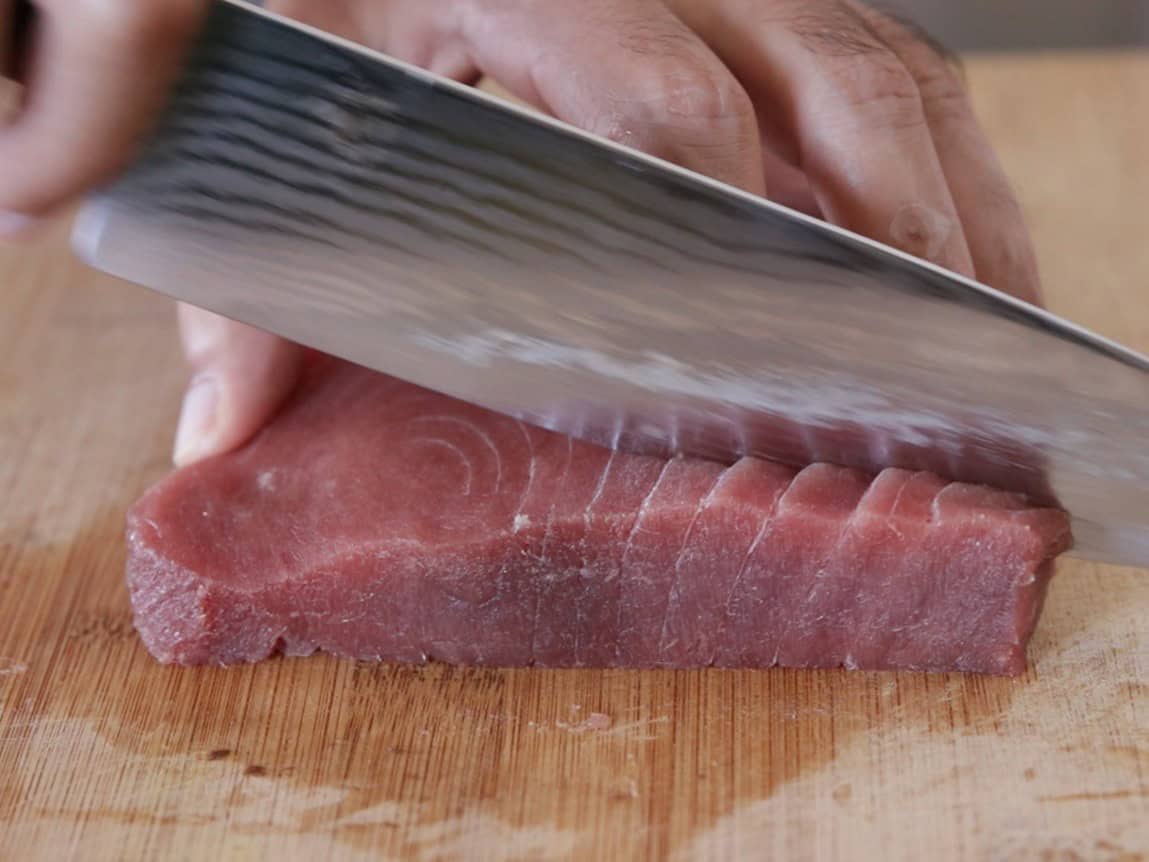
Look at the direction of the muscle fibers in your tuna and slice perpendicular to them. This creates a more tender bite and better texture in every piece.
Don’t Over-Marinate
Tuna only needs 15-30 minutes in the marinade. Any longer and the acid from the soy sauce and rice vinegar will start to “cook” the fish, changing its texture and making it mushy. If you’re prepping ahead, keep the tuna and marinade separate until closer to serving time.
Expert Tips & Tricks
- Use Cold Tuna. Keep your tuna refrigerated until the moment you’re ready to cube and marinate it. Cold fish is much easier to cut cleanly and maintains its firm texture. Use a very sharp knife to get clean cuts without tearing the flesh.
- Let Rice Cool Slightly. Don’t assemble your poke bowl with piping hot rice. Let it cool to room temperature or slightly warm so it doesn’t wilt your vegetables or warm up the cold tuna.
- Freshly Grate Your Ginger. Fresh ginger has a bright, zingy flavor that jarred ginger can’t match. Use a microplane or fine grater to get a smooth paste that distributes evenly through the marinade.
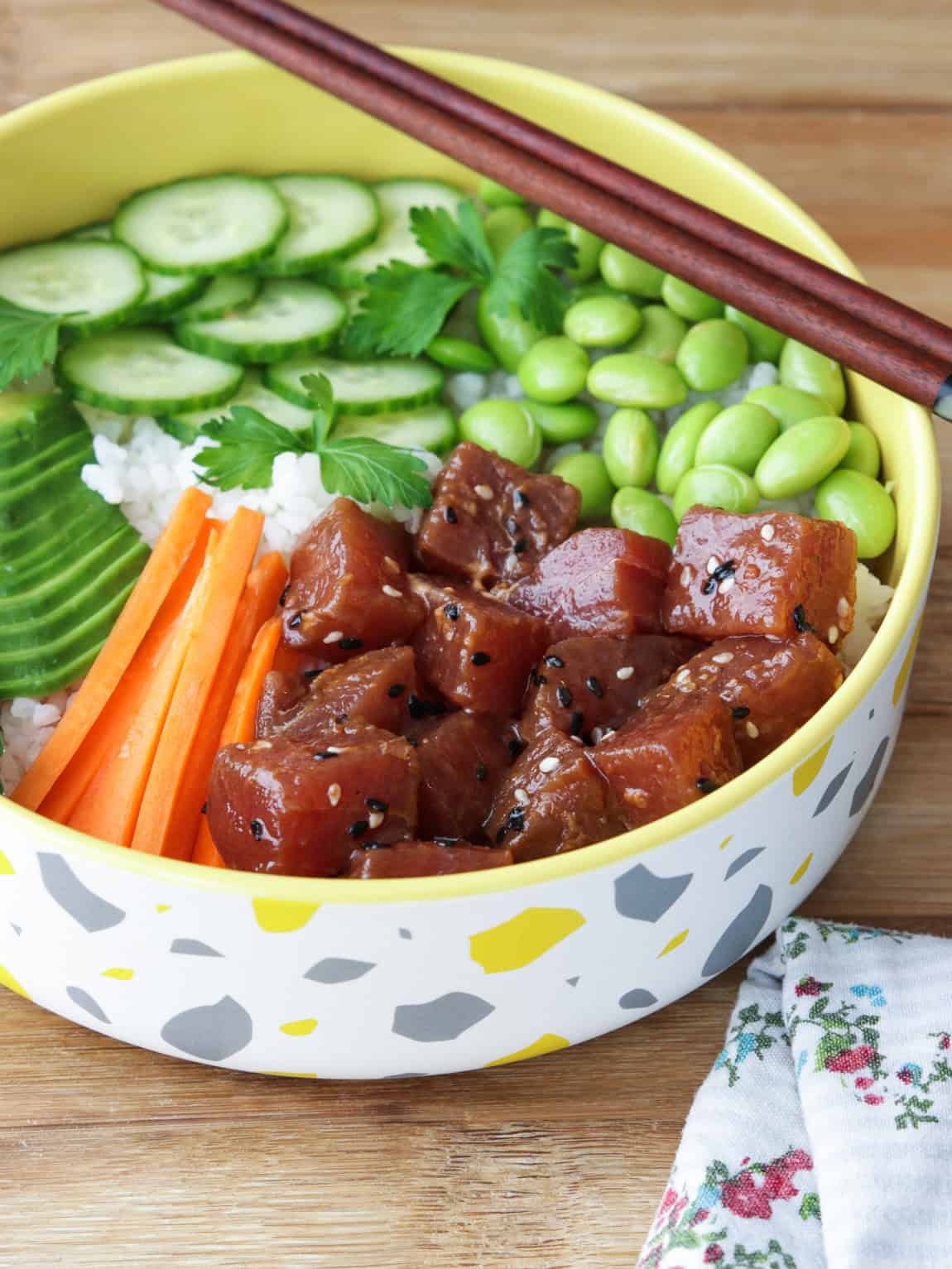
- Build Your Bowl Strategically. Start with rice on the bottom, arrange your toppings in sections on top rather than mixing everything together, and place the marinated tuna front and center. This creates a beautiful presentation that’s Instagram-worthy and lets each ingredient shine.
- Serve Immediately. Poke bowls are best enjoyed fresh. The contrast between cold marinated tuna, crisp vegetables, and slightly warm rice is what makes them so delicious. Assemble just before serving for the best experience.
Optional Variations & Dietary Adaptations
- Different Proteins – Swap the tuna for sushi-grade salmon or homemade gravlax. Cooked shrimp, imitation crab, or marinated tofu are great alternatives if you prefer not to use raw fish.
- Brown Rice or Quinoa – Substitute sushi rice with short-grain brown rice for added fiber and a nuttier flavor, or use quinoa for a protein-packed, gluten-free base. Both options make the bowl heartier and more filling.
- Extra Vegetables – Add thinly sliced radishes for peppery crunch, homemade pickled ginger for tang, seaweed salad for an authentic touch, shredded red cabbage for color, or jalapeño slices for heat. Mango or pineapple chunks add a sweet tropical twist.
- Spicy Tuna Bowl – Add chili crisp, sambal oelek, or a drizzle of chili oil for extra heat. Mix sriracha directly into the soy marinade for spicy tuna poke.
- Crunchy Toppings: Top with crispy fried onions, tempura flakes (tenkasu), crushed nori sheets, or toasted panko for added texture and crunch.
- Gluten-Free – Swap in tamari, coconut aminos or Bragg’s liquid aminos for the soy sauce.
Tuna Poke Bowl: Video Recipe
Watch the full video recipe to learn how to make the BEST Hawaiian Poke Bowls. This step-by-step tutorial simplifies the process, offering tips and tricks to guarantee perfect results every time.
Prefer the written recipe? Scroll down to the recipe box 👇
Storage Instructions
- Store the components separately: For the freshest poke bowls, keep the rice, marinated tuna, vegetables, and spicy mayo in separate airtight containers. Assemble the bowls just before serving.
- Tuna: Raw tuna is best enjoyed the same day, but can be refrigerated for up to 24 hours. Keep it well chilled at all times, and discard it if it develops an off smell or dull color.
- Sushi Rice: Store cooked rice in an airtight container in the refrigerator for up to 4 days. Reheat gently or let it come to room temperature before assembling your bowls.
- Vegetables: Cucumber, carrots, and edamame will keep well for 2–3 days in the refrigerator. Slice the avocado just before serving, or toss it with a little lemon or lime juice to help prevent browning.
- Spicy Mayo: Store in an airtight container or squeeze bottle in the refrigerator for up to 1 week.
- Freezing: Not recommended. Raw tuna should not be refrozen after thawing, and the rice and fresh vegetables lose their texture once frozen.
Ahi Tuna Poke Bowl
Equipment
Ingredients
For the Rice:
- 2 cups (390 g) Sushi rice
- 3 cups (720 ml) Water
- ½ teaspoon Salt
For the Tuna:
- 1 lb (450 g) Sushi-grade tuna diced *see notes
- 4 tablespoons (60 ml) Soy sauce
- 1 teaspoon Sesame oil
- 1 tablespoon Rice vinegar
- 1 teaspoon Fresh ginger grated
- 2 teaspoons Sriracha optional
- 1 teaspoon White sesame seeds
- 1 teaspoon Black sesame seeds
For the Bowls:
- 1 Avocado sliced
- 1 Cucumber thinly sliced or diced
- 1 Carrot julienned
- 1 cup (150 g) Edamame Shelled
- Fresh cilantro leaves for serving
For the Spicy Mayo:
- 3 tablespoons Mayonnaise
- 2 teaspoons Sriracha
Instructions
- Marinate the tuna: Place the diced tuna in a medium bowl. Add the soy sauce, sesame oil, rice vinegar, ginger, sriracha (if using), and both sesame seeds. Toss until evenly coated and set aside while preparing the remaining ingredients.
- Cook the rice: Rinse the sushi rice under cold water until the water runs mostly clear. Transfer to a saucepan or rice cooker and add the water and salt. Bring to a boil, reduce the heat to low, cover, and cook for 15 minutes. Remove from the heat and let rest, covered, for 5 minutes. Fluff gently with a fork.
- Prepare the vegetables: Cook the edamame according to package instructions or boil for 3–4 minutes. Drain and cool. Slice the avocado, cucumber, and carrot.
- Make the spicy mayo: In a small bowl, whisk together the mayonnaise and sriracha until smooth.
- Assemble the bowls: Divide the rice among 4 serving bowls. Arrange the avocado, cucumber, carrot, edamame, and marinated tuna over the rice.
- Finish and serve: Drizzle with the spicy mayo, garnish with fresh cilantro and additional sesame seeds if desired, and serve immediately.
Video
Notes
- Use sushi-grade tuna: Because the tuna is served raw, purchase fish labeled sushi-grade or sashimi-grade from a trusted source.
- Best type of tuna for poke bowls: Yellowfin tuna (Ahi) is the most popular choice for poke bowls thanks to its mild flavor, firm texture, and vibrant color. Bigeye tuna is another excellent option and is often considered richer and more buttery. Bluefin tuna can also be used, but it is usually much more expensive and often reserved for sashimi or sushi.
- Keep it cold: Store the tuna in the refrigerator until you’re ready to assemble the bowls. If serving outdoors or during warm weather, avoid leaving raw fish at room temperature for extended periods.
- Use sushi rice: Short-grain Japanese rice is the best choice. Its sticky texture helps hold the bowl together and creates the authentic poke bowl experience.
- Customize your bowl: Add mango, seaweed salad, pickled ginger, radishes, green onions, or nori strips.
- Adjust the heat: For a milder poke bowl, omit the sriracha from the tuna and spicy mayo.
- Best served fresh: Poke bowls are at their best when eaten shortly after assembling, especially when using raw tuna.
Nutrition
FAQs
A tuna poke bowl typically includes sushi rice as the base, topped with marinated sushi-grade tuna, fresh vegetables like cucumber, avocado, edamame, and shredded carrot, plus toppings like sesame seeds, green onions, and a drizzle of spicy mayo or soy-based sauce. It’s a customizable dish where you can mix and match proteins, vegetables, and sauces to suit your taste.
Poke bowls can be heart-healthy and suitable for managing high cholesterol, especially when made with fatty fish like tuna or salmon, which are rich in omega-3 fatty acids that help lower bad cholesterol. To keep them cholesterol-friendly, skip heavy mayo-based sauces, load up on vegetables and whole grains like brown rice or quinoa, and go easy on high-sodium soy sauce.
Tuna for poke bowls is typically marinated in a mixture of soy sauce, sesame oil, rice vinegar, fresh ginger, garlic, and a touch of honey or sugar, with sesame seeds and green onions added for extra flavor. The marinade should be brief—just 15-30 minutes—to keep the tuna fresh and prevent the acids from breaking down its texture.
Yes! In fact, high-quality frozen sushi-grade tuna is often an excellent choice because it’s frozen shortly after being caught. Thaw it overnight in the refrigerator before using, and never refreeze it once thawed.
Buy tuna that’s labeled sushi-grade or sashimi-grade from a trusted fish market or seafood counter. It should have a fresh ocean smell, a deep red color, and a firm texture. Since it’s served raw, always buy from a reputable source.


Came out really good! Thanks
Wow, this looks so good! I already tried your smoked salmon poke bowl and it was phenomenal. I guess now I have to try this tuna poke bowl.