
Crispy Beer Battered Fish and Chips | Authentic British
This post may contain affiliate links.
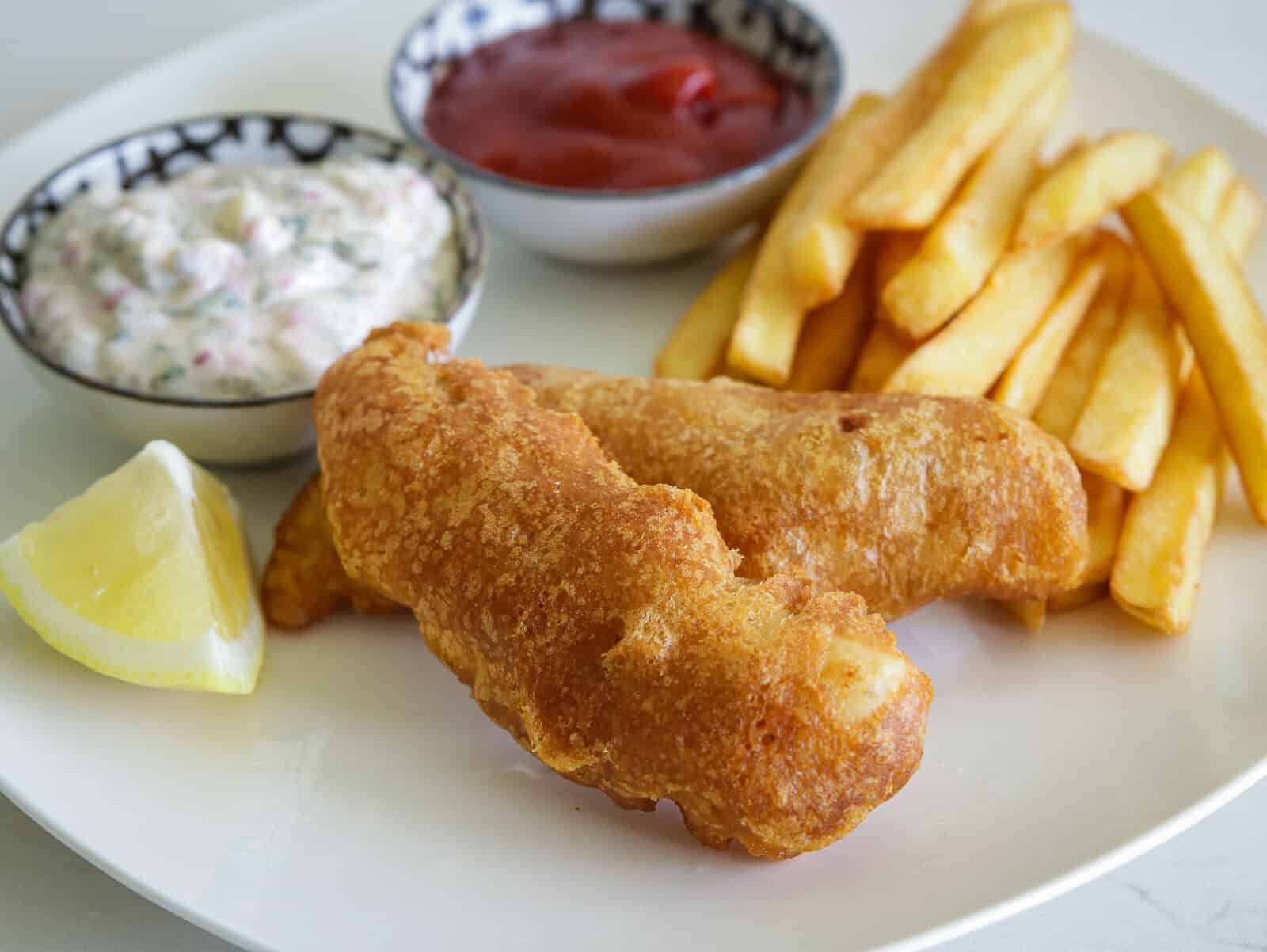
Bring a taste of your favorite British pub to your table with my authentic Beer Battered Fish and Chips recipe! Flaky white fish is encased in a shatteringly crisp golden brown crust and served alongside fluffy French fries with creamy tartar sauce. Delicious!
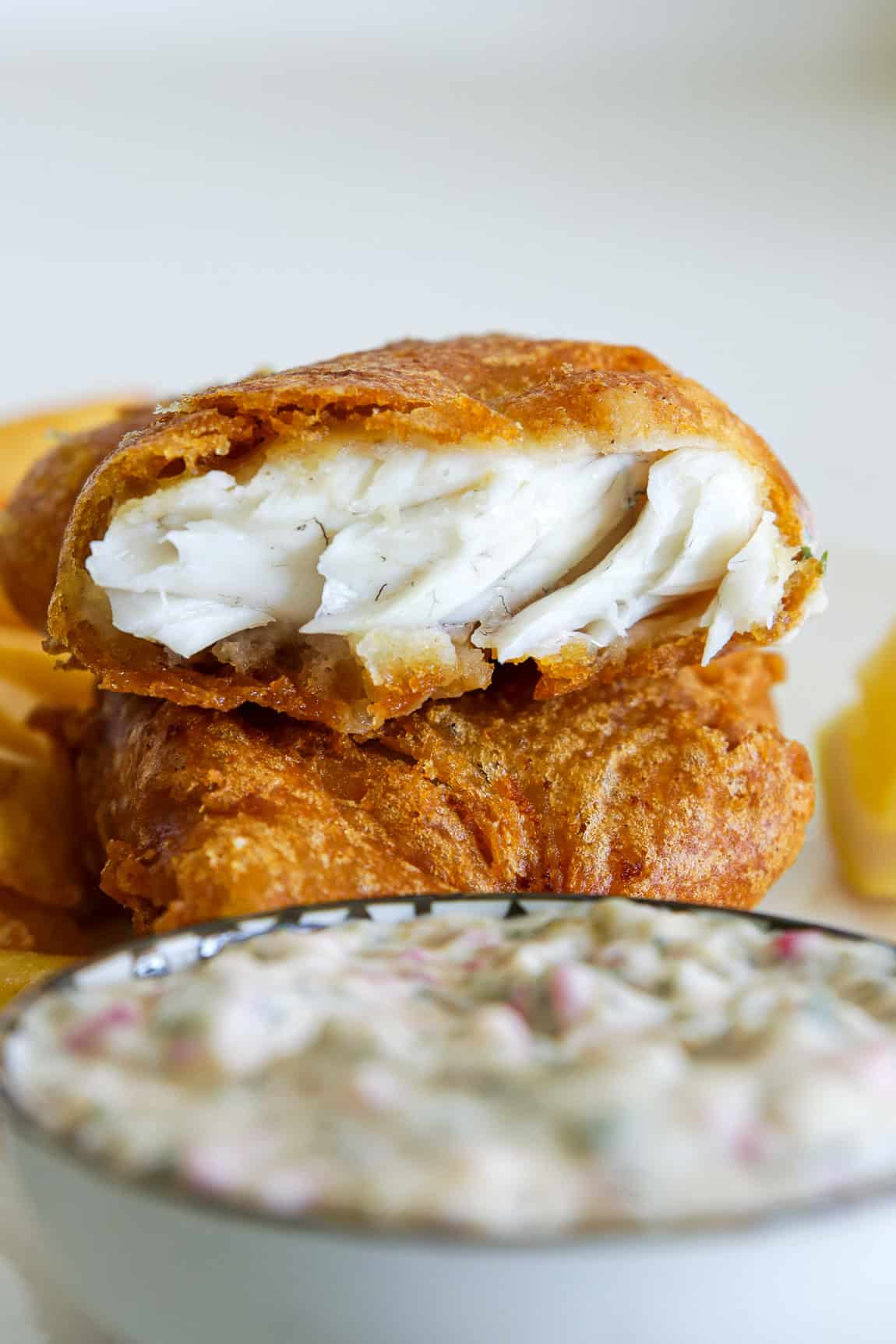
While I love the lightness of my baked panko-crusted cod, there’s something undeniably craveworthy about British fish and chips. Sure, it’s a little heavier on the calories thanks to deep-frying, but it’s well worth every single calorie!
While this recipe includes everything you need to make crispy homemade chips, if you’d like to dive deeper into the process, be sure to check out my How to Make the Best Homemade French Fries guide. It covers every step in detail and my accompanying video has gained over 7 million views, making it one of my most popular recipes.
Ingredients & Substitutions
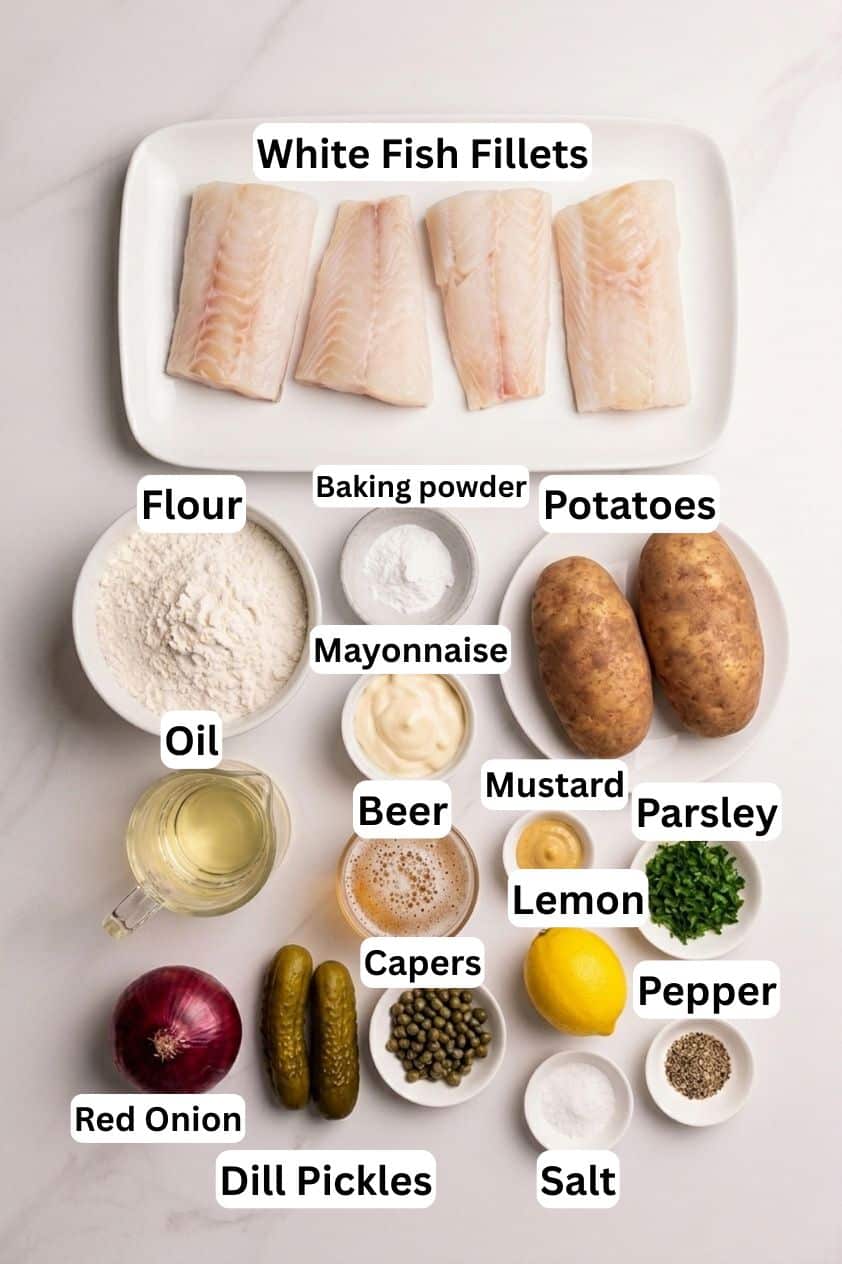
- White Fish Fillets – There are quite a few types of white fish that you can use to make fish and chips, including cod, haddock, barramundi, snapper, flathead, pollock and more.
- All-Purpose Flour – Also known as “plain flour.”
- Beer – Adding beer to the fish and chips batter makes the crust supremely light and crispy. If you don’t like having alcohol in the house, feel free to swap in NA beer or use sparkling water instead.
- Baking Powder – Not to be confused with baking soda, this leavener helps to crisp up the crust.
- Potatoes – I recommend reaching for starchy varieties like Russet or Idaho for the best chips.
- Neutral Oil – Any neutral-flavored oil with a high smoke-point (e.g. avocado, canola, vegetable, peanut) will work.
- Mayonnaise – The creamy base of our tartar sauce!
- Yellow Mustard – This adds a bit of tang to balance out the creamy mayo. If needed, mix a teaspoon each of dry mustard, white vinegar, and water to make your own.
- Red Onion – For a bit of sharpness. Slightly milder shallots work well, too.
- Dill Pickles – For tang. Avoid sweet pickles or bread and butter pickles.
- Capers – For a bit of brininess. Rinse them beforehand to keep the sauce from becoming too salty.
- Fresh Lemons – You’ll use the juice of a lemon in the tartar sauce, but I also recommend serving fish and chips with extra lemon wedges for brightness.
- Salt & Black Pepper – Just the basics!
- Fresh Parsley – For a bit of lemony freshness in the tartar sauce.
This is just a short review of the ingredients; for the complete recipe, including quantities, scroll down to the recipe card 👇
The Best Fish For Fish & Chips
The type of fish you choose makes all the difference in achieving authentic, restaurant-quality fish and chips. Traditional British fish and chips rely on white fish with mild flavor, firm texture, and thick fillets that hold up well to deep frying.
- Cod is the gold standard—its flaky, tender flesh and mild, slightly sweet flavor make it the most popular choice in the UK. Cod’s thick fillets create substantial portions with a satisfying bite.
- Haddock runs a close second, offering a slightly sweeter, more delicate flavor than cod with a firmer texture that many prefer. It’s particularly popular in Scotland and Northern England.
- Pollock (or pollack) is an excellent budget-friendly alternative with a similar texture to cod but a slightly stronger flavor. It’s sustainable and increasingly common in fish and chip shops.
- Halibut is a premium option with dense, meaty flesh and sweet, buttery flavor, though it’s pricier and can be harder to find.
- For North American cooks, hake offers mild flavor and flaky texture similar to cod, while tilapia works in a pinch but has a thinner, less substantial fillet.
Avoid oily fish like salmon or mackerel—their strong flavors and high fat content don’t suit the light, crispy batter. Look for thick, skinless fillets about 6-8 ounces each, and always use fresh or properly thawed fish for the best texture and flavor.
Frozen fish works well too—just thaw it completely and pat it very dry before coating it in the batter.
How to Make Fish and Chips
Watch the full video to learn how to make the BEST Fish and Chips recipe. This step-by-step tutorial simplifies the process, offering tips and tricks to guarantee perfect results every time.
Prefer the written recipe? Scroll down to the recipe box 👇
Don’t Skip the Beer: The Secret to Crispy Beer Battered Fish
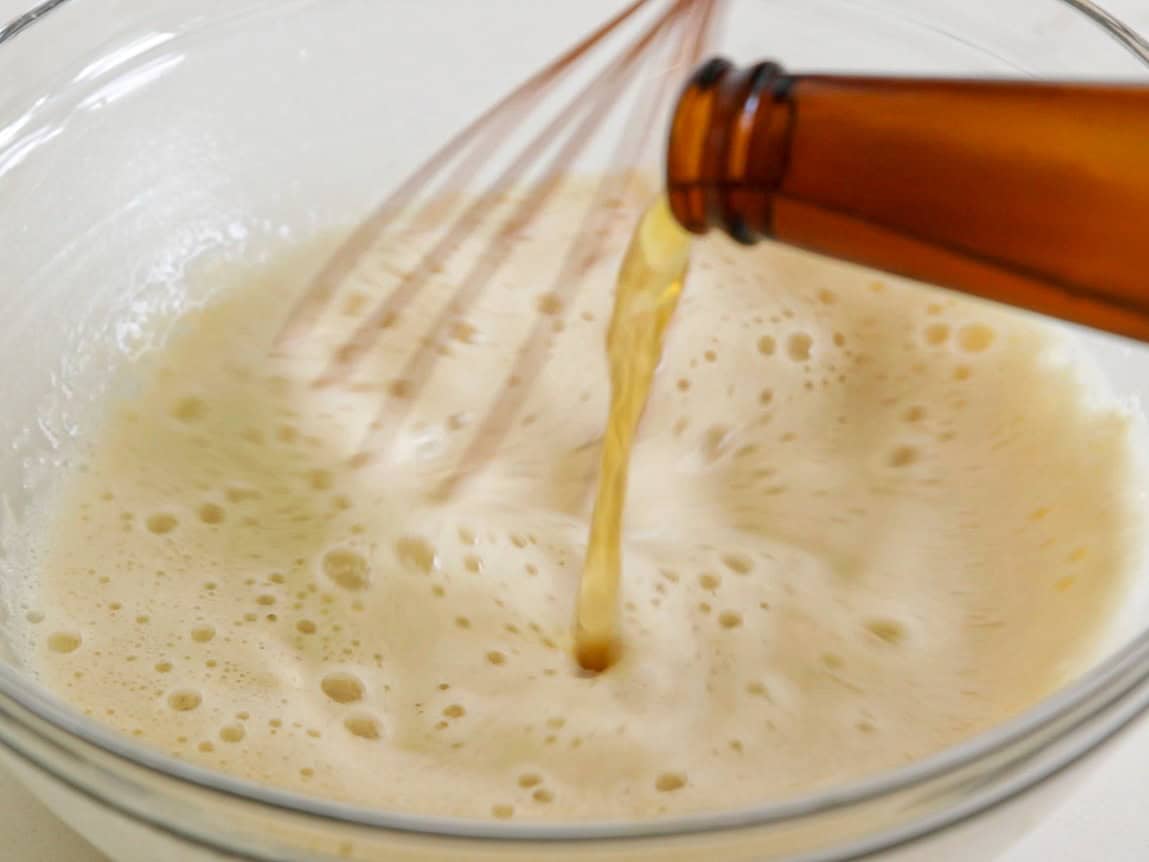
Beer isn’t just there for flavor—it’s the secret to an extra light and crispy beer battered fish. The carbonation creates tiny air bubbles, while the alcohol quickly evaporates during frying, leaving behind a delicate, crunchy coating. A light lager or pilsner works best, but if you prefer not to use beer, cold sparkling water or club soda makes an excellent substitute.
Expect a Thick, Pourable Batter
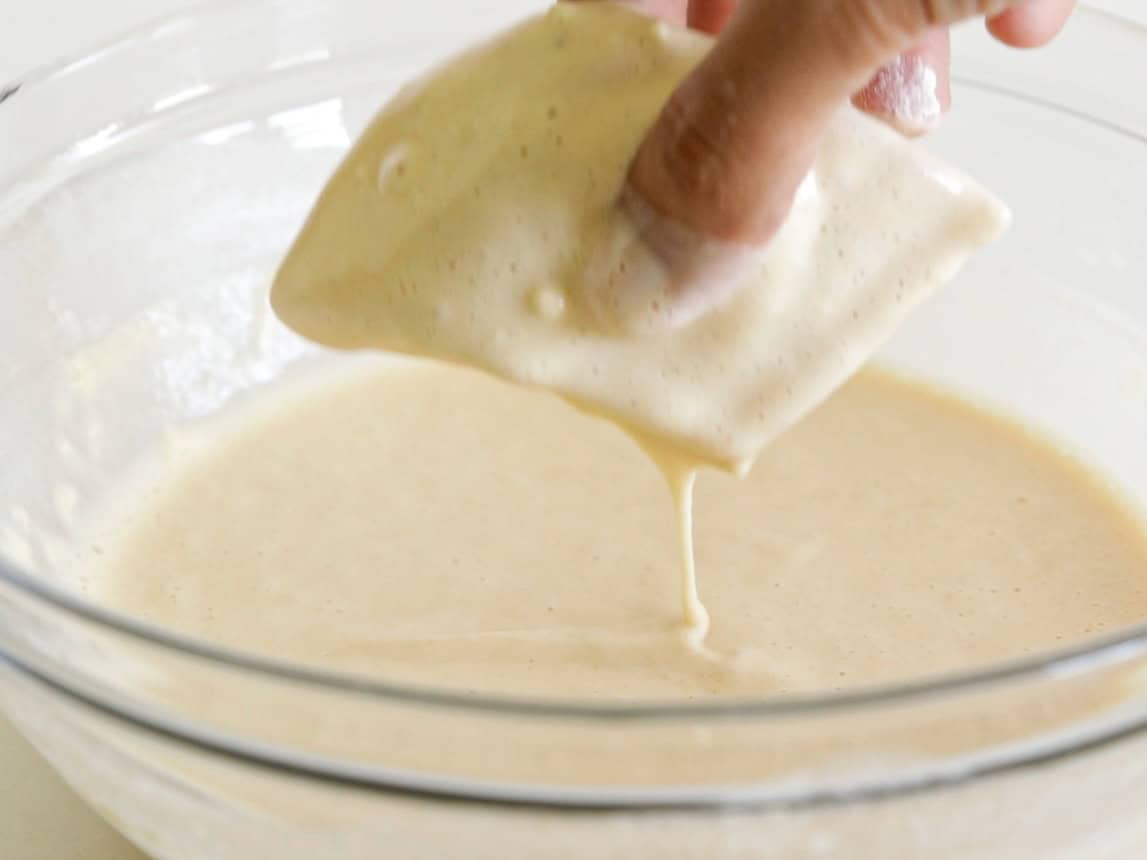
For the best fish and chips batter, start with 1 cup of cold beer, then gradually add up to an additional ¼ cup if needed. The batter should be smooth, thick enough to coat the back of a spoon, yet still thin enough for the excess to drip off the fish. If the batter is too thick, the coating will be heavier and less crispy.
Optional Variations & Dietary Adaptations
- Gluten-Free – Swap the all-purpose flour for a 1:1 gluten-free flour blend or rice flour, and use gluten-free beer or sparkling water in the batter. Rice flour creates an exceptionally crispy coating and is commonly used in Asian-style tempura batters.
- Dairy-Free – This recipe is naturally dairy-free as written, making it suitable for lactose-intolerant diners without any modifications needed.
- Lower-Carb Chips – Replace traditional potato chips with thick-cut zucchini fries, jicama sticks, or turnip wedges. While the texture differs, they still provide a satisfying crunch when fried.
- Air Fryer Version – For a lighter preparation, coat the fish in the beer batter (use a thicker consistency), spray with oil, and air fry at 400°F for 10-12 minutes, flipping halfway. Air fry potato chips separately at 380°F for 15-20 minutes, shaking the basket occasionally.
- Baked Fish & Chips – Bake battered fish on a wire rack over a baking sheet at 425°F for 15-18 minutes until golden and crispy. Bake chips on a separate sheet, tossing with oil and salt, for 30-35 minutes, flipping halfway through.
- Spicy Twist – Add cayenne pepper, paprika, or Old Bay seasoning to the batter for a kick of heat and extra flavor dimension.
- Vegan Tartar Sauce – Replace mayonnaise with vegan mayo to keep the tartar sauce plant-based while maintaining its creamy texture.
- Sweet Potato Chips – Substitute regular potatoes with sweet potatoes for a slightly sweeter, more nutritious alternative with beautiful color.
Expert Tips & Tricks
- Start with the freshest fish possible. Sometimes your best option is defrosting frozen fish. Avoid anything that smells “fishy” or off.
- Keep the batter ice-cold. Refrigerate your beer or sparkling water before mixing, and even chill the flour for 30 minutes beforehand. The temperature contrast between cold batter and hot oil creates maximum crispiness and prevents the batter from absorbing excess oil.
- Don’t overmix the batter. Stir just until combined—lumps are perfectly fine. Overmixing develops gluten, resulting in a dense, chewy coating instead of a light, crispy one.
- Dry the fish thoroughly. Pat fillets completely dry with paper towels before battering. Any moisture will cause the batter to slide off and create soggy spots instead of an even, crispy crust.
- Double-fry the chips. Fry potatoes twice for the ultimate crispy-fluffy texture. First fry at 325°F for 5-6 minutes until tender but pale, then let them rest. Just before serving, fry again at 375°F for 2-3 minutes until golden and crispy.
- Use a wire rack. Drain fried fish and chips on a wire rack instead of paper towels to keep air circulating underneath and prevent steam from making the bottoms soggy.
- Season immediately. Salt your fish and chips the moment they come out of the oil while still hot—the seasoning will stick better and penetrate the crust.
- Serve immediately. Fish and chips are best enjoyed straight from the fryer. If you must wait, keep them warm in a 200°F oven on a wire rack, but don’t cover them or they’ll steam and lose their crispiness.
Maintain Oil Temperature
Keep your oil between 350-375°F throughout frying. Use a thermometer to monitor—too cool and the food absorbs grease, too hot and the outside burns before the inside cooks. Fry in small batches to avoid temperature drops.
How to Serve Fish and Chips
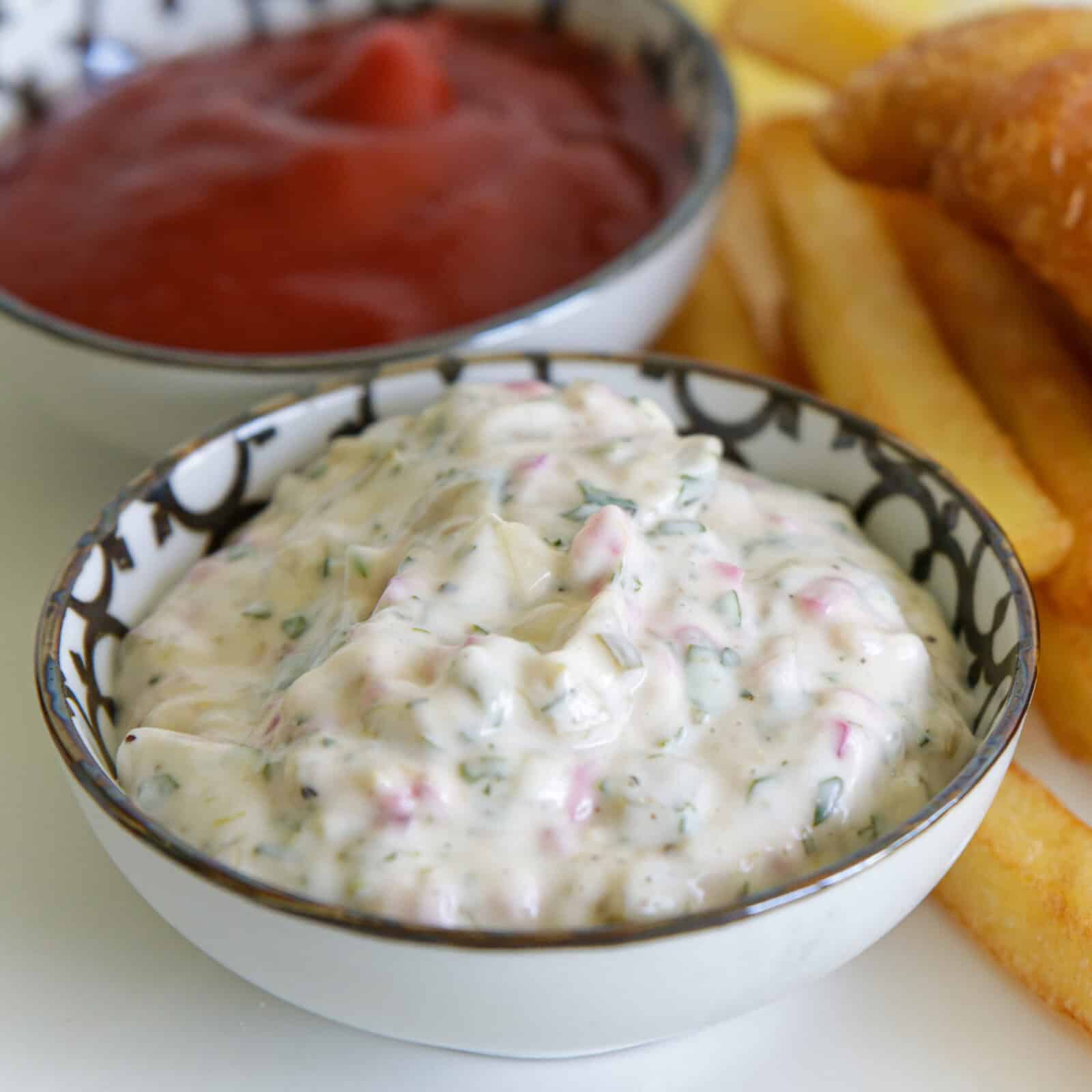
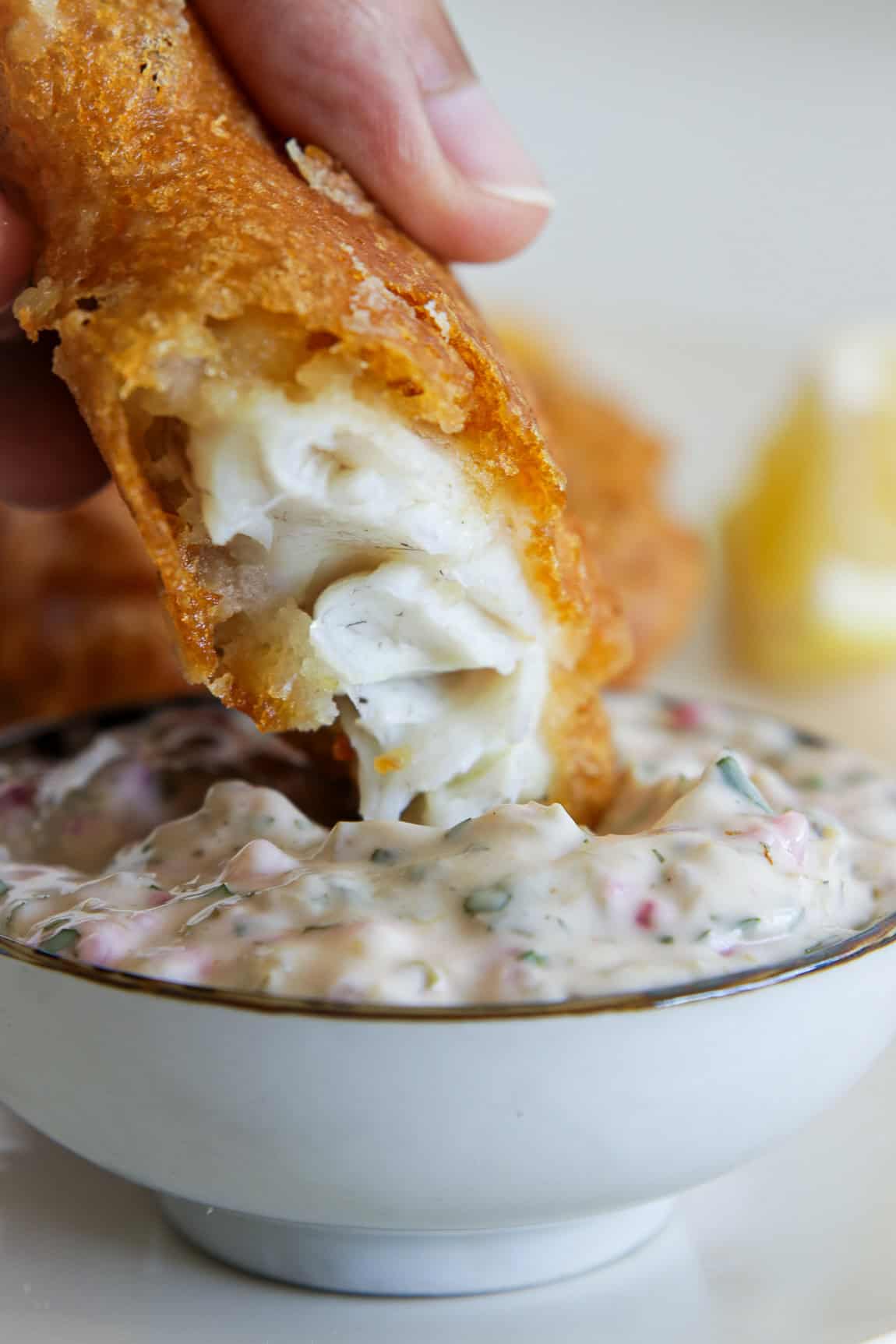
Fish and chips are best served immediately while they’re hot and crispy. I love serving them with my homemade tartar sauce, fresh lemon wedges, and a sprinkle of flaky sea salt. For extra dipping options, try ketchup, malt vinegar, garlic aioli, curry sauce, or mushy peas for a classic British pairing.
Storage & Reheating Fish and Chips
- Storage: Let fish and chips cool completely, then store in an airtight container lined with paper towels in the refrigerator for up to 2 days. Store fish and chips separately if possible for better texture. Freezing is not recommended as the batter becomes soggy.
- Oven Method (Best): Preheat oven to 350-375°F. Place fish and chips on a wire rack over a baking sheet and reheat for 10-15 minutes until heated through and crispy.
- Air Fryer Method (Quick & Crispy): Preheat air fryer to 375°F. Arrange in a single layer and reheat for 5-7 minutes, checking halfway through.
- Avoid the Microwave as it makes the batter soggy and rubbery. Reheat only once for best quality, and never cover with foil as this traps steam.
More Seafood Recipes
Beer Battered Fish and Chips
Equipment
- Deep fryer optional
Ingredients
For the fish:
- 4-5 (750 g) White fish fillets (about 150–180g / 5–6 oz each) *see notes
- Salt to taste
- Black pepper to taste
- All-purpose flour for coating
Beer batter:
- 1 cup (125 g) All-purpose flour
- 1 cup (240 ml) Beer cold *see notes
- ½ teaspoon Salt
- ¼ teaspoom Black pepper
- 2 teaspoons baking powder
For the chips:
- 4 Potatoes large
- Cold water for soaking
- Oil for frying
- Salt and pepper for seasoning
For the tartar sauce:
- ½ cup (125 g) Mayonnaise
- 1 teaspoon Mustard
- 2 tablespoons Red onion finely chopped
- 2 tablespoons Dill pickles chopped
- 1 tablespoon Capers chopped
- 1 tablespoon Lemon juice fresh
- Salt & pepper to taste
- 1 tablespoon Parsley chopped
For serving:
- Lemon cut into wedges
Instructions
- Prepare the potatoes: Peel the potatoes and cut them into fries about ½-inch (1cm) thick. Rinse well under cold water, then transfer to a large bowl and cover with fresh cold water. Let soak for 30 minutes to remove excess starch. Drain and pat completely dry with a clean kitchen towel or paper towels.
- First fry the chips: Fill a deep fryer or a large heavy-bottomed pot (such as a Dutch oven) with enough oil for deep frying. Attach a deep-fry thermometer and heat the oil to 275–300°F (135–150°C). Fry the potatoes in batches for 3–5 minutes, stirring occasionally, until softened but still pale.
- Use a spider strainer to transfer the fries to a paper towel-lined tray and let them cool for 10–15 minutes.
- Make the batter: In a large bowl, whisk together the flour, baking powder, and salt. Gradually whisk in 1 cup of the cold beer, adding up to ¼ cup more if needed. The batter should be smooth, thick enough to coat the back of a spoon, but still pour easily. Avoid overmixing.
- Prepare the fish: Pat the fish completely dry with paper towels and season both sides with salt and black pepper. Lightly coat each fillet in flour, shaking off any excess. This helps the batter adhere evenly.
- Make the tartar sauce: In a small bowl, stir together the mayonnaise, mustard, red onion, dill pickles, capers, lemon juice, parsley, salt, and pepper. Cover and refrigerate until ready to serve. Chilling the sauce allows the flavors to meld while you finish cooking.
- Finish the chips (second fry): Increase the oil temperature to 400°F (200°C). Fry the potatoes again, in batches, for 6–8 minutes or until deeply golden and crispy. Transfer to paper towels, season immediately with salt and keep warm while frying the fish. Keep warm in a 200°F (100°C) oven while frying the fish.
- Fry the fish: Reduce the oil temperature to 350°F (180°C). Dip each floured fillet into the batter, allowing any excess to drip off, then carefully lower it into the hot oil. Fry for 4–6 minutes, depending on thickness, until the batter is deeply golden and crisp and the fish flakes easily with a fork. Remove with the spider strainer and drain on a wire rack or paper towels.
- Serve: Plate the crispy fish with the hot chips, tartar sauce, and fresh lemon wedges. Serve immediately while everything is hot and crisp.
Video
Notes
- Beer: Beer helps create a light, crispy batter thanks to its carbonation and alcohol, which evaporates during frying. A light lager, pilsner, pale ale, or other mild beer works best. Avoid dark beers, which can add bitterness. For an alcohol-free option, use cold sparkling water or club soda instead.
- Batter consistency: Start with 1 cup of beer, then gradually add more, up to an additional ¼ cup, if needed. The batter should be smooth, thick enough to coat the fish evenly, but still thin enough for any excess to drip off.
- Best fish: Cod is the traditional choice for fish and chips thanks to its mild flavor and large flaky texture. Haddock, pollock, hake, halibut, snapper, or other firm white fish also work well. Choose thick fillets whenever possible for the juiciest result.
- Choose the right potatoes: Starchy potatoes, such as Russet or Maris Piper, produce the fluffiest interior and crispiest chips. For even more tips and troubleshooting, see my How to Make the Best French Fries guide.
- Double frying: The two-stage frying method is what creates chips that are crispy on the outside and fluffy on the inside. Don’t skip the first fry, as it’s essential for the final texture.
- Maintain the oil temperature: A deep-fry thermometer makes a huge difference. If the oil is too cool, the fish and chips will absorb excess oil and become greasy. If it’s too hot, the batter may brown before the fish is cooked through.
- Don’t overcrowd the fryer: Fry in small batches to keep the oil temperature stable and ensure even cooking and crispiness.
- Best oil: Use a neutral oil with a high smoke point, such as vegetable, canola, sunflower, or peanut oil. If frying multiple batches, skim away any loose batter between batches to help keep the oil clean and prevent burnt bits from sticking to the fish.
- Make ahead: The tartar sauce can be prepared up to 2 days in advance and refrigerated. The potatoes can also be peeled, cut, and soaked in cold water in the refrigerator for up to 24 hours. Just dry them thoroughly before frying.
Nutrition
FAQs
Yes, fish and chips can be reheated, though they won’t be quite as crispy as when freshly fried. The best method is to reheat them in the oven at 350-375°F for 10-15 minutes, placing them on a wire rack to allow air circulation and prevent sogginess. You can also use an air fryer at 375°F for 5-7 minutes for excellent results. Avoid the microwave, as it will make the batter soggy and rubbery. For best quality, store leftover fish and chips in the refrigerator in an airtight container for up to 2 days, and reheat only once. The chips tend to reheat better than the fish, which can lose some of its flaky texture.
Beer adds several benefits to fish batter. The carbonation creates tiny air bubbles that make the batter incredibly light and crispy when fried. The alcohol evaporates quickly in hot oil, leaving behind a delicate, airy texture with less grease absorption. Beer also contains yeast and sugars that promote browning and add subtle flavor depth to the coating. Additionally, the acidity in beer helps tenderize the batter and prevents gluten development, keeping it from becoming tough or chewy. You can use any beer style—lagers create a mild, clean flavor while ales add more character. If you prefer, sparkling water or club soda can substitute for beer and still provide the carbonation needed for crispiness.
Beer batter usually turns soggy when the oil isn’t hot enough, the batter is too thick, or the fish is wet before coating. Keep the batter ice-cold, pat the fish completely dry, and fry at 350°F (180°C) for the lightest, crispiest coating.
A light lager or pilsner is the best choice because it creates a light, crispy coating without overpowering the fish. Pale ales also work well. Avoid dark beers such as stouts or porters, which can make the batter darker and slightly bitter.
Yes. Replace the beer with an equal amount of cold sparkling water or club soda. The carbonation still creates a light, crispy batter, although the flavor won’t be quite as rich as a traditional beer batter.
Yes. Frozen white fish works very well for fish and chips. Thaw it completely in the refrigerator, then pat it very dry with paper towels before coating it in flour and batter. Excess moisture can prevent the batter from sticking properly.

Love the crisp of these fried fish.
Hello David, This looks like a stellar recipe, but the second Chips fry oil temp and timing are missing! Please add this as I really want to make this recipe!
Cheers,
Hi Ross,
Thanks so much for pointing that out. I just checked the recipe, and it looks like that step may be missing from the recipe card. I’ve updated it now.
Delicious thanks