Make brunch at home a breeze with my super simple, fantastically flaky Homemade Quiche Crust recipe. While quiches may feel like something you only order at restaurants, they’re actually surprisingly easy to make. With this foolproof crust, you’re guaranteed to impress.
As much as I love the concept of brunch, I’m not a fan of loud, busy restaurants or long wait-times. That’s why I’d rather host them myself! One of my go-tos is homemade quiche since you can make them in advance, use any fillings you have on hand, and they’re always a smash hit. In fact, my quiche video has over 6 million views. Of course, the secret to a restaurant-worthy result is the perfect quiche crust.
This quiche crust is essentially a classic French shortcrust pastry (pâte brisée), known for its buttery, flaky texture. It’s made with just 4 ingredients and works perfectly for any quiche filling.
The result? A flaky, buttery crust that doesn’t shrink or turn soggy, every single time.
Ingredients & Substitutions
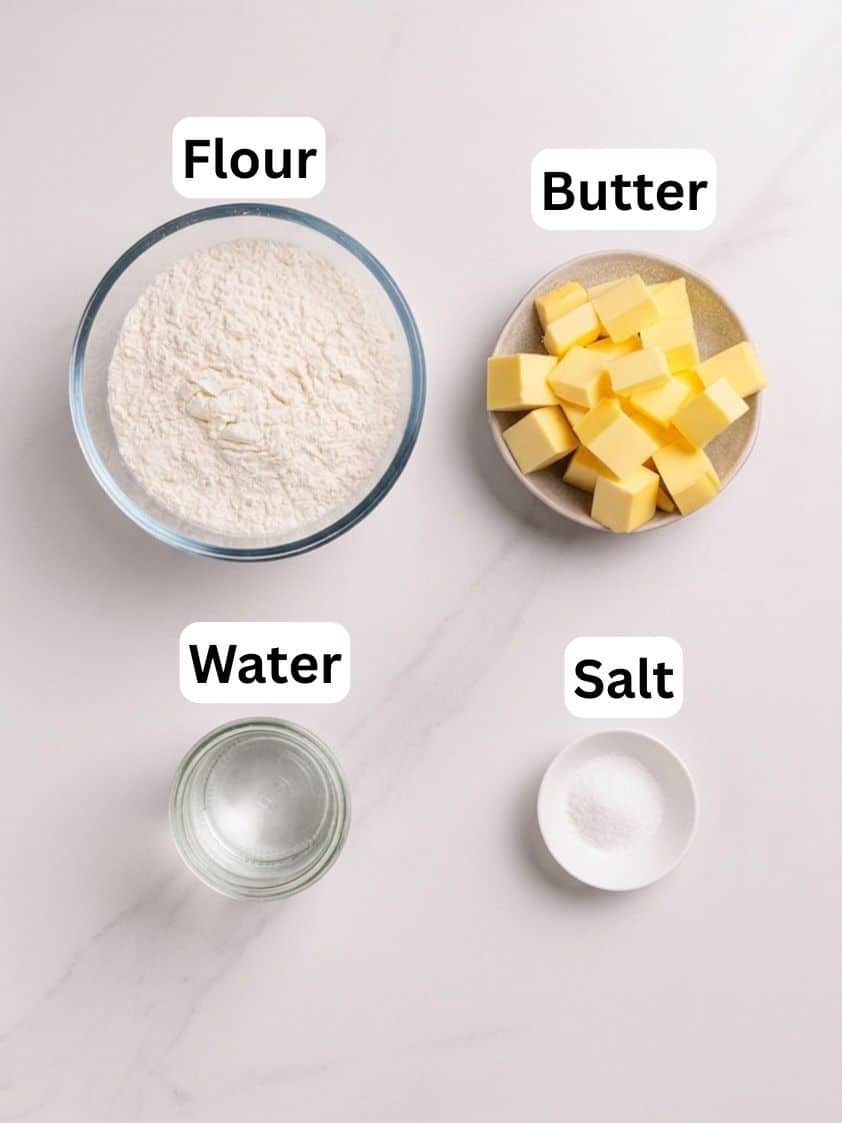
All-Purpose Flour – Plain flour is all you need!
Unsalted Butter – Make sure it’s nice and cold to help with lamination (the technique that causes beautiful flakiness). If possible, reach for European style (preferably cultured) butter for the best flavor.
Salt – Use fine sea salt or kosher salt; iodized table salt tends to leave a bitter aftertaste.
Ice Water – The frostier, the better!
This is just a short review of the ingredients; for the complete recipe, including quantities, scroll down to the recipe card 👇
Flaky Quiche Crust: Video Recipe
Watch the full video to learn how to make the BEST Quiche Crust recipe. This step-by-step tutorial simplifies the process, offering tips and tricks to guarantee perfect results every time.
Prefer the written recipe? Scroll down to the recipe box 👇
The Best Kind of Butter For Pastry Crusts
When it comes to making a flaky quiche crust, the butter you use makes a big difference. Here are the key factors to consider:
Conventional vs. European Butter – European-style butters typically contain a higher fat content, often around 82-84% compared to the 80% fat in standard American butter. This extra fat content results in a richer, more tender crust.
Cultured vs. Uncultured Butter – Cultured butters have been fermented, giving them a slightly tangy, complex flavor that’s almost cheesy. This can complement the other ingredients in your quiche crust nicely. Uncultured butter has a more neutral taste.
Grass-Fed/Organic vs. Conventional – Butter made from the milk of grass-fed, organic cows tends to have a slightly higher nutritional profile, with more beneficial omega-3s and vitamins. While the difference is subtle, some bakers also prefer the flavor of grass-fed butter.
Salted vs. Unsalted Butter – Most pastry recipes call for unsalted butter, as it allows you to control the overall salt content. Salted butter can work, but you’ll need to adjust the recipe’s salt accordingly.
Bottom line: Use cold, high-quality unsalted butter for the best flavor and flakiest texture.
Blind Baking (Why It Matters + How to Do It)
If you’ve ever made a quiche with a soggy bottom or a crust that shrinks down the sides, blind baking is the step that fixes both.
Quiche fillings are very wet (eggs + cream), and if you pour them into raw dough, the crust won’t have time to set properly. Instead of staying crisp and flaky, it absorbs moisture and turns soft.
Blind baking solves this by partially baking the crust first, so it holds its shape and creates a barrier before the filling goes in.
A few key tips:
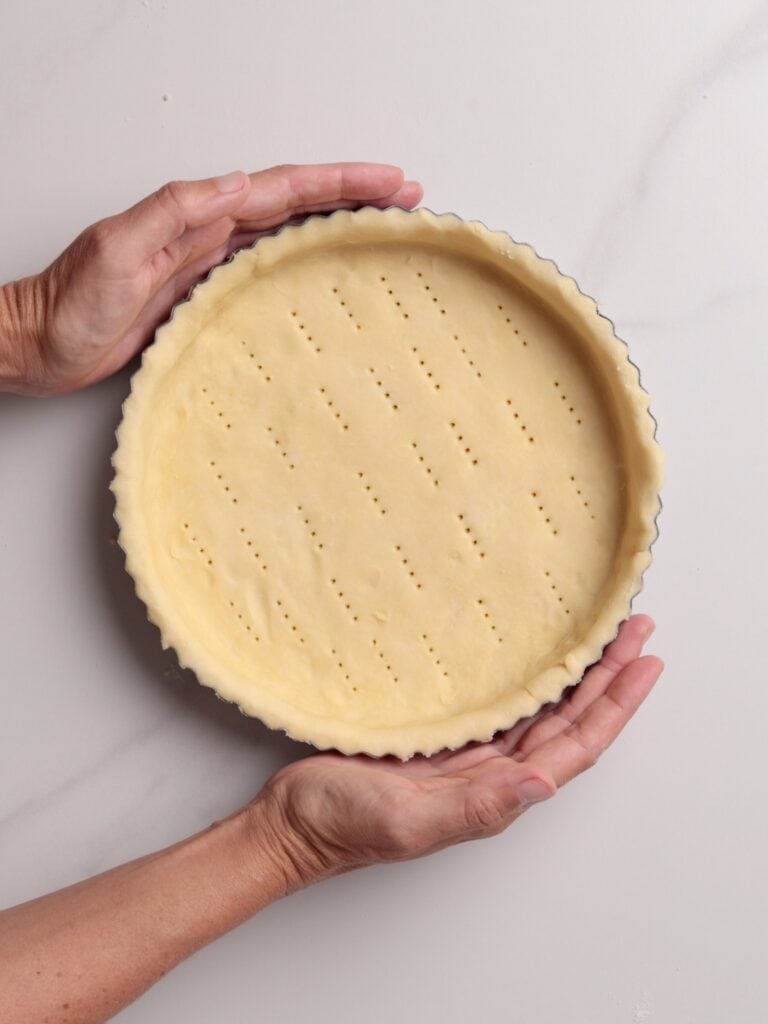
Always chill or freeze the crust before baking; this helps prevent shrinking
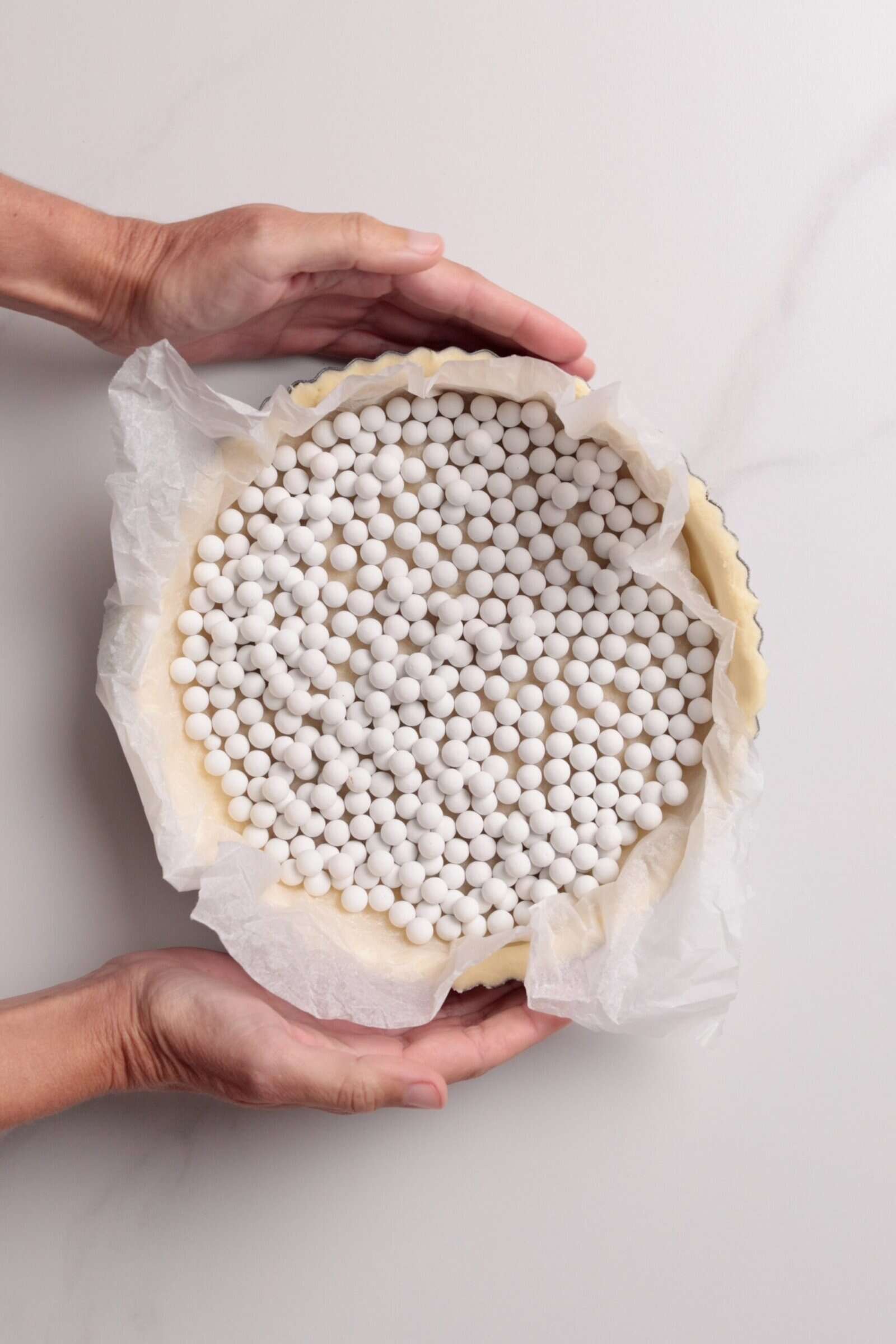
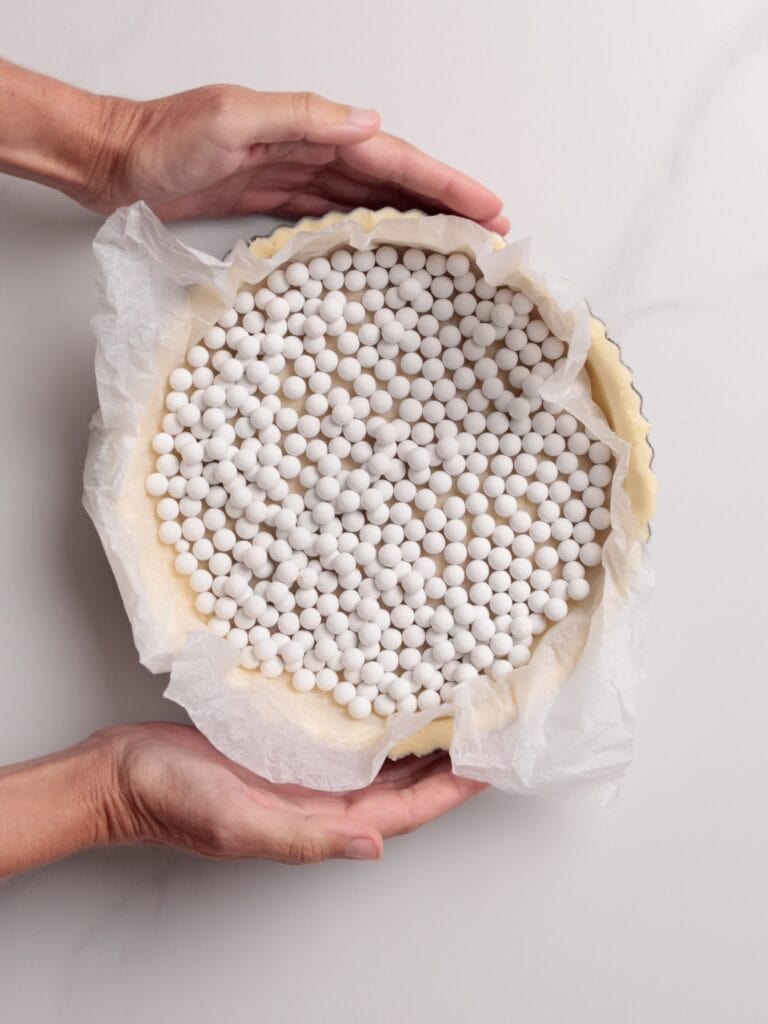
Use pie weights to keep the crust from puffing or collapsing
No pie weights? No problem, dry beans or rice work perfectly
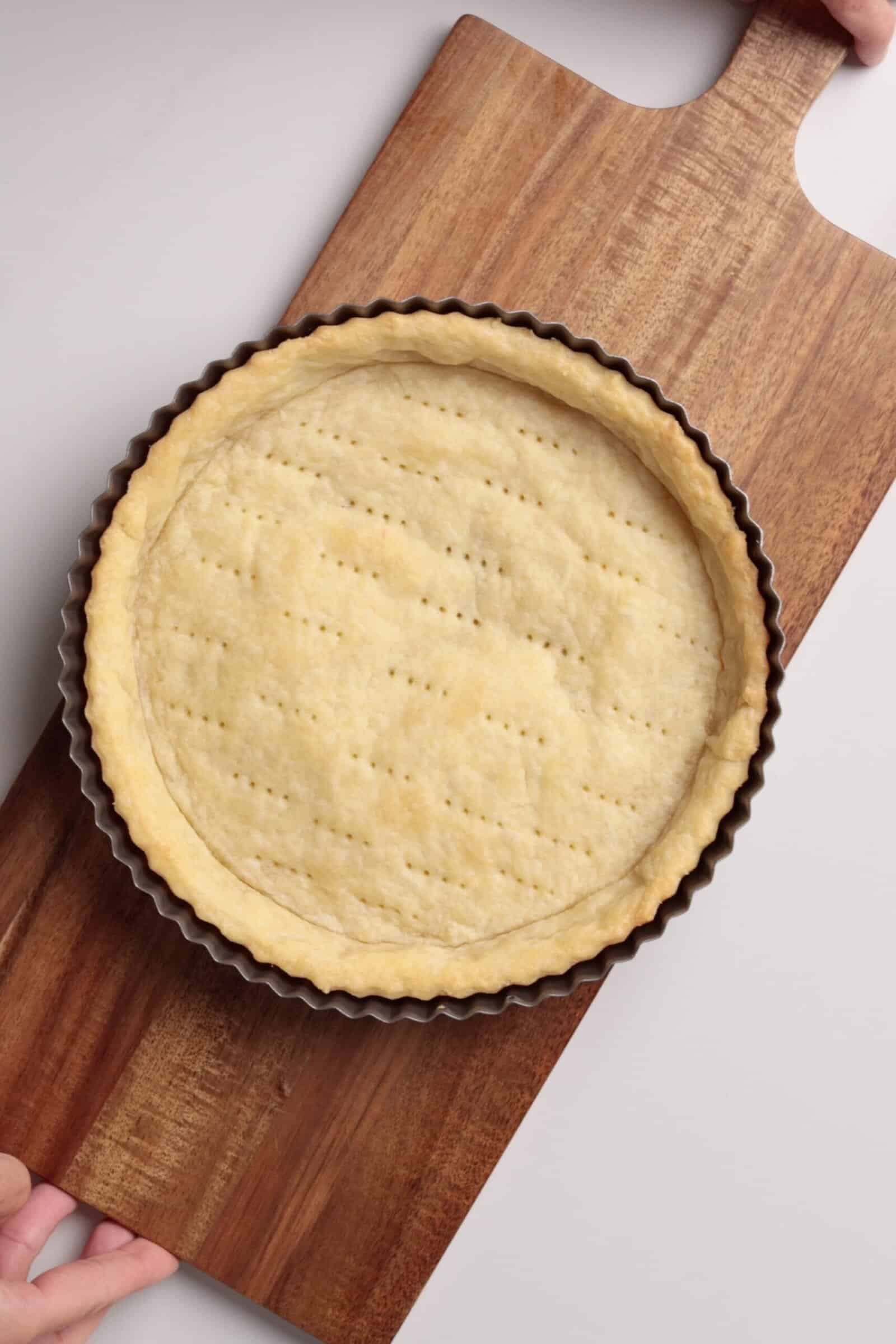
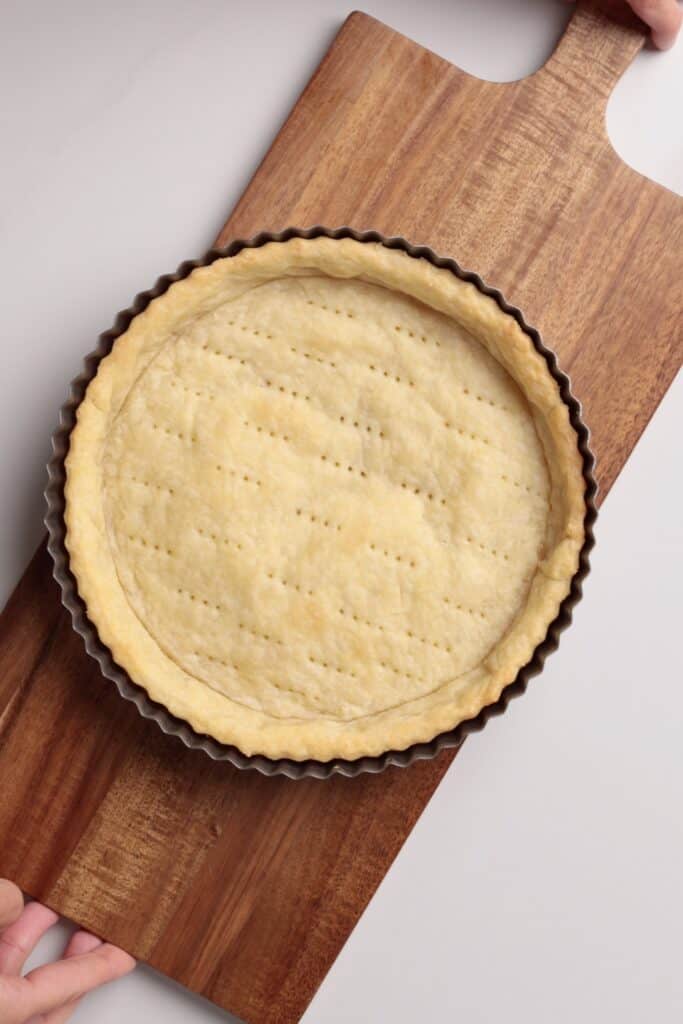
Bake until the crust looks lightly golden and dry, not pale
How to Make The Best Quiche Crust
Blend flour and saltAdd butter and blend just until combinedChill the doughRoll the doughFit to your panPierce the dough and chill againBlind bakeRemove the weights and bake until golden
Optional Variations & Dietary Adaptations
Dairy-Free – Swap in your favorite high-quality vegan butter.
Herbed – Add your favorite dried herbs to the mix for an extra layer of savory flavor.
Whole Wheat Option – Replace up to 50% of the flour with whole wheat for a nuttier flavor
Expert Tips & Tricks
Water in the crust: Add gradually. The dough should hold together when pressed but not feel sticky. Too much water = tough crust. You may not need all the water.
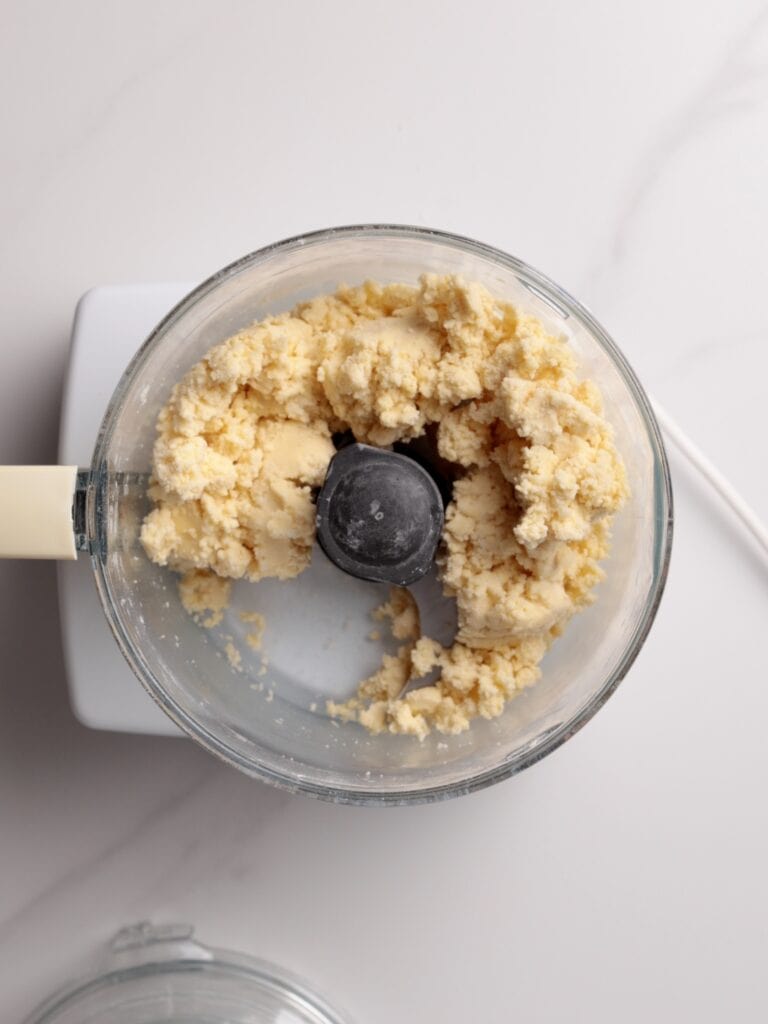
Do not over-process the dough: Mix the dough just until it comes together. Over-processing or over-kneading develops too much gluten and warms the butter, which results in a tough, dense crust instead of a tender, flaky one. Small visible butter pieces in the dough are perfectly fine, they help create a flaky texture when baked.
Keep everything cold: Cold butter = flaky layers. If needed, chill the dough again before rolling
Don’t skip freezing before baking: This prevents shrinking and keeps the edges from collapsing.
Egg wash trick: For an extra crisp, moisture-resistant crust, brush the base lightly with egg wash after blind baking and return to the oven for 2–3 minutes.
Quiche Filling Ideas
This easy quiche crust recipe works well for any variety of quiche you like! Here are some of my favorites:
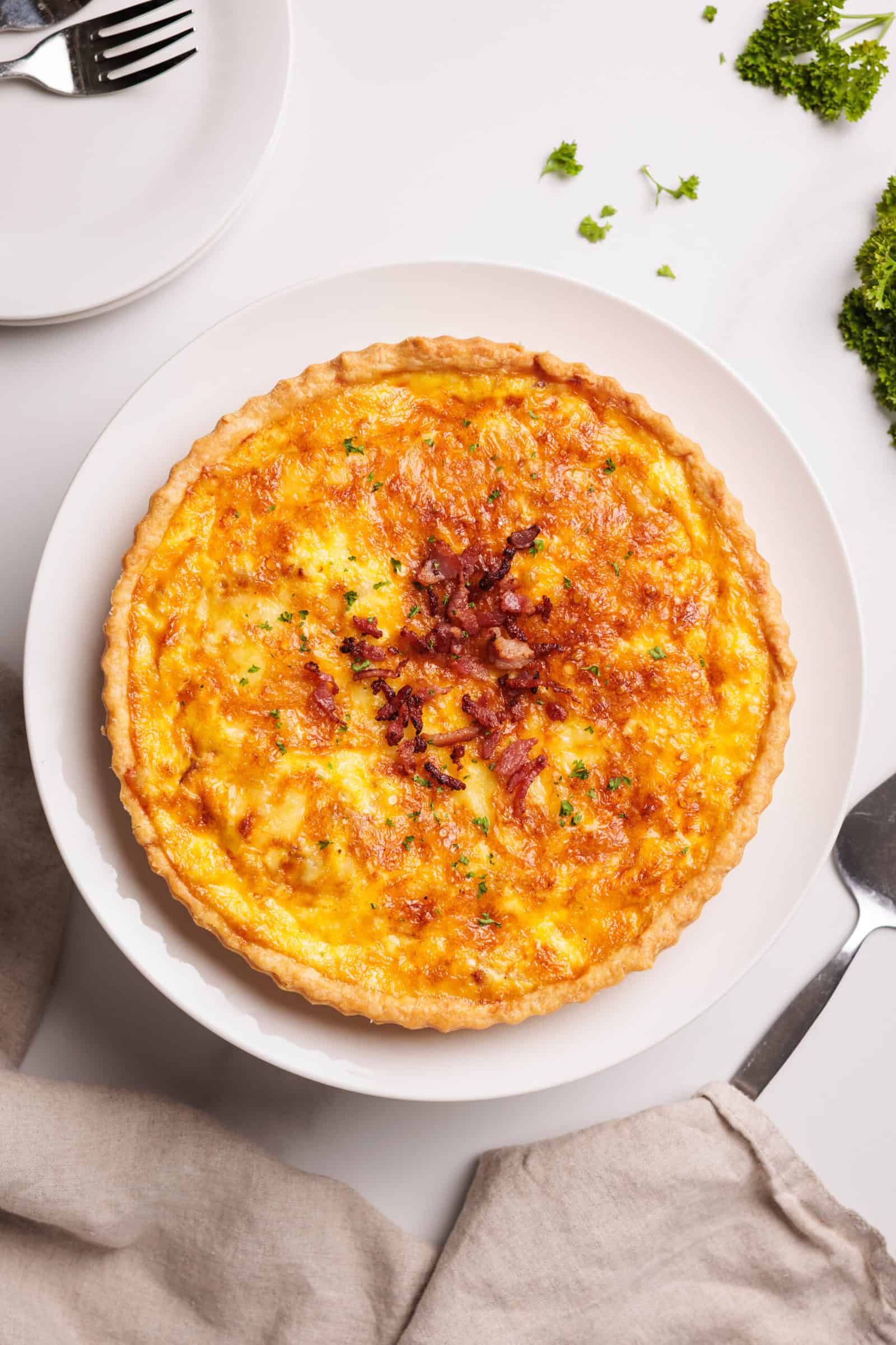
Quiche Lorraine – The quintessential quiche, with savory bacon and nutty Gruyère cheese.
How to Store Quiche Crust
Refrigerator: Unbaked quiche crust can be stored in the refrigerator for 3-5 days. Wrap the dough tightly in plastic wrap or place it in an airtight container before refrigerating.
Freezer: For longer-term storage, the quiche crust dough can be frozen for up to 3 months. Divide the dough into individual portions, wrap each piece tightly in plastic wrap or foil, then place in a freezer-safe bag or container. When you’re ready to make your quiche, transfer the frozen dough to the refrigerator and let it thaw overnight.
To Use Refrigerated Crust: Remove the dough from the fridge and let it sit at room temperature for 30 minutes to an hour before rolling and baking. This will make the dough more pliable and easier to work with.
Homemade Quiche Crust Recipe
Easy homemade quiche crust recipe, flaky, buttery, no soggy bottom, no shrinking. Perfect base for any quiche filling.
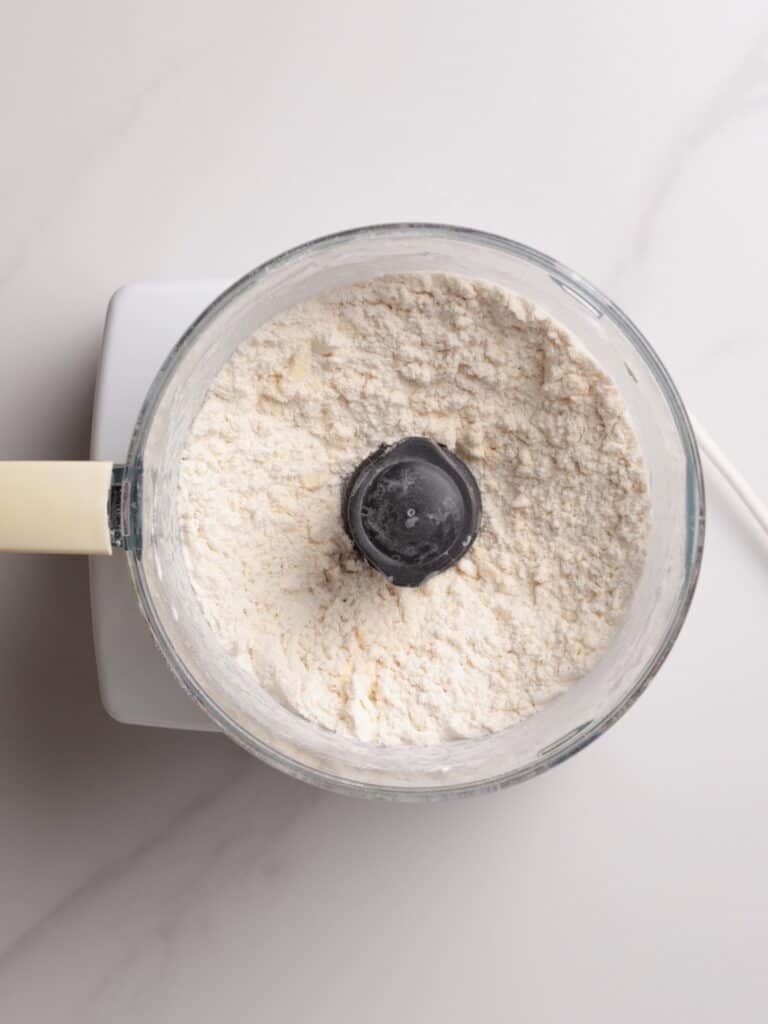
Make the Dough: In a food processor, pulse the flour and salt to combine. Add the cold butter and pulse until the mixture resembles coarse crumbs with small pea-sized butter pieces.
Gradually add the ice water, 1 tablespoon at a time, pulsing just until the dough starts to come together. Do not overmix.
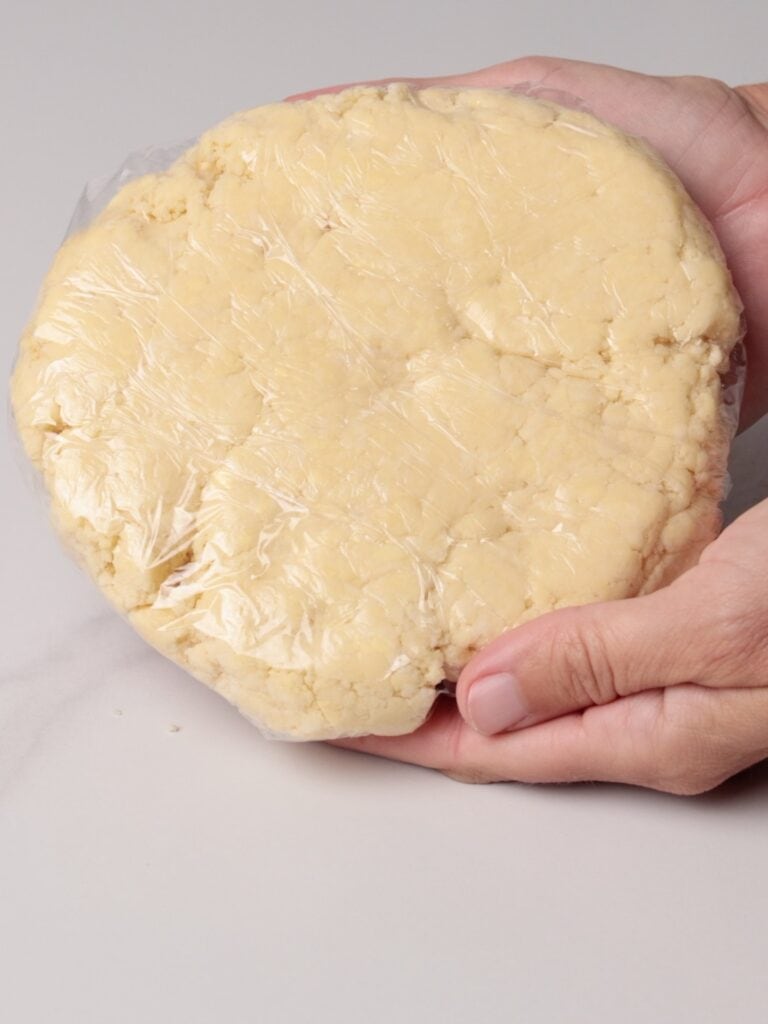
Chill the Dough: Transfer the dough to a work surface and gently bring it together into a disk (do not knead). Wrap tightly and refrigerate for at least 30 minutes.
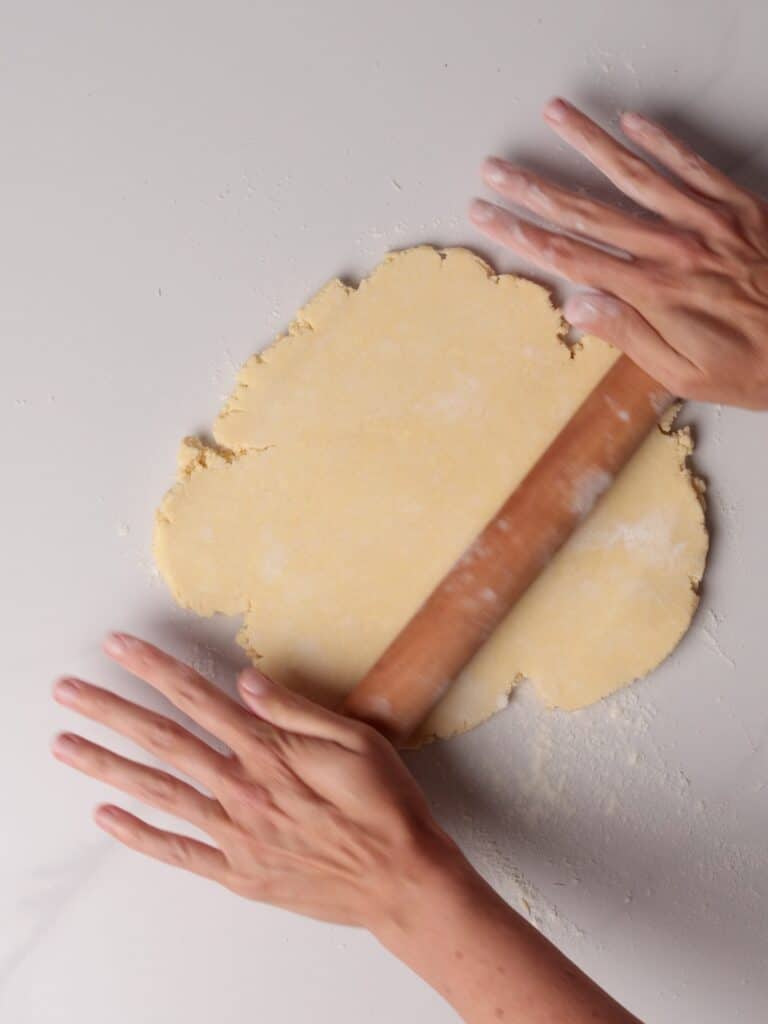
Roll & Shape: On a lightly floured surface, roll the dough into an 11–12 inch (28–30 cm) circle.
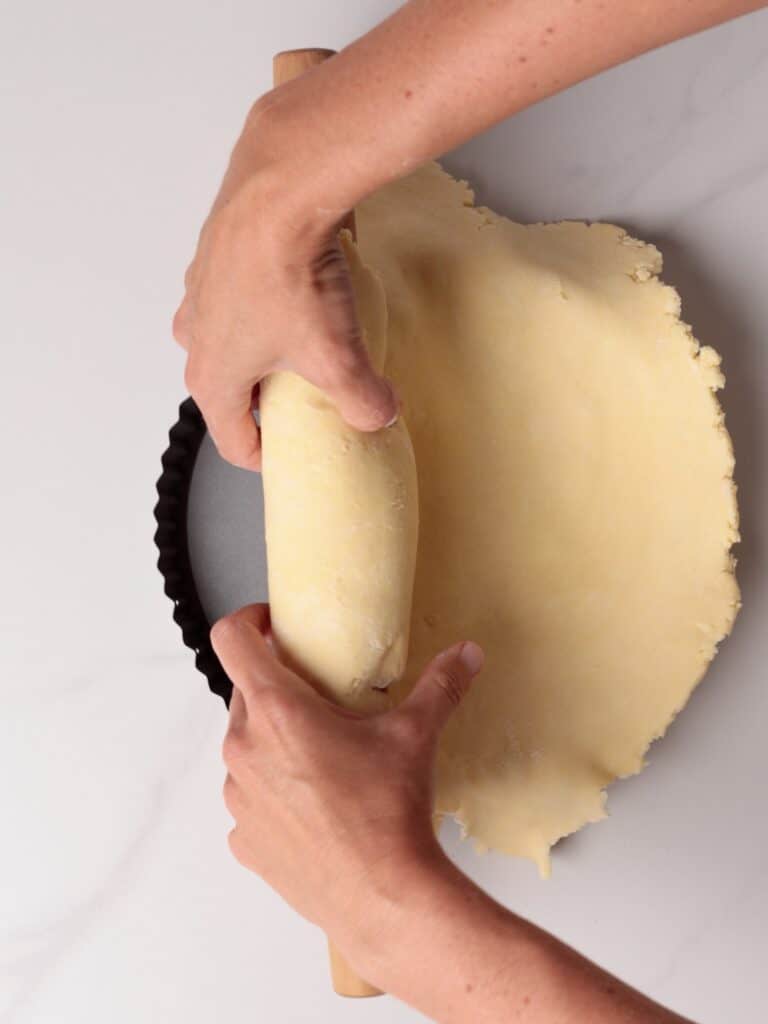
Transfer to a 9-inch (23 cm) tart or pie pan. Gently press into the base and sides without stretching. Trim excess dough and prick the base with a fork.
Freeze for 20–30 minutes (this helps prevent shrinking).
Blind Bake: Preheat oven to 350°F (180°C).
Line the crust with parchment paper and fill with pie weights or dry beans. Bake for 15 minutes, then remove weights and parchment. Return to oven and bake another 10–12 minutes, until lightly golden and dry.
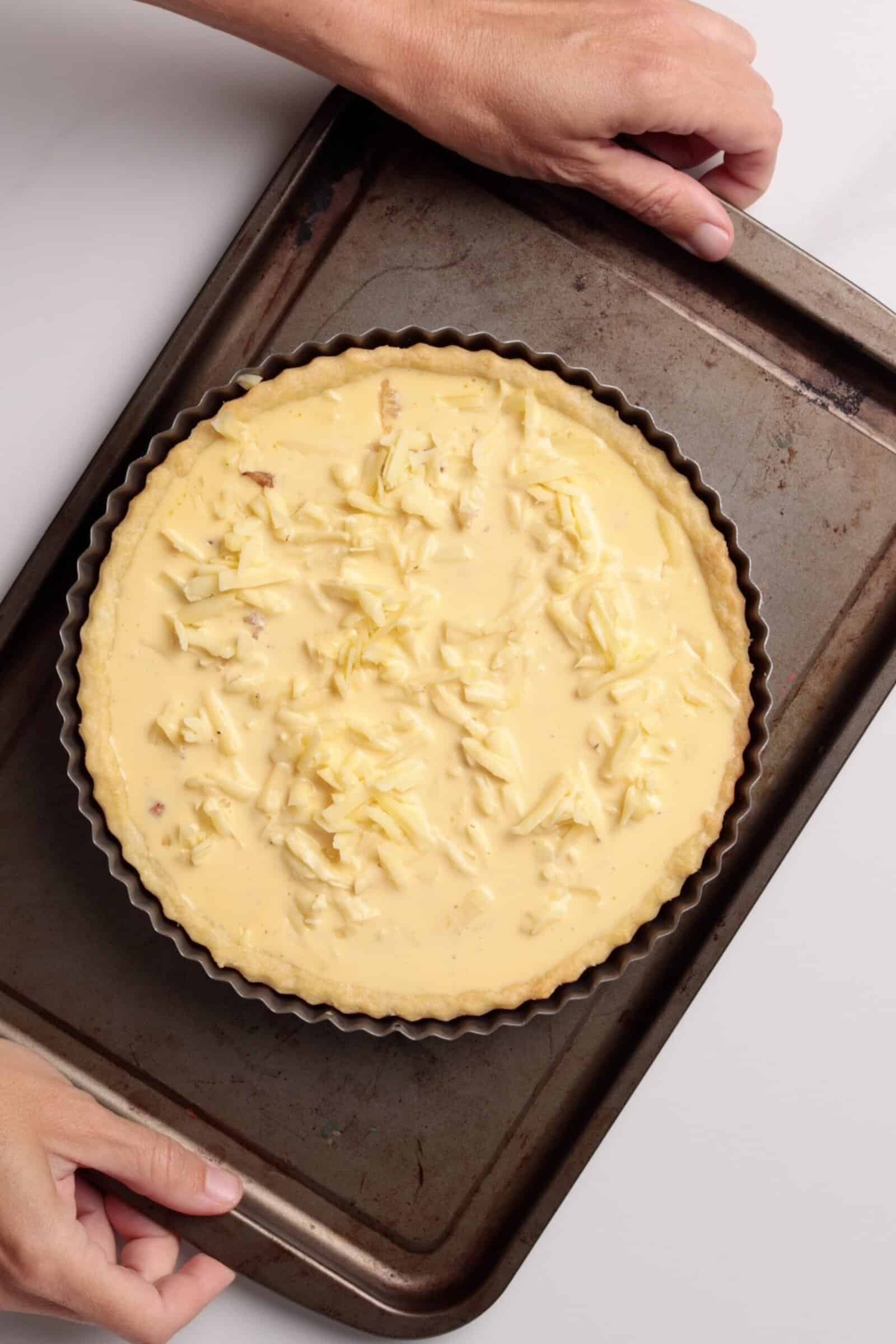
Ready to Use: Your crust is now ready for any quiche filling. Add filling and bake according to your recipe.
Video
Notes
Keep everything cold: Cold butter = flaky layers. If your kitchen is warm, chill the dough again before rolling.
Don’t overwork the dough: Overmixing develops gluten → tough crust. Mix just until it comes together.
Why freeze before baking? Helps the crust hold its shape and prevents shrinking. If the pastry is too warm, it may shrink and slide down the sides while baking.
No food processor? Use a pastry cutter or your fingers to rub the butter into the flour.
Avoid soggy crust: Always blind bake for quiche, this keeps the bottom crisp even with a creamy filling.
Make ahead: Dough can be refrigerated up to 2 days or frozen up to 2 months.
Fix cracks easily: Patch with a small piece of dough before baking.
Nutrition information is automatically generated and thus we can not guarantee it is 100% accurate.
Keyword homemade, pastry, savory
FAQs
Is quiche crust the same as pie crust?
While quiche crust and standard pie crust share some similarities, they are not exactly the same. Quiche crust is typically richer and more tender than traditional pie crust, often made with a higher ratio of butter or sometimes cream cheese. This added richness helps the crust better withstand the weight and moisture of the custard-like quiche filling, preventing a soggy bottom.
Why did my quiche crust shrink?
This usually happens when the dough is too warm or hasn’t been chilled long enough before baking. Cold butter is key for structure. Always chill or freeze the crust before baking, and avoid stretching the dough when fitting it into the pan.
How do you keep quiche crust from getting soggy?
The best way is to blind bake the crust before adding the filling. This helps set the structure and creates a barrier so the custard doesn’t soak into the dough. Baking until lightly golden also ensures a crisp base.
Can you use pie crust for making quiche?
Using a pie crust for quiche can work, but the results may not be as optimal as using a quiche-specific crust. The more delicate texture of a pie crust may not hold up as well to the quiche filling. It could potentially become soggy or break apart more easily during slicing and serving. That said, if you don’t have a quiche crust on hand, using a premade or homemade pie crust is a viable substitute.
I’ve been making your quiche recipes for years! The one with blue cheese is our family favorite. Thank you for sharing all those tips on making the perfect quiche crust, they’re very helpful. I sometimes make a batch and freeze it.




I’ve been making your quiche recipes for years! The one with blue cheese is our family favorite. Thank you for sharing all those tips on making the perfect quiche crust, they’re very helpful. I sometimes make a batch and freeze it.