
Easy Homemade Curry Powder Spice Blend
This post may contain affiliate links.
This warm, cozy, and tongue-titillating Curry Powder Recipe is a simple, speedy way to add some internationally-inspired interest to your meals. All you need are 10 ingredients and 5 minutes of effort to make a batch that can be used in dozens of recipes.

I’ve always been a from-scratch cook, making everything from DIY oat flour to homemade Nutella. Not only are these easy DIYs typically cheaper than store-bought, they’re also perfectly tailored to my personal preferences and include zero fillers. Spice blends like homemade curry powder, DIY garam masala, DIY Baharat, and DIY pumpkin pie spice are no different!
Ingredients & Substitutions
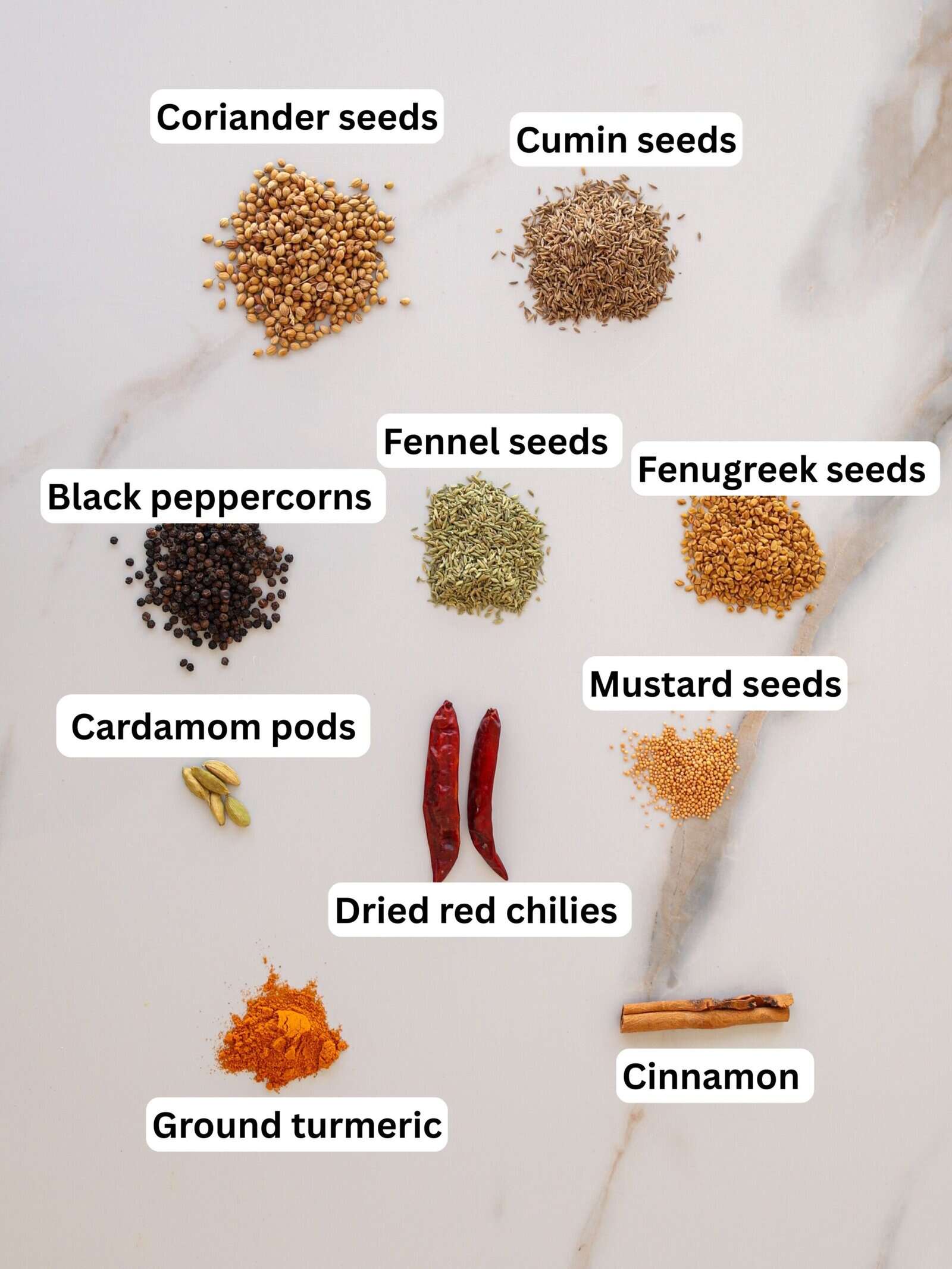
- Coriander Seeds – Bright, citrusy, floral, and warming. Use ¾ teaspoon of ground coriander for every teaspoon of whole seeds.
- Cumin Seeds – Earthy, warming, and nutty. Use ¾ teaspoon of ground cumin for every teaspoon of whole.
- Fenugreek Seeds – Sweet and maple-y. This is an optional addition, but traditional. (And interestingly, a requirement to be considered “curry powder” in the USA!).
- Fennel Seeds – Sweet, spicy and anise-y.
- Black Peppercorns – Pungent, spicy, and woody, sometimes with a citrusy or piney kick (depending on the variety used). This is one particular spice that I never recommend buying pre-ground as it doesn’t taste like much of anything!
- Mustard Seeds – Sharp, pungent, and pleasantly bitter. Ground mustard can be used as a 1:1 swap.
- Cardamom Pods – Sweet, spicy, earthy, and minty. Use black cardamom pods for more of an intense, smoky flavor or green cardamom pods for a brighter, more citrusy flavor. Use 1 teaspoon of ground cardamom for every 12 whole pods.
- Cinnamon Stick – Sweetly spicy and delightfully nostalgic. Use hard cassia-style cinnamon for a more fiery flavor, or soft Ceylon cinnamon for a softer, sweeter flavor. One spice jar-sized stick is equal to approximately ½ teaspoon of ground.
- Dried Red Chilies – The wide world of dried chili peppers has much to offer, from mild anaheims to fiery bird’s eye chilies. Use whatever variety that most suits your heat tolerance! Note that different varieties of chilies have different ground powder conversions on account of being different sizes. For example, a dried guajillo is equivalent to about a teaspoon of guajillo powder whereas a dried ancho is equivalent to about a tablespoon of ancho powder.
- Ground Turmeric – Earthy, warm, peppery, and musky, turmeric is what gives British-Indian curry powder its signature yellow hue.
- Ground Ginger & Garlic Powder – Optional, but delicious. Also, note that ginger is one of the spices the USDA says must be present to consider something “curry powder.”
This is just a short review of the ingredients; for the complete recipe, including quantities, scroll down to the recipe card 👇
Whole vs. Ground Spices
A quick note: I prefer using whole spices in my spice blends whenever possible, as they retain their essential oils and vibrant flavors longer than pre-ground. However, in a pinch, you can certainly swap in pre-ground spices for whole ones, as long as you adjust the amounts to keep the correct ratio for your DIY curry powder.
How to Make Curry Powder
Watch the full video recipe to learn how to make the Best Homemade Curry Powder. This step-by-step tutorial simplifies the process, offering tips and tricks to guarantee perfect results every time.
Prefer the written recipe? Scroll down to the recipe box 👇
Curry Powder vs. Garam Masala – What’s the Difference?
Although they’re sometimes confused, garam masala and curry powder are not the same thing. Garam masala is a traditional Indian spice blend, typically made with warming spices like cumin, coriander, cardamom, cinnamon, cloves, and black pepper. It’s usually added as a garnish to preserve its aroma and depth of flavor rather than a primary spice blend.
Curry powder, on the other hand, is not a traditional Indian creation, but rather a British one. When the British East India Company brought spices back to England in the 18th and 19th centuries, they created “curry powder” as a convenient, standardized blend that could mimic the flavors of Indian cooking without the need to learn complex regional recipes.
While the exact mix of curry powder ingredients varies by cook or spice house, it’s typically made with turmeric (that golden color!!), along with coriander, cumin, fenugreek, chili, and ginger. In contrast, today curry powder is much more widely used in Western kitchens, whereas garam masala remains a cornerstone of authentic Indian cooking.
Optional Variations & Dietary Adaptations
There’s no single “right” way to make curry powder! Every region and even every household has its own signature blend. This recipe is my personal favorite, but you can easily tailor it to your tastes.
- Adjust the Heat – Use more or less dried red chilies or chili powder, and be sure to pick a chili variety that is within your preferred spiciness range. Black pepper can also amp up the fire! (Fun fact: “chili powder” in the USA is typically a blend of multiple types of chiles and other spices like cumin. If you want a particular variety of chili powder, make sure to reach for bottles with clearly marked labels like “chipotle” or “cayenne.”)
- Alter the Balance. Spiciness isn’t the only dial you can turn here! Here’s how to make your curry spice mix:
- Earthier: Add extra cumin.
- Sweeter: Increase the fennel.
- Cozier: Stir in a pinch of cloves or nutmeg.
- Allium-Free – Omit the garlic powder or swap in a few pinches of asafoetida/hing.
Expert Tips & Tricks
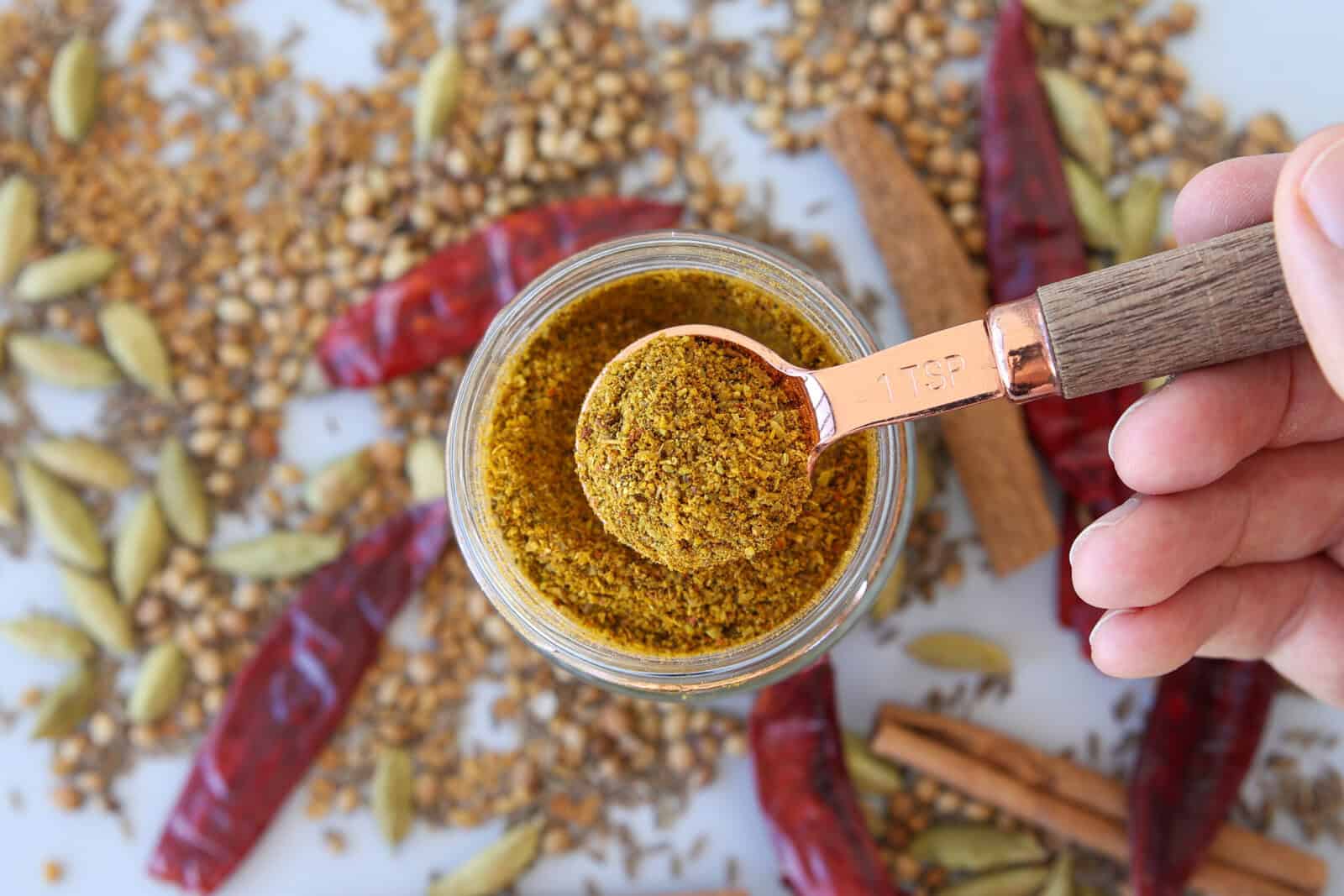
- Toast your spices. For best results, lightly dry-roasting whole spices before grinding brings out their essential oils and makes the curry powder mix even more aromatic.
- Use turmeric wisely. A little goes a long way for color and earthy flavor; too much can overwhelm the blend and make it taste bitter or musty.
- Check freshness. Whole spices can last up to 2–3 years (which is why I prefer to buy them whole), but ground spices are best used within 6–12 months. If the aroma is faint when you open the jar, it’s time to mix up a new batch.
- Label your jar. Add the date you made it so you’ll know when it’s time to replace it.
Free Printable Curry Powder Spice Labels
Want to give your homemade curry powder a polished, giftable touch? I’ve designed a set of free printable labels you can use for your spice jars. They’re perfect for organizing your pantry, dressing up homemade food gifts, or just making your kitchen feel a little cozier this fall.
- Size options: Labels are designed to fit standard 2–4 oz spice jars, but you can resize them to fit larger containers.
- Printing tips: Use sticker paper for easy peel-and-stick labels, or print on cardstock and attach with double-sided tape or twine.
- Durability: For longer-lasting labels, print on waterproof sticker paper or cover with a layer of clear packing tape.
👉 Download My Free Printable Curry Powder Labels Here
How to Use Yellow Curry Powder
Homemade curry powder is incredibly versatile and can add warmth and depth to countless dishes. Use it to season proteins, roasted vegetables, soups, or stews for an instant flavor boost. For example, It’s especially delicious in classics like my:
- Quick and easy chicken curry or quick and easy chickpea curry
- Butter chicken or chicken tikka masala
- Creamy curry mac & cheese
- Coconut curry chicken meatballs
- One-pot lentil dahl
- Pumpkin Curry Soup
- Additionally, you can also stir it into marinades and even salad dressings for a cozy twist!
Storage & Reheating
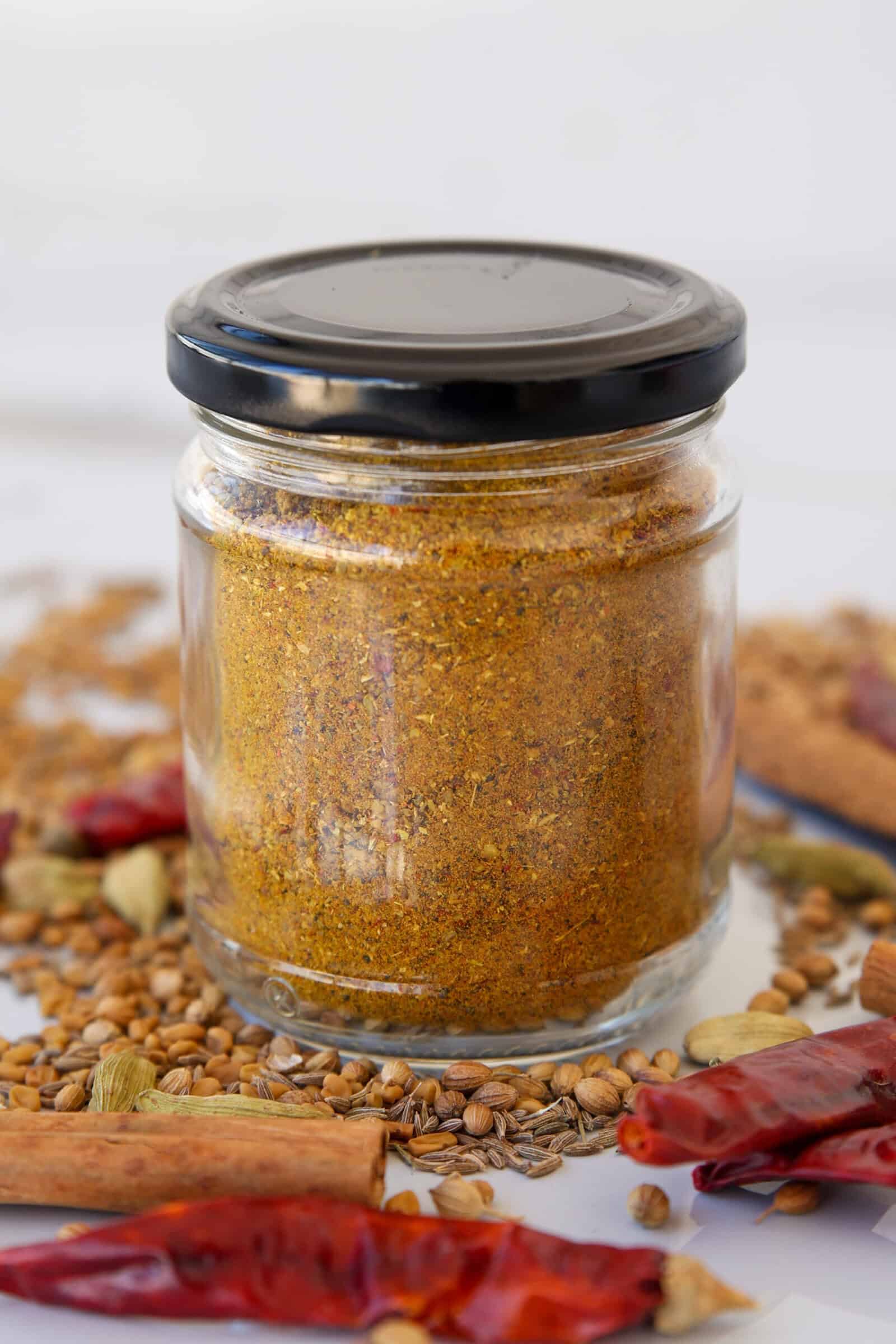
- Container: Keep your curry powder in an airtight jar or spice tin to protect it from air and moisture.
- Location: Store it in a cool, dark place like a pantry or cabinet. Avoid keeping it near the stove, where heat and steam can dull the flavor of spices.
- Shelf life: Homemade curry powder will taste its best for about 6–12 months. However, after that, it’s still safe to use, but the flavor and aroma will be noticeably weaker. In particular, note that if you are starting with ground spices, it will taste best within the first 3 months.
- Freshness test: Forgot to date your bottle? Rub a little curry powder between your fingers to test it. If the aroma is faint or flat, it’s time to make a fresh batch.
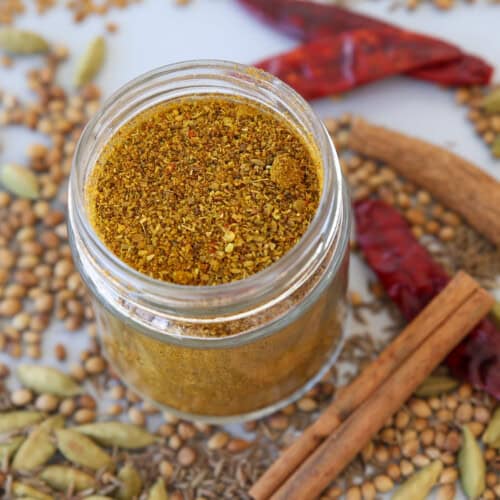
Easy Homemade Curry Powder Spice Blend
Equipment
Ingredients
- 2 tablespoons (15 g) Coriander seeds
- 2 tablespoons (18 g) Cumin seeds
- 1 tablespoon (7 g) Fenugreek seeds (optional but traditional)
- 1 tablespoon (6 g) Fennel seeds
- 1 tablespoon (5 g) Black peppercorns
- 1 teaspoon (2 g) Mustard seeds
- 4-5 pods (2 g) Cardamom
- 1 stick (5 g) Cinnamon
- 2 Dried red chilies adjust to heat preference
- 2 teaspoons (4 g) Ground turmeric
Optional:
- 1-2 teaspoons Ground ginger
- 1-2 teaspoons Garlic powder
Instructions
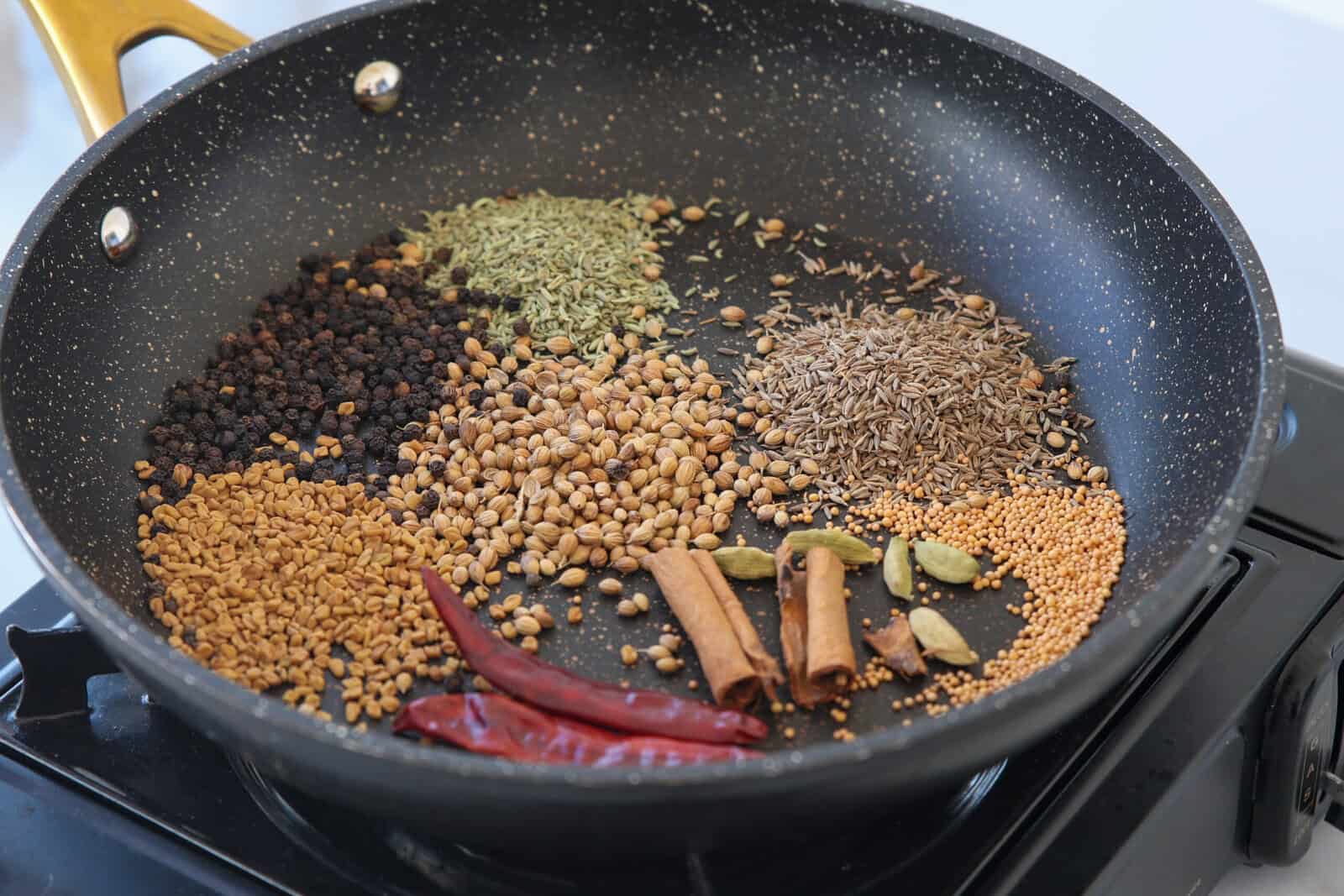
- Toast the whole spices: In a dry skillet over medium heat, toast the coriander, cumin, fenugreek, fennel, black peppercorns, mustard seeds, cardamom pods, cinnamon stick, and dried chilies for 2–3 minutes until fragrant. Stir constantly to prevent burning.
- Cool and grind: Remove from heat and let cool slightly. Transfer the toasted spices to a spice grinder or high-powered blender and grind into a fine powder.
- Add ground spices: Stir in ground turmeric, and if using, ground ginger and garlic powder. Mix well.
- Store: Transfer to an airtight jar and store in a cool, dry place for up to 3 months.
Video
Notes
- There’s no one “correct” curry powder recipe: Every region, and every cook, has their own version. This is my go-to blend, but feel free to customize it.
- Chili heat: Add more or fewer dried chilies depending on your spice preference. You can also use cayenne pepper instead for a sharper kick.
- Adjust to your taste: Add more cumin for earthiness, more fennel for sweetness, more black pepper for heat, or a pinch of cloves or nutmeg for warmth.
- Storage: Store in an airtight container, away from heat and light. Best used within 3 months for optimal flavor.
- Using ground spices: Can’t find whole spices? You can use pre-ground versions and skip to step 3. Whole spices are preferred because they retain their oils and flavor longer and give you a fresher, more vibrant blend.
- Great with: Chicken curry, lentil dahl, chickpea curry, butter chicken, chicken tikka masala, curry roasted vegetables, and more!
- Free Printable Spice Labels: Get here
Nutrition
Common Questions
In fact, curry powder is a spice blend (or a masala) rather than a single spice, and it can vary depending on the recipe or region. Most versions include a base of turmeric for color and earthiness, along with coriander, cumin, fenugreek, and ginger for balance. To add complexity, blends often feature chili powder, black pepper, mustard seeds, cardamom, or fennel, and sometimes warming spices like cloves, cinnamon, or nutmeg. Therefore, the exact mix is flexible, so have fun finding your personal favorite!
A basic curry powder blend usually contains turmeric, coriander, cumin, fenugreek, and some variety of chili powder. These five spices give it its signature golden color, earthy depth, slight bitterness, and gentle heat.
No, turmeric and curry powder are not the same thing. Turmeric comes from the dried, ground root of the turmeric plant and has a bright yellow color with an earthy, slightly bitter flavor. Curry powder is a blend of multiple spices, one of which is often turmeric.




I KNEW you were the one to ask about spices! But you didn’t wait for me to ask, as you explained them, pictured them & suggested usage. OMG, you’re welcome to read my mind any time. Plus, the labels – excellent!
Haha, love this! 😍 I’m so glad the recipe (and those labels!) hit the spot. I always try to make spices less intimidating and more fun, so it makes me really happy to hear you felt like I was reading your mind. Can’t wait to see what you cook up with the curry powder!