
Adjaruli Khachapuri Recipe (Georgian Cheese Bread)
This post may contain affiliate links.
This authentic Adjaruli Khachapuri recipe, also known as Georgian cheese bread is one of Georgia’s most iconic dishes. Soft, fluffy bread is shaped into a boat, filled with gooey melted cheese, baked until golden, then finished with a runny egg yolk and butter. It’s simple to make and absolutely irresistible.

Between Georgian khachapuri, Beef Chebureki, and Ukrainian-Russian vareniki, I’d argue that Eastern European comfort food is as good as it gets. When you’re in need of a simple, rich-tasting-but-inexpensive, carb-y, cheesy internal hug, there’s nothing like a Georgian cheese boat that tastes like a Georgian Bebia made it!
I originally published this recipe in 2017 and have since updated it with new photos, improved instructions, and extra success tips.
Ingredients & Substitutions
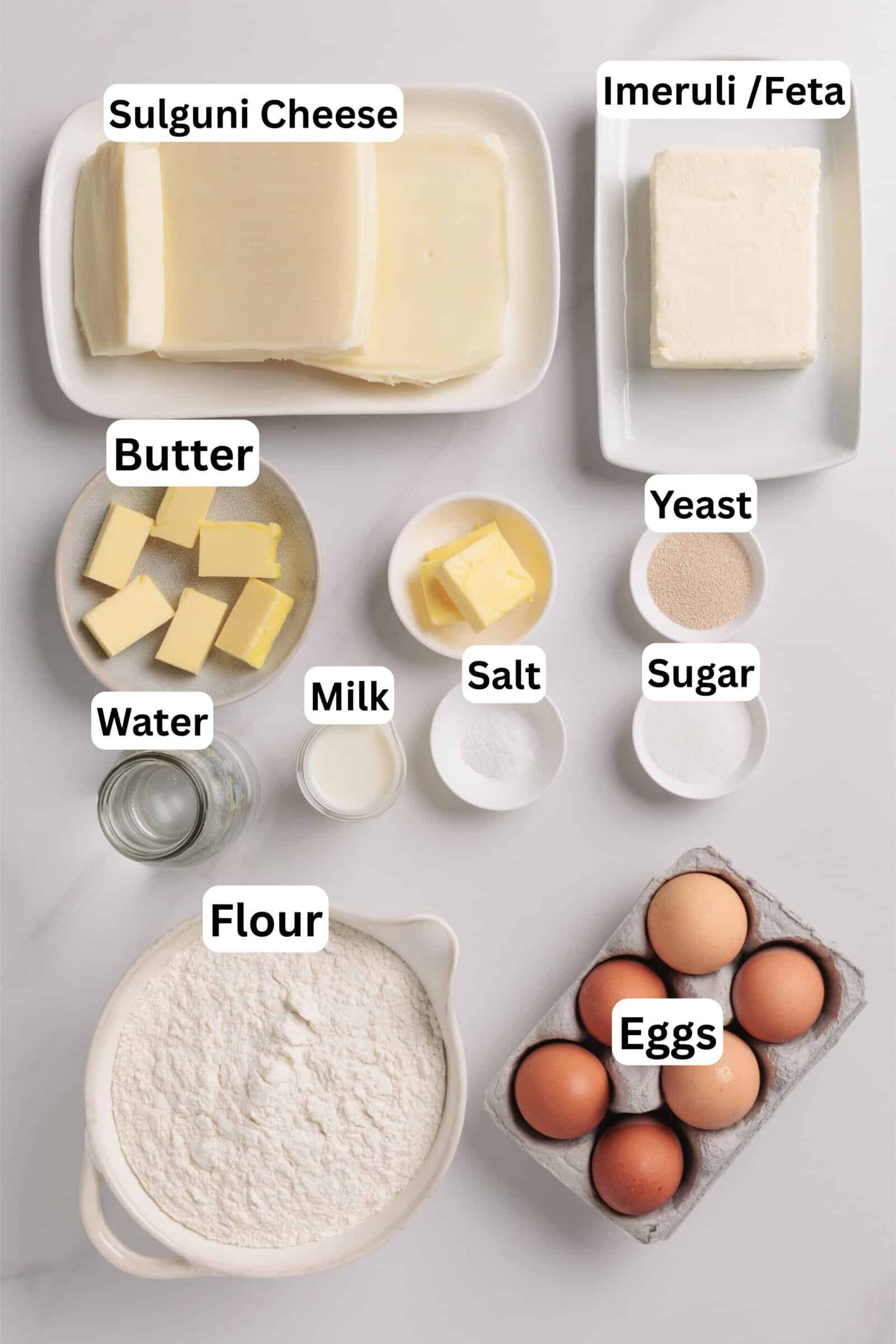
- All-Purpose Flour – Also known as “plain flour.”
- Warm Water & Milk – Water binds the dough, while milk also adds both fat and acidity, providing a softer, fluffier result.
- Unsalted Butter – We add butter to the dough for a brioche-like texture, then add an extra bit on top for serving to help emulsify the egg and cheese into a glorious sauce.
- Instant-Dry Yeast – Using instant dry yeast eliminates the need to proof it first. If you only have active dry yeast, first mix the milk, water, sugar, and yeast together and let it rest for 5-10 minutes or until foamy, then add the flour and salt.
- Sugar – A little bit of sugar provides extra food for the yeast, adding extra loft. It also helps to promote beautiful browning.
- Salt – Seasoning is important for the bread base, but be wary of when you add it. Salt can kill yeast in high doses. If you’re proofing active dry yeast, don’t add it until after the flour is in the bowl to dilute it.
- Sulguni Cheese – One of the traditional cheeses for khachapuri. If you can’t find it, low-moisture block-style mozzarella is a good alternative with a similarly stretchy consistency.
- Feta Cheese – Easier to find than traditional Imeruli cheese, with a similarly salty, briny, and crumbly personality. If possible, opt for authentic sheep’s milk feta packed in brine for the best flavor.
- Egg Yolks – Many Georgian bakeries use a whole egg. For a richer texture and easier serving, this recipe uses only the yolk. (Don’t forget to use up extra egg whites!) If preferred, add a whole egg during the final 2–3 minutes of baking. You can also skip adding the egg entirely. That’s totally fine, too!
This is just a short review of the ingredients; for the complete recipe, including quantities, scroll down to the recipe card 👇
What is Georgian Khachapuri?

Khachapuri is Georgia’s national dish, a traditional cheese-filled bread that’s been baked in Georgian homes and bakeries for centuries. The name comes from the Georgian words khacho (cheese curds) and puri (bread), perfectly describing this simple yet irresistible dish.
There are many regional varieties of khachapuri throughout Georgia, each reflecting the local traditions and ingredients of its region.
This recipe is for Adjarian khachapuri (also called Adjaruli or Acharuli), the most iconic version. Originating from the Adjara region on Georgia’s Black Sea coast, it’s instantly recognizable by its signature boat shape, filled with melted cheese and finished with a runny egg and a pat of butter.
Other popular styles include Imeretian khachapuri, a round cheese-filled bread, Megrelian khachapuri, topped with extra cheese, and Gurian khachapuri, a crescent-shaped version often enjoyed during holidays.
Adjarian khachapuri is best enjoyed fresh from the oven by tearing off pieces of the warm bread and dipping them into the rich mixture of melted cheese, butter, and egg.
What Cheese is Traditionally Used in Georgian Adjarian Khachapuri?
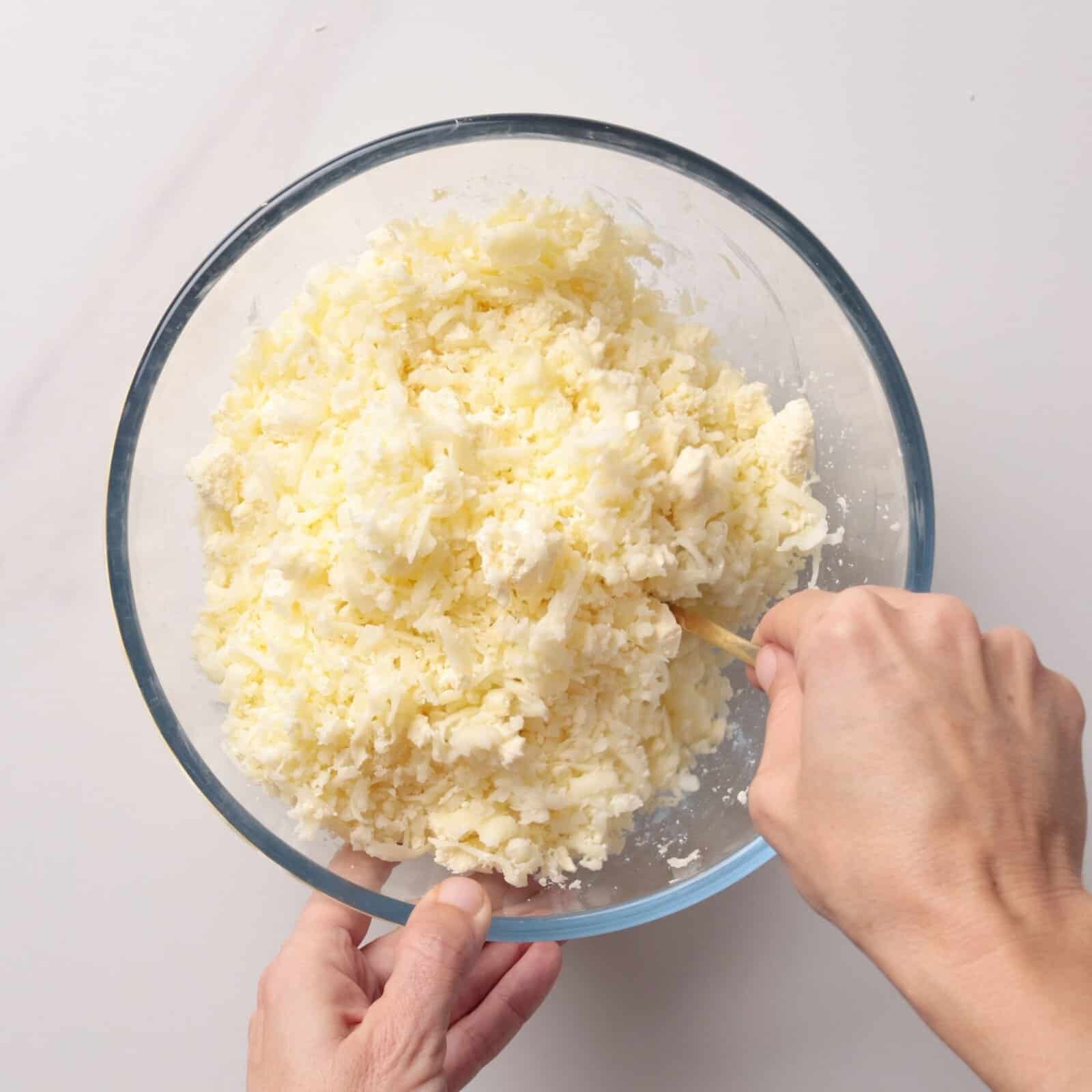
Authentic Adjarian khachapuri is traditionally made with Georgian cheeses that may be difficult to find outside of Georgia. The most common is sulguni, a brined, stretched-curd cheese similar to mozzarella with a mild, slightly tangy flavor and excellent melting properties. It’s often combined with imeruli, a fresh, crumbly cheese from the Imereti region that adds richness and a subtle saltiness to the filling.
Cheese Substitutes Outside Georgia
Since authentic Georgian cheeses can be hard to source internationally, you can create a delicious approximation using cheeses readily available in most grocery stores. The best combination is mozzarella (for its signature stretchy, melty texture) mixed with feta cheese (for tanginess and saltness). A ratio of about 60-70% mozzarella to 30-40% feta works beautifully.
Other good substitutes include Muenster, Monterey Jack, or mild white cheddar mixed with feta. Some recipes also add a touch of ricotta or farmer’s cheese for extra creaminess. The key is achieving a balance between meltability, flavor, and khachapuri’s characteristic salty-tangy flavor profile.
How to Make Adjaruli Khachapuri (Video Recipe)
Watch the full video recipe to learn how to make the BEST Georgian Cheese Bread. This step-by-step tutorial simplifies the process, offering tips and tricks to guarantee perfect results every time.
Prefer the written recipe? Scroll down to the recipe box 👇
How to Shape Khachapuri Step-By-Step
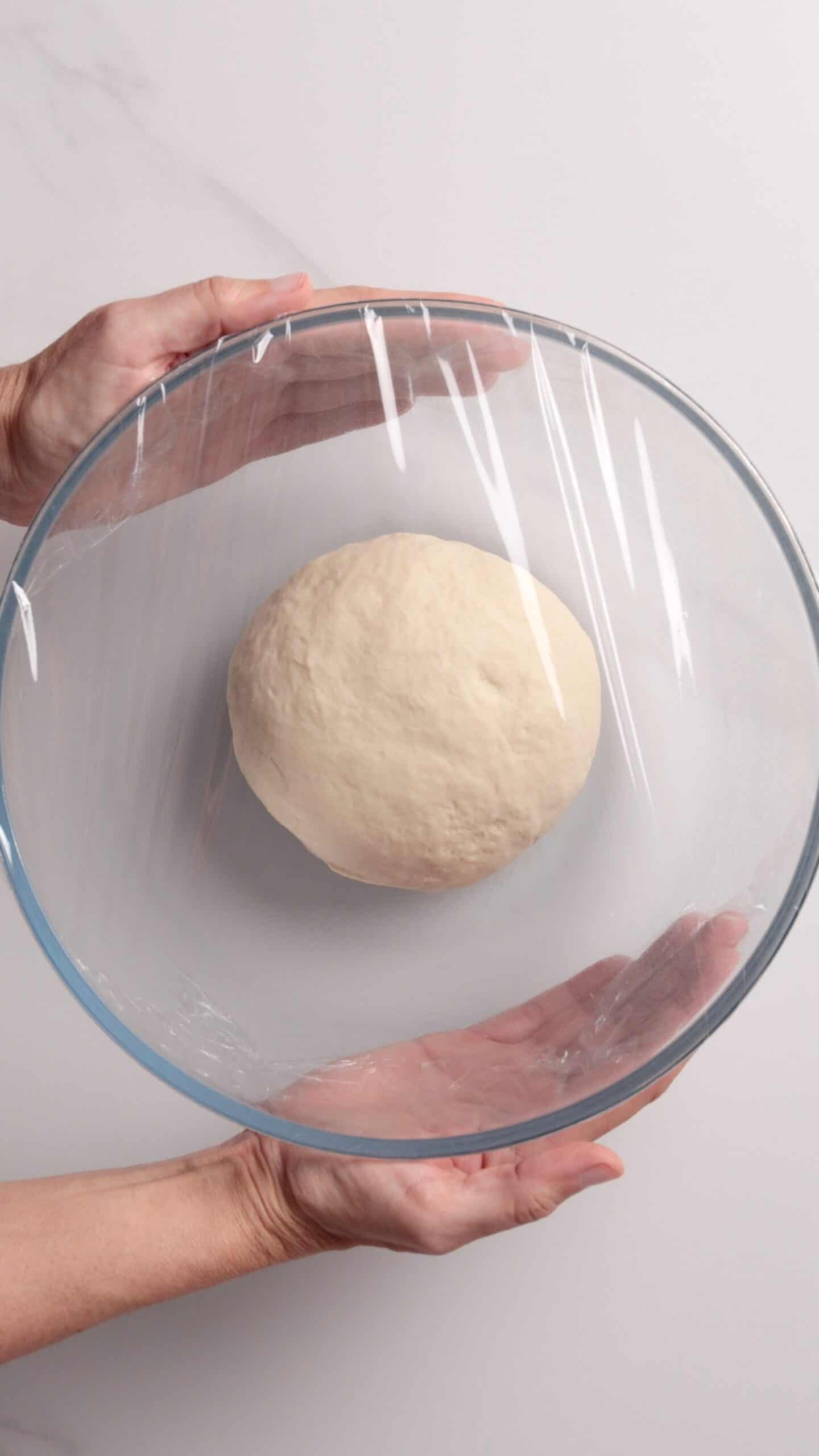
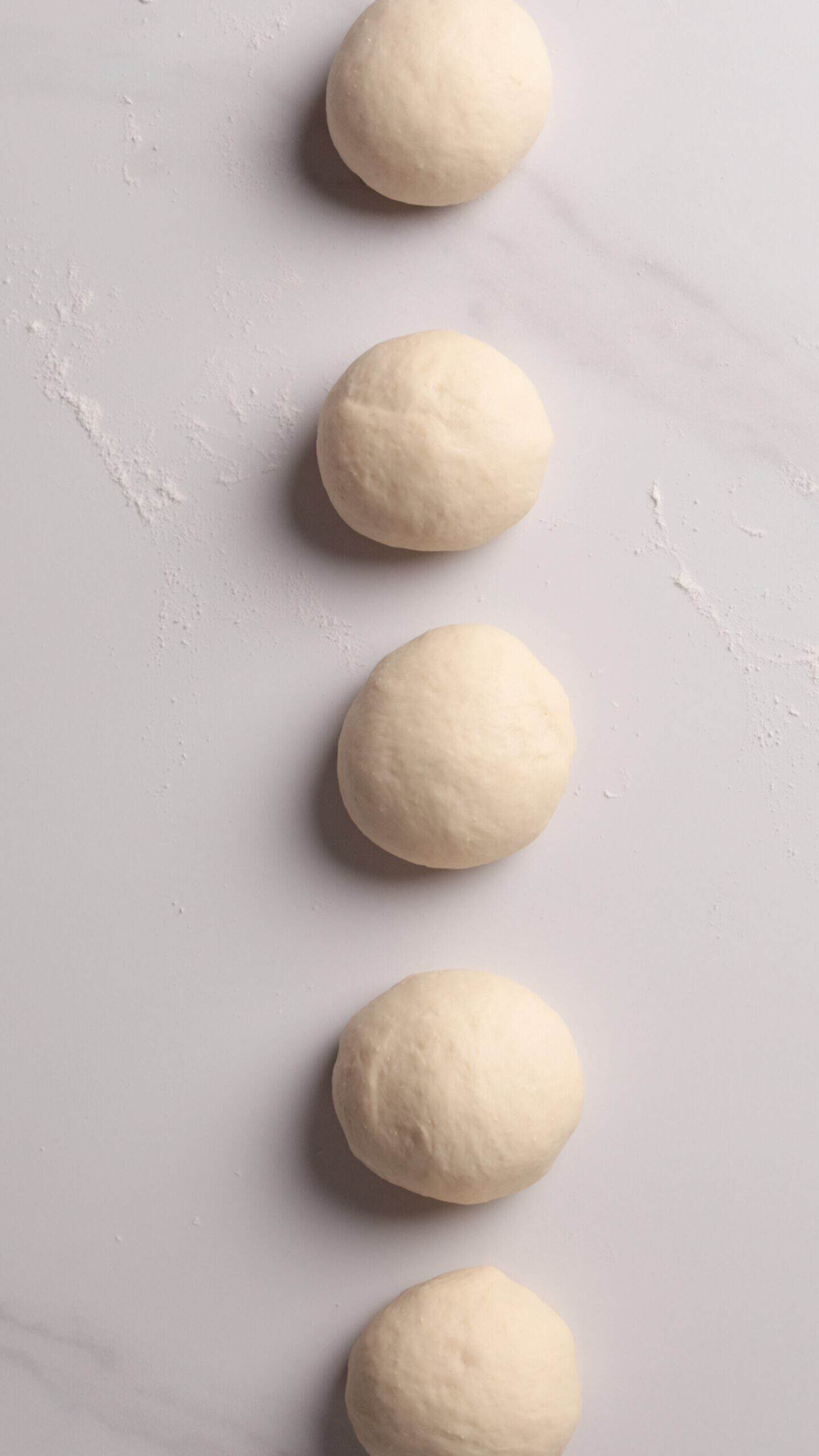
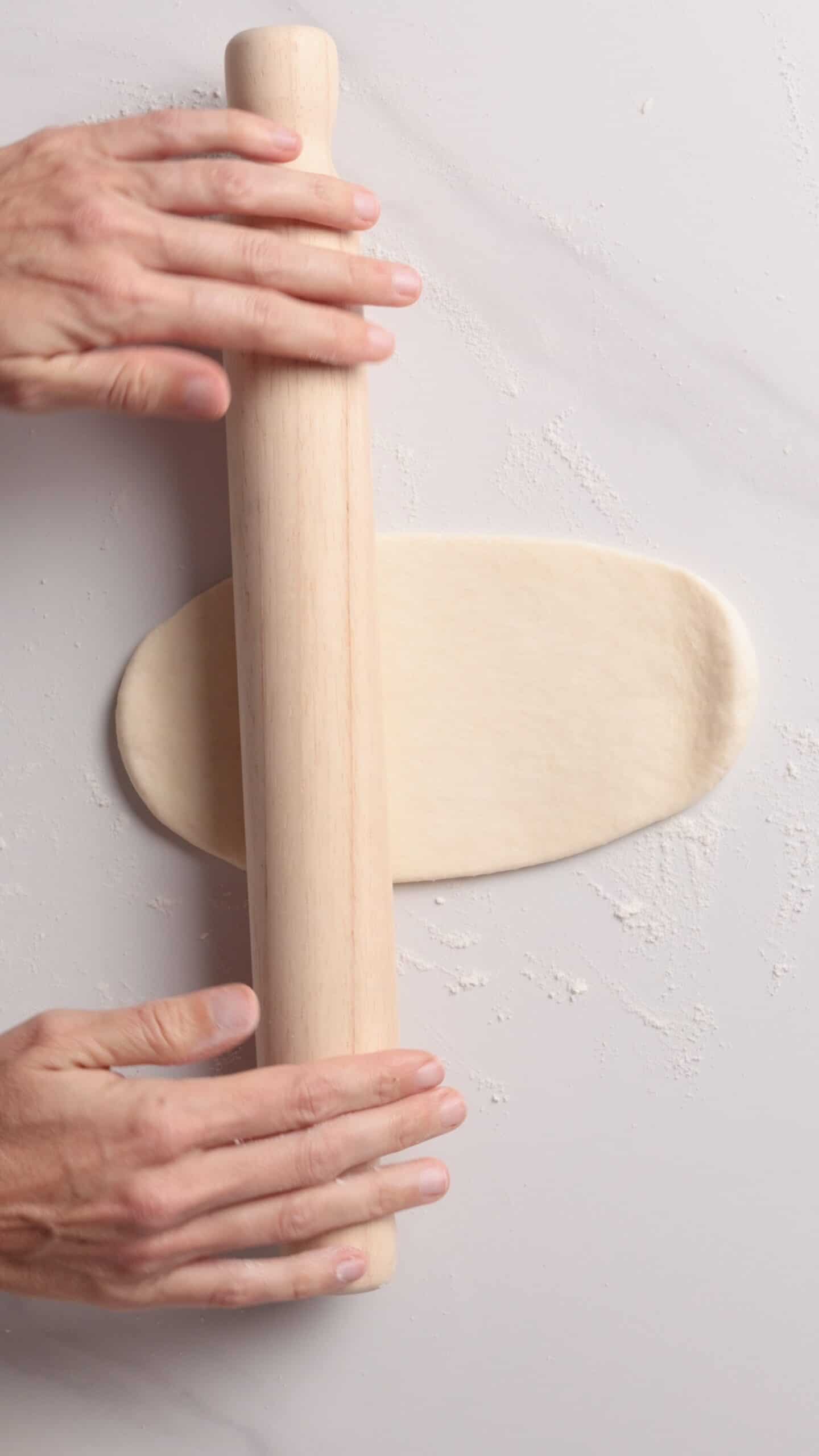
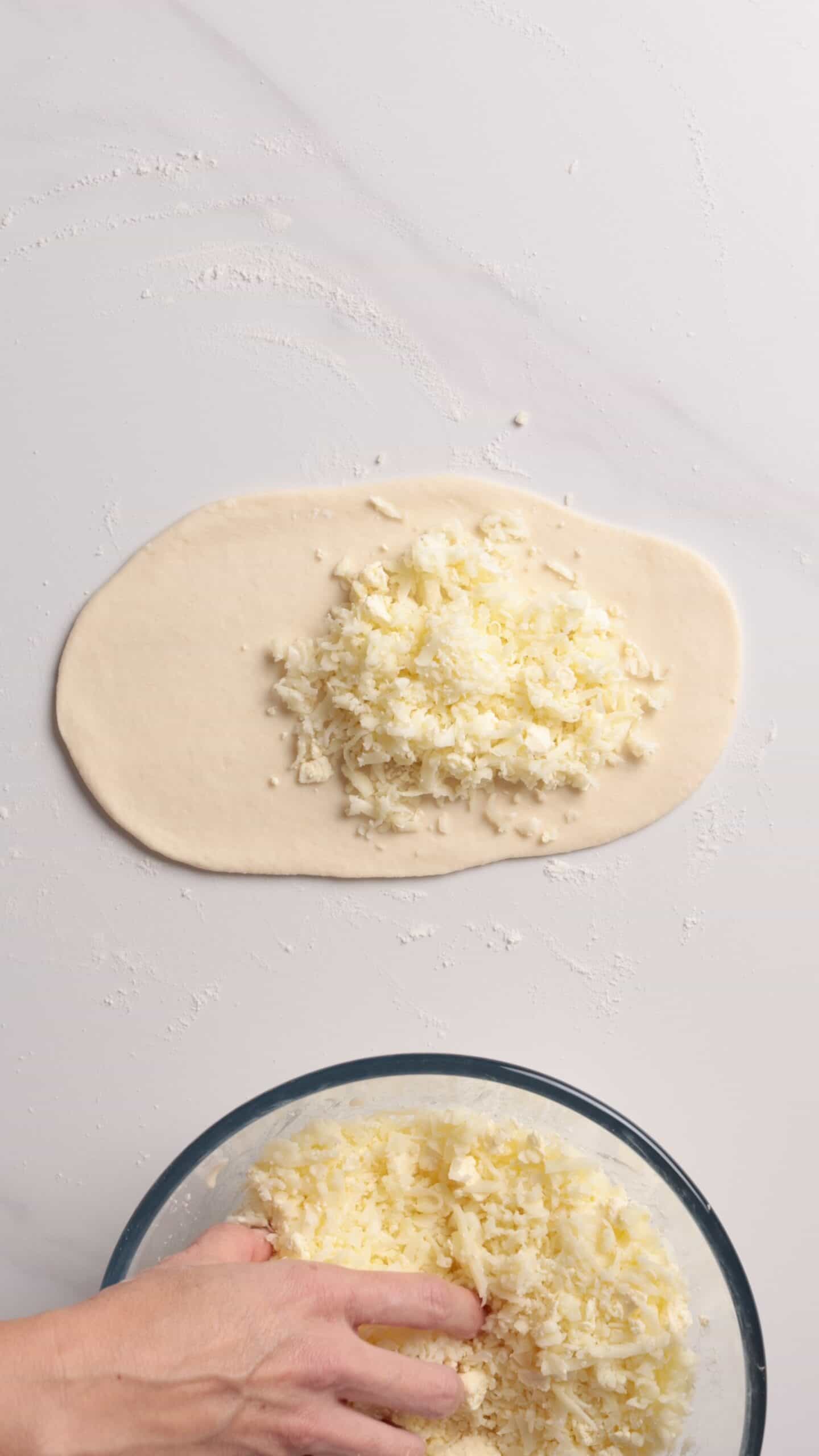
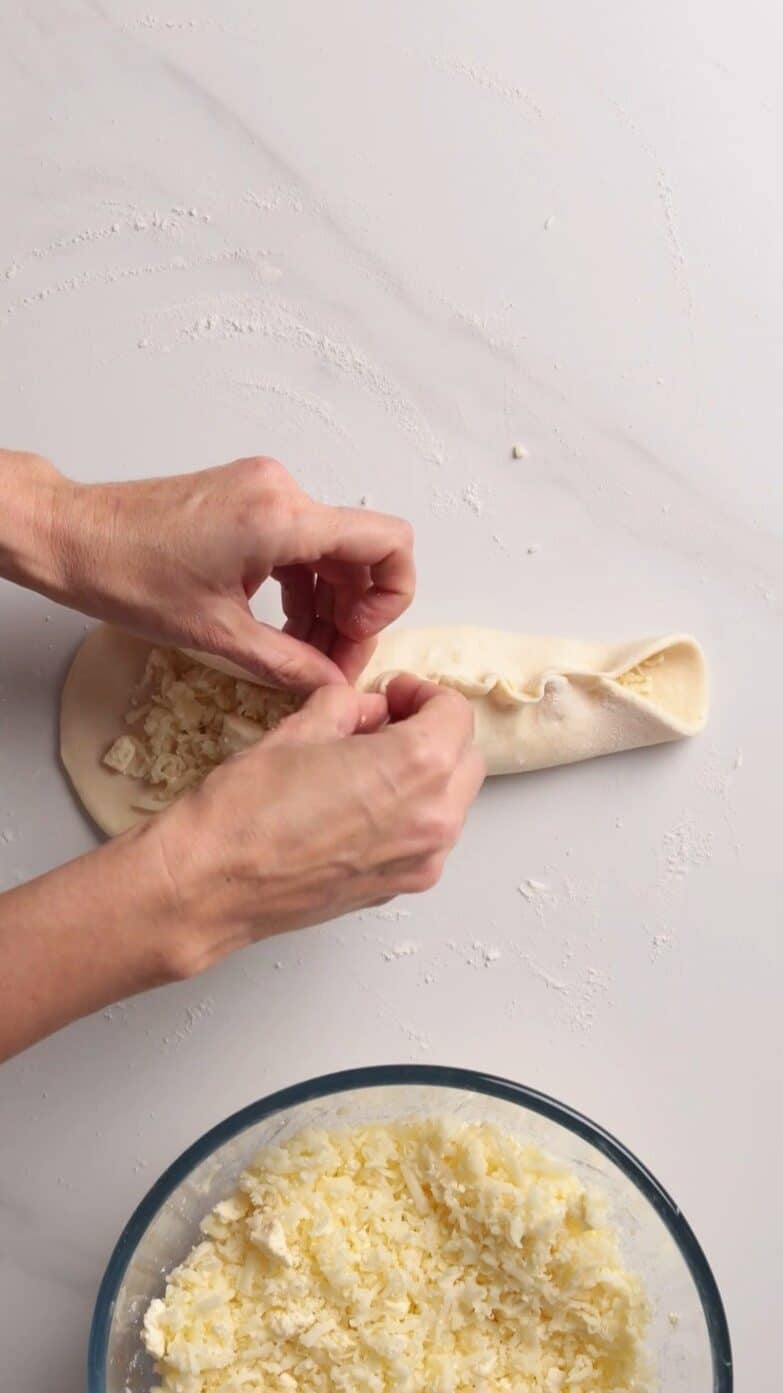
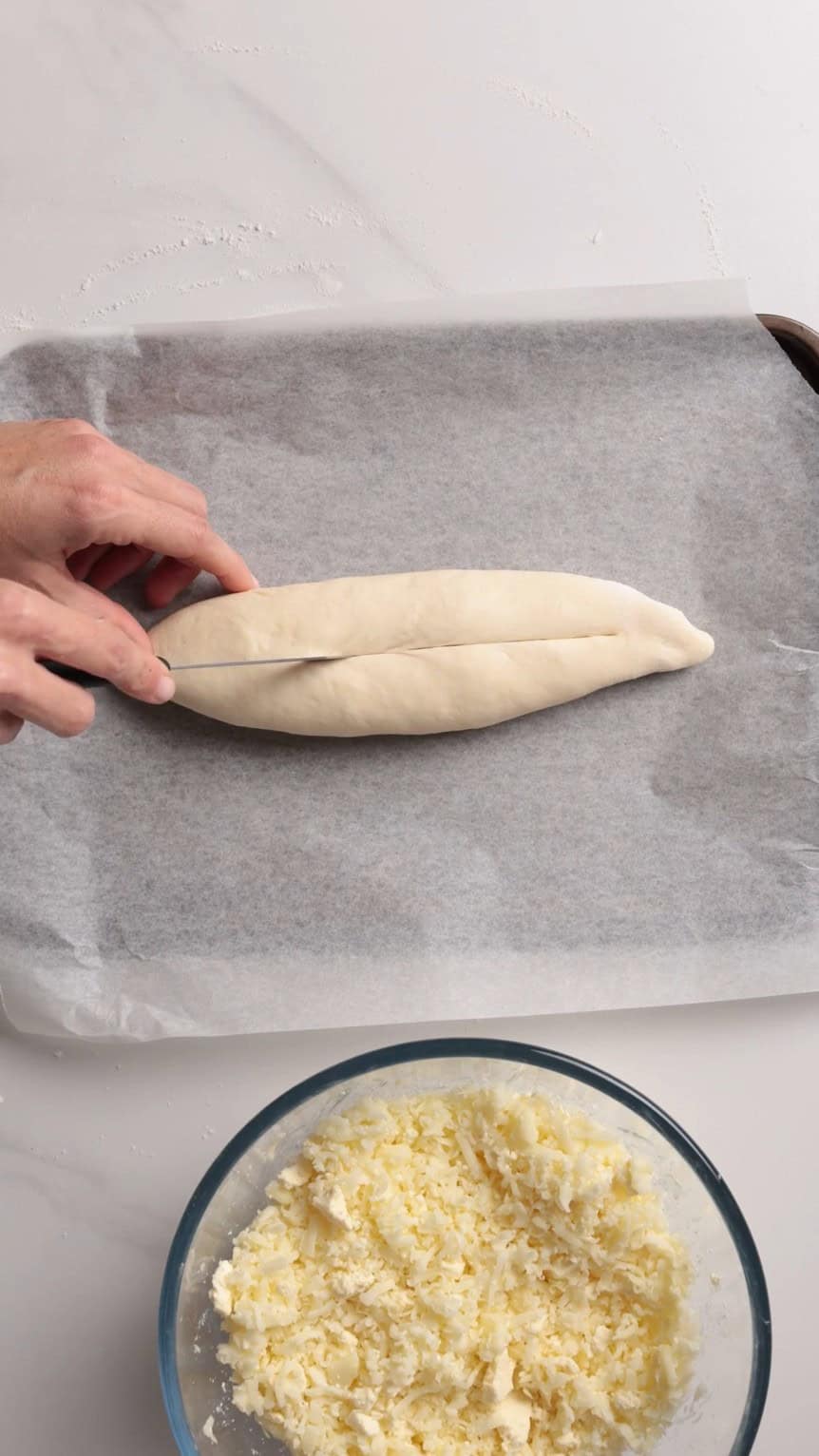
- Make the dough. Prepare the dough according to the recipe, either in a stand mixer fitted with the dough hook or by hand, then let it rise until doubled in size.
- Roll into an oval. Roll each ball into an oval about 8–9 inches (20–23 cm) long.
- Add the cheese. Spread some of the cheese filling over the center, leaving a 1-inch (2.5 cm) border around the edges.
- Enclose the filling. Bring the edges of the dough up and over the cheese, then pinch them together to completely seal the filling inside, forming an elongated oval.
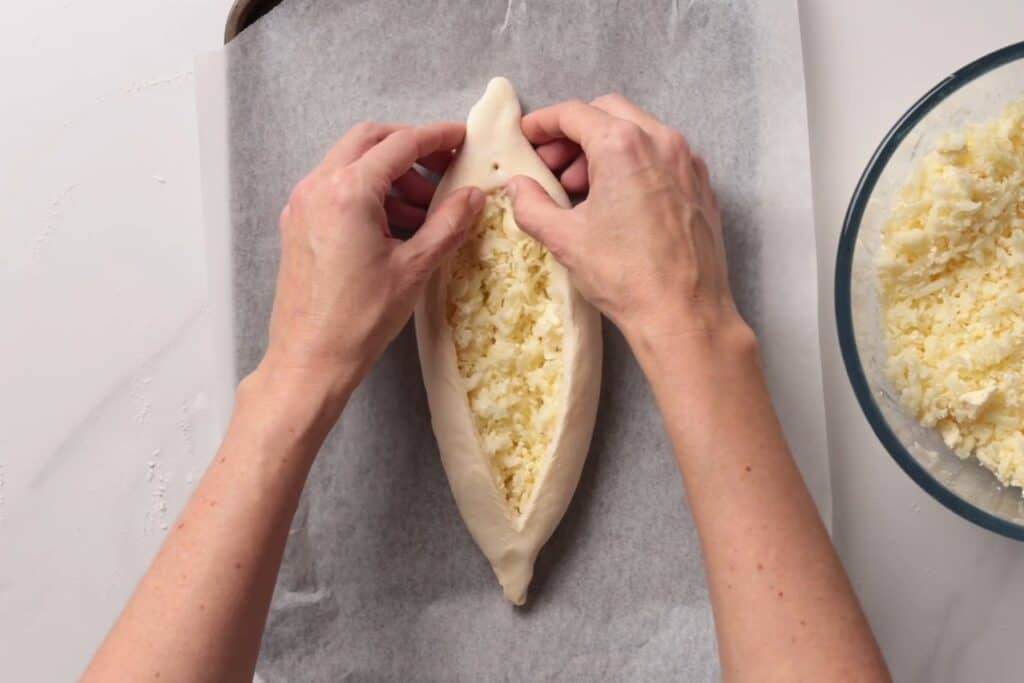
5. Cut and shape the boat. Flip the dough seam-side down and gently flatten it. Using a sharp knife, cut a long slit down the center, stopping about 1 inch (2.5 cm) from both ends. Gently pull the opening apart with your fingers to expose the cheese and create the boat shape.
6. Bake and finish. Transfer to a parchment-lined baking sheet and bake until golden and bubbling. Add the egg yolk, bake for 2 more minutes, then top with butter and serve immediately.
Expert Tips & Tricks
- Don’t Overfill with Cheese. While it’s tempting to pile on extra cheese, overfilling can cause spillage during baking and make it harder to add the egg at the end. Stick to the recommended amount for the best results.
- Watch the Baking Time. Khachapuri bakes quickly. Keep a close eye during the final minutes, you want golden-brown edges and bubbling, melted cheese, but not burnt crust. Every oven is different, so check a minute or two early.
- Add the Egg at the Right Moment. Wait until the cheese is fully melted and bubbling before adding the egg yolk. If added too early, it will overcook and become hard instead of staying creamy.
- Stir Before Serving. As soon as the khachapuri comes out of the oven, add the butter and immediately stir it together with the egg yolk and melted cheese. This creates the rich, creamy filling that makes Adjarian khachapuri so special. Serve immediately while the cheese is hot and stretchy.
Optional Variations & Dietary Adaptations
- Whole Egg Instead of Yolk – Many Georgian bakeries use a whole egg for a lighter, more traditional finish. If preferred, crack a whole egg into the center during the final 2-3 minutes of baking instead of just the yolk. You can also skip the egg entirely for a simpler cheese-only version.
- Cheese Variations – Experiment with different cheese combinations to customize the flavor. Try adding a handful of shredded Muenster or Monterey Jack for extra creaminess, or mix in some crumbled goat cheese for a tangier profile. For a more authentic touch, seek out sulguni at Eastern European or Middle Eastern markets.
- Herb & Spice Additions – Stir fresh or dried herbs into your cheese filling for extra flavor. Chopped fresh dill, cilantro, or parsley work beautifully. A pinch of nigella seeds or caraway seeds mixed into the dough adds an authentic Georgian touch.
- Garlic Butter Finish – Brush the golden crust with melted garlic butter immediately after baking for an extra layer of flavor. Mix 2 tablespoons melted butter with 1-2 minced garlic cloves and brush generously over the warm edges.
- Spicy Kick – Add a pinch of red pepper flakes or a drizzle of chili oil over the finished khachapuri for those who like a little heat with their cheese.
- Mini Khachapuri – Divide the dough into 6 smaller portions to make individual-sized khachapuri. They’re perfect for parties or when everyone wants their own boat! Just be sure to adjust the baking time as needed.
How To Eat Adjarian Khachapuri
Traditionally, Adjarian khachapuri is served piping hot, straight from the oven. As soon as it’s ready, stir the egg yolk and butter into the melted cheese to create a rich, creamy filling. Then tear off pieces of the warm bread from the edges and dip them into the cheesy center. Instead of slicing it like pizza, it’s meant to be enjoyed piece by piece while it’s still warm and gooey.

Is The Egg Raw In Khachapuri?

The egg in Adjarian Khachapuri is not fully raw, but it’s also not completely cooked through. The egg yolk is added to the hot, bubbling cheese during the final 2-3 minutes of baking, which gently cooks the whites while leaving the yolk soft and creamy.
When you stir the yolk into the molten cheese and butter immediately after removing it from the oven, the residual heat continues to cook it slightly, creating a rich, custard-like sauce.
Storage & Reheating
- Refrigeration: Khachapuri is best enjoyed fresh from the oven, but leftovers can be stored in an airtight container in the refrigerator for up to 2-3 days. Keep in mind that the egg and cheese mixture will solidify when cold, and the bread will lose some of its original soft texture.
- Freezing Baked Khachapuri: Freeze baked khachapuri (without the egg) for up to 1 month. Reheat from frozen in a 350°F (175°C) oven for 15-20 minutes.
- Reheating in the Oven: Reheat in a 350°F (175°C) oven for 8–10 minutes until warm. The microwave also works, but the crust won’t stay as crisp.
- Freezing the Dough. You can freeze the shaped, unbaked khachapuri boats before adding the cheese filling. Wrap tightly in plastic wrap and freeze for up to 2 months. When ready to bake, thaw in the refrigerator overnight, add the cheese filling, and bake as directed.

More Comfort Food Recipes

Adjarian Khachapuri Recipe (Acharuli Khachapuri)
Equipment
Ingredients
For the Dough
- 3⅓ cups (420 g) All-purpose flour
- ¾ cup (180 ml) Water
- ¼ cup (60 ml) Milk
- 2 tablespoons (30 g) Butter unsalted, melted
- 1 tablespoon Instant-dry yeast
- 1 tablespoon sugar
- 1 teaspoon salt
For the Cheese Filling
- 18 oz (500 g) Sulguni cheese shredded *see notes
- 7 oz (200 g) Feta cheese shredded/crumbled *see notes
For Topping
- 6 Egg yolks or whole eggs
- Butter
Instructions
- Make the Dough: In a large bowl, combine flour, yeast, sugar, and salt. Add the water, milk, and melted butter. Mix until a dough forms.
- Knead for 6–8 minutes, until smooth and elastic. Transfer to a lightly greased bowl, cover, and let rise for about 1 hour, or until doubled in size.
- Prepare the Filling: In a medium bowl, combine the Sulguni and feta cheese. Mix until evenly distributed.
- Preheat the oven to 220°C (430°F).
- Shape the Khachapuri: Transfer the dough to a lightly floured surface and divide into 4-6 equal pieces. Shape each piece into a ball, cover, and let it rest for 15–20 minutes.
- Roll each dough ball into an oval approximately 8–9 inches (20–23cm) long. Place a portion of the cheese filling in the center, spreading it evenly and leaving a 1-inch (2.5cm) border around the edges.
- Bring the edges of the dough up and over the filling and pinch them together to completely enclose the cheese, creating an elongated oval-shaped dough packet.
- Flip the dough over so the seam side is facing down. Gently flatten and shape it into a neat oval, making sure the seam is well sealed. Using a sharp knife, make a long cut down the center of the dough, stopping about 1 inch (2.5cm) from each end. Use your fingers to gently pull the opening apart, exposing the cheese filling and creating the classic boat shape.
- Transfer the shaped khachapuri to baking sheets lined with parchment paper and continue with the recipe.
- Bake: Bake for 12–15 minutes, until the crust is golden brown and the cheese is bubbling.
- Add the yolk (optional): Remove from the oven and gently place one egg yolk in the center of each khachapuri.
- Return to the oven for an extra 2 minutes, just until the yolk begins to set around the edges but remains runny in the center.
- Finish and Serve: Remove from the oven and immediately place 1 tablespoon butter on top of each khachapuri.
- Tear off a small piece of the crust and use it to stir the butter, egg yolk, and hot cheese together until creamy and well combined. Continue tearing off pieces of the crust and dipping them into the cheesy center while eating.
Video
Notes
- About the Cheese: Traditional Adjarian Khachapuri is made with Sulguni and Imeruli cheese. Since Imeruli cheese can be difficult to find outside Georgia, this recipe uses feta cheese, which provides a similar salty and tangy flavor. If Sulguni is unavailable, use a combination of mozzarella and feta cheese. While not identical, it creates a similar stretchy, cheesy texture and works well in this recipe.
- Egg Yolk vs Whole Egg: Many Georgian bakeries use a whole egg. For a richer texture and easier serving, this recipe uses only the yolk. If preferred, add a whole egg during the final 2–3 minutes of baking. You can also skip adding the egg entirely. That’s totally fine, too.
- Don’t Overbake the Egg: The yolk should remain soft and runny. It will continue to cook slightly from the residual heat after baking. Some bakers won’t even cook it at all, just put on the hot khapuri and serve.
- Don’t Skip the Butter: The butter isn’t just a garnish. It melts into the hot cheese and egg yolk, creating the rich, creamy filling that makes Adjarian khachapuri so special.
Nutrition
FAQs
Khachapuri is unequivocally Georgian. It originates from Georgia and is considered the country’s national dish. Growing up in Russia, I encountered khachapuri often because Georgian cuisine was beloved across Soviet republics (including Russia and Armenia), but it’s important to recognize its true roots.
While “Georgian cheese bread,” “Georgian cheese boat,” or “Georgian pizza” are the most common English translations, many people simply use the original Georgian name “khachapuri” since it has become widely recognized internationally. The boat-shaped version specifically is called “Adjarian Khachapuri” or “Acharuli Khachapuri,” named after the Adjara region of Georgia where this style originated.
You can prepare and shape the dough a few hours ahead of time and keep it covered in the refrigerator. When you’re ready to bake, let it sit at room temperature for 20–30 minutes, fill it with the cheese, and bake as directed. For the best texture and flavor, khachapuri is best served fresh from the oven.
Traditionally, Adjarian khachapuri is made with sulguni and imeruli cheese. Since these can be difficult to find outside Georgia, the best substitute is a combination of low-moisture mozzarella for its stretchy melt and feta cheese for its salty, tangy flavor. This combination closely mimics the taste and texture of the traditional cheeses.
Absolutely. While the egg is one of the signature features of Adjarian khachapuri, it’s completely optional. Simply bake the bread with the cheese filling until golden and bubbly, then finish with a little butter before serving. It will still be delicious and just as cheesy.



I am deffo going to make this! I make bread every week and love new varieties. Thanks for sharing
delicious!
It’s a bit insulting to write the name of Georgian food in Russian instead of Georgian, as Russia has occupied a huge chunk of Georgian territory since the war in 2008. I would reccomend fixing this, out of respect. (ხაჭაპური)