
Easy Scalloped Potatoes Recipe
This post may contain affiliate links.
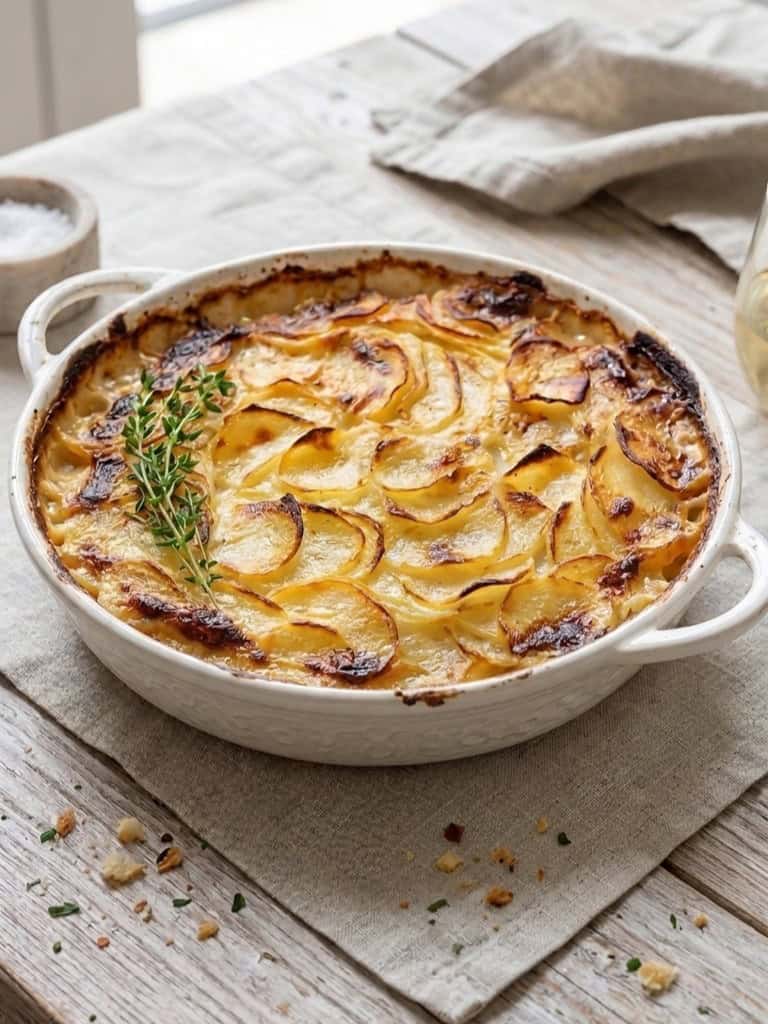
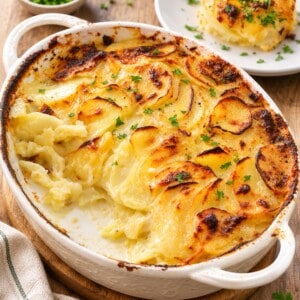
These homemade scalloped potatoes are everything I want in a comforting side dish: thin, tender layers of Yukon Gold potatoes, soft onions, and a rich, creamy sauce infused with garlic, rosemary, thyme, and a little nutmeg. Everything bakes together until the potatoes are beautifully tender and the top is golden brown.
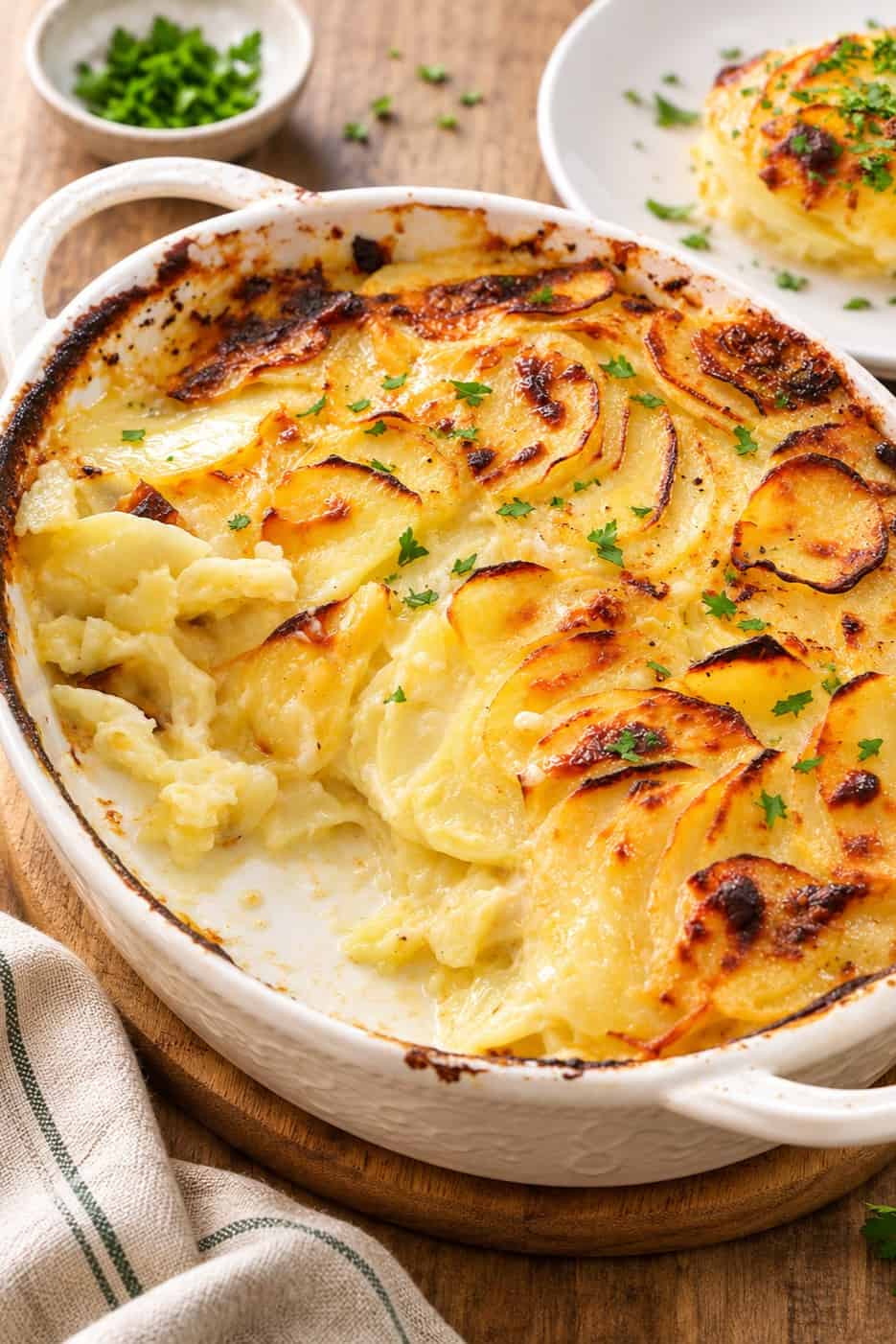
These scalloped potatoes are a wonderful side dish for Thanksgiving, Christmas, Easter, or even a cozy Sunday dinner. Unlike cheesy versions, this traditional recipe gets its rich, creamy texture from milk, heavy cream, and a little flour—no cheese needed!
If you usually make my creamy mashed potatoes for the holidays, these are a great alternative. They’re just as comforting, but with tender potato layers and a beautiful golden top. And if you prefer something with crispy edges, my Hasselback potatoes are another delicious option for your holiday table.
I originally published this recipe in 2020 and have since updated it with new photos, improved instructions, and extra success tips.
Why You’ll Love This Scalloped Potatoes Recipe
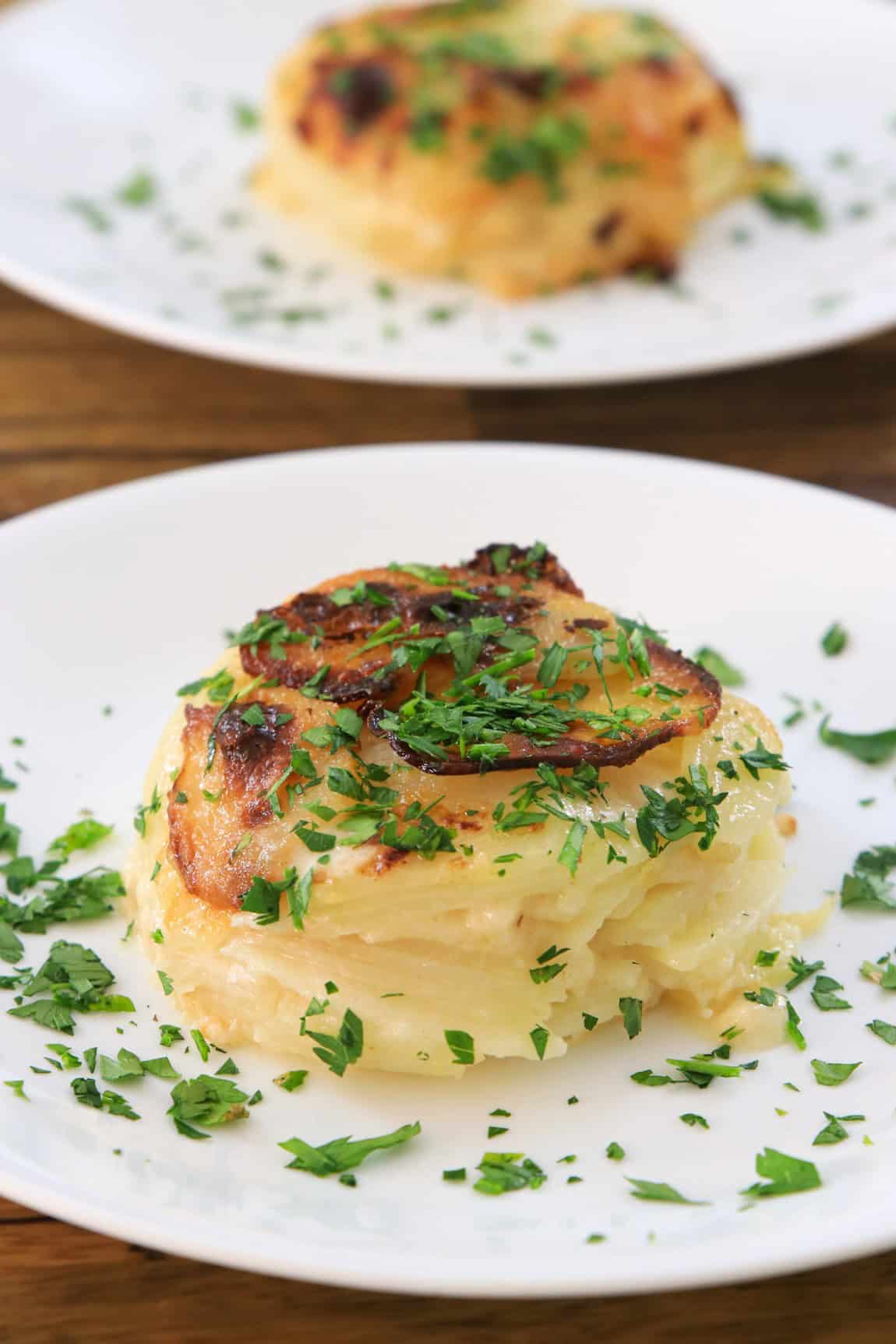
- Rich and creamy: Thin potato slices bake in a buttery, garlic-infused cream sauce until they’re soft and tender.
- Simple ingredients: No fancy ingredients or complicated techniques, just potatoes, onion, milk, cream, butter, and a few seasonings.
- Perfect for the holidays: A comforting side that pairs beautifully with Thanksgiving turkey, Christmas ham, or roast chicken.
- Easy to customize: Keep it traditional, add cheese for extra richness, or include ham for a heartier dish.
- Great for feeding a crowd: One baking dish makes about 8 side-dish servings, and you can prepare parts of the recipe ahead of time.
Ingredients and Substitutions
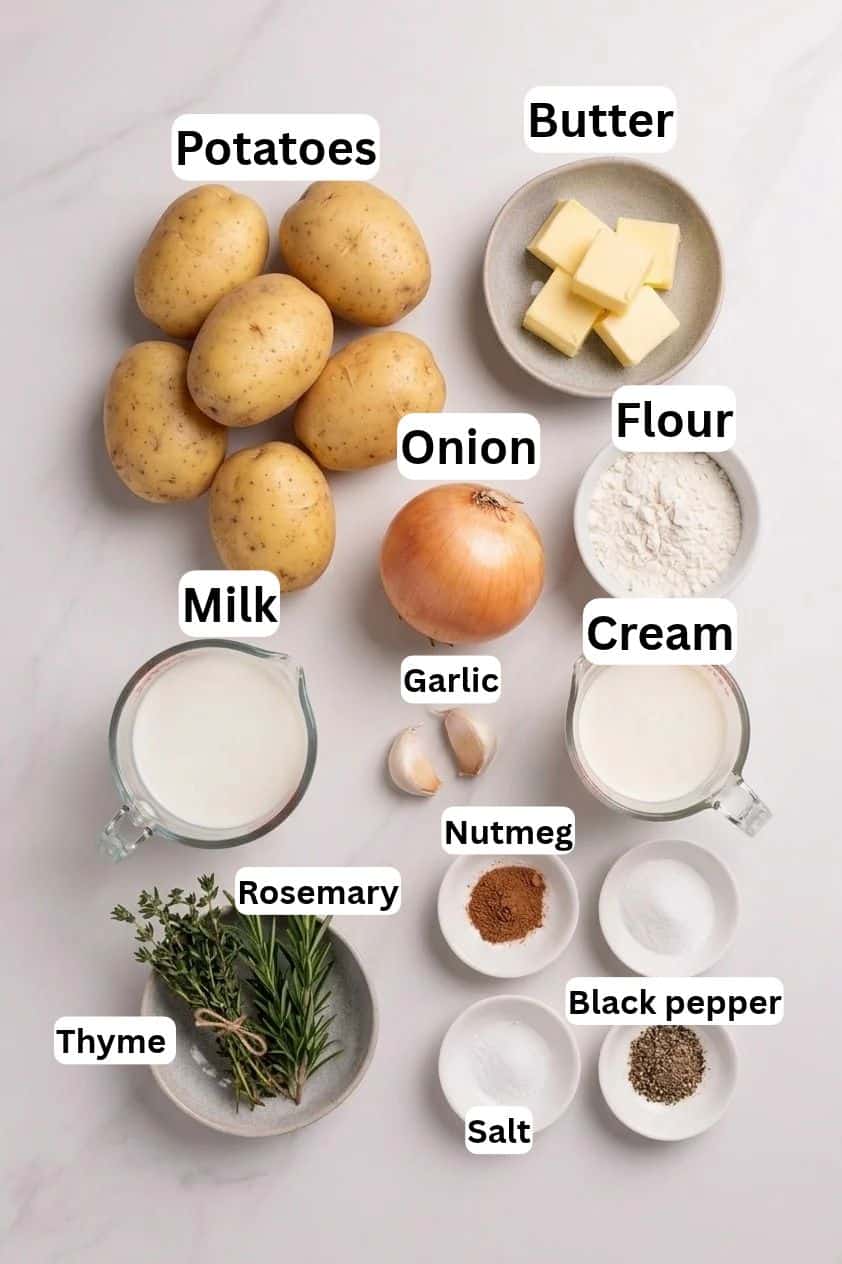
- Yukon Gold potatoes: My preferred choice for this recipe. They have a naturally buttery flavor and a creamy texture, but they also hold their shape during baking. Russet potatoes work too, although they’ll give you softer layers that are more likely to break apart.
- Heavy cream and milk: I use a combination of the two for richness without making the dish overly heavy. Whole milk is my preference. Using only low-fat milk can result in a thinner sauce that’s more likely to separate.
- Butter: Adds flavor and richness between the layers. I recommend unsalted butter so you can control the seasoning.
- Onion: Thinly sliced onion becomes soft and slightly sweet as it bakes. Yellow or sweet onions work especially well.
- All-purpose flour: Helps thicken the milk and cream as the potatoes bake, giving the sauce more body.
- Garlic: Fresh garlic adds flavor to the cream without leaving large pieces throughout the finished dish.
- Fresh thyme and rosemary: These herbs give the sauce its lovely aroma. You can use just thyme if you prefer a milder herb flavor.
- Nutmeg: Only a small amount is needed. It adds a subtle warmth that works especially well with cream and potatoes.
- Salt and black pepper: Potatoes need proper seasoning, so don’t skip these.
This is just a short review of the ingredients; for the complete recipe, including quantities, scroll down to the recipe card 👇
How to Make Scalloped Potatoes
Step 1: Prepare the potatoes.
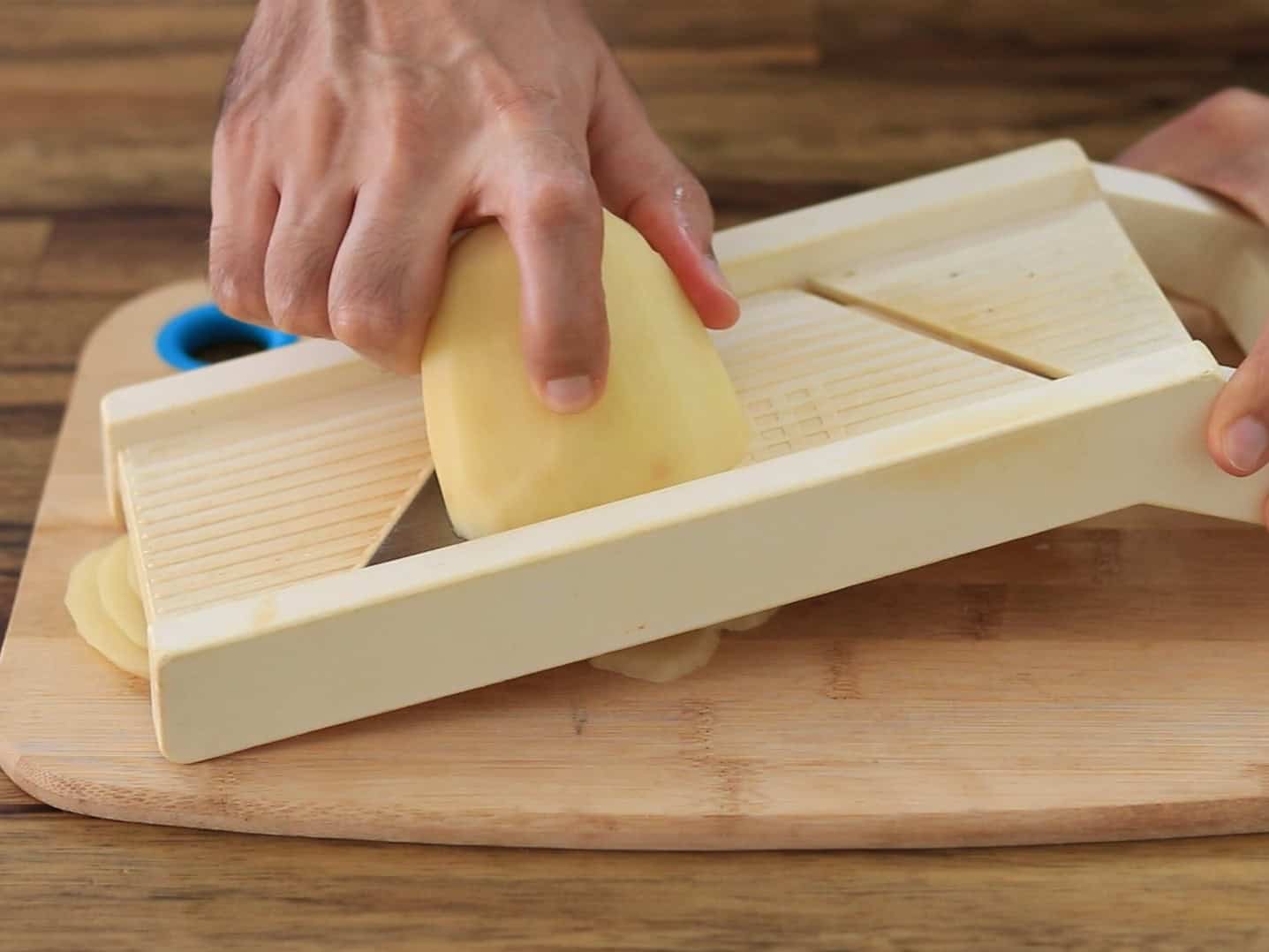
Preheat the oven to 400°F (200°C) and grease your baking dish. Peel the Yukon Gold potatoes and slice them about ⅛ inch (3 mm) thick. I recommend using a mandoline slicer for even slices, but a sharp knife works too.
Step 2: Arrange the potato layers.
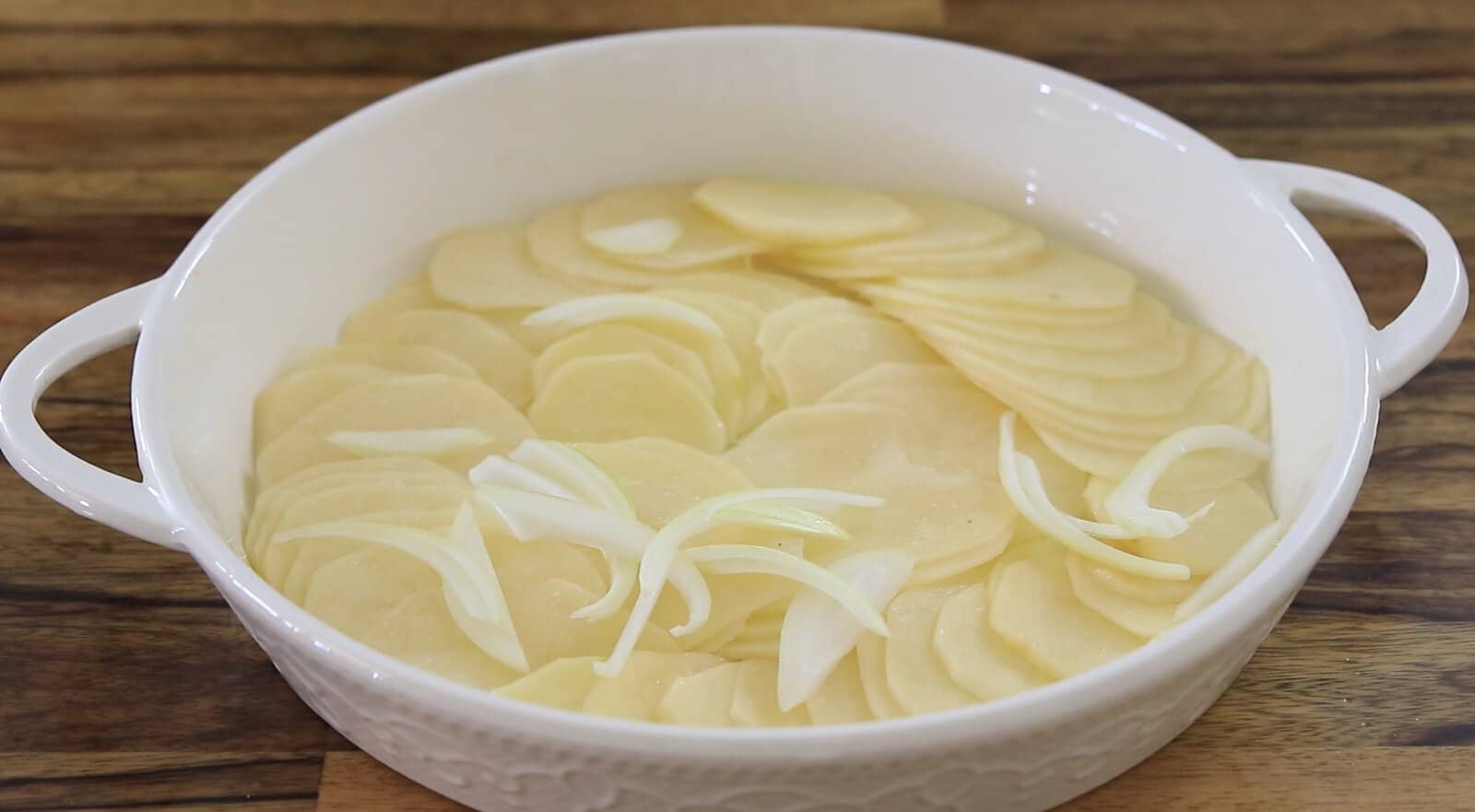
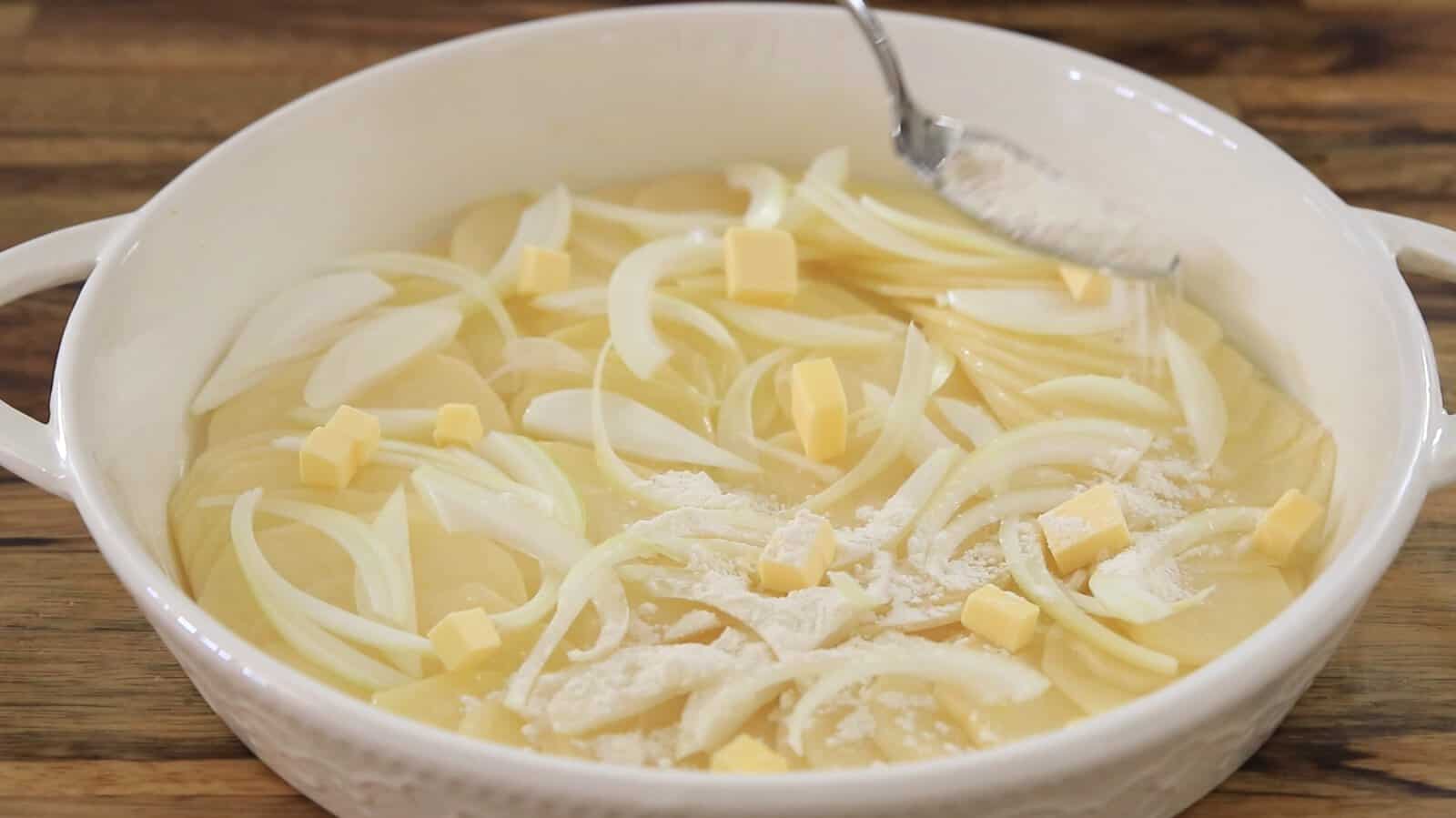
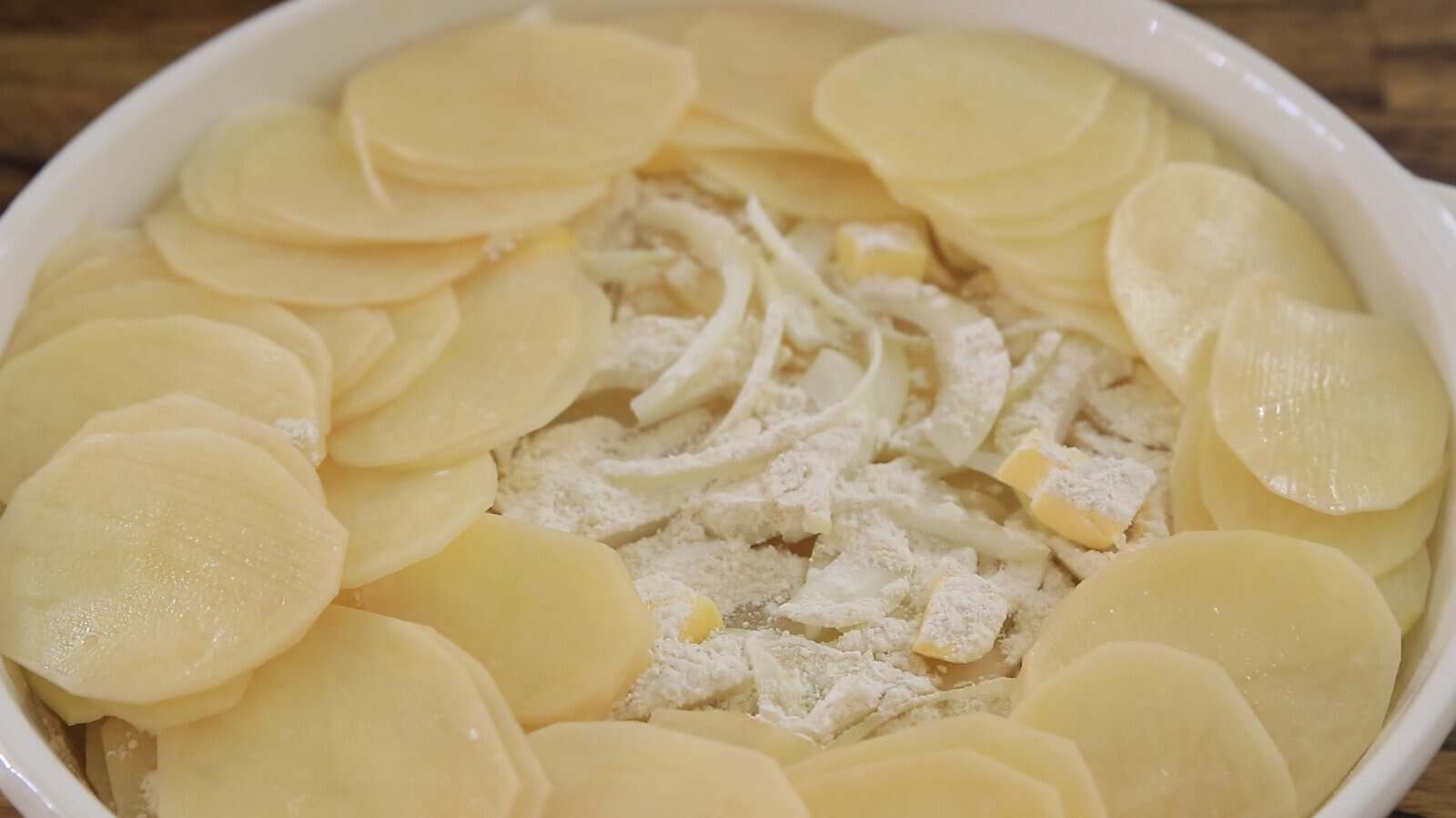
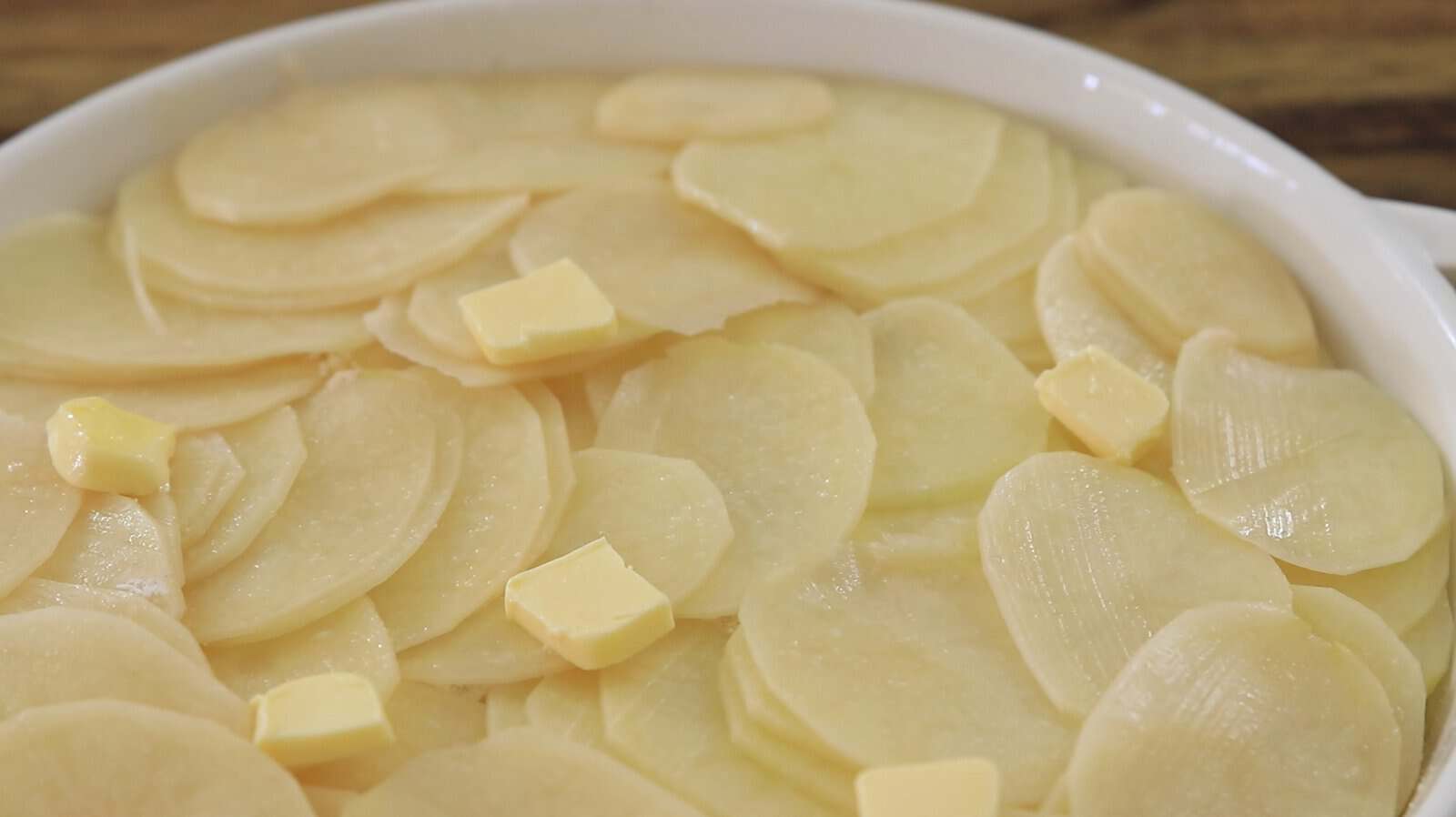
Spread one-third of the potatoes in the prepared dish. Add half of the sliced onion, sprinkle with 3 tablespoons of flour, and dot with 1 tablespoon of butter. Repeat with another third of the potatoes, the remaining onion, another 3 tablespoons of flour, and 1 tablespoon of butter.
Finish with the remaining potatoes and butter.
Step 3: Infuse the cream.
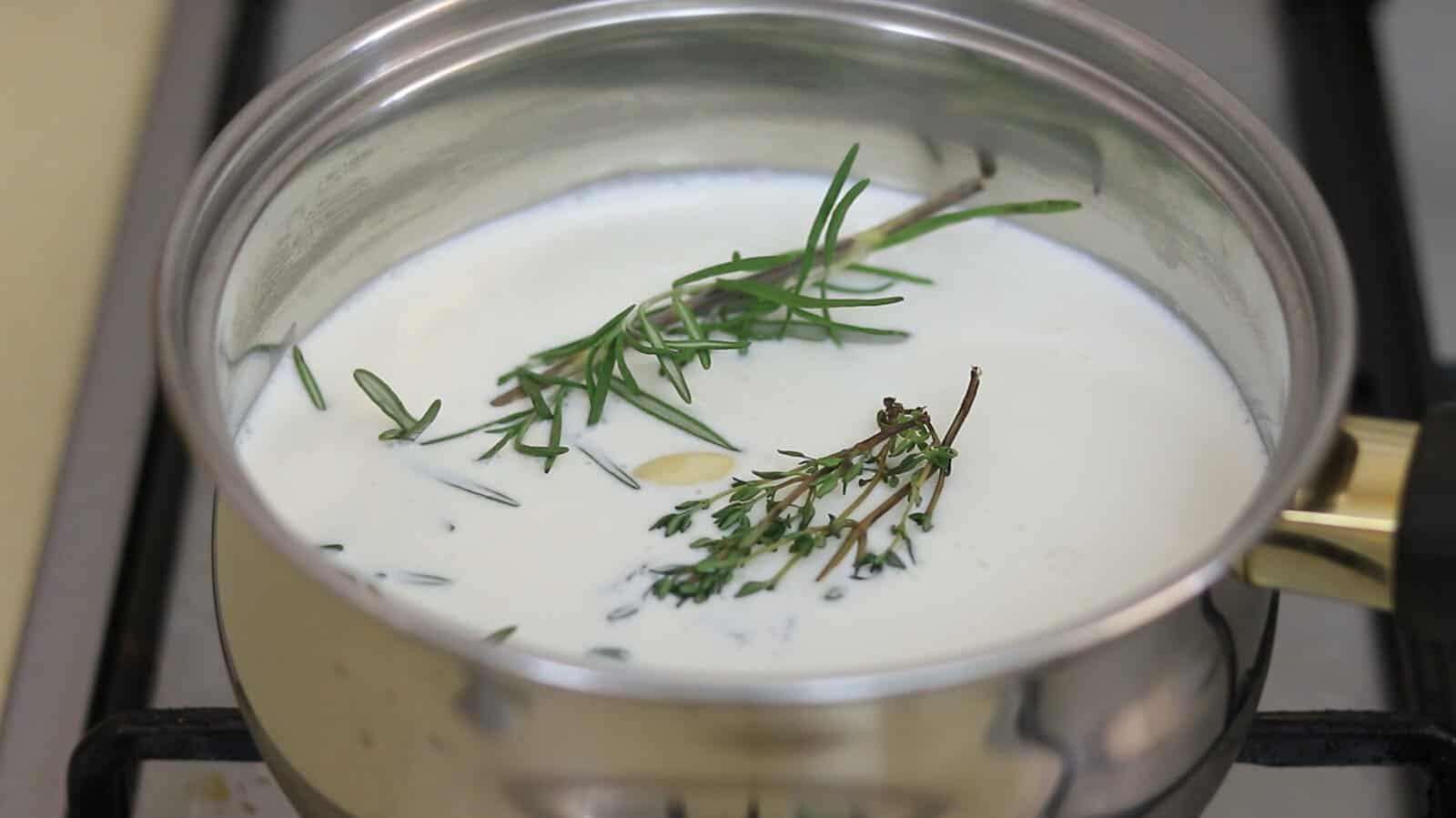
In a saucepan, combine the milk, heavy cream, garlic, rosemary, thyme, salt, pepper, and nutmeg. Warm gently over low heat for 6–7 minutes, stirring occasionally. Don’t let the mixture come to a rolling boil.
Remove the garlic and herb sprigs.
Step 4: Add the cream and bake.
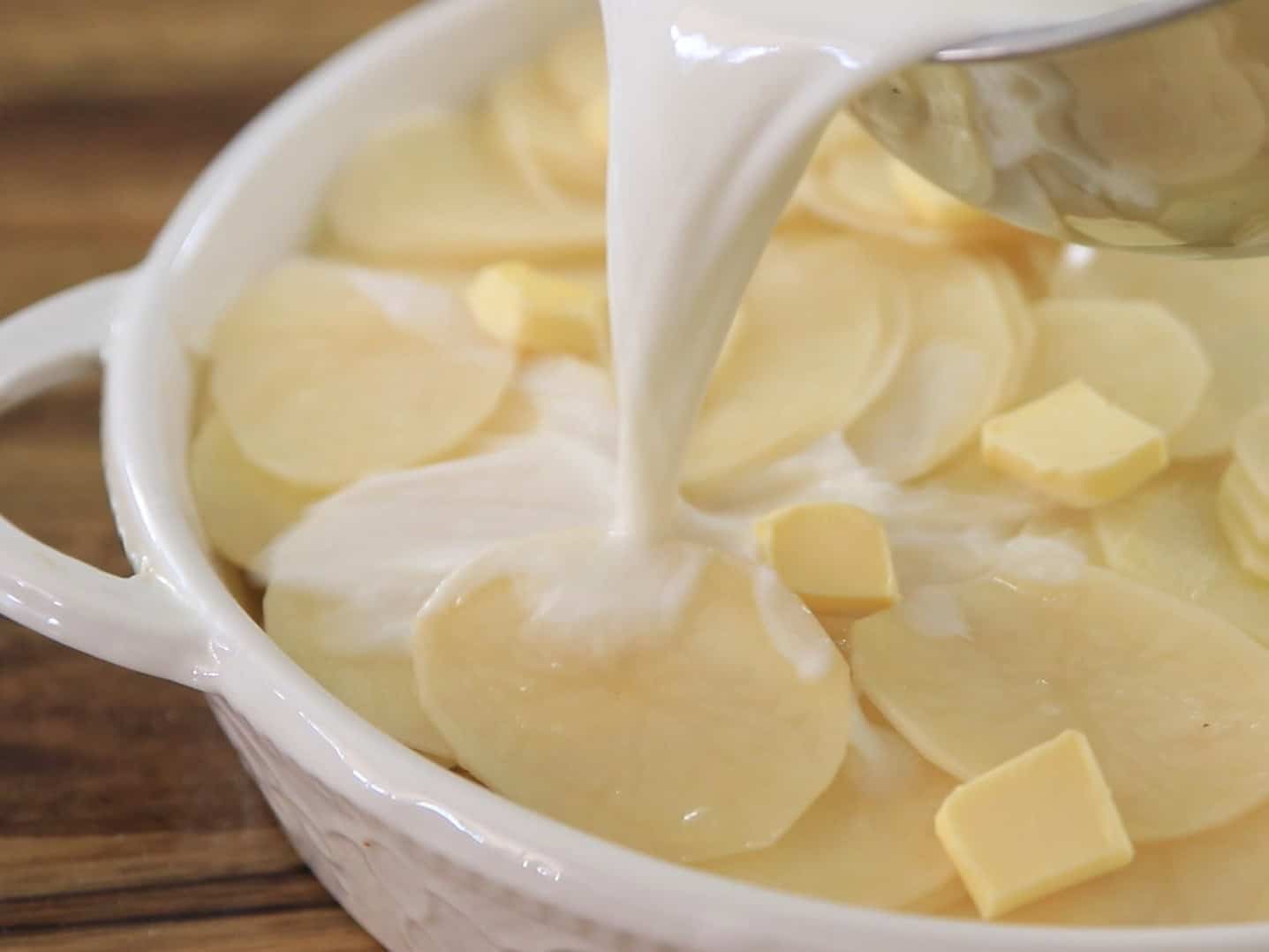
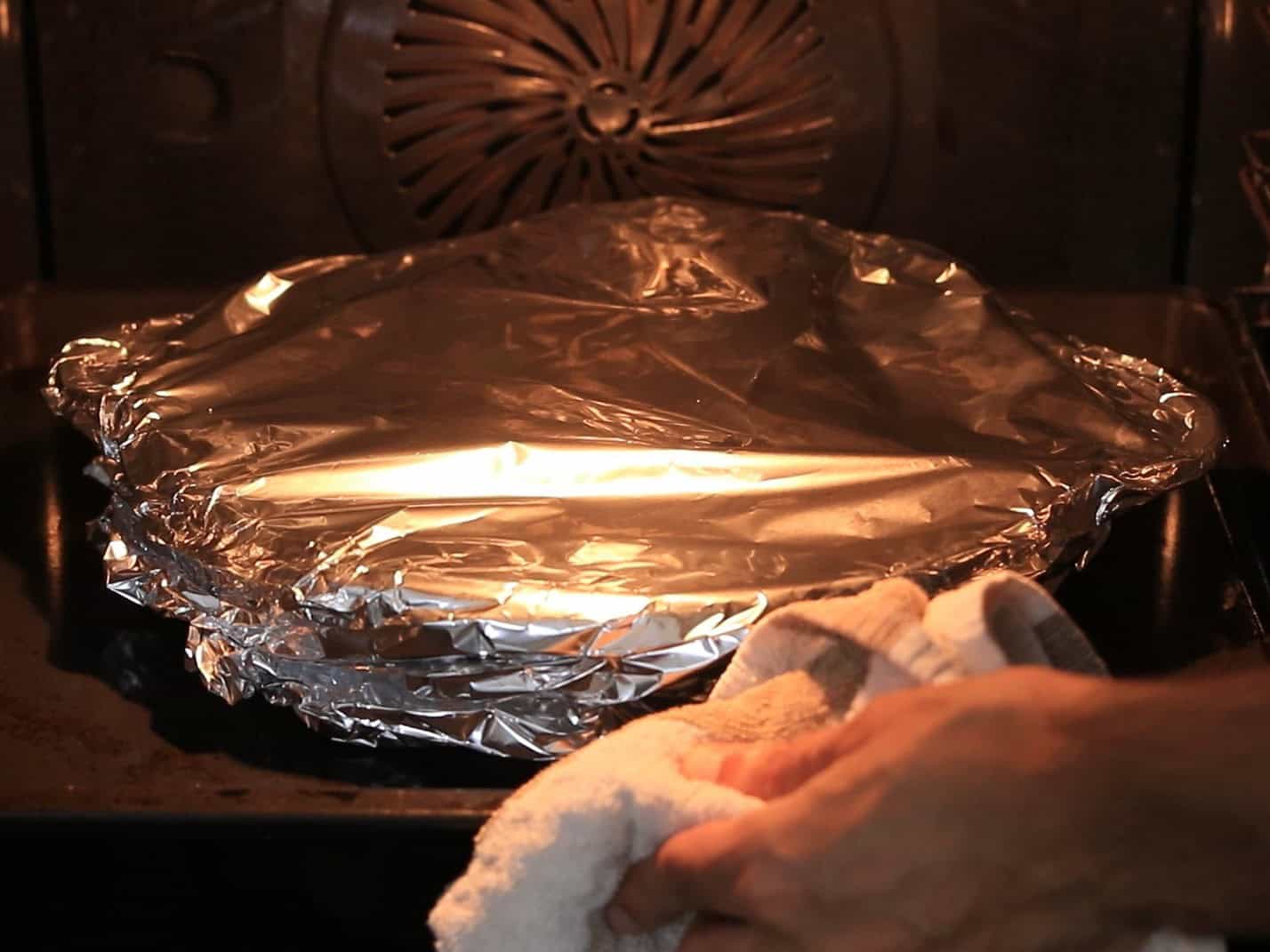
Pour the warm cream mixture evenly over the potatoes. Cover the dish tightly with aluminum foil and bake for 50–60 minutes.
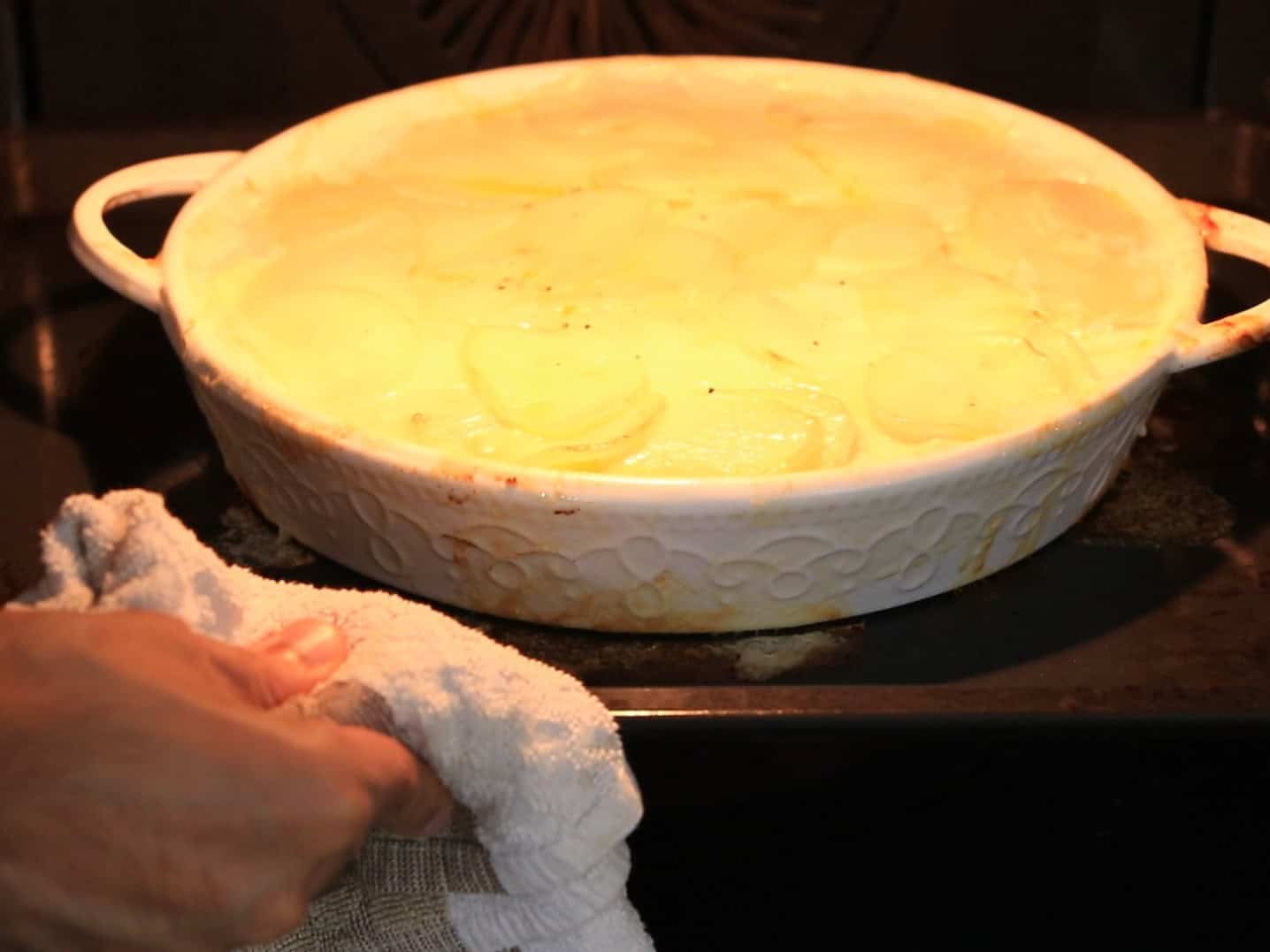
Remove the foil and continue baking for another 30–40 minutes, until the top is golden brown and a knife slides easily through the potatoes in the center.
Step 5: Let it rest.
Remove from the oven and let the scalloped potatoes rest for about 10–15 minutes before serving. This gives the sauce time to settle and thicken slightly, making the potatoes easier to serve.
Video Recipe
Watch my step-by-step scalloped potatoes video to see how I slice the potatoes, arrange the layers, infuse the cream with herbs, and bake everything until golden.
Prefer the written recipe? Scroll down to the recipe box 👇
My Tips for the Best Scalloped Potatoes
- Slice the potatoes evenly. This is probably my most important tip! Aim for about ⅛ inch (3 mm) thick. You can use a sharp knife, but I highly recommend using a mandoline slicer. It’s much faster, gives you perfectly even slices, and helps ensure all the potatoes cook at the same rate. Just be careful and always use the safety guard.
- Don’t rinse the potatoes after slicing. Their natural starch helps the sauce thicken. If you rinse the slices, you’ll wash some of that starch away.
- Use a baking dish with enough depth. A 9×13-inch rectangular dish or an 11-inch (28 cm) round dish works well for this recipe. You can also use a large oval baking dish, as long as it has enough room for the potato layers and cream without overflowing. I recommend a deep ceramic baking dish or a oval ceramic baking dish.
- Warm the cream gently. You’re infusing it with garlic and herbs, not trying to boil it. Gentle heat also helps reduce the chance of the dairy separating.
- Check the center, not just the top. A golden crust doesn’t always mean the potatoes underneath are ready. Insert a thin knife into the center. It should slide through with very little resistance.
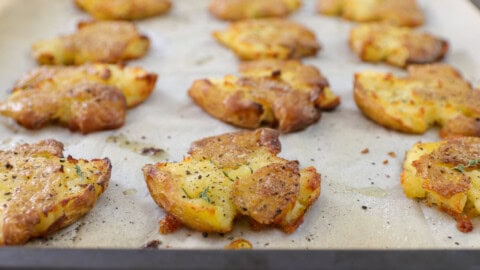
- Don’t expect crispy potato layers. Scalloped potatoes should be soft and creamy, with some browning on top. If you prefer potatoes with really crispy edges, try my crispy smashed potatoes instead.
- Let the potatoes rest before serving. The sauce can look a little loose when the dish first comes out of the oven. Give it 10–15 minutes to settle.
Make-Ahead Scalloped Potatoes for Thanksgiving
If you’re making these scalloped potatoes for Thanksgiving or Christmas, preparing them ahead can save you time and valuable oven space on the big day. Here are two ways to do it.
Can I assemble scalloped potatoes the night before?
Yes! Prepare the cream mixture and let it cool, then assemble the potatoes in your baking dish. Make sure the potato slices are coated with the cream to help prevent discoloration. Cover tightly and refrigerate overnight.
When ready to bake, follow the original instructions, allowing extra time because the dish is cold.
💡Important: Avoid putting a refrigerator-cold glass baking dish directly into a hot oven unless its manufacturer specifically says it’s safe. A suitable metal baking dish is a better choice for this method.
Can I bake scalloped potatoes a day ahead?
Absolutely, and this is my preferred option for a busy holiday! Bake the dish as instructed, let it cool briefly, then cover and refrigerate within two hours.
The next day, cover with foil and reheat at 350°F (175°C) until hot throughout (165°F/74°C in the center). Add a splash of milk if the sauce seems too thick, and uncover toward the end to refresh the golden top.
💡My holiday tip: If you’re making several dishes for Thanksgiving, preparing the scalloped potatoes the day before can make the day itself much easier.
Want Cheesy Scalloped Potatoes? No Problem!
I love the traditional version without cheese, but if you prefer your scalloped potatoes extra cheesy, it’s an easy variation!
Add about 1–1½ cups of freshly shredded cheese to the recipe. Gruyère is a wonderful choice for its nutty flavor and smooth melting texture, while sharp cheddar gives you a stronger cheesy flavor. You can also use a combination of both, just like in my baked mac and cheese.
Sprinkle most of the cheese between the potato layers, then add the remaining cheese during the last 10–15 minutes of baking for a delicious golden, melted topping. A little grated Parmesan is also a great addition if you want extra flavor.
💡My tip: Grate the cheese yourself rather than using pre-shredded cheese. It generally melts more smoothly and gives the sauce a better texture.
Easy Scalloped Potatoes Variations
The original recipe is creamy and flavorful without any cheese, but there are plenty of ways to make it your own.
- Scalloped potatoes and ham: Add 1–2 cups of diced, fully cooked ham between the potato layers. It’s a great way to use leftover holiday ham and makes the dish more filling. Reduce the added salt if your ham is particularly salty.
- Scalloped potatoes with mushrooms: Add sautéed mushrooms between the potato layers for a deeper, savory flavor. Cook the mushrooms first to remove excess moisture, which can make the sauce watery. You can use the cooking method from my garlic mushrooms recipe as inspiration.
- Gluten-free scalloped potatoes: A gluten-free all-purpose flour blend may work in place of regular flour. Cornstarch is another option, but it needs to be mixed into cold liquid before heating rather than sprinkled dry between the layers.
- Dairy-free or vegan scalloped potatoes: Use unsweetened plant-based milk, a suitable dairy-free cooking cream such as cashew cream, and vegan butter. Oat milk is another option. Full-fat coconut milk provides richness but will change the flavor. Plant-based substitutes vary in thickness, so the sauce may need adjusting.
What to Serve with Scalloped Potatoes
Scalloped potatoes are one of those side dishes that can turn an ordinary meal into something a little more special. They’re rich and creamy, so I like the idea of pairing them with a flavorful main dish and something fresh or lighter on the side.
For Thanksgiving: Serve them alongside roasted turkey, green beans, roasted vegetables, and your favorite holiday sides. You could also start your holiday meal with my classic deviled eggs, an easy appetizer that’s always welcome at family gatherings.
For Christmas or Easter: These potatoes pair beautifully with glazed ham, roast chicken, or roast beef. They’re also delicious alongside my salmon with lemon butter sauce.
For a comforting family dinner: Try them with my classic meatloaf and a green salad. Or serve them with my Mediterranean cauliflower salad for something fresh and colorful.
And if you’re planning a complete Thanksgiving menu, don’t forget dessert! My Pumpkin Basque Cheesecake is a lovely make-ahead option that combines creamy cheesecake with warm pumpkin spice flavors.
How to Store, Reheat, and Freeze Scalloped Potatoes
- Refrigerate: Allow leftovers to cool briefly, then transfer them to an airtight container or cover the baking dish tightly. Refrigerate within two hours and keep for up to 3–4 days.
- Reheat: Cover with foil and warm in a 350°F (175°C) oven until heated through to 165°F (74°C) in the center. The time depends on the size and thickness of the portion. Add a splash of milk if the sauce seems too thick or dry.
- Freeze: You can freeze baked scalloped potatoes, although the cream sauce may become slightly grainy and the potato texture can change after thawing. For the best quality, use within about 2–4 weeks. Cool promptly, wrap well, and freeze in suitable containers.
- Thaw: Thaw overnight in the refrigerator, then reheat until thoroughly hot. Don’t freeze raw potato slices for this recipe; they can discolor and lose their texture.
Frequently Asked Questions
Both dishes feature thinly sliced potatoes baked in a creamy sauce. Traditionally, scalloped potatoes are made without cheese, while potatoes au gratin usually include cheese and sometimes breadcrumbs.
The names are often used interchangeably today, but my original scalloped potatoes recipe is the no-cheese version.
I recommend Yukon Gold potatoes because they have a naturally buttery flavor and hold their shape while developing a creamy texture.
Russet potatoes are a good alternative. They contain more starch and tend to become softer, so your potato layers may be less defined. Red potatoes also work, but they have a firmer, waxier texture.
Avoid boiling the cream and milk mixture, and use fresh, full-fat dairy when possible. The flour in this recipe also helps stabilize and thicken the sauce as it bakes.
If the sauce looks slightly separated at the edges, it doesn’t necessarily mean the whole dish is ruined. Let it rest before serving. For the next batch, try a gentler oven temperature and make sure the cream mixture isn’t boiling before it goes into the dish.
This recipe is written for 400°F (200°C), with approximately 80–100 minutes of total baking time.
At 350°F (175°C), plan for a longer bake, potentially around 1 hour 45 minutes to 2 hours or more, depending on the dish and thickness of the potatoes. Keep the dish covered for most of the cooking time, then uncover to brown the top.
The most reliable test is tenderness in the center, not the clock.
The most common reasons are slices that are too thick, unevenly cut potatoes, or insufficient baking time.
Cover the dish again and continue baking until a knife slides easily into the center. If the top is already golden, keeping it covered will help prevent excessive browning.
More Easy Side Dish Recipes
Scalloped Potatoes Recipe
Equipment
- Mandoline slicer highly recommended
Ingredients
- 3 pounds (1.4 kg) Potatoes Yukon Gold *see notes
- 3 tablespoons (45 g) Unslated Butter divided, plus extra for greasing
- 1 medium Onion thinly sliced
- 6 tablespoons (50 g) Flour
- 1½ cups (360 ml) Whole milk
- 1½ cups (360 ml) Heavy cream
- 2 cloves Garlic lightly crushed
- 2-3 sprigs Fresh thyme
- 2-3 sprigs Rosemary
- ¼ teaspoon Nutmeg
- 1 teaspoon Salt
- ½ teaspoon Black pepper
Instructions
- Prepare the baking dish: Preheat your oven to 400°F (200°C). Lightly grease a 9×13-inch baking dish or an approximately 11-inch round baking dish with butter.
- Slice the potatoes: Peel the potatoes and slice them evenly, about ⅛ inch (3 mm) thick, using a mandoline slicer or sharp knife.
- Layer the potatoes: Arrange one-third of the potato slices in the bottom of the baking dish. Top with half of the sliced onion, sprinkle with 3 tablespoons of flour, and dot with 1 tablespoon of butter.
- Finish layering: Repeat with another third of the potatoes, the remaining onion, the remaining 3 tablespoons of flour, and another tablespoon of butter. Finish with the remaining potatoes and the last tablespoon of butter.
- Infuse the cream: Combine the milk, heavy cream, garlic, thyme, rosemary, nutmeg, salt, and black pepper in a saucepan. Warm over low heat for 6–7 minutes, stirring occasionally, without allowing the mixture to boil. Remove the garlic and herb sprigs.
- Add the cream: Pour the warm cream mixture evenly over the potatoes. Gently shake the dish to help the liquid settle between the layers.
- Bake covered: Cover tightly with aluminum foil and bake for 50–60 minutes.
- Brown the top: Remove the foil and bake for another 30–40 minutes, until the top is golden and the potatoes in the center are tender when pierced with a knife. If the top is browning too quickly, loosely cover it again.
- Rest and serve: Let the dish rest for 10–15 minutes before serving.
Video
Notes
- Best potatoes: Yukon Golds give a creamy texture while holding their shape. Russets work but tend to soften more.
- Slice thickness: Aim for about ⅛ inch (3 mm) so the potatoes cook evenly.
- Make ahead: For the most dependable holiday preparation, bake the dish the day before, refrigerate promptly, and reheat covered until hot throughout.
- Cheese variation: Add 1–1½ cups shredded Gruyère or cheddar between the layers and toward the end of baking.
- Storage: Refrigerate leftovers for up to 3–4 days.
- Freezing: Freeze baked portions for about 2–4 weeks for best quality; the sauce may be less smooth after reheating.
- Doneness: The potatoes should be tender in the center, the sauce should be bubbling, and the top should be golden brown.




I have got to try this! I already know I’m going to love it, as I love every ingredient in this dish. I think I may add this to our Thanksgiving dinner this year. It’s just me and my husband, and we will devour this. Thank you so much for sharing. I printed out the recipe. I know your recipe will be a hit, and therefore it’s earned a place in my recipe book. 🙂
Hi Beth,
This makes me so happy to hear! Thank you for your kind words, and please let me know how they turn out when you try the recipe. I’d love to hear what you and your husband think! ❤️
Великолепный рецепт!
Обожнюю всі ваші рецепти. Дякую 🤗