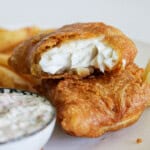
Beer Battered Fish and Chips
Crispy Beer Battered Fish and Chips made easy! Learn the secrets to perfectly golden fish, crunchy chips, and homemade tartar sauce. Classic British comfort food!
Servings: 4 servings
Calories: 663kcal
Equipment
- Deep fryer optional
Ingredients
For the fish:
- 4-5 White fish fillets (about 150–180g / 5–6 oz each) *see notes
- Salt to taste
- Black pepper to taste
- All-purpose flour for coating
Beer batter:
- 1 cup All-purpose flour
- 1 cup Beer cold *see notes
- ½ teaspoon Salt
- ¼ teaspoom Black pepper
- 2 teaspoons baking powder
For the chips:
- 4 Potatoes large
- Cold water for soaking
- Oil for frying
- Salt and pepper for seasoning
For the tartar sauce:
- ½ cup Mayonnaise
- 1 teaspoon Mustard
- 2 tablespoons Red onion finely chopped
- 2 tablespoons Dill pickles chopped
- 1 tablespoon Capers chopped
- 1 tablespoon Lemon juice fresh
- Salt & pepper to taste
- 1 tablespoon Parsley chopped
For serving:
- Lemon cut into wedges
Instructions
- Prepare the potatoes: Peel the potatoes and cut them into fries about ½-inch (1cm) thick. Rinse well under cold water, then transfer to a large bowl and cover with fresh cold water. Let soak for 30 minutes to remove excess starch. Drain and pat completely dry with a clean kitchen towel or paper towels.
- First fry the chips: Fill a deep fryer or a large heavy-bottomed pot (such as a Dutch oven) with enough oil for deep frying. Attach a deep-fry thermometer and heat the oil to 275–300°F (135–150°C). Fry the potatoes in batches for 3–5 minutes, stirring occasionally, until softened but still pale.
- Use a spider strainer to transfer the fries to a paper towel-lined tray and let them cool for 10–15 minutes.
- Make the batter: In a large bowl, whisk together the flour, baking powder, and salt. Gradually whisk in 1 cup of the cold beer, adding up to ¼ cup more if needed. The batter should be smooth, thick enough to coat the back of a spoon, but still pour easily. Avoid overmixing.
- Prepare the fish: Pat the fish completely dry with paper towels and season both sides with salt and black pepper. Lightly coat each fillet in flour, shaking off any excess. This helps the batter adhere evenly.
- Make the tartar sauce: In a small bowl, stir together the mayonnaise, mustard, red onion, dill pickles, capers, lemon juice, parsley, salt, and pepper. Cover and refrigerate until ready to serve. Chilling the sauce allows the flavors to meld while you finish cooking.
- Finish the chips (second fry): Increase the oil temperature to 400°F (200°C). Fry the potatoes again, in batches, for 6–8 minutes or until deeply golden and crispy. Transfer to paper towels, season immediately with salt and keep warm while frying the fish. Keep warm in a 200°F (100°C) oven while frying the fish.
- Fry the fish: Reduce the oil temperature to 350°F (180°C). Dip each floured fillet into the batter, allowing any excess to drip off, then carefully lower it into the hot oil. Fry for 4–6 minutes, depending on thickness, until the batter is deeply golden and crisp and the fish flakes easily with a fork. Remove with the spider strainer and drain on a wire rack or paper towels.
- Serve: Plate the crispy fish with the hot chips, tartar sauce, and fresh lemon wedges. Serve immediately while everything is hot and crisp.
Video
Notes
- Beer: Beer helps create a light, crispy batter thanks to its carbonation and alcohol, which evaporates during frying. A light lager, pilsner, pale ale, or other mild beer works best. Avoid dark beers, which can add bitterness. For an alcohol-free option, use cold sparkling water or club soda instead.
- Batter consistency: Start with 1 cup of beer, then gradually add more, up to an additional ¼ cup, if needed. The batter should be smooth, thick enough to coat the fish evenly, but still thin enough for any excess to drip off.
- Best fish: Cod is the traditional choice for fish and chips thanks to its mild flavor and large flaky texture. Haddock, pollock, hake, halibut, snapper, or other firm white fish also work well. Choose thick fillets whenever possible for the juiciest result.
- Choose the right potatoes: Starchy potatoes, such as Russet or Maris Piper, produce the fluffiest interior and crispiest chips. For even more tips and troubleshooting, see my How to Make the Best French Fries guide.
- Double frying: The two-stage frying method is what creates chips that are crispy on the outside and fluffy on the inside. Don't skip the first fry, as it's essential for the final texture.
- Maintain the oil temperature: A deep-fry thermometer makes a huge difference. If the oil is too cool, the fish and chips will absorb excess oil and become greasy. If it's too hot, the batter may brown before the fish is cooked through.
- Don't overcrowd the fryer: Fry in small batches to keep the oil temperature stable and ensure even cooking and crispiness.
- Best oil: Use a neutral oil with a high smoke point, such as vegetable, canola, sunflower, or peanut oil. If frying multiple batches, skim away any loose batter between batches to help keep the oil clean and prevent burnt bits from sticking to the fish.
- Make ahead: The tartar sauce can be prepared up to 2 days in advance and refrigerated. The potatoes can also be peeled, cut, and soaked in cold water in the refrigerator for up to 24 hours. Just dry them thoroughly before frying.
Nutrition
Calories: 663kcal | Carbohydrates: 65g | Protein: 42g | Fat: 24g | Saturated Fat: 4g | Polyunsaturated Fat: 13g | Monounsaturated Fat: 6g | Trans Fat: 0.1g | Cholesterol: 97mg | Sodium: 939mg | Potassium: 1493mg | Fiber: 6g | Sugar: 2g | Vitamin A: 124IU | Vitamin C: 45mg | Calcium: 178mg | Iron: 5mg