
Easy Homemade Torrone | Soft & Chewy Italian Nougat
This post may contain affiliate links.
Making my nutty, soft and chewy Italian Torrone Candy recipe is a worthwhile holiday tradition. All you need are 8 simple ingredients and 30 minutes to make a batch of this beloved treat! It’s perfect for gifting, adding to Christmas cookie plates, or nibbling on when you’re craving something sweet.
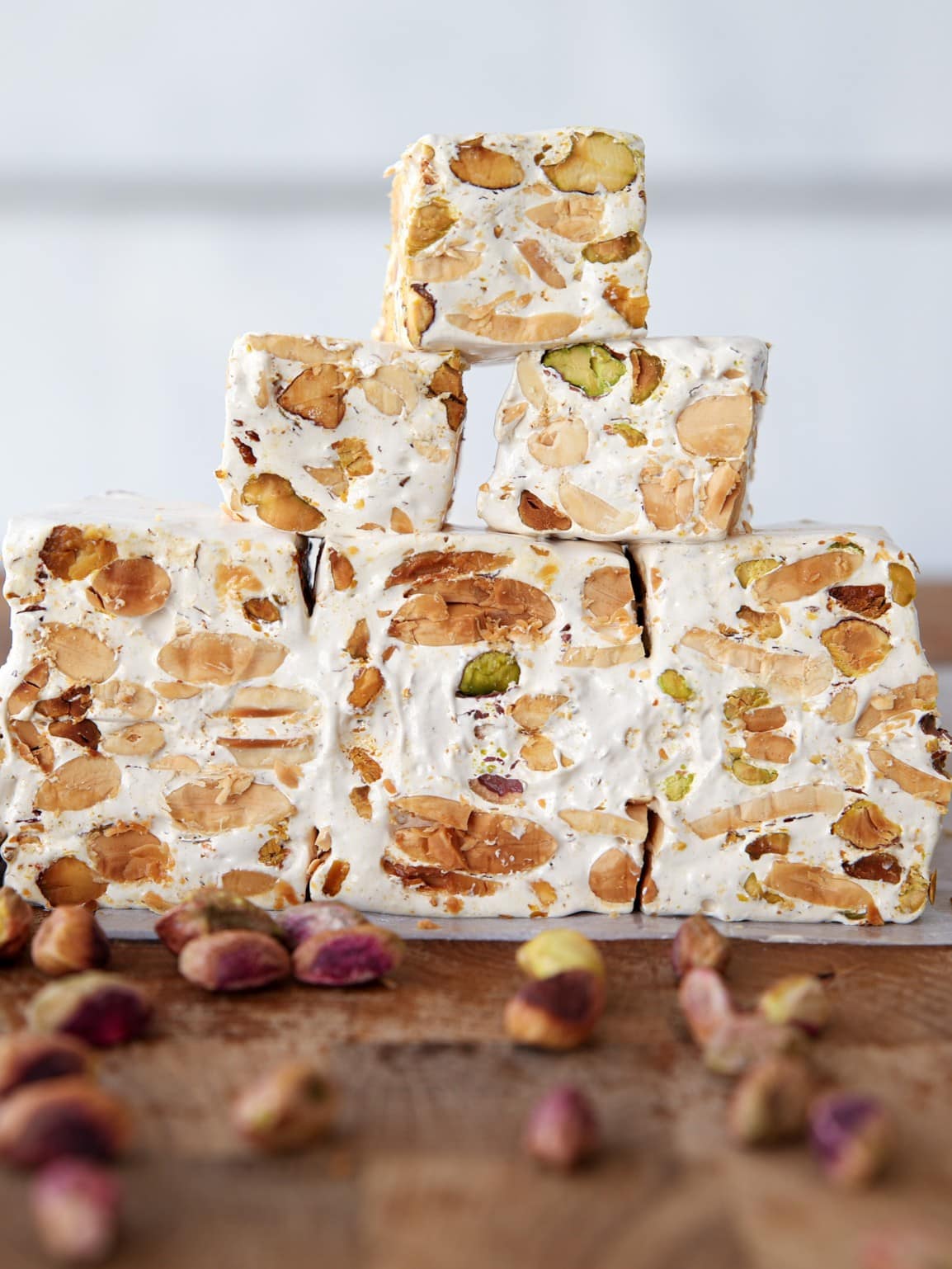
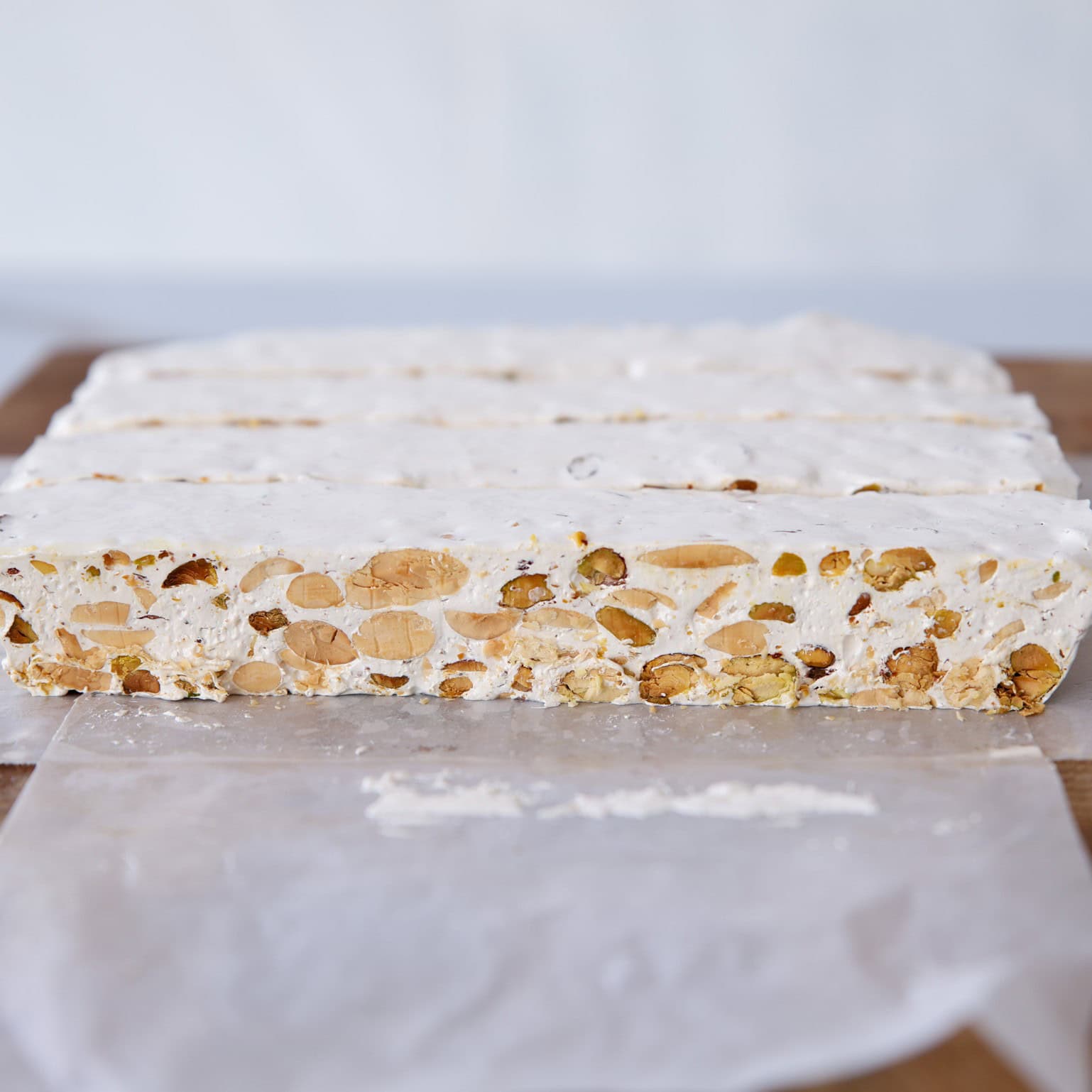
While torrone is often associated with the holidays, it’s a simple dessert recipe I turn to throughout the year. It’s a lovely way to use up leftover egg whites, plus it has a fantastic texture that is absolutely craveworthy. The combination of fluffy meringue and honey makes it light, tender, and perfectly stretchy, while toasted nuts add delightful crunch.
What is Italian Torrone Candy?
Torrone is a classic Italian nougat candy traditionally enjoyed during Christmas. With origins dating back to medieval Italy and Spain, this sweet treat is deeply tied to holiday celebrations, gift-giving, and regional pride. Nearly every part of Italy has its own variation!
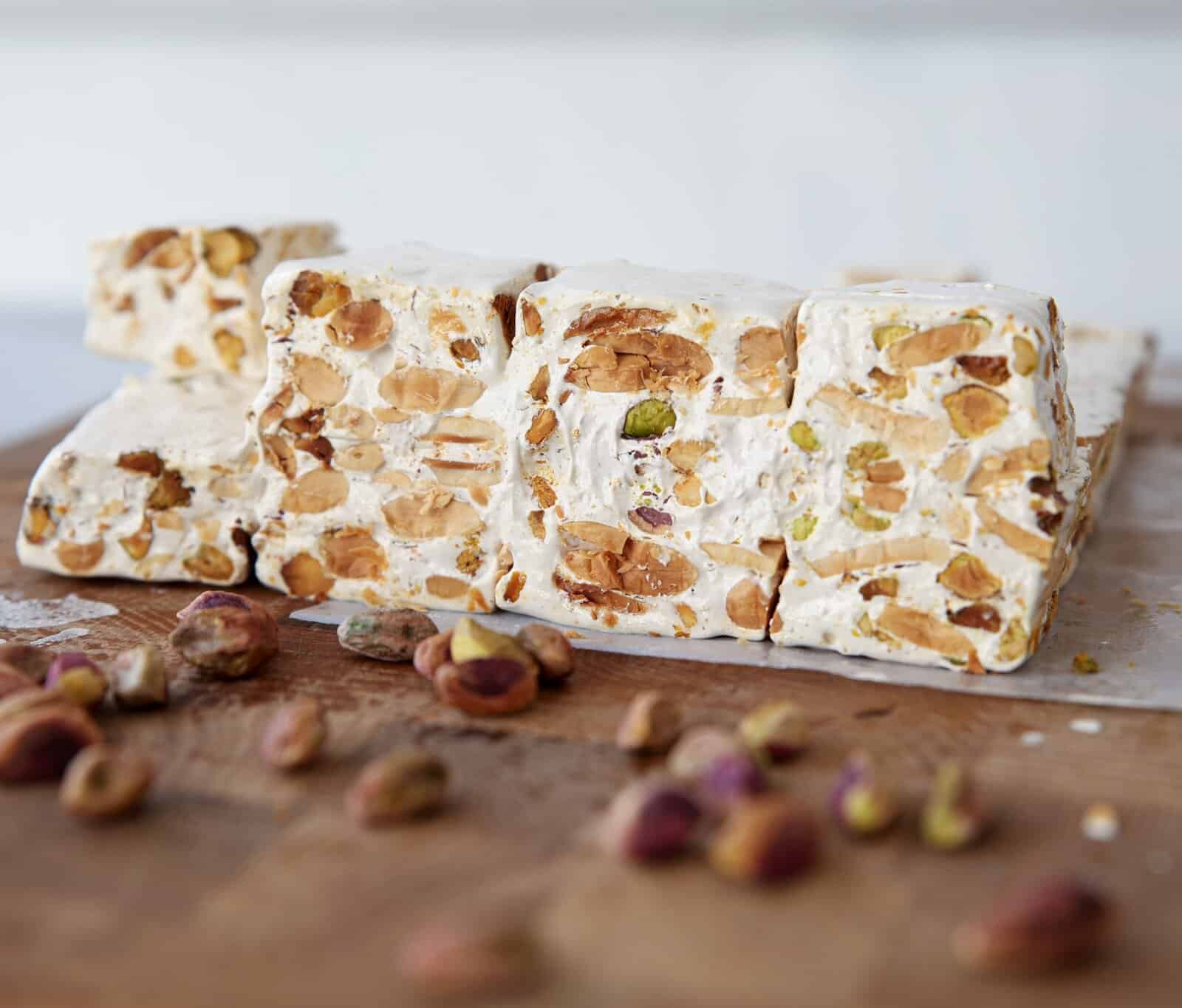
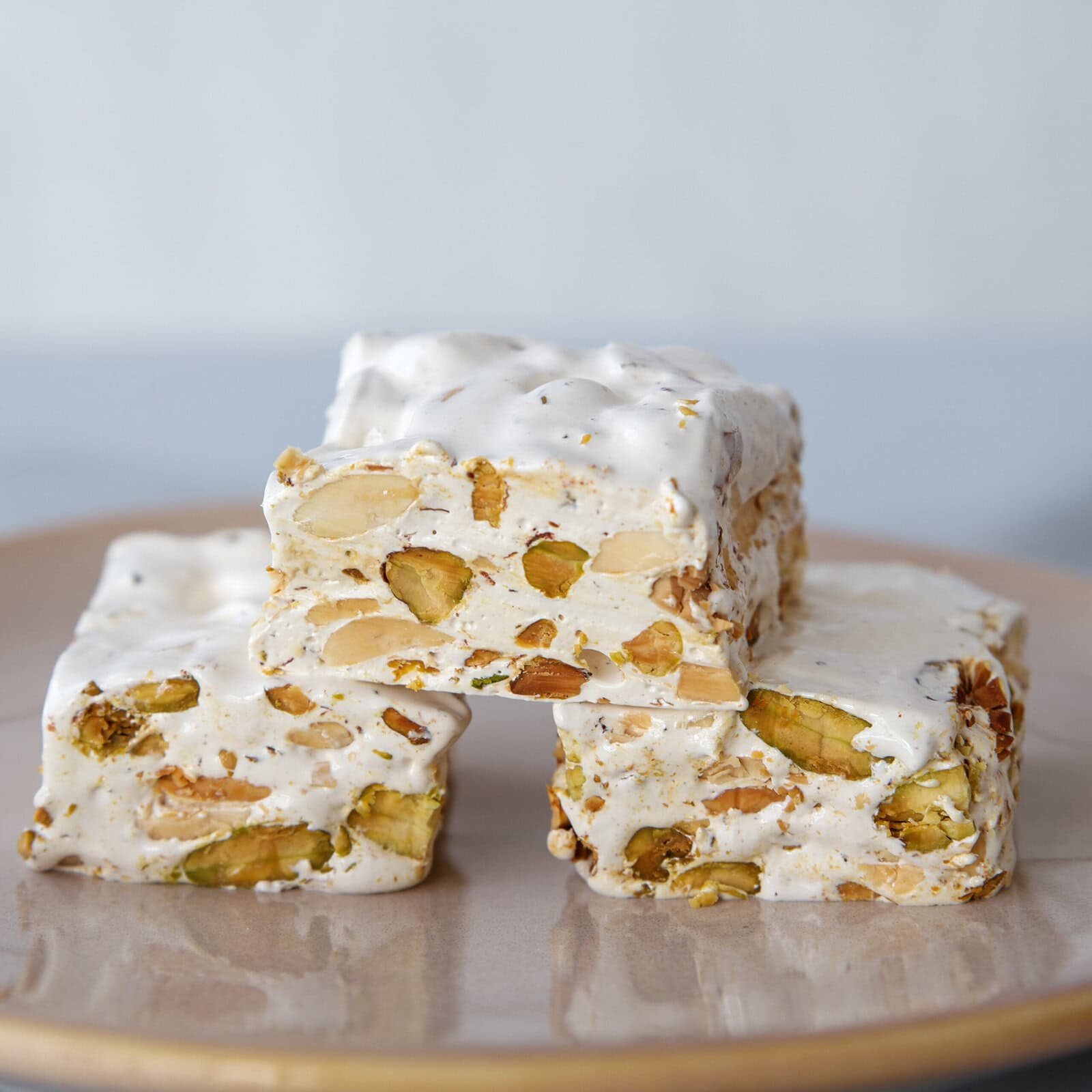
It’s made by whipping egg whites into a glossy meringue, then cooking it gently with honey and sugar until thick, chewy, and beautifully airy. Once the base reaches a marshmallow-like consistency, it’s mixed with toasted nuts (usually pistachios, almonds, and/or hazelnuts) and pressed into slabs or bars. Some variations are scented with citrus zest or vanilla, and many are wrapped in delicate edible wafer paper to keep the pieces from sticking.
Torrone comes in two main styles: morbido (soft and chewy) and duro (firm and crunchy). The texture depends on cooking temperature and regional traditions. In the north, softer torrone is common, while southern versions tend to be more brittle and caramel-like. My recipe is for Northern-style torrone morbido.
Ingredients & Substitutions
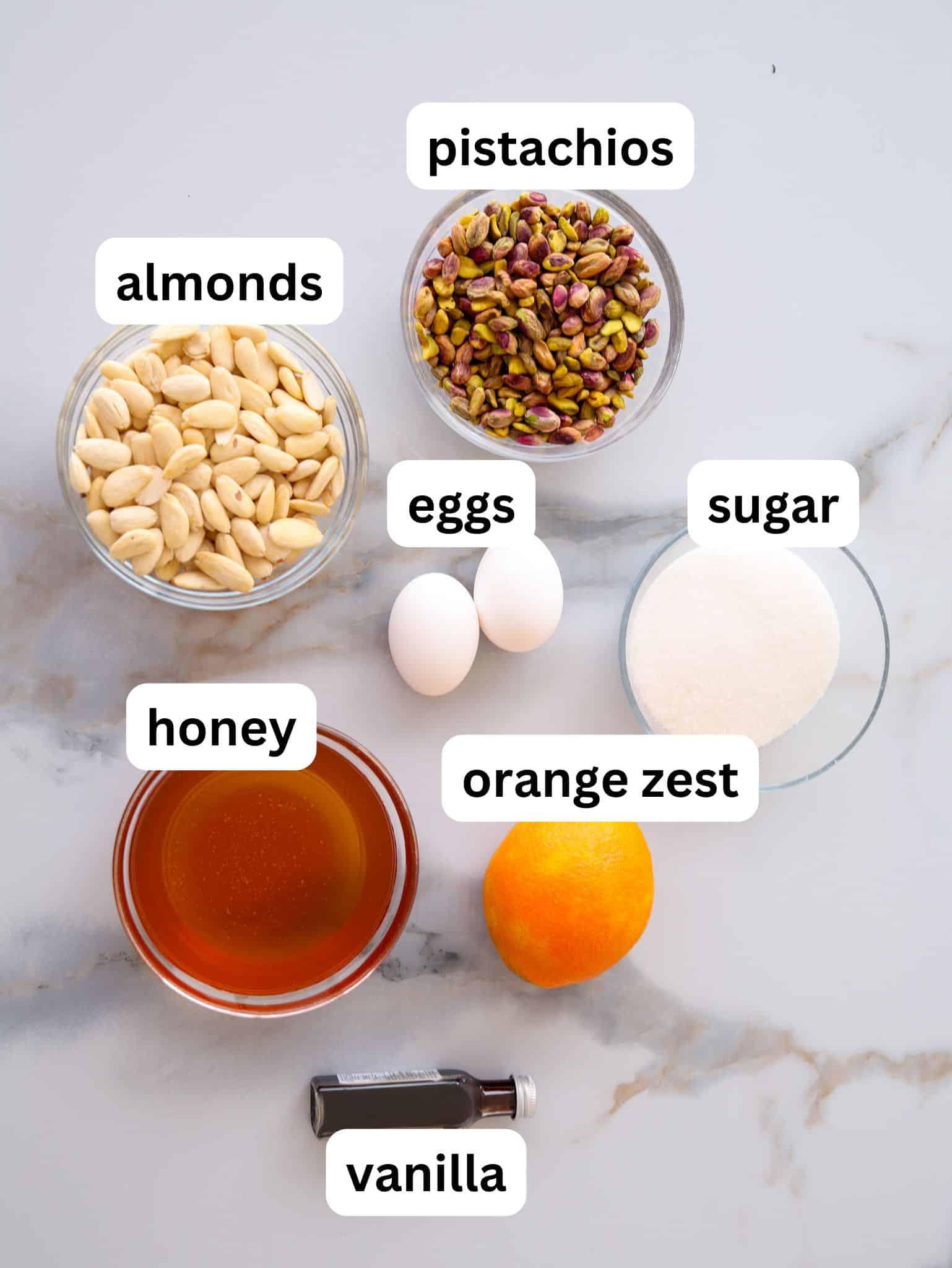
- Honey – Regular mass-market clover honey will do, but this is a fun spot to experiment with local varieties. Read on below for more information!
- Granulated Sugar – It’s important to use white sugar here, not brown. That said, cane sugar or superfine/caster sugar are great substitutes. Just note that cane sugar may impart a small hint of golden color to the final product.
- Almonds & Pistachios – These nuts are classic torrone candy inclusions, but you’re welcome to shake things up as needed. Use all pistachios or all almonds, add hazelnuts, or use a mix of your choosing. Toast them first for the best flavor.
- Egg Whites – Make sure to separate eggs when they’re still cold from the fridge when the yolks are less likely to break, but let them come to room temperature for better whipping. And don’t toss the yolks, they’re perfect for making other holiday favorites like homemade eggnog.
- Salt – A little salt helps to draw out the flavor of the honey, nuts, vanilla and citrus. Use kosher salt or fine sea salt instead of iodized table salt, which is a bit bitter.
- Vanilla Extract – You can also use an equal amount of vanilla paste.
- Orange/Lemon Zest – Fresh citrus zest adds a nice brightness to cut through the toasty nuts and sweet nougat.
This is just a short review of the ingredients; for the complete recipe, including quantities, scroll down to the recipe card 👇
How Different Types of Honey Affect Your Torrone Recipe
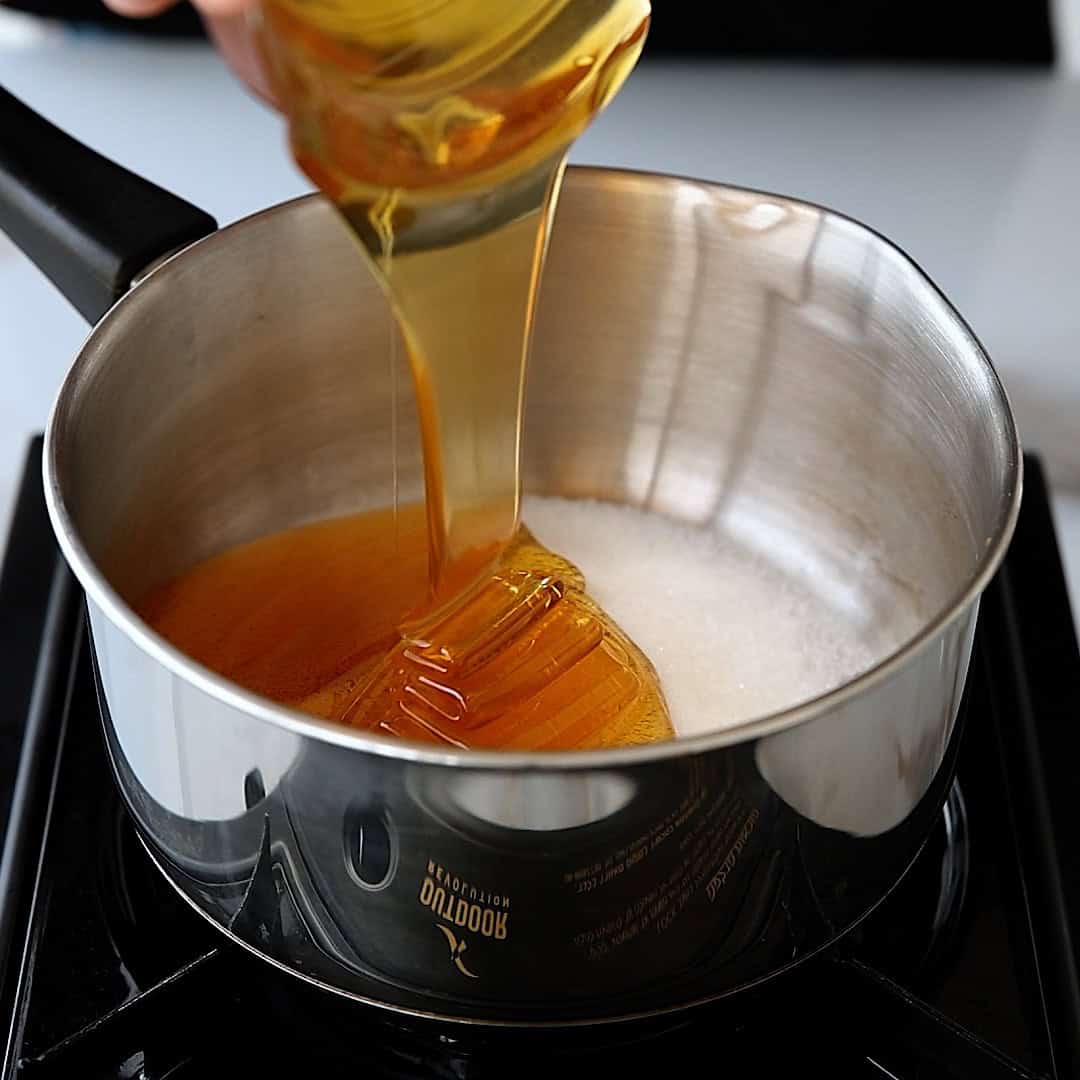
Honey is one of the defining ingredients in torrone, and the type you choose can subtly (or dramatically!) change the final flavor. Here’s how a few common varieties will transform your batch:
- Clover Honey – Mild, clean, and classic. Clover honey keeps the torrone’s flavor neutral and balanced, letting the nuts and vanilla shine. This is the safest choice if you want a traditional, crowd-pleasing result.
- Wildflower Honey – More floral and complex, with notes that vary by region and season. Wildflower honey gives your torrone a deeper, more nuanced sweetness and a slightly rustic character, great if you want a homemade, artisanal feel.
- Orange Blossom Honey – Bright, citrusy, and aromatic. Orange blossom honey adds subtle floral and orange-zest-like undertones that make it perfect for a lighter, brighter spin.
- Acacia Honey – Very mild, light, and almost vanilla-like. This honey keeps torrone ultra-delicate and smooth, complementing soft morbido styles especially well. It’s an elegant upgrade if you can find it!
- Chestnut Honey – Bold, dark, and slightly bitter with a deep caramel edge. Chestnut honey produces a far more intense, grown-up torrone with a complex flavor profile. It pairs beautifully with hazelnuts but may be too strong for people who prefer a sweeter profile.
- Lavender or Herb-Infused Honey – Floral honeys or herb-infused varieties (like rosemary honey) add aromatic notes that can make your torrone feel extra special. Use sparingly (preferably in conjunction with a milder variety) since the flavors can easily overpower the delicate nougat.
- Manuka Honey – Earthy, medicinal, and mentholated. This variety can overshadow the traditional flavor, so it’s generally not recommended for torrone.
How to Make Torrone
Watch the full video recipe to learn how to make the BEST Italian Torrone Nougat. This step-by-step tutorial simplifies the process, offering tips and tricks to guarantee perfect results every time.
Prefer the written recipe? Scroll down to the recipe box 👇
Optional Variations & Dietary Adaptations
- Nut-Free – If you love the chewy, honey-sweet texture of torrone but can’t have nuts, you can still enjoy a delicious version. Simply swap the nuts for dried fruit, crushed amaretti cookies, crispy rice cereal, or toasted pumpkin seeds.
- Chocolate-Dipped – For an extra-decadent twist, dip the cooled torrone pieces halfway into melted dark or milk chocolate. Let them let on parchment for a glossy, confectionery-style finish. Drizzle white chocolate on top for a special holiday look.
- Creative Mix-Ins – Feel free to play with flavors! Fold in crushed almond cookies or gingersnaps for a spiced, cookie-like crunch, or add candied citrus peel for a bright, traditional Italian touch. Dried fruits like cherries, apricots, or cranberries also work and bring pretty pops of color to each slice.
- Flavor Variations – Customize your torrone with extracts or aromatics: a splash of almond extract, orange blossom water or a pinch of cinnamon can subtly shift the personality of the candy.
- Texture – While I prefer my torrone soft, cooking the syrup to a slightly higher temperature will give you a firmer, crunchier torrone.

Expert Tips & Tricks
- Use a candy thermometer. Torrone relies on precise temperatures. A candy thermometer takes out all the guesswork and ensures you cook the honey-sugar syrup to the exact stage needed for the texture you want—soft and chewy or firm and crunchy.
- Beat the meringue to stiff peaks. Whip the egg whites until they’re glossy and hold their shape.
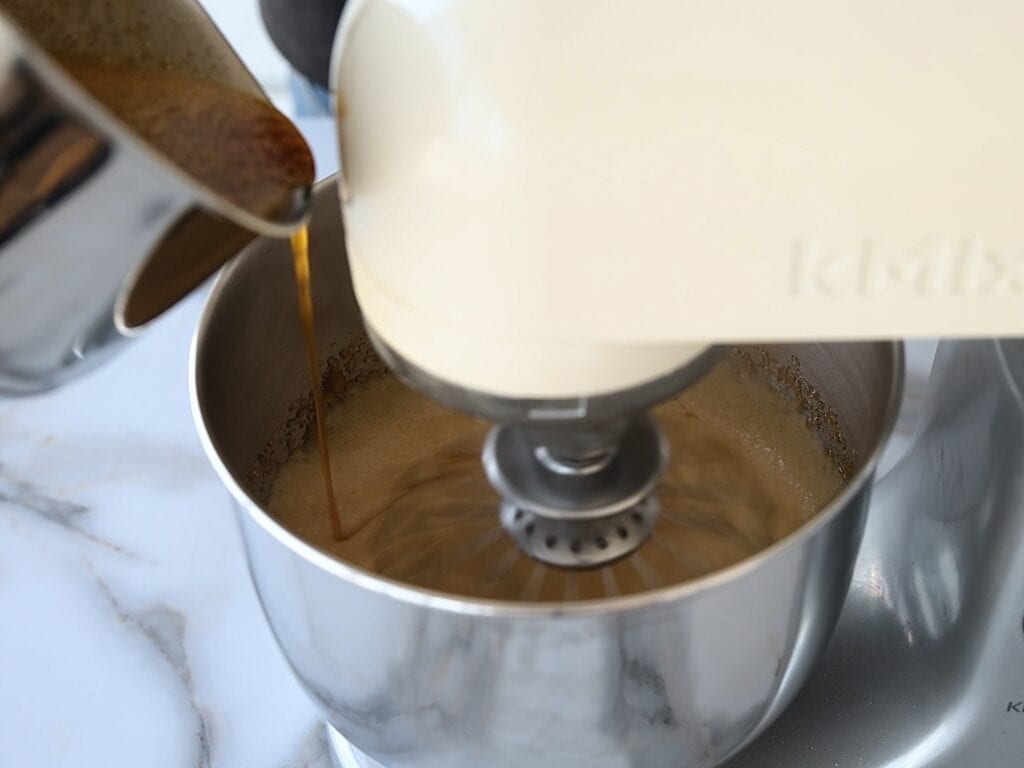
- Slowly stream in the syrup. Pour the hot honey-sugar syrup into the egg whites in a slow, steady stream while the mixer runs. This stabilizes the meringue and prevents it from deflating or scrambling.
- Keep on mixing! Continue beating the mixture until it thickens and begins to pull away from the sides of the bowl. This step determines the final texture, stop too early, and it may not set properly.
- Use edible wafer paper. It will make your life much easier!
- Prep your nuts. Always toast your nuts before folding them in. It deepens their flavor and keeps them crisp.
- Work quickly. Torrone sets fast once it cools. Have your pan lined with wafer paper or parchment ahead of time so you can press the mixture in while it’s still workable.
- Grease your hands or spatula. A light coat of oil on your hands or spatula makes spreading and leveling the sticky nougat so much easier.
- Chill before slicing. Let the torrone rest until fully set—typically a few hours or overnight. Use a sharp, slightly oiled knife for clean cuts.
- Store in a cool, dry place. Moisture is torrone’s enemy. Keep it wrapped tightly and away from humidity to maintain its fresh, chewy texture.
Soft Nougat vs. Hard Nougat: What’s the Difference?
The main difference between soft and hard torrone comes down to syrup temperature, which directly affects texture.
- Soft Torrone (Torrone Morbido) is cooked to a lower temperature—typically around 290°F–295°F (143°C–146°C). This creates a nougat that’s soft, chewy, and slightly stretchy, with a marshmallow-like bite. It’s easier to slice, more tender to eat, and is the most common style in northern Italy. This is the style used in this recipe.
- Hard Torrone (Torrone Duro) is cooked to a higher temperature, usually 295°F–310°F (146°C–155°C), reaching the hard-crack stage. The higher heat drives out more moisture, resulting in a firm, brittle candy that snaps cleanly when broken. This style is more traditional in southern Italy and Spain and requires very precise timing.
In short, lower temperature = soft and chewy, while higher temperature = firm and crunchy. Even a small change of a few degrees can noticeably shift the final texture, which is why a candy thermometer is essential when making torrone.
How to Serve
Torrone is rich, so small pieces are ideal. Slice it into petite rectangles or diamonds and arrange on a Christmas cookie tray, dessert board, or holiday platter. For gatherings, offering a few varieties, plain, chocolate-dipped, or citrus-studded, creates a fun tasting-style display.
Serve torrone with espresso, cappuccino, or a small glass of dessert wine like Vin Santo. The bitterness of coffee or the warmth of liqueur balances its honeyed sweetness. It’s also lovely alongside fresh citrus slices, especially orange or clementine.
For Christmas gifting, wrap individual pieces in parchment and place them in a decorative tin or cellophane bag tied with ribbon. Homemade torrone makes a thoughtful, old-world holiday gift, and of course, it’s just as perfect enjoyed with coffee while imagining an Italian Christmas market stroll.
How to Store Torrone
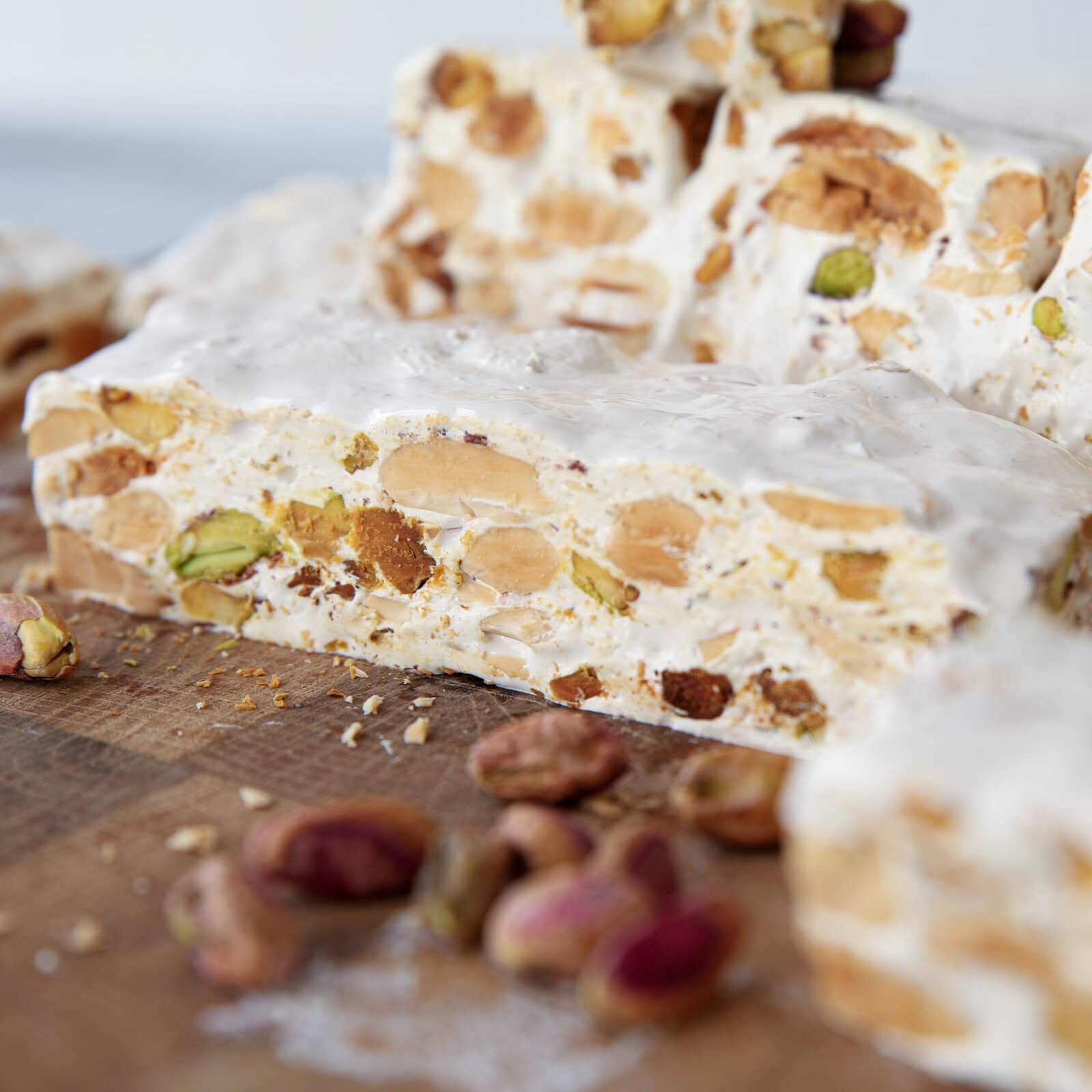
- Room Temperature: Store your homemade torrone in a cool, dry place, wrapped snugly in parchment and tucked inside an airtight container to keep out humidity and direct sunlight. Properly stored, it will stay fresh for up to 2 weeks, which makes it a fantastic make-ahead treat for shipping during the holidays.
- Freezing: If you want to keep it longer, torrone can be frozen for up to 1 month. For easier thawing, cut it into individual portions first and remove only what you need. Keep in mind that freezing may slightly change the texture, but the flavor will still be delicious.
FAQS
The syrup may not have reached the correct temperature. Use a candy thermometer or the water test to ensure accuracy.
Yes, but the nougat might stick to the pan or your hands. Line the pan with greased parchment paper to help with removal.
Torrone is traditionally made from a simple mixture of honey, sugar, whipped egg whites, and toasted nuts, usually almonds, pistachios, or hazelnuts. Some versions include vanilla, citrus zest, or edible wafer paper, but the base is always the same sweet, airy nougat.
Short answer: Not really. Sugar isn’t just for sweetness in torrone, it’s essential for forming the hot syrup that stabilizes the meringue and creates the classic chewy, glossy texture. Reducing it too much can prevent the syrup from reaching the proper temperature, resulting in a soft or unstable nougat.
You can make small adjustments, such as reducing the sugar by about 10–15% or boosting flavor with aromatic honey, citrus zest, vanilla, or orange blossom water to enhance perceived sweetness. For a truly reduced-sugar torrone, the recipe would need a full reformulation, so sticking close to the traditional ratios is best for reliable results.

Easy Homemade Torrone | Soft & Chewy Italian Nougat
Ingredients
- Cooking spray
- 1 cup (340 g) Honey
- 1¼ cups (250 g) Sugar
- 1½ cups (220 g) Almonds
- 1½ cups (180 g) Pistachios
- 2 Egg whites large
- Pinch Salt
- 2 teaspoons Vanilla extract
- Orange zest
Instructions
- Prepare the pan: Line an 8-inch (20 cm) pan with parchment paper and lightly grease with non-stick spray.
- Note: Traditionally, torrone is lined with edible wafer paper on the bottom and top to prevent sticking.
- Toast the nuts: Preheat the oven to 350°F (180°C). Spread the almonds and pistachios on a baking sheet and toast for 8–10 minutes, until lightly golden. Turn off the oven and leave the nuts inside to keep them warm.
- Make the meringue: In the bowl of a stand mixer fitted with the whisk attachment, beat the egg whites with a pinch of salt until soft peaks form. Stop the mixer and set aside.
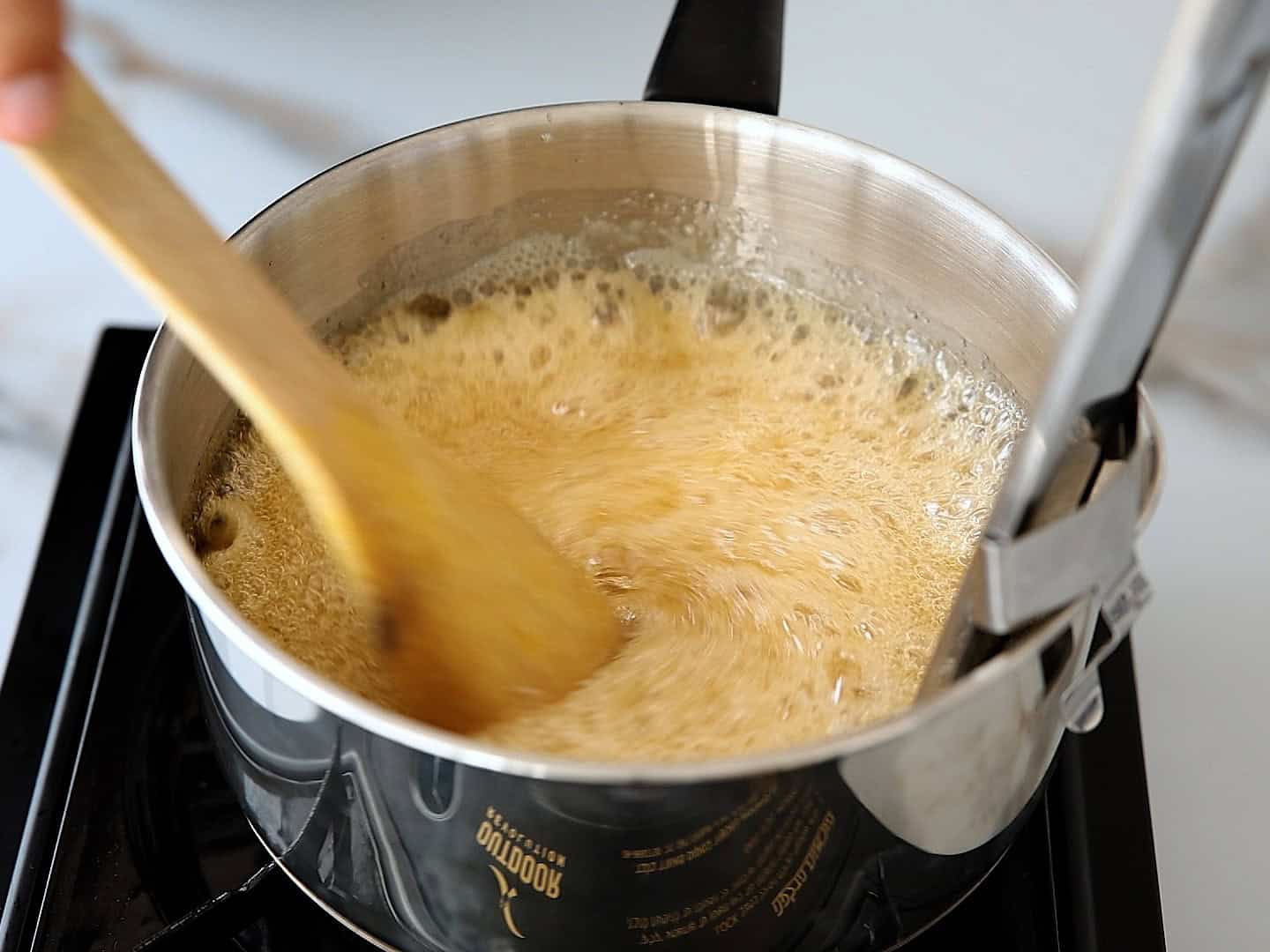
- Cook the syrup: In a medium-large saucepan, combine the sugar and honey. Cook over medium heat, stirring constantly, until the mixture reaches 280°F (138°C). Stop stirring and allow it to continue cooking undisturbed.
- Combine syrup and egg whites: When the syrup reaches 295°F (145°C), remove it from the heat. With the mixer running on low speed, slowly pour the hot syrup into the egg whites in a thin stream (avoid pouring directly onto the whisk).
- Increase speed to high and whip for 6–8 minutes, until thick, glossy, and the mixture begins pulling away from the bowl.
- Add flavor & nuts: Remove the bowl from the mixer and quickly fold in the warm almonds, pistachios, citrus zest, and vanilla.
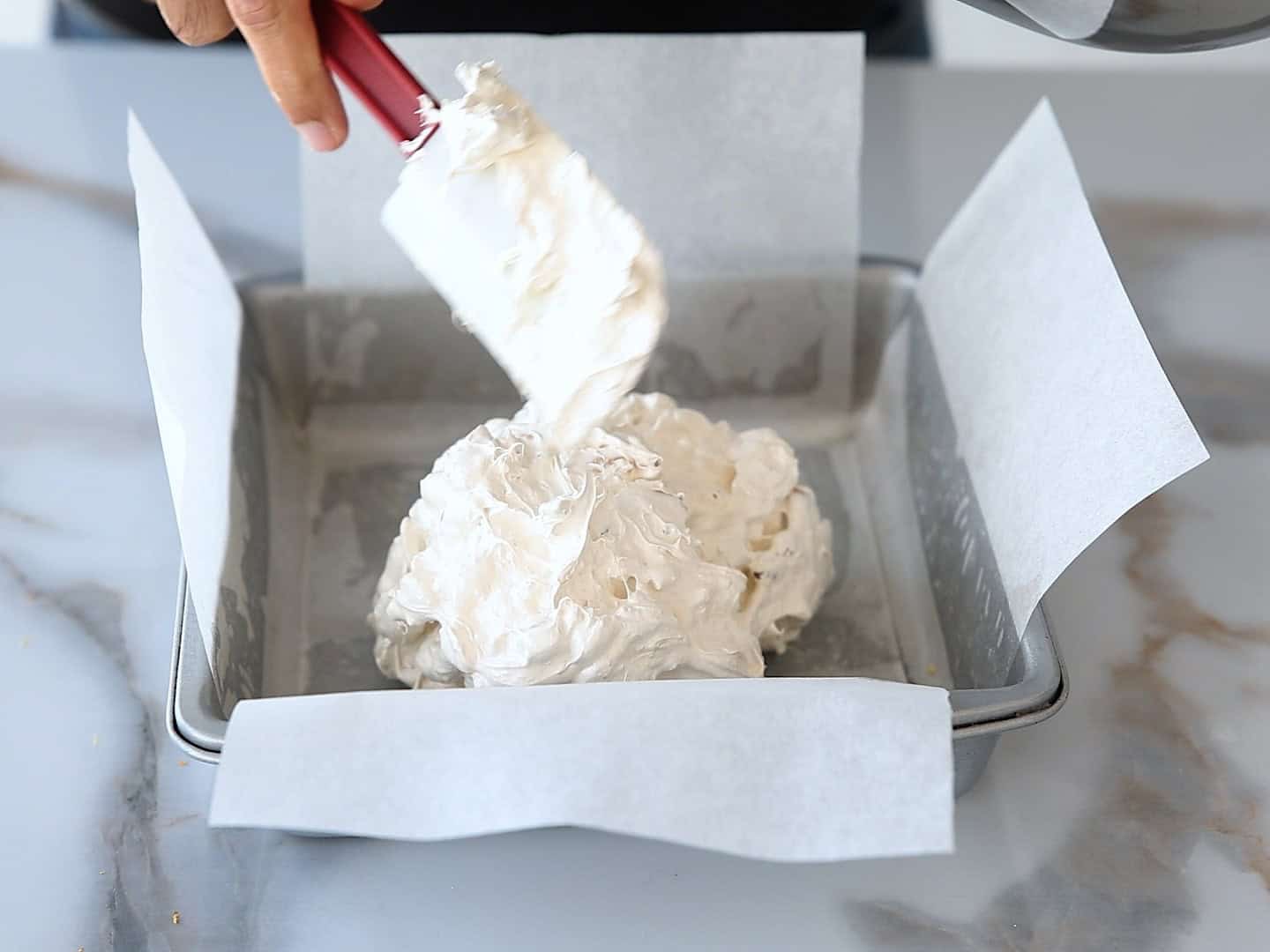
- Shape the torrone: Immediately transfer the mixture to the prepared pan. Using a lightly greased spatula, press and smooth evenly.
- Cool & slice: Let cool completely at room temperature for about 3 hours. Remove from the pan and slice into bars or squares.
Video
Notes
- Use Wafer Paper: I didn’t use it in this recipe, but I highly recommend lining the pan with edible wafer paper. It prevents sticking and makes slicing much easier.
- Warm Nuts: Cold nuts can lower the temperature of the nougat, making it much harder to mix and spread. Always keep the nuts warm.
- Clean bowl: Make sure your bowl is very clean and grease-free, otherwise you might have issues with making the meringue, remember, fat is the enemy of meringue.
- Storage: Store torrone in an airtight container at room temperature for up to 1 week. Separate layers with parchment or wafer paper to prevent sticking. Avoid refrigeration, it can make the texture too hard.
- Watch the Video: For a better understanding of the recipe, I always recommend watching the video recipe, which includes a step-by-step guide to help you succeed.
Nutrition
More FQAs
You can test the syrup’s stage by dropping a small amount into cold water. For soft nougat, it should form a firm but pliable ball. For hard nougat, it should harden and crack.
Torrone tastes sweet, nutty, and lightly honeyed, with a delicate vanilla and/or citrus aroma depending on the recipe.
Torrone and nougat are very similar, but they’re not exactly the same. Nougat is the broader category found across Europe and the Middle East. The ingredients and textures vary more widely, some nougats are very soft and marshmallowy, while others are firm or intensely nut-packed. Torrone is the Italian version of nougat, traditionally made with honey. In short: all torrone is nougat, but not all nougat is torrone, and the Italian version tends to have a more distinct honey flavor.


Thanks David for this recipe – its is perfect to give away. Hug and best regards
Solid recipe, worked beautifully, but keep in mind that you need to work quickly, as the nougat sets pretty fast.
I ordered wafer paper but please advise if it should be greased with non-stick cooking spray as you note for parchment paper? Thanks.
No need to grease the wafer paper at all. Unlike parchment, it naturally prevents sticking and peels right off once the torrone is set.