
Tender Oven Braised Beef Cubes Stew (So Easy!)
This post may contain affiliate links.
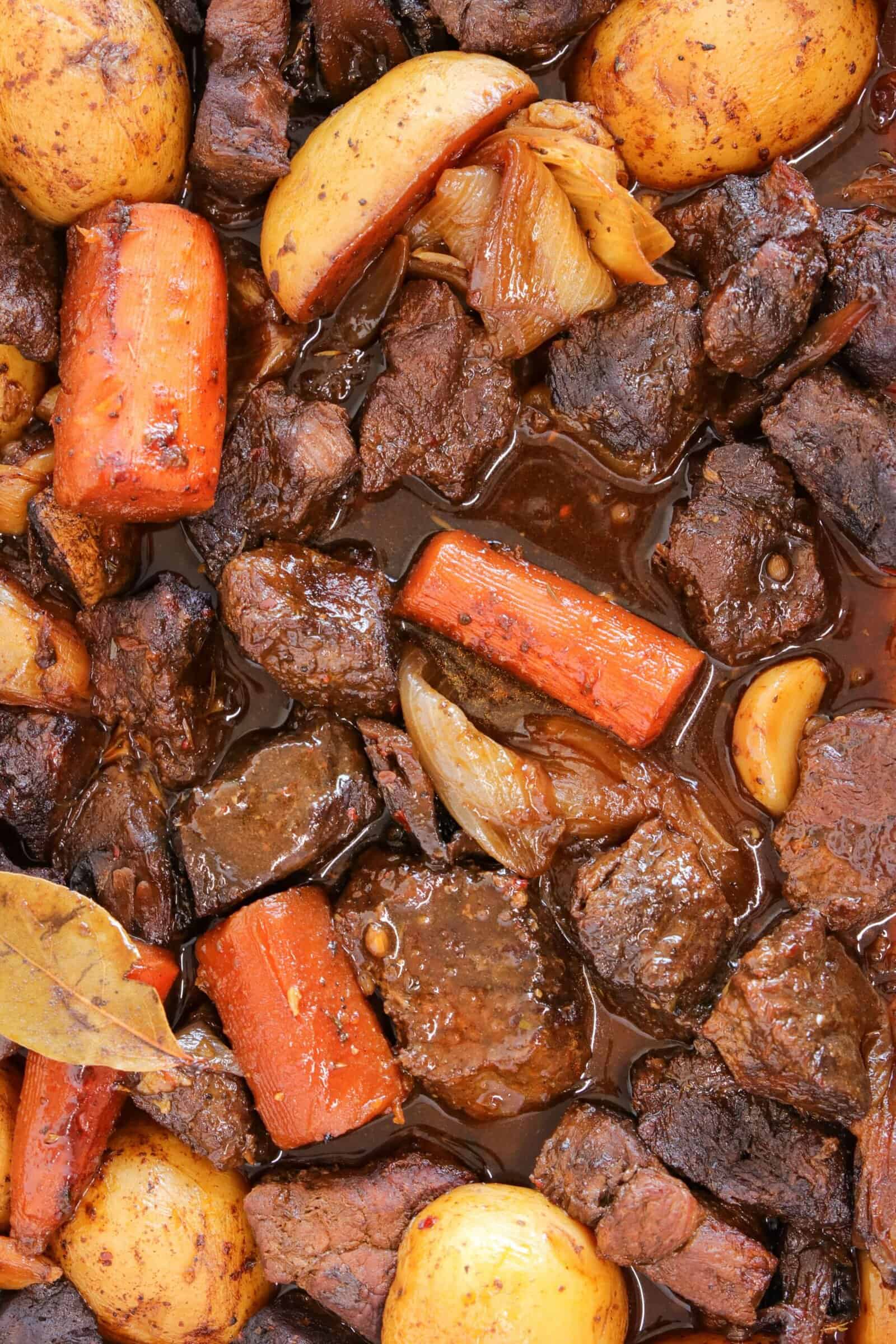
Turn a pack of beef cubes into a deliciously cozy meal with my easy Braised Oven Roasted Beef Stew recipe. Inexpensive chunks of beef chuck are browned and braised in a garlicky red wine gravy alongside umami mushrooms, starchy potatoes, sweet carrots and onions until fork tender. Rich, hearty, and comforting, perfect for cold winter nights!
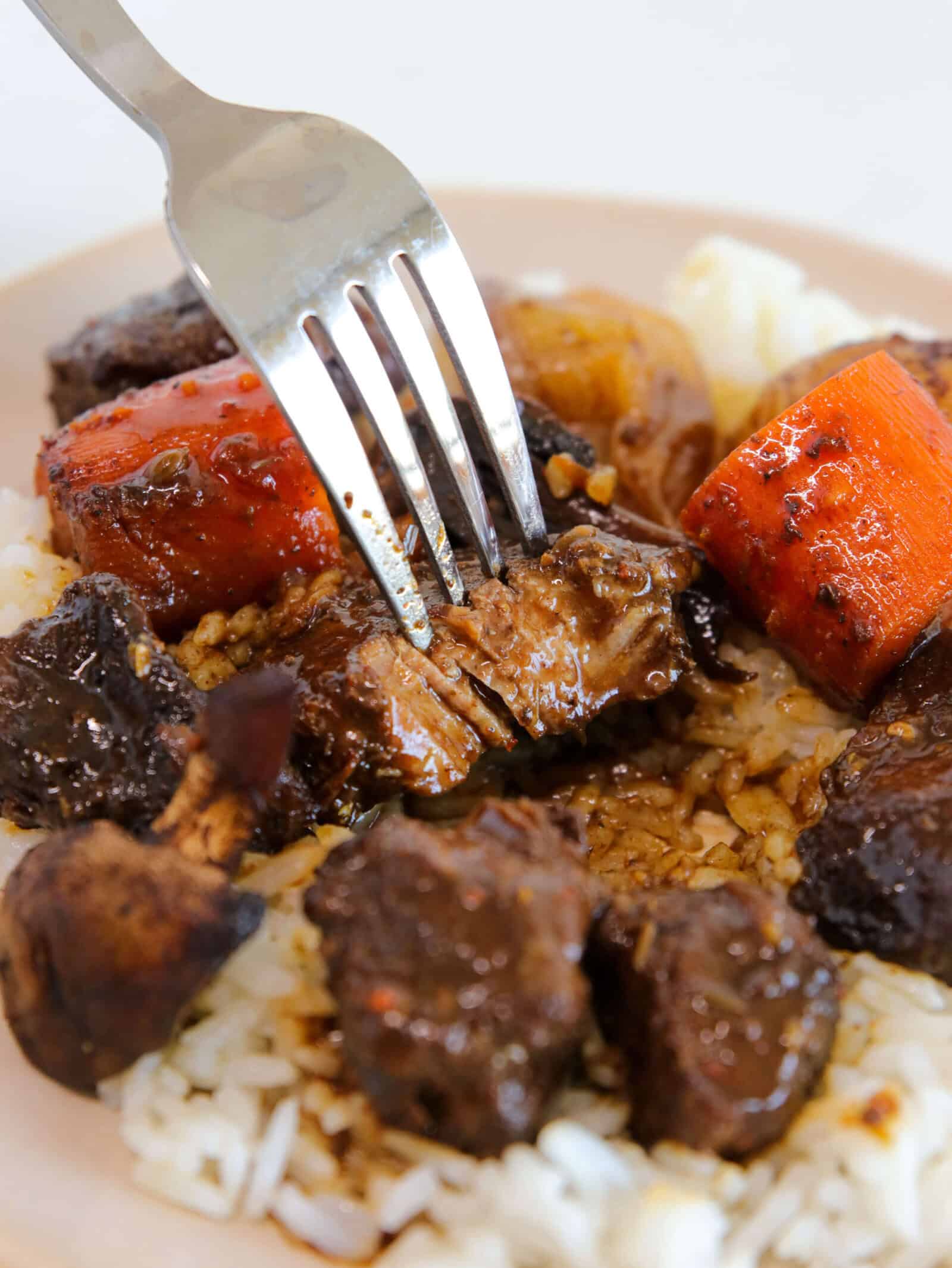
As much as I love vegetables, something about cold weather turns me into a meat-and-potatoes kind of guy. This easy roasted beef stew is just the thing to satisfy my cravings! Best of all, it takes just 15 minutes to prepare, then the oven does the rest. So, if you’ve been wondering what to do with that bag of beef cubes in the freezer, this braised beef recipe is your answer.
Ingredients & Substitutions
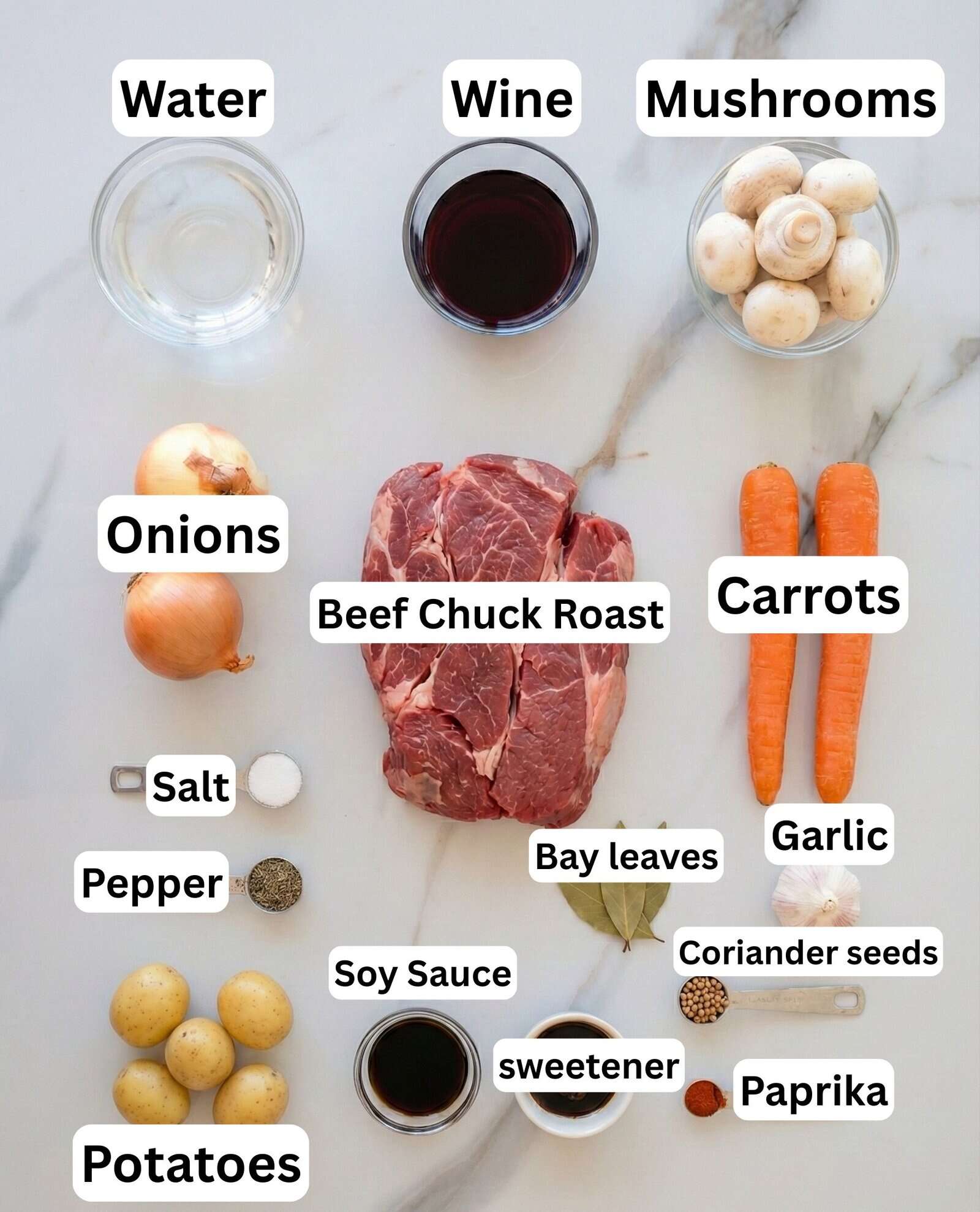
- Beef Chuck Roast – Beef chuck roast is my go-to for stew because it’s well-marbled, richly flavored, and perfectly suited to long, slow cooking. As it braises, the connective tissue melts down into a silky, hearty sauce that makes every bite incredibly tender.
- Onions – Any color will work, but note that red and yellow onions will become more sweet and tender than white. You can also use shallots if preferred.
- Carrots – You can either buy large carrots to cut into rough chunks, or save yourself some prep work by getting baby carrots.
- Baby Potatoes – Even though I typically like to serve this braised beef stew over mashies, adding a few potatoes to the braising mix helps the sauce thicken perfectly.
- Mushrooms – White button mushrooms or baby bella mushrooms are the most easily accessible, but you’re welcome to experiment with other varieties if you like.
- Garlic Cloves – As they braise, whole cloves become soft, tender, and sweet, sort of like garlic confit!
- Red Wine – Dry red wine adds wonderful depth to the sauce. Don’t feel like you have to break the bank, though! Boxed wine or an inexpensive bottle will do the trick.
- Soy Sauce – For a touch of umami. If needed, swap in tamari, coconut aminos, Bragg’s liquid aminos, or worcestershire sauce.
- Date Syrup/Honey/Maple – A little bit of sweetness helps to balance out the sauce.
- Coriander Seeds – For adding citrusy brightness.
- Paprika – For a hint of warmth. Feel free to experiment with hot paprika if you like a little kick, or smoked paprika for smoky depth.
- Dried Thyme – If you’re using fresh thyme, use 3x as much.
- Bay Leaves – Just a couple of leaves adds a certain je ne sais quois to the braising liquid. If you don’t have them, you can omit them.
What is the best cut of beef for beef stew?
When it comes to stew, I think beef chuck roast is hands-down the best cut to use. It comes from the shoulder, a hardworking part of the animal that naturally contains plenty of connective tissue and intramuscular fat (a.k.a. marbling). While that might make chuck too tough for quick-cooking methods, it’s exactly what makes it shine in a slow-simmered stew.
As chuck cooks low and slow, the collagen gradually breaks down, turning into gelatin that gives the stew its signature rich body and ultra-tender texture. The result? Melt-in-your-mouth beef cubes and a broth that tastes like it simmered all day.
If you can’t find chuck roast (or just want to try something new), these cuts also make excellent stews:
- Beef Bottom Round (Rump Roast): Leaner than chuck but still great for slow cooking. It won’t get quite as velvety, but it holds its shape nicely and soaks up flavor well.
- Short Ribs: Exceptionally rich and meaty. As they braise, they release tons of gelatin, giving your stew deep, luxurious body.
- Oxtail: A classic for long braises since it’s loaded with connective tissue that creates an ultra-rich, almost glossy broth. It takes longer to cook than other cuts, but rewards you with unbelievable flavor.
Beef Shank: Tough and lean, but full of collagen. Great when you want a stew with lots of depth and a slightly rustic texture. - Brisket: Another collagen-rich cut that becomes incredibly tender when stewed. It lends a subtly sweet, beefy flavor that’s hard to beat.
But while all of these cuts shine as slow-roasted beef chunks, I think chuck roast remains the most dependable combination of flavor, tenderness, and value.
How to Make Roasted Beef Stew (Baked in the Oven!)
Watch the full video recipe to learn how to make the BEST Braised Beef Stew.
Prefer the written recipe? Scroll down to the recipe box for the full written recipe! 👇
Optional Variations & Dietary Adaptations
- Gluten-Free: This recipe is naturally gluten-free as long as you use gluten-free soy sauce alternatives like tamari or coconut aminos.
- Wine-Free Version: Use extra beef broth with a splash of balsamic vinegar or red wine vinegar for acidity.
- Lower-Carb: Skip the potatoes and add celery root, rutabaga, or extra mushrooms instead. Serve over cauliflower mash.
- Lower-Sodium: Use low-sodium beef broth and soy sauce, and season lightly, you can always adjust at the end.
- Whole30/Paleo: Replace soy sauce with coconut aminos and choose date syrup or omit sweeteners entirely. Use broth instead of wine, and skip any non-compliant sides.
Expert Tips & Tricks
- Sear in batches. Don’t crowd the pot when browning the beef. Giving each piece space ensures a deep, flavorful crust instead of steaming. This browning step is where a lot of the stew’s richness develops.
- Pat the beef chunks dry. Moisture prevents caramelization. Blot the beef cubes with a paper towel before searing to help them brown beautifully.
- Use the fond. After searing, scrape up all the browned bits on the bottom of the pot when you add the wine or broth. That’s pure flavor gold!
- Layer your seasoning. Lightly season the beef before browning, then taste and adjust at the end. Long braises can mellow salt and spices.
- Don’t rush the braise. Beef chuck needs low, slow heat to transform from tough to tender. Keep the pot at a gentle simmer, not a boil, to avoid toughening the meat.
- Keep veg sizes consistent. Cut your vegetables into similar-sized pieces so they cook evenly and maintain their texture.
- Add mushrooms later (optional). If you prefer firmer mushrooms, stir them in during the last hour of cooking rather than braising them from the start.
- Don’t forget to rest the stew for 10-15 minutes off the heat before serving. This helps the flavors settle and gives the broth time to thicken slightly. If you can hold off, it tastes even better the next day!
How to Serve Braised Beef
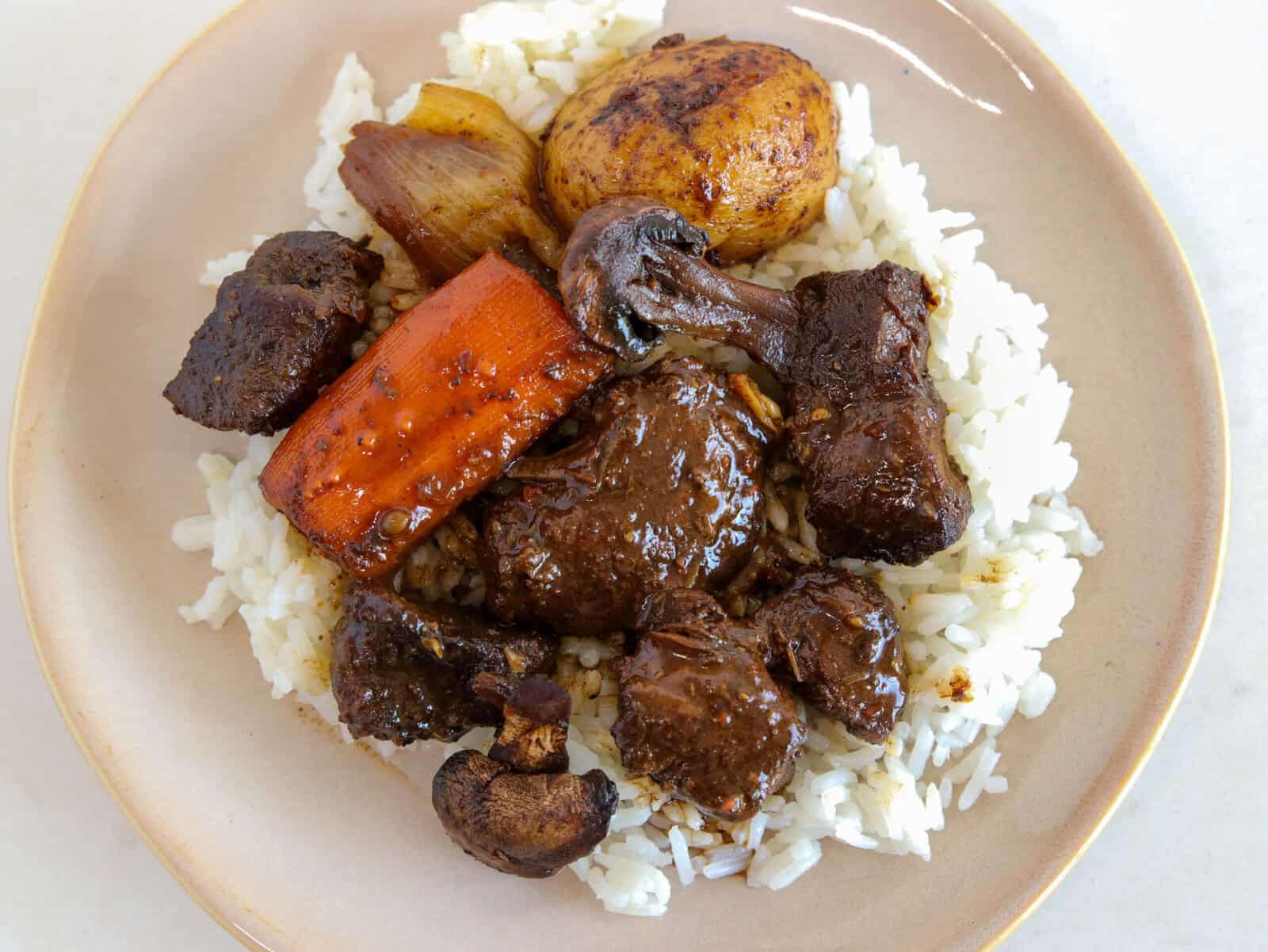
My favorite way to serve this roasted beef stew is ladled generously over a bowl of buttery mashed potatoes. The rich sauce seeps into every swirl of mash, giving you a perfect bite of tender beef, velvety gravy, and fluffy potatoes. Other good options include mashed cauliflower, whipped parsnips, or soft polenta. You can also go for rice or buttered noodles if you like!
Crusty bread is another must-have pairing. A warm baguette, savory parmesan garlic dinner rolls, or even a simple cornbread gives you the perfect tool for swooping through the bowl to catch every last bit of sauce.
For some freshness and contrast, add more veggies. Peppery arugula, mixed greens, or romaine tossed with lemon vinaigrette helps cut through the richness and balance the savory flavors of the beef stew. Roasted vegetables like broccoli, Brussels sprouts, or carrots are also great options if you’d like to keep things hearty while still adding more color to the plate.
How to Store & Reheat Braised Beef Cubes
- Refrigerator: Store cooled beef stew in an airtight container for up to 4-5 days. The flavors deepen as it sits, making it even better the next day.
- Freezer: Freeze in airtight containers or freezer bags for up to 3 months. Leave a little headspace for expansion. For easy meal prep, portion the stew into individual servings. Thaw overnight in the refrigerator. Avoid microwaving straight from frozen, slow thawing helps preserve texture.
- Stove: Warm the stew over medium-low heat, stirring occasionally, until heated through. Add a splash of broth or water if the sauce has thickened in the fridge.
- Microwave: Heat in a microwave-safe bowl in 1-minute intervals, stirring between each, until hot. Cover loosely to prevent splatters.
- Reheating from Frozen: If you’re pressed for time, you can gently reheat from frozen on the stove over low heat, covered, adding broth as needed. It will take longer but works well.
- Texture Tip: Stew thickens as it chills. If it’s too thick when reheated, loosen it with broth or water. If you want it thicker, simmer a little longer uncovered.
More Comforting Recipes
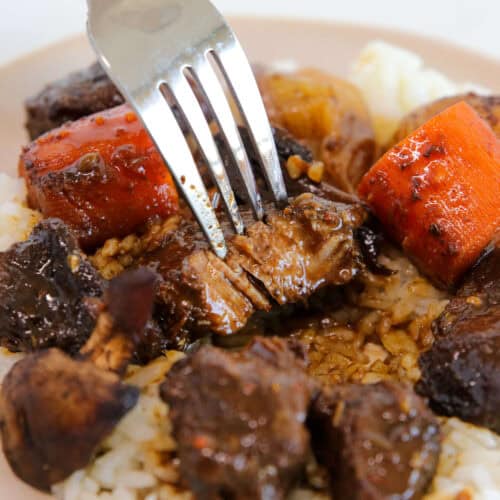
Tender Oven Braised Beef Cubes Stew (So Easy!)
Equipment
Ingredients
- 3 pounds (1.3 kg) Beef chuck roast or other cut (read recipe notes)
- Salt
- Black pepper
- 2 Onions cut into quarters
- 2-3 Carrots cut into nig chunks
- 4-5 Baby potatoes cut in half
- 7 oz (200 g) Mushrooms cut in half or quarters
- 5-8 garlic cloves
For the sauce:
- 1 cup (240 ml) Water
- 1 cup (240 ml) Red Wine
- ¼ cup (60 ml) Soy sauce
- 1 tablespoon Date syrup or honey/maple
- Salt to taste
- Black pepper to taste
- 1-2 teaspoon Coriander seeds
- 1-2 teaspoons Paprika
- 1 teaspoon Thyme
- 2-3 Bay leaves
Instructions
- Prep: Preheat oven to 400°F (200°C).
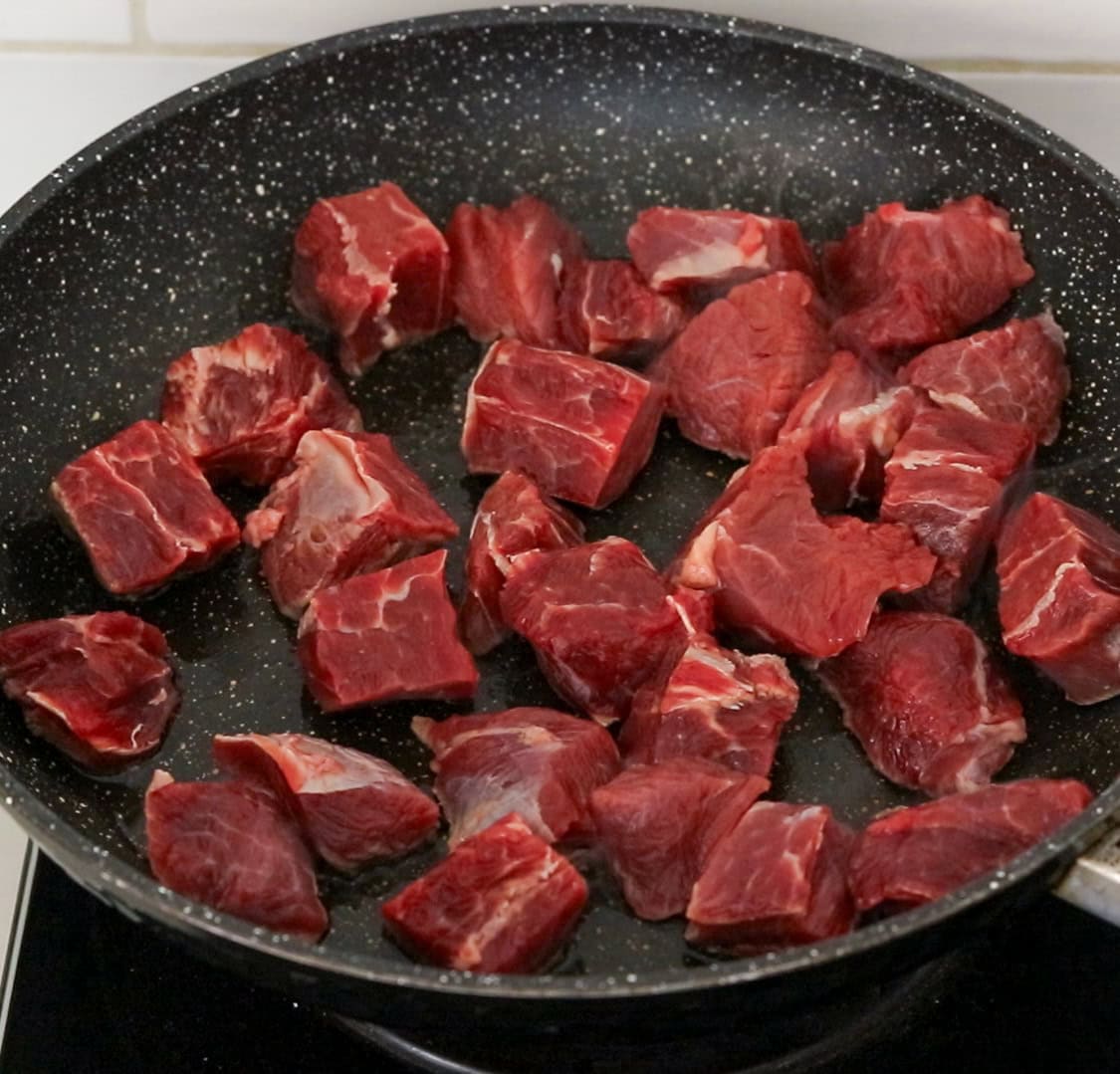
- Sear: Cut beef into bite-size cubes. Heat 1 tablespoon oil in a large skillet over high heat. Brown the beef on all sides for 6–10 minutes. Season with salt and pepper while searing. Transfer beef to a large baking dish.
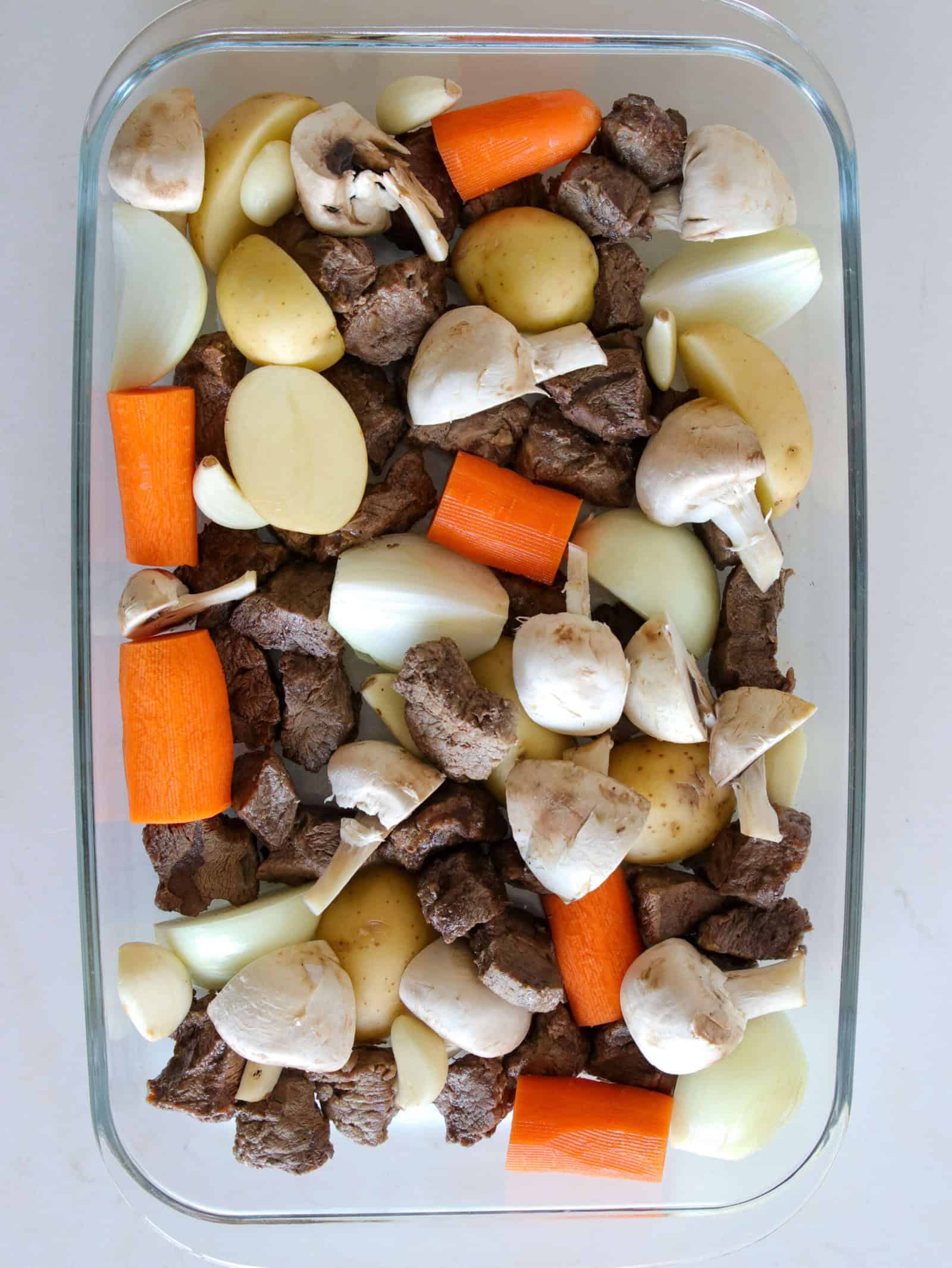
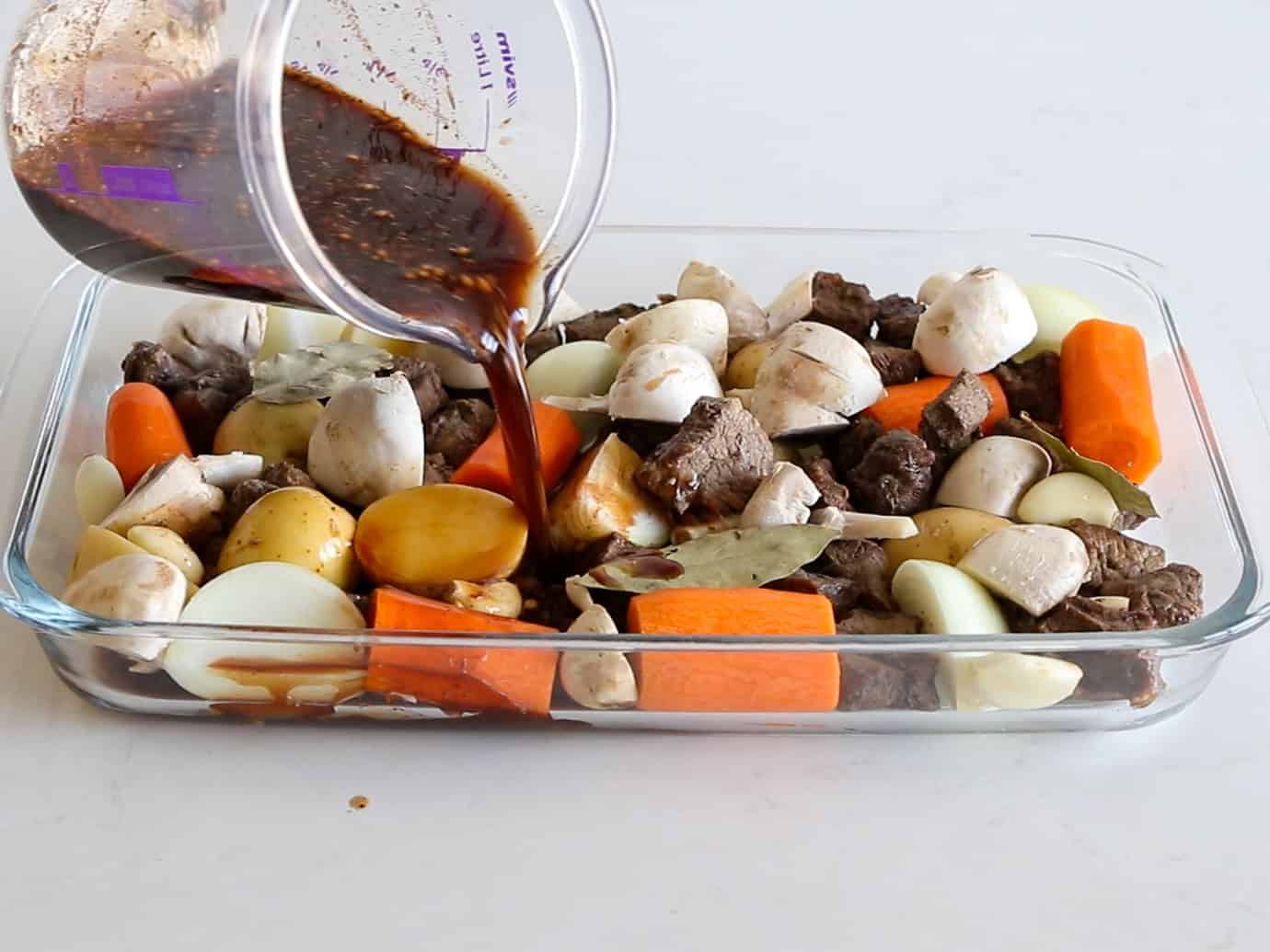
- Add onions, carrots, potatoes, mushrooms, garlic, and bay leaves to the baking dish.
- Make the sauce: Whisk together water, wine, soy sauce, date syrup (or honey/maple), salt, pepper, coriander seeds, paprika, and thyme.
- Pour sauce over the beef and vegetables. Stir gently to combine. Cover tightly with aluminum foil.
- Bake: Bake 30 minutes at 400°F (200°C), then reduce to 350°F (180°C) and continue baking 3–4 hours, until beef and vegetables are very tender.
- Every hour, carefully uncover and stir.
- During the last 20-30 minutes, uncover completely to deepen flavor and thicken the sauce.
- Serve hot with rice or mashed potatoes.
Video
Notes
- Best Beef Cuts: Chuck roast, blade roast, shoulder, beef neck. Avoid lean cuts (they dry out during long baking).
- Vegetable Swaps: Add or swap with parsnips, sweet potatoes, pearl onions, celery, pumpkin. Mushrooms can be omitted if needed.
- Wine Substitutes:
- Beef stock + splash of balsamic vinegar
- Grape juice + a little vinegar
- More water + extra spices (flavor will be milder)
- Sweetener Options: Date syrup, honey, maple syrup, brown sugar (all work well).
- Flavor Boosters (Optional):
- 1–2 tablespoons tomato paste in the sauce
- A splash of Worcestershire sauce
- Fresh rosemary instead of thyme
- Make-Ahead & Storage:
- Make ahead: Tastes even better the next day
- Refrigerator: Up to 4 days in an airtight container
- Freezer: Up to 2 months (cool completely before freezing).
- Texture Tip: If the sauce is too thin at the end: uncover and bake 10–15 extra minutes. If too thick: add a splash of water or stock and stir.
Nutrition
FAQs
First, brown the beef cubes on all sides to develop flavor, then add aromatics like onions and garlic. Pour in liquid, such as broth, wine, or a mix of both—so it comes about halfway up the meat. Bring it to a simmer, cover the pot, and cook low and slow (either on the stove or in the oven) until the beef becomes fork-tender.
Both use the braising method, searing meat, then cooking it low and slow in liquid, but stew typically includes bite-sized beef chunks cooked together with vegetables in a brothier sauce. Braised beef usually refers to larger cuts (like whole roasts) cooked in a smaller amount of liquid, resulting in a thicker, richer sauce.
Boeuf bourguignon is a type of beef stew, but it’s not the same as a standard American-style beef stew. It’s a classic French dish made with red wine (traditionally Burgundy), bacon, mushrooms, onions, and aromatics. So, while all boeuf bourguignon is beef stew, not all beef stews are boeuf bourguignon.
Common mistakes when braising beef include not browning the meat properly, which means missing out on that deep, caramelized flavor that makes the stew so rich. Crowding the pan is another big one. If the beef steams instead of sears, it won’t develop a good crust. Some cooks also simmer the liquid too aggressively; braising should be low and slow so the chuck roast becomes tender without drying out. Finally, adding too much liquid can dilute the sauce. Your beef only needs to be partially submerged, since it will release juices as it cooks.



I tried this recipe a few days ago.
So tender and delicious!
Thank you for this easy recipe.
Excellent recipe! Delicious and easy to modify for the ingredients you have on hand. Works for me because I can put it in the oven before I go run errands and pick up kids and it’s ready when I get home.