
Authentic Portokalopita Recipe (Greek Orange Cake)
This post may contain affiliate links.
This authentic Portokalopita recipe is incredibly moist, syrupy, and bursting with fresh orange flavor. Unlike a regular cake, this traditional Greek orange cake is made with dried phyllo, Greek yogurt, and fresh oranges. After baking, it’s soaked in a fragrant orange and cinnamon syrup, creating a soft, syrupy center with a beautifully golden top.
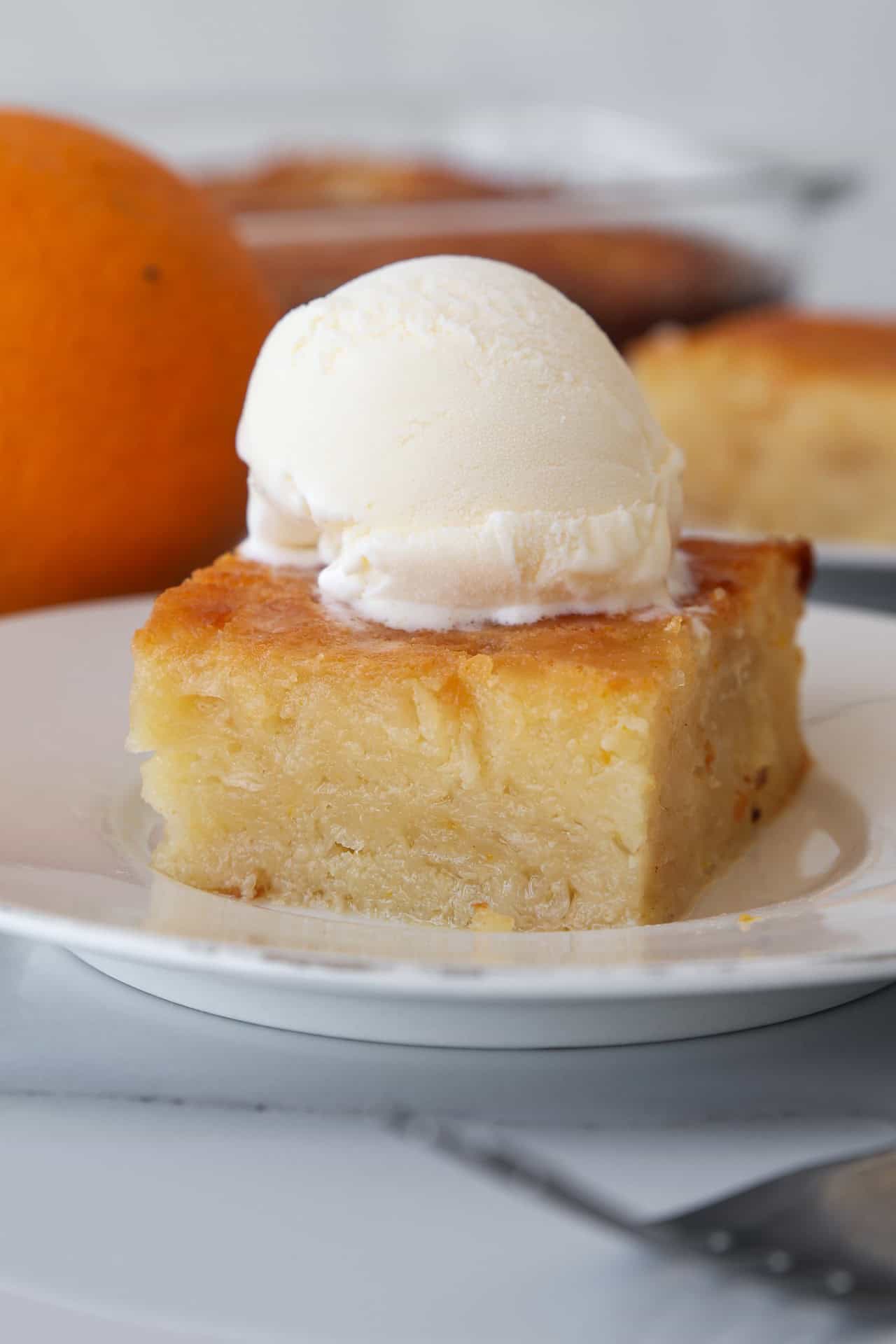
I learned how to make authentic Portokalopita from a Greek chef during a cooking class in Athens. It was one of those recipes that immediately caught my attention. Using dried phyllo instead of flour to make a cake seemed so unusual!
This recipe is also Episode 3 of David Cooks the World, my series where I travel to different countries and learn traditional recipes from local chefs. Then, I come home and recreate what I learned in my own kitchen.
If you’ve been following the series, you may have already tried my authentic Greek salad from Episode 1 or Greek tzatziki from Episode 2. Now it’s finally time for something sweet!
Why You’ll Love This Portokalopita
- Learned in Greece: This recipe is based on the techniques I learned from a Greek chef in Athens.
- Packed with orange flavor: Fresh orange juice and zest flavor both the cake and syrup.
- Amazing texture: It’s golden and slightly crisp on top, but moist and syrupy inside.
- Easy to make: The technique is unusual, but the actual process is surprisingly simple.
- Great for making ahead: Portokalopita gets even better after the syrup has time to soak into the cake.
What Is Portokalopita?
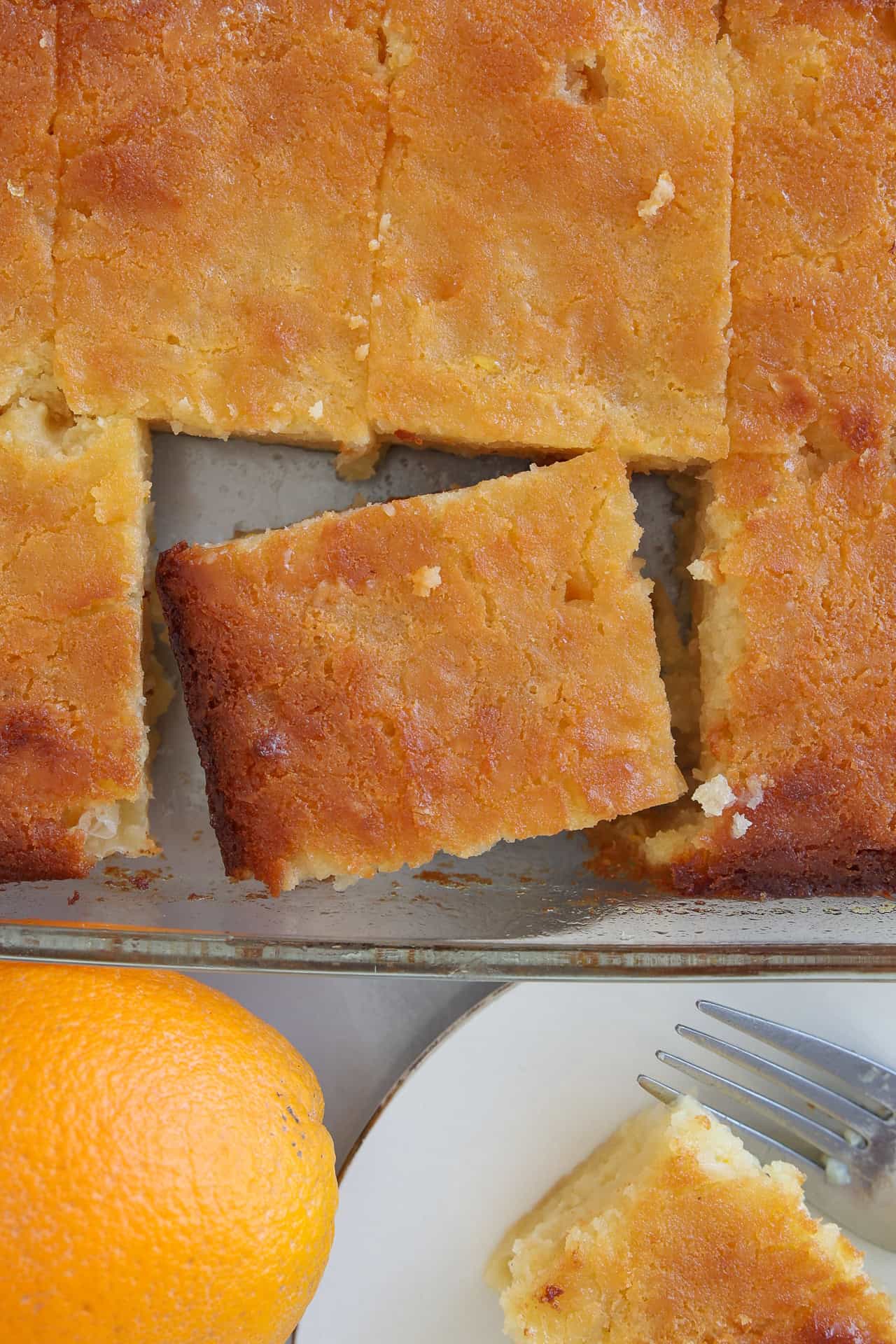
Portokalopita (πορτοκαλόπιτα) is a traditional Greek orange cake made with phyllo pastry. Its name comes from the Greek words for orange (portokali) and pie (pita).
However, this isn’t a typical phyllo dessert like Baklava or baklava rolls (Saragli). Instead of layering the phyllo, you dry it until crisp. Then, you crumble it and fold it directly into the cake batter.
The batter usually contains Greek yogurt, eggs, sugar, oil, and plenty of fresh orange. Once baked, the hot cake is soaked in a fragrant orange and cinnamon syrup
The result is a wonderfully moist and fragrant cake with a texture that’s completely different from a traditional orange cake. The phyllo absorbs the orange syrup while still giving the cake structure and a slightly crisp top.
Portokalopita Ingredients
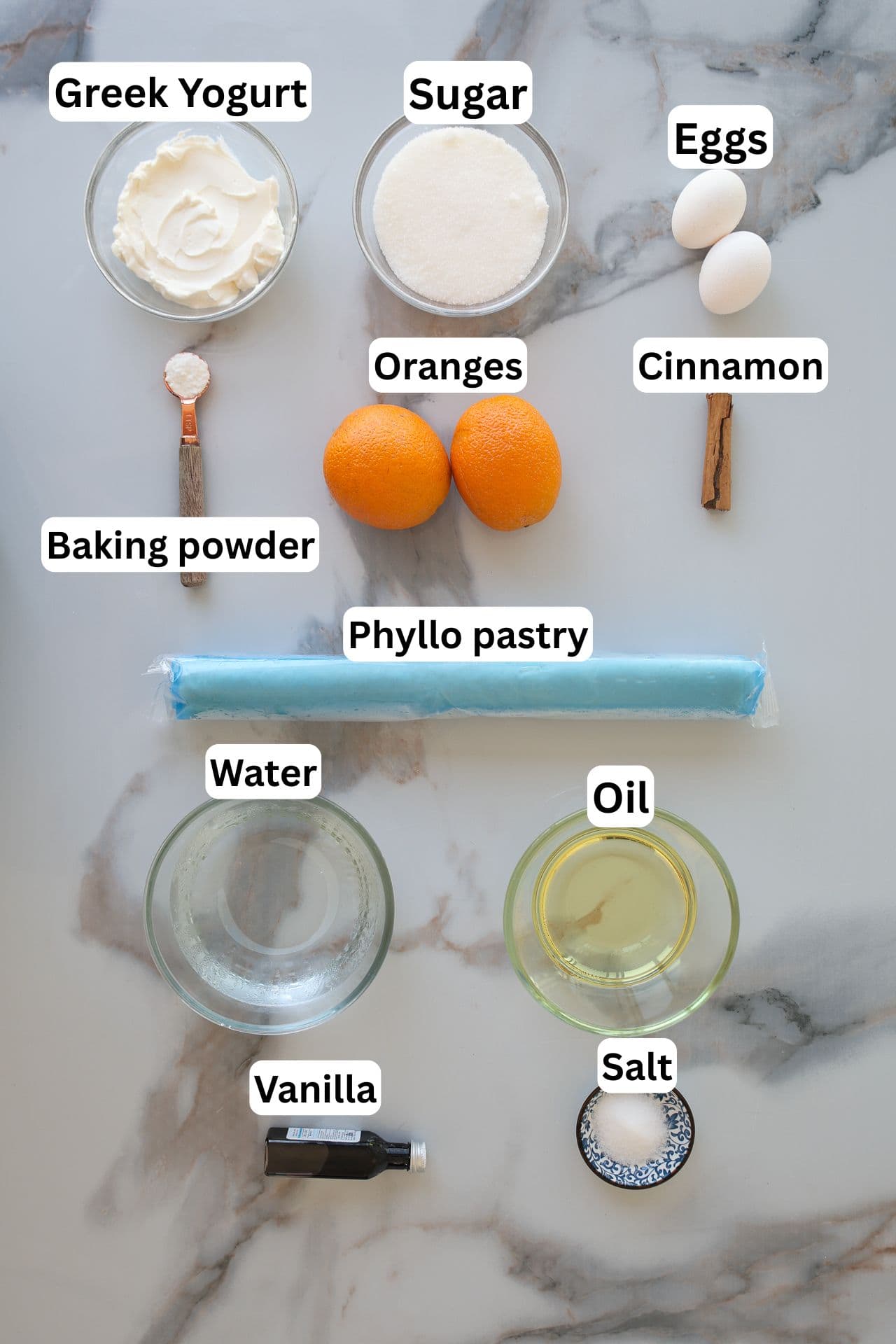
- Phyllo pastry: This replaces the flour found in a traditional cake. It must be completely dried before adding it to the batter.
- Oranges: Use fresh oranges for both the juice and zest. Since orange is the main flavor, fresh juice makes a big difference.
- Greek yogurt: Use full-fat Greek yogurt for the best texture and flavor. In Greece, I learned that 10% fat Greek yogurt is preferred for Portokalopita. It makes the cake richer and helps create that soft, moist texture.
- Eggs: Help bind the batter and give the cake structure.
- Sugar: You’ll need sugar for both the cake and orange syrup.
- Sunflower oil: Keeps the cake moist without adding a strong flavor. Another neutral-flavored oil also works.
- Vanilla extract: Adds another layer of flavor without overpowering the orange.
- Baking powder: Gives the cake a little lift as it bakes.
- Cinnamon: I add a cinnamon stick to the syrup. It gives the orange syrup a warm, subtle spice.
- Salt: Just a pinch helps balance the sweetness.
This is only a quick overview. For exact quantities, scroll down to the recipe card below. 👇
How to Make Portokalopita
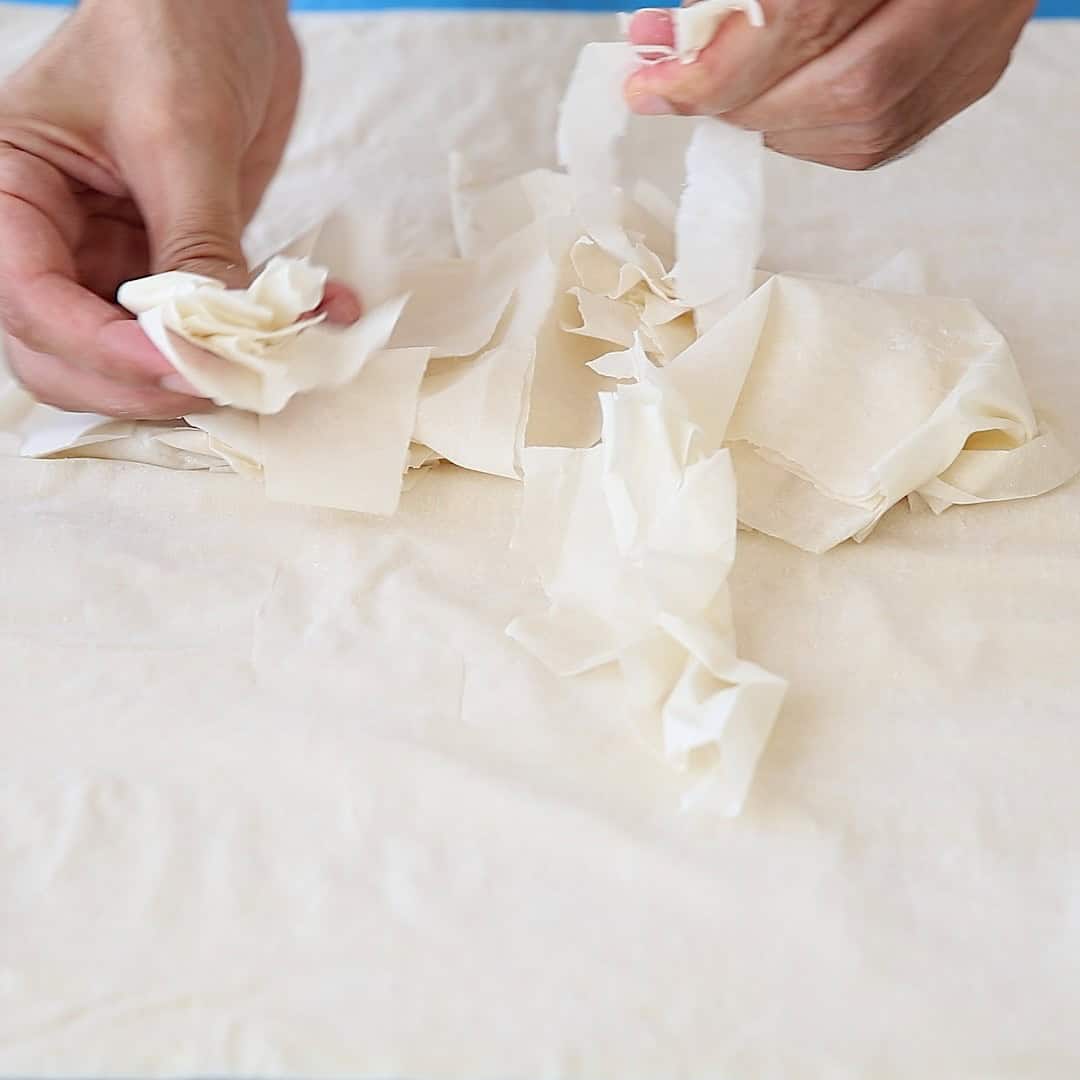
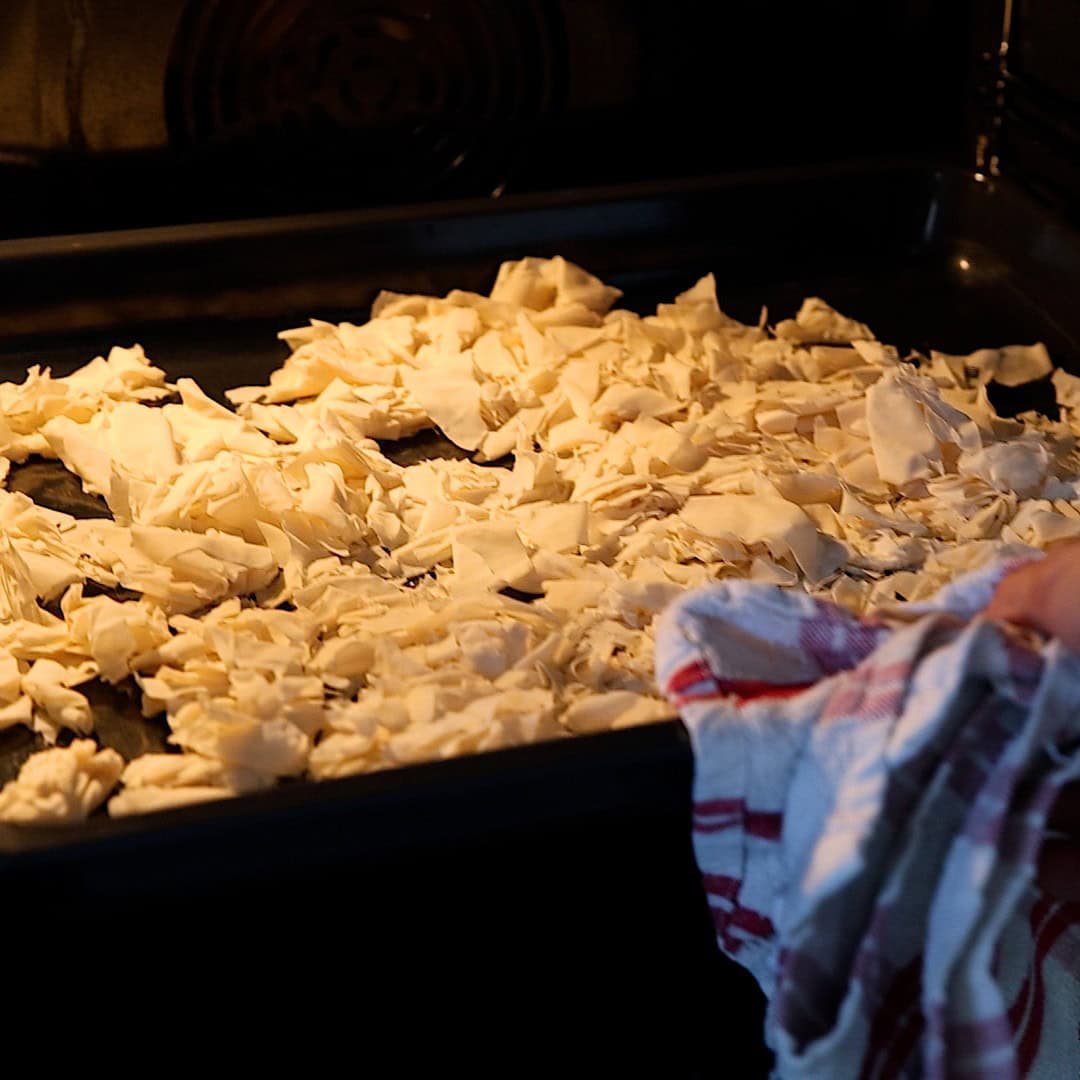
1. Dry the phyllo: Tear the phyllo sheets into rough pieces. Spread them over a large baking sheet. Bake at 300°F (150°C) for 10–15 minutes, tossing occasionally. The phyllo should become completely dry and crisp, but it shouldn’t brown. Let it cool slightly, then crumble it into smaller pieces.
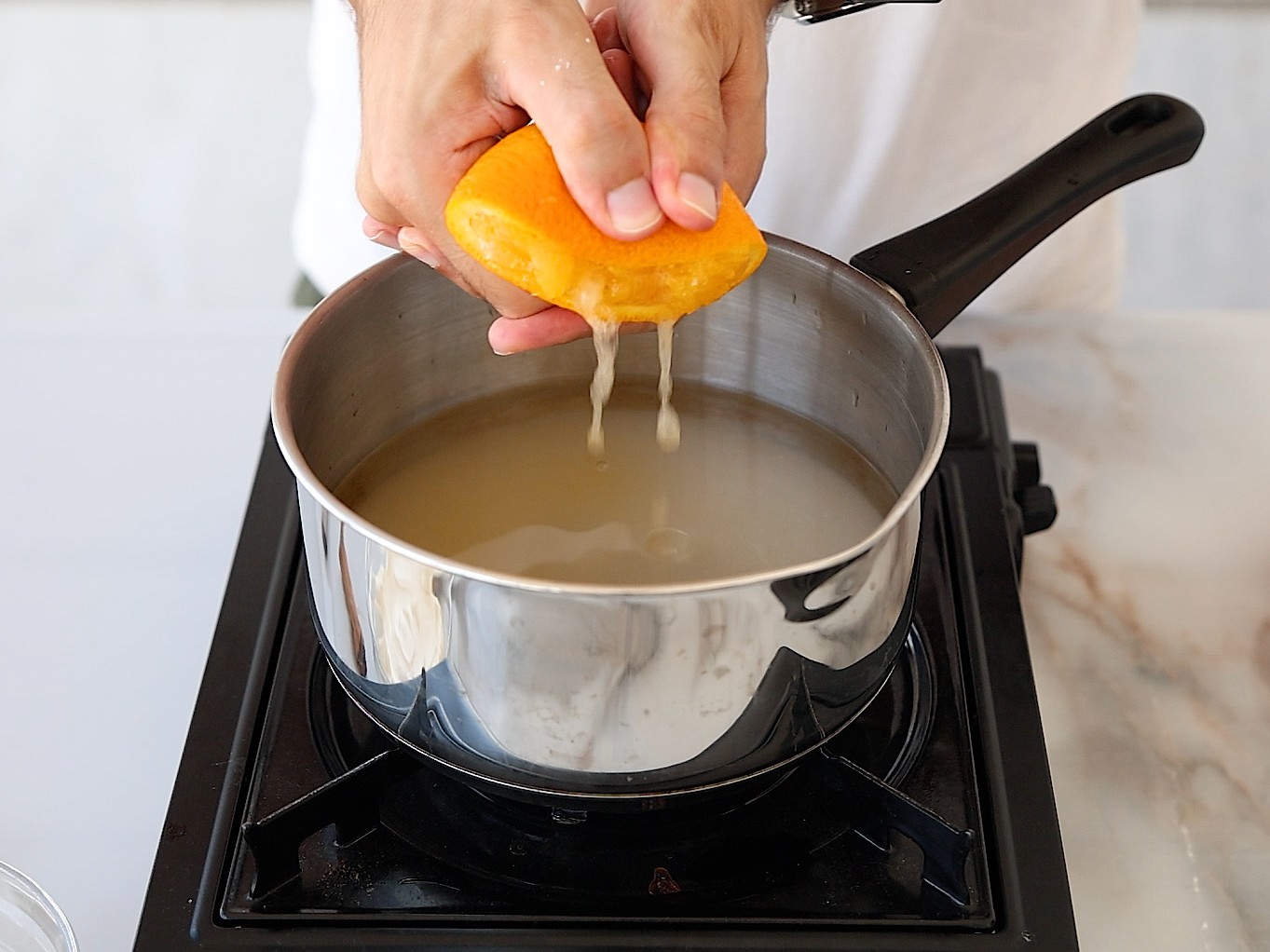
2. Make the orange syrup: Combine sugar, water, orange juice, and cinnamon in a saucepan. Bring to a boil, then simmer for 4–5 minutes. Remove from the heat and cool completely.
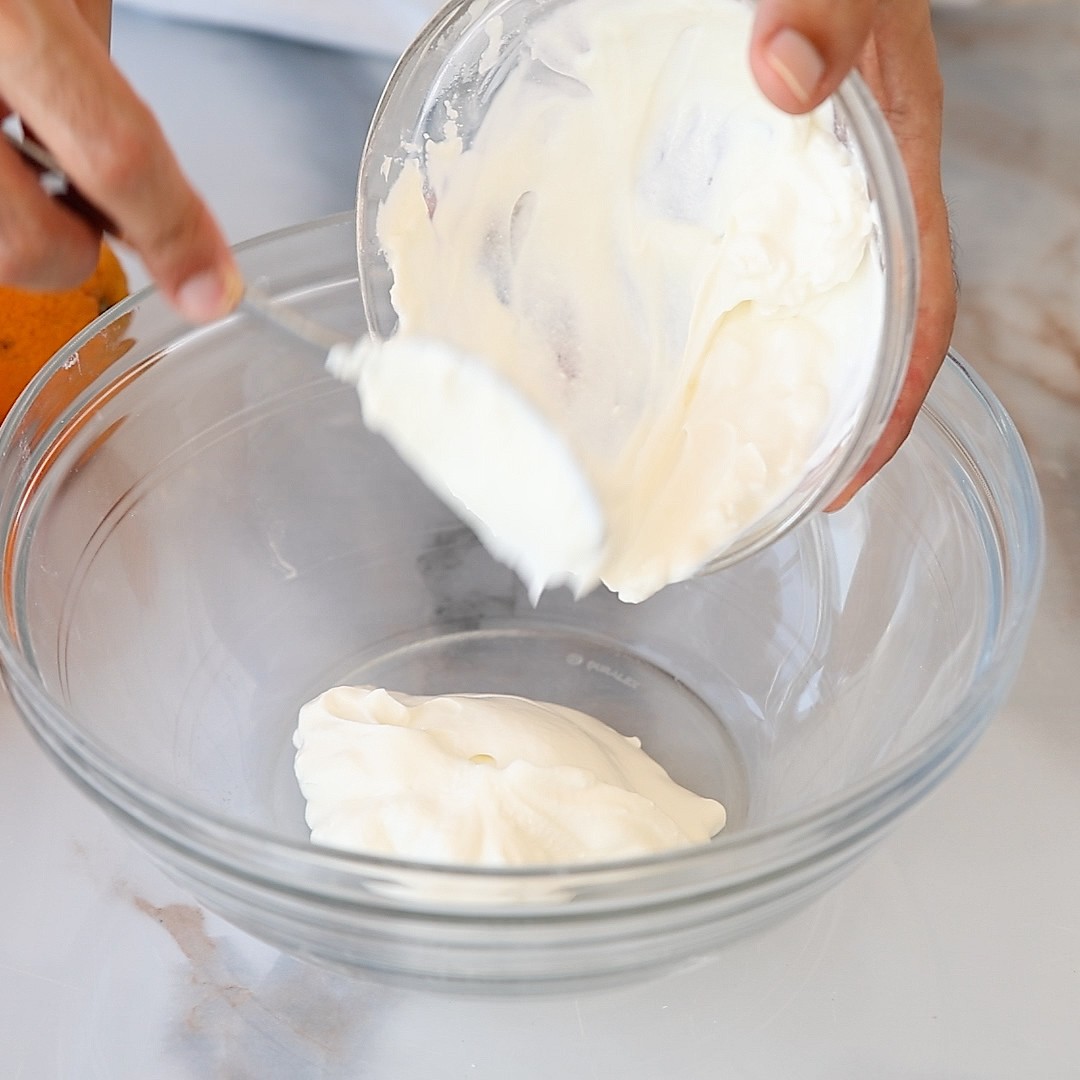
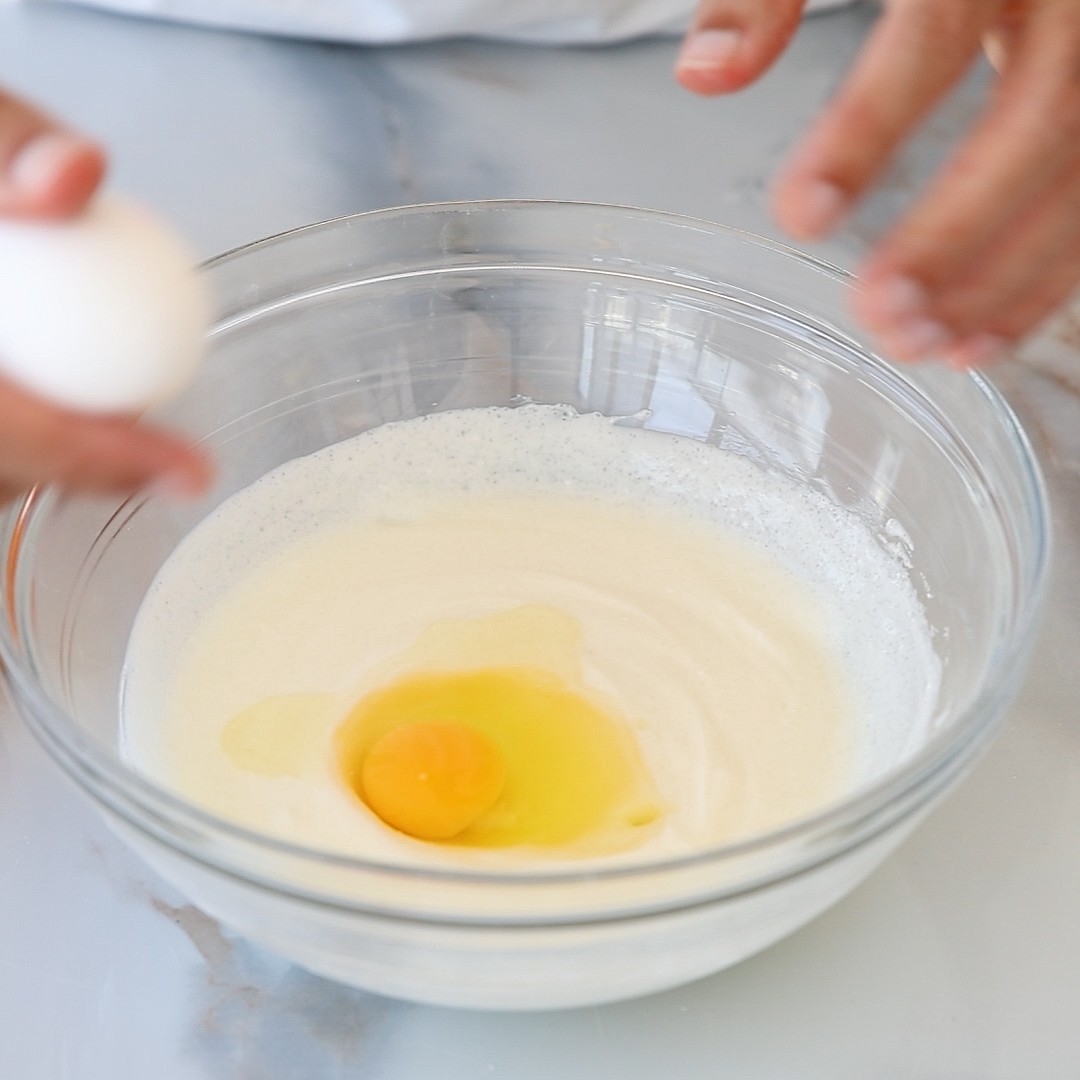
3. Make the batter: Whisk the Greek yogurt and sugar until smooth. Add the eggs, orange zest, orange juice, vanilla, baking powder, and salt. Finally, add the sunflower oil and whisk until smooth.
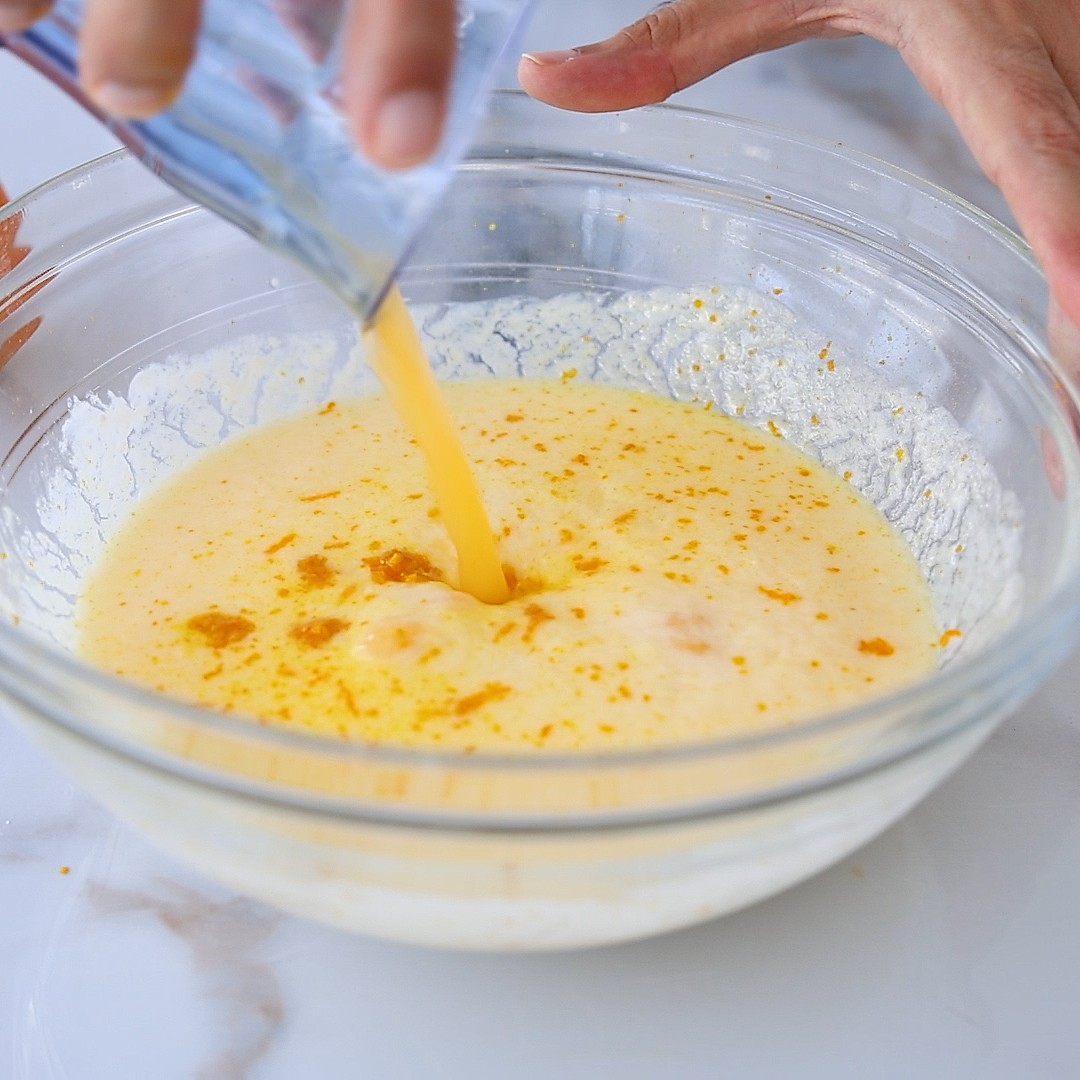
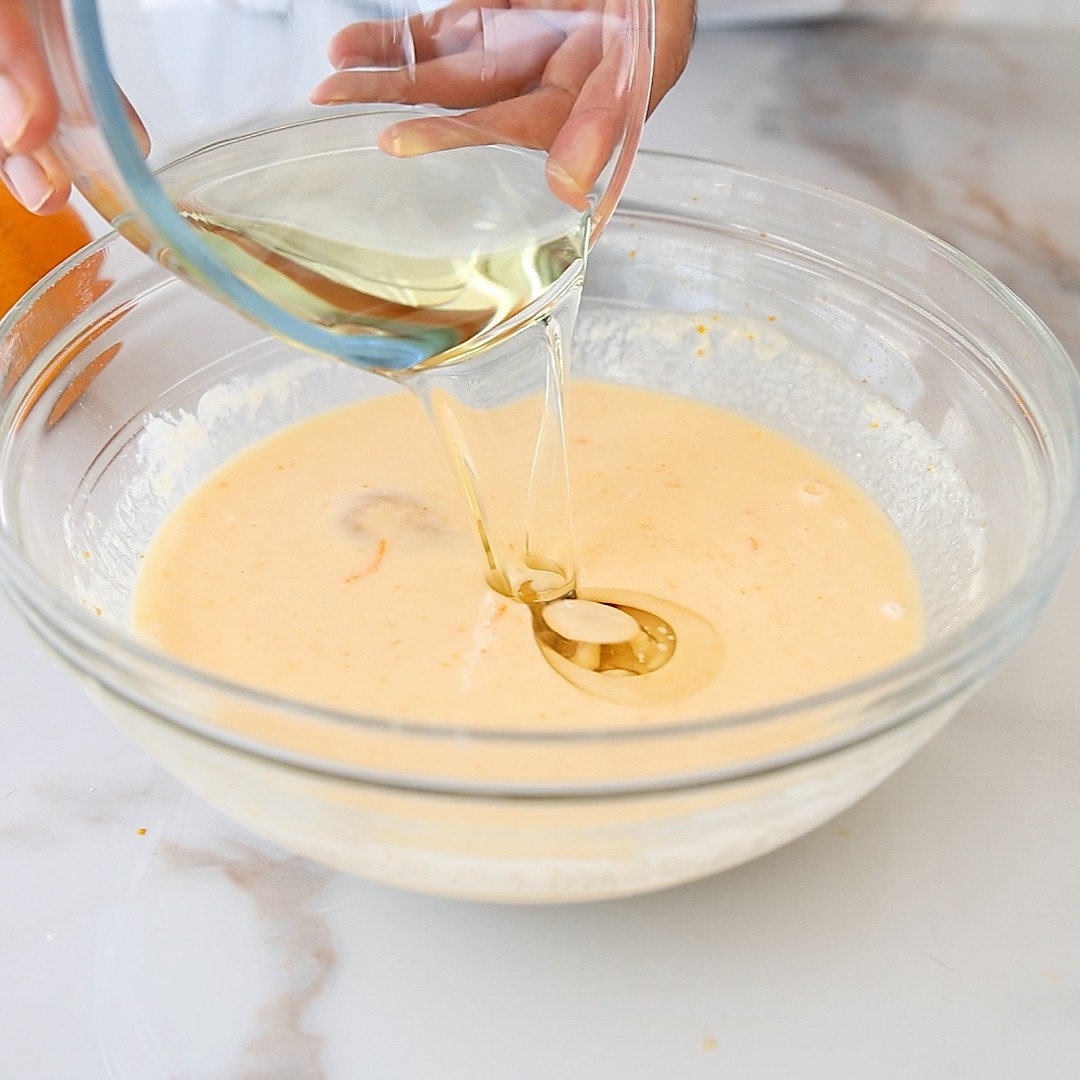
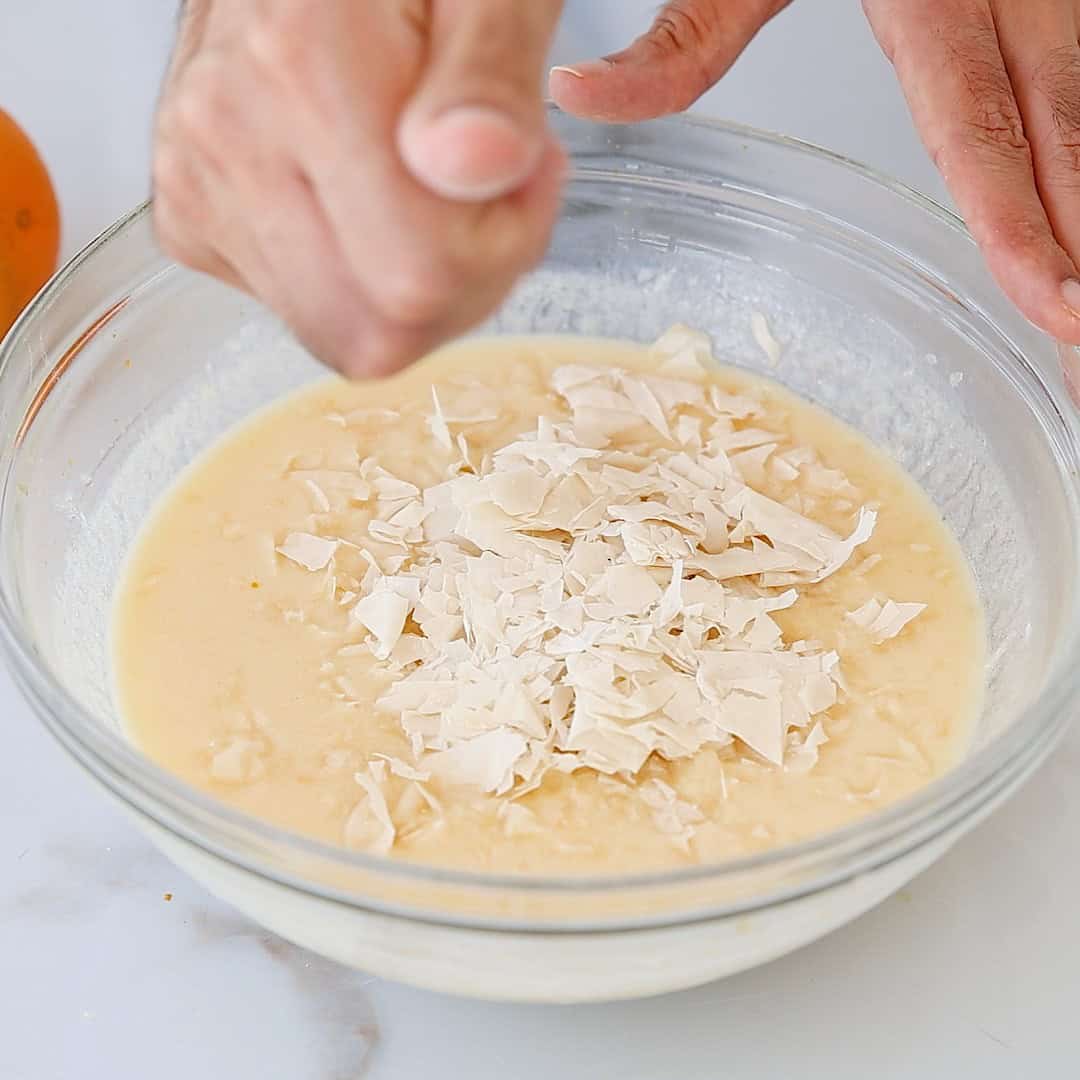
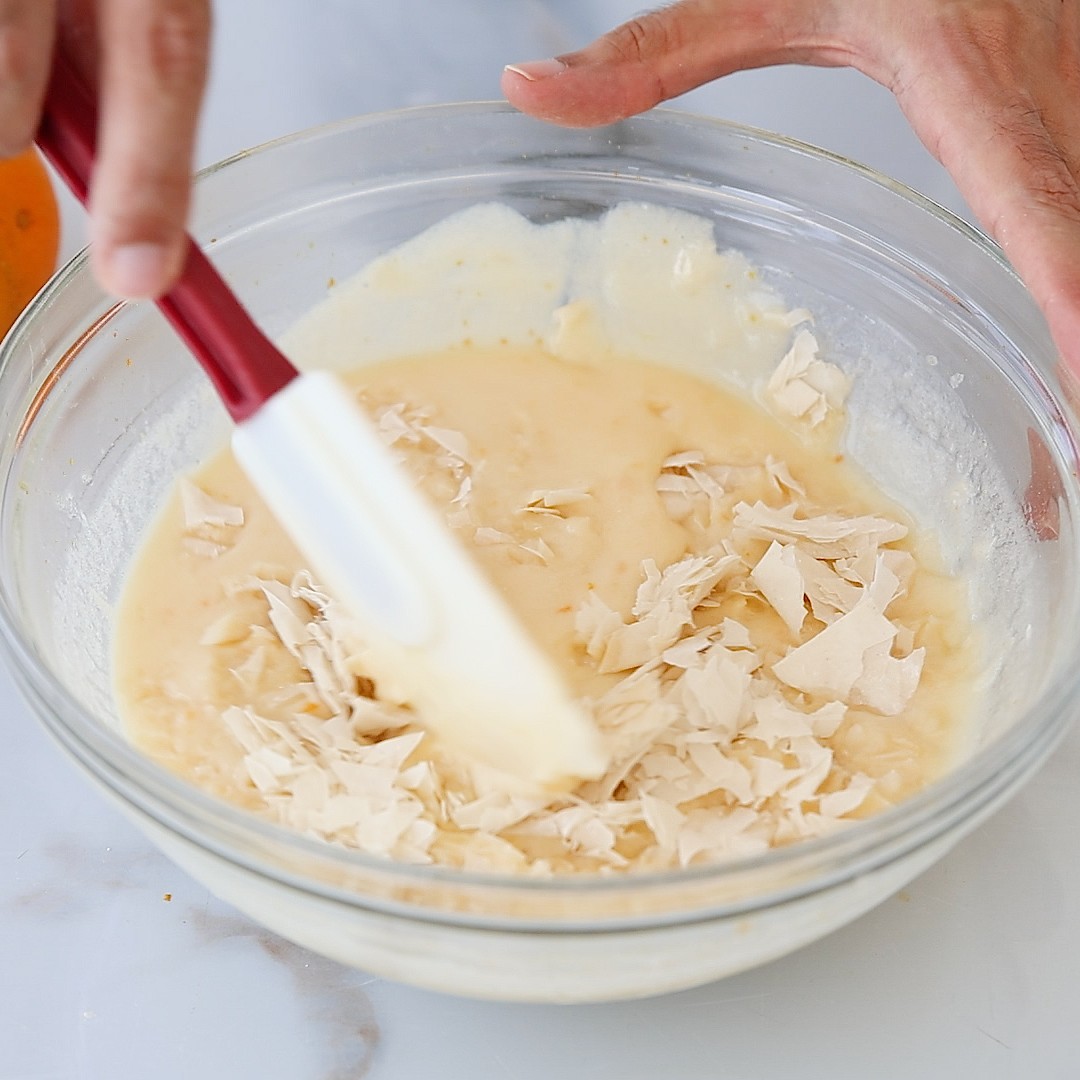
4. Add the phyllo: Gradually add the dried phyllo to the batter. Fold well after each addition so the pieces stay separated and evenly coated. Let the mixture rest for about 5 minutes.
5. Bake and Pour the syrup: Transfer the mixture to a greased baking dish and spread it evenly. Bake at 350°F (180°C) for 45–50 minutes.
Remove the cake from the oven and poke a few holes with a skewer or knife. Slowly pour the cold orange syrup over the hot cake. Add it in several additions, allowing the syrup to absorb between each one.
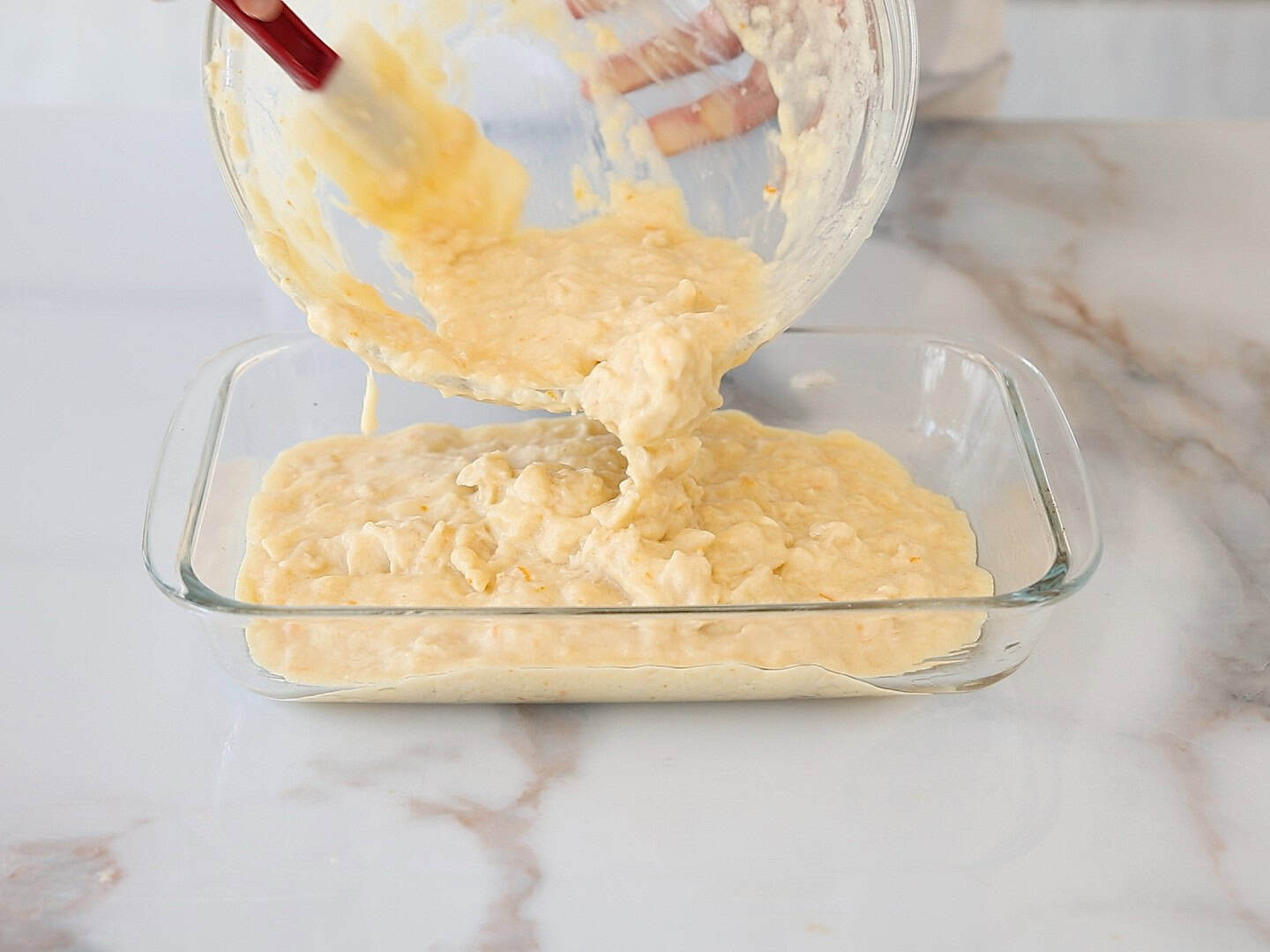
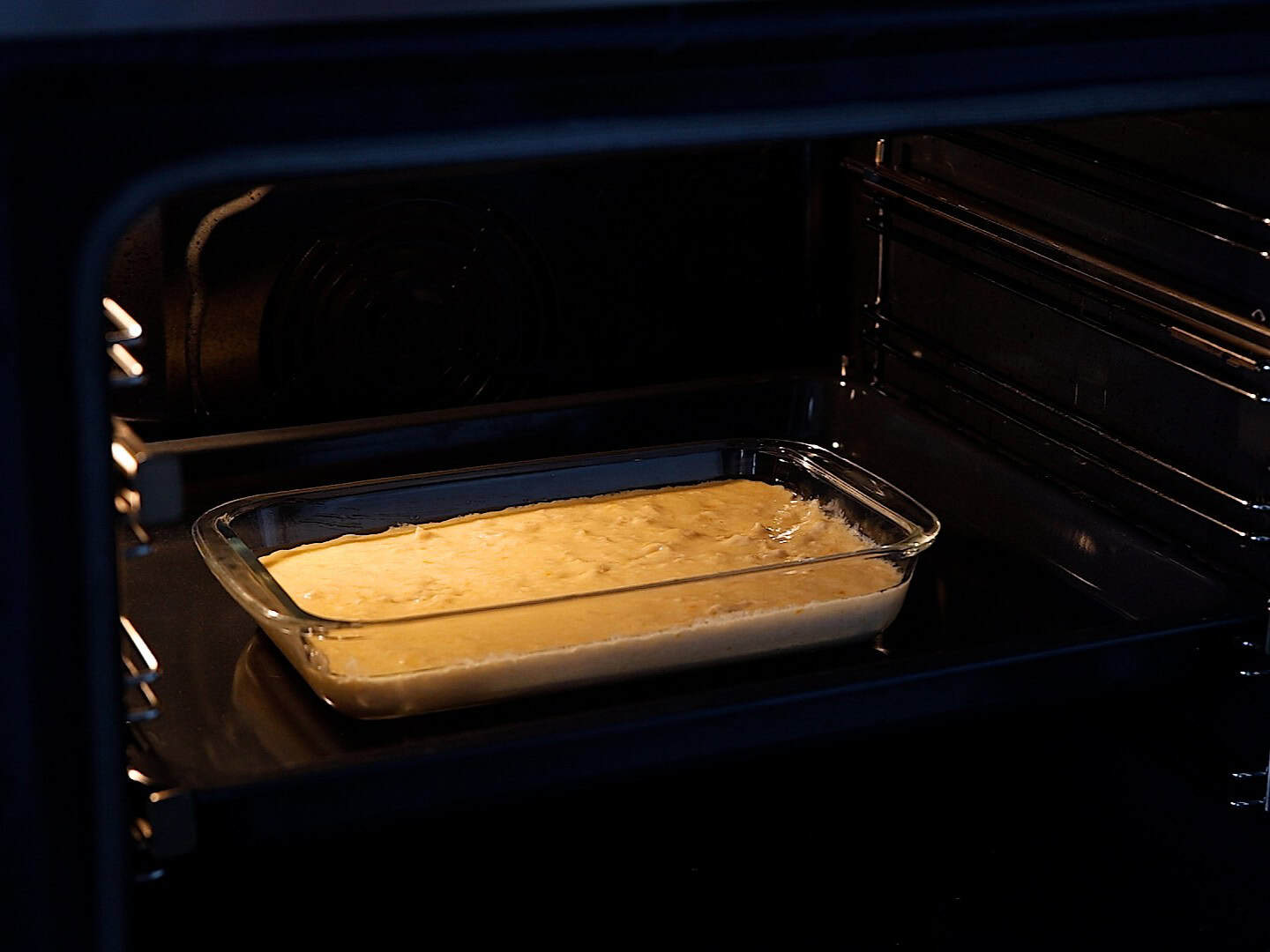
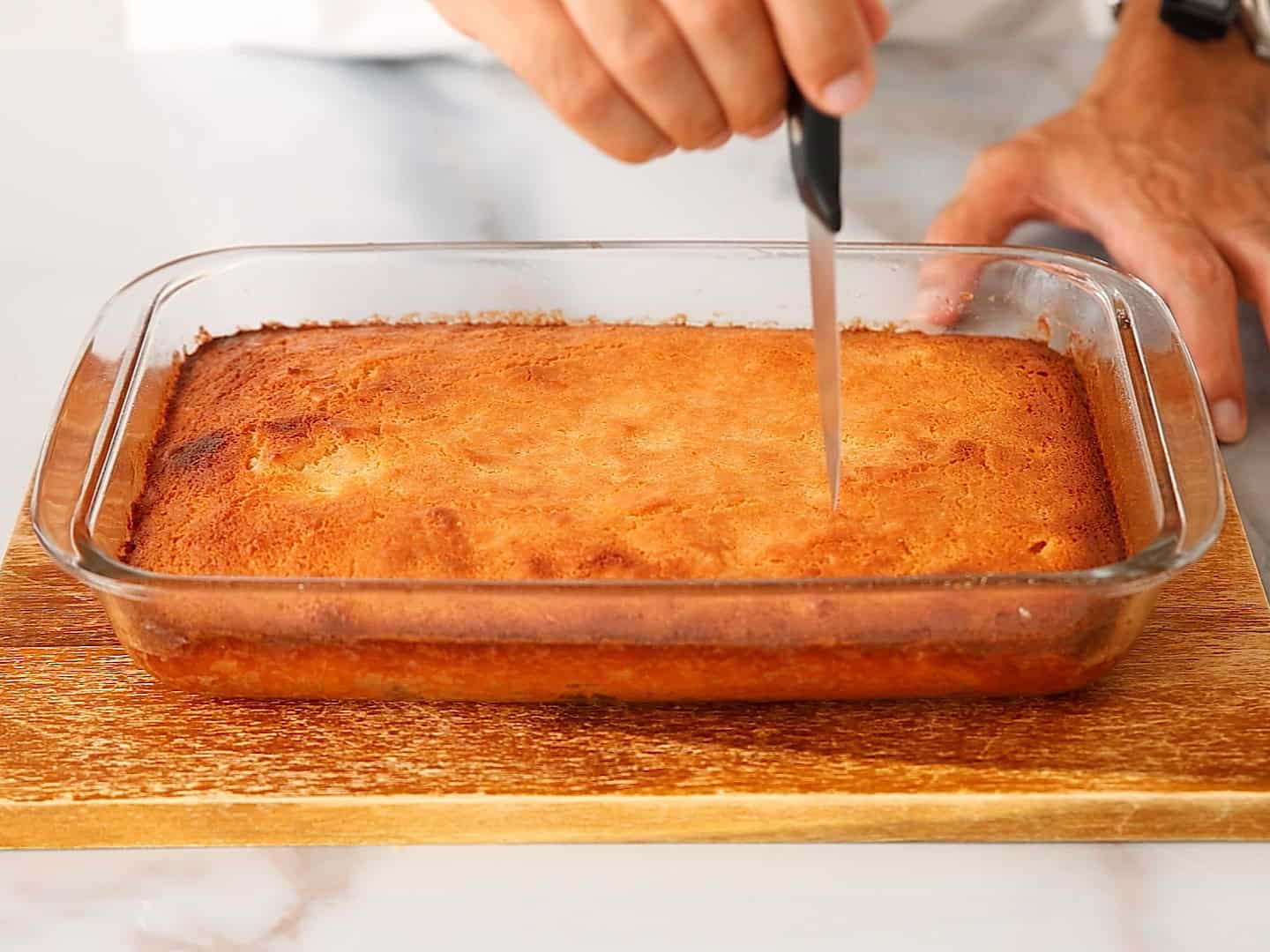
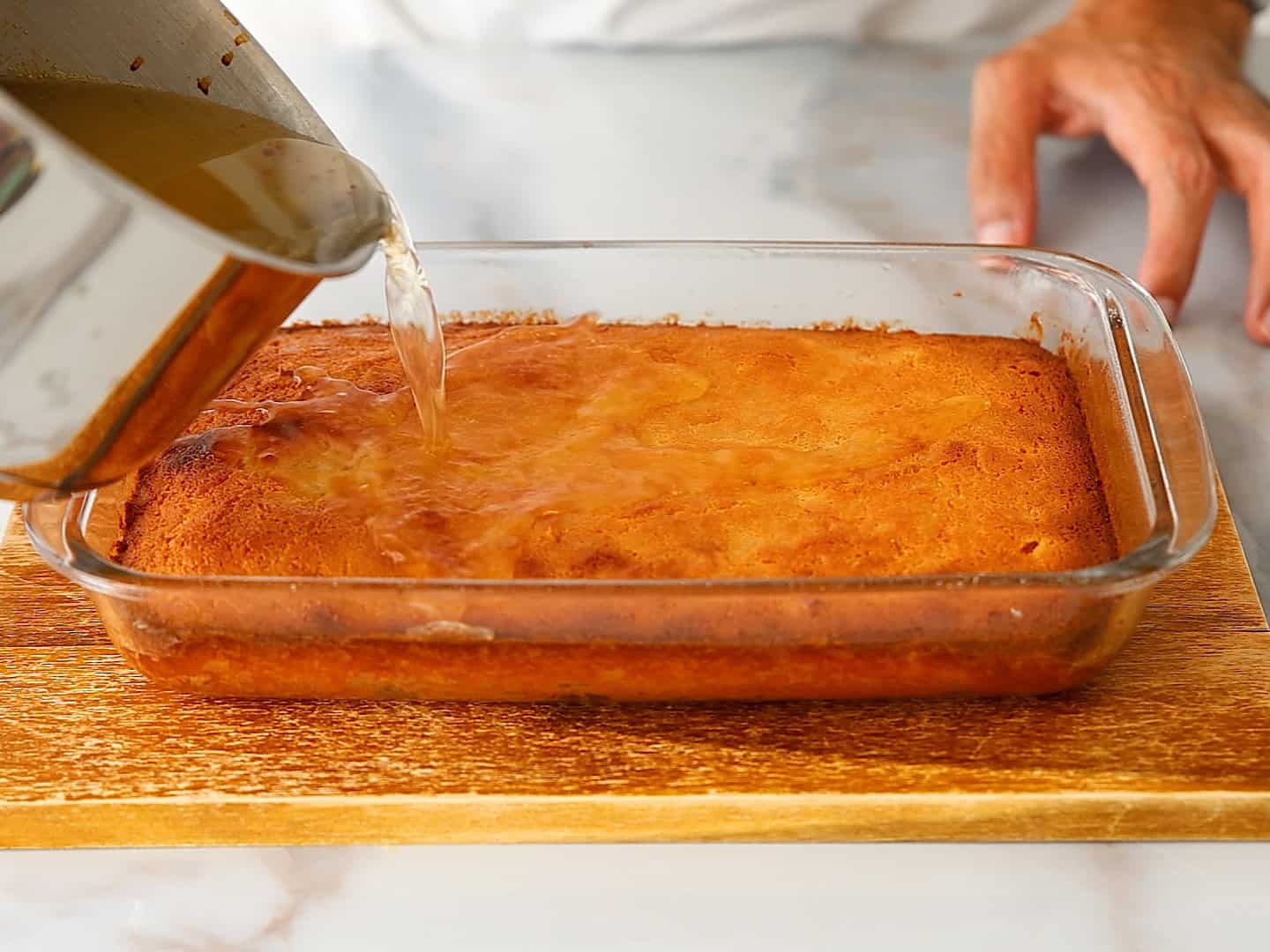
6. Let it soak: Give the cake enough time to absorb all that delicious orange syrup before slicing.
Greek Orange Cake Video Recipe
Watch the full video below to see exactly how I learned to make authentic Portokalopita in Greece.
Prefer the written recipe? Scroll down to the recipe card. 👇
The Secret to Perfect Portokalopita: Dry the Phyllo
One of the most important steps when making Portokalopita is drying the phyllo completely. Fresh phyllo is soft and flexible. For this recipe, however, it should be dry and brittle before being added to the batter.
Many Greek chefs I met simply air-dry the phyllo at room temperature for several hours or even overnight. This traditional method works very well, but it requires some planning ahead.
For a quicker and more consistent method, I prefer drying it in a low oven. Tear the sheets into pieces, spread them out, and bake at 300°F (150°C) for 10–15 minutes. Toss them once or twice so they dry evenly.
The goal is to remove the moisture without browning the phyllo. Once crisp, let it cool and crumble it into roughly 1-inch (2–3cm) pieces.
Finally, add the dried phyllo to the batter gradually. This helps keep the pieces separated and prevents large clumps from forming.
Hot Cake + Cold Syrup: Why It Matters
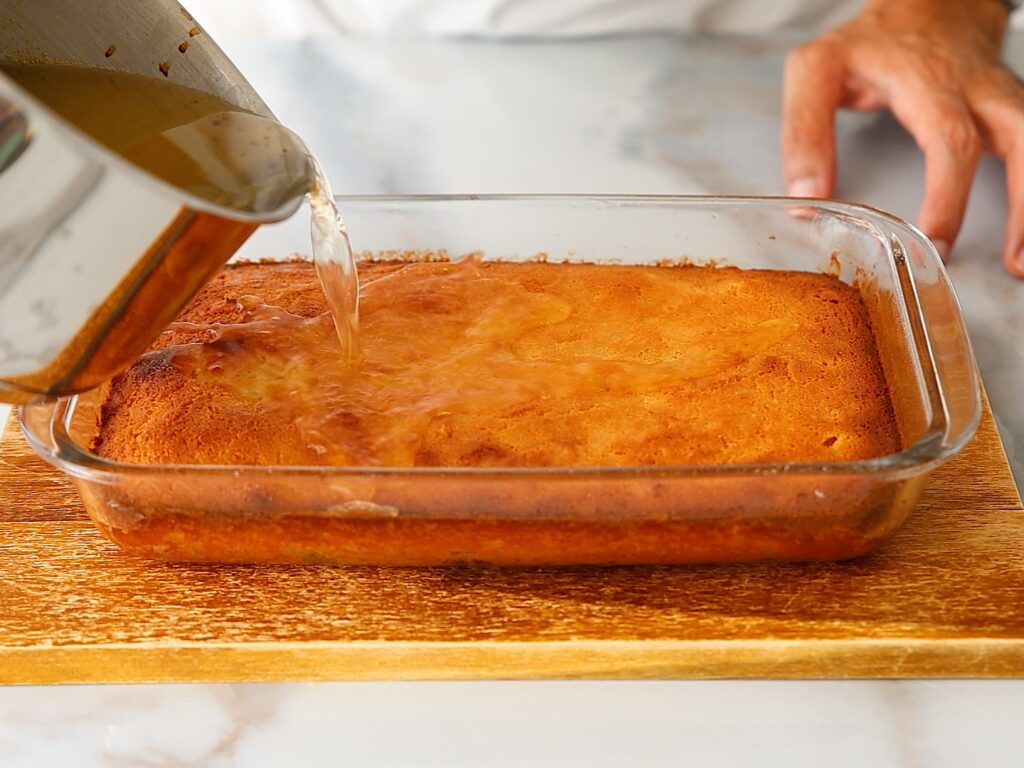
One of the most important techniques I learned when making Portokalopita is to combine hot cake with completely cooled syrup.
This temperature contrast helps the syrup absorb gradually and evenly without making the cake overly soft or soggy. If both the cake and syrup are hot, the texture can become too wet.
It’s a technique you’ll see in many Greek, Mediterranean, and Middle Eastern syrup-soaked desserts, including classic baklava, knafeh, and basbousa. Depending on the dessert, either the pastry or syrup is cooled so they aren’t both piping hot when combined.
For Portokalopita, I prefer making the syrup first and letting it cool completely. Then, pour it slowly over the cake as soon as it comes out of the oven. Add it in two or three additions so the cake has time to absorb it evenly.
What Pan Size Should I Use?
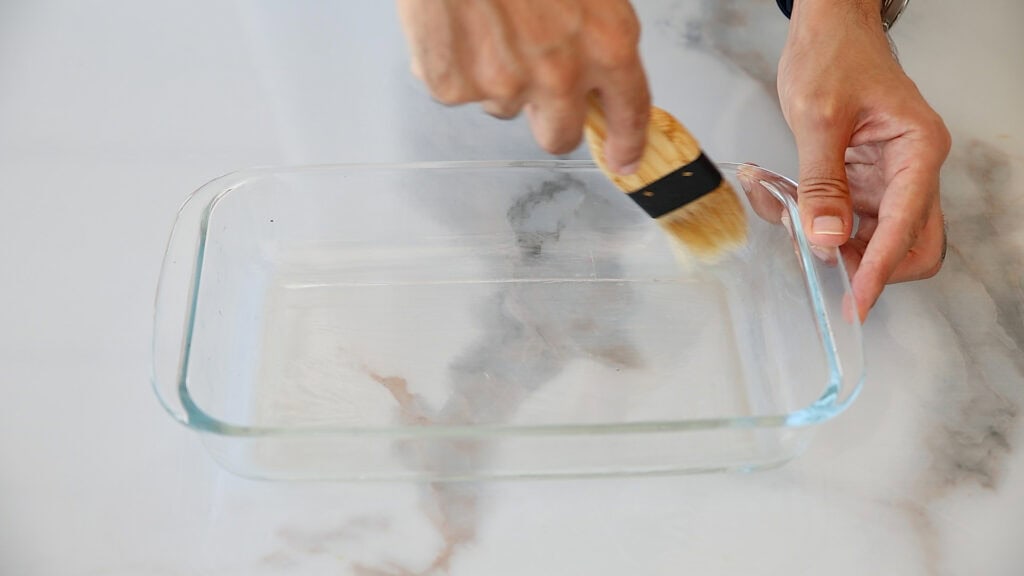
I made and tested this recipe in a 10 × 6-inch (25 × 15cm) rectangular casserole dish.
However, you don’t need that exact size.
An 8-inch (20cm) square pan or 9-inch (23cm) round pan is close enough in surface area. You can use the recipe as written.
For larger pans, increase the recipe approximately as follows:
- 9-inch (23cm) square: Increase the ingredients by about 35%.
- 11 × 7-inch (28 × 18cm): Increase the ingredients by about 30%.
- 9 × 13-inch (23 × 33cm): Double the recipe.
Remember that pan size affects baking time. A thinner cake will generally bake faster, while a thicker cake may need longer.
Look at the cake rather than relying only on the clock. It should be puffed and deeply golden before you remove it from the oven.
How to Serve Portokalopita
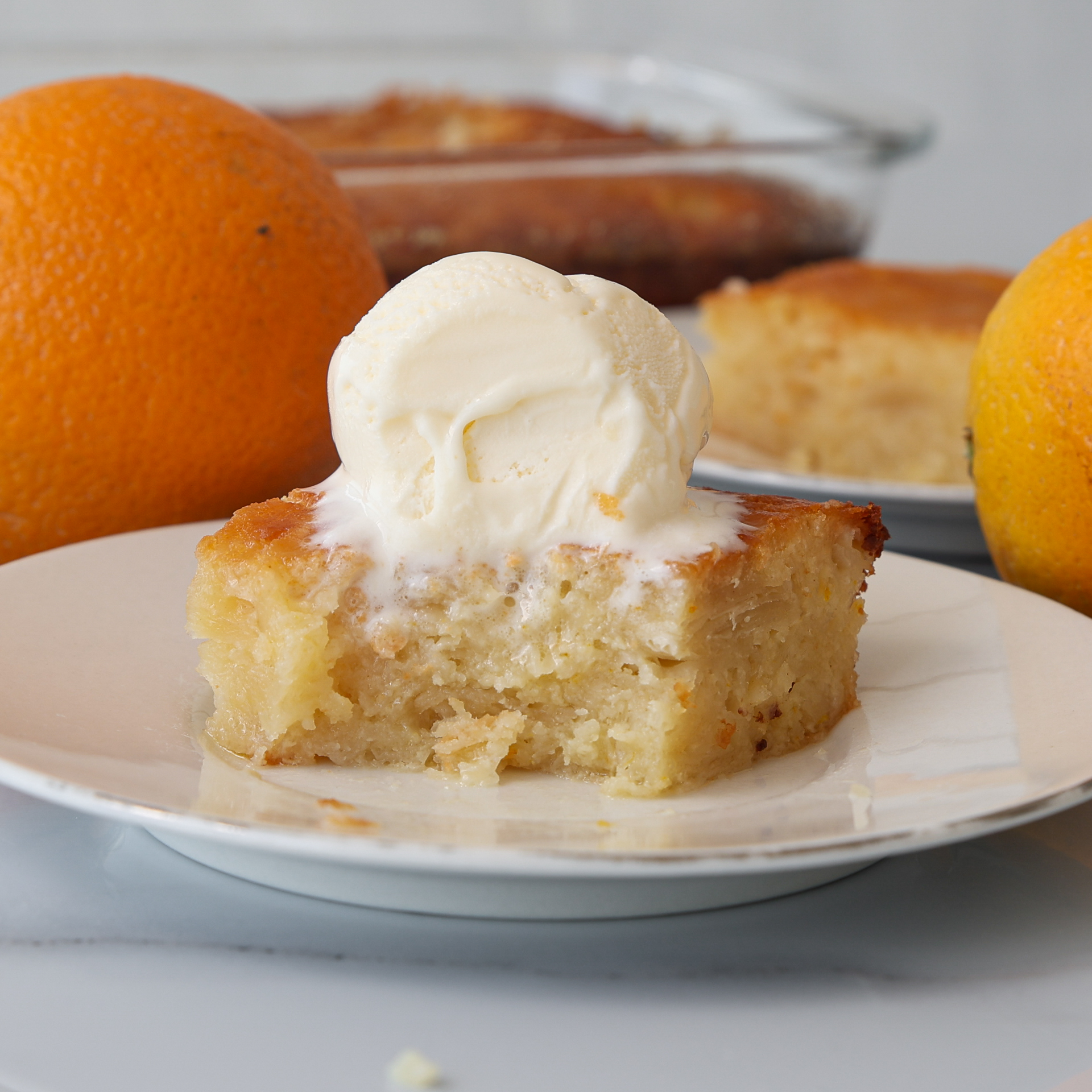
Personally, I think Portokalopita is delicious on its own. There is already plenty of flavor from the oranges and cinnamon syrup.
However, a scoop of vanilla ice cream makes it even better. The cold, creamy ice cream works beautifully with the syrup-soaked cake.
You could also serve it with:
- A spoonful of thick Greek yogurt
- Lightly whipped cream
- Fresh orange slices
- A little extra orange zest
- Greek coffee or cold coffee such as Dalgona coffee
If you love orange desserts but want something completely different, try my orange and ginger cake. It’s a more traditional flour-based cake topped with beautiful candied orange slices.
How to Store Portokalopita
- Refrigerate: Cover the cake well or transfer slices to an airtight container. Store in the refrigerator for up to 4–5 days.
- Before serving: I like to let refrigerated slices sit at room temperature for 15–20 minutes. The cake softens slightly, and the orange flavor becomes more noticeable.
- Make ahead: Portokalopita is an excellent make-ahead dessert. In fact, giving the syrup more time to soak into the cake can improve the texture.
More Authentic Greek Recipes
Portokalopita (Greek Orange Cake)
Ingredients
For the syrup:
- 1 cup (200 g) Sugar
- 1¾ cups (420 ml) Water
- ¼ cup (60 ml) Orange juice
- 1 Cinnamon stick
For the cake:
- 9 oz (250 g) Phyllo pastry see notes
- 2 Eggs large
- ½ cup + 2 tablespoons (125 g) Sugar
- ¾ cup + 2 tablespoons (200 g) Greek yogurt full fat
- Orange zest from one orange
- ¼ cup (60 ml) Fresh orange juice
- 1 teaspoon Vanilla extract
- 1 teaspoon Baking powder
- ⅔ cup (160 ml) Sunflower oil (or other neutral oil)
- Pinch Salt
Instructions
- Dry the phyllo: Preheat the oven to 300°F (150°C). Separate the phyllo sheets, tear them into rough pieces, and spread them in a single layer on a large baking sheet. Bake for 10–15 minutes, tossing once or twice, until the phyllo is completely dry and crisp, but not browned. Let it cool slightly, then crumble it into smaller pieces – roughly 1-inch (2–3cm) pieces.
- Prepare the syrup: In a small saucepan combine the sugar, water, orange juice, and cinnamon stick. Bring to a boil over medium-high heat, then simmer for 4–5 minutes. Remove from the heat and let the syrup cool completely.
- Preheat the oven: Preheat the oven to 350°F (180°C). Grease an 8-inch (20cm) square baking dish or a similar-sized baking pan with oil. For other pan sizes, see the Notes below.
- Make the batter: In a large bowl whisk together the yogurt and sugar until smooth. Add the eggs, orange zest, orange juice, vanilla extract, baking powder, and a pinch of salt, then whisk until combined. Add the sunflower oil and whisk until smooth.
- Add the phyllo: Add the dried phyllo gradually, a handful at a time, folding well after each addition so the pieces remain separated and evenly coated. Let it sit for 5 minutes so the phyllo can absorb some of the batter.
- Bake: Transfer the batter to the prepared pan and spread it into an even layer. Bake for 45–50 minutes, or until the cake is puffed, deeply golden brown, and crisp around the edges.
- Add the syrup: As soon as the cake comes out of the oven, poke a few holes using a knife or a skewer, then slowly pour the cooled syrup evenly over the hot cake, including around the edges. Add it in 2–3 additions, allowing each addition to absorb before pouring over more.
- Serve: Let the cake rest until all the syrup has soaked in. Slice and serve as is or with a scoop of vanilla ice cream.
Video
Notes
- Pan sizes: I used a 10×6-inch (25 × 15cm) rectangular casserole dish for this recipe. However, you can also use any of the following:
- 8-inch (20cm) square baking dish (recommended)
- 9 × 6-inch (23 × 15cm) rectangular baking or casserole dish
- 11 × 7-inch (28 × 18cm) baking dish (the cake will be thinner and may bake a little faster)
- Adjusting for different pan sizes: If you’re using a different pan size, adjust the ingredients based on the baking surface area:
-
- 9-inch (23cm) square pan: Increase all ingredients by about 35%.
- 11 × 7-inch pan: Increase all ingredients by about 30%.
- 9 × 13-inch pan: Double the recipe.
- 9-inch (23cm) round pan: Increase the ingredients by about 15%.
- Extra orange flavor: For an even more intense orange flavor, add the peel or a zest of 1 orange to the syrup while it’s simmering. Remove it along with the cinnamon stick before pouring the syrup over the cake.
- Hot cake, cold syrup: For the best absorption, pour completely cooled syrup over the cake immediately after it comes out of the oven. Adding hot syrup to a hot cake may make it overly soft.
- Control the sweetness: Traditional Portokalopita is very syrupy. If you prefer a less sweet cake, you can use about 3/4 of the syrup instead of the full amount.
- Storage: Store the cake covered in the refrigerator for up to 4–5 days. Let individual slices sit at room temperature for 15–20 minutes before serving for a softer texture and fuller orange flavor.


Thank you David. It’s such a delicious dessert. It was all gone before I could even take a proper photo.
I put a bit of lime juice in my syrup as I felt the oranges I used were so sweet and it worked like a charm.
I’ve been following your recipes for quite some times now and tried both food and treat recipes– Thank you for creating such interesting healthy recipes.
I’ve made portokalopita before, using a different recipe, but that recipe was insanely sweet. Between the cake and the syrup, it had almost THREE cups of sugar! The next time I tried it, I cut the sugar down to about the proportions you list in your recipe.
The first time, I couldn’t find phyllo and tried puff pastry – not the same thing. However, after some inventive drying, I did manage to make it work.
While it isn’t traditional, I want to try other citrus for this. I think lime would be amazing. I’ve tried rhubarb (believe it or not), and it actually turned out, even if the flavor was very subtle.
I’ll definitely try this version.
Hi Alan,
I agree, some versions of portokalopita can be incredibly sweet, which is why I prefer a more balanced amount of sugar. And rhubarb is definitely an unexpected twist!
I’d love to hear how it turns out if you try it. Hope you enjoy my version!
First try for me. Loved it! Very nice and delicious orange cake.
Thanks.
My wife and I had this dessert 13 years ago when we were in Crete on our honeymoon. We really loved it, but unfortunately, we haven’t had it since then. Now, with your easy recipe, we will definitely make portokalopita! We have such great memories from Greece.