
The Best Kunafa (Knafeh) Recipe | Easy and Authentic
This post may contain affiliate links.
Make the best knafeh (also spelled as kunafa, kunefe) at home! Crispy kataifi pastry, gooey cheese, and fragrant rose syrup come together in this irresistible Middle Eastern dessert.
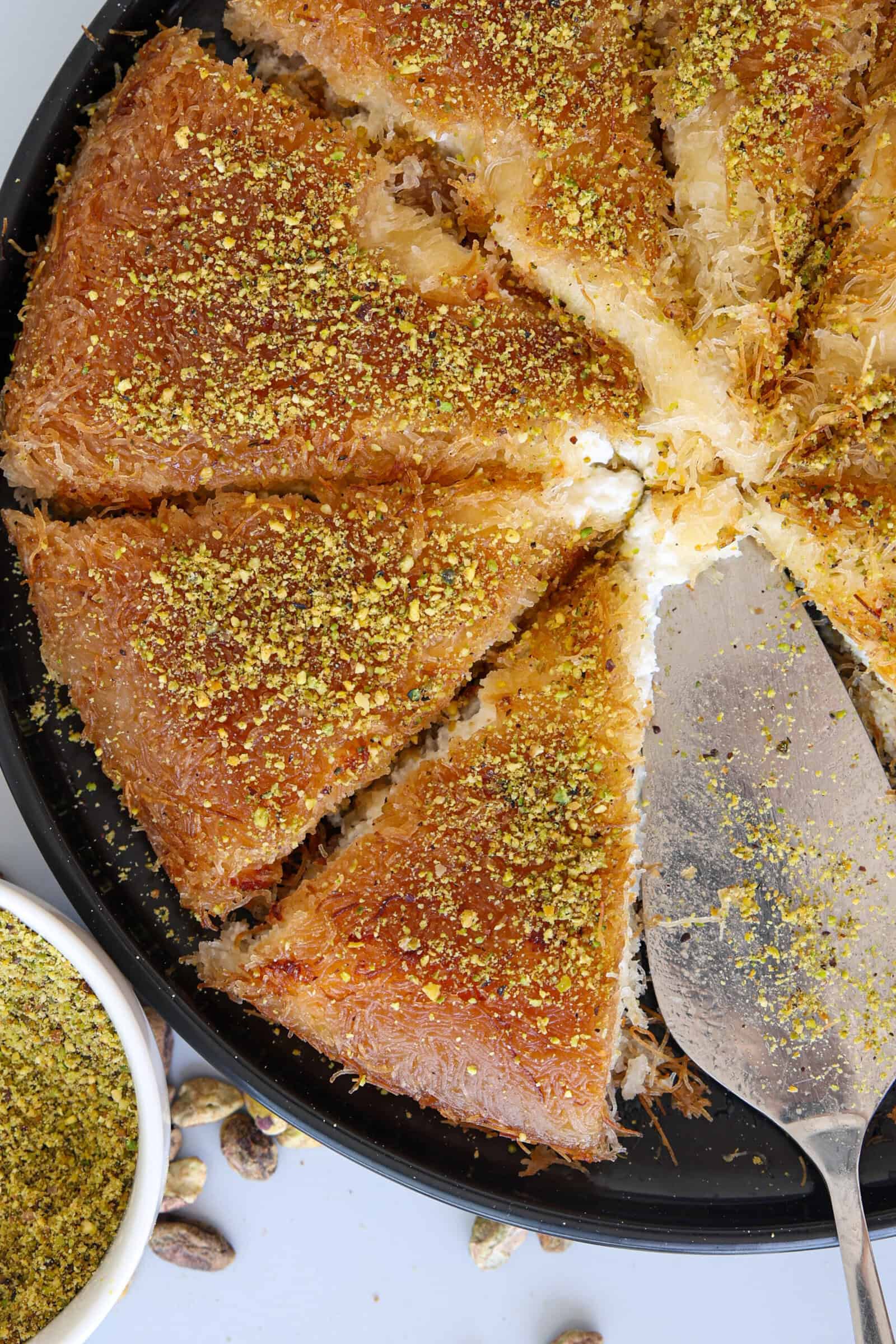
Growing up in the Middle East, knafeh has always been close to my heart. Over the years, I’ve tasted incredible versions across the region — from the famous street-side slices in Jerusalem to rich, cheesy knafeh in Northern Israel — but this recipe is still my favorite. It’s easy, authentic, and delivers the perfect balance of crisp pastry, creamy cheese, and fragrant syrup.
This recipe was a huge hit on my YouTube channel, with over 1.7 million views and thousands of happy bakers recreating it at home. If you love Middle Eastern desserts like my Baklava or any of my Middle Eastern recipes, you’ll definitely fall in love with this one.
Kunafa Ingredients & Substitutions
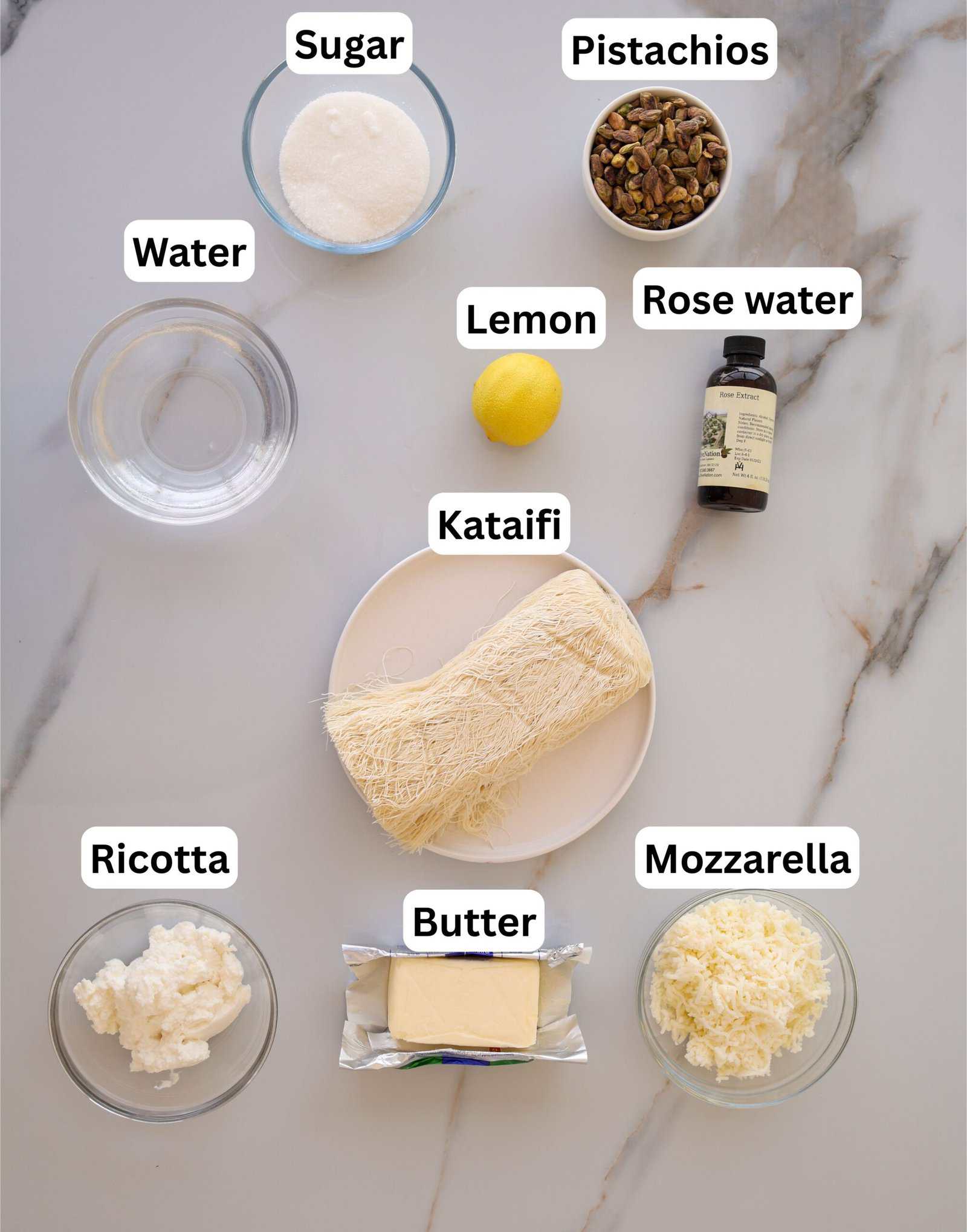
- Kataifi (Kadayif) – Shredded phyllo dough for that iconic crispy texture. If the kataifi is frozen, thaw it completely before using.
- Butter (unsalted) – Gives the pastry its rich golden crust. Ghee works beautifully as well.
- Sugar & Water – Traditionally used to make a simple syrup for the topping; the sugar amount can be adjusted (see my expert tips below).
- Rose Water & Lemon Juice – Rose water adds that signature aroma, while lemon juice balances the sweetness.
- Cheese – Traditionally made with Akkawi or Nabulsi cheese, but due to the fact that most of my readers can’t get these, I’ve created an accessible version for people worldwide using a combination of ricotta and mozzarella. See the “What cheese is best for kunafa?” section for more variations.
- Pistachios – Crush pistachios for garnish and crunch, or use almonds or walnuts instead.
This is just a short review of the ingredients; for the complete recipe, including quantities, scroll down to the recipe card 👇
How to Make Knafeh (Kunafa)
Follow my step-by-step video tutorial to see how easy it is to make Middle Eastern kunafa at home.
Prefer the written recipe? Scroll down to the recipe box 👇
What is Kataifi (Kadayif)?
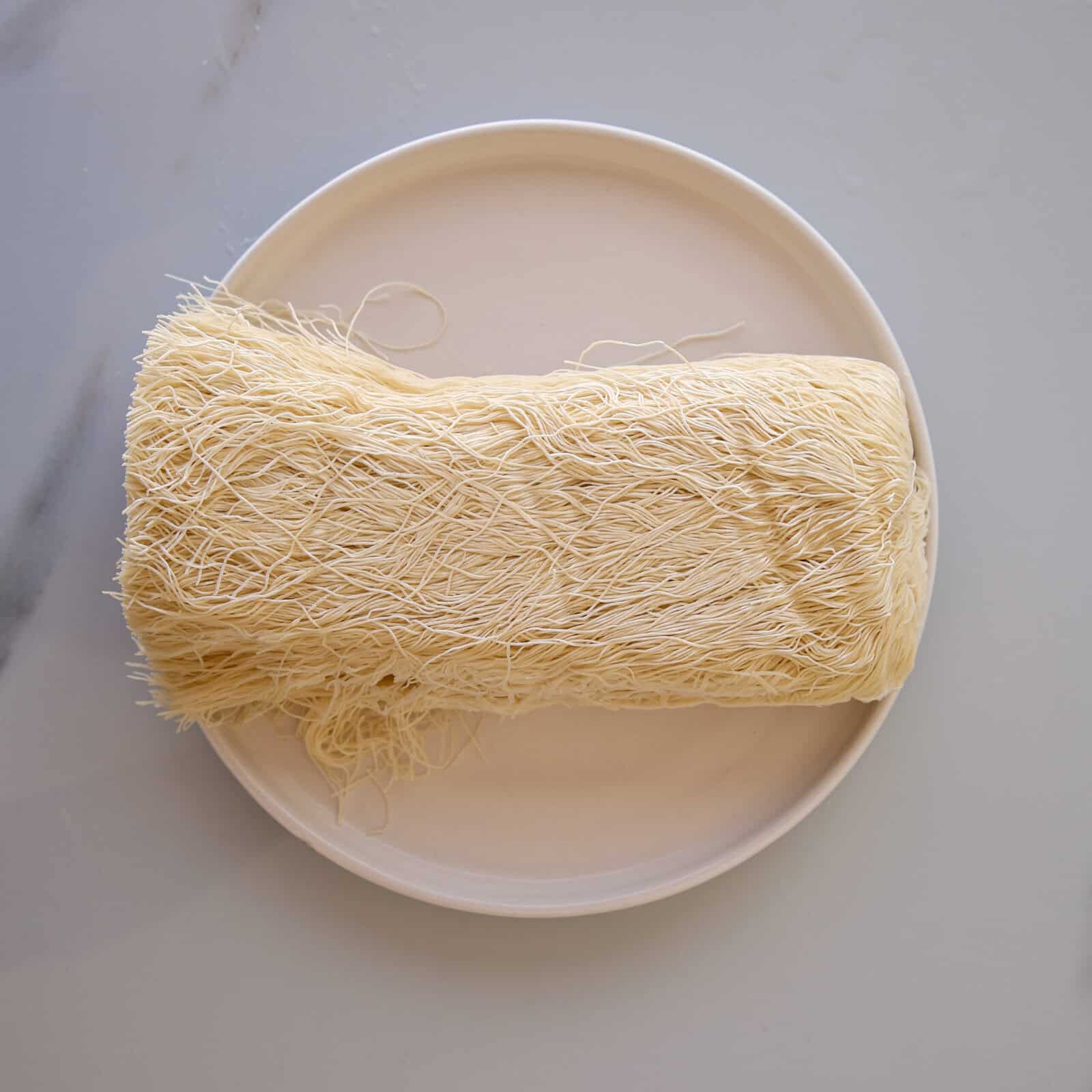
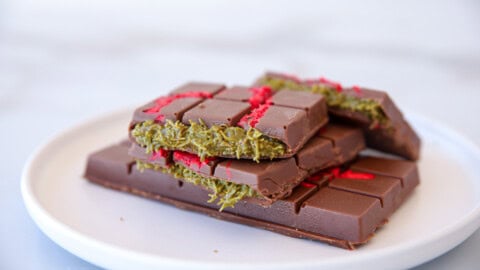
Kataifi (also spelled kadayif, kadaifi, or kadaif) is a shredded phyllo dough widely used in Middle Eastern and Mediterranean desserts. It crisps beautifully when baked or fried, making it perfect for knafeh. You’ll also find it in recipes like my Dubai Chocolate Bar and Dubai Chocolate Tart, where it adds an irresistible crunch.
What Cheese is the Best for Kunafa?
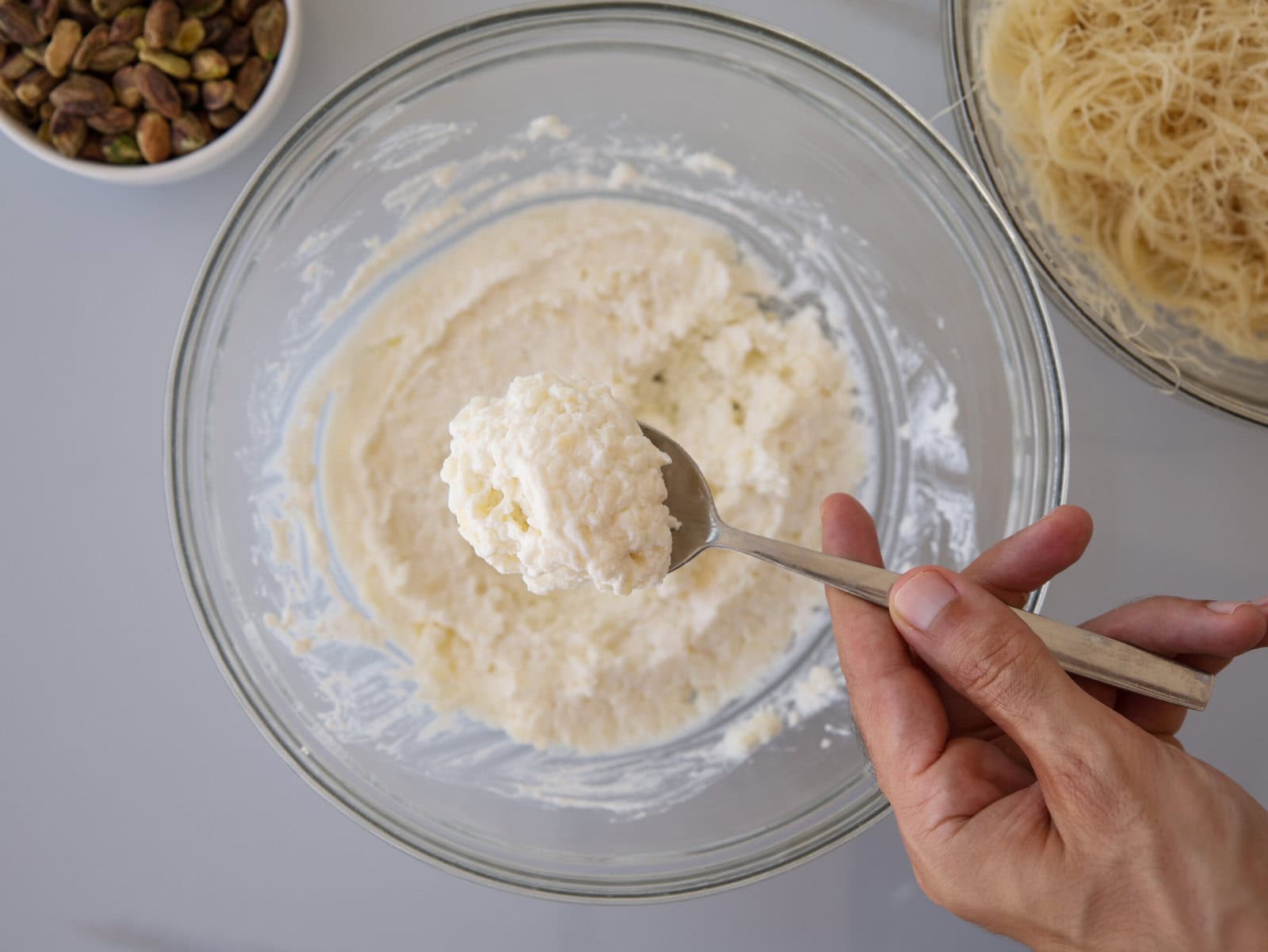
Traditionally, kunafa is made with Akkawi or Nabulsi cheese — mild, slightly salty Middle Eastern cheeses that are soaked to remove excess salt before use.
However, most of my readers can’t get these cheeses, so I created a version that is easy to make anywhere in the world but still delivers the same amazing taste and texture as the original authentic knafeh recipe. My go-to combination is fresh ricotta (for creaminess) and mozzarella (for stretch). This pairing is simple, accessible, and incredibly delicious.
How to Assemble Knafeh
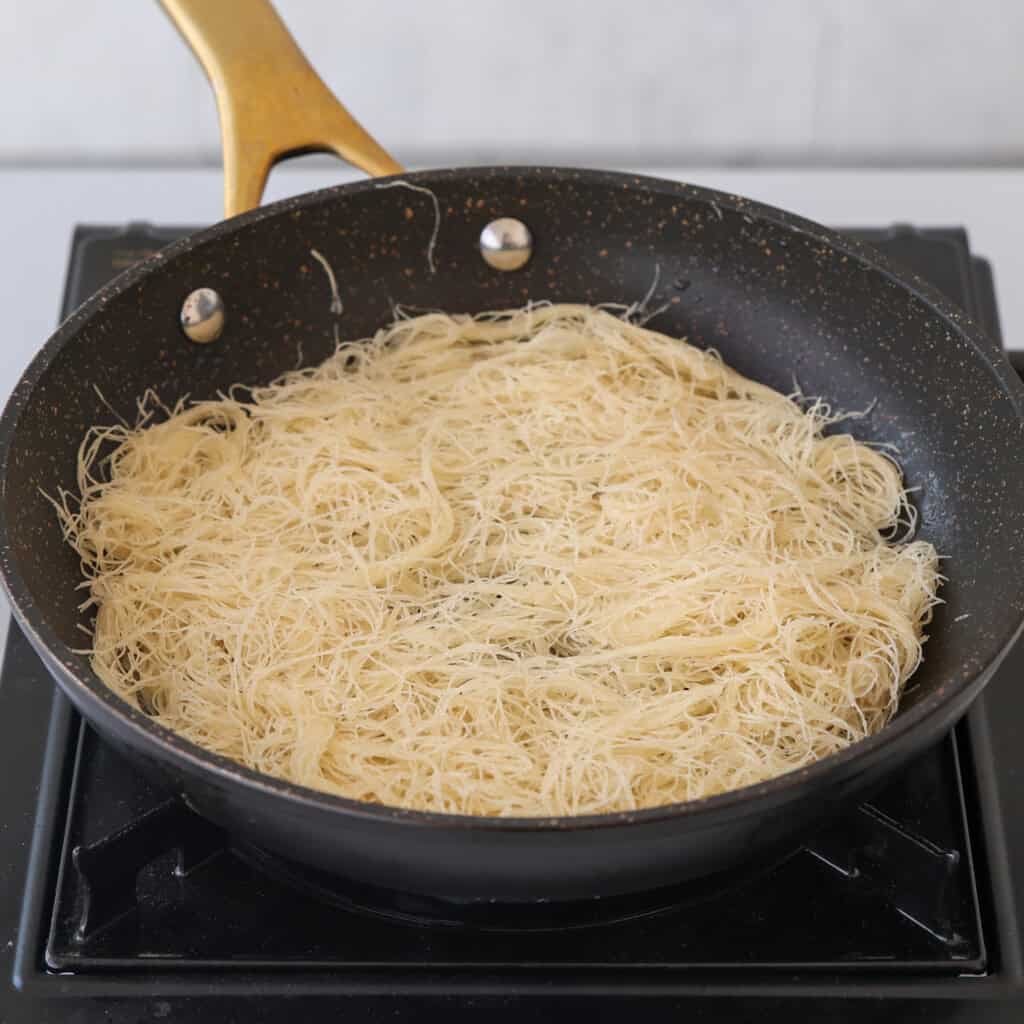
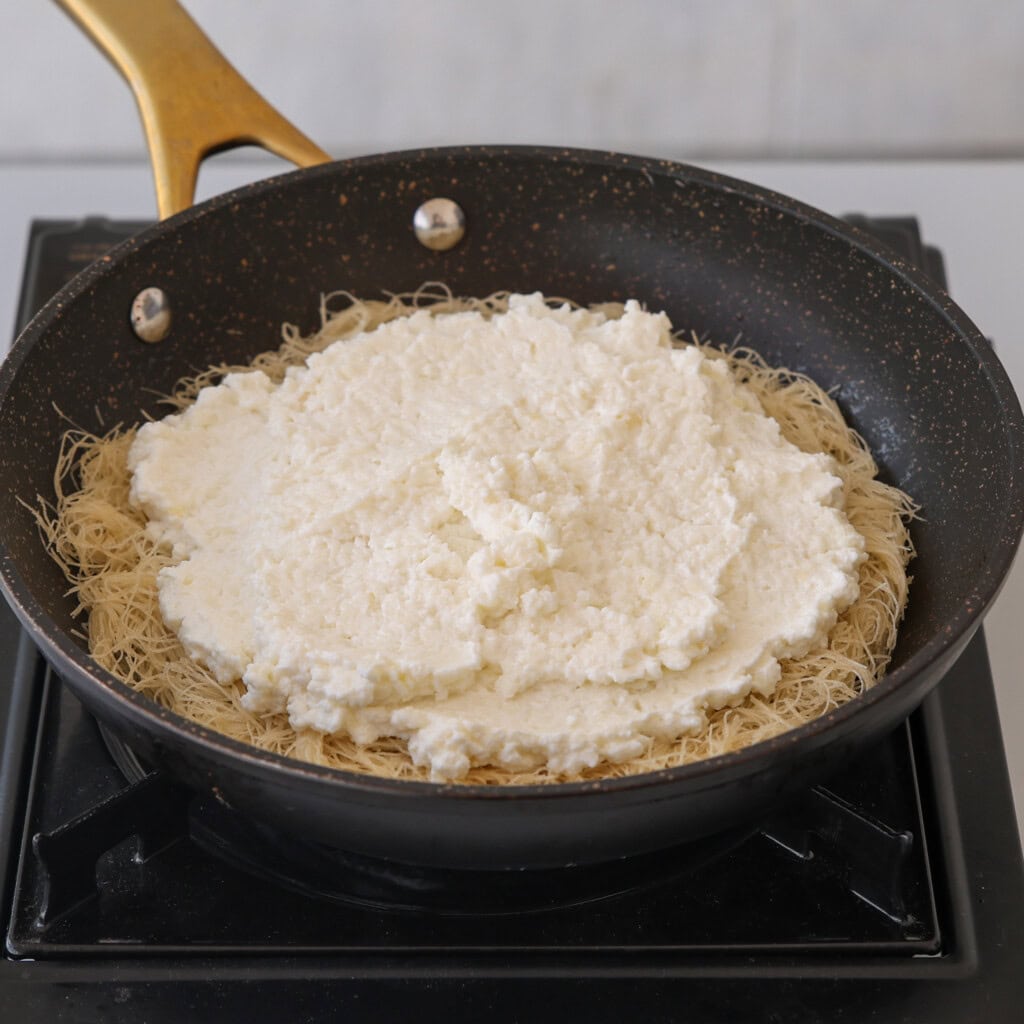
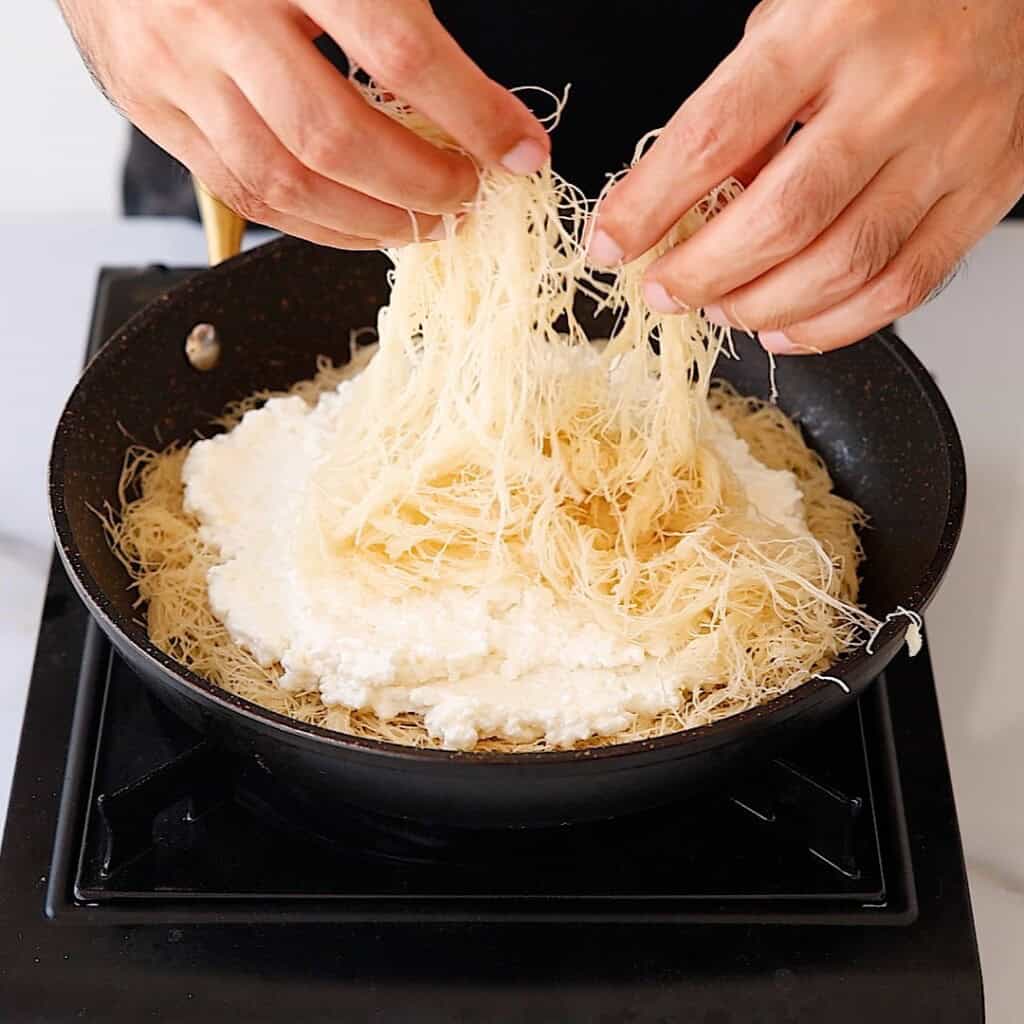
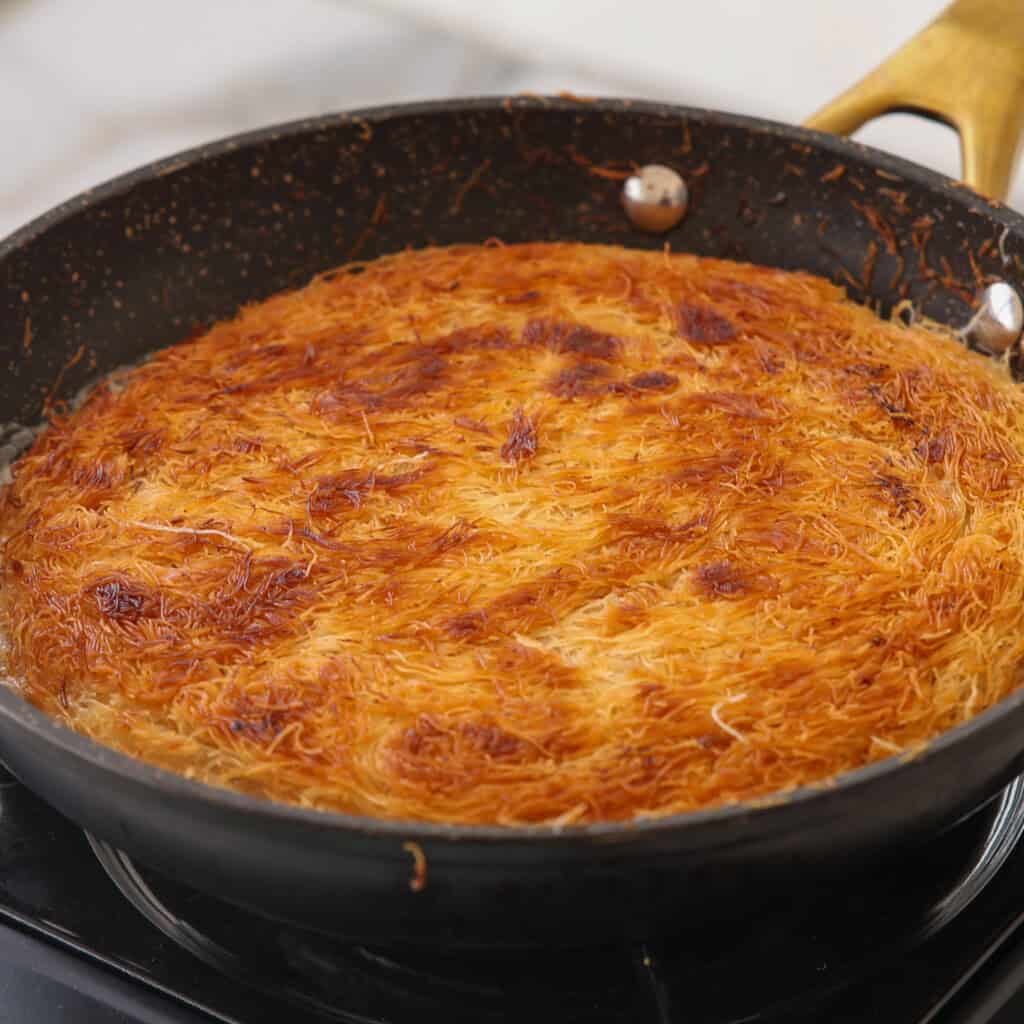
Substitutes and Variations
- Vegan knafeh – Use vegan butter or coconut oil, and vegan mozzarella-style cheese.
- Low-sugar version – Reduce sugar in the syrup to your taste.
- Nut variations – Swap pistachios for almonds, walnuts, or a mix.
- Flavored syrup – Try orange blossom water instead of rose water for a citrusy aroma.
- No-bake kunafa – Use the stovetop method for both sides instead of baking.
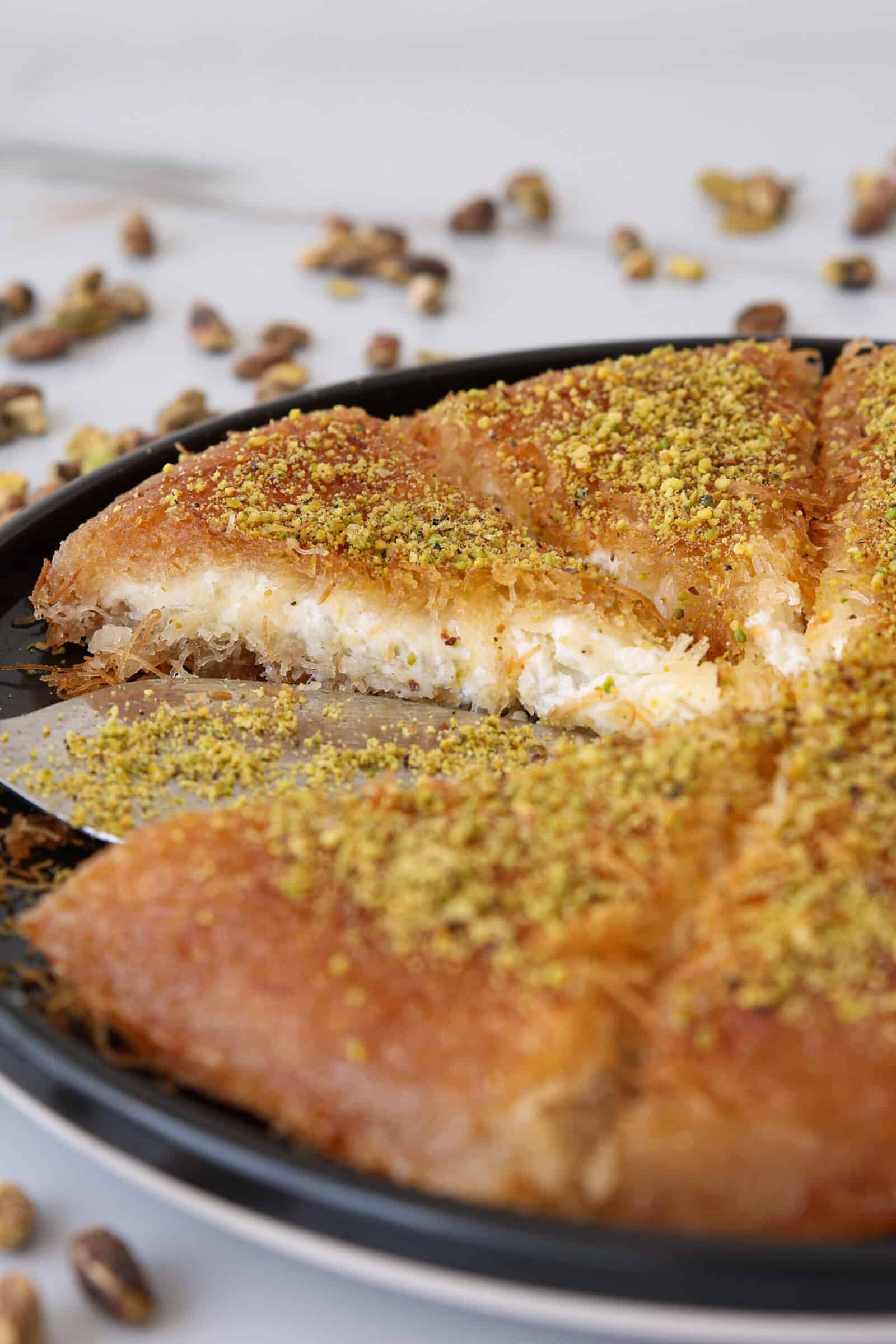
Expert Tips for the Best Knafeh
After years of testing (and thousands of happy readers), here’s how to make knafeh perfectly every time:
- Sweetness level: Traditional kunafa is made with classic simple syrup, which in my opinion, is very sweet — a 1:1 ratio of sugar to water (1 cup / 200g sugar to 1 cup / 240ml water). For my personal taste, that’s too sweet; I prefer 125g sugar. However, you can use anywhere from 100g to 200g, depending on how sweet you like it.
- Cold syrup + hot knafeh: Always pour cold syrup over hot pastry to keep it crisp.
- Even butter coating: Coat every strand of kataifi in butter to achieve an even golden crust.
- Flip with confidence: Use a plate slightly larger than your pan, hold firmly, flip quickly, and slide it back in to cook the second side.
- Serve immediately: Knafeh is at its best while warm and crispy.
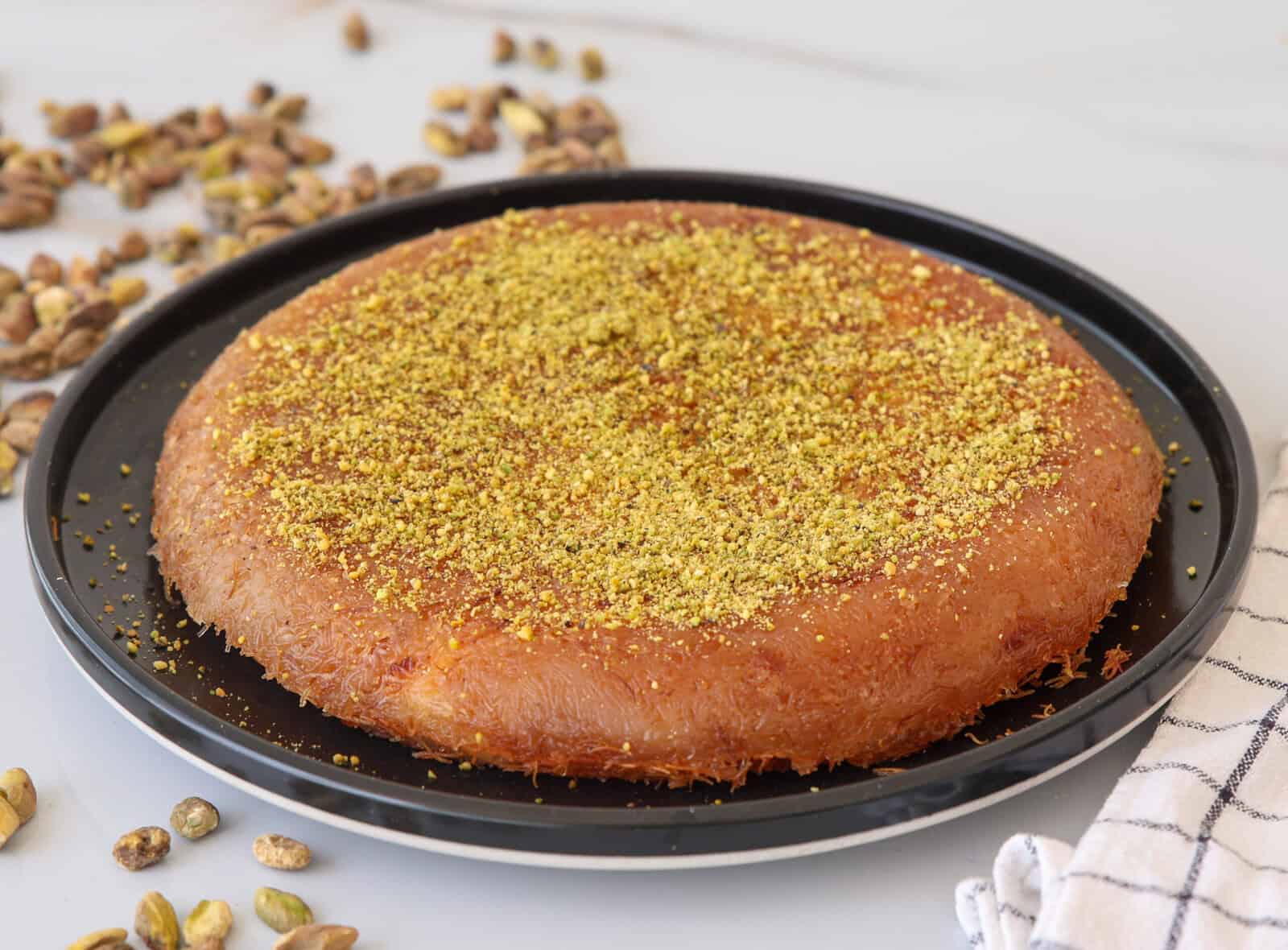
How to Store Knafeh
Knafeh is at its absolute best when served warm and fresh — that’s when the pastry is crispiest and the cheese is perfectly melty. However, if you have leftovers or want to make it ahead, here’s how to store it:
- Best eaten fresh: Serve immediately after cooking for the ultimate texture and flavor.
- Leftovers: Store in an airtight container in the fridge for up to 2 days.
- Reheating: Warm in the oven or a frying pan to restore crispiness. Avoid microwaving, as it can make the pastry soggy.
- Freezing (make-ahead): Assemble the knafeh (uncooked), wrap well, and freeze for up to 1 month.
- Cooking from frozen: Thaw overnight in the fridge, then cook fresh for the best results.
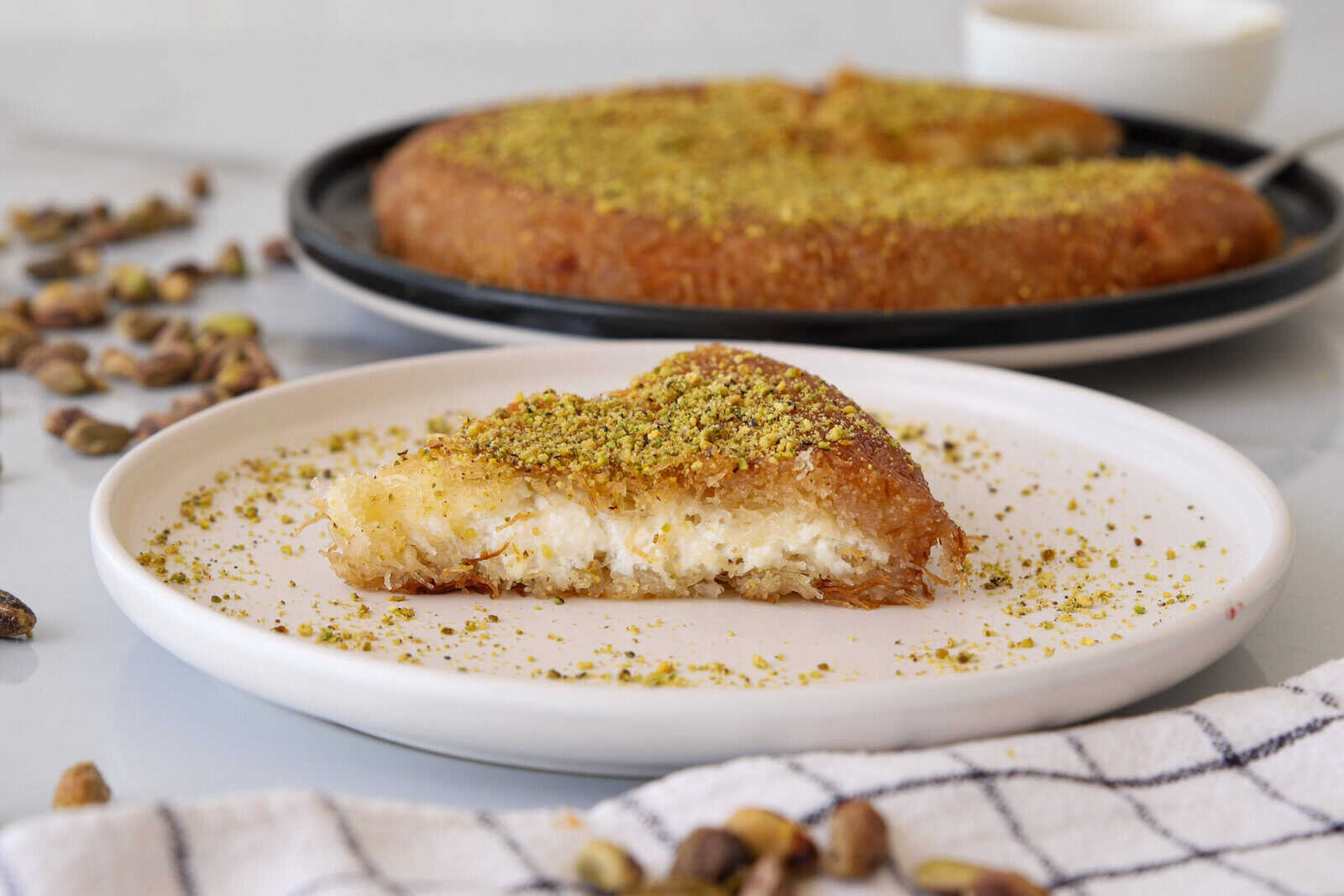
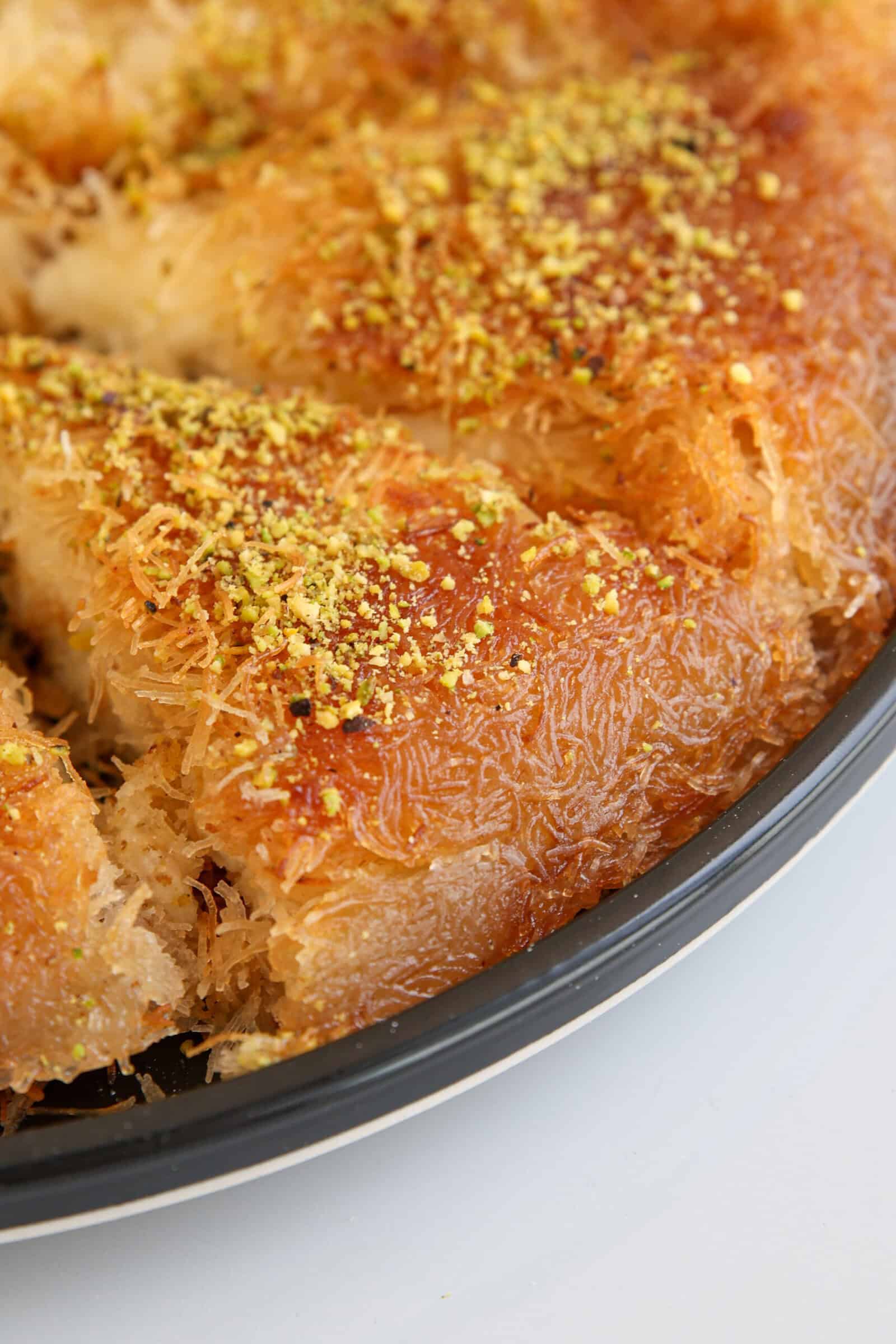
More Middle Eastern Desserts
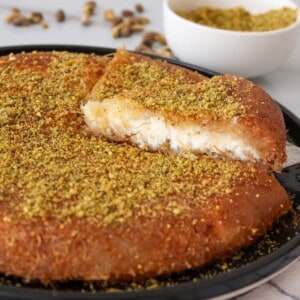
Best Kunafa (Knafeh) Recipe | Easy and Authentic
Equipment
Ingredients
- 12 oz (340 g) Kataifi also known as kadayif, kadaifi, or kadaif
- ⅔ cup (155 g) Butter, unsalted plus extra 1-2 tablespoons of fryung
- 5 oz (140 g) Ricotta cheese fresh
- 5 oz (140 g) Mozzarella cheese freshly grated
- 1 cup (240 ml) Water
- ½ cup + 2 tablespoons (125 g) Sugar read notes
- ½ tsp Rose water
- 1 tsp Lemon juice
- ¼ cup (33 g) Pistachios (roasted), chopped
Instructions
- Make the syrup: In a small saucepan, combine the sugar and water. Bring to a boil over medium heat, stirring until the sugar dissolves. Reduce the heat to low and simmer for 5–6 minutes until slightly thickened. Stir in the lemon juice and rose water (if using), then set aside to cool completely. Read recipe notes.
- Prepare the Kataifi dough: If frozen, thaw completely. Loosen the strands with your fingers until fluffy. Pour over the melted butter and mix until all strands are evenly coated.
- Prepare the cheese filling: in a small bowl mix both cheeses until well combined.
- Assemble the knafeh: Melt 1 tablespoon butter in a 9-inch (23cm) non-stick frying pan over medium heat. Spread half the kataifi evenly across the bottom, pressing gently with a spatula.
- Spread the cheese mixture evenly over the kataifi, leaving a 1cm border around the edges. Top with the remaining kataifi, gently pressing down to create a smooth, even surface and seal the edges.
- Cook the knafeh: Cook over medium heat for about 5 minutes, until the bottom is golden brown. Place a large plate or flat lid over the pan, hold firmly, and flip the knafeh onto it. Add 1 tablespoon butter to the pan, then slide the knafeh back in to cook the second side for another 5 minutes, until golden and crisp.
- Add syrup & serve: Remove from heat and immediately pour the cooled syrup over the hot knafeh (use as much or as little as you prefer). Transfer to a serving plate and garnish with chopped pistachios. Serve warm.
Video
Notes
- Cheese choice: Traditionally, knafeh is made with akkawi or nabulsi cheese. If you can’t find these, ricotta will give you a soft and light texture, mozzarella will add stretch and mild flavor, and a mix of both offers the perfect balance.
- Make ahead: Assemble the knafeh up to 1 day in advance, cover, and refrigerate. Cook just before serving.
- Flipping tip: Use a plate slightly larger than your pan. Hold firmly with both hands, flip quickly but carefully, and slide back into the pan to cook the second side.
- Oven method: Assemble in a greased oven-safe pan and bake at 375°F (190°C) for 25–30 minutes until golden.
- Syrup tip: Always add cold syrup to hot knafeh to keep it crisp, not soggy.
- Sweetness level: Traditionally, kunafa syrup is made with a 1:1 ratio of water and sugar (1 cup water, 1 cup sugar), which is very sweet. I personally prefer using 125g sugar for a balanced sweetness, but you can adjust anywhere between 100–200g depending on your taste.
- Storage: Knafeh is best enjoyed fresh, but leftovers can be stored in an airtight container in the fridge for up to 2 days. Reheat in a pan or oven to restore crispiness.
- Read the FAQs below for more tips, substitutions, and troubleshooting advice.
- Watch the video for step-by-step visuals.
Nutrition
Frequently Asked Questions
People use different spellings for the same Middle Eastern dessert, which combines kataifi dough, cheese, and syrup.
Yes, you can replace it with orange blossom water or omit it for a more neutral flavor.
Traditionally Akkawi or Nabulsi, but ricotta and mozzarella are great worldwide-friendly alternatives.
Always pour cold syrup over hot pastry — never the other way around.
Yes, assemble it up to 24 hours ahead, refrigerate, and cook right before serving.
Knafeh (also spelled kunafa, kunefe, or konafa) is a traditional Middle Eastern dessert believed to have originated in the Levant region, with roots in countries like Palestine, Lebanon, Syria, and Jordan. Its exact origin is debated, but it has been enjoyed for centuries across the Arab world and parts of the Eastern Mediterranean. Each region has its own unique twist — from the type of cheese used to the thickness of the pastry — making it a beloved dessert with many variations.



10 oz does not equal 140 g. 10 oz equals ~280 (283) g.
Sorry for the confusion, and thank you for catching that! You’re right, it should be 5 oz (140g). I’ve corrected it now.
One of the best desserts I’ve ever had!
5/5.
Love your version of Kunafa, it’s not too sweet and easy to make!
Good
Incrediblely good
Hi I made this cake and was impressed with the speed from start to finish. Next time I will use 500g ricotta and the whole packet of pastry and add 1.5 lemons zest to the ricotta. I used 2tsps lemon juice and could not taste the lemon or the rosewater, so will up the amounts next time. I will also add some alcohol infused raisins or sultanas to ricotta as the cake needed more flavour for me and guests.
I am Middleeastern, you can have cream or cheese as a filling. Mozarella cheese is all you need tastes better than Ricotta in my opinion.
Where can I buy the rose water and kadayif or kataifi please? Your response is my go signal for trying it…
Nice recipe