
Easy Mango Mousse (3-Ingredient & Eggless)
This post may contain affiliate links.
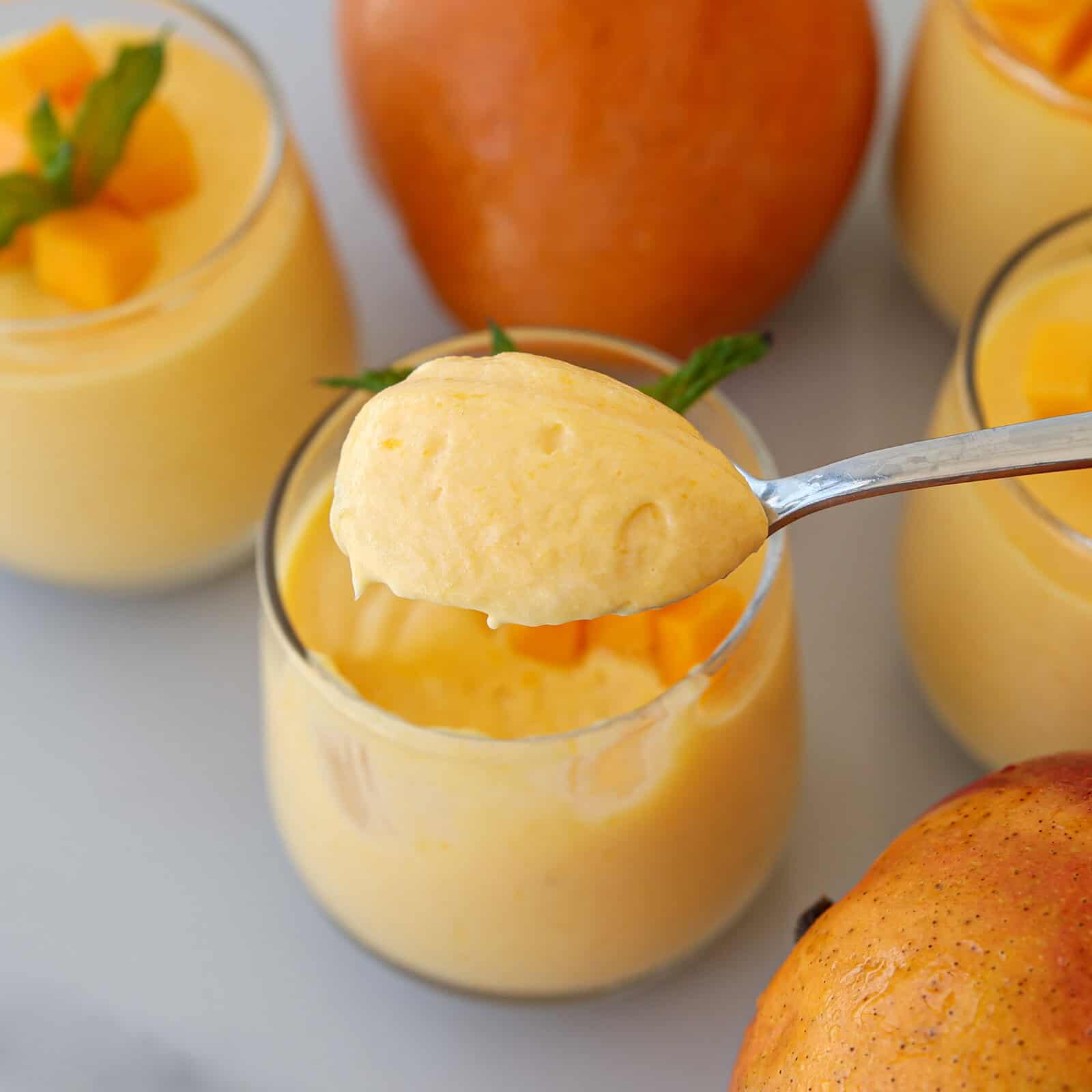
My light and airy, sweet and tangy, eggless Mango Mousse is the 3-ingredient dessert recipe you’ve been missing! It’s also a year-round favorite, equally delightful served as a post-BBQ treat as it is a palate-cleanser after a heavy, multi-course winter meal.
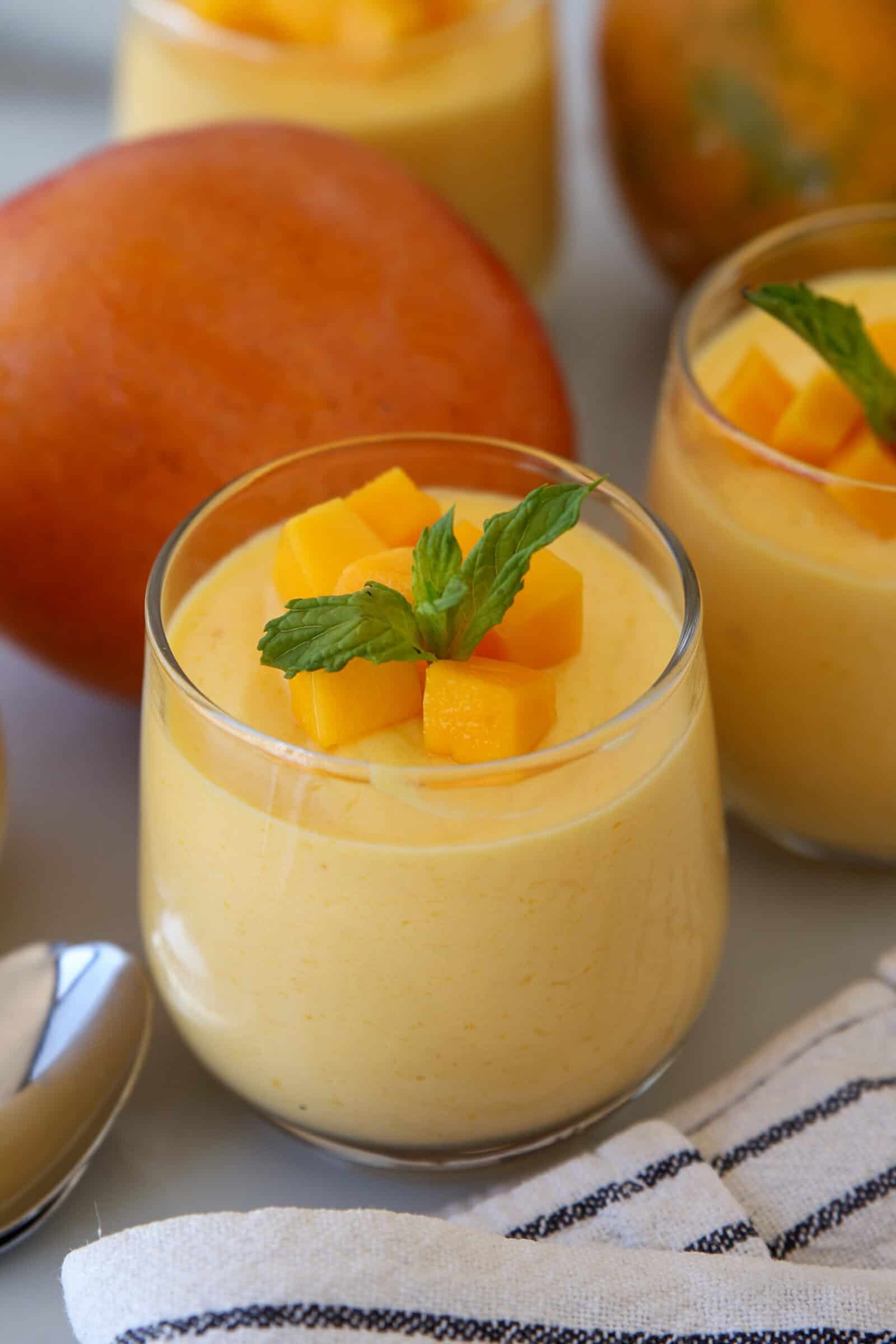
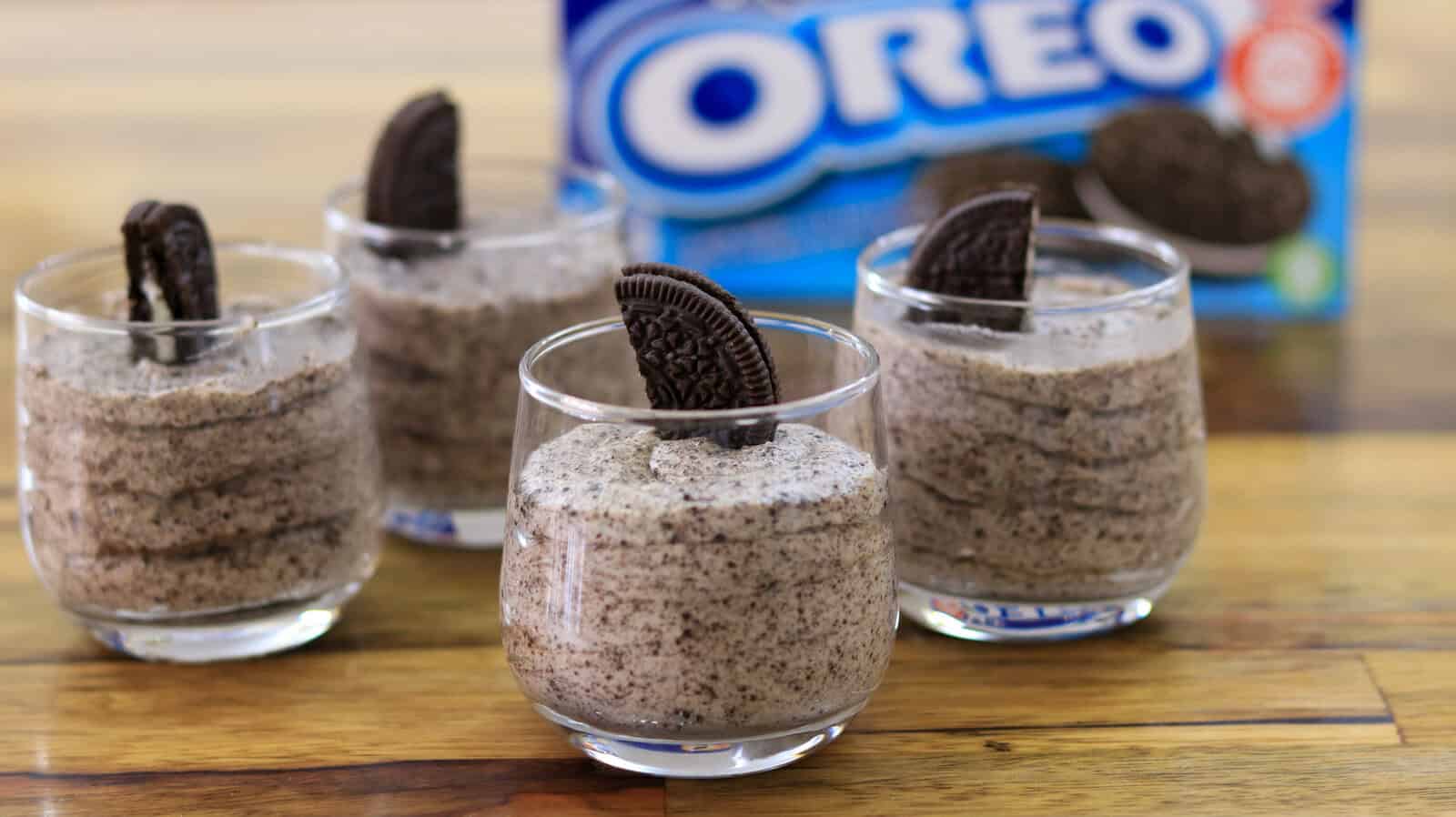
While I have nothing against pudding, there’s something extra special about a fluffy cloud of mousse for dessert. And, while it may sound fancy, this creamy-dreamy treat category is actually easy to pull off. Don’t believe me? After you try this fresh mango mousse recipe, give my 2-ingredient chocolate mousse and 3-ingredient Oreo mousse a try next!
Why You’ll Love This Easy Mango Dessert Recipe
- Next time you’re in the market for a simple, last-minute dessert that’s worthy of a fancy dinner party, this 3-ingredient mango mousse should make the short list. With no gelatin-blooming and no egg white-separating to speak of, it’s easy enough for any kitchen newbie to master.
- If you’re feeding a mixed crowd, this lusciously fluffy mango treat is a boon. It’s naturally gluten-free, egg-free, soy-free, nut-free, and vegetarian. You can also make it dairy-free and vegan with one simple ingredient swap.
- The richness of heavy cream adds a luxurious mouthfeel, while the tropical brightness of mango keeps it light and lovely. It’s the perfect end to any meal!
Ingredients & Substitutions
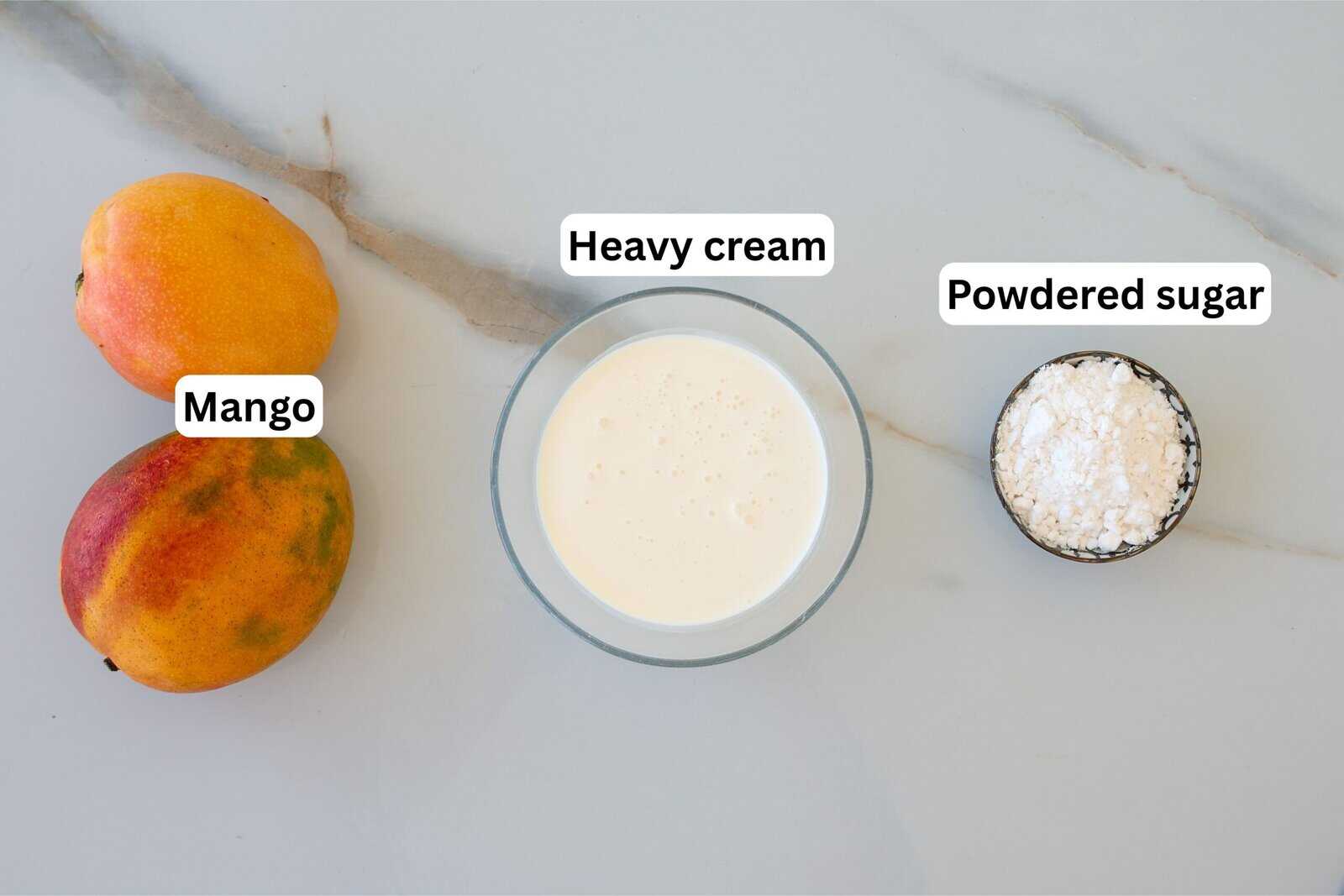
- Mango – I prefer to make my own fresh mango purée, as it gives me the option to choose different varieties I like best. That said, you can use store-bought unsweetened mango purée if you prefer a shortcut!
- Heavy Cream – Also known as double cream, this is the richest dairy of them all. Feel free to swap in slightly lighter whipping cream if needed.
- Powdered Sugar – Made with granulated sugar and starch (usually corn or potato), powdered sugar both sweetens the whipped cream and helps give it a bit of structure.
- Vanilla Bean Paste – Optional, but nice if you like a warm, aromatic undertone.
- Mint Leaves – Optional, but pretty as a garnish.
This is just a short review of the ingredients; for the complete recipe, including quantities, scroll down to the recipe card 👇
How to Make Mango Mousse with Fresh Mangoes
Watch the full video recipe to learn how to make the BEST Fresh Mango Mousse. This step-by-step tutorial simplifies the process, offering tips and tricks to guarantee perfect results every time.
Prefer the written recipe? Scroll down to the recipe box 👇
How This Mango Mousse Differs from Traditional Recipes
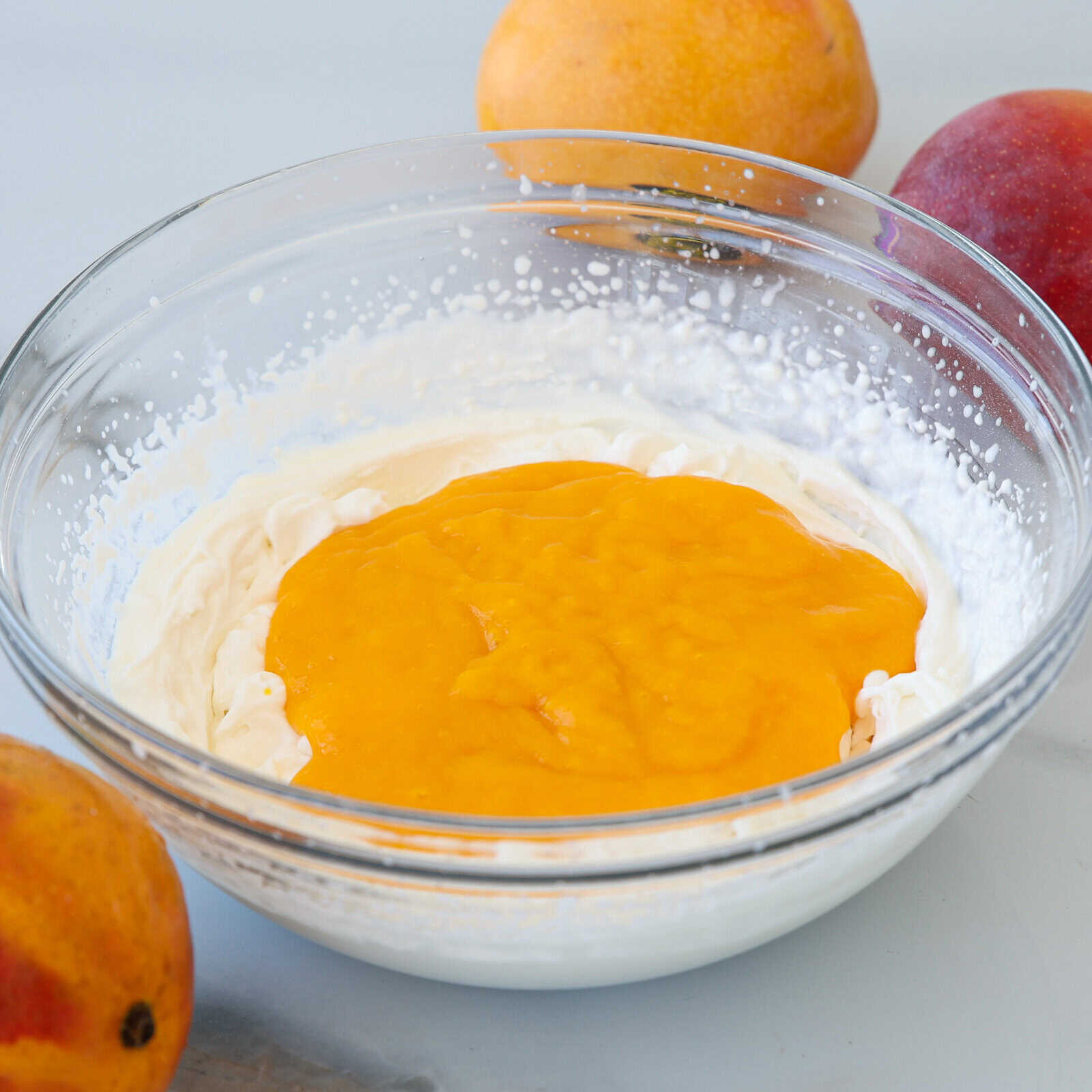
Most mousse recipes call for ingredients like gelatin or whipped egg whites to give them structure and lightness. Gelatin creates a firmer set that’s perfect for molded desserts or layered cakes, while egg whites add volume and an airy texture.
This egg-free mango mousse keeps things simpler by relying only on whipped cream and the natural body of mango purée. The result is a mousse that’s ultra-creamy, rich, and fresh-tasting, with no fussing over eggs or specialty stabilizers. It’s ideal if you want a quick, beginner-friendly recipe that still feels luxurious. The only downside is that it deflates rather quickly.
🛠 How to Stabilize Mango Mousse
If you plan to pipe this mousse into a tart shell, layer it into parfait glasses, or make it ahead of time for a party, stabilizing it will help it hold its shape. Here are a few options:
- Gelatin: Dissolve 1 teaspoon unflavored gelatin in 2 tablespoons cold water. Let it bloom for 5–10 minutes, then microwave for about 15 seconds until liquid. Stir in 1 tablespoon of mango puree to temper it, then mix back into the rest of the puree. Once cooled slightly, fold it into the whipped cream.
- Agar-Agar (Vegetarian): A plant-based alternative to gelatin. Follow package directions, stir it into the mango puree, let cool slightly, then fold into the cream.
- Cream Cheese or Mascarpone: Folding in 2–3 tablespoons gives the mousse a richer flavor and more body while keeping it smooth and creamy.
- Instant Pudding Mix: Replace the powdered sugar with 2–3 tablespoons of vanilla pudding powder and whip it with the cream. This adds subtle flavor while keeping the mousse thick and stable.
Optional Variations & Dietary Adaptations
- Dairy-Free/Vegan Mango Coconut Mousse: Swap the heavy cream for full-fat coconut cream. Chill a can of coconut milk overnight, then scoop out the thick cream on top and whip it just like you would dairy cream. Consider swapping out the vanilla extract for coconut extract and garnishing with toasted coconut to double down on the tropical vibes.
- Refined Sugar-Free – Swap in your favorite sugar-free powdered sugar alternative for a no sugar added dessert. Note that mangoes are a natural source of sugar, so you can’t make it fully sugar-free.
- Stabilized – Use any of the stabilizing methods listed above for a firmer, more classic mango mousse consistency.
- Spiced Mango Mousse – Add a pinch of cardamom or cinnamon to the mango puree for a warm, aromatic twist.
Expert Tips & Tricks
- Use ripe, sweet mangoes. The flavor of your mousse depends on the fruit. Ataulfo (honey mango) or Alphonso are excellent choices for their intense sweetness and smooth texture. If using frozen mango, thaw completely and drain any excess liquid before pureeing. Got extra ripe mangoes? Try my mango sticky rice recipe, a classic Thai dessert that highlights their natural sweetness.
- Sweetness level. Adjust how much powdered sugar you add depending on the sweetness of your mangoes. Some ripe mangoes may not need as much.
- Chill everything. Cold cream whips up faster and holds more air. For best results, chill your mixing bowl and beaters in the fridge or freezer for 10 minutes before whipping.
- Fold, don’t stir. When combining the mango puree with whipped cream, gently fold with a spatula. Stirring aggressively will deflate the whipped cream and make the mousse heavy instead of airy.
- For extra smooth mousse. Strain the mango puree through a fine mesh sieve to remove fibers before folding into the cream.
- Serve chilled. This egg free mango mousse without gelatin needs at least 1–2 hours in the fridge to firm up. Always serve it straight from the fridge, and avoid letting it sit out too long since there are no stabilizers added.
How to Serve
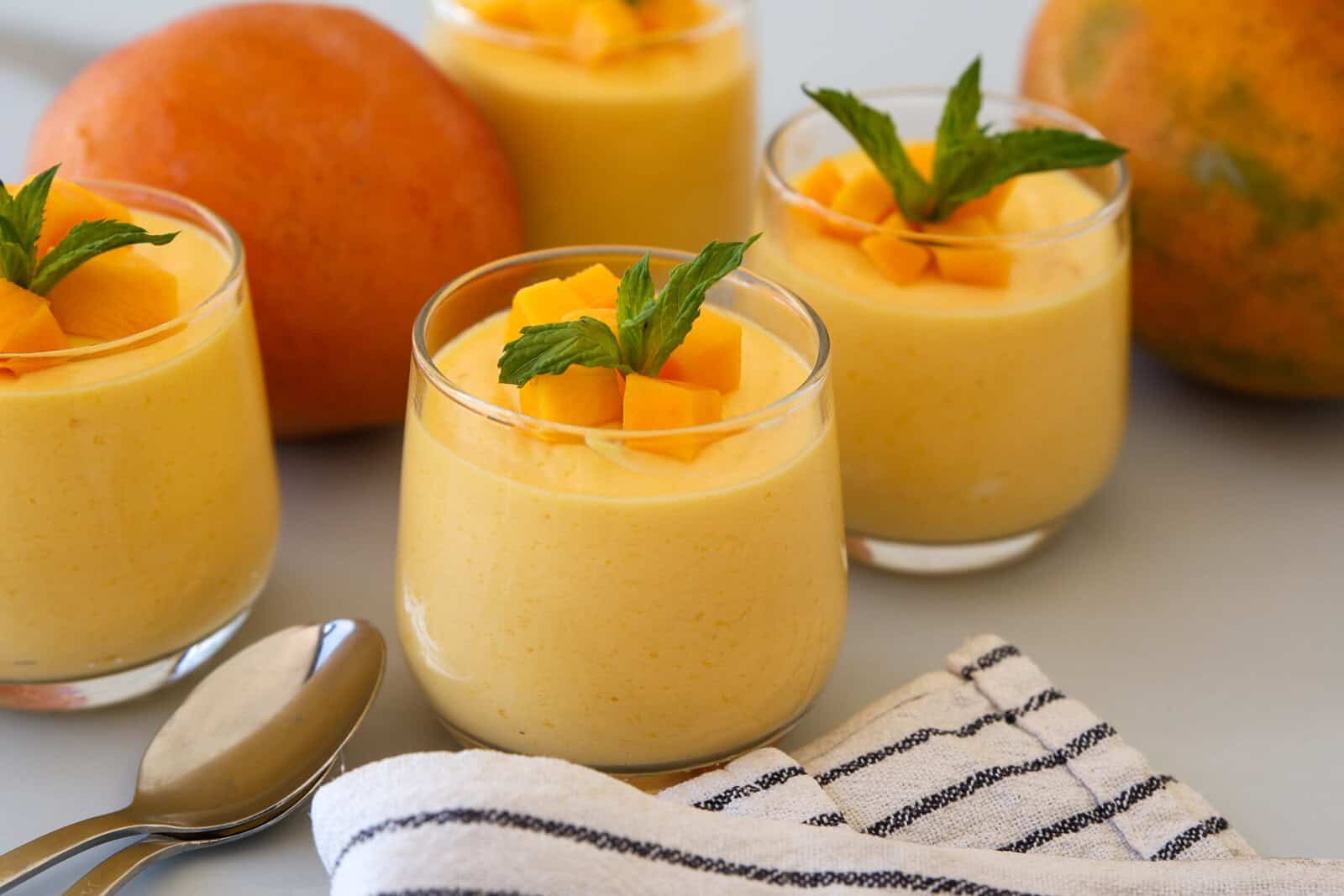
Mango mousse is light, creamy, and versatile, making it easy to dress up or keep simple. Serve it in individual glasses with a swirl of whipped cream and a few mint leaves for an elegant dinner party dessert. For extra color, garnish with diced fresh mango, raspberries, or a dollop of passionfruit pulp.
If you’re feeling fancy, pipe the mousse into tart shells and top with toasted coconut, berries, or candied ginger for a tropical twist. It also layers beautifully with mango pound cake, vanilla sponge cake or ladyfingers to create a quick trifle. For a casual take, serve the mousse alongside melt-in-your-mouth butter cookies or snickerdoodles for dipping.
How to Store 3-Ingredient Mango Mousse
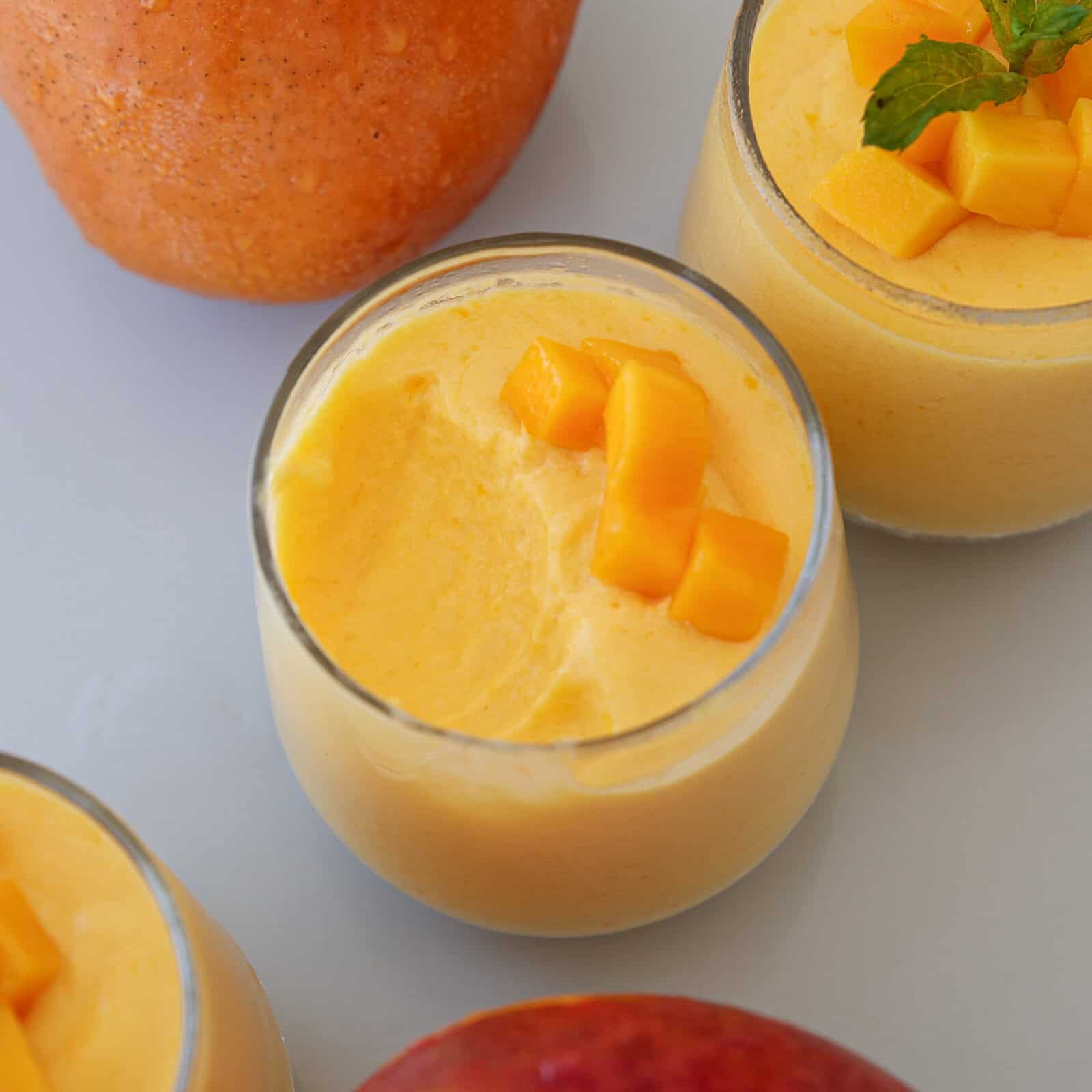
- Refrigerator: Keep the gelatin-free mango mousse covered with plastic wrap or in an airtight container in the fridge for up to 2 days. (Because this recipe doesn’t use gelatin or egg whites, it’s best enjoyed fresh—the mousse will gradually lose some of its structure over time.)
- Freezer: Freezing is not recommended.
- Room Temperature: Do not leave the mousse out for long, as it softens quickly and can become runny. Always keep it chilled until ready to serve.
- If Stabilized: When stabilized with gelatin, agar-agar, or cream cheese/mascarpone, the mousse will hold its shape longer. You can prepare it up to 3 days ahead, and it’s sturdy enough for piping into tart shells, layering in cakes, or transporting to gatherings.
More Easy Dessert Recipes
Easy 3-Ingredient Mango Mousse (Eggless)
Equipment
Ingredients
- 7 oz (200 g) Mango from about 2 medium mangoes
- 1 cup (240 ml) Heavy cream cold
- 4 tablespoons (30 g) Powdered sugar
Optional:
- 1 teaspoon Vanilla bean paste or extract
- Mint leaves for decoration
Instructions
- Prepare the mango puree: Peel and cut the mangoes into cubes. Place in a blender or food processor and blend until smooth. Set aside.
- Whip the cream: In a chilled mixing bowl, beat the heavy cream, powdered sugar, and vanilla (if using) until stiff peaks form.
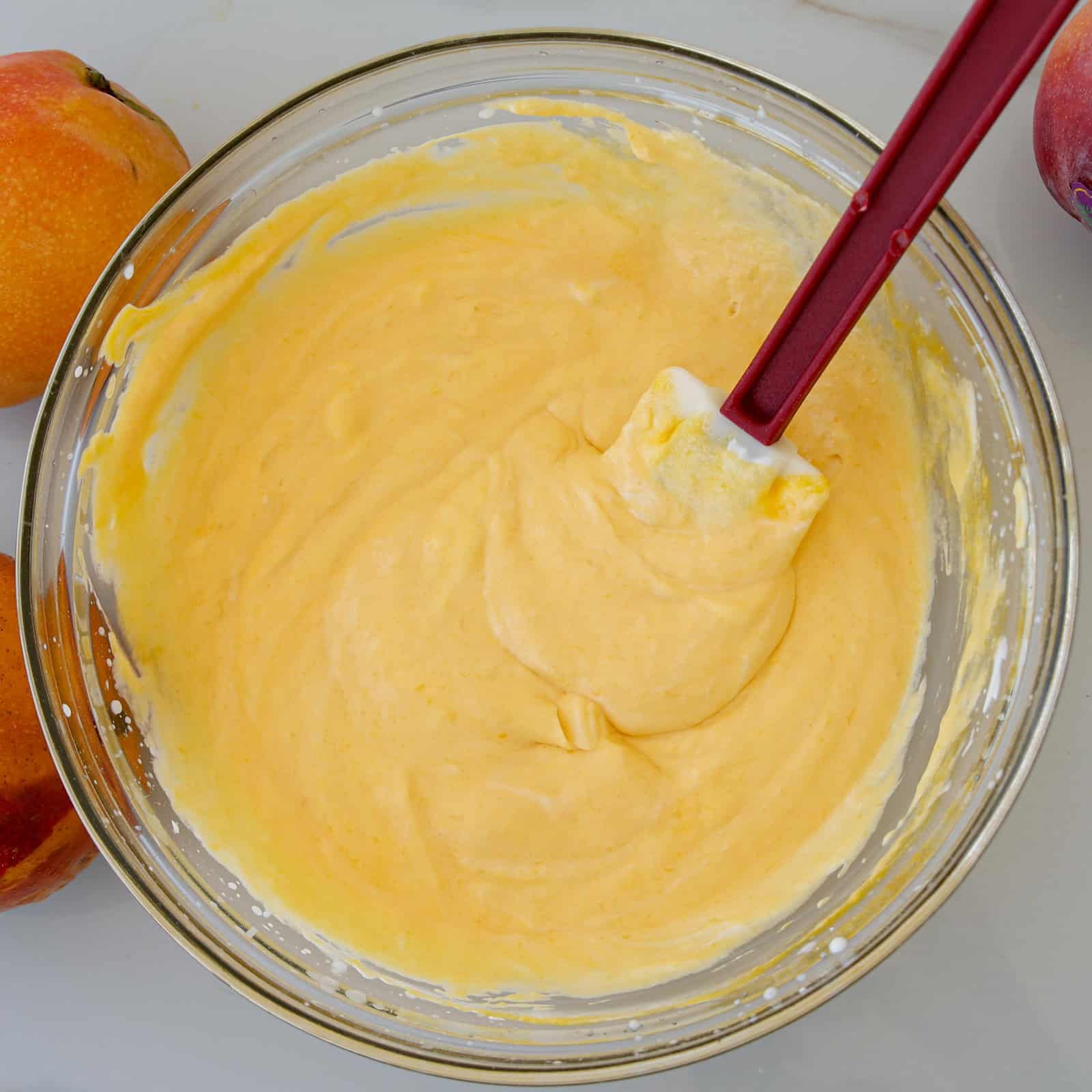
- Fold in the mango: Gently fold the mango puree into the whipped cream until fully combined and no streaks remain.
- Pipe and chill: Transfer the mousse to a piping bag. If it feels too runny, refrigerate the piping bag for 1 hour before using. Pipe into serving glasses or bowls.
- Set and serve: Refrigerate for at least 4 hours or overnight.
- Decorate and serve: Just before serving, garnish with fresh mango cubes and mint leaves. (optional)
Video
Notes
- Storage: Keep the mousse covered in the fridge for up to 2 days. Do not leave at room temperature for long, as the mousse softens quickly.
- Sweetness level: Adjust powdered sugar depending on the sweetness of your mangoes. Some ripe mangoes may not need as much.
- Heavy cream: For best results, use full-fat heavy cream (at least 35% fat). Make sure it is very cold before whipping. Chilling your bowl and beaters also helps achieve stable whipped cream.
- Shortcuts: For convenience, you can use store-bought mango pulp or puree (such as Alphonso mango pulp, often found in cans). Just make sure it’s unsweetened or adjust the sugar in the recipe accordingly.
- Stability warning: This mousse is not very stable since it contains no stabilizers. Always serve it straight from the fridge, and avoid letting it sit out too long.
- Serving idea: Layer the mousse with crushed cookies, sponge cake cubes, or granola for a parfait-style dessert.
-
How to stabilize the mousse:
- Gelatin: Dissolve 1 teaspoon gelatin in 2 tablespoons cold water and let it bloom for 5–10 minutes. Melt the bloomed gelatin in the microwave for about 15 seconds until liquid. Stir 1 tablespoon of mango puree into the gelatin (to temper it), mix until smooth, then combine it back into the remaining mango puree. Finally, fold into the whipped cream.
- Agar-agar: A vegetarian alternative to gelatin. Prepare according to package directions, mix into the mango puree, and allow it to cool slightly before folding into the cream.
- Cream cheese or mascarpone: Folding in 2–3 tablespoons will add richness and improve structure while keeping the mousse creamy.
- Instant vanilla pudding mix: Replace the powdered sugar with 2–3 tablespoons of pudding powder and whip it with the cream. It stabilizes the mousse while adding a subtle vanilla flavor.
Nutrition
FAQs
While both are creamy desserts, mousse feels more delicate, whereas pudding is rich, dense, and custard-like. Mousse is made by folding whipped cream (and sometimes whipped egg whites) into mango puree, giving it a fluffy, cloud-like consistency. Pudding, on the other hand, is thicker and creamier, usually made by cooking milk or cream with a starch like cornstarch until it sets.
Classic mousse, which originated in France in the 18th century, is a light, airy dessert made with chocolate, coffee, or fruit purées combined with whipped cream and/or egg whites. The word mousse comes from the French word for “foam,” which perfectly describes its fluffy, delicate consistency. Depending on the recipe, mousse can be served sweet (like chocolate or mango mousse) or savory (such as smoked salmon mousse), and it’s usually chilled to help it set before serving.




Thank you for this lovely recipe, my family loved it.
Love this mango mousse recipe, made it with my 8-year-old and it was a huge hit!
Can I use canned mango pulp in this recipe?
Sure.
Thank you and God bless you for sharing your Talents with us, love your recipes