
Authentic Thai Mango Sticky Rice
This post may contain affiliate links.
Bring a taste of Thailand to your table with my easy Mango Sticky Rice recipe. This naturally vegan, naturally gluten-free dessert is simply made with just 8 ingredients and about 20 minutes of active prep. If you love tropical flavors, it’ll be right up your alley!
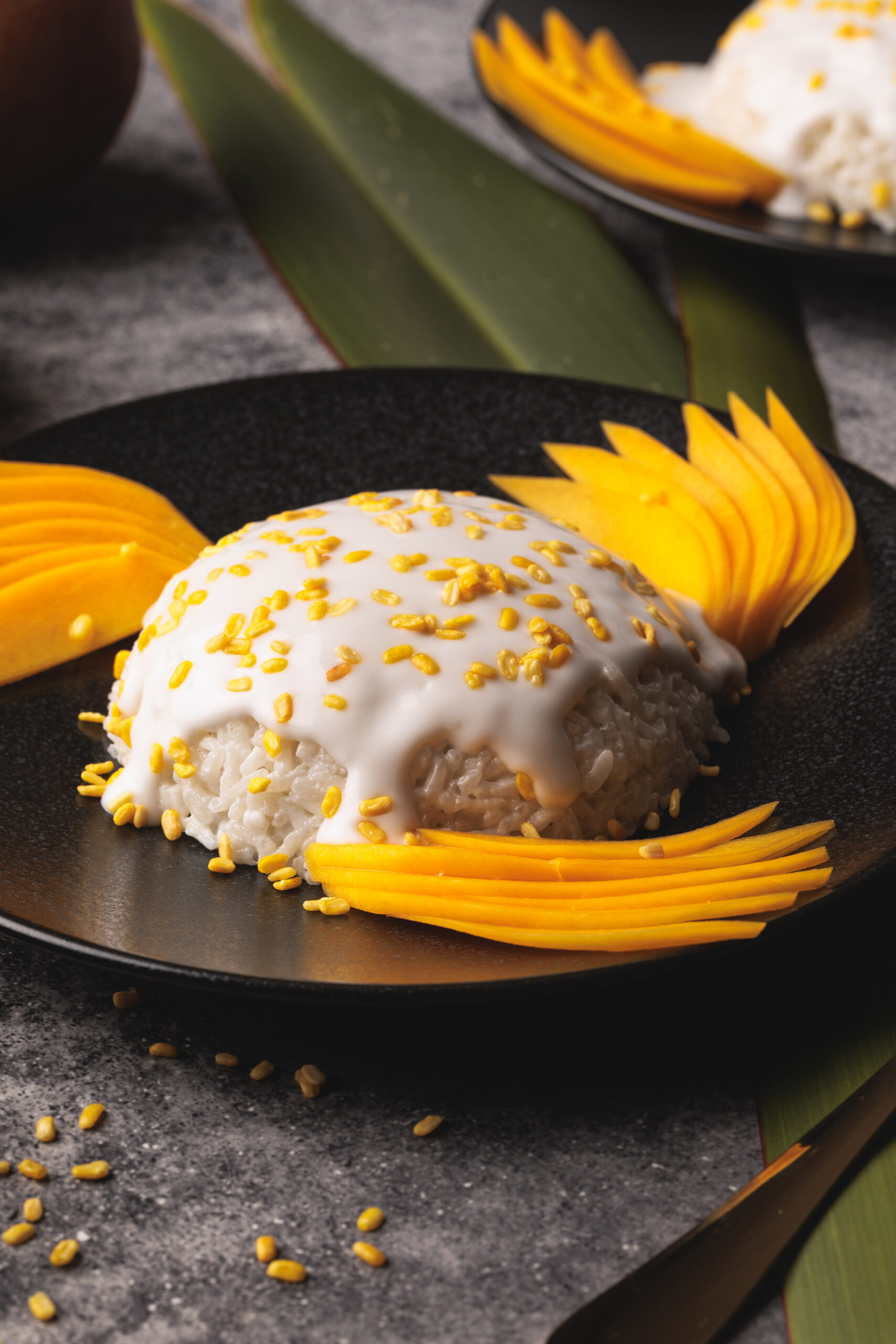
Ever since I learned how to make this sweet mango sticky rice in Thailand, we have been making it at least once a month. It has the cozy, casual air of rice pudding, but with a decidedly tropical twist thanks to creamy coconut milk and vibrant mango. If you’re looking to expand your repertoire of gluten-free desserts, this fruity treat is a lovely (and inexpensive!) place to start.
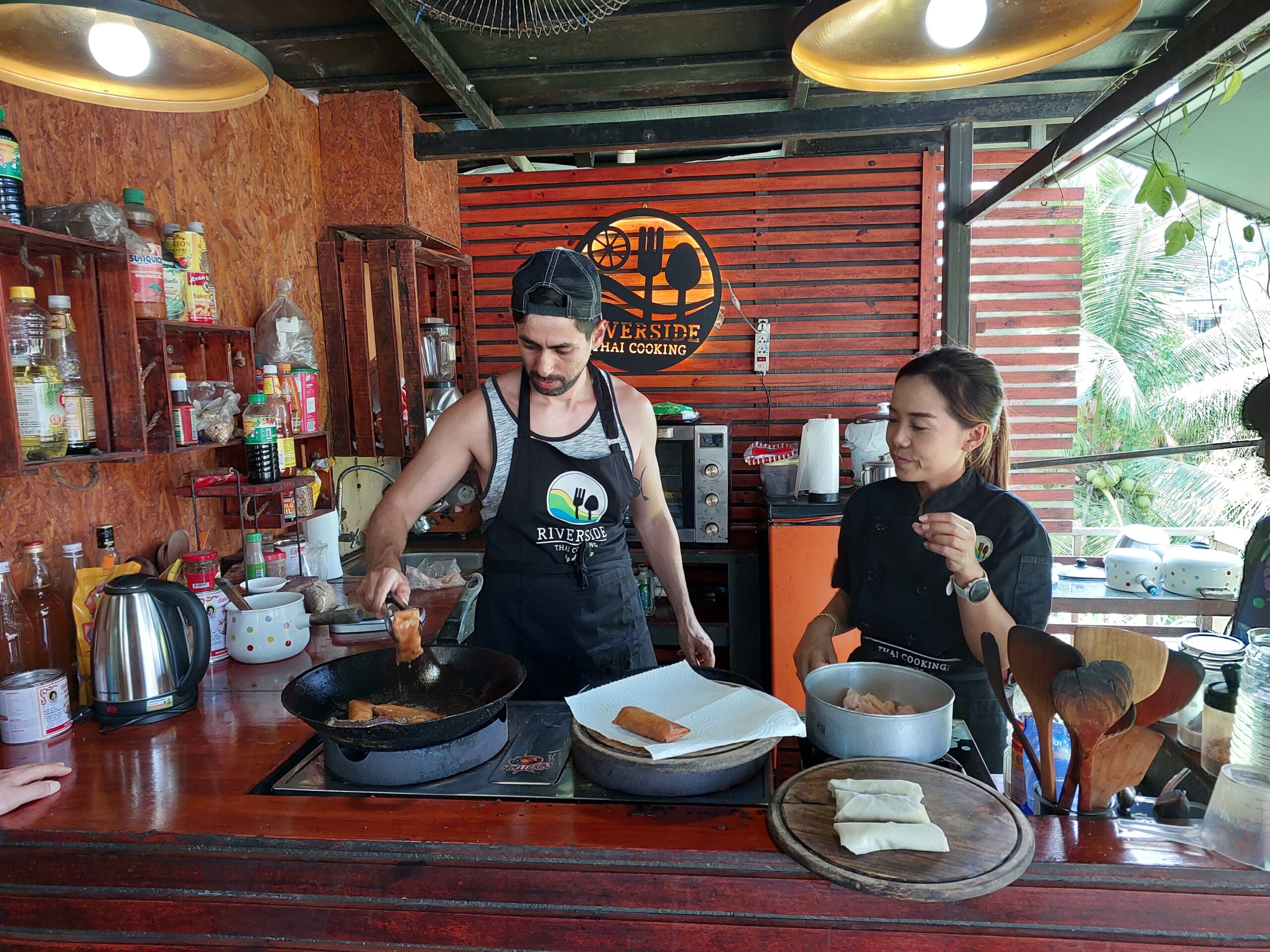
Back in 2023, I took Thai cooking classes in Thailand with a local chef, and it completely changed how I approach Southeast Asian cooking.
I learned to make classics like pad thai, green curry, and tom yum, but the one recipe that really stayed with me was mango sticky rice.
It’s simple, but when done right, steamed sticky rice, rich coconut sauce, and perfectly ripe mango, it’s unforgettable. Since that trip, I’ve made it countless times, and this is my go-to version.
Ingredients & Substitutions
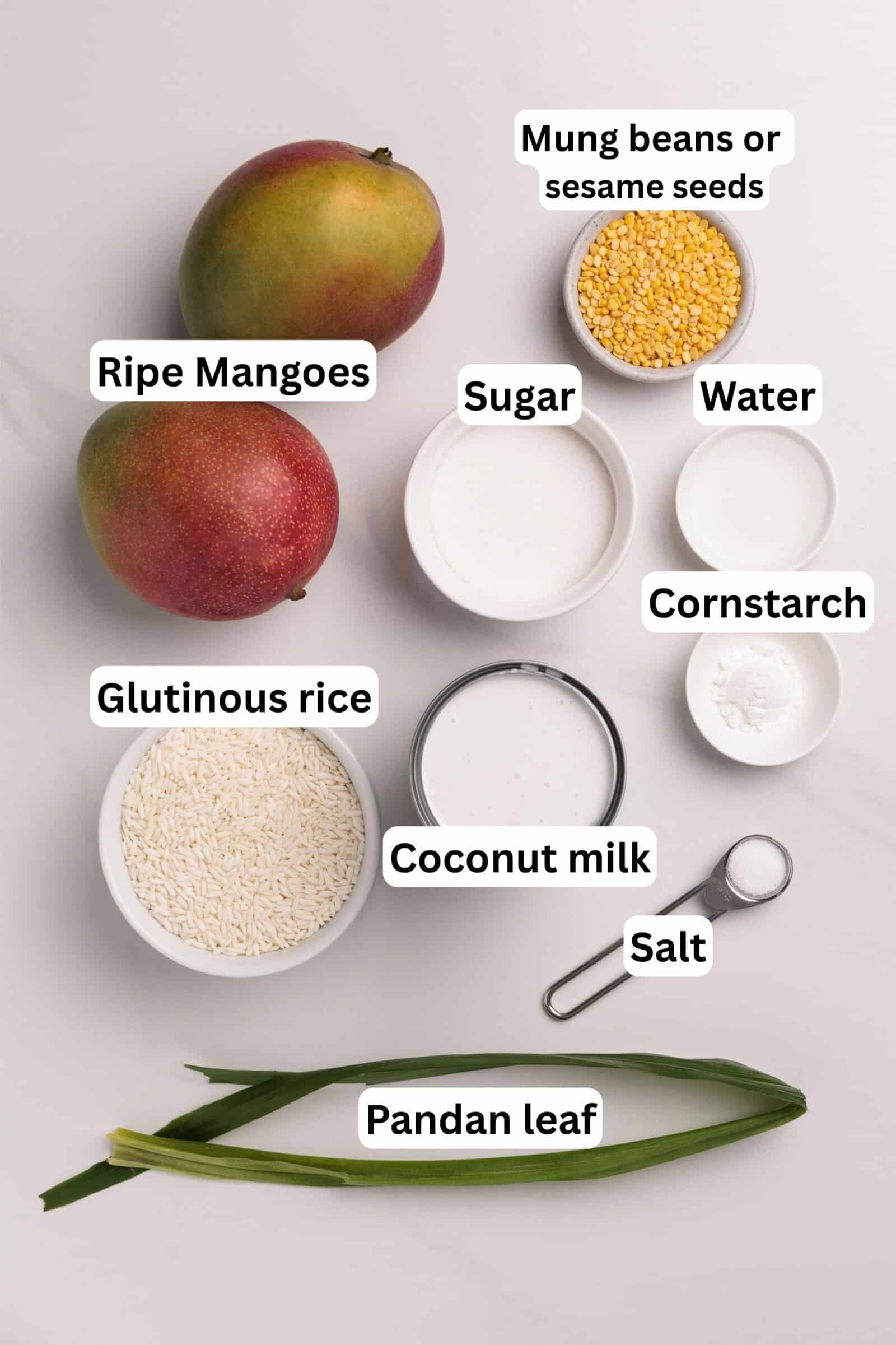
- Glutinous Rice (Sticky Rice) – The star of our recipe!
- Canned Full Fat Coconut Milk – Make sure you’re using full-fat coconut milk for the best flavor and mouthfeel. Light coconut milk results in a thinner, less creamy sauce. Shake the can well to combine, as the cream and milk tend to separate.
- Granulated Sugar – White sugar has a neutral flavor that allows the coconut, mango, and pandan to shine. If you prefer a less-refined option, swap in pure cane sugar.
- Salt – Just a pinch helps balance out the sweetness and draws out more of the naturally fruity flavors.
- Pandan Leaf – Pandan leaf adds a subtle floral, vanilla-like aroma for a more authentic Thai mango sticky rice. It’s optional, but highly recommended if available. Simply tie it into a knot and steep it in the coconut sauce, then remove before serving. It can be challenging to find, so don’t worry if you can’t get it. Feel free to omit it or use a small amount of vanilla extract instead.
- Cornstarch – For thickening the coconut sauce.
- Ripe Mangoes – Choose very ripe, sweet mangoes that are soft and fragrant. Avoid fibrous or underripe mangoes. Thai varieties like Nam Dok Mai are ideal, but any smooth, juicy mango will work.
- Toasted Mung Beans – Toasted mung beans add a light crunch and contrast to the soft, sticky rice. If you can’t find them, toasted sesame seeds make a great alternative.
This is just a short review of the ingredients; for the complete recipe, including quantities, scroll down to the recipe card 👇
What Is Glutinous Rice and Why Does It Matter?
Glutinous rice (also called sticky rice or sweet rice) is essential for authentic mango sticky rice—regular jasmine or long-grain rice simply won’t work.
What makes it different: Despite the name, glutinous rice contains no gluten. It’s called “glutinous” because of its sticky, glue-like texture when cooked. The difference is in the starch composition: glutinous rice is almost entirely amylopectin (a sticky starch), while regular rice contains both amylopectin and amylose (which keeps grains separate and fluffy). This unique starch structure is what gives sticky rice its signature chewy, clingy texture.
Why regular rice fails: Regular rice won’t absorb the sweetened coconut sauce properly. Instead of becoming glossy and pleasantly chewy, it turns mushy and waterlogged. The grains fall apart rather than stick together, and you lose that essential textural contrast between the tender rice and fresh mango.
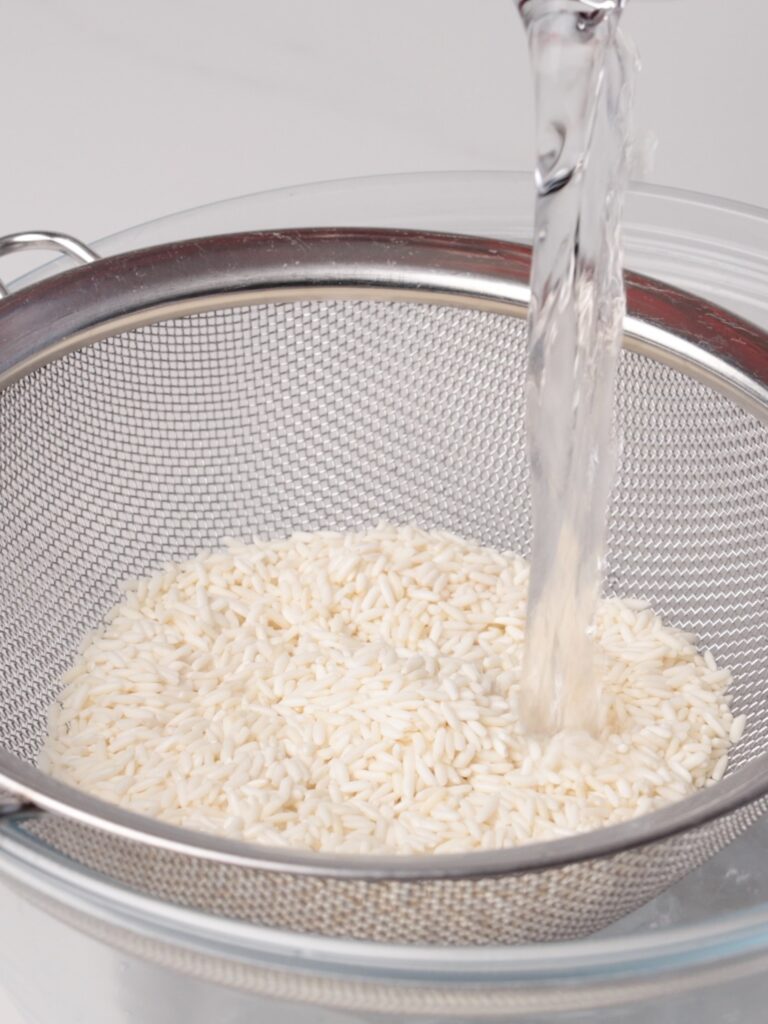
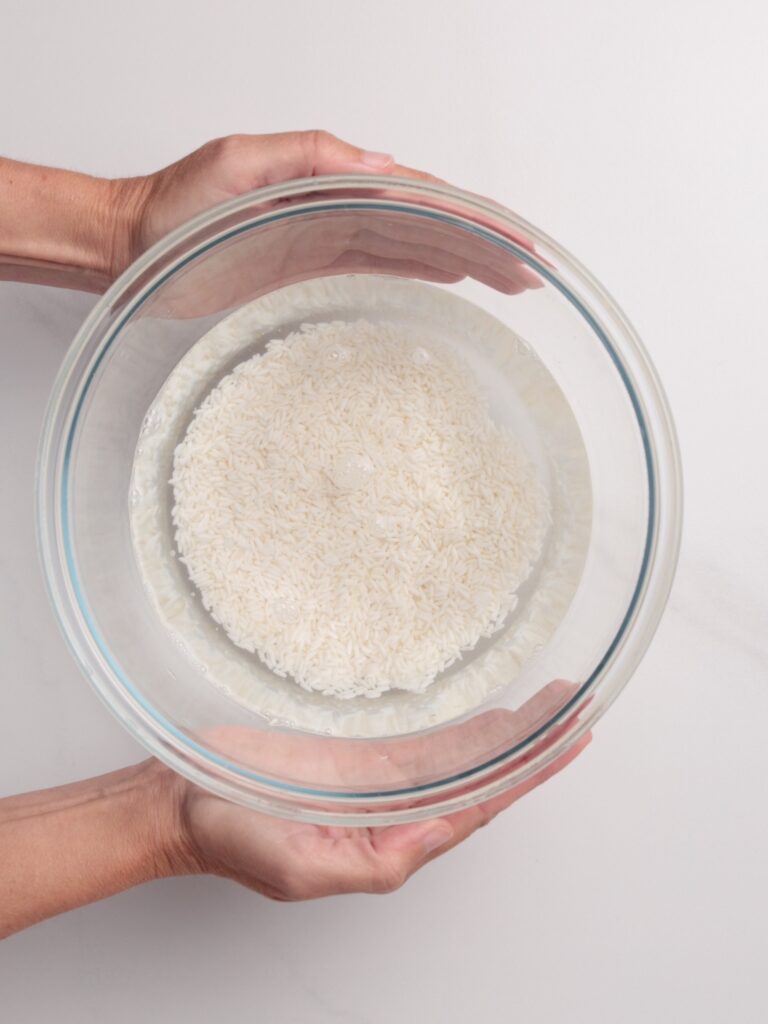
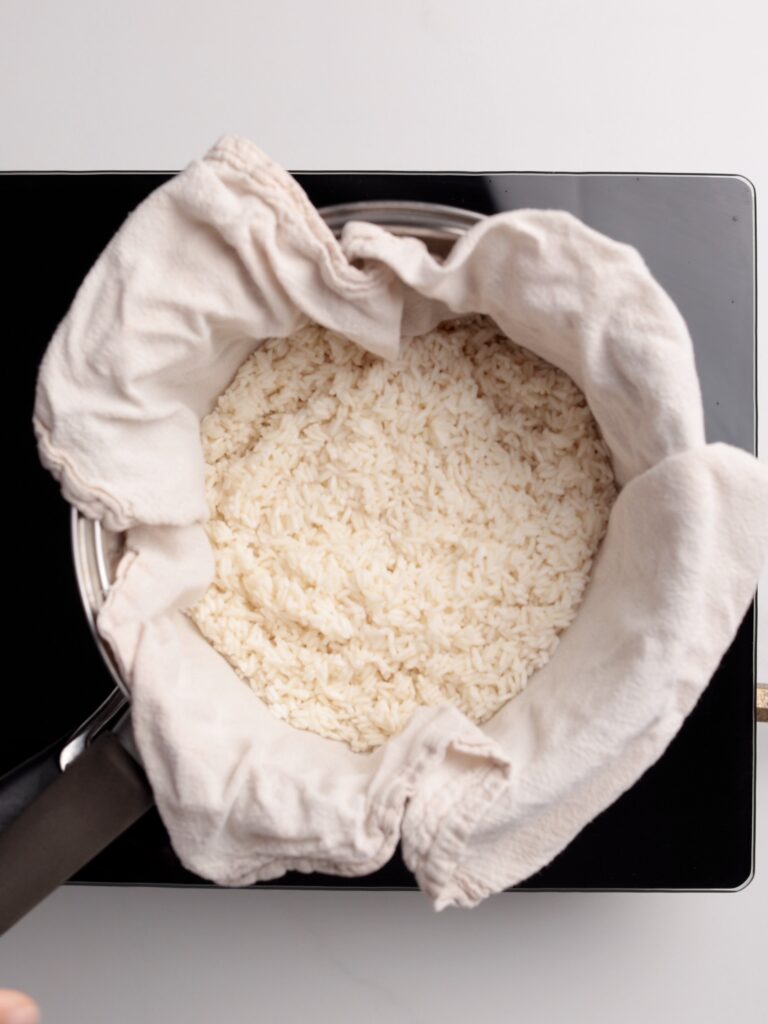
How to prepare it: Glutinous rice must be steamed, not boiled. Soaking the rice for at least 4 hours (or overnight) hydrates the grains first, then steaming cooks them gently and evenly without adding excess water. Boiling would oversaturate the rice and turn it into porridge. Steaming preserves the distinct chewy texture and allows the grains to absorb the coconut sauce after cooking, creating a perfectly glossy, sweet finish that makes this dessert so special.
How to Cook Glutinous Rice?
All About Mung Beans
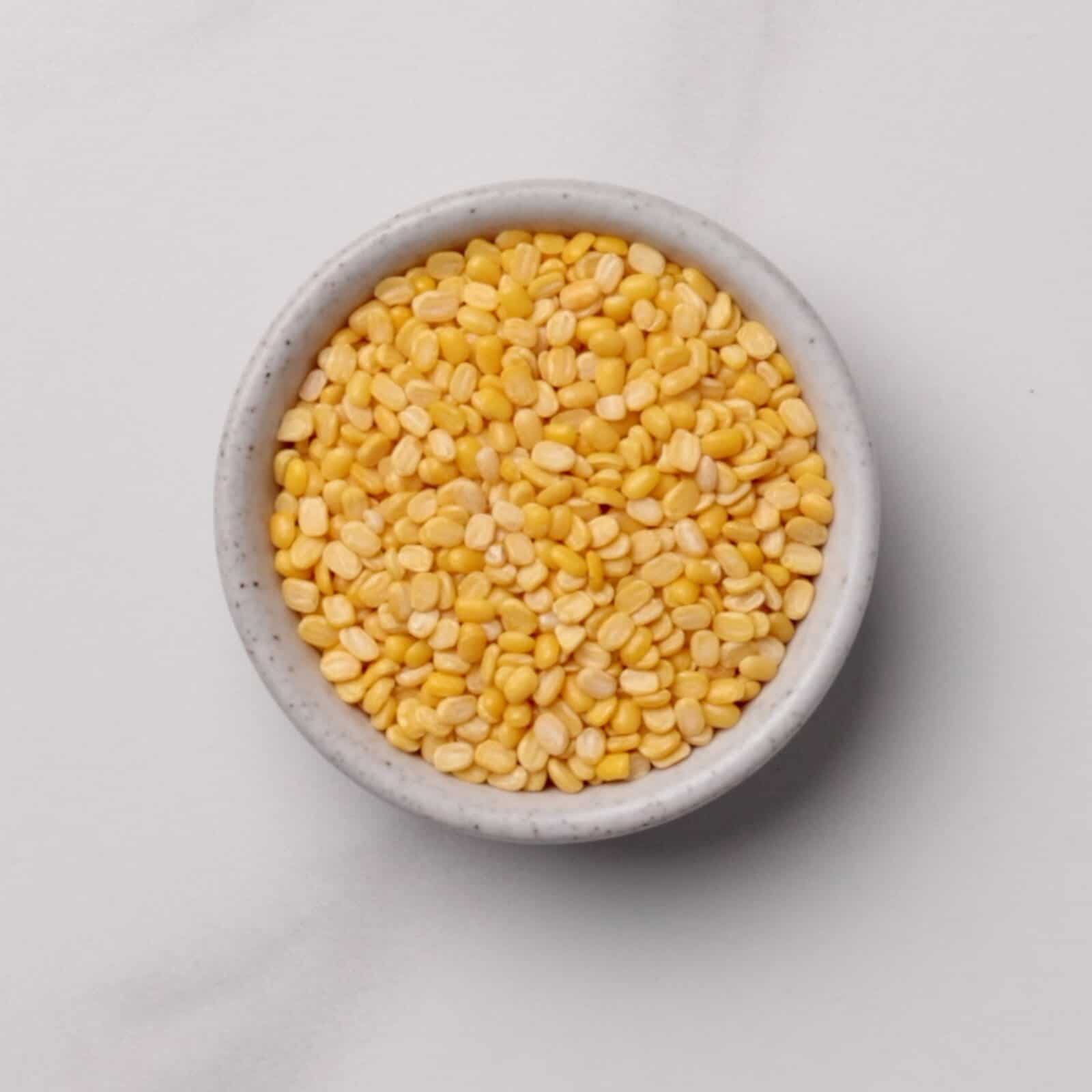
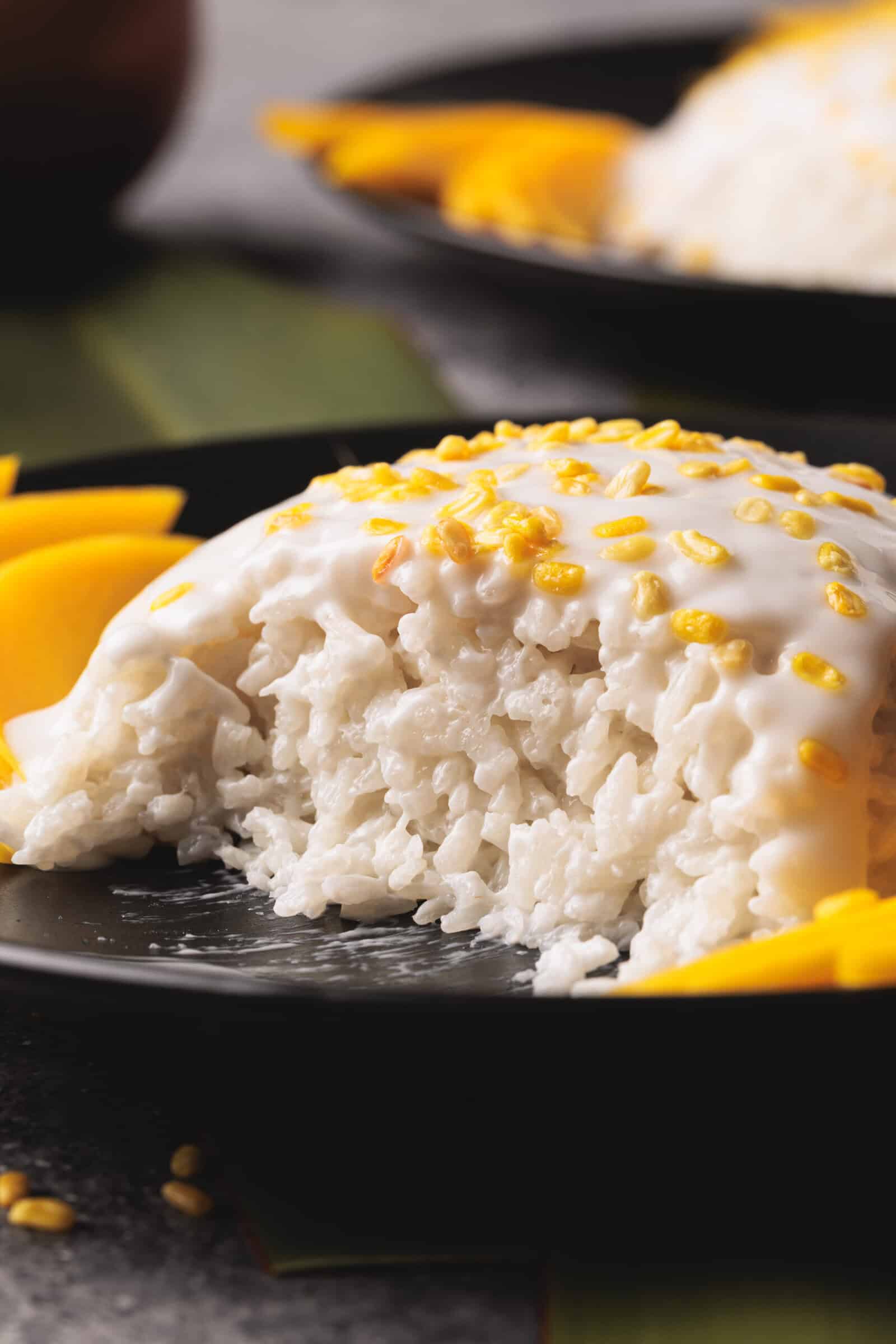
Toasted mung beans are a traditional topping for mango sticky rice that adds a light, nutty crunch and a subtle savory contrast to the soft, sweet coconut sticky rice. They’re not always included, but they infuse the dish with textural variety and authentic Thai flavor.
What to use: In Thailand, hulled split yellow mung beans (also known as moong dal in Indian cooking) are typically used. These cook faster and toast more evenly than whole green mung beans. You can find them at Asian grocery stores or Indian markets.
How to prepare them: If using raw mung beans, soak them in water for at least 30 minutes to soften slightly and ensure even toasting. Drain them well and pat dry with a towel—excess moisture will cause them to steam instead of crisp up. Then dry roast them in a dry skillet over medium heat, stirring frequently, until they turn lightly golden and become crisp and fragrant, about 5-7 minutes. Let them cool completely before sprinkling over your mango sticky rice.
How to Make Mango Sticky Rice
Watch the full video recipe to learn how to make the BEST Thai Mango Sticky Rice.
Prefer the written recipe? Scroll down to the recipe box 👇
Optional Variations & Dietary Adaptations
- Corn-Free – If you can’t eat corn, swap in an equal amount of potato starch or mochi rice flour to thicken the sauce.
- Gluten-Free – Mango sticky rice is naturally gluten-free! Just double-check the packaging to make sure it hasn’t been processed in a facility with gluten-containing ingredients.
- Add-Ons – While it’s not authentic, feel free to dress up your bowl with strawberry chia seed jam, berry sauce, and/or extra fruit like fresh berries, toasted coconut, or sliced papaya.
Expert Tips & Tricks
- Sweetness level: Coconut mango sticky rice should be sweet but balanced. Traditional versions are not overly sugary and the salt in the coconut sauce helps balance the sweetness. Feel free to slightly adjust the sugar to taste, depending on how sweet your mangoes are.
- Use the right rice: Only glutinous (sticky) rice will work. Look for labels that say “sweet rice,” “sticky rice,” or “glutinous rice”—usually in Asian grocery stores. Regular jasmine rice is not a substitute.
- Don’t skip the soak: Soak your glutinous rice for at least 4 hours, preferably overnight. This ensures the grains cook evenly and achieve that signature chewy texture without becoming hard or crunchy in spots.
- Steam, never boil: Steaming is non-negotiable. Use a bamboo steamer lined with cheesecloth, a Thai sticky rice steamer basket, or even a metal steamer lined with parchment. Boiling will turn your rice into mush!
- Warm coconut mixture: Heat your sweetened coconut milk slightly before mixing it with the cooked rice. Warm coconut sauce absorbs better and more evenly than cold.
- Let it rest: After mixing the rice with coconut sauce, cover and let it sit for 20-30 minutes. This resting time allows the rice to fully absorb the liquid and develop its creamy, glossy finish.
- Choose ripe mangoes: Use ripe, sweet mangoes like Ataulfo (honey), Nam Dok Mai (if you can find them), or regular yellow mangoes. They should yield slightly to pressure and smell fragrant. Underripe mangoes will be too tart and fibrous.
- Serve at room temperature: Mango sticky rice is best served warm or at room temperature, not cold. The coconut cream can solidify when chilled, and the flavors are more vibrant when not straight from the fridge.
How to Store & Reheat Mango Sticky Rice
- Room Temperature: Mango sticky rice is best enjoyed fresh but can sit at room temperature for up to 2 hours. Keep it covered to prevent the rice from drying out. Beyond that, refrigerate to prevent spoilage, especially in warm weather.
- Refrigeration: Store leftover sticky rice and mangoes in separate airtight containers for up to 2 days. The coconut sauce will firm up when cold, and the mango may release moisture (it’s best served fresh). Keep any extra coconut topping sauce in a separate container in the fridge for up to 3 days.
- Freezing: Freeze the cooked sticky rice (without mango) in an airtight container or freezer bag for up to 1 month. Do not freeze fresh mango, as it becomes mushy and loses texture. Freeze any leftover coconut sauce separately.
- Reheating (Microwave): Place refrigerated sticky rice in a microwave-safe bowl, sprinkle with 1-2 tablespoons of water or coconut milk, cover with a damp paper towel, and microwave in 30-second intervals until warmed through. This restores moisture and softness.
- Reheating (Steamer): Steam refrigerated or frozen sticky rice for 5-10 minutes until heated and soft again. This is the best method for maintaining the original texture.
More Mango Dessert Recipes
Mango Sticky Rice
Ingredients
For the rice mixture:
- 1 cup (200 g) Glutinous rice (sticky rice) see notes
- Water for soaking
For the coconut sauce:
- 1 can (400 ml) Coconut milk Full-fat
- ⅓ cup (67 g) Sugar see notes
- ½ teaspoon Salt
- 1 Pandan leaf *optional-see notes
For thickened topping:
- 1 teaspoon Cornstarch or rice flour
- 1 tablespoon Water
To serve:
- 2 Ripe mangoes *see notes
- ¼ cup Toasted mung beans or sesame seeds (optional)
Instructions
- Rinse and soak the rice: Rinse the sticky rice under cold water until the water runs clear. Place the rice in a bowl and cover with water. Soak for at least 3-4 hours, preferably overnight. If the soaking water is still cloudy afterward, rinse the rice again.
- Steam the rice (do NOT boil): Drain the soaked rice well. If you have a steamer: Line a steamer basket with cheesecloth or a clean kitchen towel, spread the rice evenly inside, cover and steam for 20–25 minutes, until tender and slightly translucent. No steamer? Place the rice in a metal sieve or colander lined with cheesecloth or a clean kitchen towel over a pot of simmering water. Make sure the rice doesn’t touch the water, then cover and steam as directed.
- Make the coconut sauce: In a saucepan, combine coconut milk, sugar, salt, and Pandan leaf (if using). Heat gently over medium-low heat, stirring until the sugar dissolves.
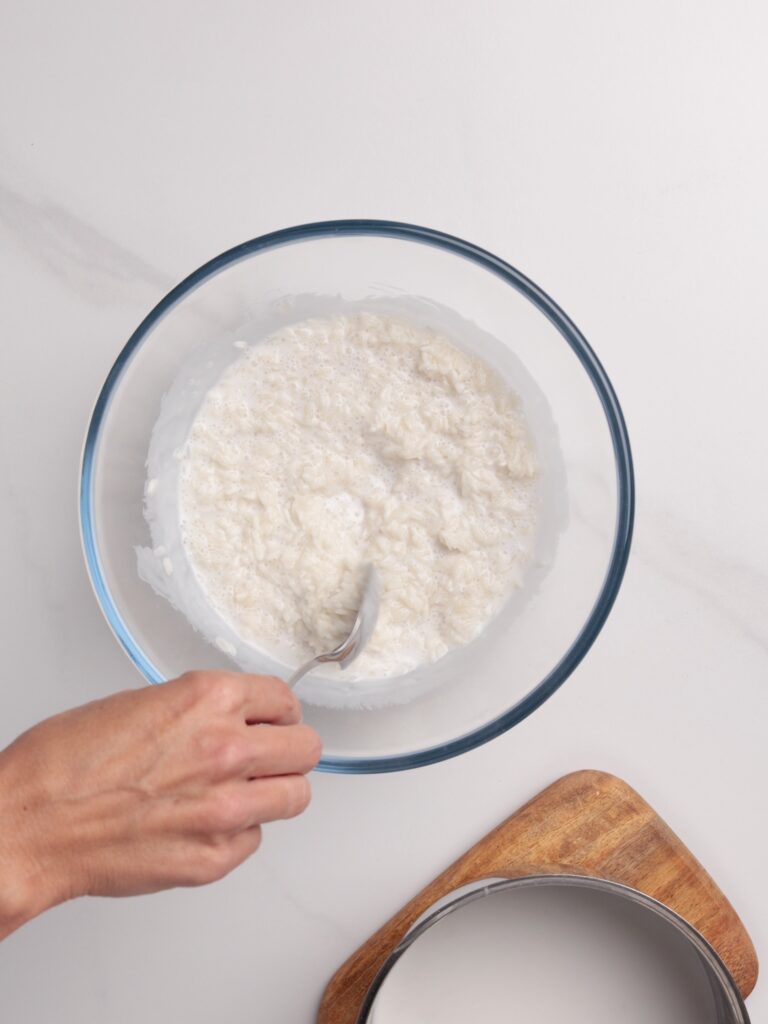
- Combine rice and coconut sauce: Remove the pandan leaf if using. Pour about 2/3 of the warm coconut sauce over the hot sticky rice. Gently mix until fully coated. At this stage, the mixture will look very loose and wet, this is exactly what you want. Cover and let it sit for 20–30 minutes. The rice will absorb the liquid and become rich, glossy, and creamy.
- Make the coconut topping: In a small bowl, mix 1 teaspoon cornstarch with 1 tablespoon water to create a slurry. Add this slurry to the remaining coconut sauce. Heat gently, stirring constantly, until slightly thickened. It should coat the back of a spoon but still be pourable. If it becomes too thick, simply add a splash of coconut milk or water to loosen it.
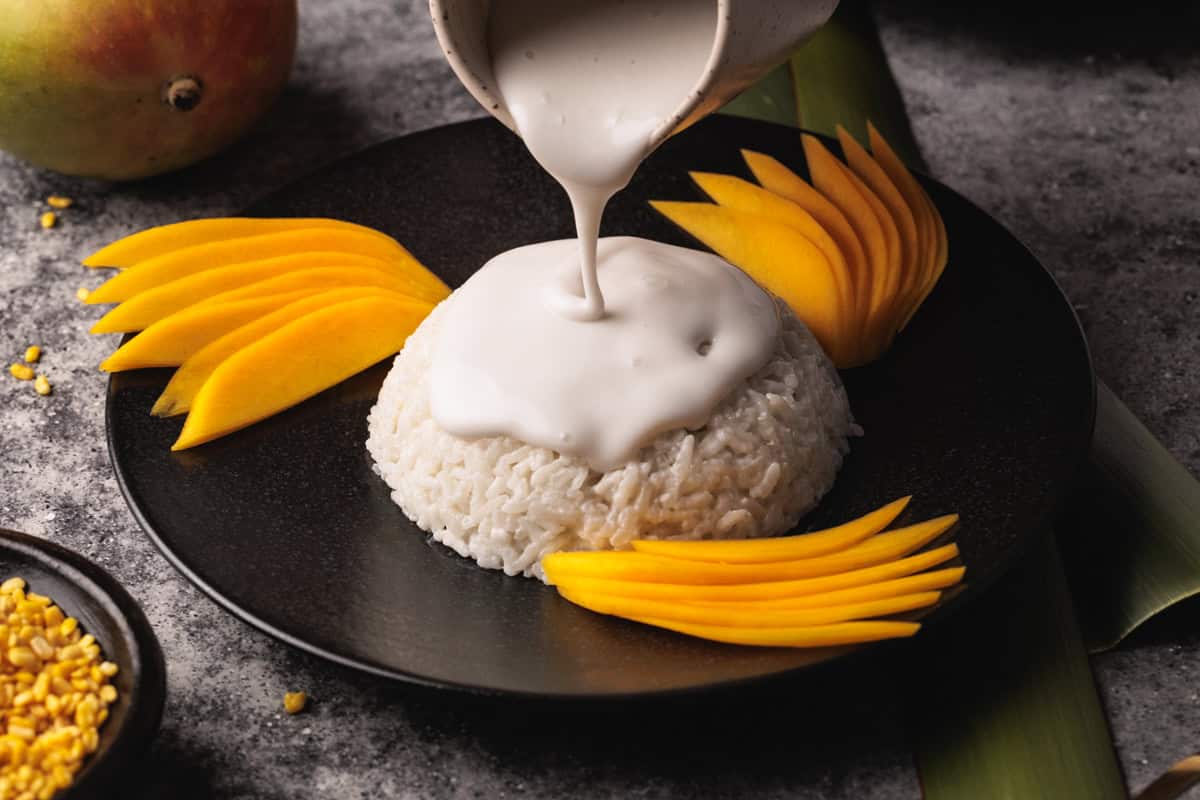
- Assemble: Slice the mangoes into thin strips, place a portion of sticky rice on a plate. Arrange mango slices next to it. Spoon the thickened coconut sauce over the rice. Sprinkle with toasted mung beans or sesame seeds (optional)
Video
Notes
- Rice: Use glutinous rice (sticky rice), also known as sweet rice, this is essential for the authentic texture. Regular rice won’t absorb the coconut sauce properly and will turn mushy instead of chewy and glossy.
- Stem, Don’t boil: Sticky rice must be steamed, not boiled. Boiling adds too much water and ruins the texture. Steaming keeps the grains separate while allowing them to become tender and slightly chewy, the signature texture of this dish.
- Coconut milk: Use full-fat coconut milk for the best flavor and richness. Light coconut milk will result in a thinner, less creamy sauce. Shake the can well before using, as the cream and liquid tend to separate.
- Sweetness level: This dessert should be sweet but balanced. Traditional versions are not overly sugary, the salt in the coconut sauce helps balance the sweetness. Feel free to slightly adjust the sugar to taste, depending on how sweet your mangoes are.
- Pandan leaf: Pandan leaf adds a subtle floral, vanilla-like aroma that makes the dish more authentic. It’s optional, but highly recommended if available. Simply tie it into a knot and steep it in the coconut sauce, then remove before serving.
I know it can be hard to find, so don’t worry if you can’t get it, feel free to omit it or use a small amount of vanilla extract instead.
- Mung beans: Toasted mung beans add a light crunch and contrast to the soft, sticky rice. In Thailand, split yellow mung beans (hulled) are typically used. If you can’t find them, toasted sesame seeds make a great alternative. If using raw mung beans, soak for at least 30 minutes, drain well, then dry roast until lightly golden and crisp.
- Mango: Choose very ripe, sweet mangoes that are soft and fragrant. Avoid fibrous or underripe mangoes. Thai varieties like Nam Dok Mai are ideal, but any smooth, juicy mango will work.
- Storage: Store leftover sticky rice in an airtight container in the fridge for up to 2–3 days. Reheat gently in the microwave or steamer with a splash of coconut milk to restore moisture. Mango is best served fresh and should not be refrigerated for too long once cut.
Nutrition
FAQs
Mango sticky rice (khao niao mamuang) is a beloved Thai dessert with roots in Central Thailand, where both sticky rice and mangoes are abundant. Sticky rice has been a staple in Southeast Asian cuisine for centuries, particularly in Thailand and Laos, while the practice of sweetening it with coconut milk and palm sugar likely evolved as these ingredients became widely available. The pairing with ripe mango is a relatively modern addition that became popular as Thailand’s mango cultivation flourished, particularly varieties like Nam Dok Mai. Today, mango sticky rice is enjoyed year-round but is especially celebrated during mango season (March to June), when the fruit is at its sweetest and most fragrant.
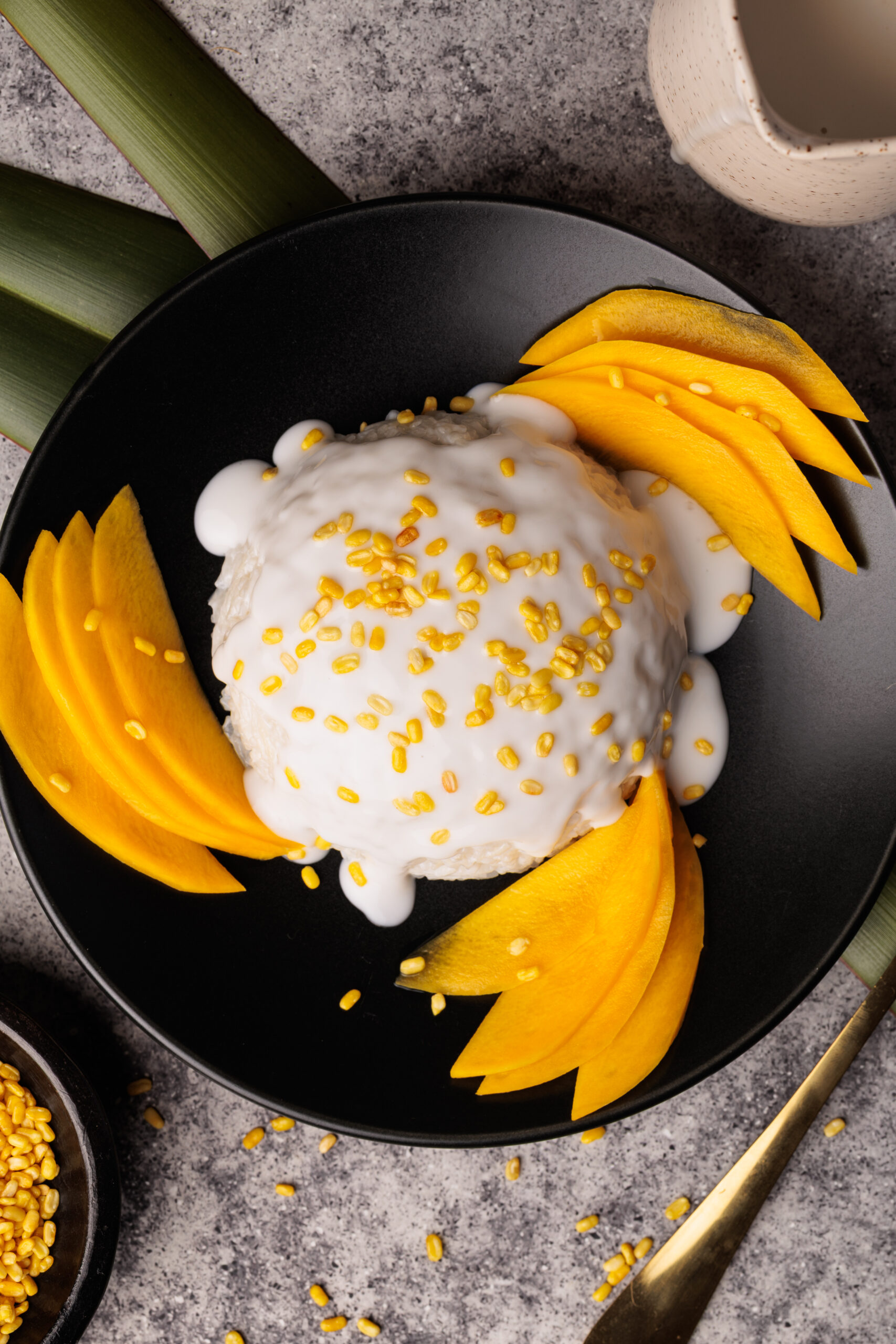
Mango sticky rice is traditionally served at room temperature or slightly warm on a plate or in a shallow bowl. The coconut-infused sticky rice is molded or scooped into a mound and placed alongside slices of ripe, peeled mango arranged in a fan or neat stack. A generous drizzle of thickened coconut cream sauce is poured over the rice, and the dish is typically garnished with toasted mung beans for crunch.
While the classic version features yellow mango and white sticky rice with coconut sauce, there are several delicious variations of mango sticky rice found across Thailand and beyond. Colored sticky rice is popular, with blue sticky rice (colored with butterfly pea flowers) or black sticky rice (a naturally dark variety with a nuttier flavor) offering visual appeal and slightly different textures. Seasonal variations swap mango for other tropical fruits like durian (a polarizing but beloved option in Thailand), jackfruit, or longan, though mango remains the most iconic.



Best mango sticky rice recipe I could find. Very successful, easy to follow and very delicious, not too sweet.
love it.
After trying several recipes, I can definitely say this is the best and closest to the original Thai recipe.
I just finished making this a few minutes ago and wow… this brought me right back to Thailand. Luckily, I had all the ingredients at home (even an open bag of glutinous rice), I just didn’t have the mung beans, honestly not even sure where to find them, so I used sesame seeds instead and it worked great.
The coconut sauce was perfectly balanced and not too sweet. I was a bit nervous about steaming the rice, but your tips really helped. Definitely making this again while mangoes are still in season!
This looks amazing! I’ve always loved mango sticky rice but never tried making it at home. Your instructions make it feel doable, especially the steaming method. Saving this for the weekend.
Thanks!