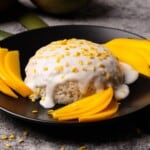
Mango Sticky Rice
Easy Mango Sticky Rice just like in Thailand! Chewy coconut rice paired with ripe mango for a sweet, creamy dessert that's surprisingly simple to make.
Servings: 3
Calories: 505kcal
Ingredients
For the rice mixture:
- 1 cup Glutinous rice (sticky rice) see notes
- Water for soaking
For the coconut sauce:
- 1 can Coconut milk Full-fat
- ⅓ cup Sugar see notes
- ½ teaspoon Salt
- 1 Pandan leaf *optional-see notes
For thickened topping:
- 1 teaspoon Cornstarch or rice flour
- 1 tablespoon Water
To serve:
- 2 Ripe mangoes *see notes
- ¼ cup Toasted mung beans or sesame seeds (optional)
Instructions
- Rinse and soak the rice: Rinse the sticky rice under cold water until the water runs clear. Place the rice in a bowl and cover with water. Soak for at least 3-4 hours, preferably overnight. If the soaking water is still cloudy afterward, rinse the rice again.
- Steam the rice (do NOT boil): Drain the soaked rice well. If you have a steamer: Line a steamer basket with cheesecloth or a clean kitchen towel, spread the rice evenly inside, cover and steam for 20–25 minutes, until tender and slightly translucent. No steamer? Place the rice in a metal sieve or colander lined with cheesecloth or a clean kitchen towel over a pot of simmering water. Make sure the rice doesn’t touch the water, then cover and steam as directed.
- Make the coconut sauce: In a saucepan, combine coconut milk, sugar, salt, and Pandan leaf (if using). Heat gently over medium-low heat, stirring until the sugar dissolves.
- Combine rice and coconut sauce: Remove the pandan leaf if using. Pour about 2/3 of the warm coconut sauce over the hot sticky rice. Gently mix until fully coated. At this stage, the mixture will look very loose and wet, this is exactly what you want. Cover and let it sit for 20–30 minutes. The rice will absorb the liquid and become rich, glossy, and creamy.
- Make the coconut topping: In a small bowl, mix 1 teaspoon cornstarch with 1 tablespoon water to create a slurry. Add this slurry to the remaining coconut sauce. Heat gently, stirring constantly, until slightly thickened. It should coat the back of a spoon but still be pourable. If it becomes too thick, simply add a splash of coconut milk or water to loosen it.
- Assemble: Slice the mangoes into thin strips, place a portion of sticky rice on a plate. Arrange mango slices next to it. Spoon the thickened coconut sauce over the rice. Sprinkle with toasted mung beans or sesame seeds (optional)
Video
Notes
- Rice: Use glutinous rice (sticky rice), also known as sweet rice, this is essential for the authentic texture. Regular rice won’t absorb the coconut sauce properly and will turn mushy instead of chewy and glossy.
- Stem, Don’t boil: Sticky rice must be steamed, not boiled. Boiling adds too much water and ruins the texture. Steaming keeps the grains separate while allowing them to become tender and slightly chewy, the signature texture of this dish.
- Coconut milk: Use full-fat coconut milk for the best flavor and richness. Light coconut milk will result in a thinner, less creamy sauce. Shake the can well before using, as the cream and liquid tend to separate.
- Sweetness level: This dessert should be sweet but balanced. Traditional versions are not overly sugary, the salt in the coconut sauce helps balance the sweetness. Feel free to slightly adjust the sugar to taste, depending on how sweet your mangoes are.
- Pandan leaf: Pandan leaf adds a subtle floral, vanilla-like aroma that makes the dish more authentic. It’s optional, but highly recommended if available. Simply tie it into a knot and steep it in the coconut sauce, then remove before serving.
I know it can be hard to find, so don’t worry if you can’t get it, feel free to omit it or use a small amount of vanilla extract instead.
- Mung beans: Toasted mung beans add a light crunch and contrast to the soft, sticky rice. In Thailand, split yellow mung beans (hulled) are typically used. If you can’t find them, toasted sesame seeds make a great alternative. If using raw mung beans, soak for at least 30 minutes, drain well, then dry roast until lightly golden and crisp.
- Mango: Choose very ripe, sweet mangoes that are soft and fragrant. Avoid fibrous or underripe mangoes. Thai varieties like Nam Dok Mai are ideal, but any smooth, juicy mango will work.
- Storage: Store leftover sticky rice in an airtight container in the fridge for up to 2–3 days. Reheat gently in the microwave or steamer with a splash of coconut milk to restore moisture. Mango is best served fresh and should not be refrigerated for too long once cut.
Nutrition
Calories: 505kcal | Carbohydrates: 98g | Protein: 5g | Fat: 9g | Saturated Fat: 9g | Polyunsaturated Fat: 0.2g | Monounsaturated Fat: 0.3g | Sodium: 500mg | Potassium: 280mg | Fiber: 4g | Sugar: 41g | Vitamin A: 1493IU | Vitamin C: 50mg | Calcium: 23mg | Iron: 1mg