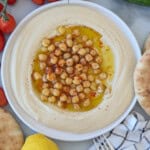
Best Homemade Hummus | Creamy and Authentic
The best authentic Middle Eastern hummus: creamy, smooth, and bright with tahini and fresh lemon. Easy to make and perfect for pita
Servings: 4 servings
Equipment
Ingredients
For cooking the chickpeas:
- ¾ cup Dried chickpeas or 250–265 g cooked chickpeas (such as canned), drained
- 1 teaspoon Baking soda *read notes
- Water for soaking and cooking
For the hummus:
- 1½ cup Cooked chickpeas homemade cooked or canned (250-265g)
- 3-4 tablespoons Lemon juice
- ½ cup Tahini paste adjust to taste (read notes)
- 1 teaspoon Salt adjust to taste
- ⅓ cup Cooking liquid or cold water adjust as needed
Optional:
- 1 clove Garlic
- 2-3 Ice cubes
Instructions
- Soak the Chickpeas (skip if using canned): Place chickpeas in a large bowl and cover with plenty of water. Soak overnight (8–12 hours). They will double in size.
- Cook the Chickpeas: Drain, transfer to a pot, cover with fresh water, and add baking soda. Bring to a boil, skim foam, then simmer 90–120 minutes, until chickpeas are extremely soft and mash easily between fingers. Reserve some cooking liquid, then drain.
- Measure 1½ cups (250–265g) cooked chickpeas for the hummus.
- Blend: In a food processor, blend tahini and lemon juice for about 30 seconds until lighter and creamy. Add cooked chickpeas, salt, and optional garlic. Blend 1–2 minutes, scraping sides as needed, until smooth.
- Adjust Texture: With the processor running, slowly add cooking liquid or cold water until silky and creamy. At this stage you also can add a few ice cubes for a fluffier hummus (read notes). Hummus should be slightly loose; it thickens in the fridge.
- Serve: Spread hummus on a plate, drizzle with olive oil, and garnish as desired (see serving suggestions section). Serve with warm pita or vegetables.
Video
Notes
- Chickpea types: choose smaller chickpeas (often labeled as Middle Eastern or Mediterranean chickpeas). Smaller beans have thinner skins and a creamier interior, which results in smoother, silkier hummus without needing to peel them individually.
- Dried vs canned chickpeas (and the amount that matters): This recipe works both ways: you can cook chickpeas from scratch or use canned, pre-cooked chickpeas. In both cases, what really matters is using about 250–265 g cooked chickpeas for the correct hummus texture. If using canned chickpeas, simply drain, rinse, and optionally simmer them for 10–15 minutes to soften before blending.
- Cook extra and freeze: Since cooking chickpeas takes time, it’s a good idea to cook a large batch and freeze portions for later. Once cooked, divide chickpeas into portions and freeze. Whenever you want to make hummus, simply thaw and blend, or use them for salads, stews, and other chickpea dishes.
- Tahini quality & quantity: Great hummus depends on good tahini. Use smooth, pourable tahini you enjoy the taste of. The amount can vary based on personal preference: more tahini makes hummus richer, creamier, and slightly more nutty, while less tahini gives a lighter chickpea flavor. Most people prefer ½–¾ cup (120–180 g), so feel free to experiment and find your favorite balance.
- Cooking liquid, water & ice cubes: Reserved chickpea cooking liquid adds flavor and creaminess, but cold water works perfectly too. For extra fluffy hummus, many cooks blend in 1–2 ice cubes, which helps create a lighter, smoother texture.
- Baking soda: Baking soda helps break down chickpea skins and softens the beans faster, creating creamier hummus. Don’t add too much, just a small amount is enough. Rinse chickpeas well after cooking to remove any residual flavor.
- Garlic: Traditional hummus sometimes includes garlic. 1 clove to the blender for a mild flavor, or more if you like it stronger. For a gentler taste, roast the garlic first.
- Pressure cooker: To speed things up, cook soaked chickpeas in a pressure cooker for about 30-40 minutes with baking soda, then allow natural pressure release. The chickpeas should still be very soft for the best texture.
- Spices: Classic hummus is simple, but you can add cumin or paprika while blending or sprinkle spices on top for extra flavor.
- Topping: Finish hummus with a generous drizzle of tahini sauce, olive oil, plus toppings like paprika, chopped parsley, whole chickpeas, boiled eggs, toasted pine nuts, sautéed mushrooms, caramelized onions, falafel or even spiced ground meat.
- Storage: Store hummus in an airtight container in the refrigerator for up to 3-4 days. If it thickens, stir in a little water or lemon juice before serving to bring back the creamy texture.