
Classic Basque Cheesecake Recipe (Easy & Creamy!)
This post may contain affiliate links.
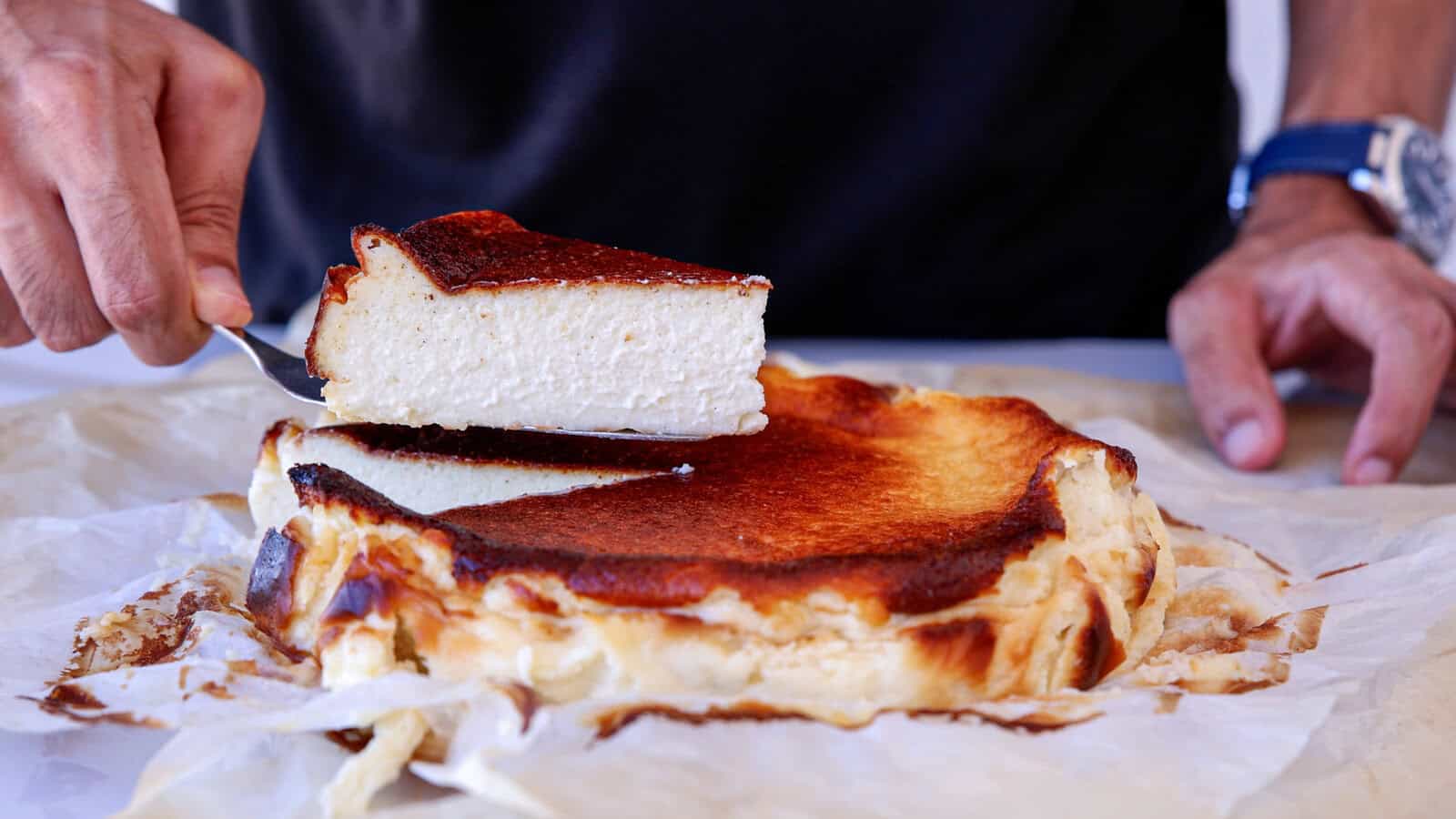
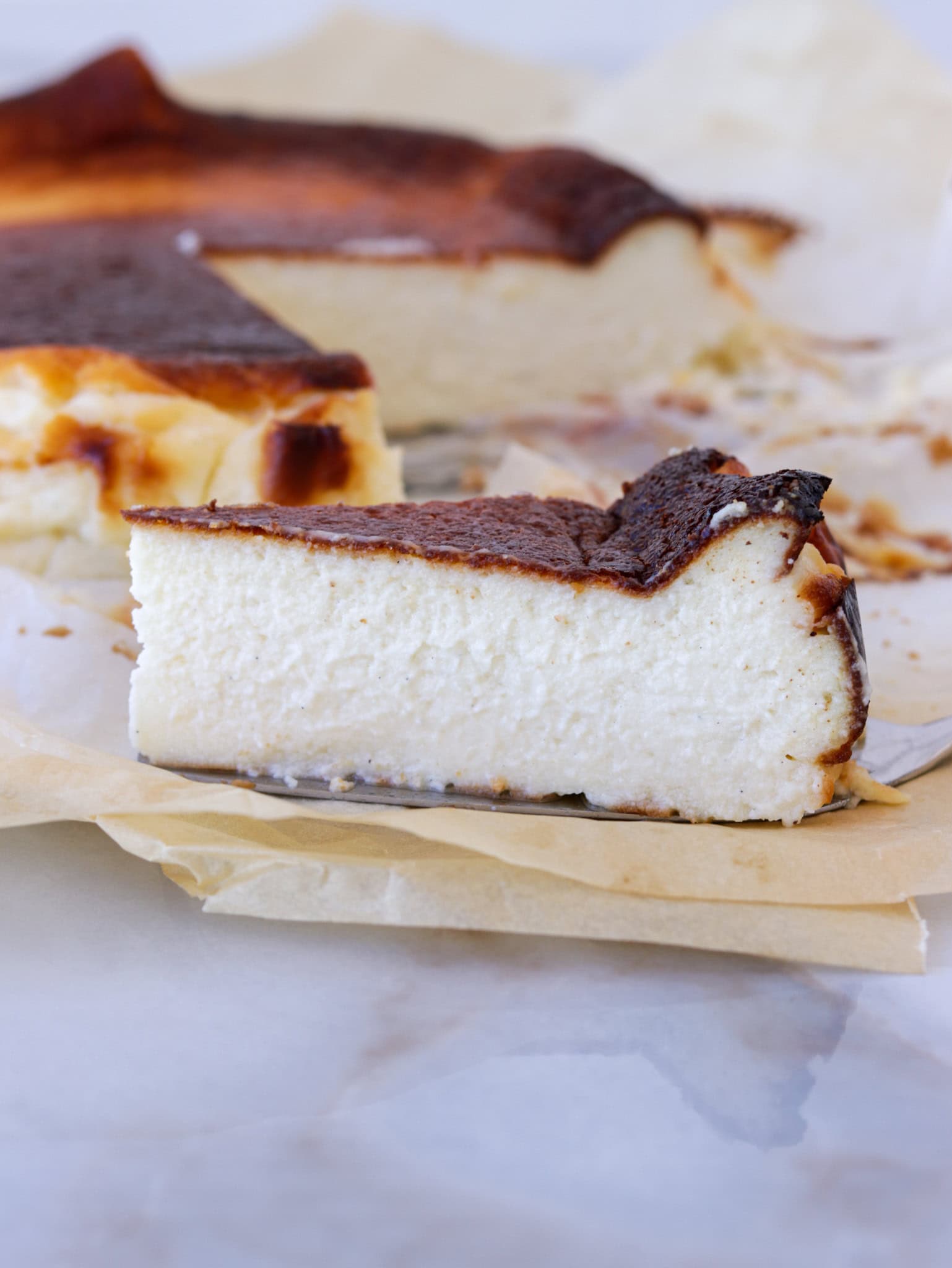
This amazingly simple Classic Basque Cheesecake recipe has a caramelly burnt top with a creamy, custardy interior. The famous rustic look combined with the rich, velvety texture makes it a gorgeous centerpiece, perfect for any occasion. And the best part? You only need one bowl and no water bath to make it!
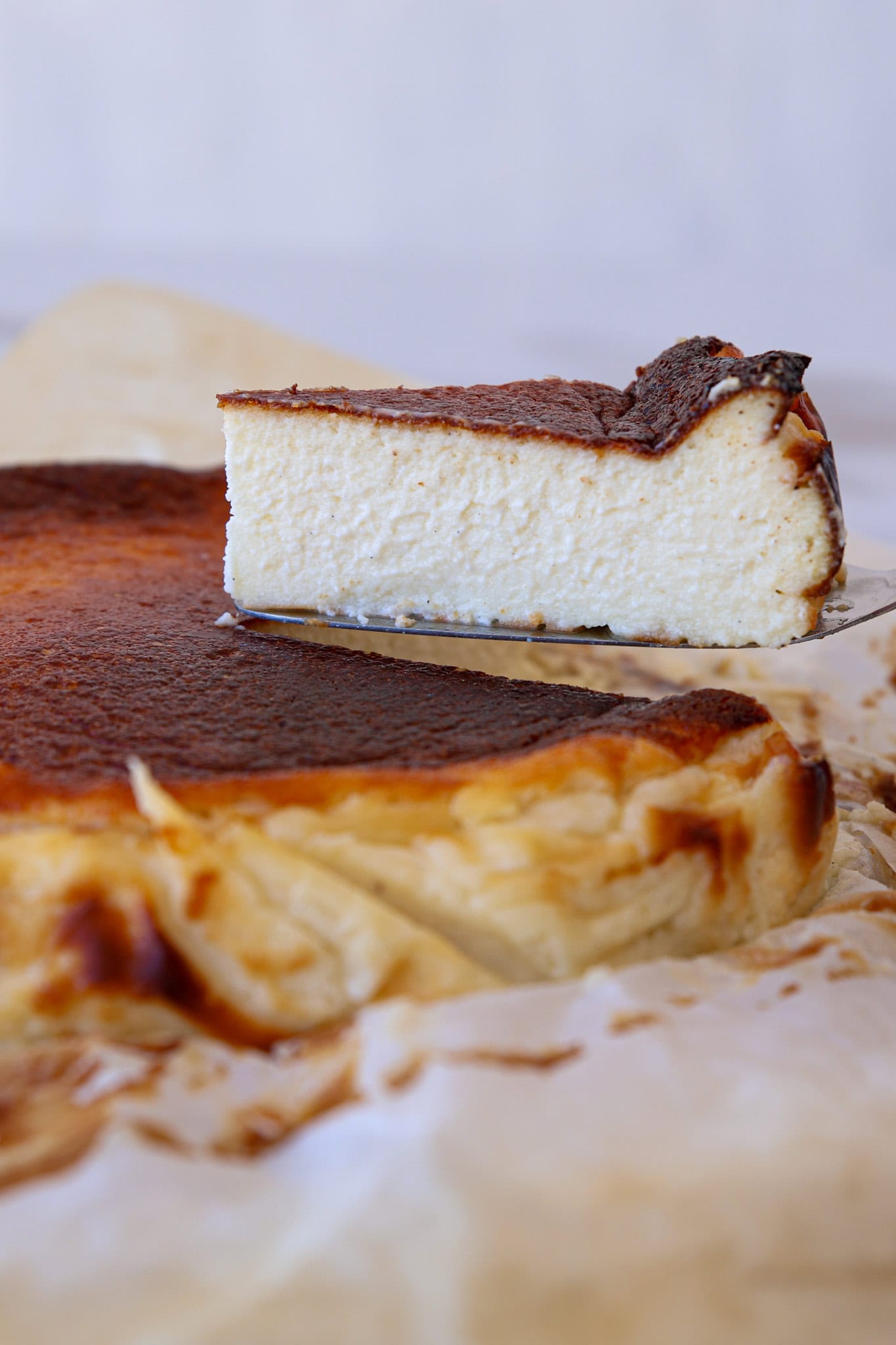
Don’t get me wrong—I love classic cheesecake recipes with graham cracker or cookie crusts. But, the fuss of using a waterbath, the worry about an imperfect or cracked top, and the extra step of making the crust isn’t always appealing. Enter burnt basque cheesecake—a one-bowl masterpiece that’s easy enough for even kitchen newbies to nail on their first try!
What is Basque Cheesecake?
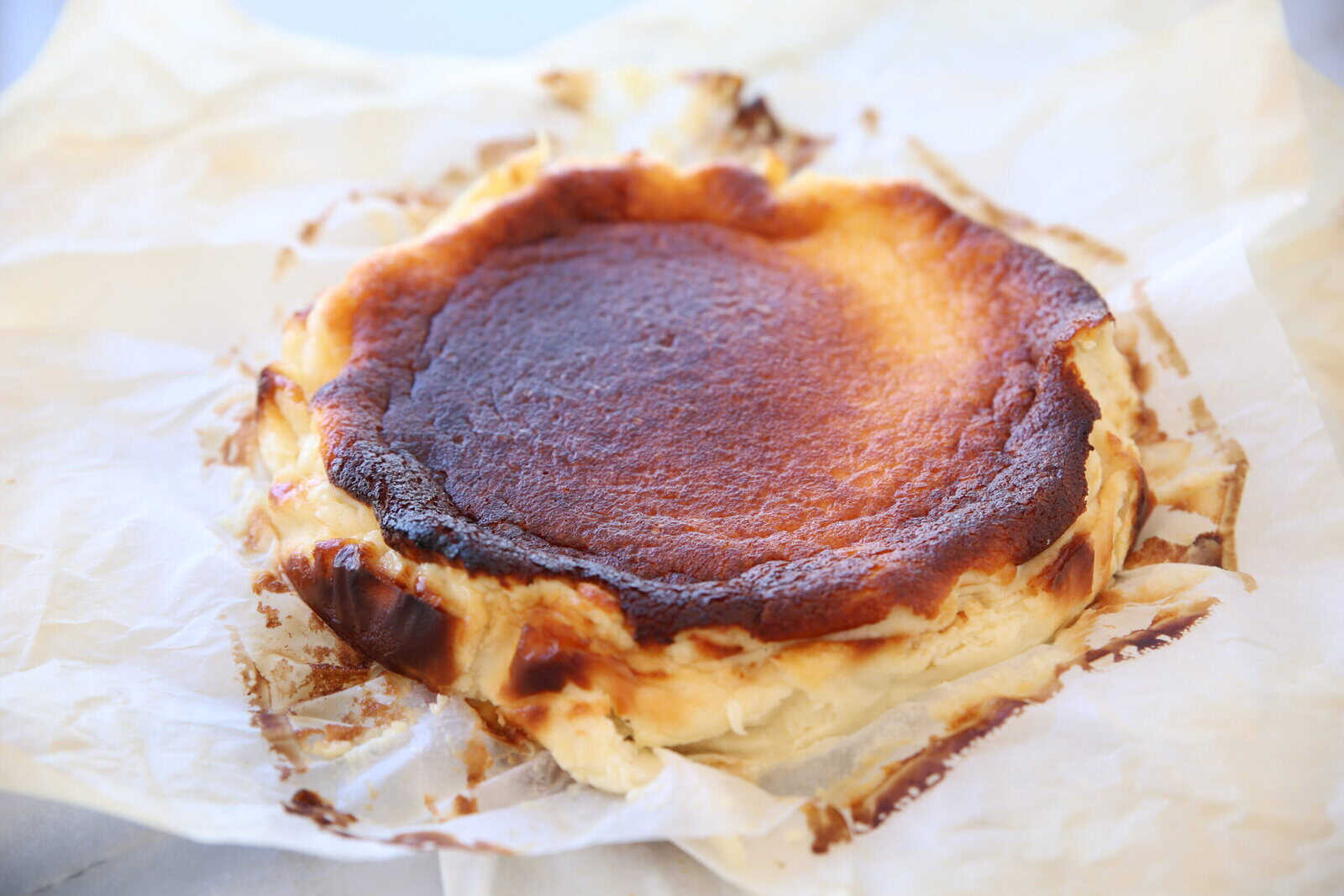
Classic Basque cheesecake, or Tarta de Queso, is a rustic, crustless dessert that originated in the Basque region of Spain. It was first created in the 1990s by Chef Santiago Rivera at La Viña, a cozy restaurant tucked into the old town of San Sebastián.
What makes it special is its beautifully scorched top—it’s burnt on purpose!—which adds a deep, caramelized, almost smoky flavor and firm top that contrasts beautifully with the rich, custardy center. It’s unlike any other cheesecake recipes I’ve tried! And, while it may not be quite the same as savoring a slice in San Sebastián, this easy DIY is pretty dang close.
Why You’ll Love My Burnt Basque Cheesecake Recipe
- Next time you’re in need of a quick and easy dessert recipe that’s guaranteed to impress, this simple stunner is the way to go. It’s made with only 10 minutes of prep—and there’s NO water bath required!
- Unlike a classic American-style cheesecake, this rustic beauty has no crust which means you don’t need to bust out your food processor! All you need is a hand- or stand-mixer and a single bowl.
- All my fellow perfectionists out there, take a deep breath and loosen your shoulders. Basque-style cheesecake is intended to be unpolished—imperfection is perfection here! That’s part of the charm.
Ingredients & Substitutions
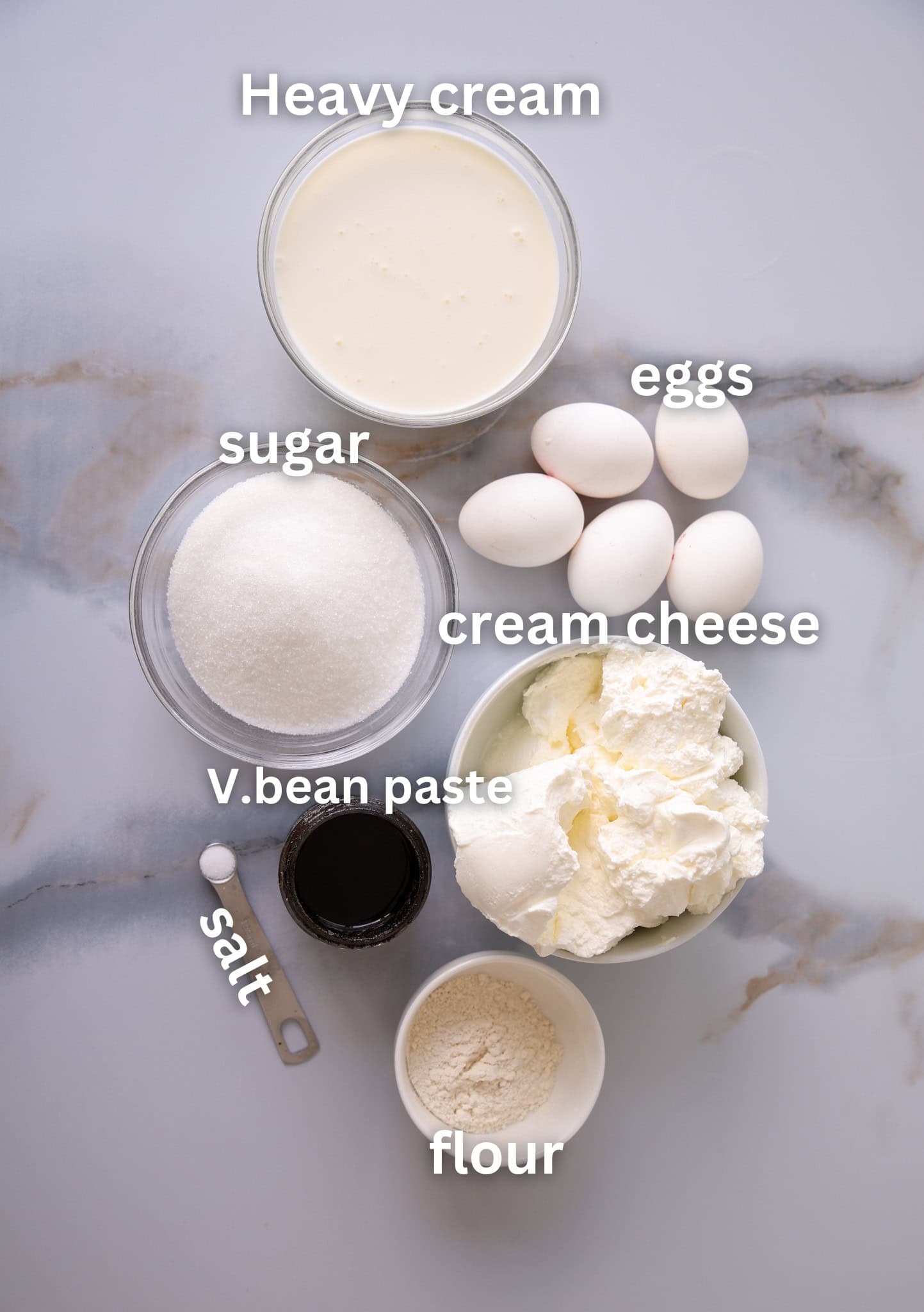
- Cream Cheese: You can’t have a cheesecake without cheese! Make sure to use full-fat block-style cream cheese for the best results. If you prefer something lighter, don’t reach for non-fat cream cheese which is loaded with stabilizers that will negatively impact the consistency—Neufchatel cheese is your best bet. Full-fat mascarpone will also work, but will be less tangy.
- Granulated Sugar: White sugar has a neutral pH, which is essential for creating the proper consistency and rich, caramelly topping. Cane sugar or caster/superfine sugar are perfect 1:1 substitutes.
- Large Eggs: These act as our binder and create that classic custardy consistency. Make sure to let them come to room temperature to make them easier to mix in! (If you’re using liquid eggs, use a scant ¼ cup per egg.)
- Vanilla Bean Paste: Adds a deep, aromatic warmth and sweetness, plus a visually appealing smattering of tiny black seeds throughout. Feel free to swap in vanilla extract if needed.
- Heavy Cream: This decadent dairy product (also known as “double cream”) adds to the smooth, luxurious texture and richness of the cheesecake. You can use slightly lighter whipping cream if needed.
- All-Purpose Flour: Adding a touch of flour creates some structure, giving our basque cheesecake some stability without making it dense. Cornstarch or a cup-for-cup all-purpose gluten-free flour blend will also work!
- Salt: Even desserts need a little seasoning. Stick to kosher salt or sea salt for the best results—iodized table salt can leave a bitter aftertaste.
How to Make the Best Basque Cheesecake
Watch the full video recipe to learn how to make the best burnt Basque cheesecake. This step-by-step tutorial simplifies the process, offering tips and tricks to guarantee perfect results every time.
Prefer the written recipe? Scroll down to the recipe box 👇
Optional Variations & Dietary Adaptations
There are endless ways to put your own twist on Basque cheesecake. Here are a few fun variations to try:
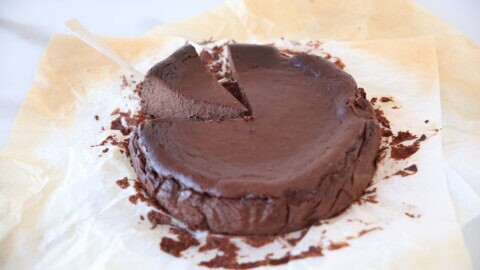
- Chocolate Basque Cheesecake: For a rich twist chocoholics will love, melt 4 oz (115g) of dark chocolate and fold it into the batter before baking.
- Pistachio Basque Cheesecake: Adding ¾ cup of pistachio paste adds a pretty, pale green hue and a luscious nuttiness I can’t get enough of!
- Berry Swirl: Add a swirl of raspberry or blueberry compote on top before baking for a colorful, tart twist.
- Pumpkin Basque Cheesecake: Add pumpkin puree and pumpkin spice, and enjoy ultra-creamy fall cheesecake. Perfect for the holiday season.
- Coffee Flavored: Dissolve 1 tablespoon of instant espresso powder in the heavy cream before adding it to the batter. Or, for a mocha-inspired version, add this to my chocolate basque cheesecake recipe!
- Matcha Masterpiece: For a unique Asian-inspired twist, sift 1-2 tablespoons of matcha powder into the batter with the flour. Serve with fresh berries for a bright pop of color and fruity contrast to the earthy tea.
- Salted Caramel Drizzle: Take a page from my salted caramel cheesecake recipe and add a drizzle of the salty topping (either before or after baking) for a sweet and salty variation that you’ll love.
- Gluten-Free Basque Cheesecake: Simply replace the flour with an equal amount of cornstarch or a gluten-free flour blend. If you use a gluten-free flour blend, make sure to let the batter sit for about 30 minutes before baking to ensure there is no grittiness.
Expert Tips & Tricks
- Use room-temperature ingredients. Cold cream cheese and eggs won’t blend smoothly and can lead to a lumpy batter. Let everything sit out for 30–60 minutes before starting.
- Mix thoroughly—but not too much. You want a silky-smooth batter, but overmixing can incorporate too much air and negatively affect the texture. Blend just until everything is incorporated.
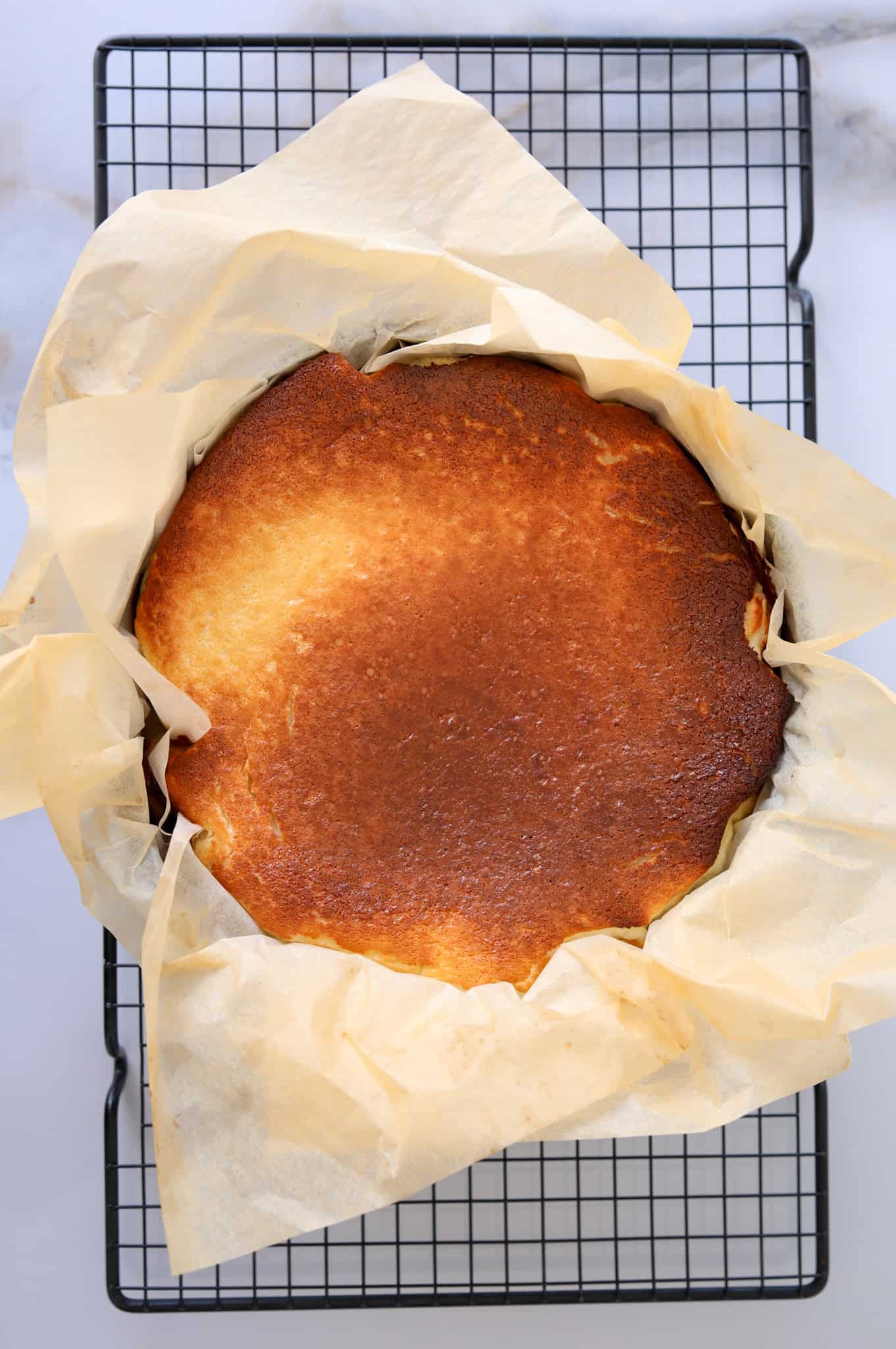
- Don’t skimp on the parchment paper. Line your pan with a generous overhang of parchment paper. Not only does this help with easy removal, but it also encourages those beautifully wrinkled, rustic edges.
- Bake at a high temperature. The signature caramelized top and slightly jiggly center depend on that blast of high heat. Don’t lower the oven temp unless you’re intentionally tweaking for a more set texture.
- Control the burnt top. If you prefer a lighter or darker burnt top, adjust the baking time accordingly. Bake for less time if you want a more lightly golden top, or leave it in a bit longer for a darker, more caramelized finish.
- Look for a wobble, not a firm center. The cheesecake is done when the edges are set and puffed, but the center still jiggles when you gently shake the pan. It’ll firm up as it cools.
- Cool at room temperature before chilling. For the classic soft and custardy texture, let it cool to room temp. Many Basque cheesecake lovers prefer it slightly warm or room temp—though I prefer to chill it for about 4 hours for a firmer slice. Also, don’t worry if it cracks or caves. That’s part of the charm!
- Slice cleanly for presentation. For neat slices, use a hot knife (dip it in warm water and wipe clean between cuts).
How to Serve
Basque cheesecake is a showstopper that fits right in on a festive table or at an elegant dinner party. Here are a few ways to serve it that feel extra special:
- Let it be the centerpiece of any gathering. Its rustic, caramelized top is visually stunning—no need for frosting or decoration. Place it on a cake stand and let the golden edges speak for themselves.
- Serve at room temperature. For the creamiest, dreamiest texture, let the cheesecake sit out for 30–60 minutes before serving. That custard-like center really shines when it’s not too cold—another reason to let it be your centerpiece!
- Add a dusting of flaky salt. A tiny pinch of sea salt on top enhances the caramelized flavor and adds contrast to the rich interior.
- Pair with fresh berries or fruit compote. A spoonful of macerated strawberries, roasted cherries, or a tangy raspberry sauce offers brightness and balance to the cheesecake’s richness.
- Add a seasonal garnish. Serving this for the winter holidays? Give it a festive touch by serving with poached pears, roasted cranberries, spiced apple compote, or a dusting of powdered sugar and fresh rosemary sprigs for a snowy look.
- Drizzle with honey or dulce de leche. For an extra indulgent touch, drizzle your slice with something sweet and silky. A little goes a long way.
- Offer a toppings bar. Serving a mixed crowd? Let guests customize their slice by setting out all your favorite toppings.
- Serve with after-dinner drinks. Bold espresso cuts through the richness beautifully, while a glass of Pedro Ximénez sherry or tawny port complements the caramelized flavors.
Storage & Reheating
If you have any classic Basque cheesecake leftover (if that’s even possible!), here’s how to store it to maintain its creamy texture and flavor:
- Refrigeration: Store the cheesecake in an airtight container in the refrigerator for up to 3-4 days. The burnt top will remain intact, and the cheesecake will stay rich and creamy.
- Freezing: If you want to store it for longer, you can freeze the cheesecake. First, wrap individual slices tightly in plastic wrap, then place them in an airtight container or freezer bag. It can be frozen for up to 3 months. When ready to eat, thaw the slices in the refrigerator overnight for the best texture.
- Avoid Room Temperature Storage: Since Basque Cheesecake contains cream cheese and eggs, it’s important not to leave it out at room temperature for more than 2 hours to avoid spoilage.
More Cheesecake Recipes
If you’re a cheesecake lover like me, you won’t be satisfied with just one cheesecake, so here are some more cheesecake recipes you might like:
Classic Basque Cheesecake Recipe (Easy & Creamy)
Equipment
Ingredients
- 3½ cups (787 g) Cream cheese room temperature
- 1¼ cups (250 g) Sugar
- ¼ teaspoon Salt
- 5 Eggs large
- 1 teaspoon Vanilla bean paste
- 1¼ cup (300 ml) Heavy cream
- 3 tablespoons (24 g) Flour
Instructions
- Prep the oven and pan: Preheat oven to 410°F (210°C). Grease a 9-inch (23cm) springform pan and line it with parchment paper, letting it overhang the edges by about 2 inches (5cm) for that signature ruffled look.
- Mix cream cheese and sugar: In a large mixing bowl, beat the cream cheese and sugar together with a hand mixer or stand mixer on medium speed for 2–3 minutes, until smooth and fluffy.
- Incorporate eggs: Add eggs one at a time, beating well after each addition. Scrape down the sides of the bowl as needed.
- Add cream and vanilla: Pour in the heavy cream, vanilla bean paste, and salt. Beat until the mixture is silky smooth.
- Fold in flour: Sift in the flour and mix just until combined. Don’t overmix. The batter should be loose.
- Bake: Pour into the prepared pan and bake for 50–60 minutes, or until the top is deeply golden brown and the center is still slightly jiggly.
- Cool and chill: Let cool completely at room temperature, then refrigerate for at least 4 hours (preferably overnight) to fully set.
- Serve: Unmold the cheesecake, peel away the parchment, slice, and serve as-is or with berries, honey, or whipped cream.
Video
Notes
- Cream cheese: Use full-fat brick-style cream cheese, and make sure it’s fully softened to avoid lumps in the batter.
- Parchment paper: The overhanging parchment isn’t just for looks; it helps lift the cheesecake out of the pan and gives it its classic rustic shape.
- Flour: A small amount of flour gives structure without compromising the creamy texture. For a gluten-free version, use cornstarch or omit it entirely (note: it will be softer).
- Burnt top: Don’t panic if the top looks too dark, that’s the goal! The caramelized top adds flavor and contrast to the silky center.
- Texture: The center should have a slight wobble when you pull it from the oven. It will set as it cools and chills.
- Flavor options: Add citrus zest, espresso powder, or try my chocolate Basque cheesecake or pistachio Basque cheesecake.
- Storage: Store covered in the refrigerator for up to 4–5 days. It can be frozen, but the texture may change slightly. Wrap tightly and thaw overnight in the fridge.
Nutrition
Common Questions
Yes, you can make Basque Cheesecake in advance! In fact, it’s recommended to chill the cheesecake for at least 4 hours or overnight to allow it to fully set and develop its flavors. This makes it an excellent dessert to prepare a day ahead for gatherings or events.
The burnt top is a signature characteristic of Basque Cheesecake. It’s baked at a high temperature to intentionally create a deeply caramelized, almost charred exterior, which contrasts beautifully with the creamy, custard-like interior. The burnt top adds a unique flavor and rustic appearance that makes this cheesecake stand out.
If your cheesecake is runny, it might not have been baked long enough. The center should still jiggle slightly when you take it out of the oven, but it should firm up as it cools and sets in the fridge. If it’s too runny, try baking it for a few more minutes next time or chilling it for a longer period to help it set.
Basque Cheesecake has a rich, creamy, and custard-like texture with a unique flavor combination. The caramelized, burnt top adds a slightly smoky, bitter edge that contrasts beautifully with the sweet, smooth interior. It’s less sweet than traditional cheesecakes, with a more complex flavor profile.
A slightly jiggly center is normal for Basque Cheesecake. It should jiggle when it comes out of the oven, but not be runny. As the cheesecake cools and sets in the fridge, the center will firm up, creating that perfect creamy texture. If the center is too jiggly or runny, it may need a bit more baking time.




hiya, im looking at trying this one next as the blueberry cheesecake turned out incredible even with a bit of water ingressing. what type of flour do i use for this recipe please? many thanks
Hi! I’m so glad you loved the blueberry cheesecake! For the Basque cheesecake, it doesn’t really matter which flour you use, it’s just a small amount to help with the texture. You can go with all-purpose flour, plain flour, cake flour, or even cornstarch if you’d like a gluten-free version
wonderful experience
Definitely going on my to make list! It looks absolutely gorgeous! Thanks for sharing!
So good, one of the best I’ve ever made!
I just made this according to your recipe and it smells and looks great . Very easy no fail cheese cake
Can’t wait to taste , cooling now lol
Brilliant recipe.