Asian Carrot Ribbon Salad With Ginger-Sesame Dressing
This post may contain affiliate links.
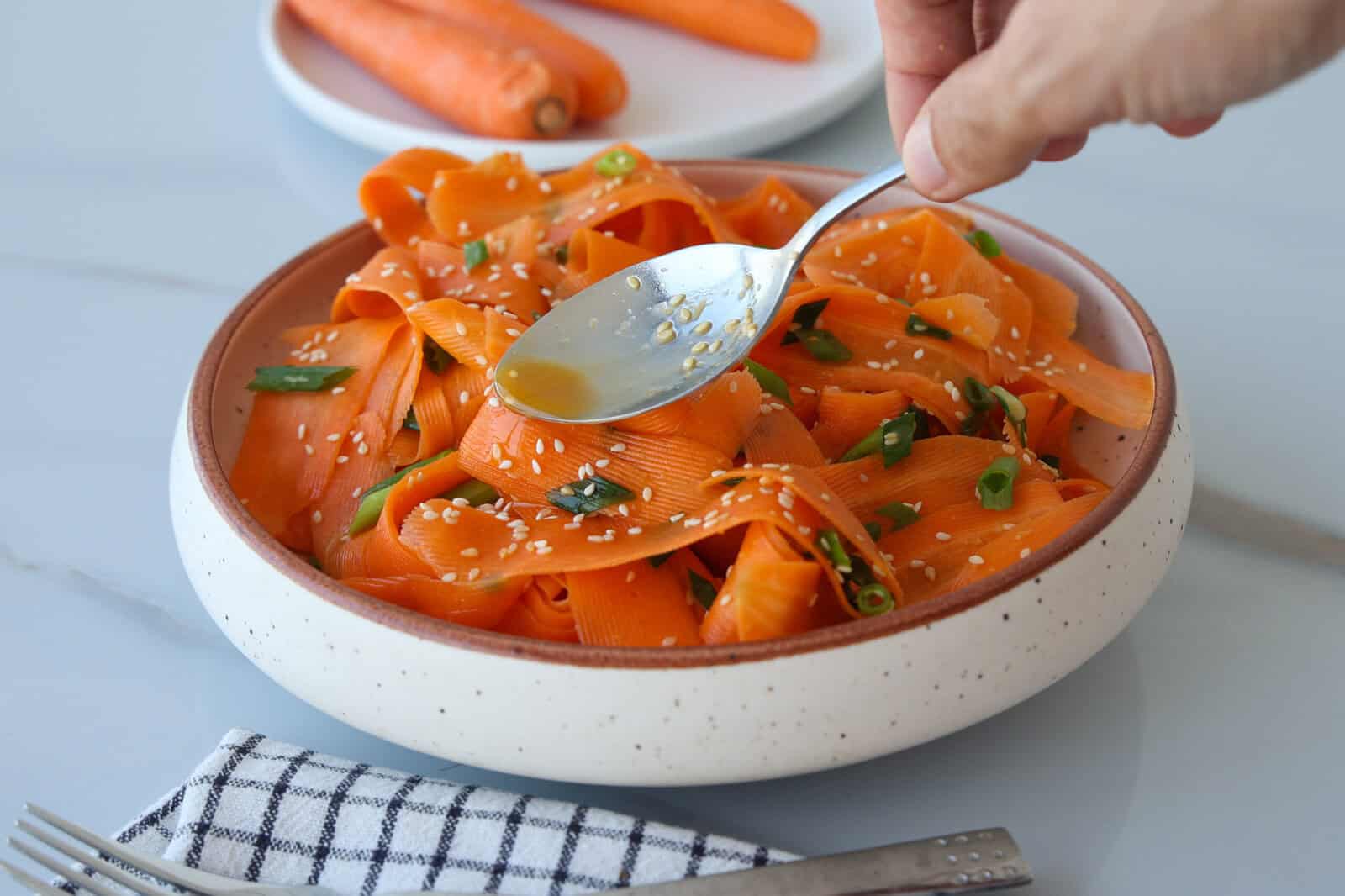
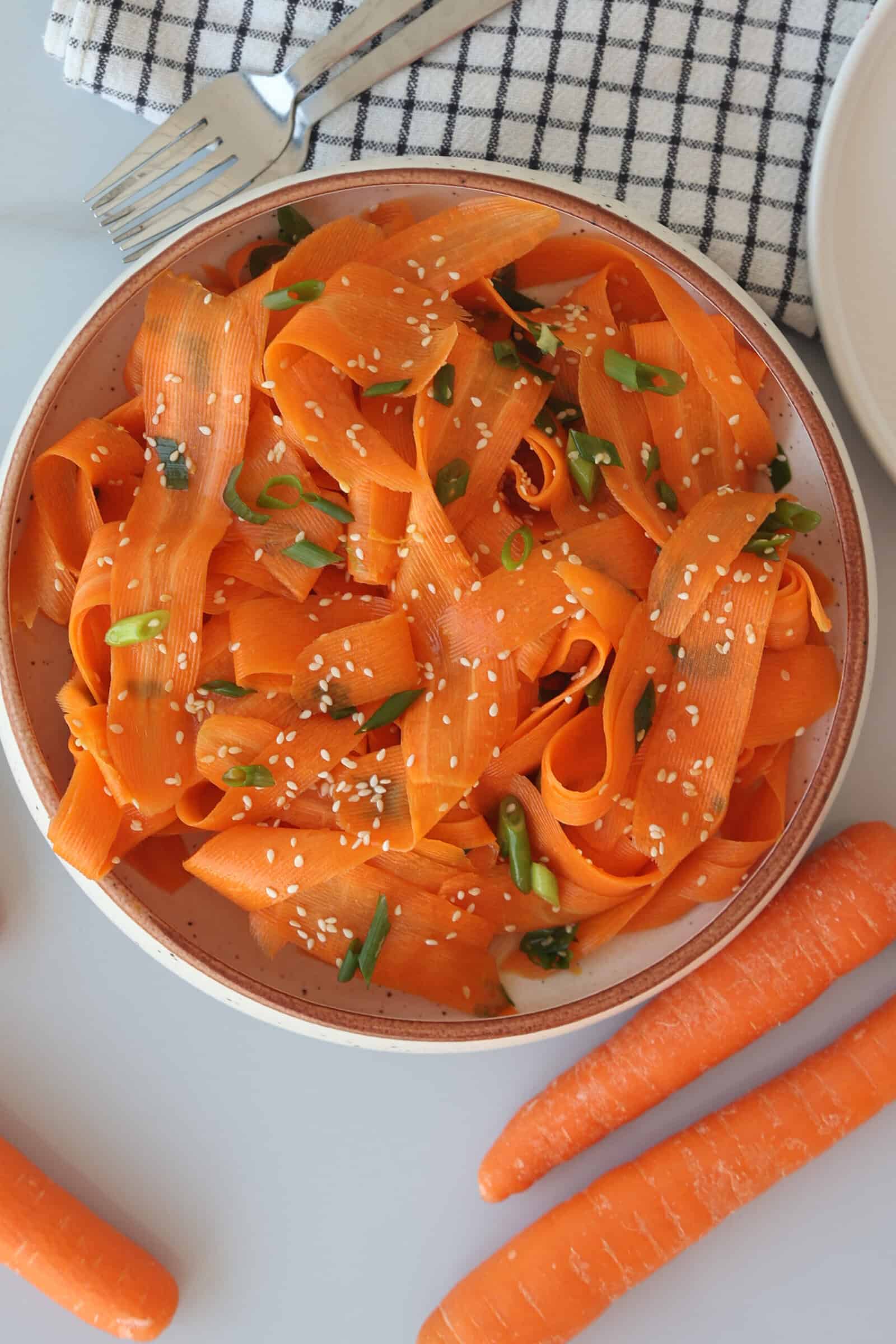
My delightfully light and refreshing Asian-inspired Raw Carrot Salad recipe is ideal for when you’re in need of a colorful, crunchy side. Thin ribbons of sweet carrots and piquant scallions are dressed in a zippy ginger-sesame dressing for a completely crave-worthy way to get your daily veggies.
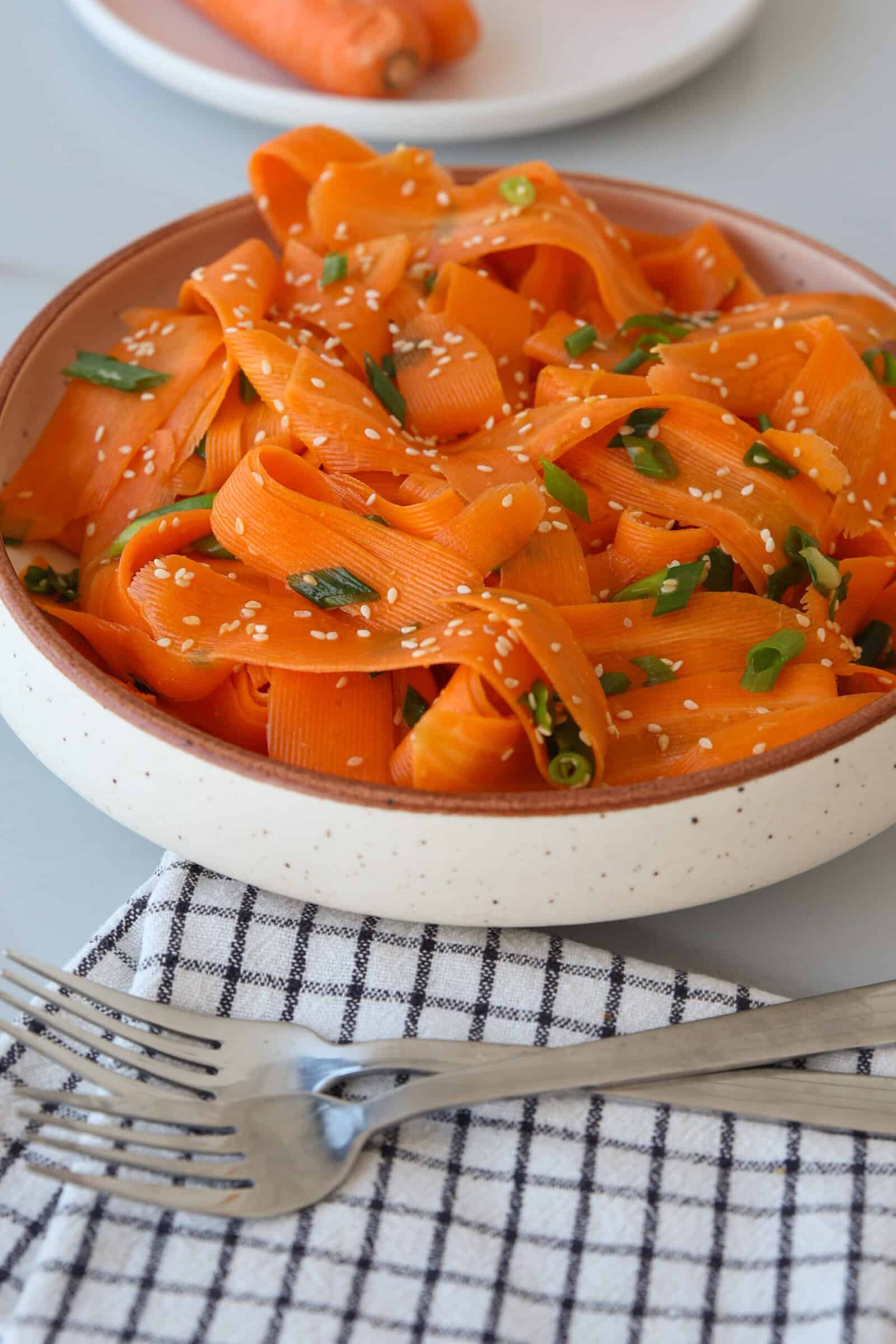
If you’re looking for the absolute best accompaniment for your homemade beef bao buns, look no further than my raw Asian carrot salad. This super simple side takes just 10 minutes of active prep and fewer than 10 ingredients to whip up, but tastes so much more than the sum of its parts. You get earthy sweetness from carrots and honey, sharpness from scallions, heat from fresh ginger, umami from soy, toasty richness from sesame, and bright acidity from rice vinegar. Delightful!
Ingredients & Substitutions
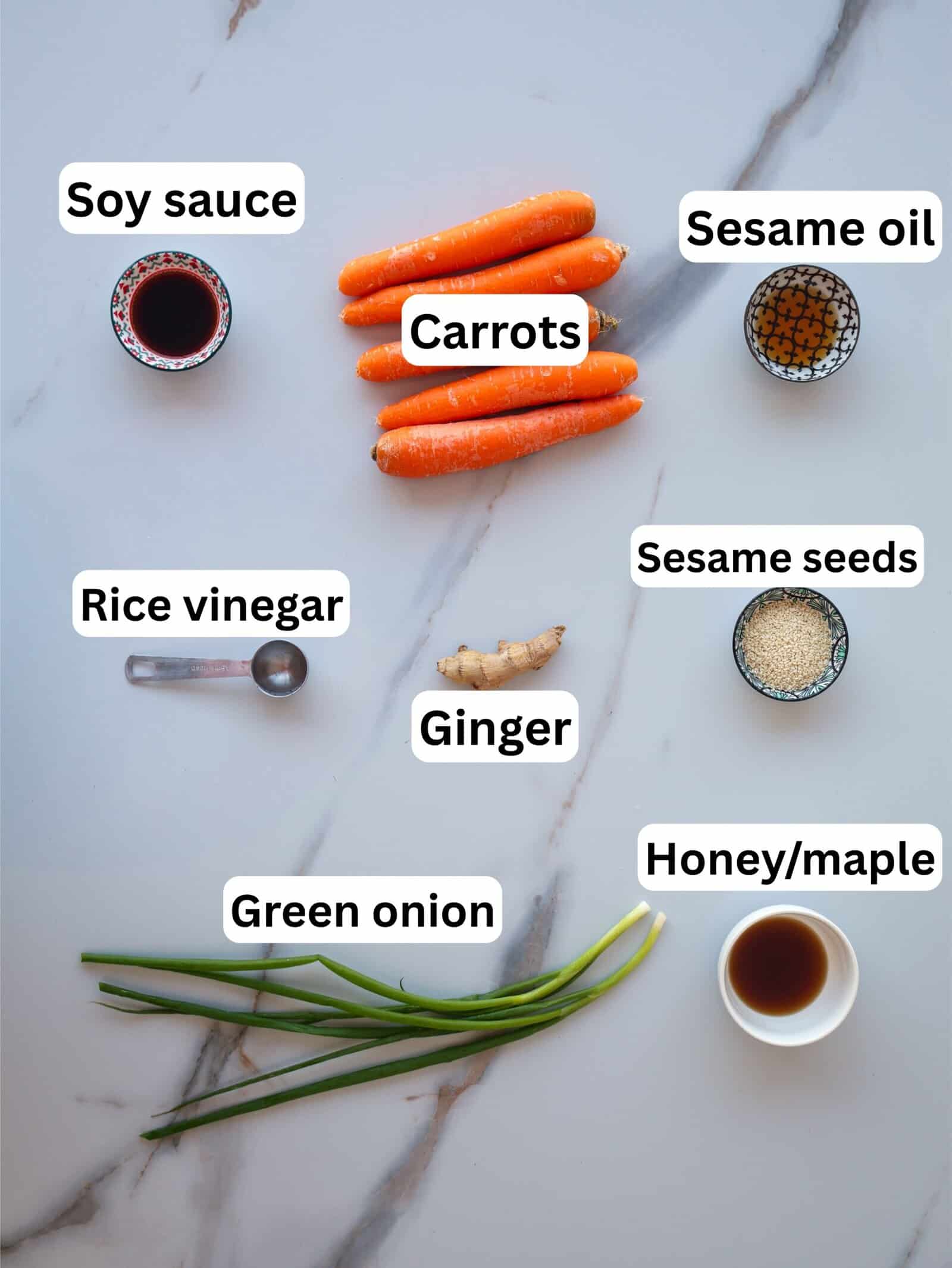
- Carrots – I used the basic orange variety, but feel free to use multicolored carrots for greater visual impact. You can also swap in parsnips if you prefer.
- Green Onions – Also known as scallions, these provide a bit of allium bite. Make sure to use both the pale and dark green parts for the best flavor and colorful pop.
- Sesame Seeds – I like using a combination of black and white sesame seeds for visual interest. Toast them first for a richer flavor.
- Rice Vinegar – Also known as “rice wine vinegar,” this delicate acid is more sweet than astringent. I recommend using the “unseasoned” variety, which doesn’t have salt or sugar added. If you don’t have any on hand, apple cider vinegar is your best bet.
- Sesame Oil – Make sure you’re reaching for toasted sesame oil (you’ll be able to tell from the dark hue) so you get the roasty, toasty warmth we’re after. Regular refined sesame oil behaves more like avocado oil and doesn’t have much taste.
- Soy Sauce – I used regular, but you can swap in low-sodium if you prefer.
- Honey or Maple Syrup – Either will work well to balance the gingery salad dressing. Use honey for a more floral undertone, or maple for a warmer, vegan-friendly alternative.
- Grated Ginger – If you’re working with a knob of ginger, the easiest way to peel it is with the back of a spoon. For a shortcut, use refrigerated ginger paste.
- Salt – Optional, if needed.
This is just a short review of the ingredients; for the complete recipe, including quantities, scroll down to the recipe card 👇
Soy Sauce & Alternatives: What to Use & Why
Soy sauce is the backbone of many Asian-inspired dressings, adding an unmistakable salty, savory umami flavor. That said, there are several soy sauce alternatives that work beautifully in this Asian-style raw carrot salad, each with slightly different flavor profiles and dietary benefits.
- Traditional soy sauce is fermented from soybeans and wheat, giving it a balanced salty depth with mild sweetness. It’s the most familiar option and delivers classic flavor, but it does contain gluten and can be high in sodium.
- Low-sodium soy sauce offers the same savory taste with about 30-40% less salt. This is a great choice if you’re watching sodium intake. Just keep in mind the dressing may taste slightly less punchy, so you might want to add a tiny extra splash or balance it with a bit more acid (like rice vinegar or lime juice).
- Tamari is similar to soy sauce but is traditionally brewed without wheat, making it gluten-free. It tends to be slightly richer and less sharp than regular soy sauce, making it an easy 1:1 substitute.
- Coconut aminos are made from fermented coconut sap and are naturally soy-free and gluten-free. They’re perfect for paleo or Whole30-style diets, but are noticeably milder and a touch sweeter than soy sauce so you may want to reduce the honey/maple if you use them.
- Bragg’s Liquid Aminos are made from soybeans but are gluten-free and contain less sodium than traditional soy sauce. The flavor is savory and salty but lighter and less complex, making it a good all-purpose soy sauce substitute.
Bottom line: if you want classic umami, go soy sauce or tamari; if you need gluten-free, choose tamari or liquid aminos; and if you’re avoiding soy altogether, coconut aminos are your best bet.
How to Make Asian Carrot Salad
Watch the full video to learn how to make the BEST Raw Sesame Carrot Salad recipe.
Prefer the written recipe? Scroll down to the recipe box👇
Optional Variations & Dietary Adaptations
- Spicy Carrot Salad – Add a pinch of red pepper flakes, a drizzle of sriracha, or a little chili crisp for heat.
- Extra Crunch – Toss in chopped peanuts, cashews, or sliced almonds for a satisfying crunch and hit of protein. Can’t do nuts? Thinly sliced red cabbage and roasted edamame can also add great texture.
- Cucumber-Carrot Salad – Add thinly sliced seedless cucumber for a cool, refreshing bite that is especially great in summer.
- Cilantro or Mint – Stir in a handful of fresh cilantro for a bright, herby finish, or add mint for a fresh, slightly unexpected upgrade.
- Garlicky – Add 1 small grated garlic clove (or a pinch of garlic powder) for a punchier dressing.
- Citrusy – Add a squeeze of lime or orange juice to the dressing for a fresh, zingy pop that pairs beautifully with ginger.
- Heartier – To turn this Asian carrot salad into more of a meal than a side, toss in some cooked quinoa, glass noodles, or shredded chicken.
Expert Tips & Tricks
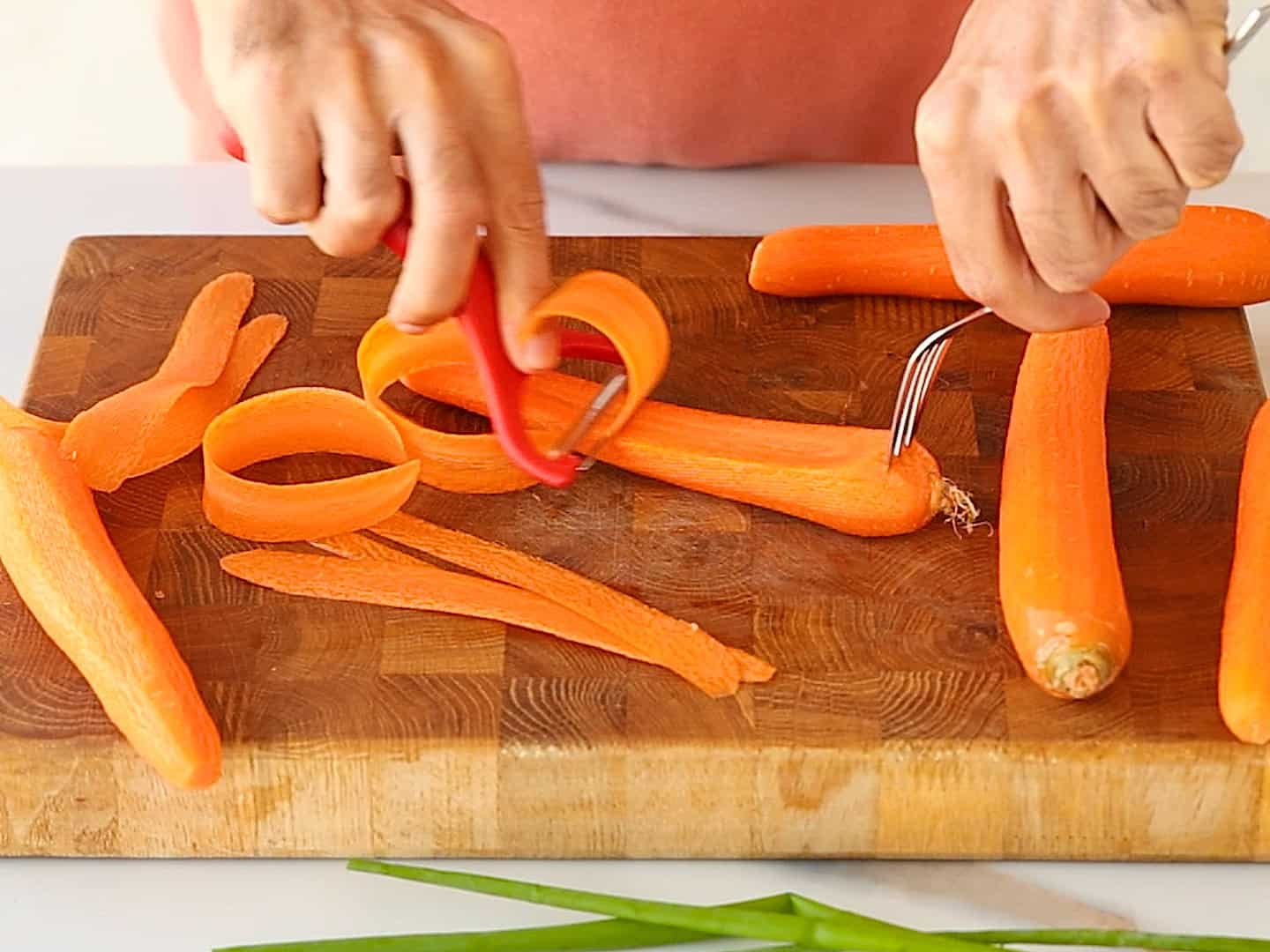
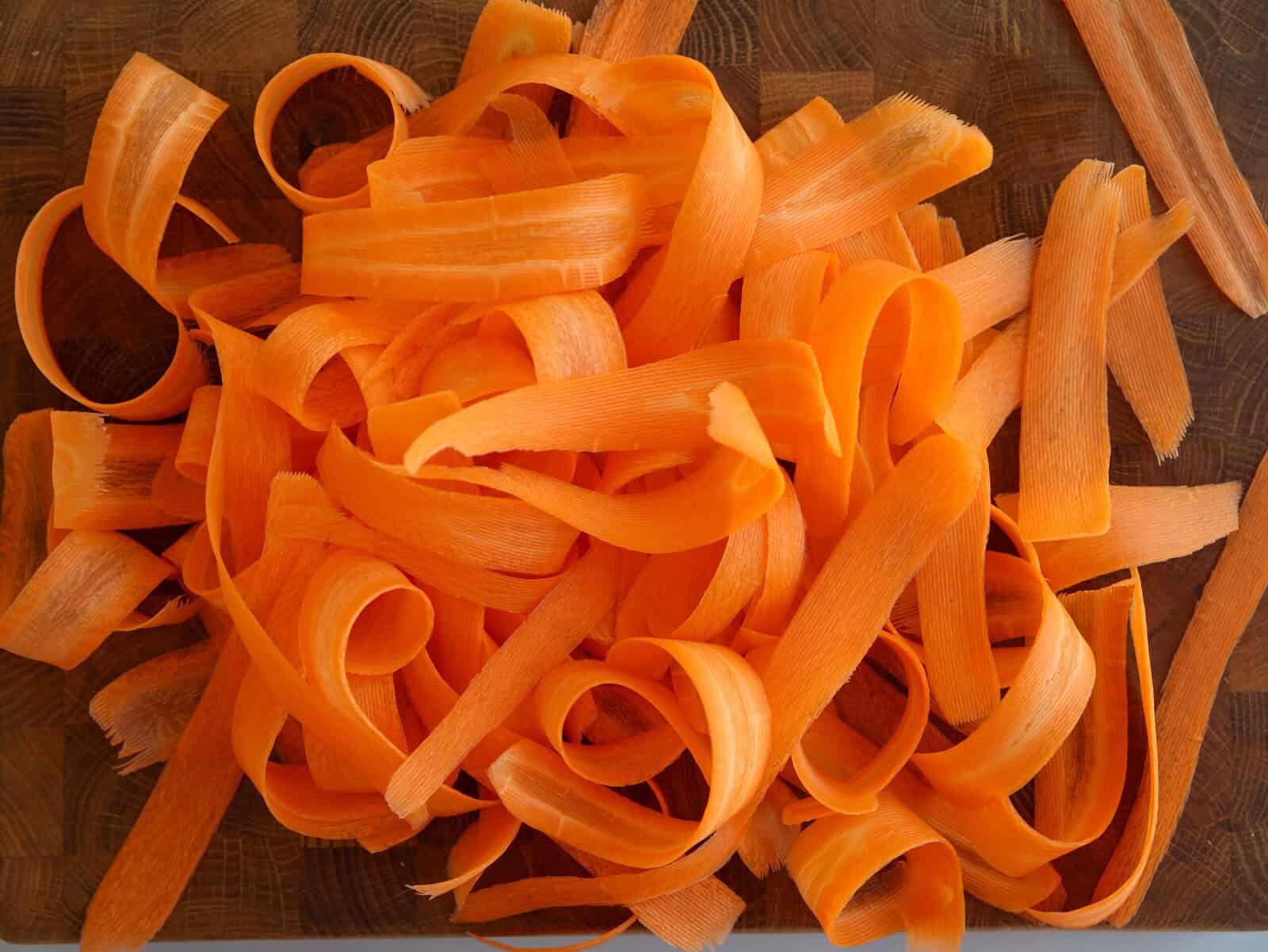
- Use a vegetable peeler for long, thin ribbons. Run the peeler down the length of the carrot to create wide, flexible ribbons that soak up the dressing beautifully. For best results, peel one side until it gets flat, then rotate the carrot and keep going.
- Choose thicker carrots for easier ribboning. Large, straight carrots are the easiest to work with and give you longer, prettier ribbons with less breakage.
- Don’t fight the skinny end. Once you get down to the thin core, the ribbons tend to snap. You can save the end pieces for snacking, soup, or shred them into the salad for less waste.
- Toast the sesame seeds for maximum flavor. A quick toast in a dry skillet (just 2–3 minutes) makes them nuttier, crunchier, and way more aromatic.
- Taste the dressing before adding extra salt. Soy sauce already brings saltiness, so you may not need any additional salt after massaging the ribbons.
How to Serve Carrot Salad
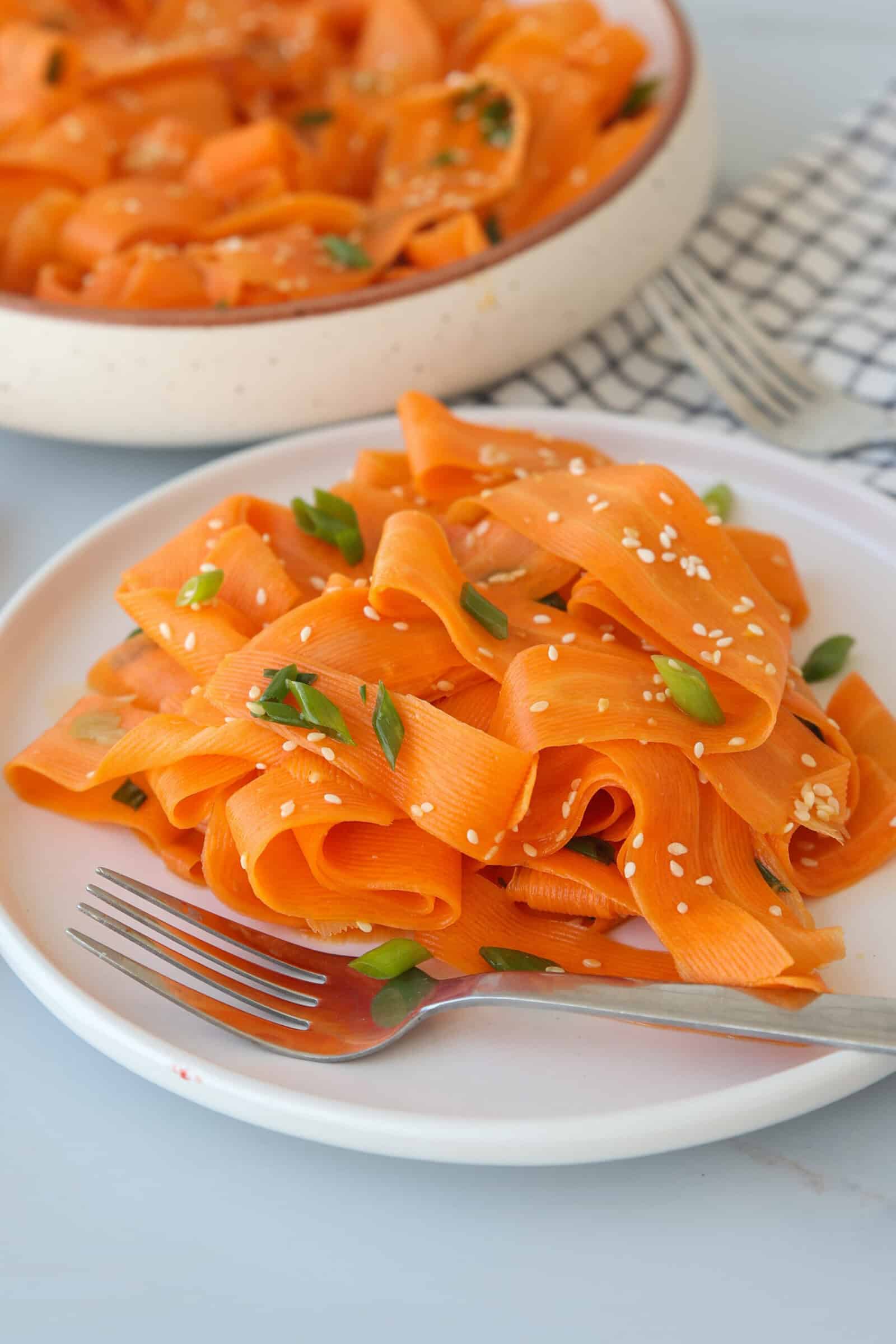
This carrot ribbon salad is best served chilled or at cool room temperature, where the flavors feel bright and refreshing. It makes an excellent side dish for potstickers, shrimp spring rolls, grilled teriyaki salmon, teriyaki chicken, chicken broccoli stir-fry, or sesame-crusted tofu, adding a crisp contrast to richer mains.
For a more filling meal, pile it onto a rice bowl or noodle bowl with avocado, edamame, and a soft-boiled egg. You can also use it as a crunchy topper for lettuce wraps, banh mi-style sandwiches, or Asian-style tacos.
How to Store Carrot Salad
- Make-Ahead: This salad is perfect for prepping in advance! You can shave the carrot ribbons and slice the green onions up to 1 day ahead, then store them separately in airtight containers in the fridge. For the best texture, toss everything with the dressing and sesame seeds right before serving. If you prefer a slightly softer, more “marinated” salad, you can dress it about 30 minutes ahead and keep it chilled until you’re ready to eat.
- Storage: Store leftovers in an airtight container in the fridge for up to 2 days. The carrot ribbons will soften a bit over time, but the salad will still taste fresh and flavorful. If you’re saving some for later, add the sesame seeds just before serving so they stay nice and crunchy.
More Easy Salad Recipes
Asian Carrot Ribbon Salad With Ginger-Sesame Dressing
Ingredients
For the salad:
- 5-6 Carrots large
- 2 Green onions
- 1 tablespoon Sesame seeds
For the sauce:
- 1 tablespoon Rice vinegar
- 1 tablespoon Sesame oil
- 1 tablespoon Soy sauce
- 1 teaspoon Honey or maple syrup
- ¼ teaspoon Grated ginger or ginger paste
- Salt to taste *if needed
Instructions
- Prepare the carrots: Using a vegetable peeler, peel each of the carrots into long, thin strips or ribbons. Start at the fat end and shave toward the narrow end, working along the full length of the carrot. Continue peeling until you’ve shaved as much of each carrot as possible, then transfer the ribbons to a large mixing bowl.
- Slice the onions: Trim the ends of the green onions and slice them thinly on a bias. Add to the bowl with the carrots.
- Toast the sesame seeds (optional but recommended): Place the sesame seeds in a dry pan over low heat and toast for 1–2 minutes, stirring constantly, until lightly golden and fragrant. Remove from heat and set aside.
- Make the dressing: In a small bowl or a jar, whisk together rice vinegar, sesame oil, soy sauce, honey (or maple syrup), and grated ginger until smooth and emulsified.
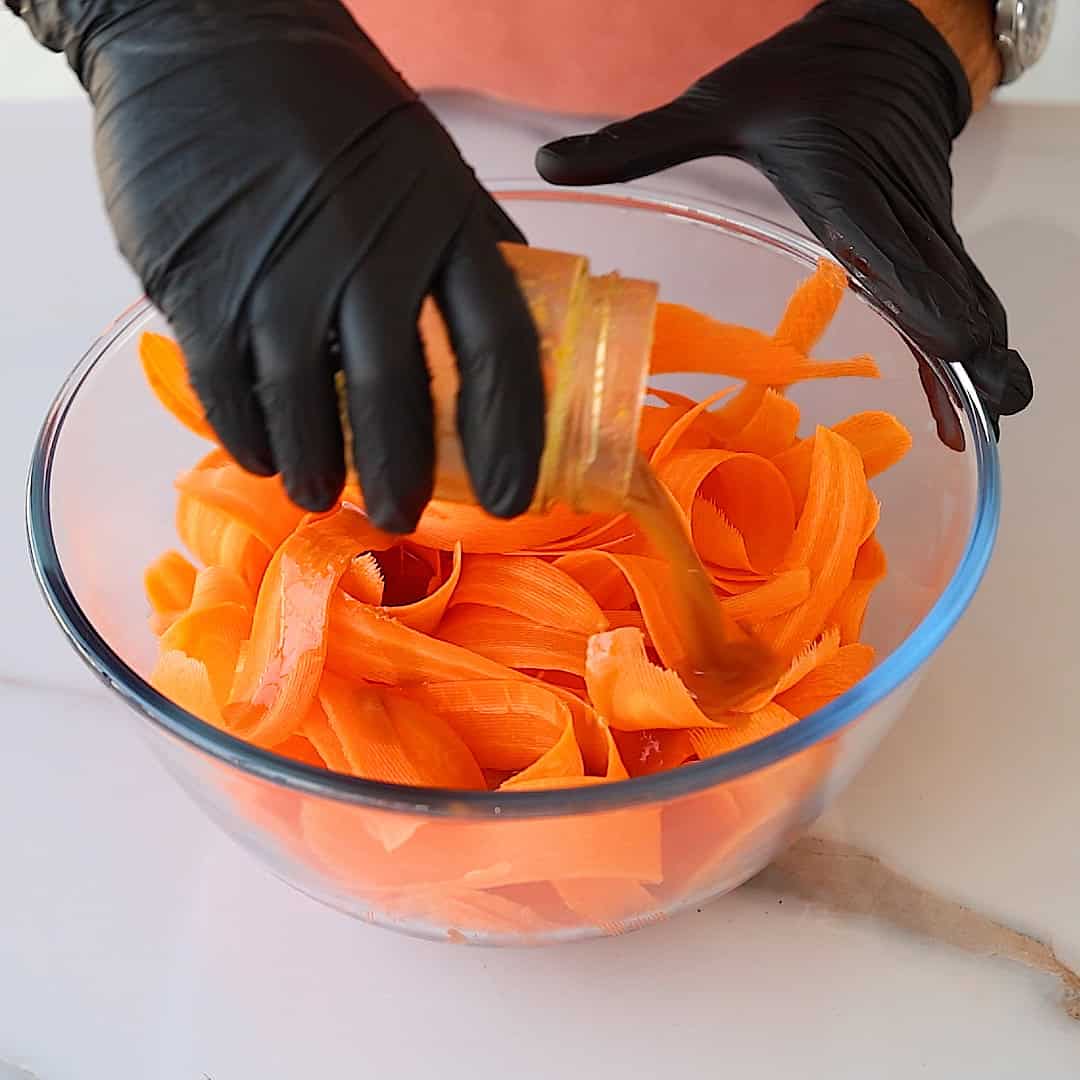
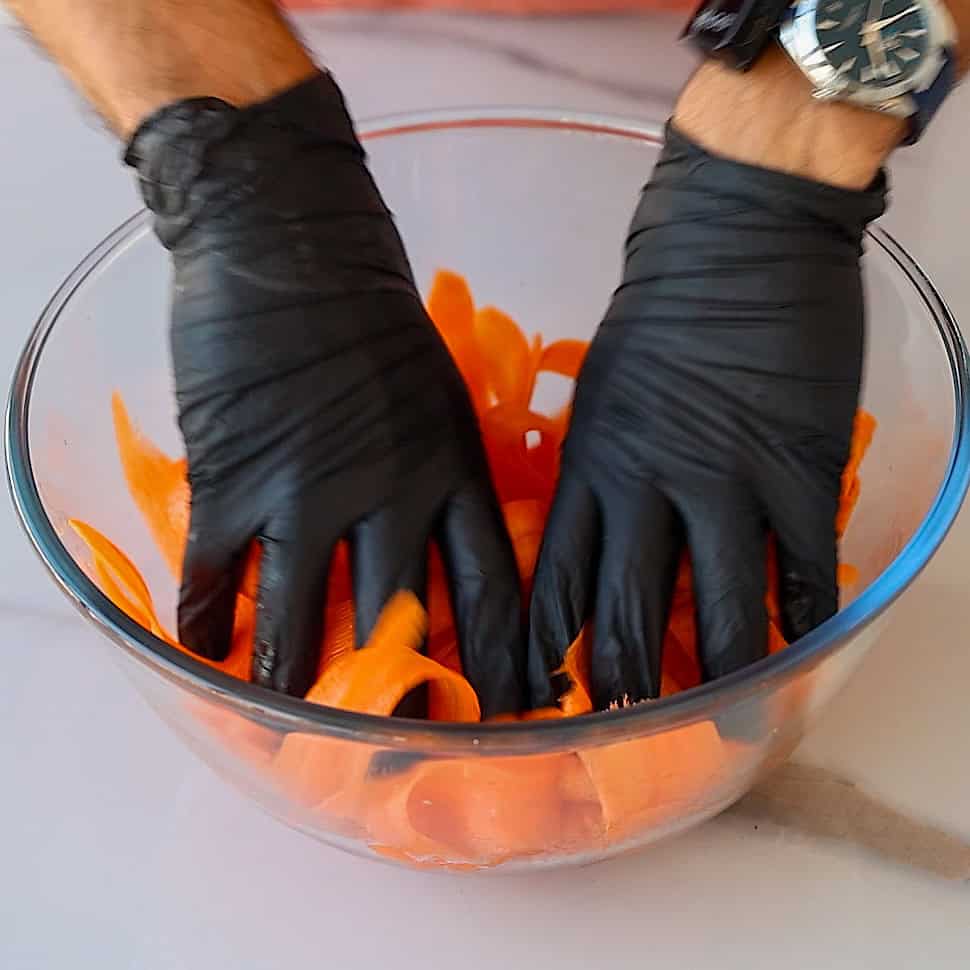
- Combine: Pour the dressing over the carrots and green onions. Using clean hands, gently toss and massage the carrot ribbons for 30–45 seconds, just until they soften slightly and absorb the flavors.
- Finish & serve: Sprinkle the toasted sesame seeds on top. Taste and adjust seasoning if needed (a splash more soy sauce for saltiness or vinegar for brightness). Serve immediately, or refrigerate for 20–30 minutes to allow the flavors to develop.
Video
Notes
- Make-Ahead: This salad is great for prepping in advance. You can shave the carrot ribbons and slice the green onions up to 1 day ahead, store them separately in airtight containers in the fridge. For the best texture, toss with the dressing and sesame seeds just before serving. If you prefer a slightly softer salad, dress it 30 minutes ahead and keep it chilled.
- Adjusting Seasoning: Taste and fine-tune after massaging the carrots. Add a splash of soy sauce for extra saltiness, a few drops of sesame oil for deeper nuttiness, or a bit more rice vinegar for brightness. If you like a sweeter balance, whisk in an extra 1/2 teaspoon honey or maple syrup.
- Mix-Ins & Add-Ins: This salad is flexible and works well with extra crunch or color. Try adding thin-sliced cucumbers, finely shredded red cabbage, edamame, roasted peanuts or cashews, or fresh herbs like cilantro or parsley.
- Variations: For a spicy version, add chili flakes, chili crisp, or a drizzle of sriracha. For a heartier salad, toss in cooked quinoa, glass noodles, or shredded chicken.
- Storage: Store leftovers in an airtight container in the fridge for up to 2 days. The carrots will soften over time but still taste great. If storing, add the sesame seeds just before serving to keep them crunchy.
Nutrition
FAQs
The best dressing for carrot salad depends on the type you’re making. For a classic deli-style shredded carrot salad, a light mayo or yogurt-based dressing works great, while ribbon-style Asian carrot salads shine with a sesame-ginger vinaigrette made with rice vinegar, soy sauce, and a touch of honey or maple.
Raw carrots pair really well with bright acids (lemon, lime, vinegar), creamy dips (hummus, ranch, tahini), salty flavors (soy sauce, feta), and crunchy add-ins like nuts and seeds. They’re also great with fresh herbs (cilantro, parsley, dill) and warm spices like ginger or cumin.
It depends on your definition of healthy, but generally speaking, I’d say so! Carrots are packed with fiber, vitamin A (beta-carotene), and antioxidants, and a simple dressing adds flavor without needing much. So long as you don’t load things up with too much sugar or heavy, creamy dressings, you should be good.


Are the Nutrition values for 4 portions or for 1 portion please?
Hi Daniela,
The nutrition values are per 1 serving.
The recipe serves 4 people, so the values shown are for one portion, not the whole recipe.
Such a fun way to incorporate carrots into my diet. Thank you for another great recipe!