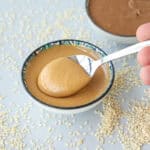
Easy Homemade Tahini Recipe | How to Make Tahini Paste
Creamy homemade tahini paste from raw sesame seeds – how to make authentic Middle Eastern tahini, easy and smooth, best traditional tahini paste recipe.
Servings: 1.5 cups
Calories: 1894kcal
Equipment
Instructions
- Toast the sesame seeds (optional): For raw tahini, you can skip this step. But if you prefer a slightly nuttier flavor, lightly toast the sesame seeds in a dry skillet over low heat for 3–5 minutes, stirring constantly until fragrant. Do not let them brown. Let cool completely before blending.
- Blend the sesame seeds: Add the sesame seeds to a high-speed blender or food processor. Start blending on medium speed. At first, the seeds will look crumbly and dry, keep going! After a few minutes, they’ll form a thick paste. Stop occasionally to scrape down the sides and bottom to make sure everything blends evenly.
- Add oil if needed: If the mixture seems too thick or dry, add 1–2 tablespoons of natural oil to help the blending process. Continue blending until smooth, creamy, and pourable. This can take 5–10 minutes, depending on your blender’s power.
- Adjust flavor: Taste your tahini. Remember, this is raw tahini paste, not a sauce, so the flavor will be intense, slightly bitter, and earthy, as it’s meant to be the base for other recipes like tahini sauce or hummus. You can add a small pinch of salt if you’d like to soften the edge. But I usually don't add salt at this stage.
- Store: Transfer your homemade tahini to a clean, airtight jar. Store in a cool, dark place or in the refrigerator.
Video
Notes
- Minimum Quantity: Use at least 2 cups of sesame seeds. Most blenders and food processors need this volume to blend smoothly.
- Temperature: When blending, avoid overheating the mixture. Try to stay below 50–55°C (122–131°F) to preserve nutrients and prevent bitterness.
- Type of Sesame Seeds: You can use hulled, whole, or even black sesame seeds. Each type will produce a slightly different color and flavor. Hulled seeds make smoother, lighter tahini, while whole seeds create a darker, earthier paste.
- Sesame Seed Varieties: Different sesame varieties grown around the world have distinct flavors and aromas:
- Ethiopian Humera sesame is prized for its rich, nutty taste and used in many premium tahinis.
- Indian sesame tends to have a deeper, slightly more bitter profile.
- Middle Eastern varieties are mild and balanced, often used in classic Lebanese or Israeli tahini.
- East Asian sesame (especially from Japan or China) has a lighter, toasty aroma.
- Oil: Traditionally, authentic tahini is made with only one ingredient — sesame seeds. If your blender is powerful enough, go oil-free for the purest flavor. But if the mixture feels too dense, it’s perfectly fine to add a few tablespoons of neutral or sesame oil to help it blend smoothly.
- Storage: Store in an airtight jar at room temperature for up to 1 month, or refrigerate for up to 3 months. Stir before using, as natural separation may occur.
- Make Tahini Sauce: To turn raw tahini into a creamy dressing, find the full recipe here: how to make creamy tahini sauce.
Nutrition
Calories: 1894kcal | Carbohydrates: 69g | Protein: 56g | Fat: 170g | Saturated Fat: 24g | Polyunsaturated Fat: 74g | Monounsaturated Fat: 64g | Sodium: 112mg | Potassium: 1469mg | Fiber: 15g | Vitamin A: 214IU | Vitamin C: 13mg | Calcium: 451mg | Iron: 14mg