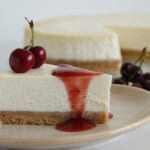
The Best Classic Cheesecake Recipe (Creamy & Crack-Free)
Make the best classic cheesecake with a creamy texture and no cracks—thanks to a foolproof water bath method.
Servings: 12 yields
Calories: 549kcal
Ingredients
For the crust:
- 250 g Digestive biscuits/crackers
- 6 tablespoons Butter melted
For the cheesecake:
- 4 cups Cream cheese room temperature
- 1 cup Sugar
- ¼ cup Heavy cream
- 1-2 teaspoons Vanilla extract
- 4 Eggs large
- 1 cup Sour cream
- 1 ½ tablespoons Cornstarch
- Lemon zest
- Pinch Salt
For topping:
- Fresh berries
- Strawberry jam
Instructions
- Prepare the crust: Preheat oven to 325°F (160°C).
- In a food processor, crush the biscuits into fine crumbs (or use a Ziploc bag and rolling pin). Add melted butter and pulse or mix until evenly combined.
- Press the mixture firmly into the bottom of a 9-inch (23 cm) springform pan. Bake for 7–8 minutes, then remove from the oven. Reduce heat to 300°F (150°C).
- Make the cheesecake filling: In a large bowl, using a hand or stand mixer, beat the cream cheese and sugar until completely smooth (about 2 minutes).
- Add the eggs, one at a time, mixing just until incorporated. Do not overmix. Add vanilla, sour cream, heavy cream, salt, lemon zest, and cornstarch. Beat just until smooth and well combined.
- Bake with water bath: Wrap the bottom of the springform pan tightly with aluminum foil to prevent water from leaking in.
- Pour the batter over the crust and smooth the top. Place the pan inside a large roasting pan, and carefully pour hot water into the roasting pan until it reaches halfway up the sides of the springform pan.
- Bake for 45–50 minutes, or until the edges are set but the center still slightly jiggles.
- Turn off the oven, crack the door slightly, and let the cheesecake rest inside for 1 hour. Remove from the oven, cool at room temperature for another hour, then refrigerate for at least 4 hours, preferably overnight.
- Decorate: Before serving, top with fresh berries and a light glaze of warmed strawberry jam, if desired.
Video
Notes
- Avoid overmixing: Too much air in the batter = potential cracks.
- Baking time: Ovens vary. If the center still has a wobble and the edges are firm, it’s done!
- Chilling: Chill at least 4 hours, but overnight gives the best flavor and texture.
- Water bath: Prevents cracks and promotes even baking. Wrap your pan tightly in 2-3 layers of foil to avoid leaks, or use a cheesecake pan with a silicone wrap. For more about this, read my complete guide on how to make a water bath for cheesecake.
- Watch the video: For visual learners, I highly recommend watching the full video tutorial—you’ll see each step in action and get extra tips.
- Have questions? Make sure to read the full blog post—I cover lots of tips, tricks, and useful info. And don’t miss the FAQs section below the recipe card for troubleshooting, substitutions, and more.
Nutrition
Calories: 549kcal | Carbohydrates: 39g | Protein: 9g | Fat: 41g | Saturated Fat: 23g | Polyunsaturated Fat: 3g | Monounsaturated Fat: 11g | Trans Fat: 0.2g | Cholesterol: 163mg | Sodium: 418mg | Potassium: 187mg | Fiber: 1g | Sugar: 26g | Vitamin A: 1463IU | Vitamin C: 0.2mg | Calcium: 122mg | Iron: 1mg