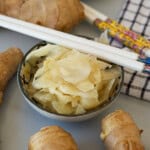
Homemade Pickled Ginger (Gari) for Sushi
This easy homemade Pickled Ginger (Gari) is sweet, tangy, and refreshing. Perfect for sushi, salads, or as a healthy Japanese condiment.
Servings: 3.5 cups
Ingredients
- 4 Ginger roots Young ginger, if available, otherwise regular
- 2½ teaspoons salt divided
- 1 cup Rice vinegar
- ½ cup + 2 tablespoons Sugar
Instructions
- Prepare the ginger: Peel the ginger with the back of a spoon or a vegetable peeler. Slice as thinly as possible with a sharp knife or mandolin.
- Salt and rest: Place slices in a bowl, sprinkle with 2 teaspoons salt, mix well, and let sit 15–20 minutes to draw out excess moisture.
- Blanch: Bring a pot of water to a boil. Add salted ginger and blanch for 2–3 minutes. Drain and let cool slightly, then squeeze out as much water as possible. Transfer to a sterilized jar.
- Make the brine: In a small saucepan, combine rice vinegar, sugar, and ½ teaspoon salt. Bring to a boil and cook 1–2 minutes, just until sugar dissolves. Remove from heat and let cool slightly.
- Pickle: Pour warm vinegar mixture over ginger. Allow to cool completely, then seal with a lid.
- Chill: Refrigerate at least 24 hours before eating to allow flavors to develop.
Video
Notes
- Young vs. regular ginger: Traditional gari is made with young ginger (shin shoga), which has pale, thin skin and tender flesh. It naturally turns a delicate pink when pickled. Regular ginger works too, but will stay more yellow and may have a spicier bite.
- Color tip: If using regular ginger but you want pink gari, add a thin slice of beet to the jar — it will naturally tint the ginger.
- Rice vinegar: Use mild rice vinegar for authentic flavor. Avoid strong vinegars like white or apple cider, which overpower the ginger.
- Sugar balance: Adjust sugar to taste. Traditional sushi ginger is slightly sweet to balance wasabi and soy sauce.
- Sterilization: Always use a clean, sterilized jar to extend shelf life and prevent spoilage.
- Storage: Refrigerate for up to 2 months. The flavor develops and mellows over time.
- Serving ideas: Classic with sushi, sashimi, poke bowls, or even in sandwiches, salads, or as a palate cleanser between courses.
- Variations: Try adding a splash of mirin for a richer sweetness, or chili flakes for a spicy twist.