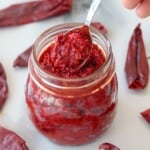
Homemade Harissa Recipe
This homemade harissa paste is bold, smoky, and packed with flavor. Customize the heat to your taste and skip the store-bought version.
Servings: 20 tablespoons
Calories: 43kcal
Ingredients
- 120 g Dried chilis see notes
- 10-20 g Dried hot chilies optional (see notes)
- Boiling Water for soaking the chilies
- 3 Garlic cloves
- ½ teaspoon Salt
- 1 teaspoon Smoked paprika
- 1 teaspoon Cumin seeds
- 1 teaspoon Caraway seeds
- 1 teaspoon Coriander seeds
- 2 tablespoons Lemon juice
- 3-4 tablespoons Olive oil plus more for covering
Instructions
- Soak the chilies: Remove the stems and most of the seeds from the dried chilies. Place them in a large bowl and cover with boiling water. Let soak for 20–30 minutes, or until softened and pliable.
- Toast the spices: Meanwhile, toast the cumin seeds, caraway seeds, and coriander seeds in a dry pan over medium heat for 1–2 minutes, until fragrant. Let cool slightly, then grind using a mortar and pestle or spice grinder. See notes.
- Prepare the chilies: Drain the soaked chilies well. Cut them open and remove most of the seeds. This step is optional, but recommended for better control over the spice level and for a smoother, less bitter harissa. Leaving some seeds will create a spicier paste.
- Blend: Transfer the chilies to a food processor or blender. Add the garlic, salt, smoked paprika, toasted spices, lemon juice or vinegar, and 1 tablespoon of olive oil.
- Blend until mostly smooth, scraping down the sides as needed. Gradually add more olive oil, 1 tablespoon at a time, until the harissa reaches your desired consistency. The paste should be thick, rich, and spreadable, not thin or runny.
- Store: Transfer the harissa to a clean jar and smooth the top. Cover with a thin layer of olive oil to help preserve freshness.
Video
Notes
- Control the heat: This recipe lets you fully customize the spice level. The mild (or sweet) dried chilies create the base flavor, color, and texture, while the hot chilies mainly add heat.
- Oil: Add the olive oil gradually while blending. Harissa should have a thick consistency, not a thin sauce-like texture. The oil also helps preserve the paste and improves the flavor over time.
- Use gloves: Hot chilies can irritate your skin and eyes. It’s highly recommended to wear gloves while handling and deseeding the chilies.
- Dried chilis vs. fresh chilies: Traditional harissa is commonly made with dried chilies, which create a deeper, smokier, and more concentrated flavor. Some versions also include fresh chilies for a brighter, fresher heat, but dried chilies are the more traditional and common choice.
- Garlic: For a deeper, sweeter, and more mellow flavor, you can replace the raw garlic with garlic confit. It creates a smoother, richer harissa with less sharpness.
- Roasted pepper? Some modern or Western-style harissa recipes include roasted red peppers or even tomato paste. While delicious, they are not traditionally used in authentic harissa. That said, you can add roasted peppers for a sweeter, milder, and creamier version.
- Best chilies for harissa: A combination of chilies usually gives the best flavor. Good options include guajillo, ancho, New Mexico, árbol, or Kashmiri chilies. Mixing mild and hot varieties creates a balanced harissa.
- Spices: For the best flavor, I highly recommend using whole spices, toasting them lightly, and grinding them yourself. It creates a much fresher and more aromatic harissa. However, store-bought ground spices work perfectly fine if that’s what you have on hand.
- Seeds: If you prefer a spicier harissa, don’t remove all the seeds. Leaving some seeds inside will increase the heat significantly.
- Storage: Store in an airtight jar in the refrigerator for up to 3 weeks. Always keep the surface covered with a thin layer of olive oil to help prevent spoilage. Even after scooping some out, add a little more oil to cover the top again.
Nutrition
Calories: 43kcal | Carbohydrates: 5g | Protein: 1g | Fat: 3g | Saturated Fat: 0.4g | Polyunsaturated Fat: 0.5g | Monounsaturated Fat: 2g | Sodium: 64mg | Potassium: 131mg | Fiber: 2g | Sugar: 3g | Vitamin A: 1772IU | Vitamin C: 3mg | Calcium: 6mg | Iron: 0.5mg