Classic Basque Cheesecake Recipe (Easy & Creamy)
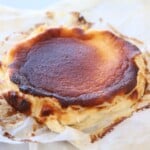
This Basque cheesecake has a burnt caramelized top and a perfectly creamy custard-like center, making it one of the easiest cheesecake recipes ever.
Servings: 12
Calories: 432kcal
Equipment
Ingredients
- 3½ cups Cream cheese room temperature
- 1¼ cups Sugar
- ¼ teaspoon Salt
- 5 Eggs large
- 1 teaspoon Vanilla bean paste
- 1¼ cup Heavy cream
- 3 tablespoons Flour
Instructions
- Prep the oven and pan: Preheat oven to 410°F (210°C). Grease a 9-inch (23cm) springform pan and line it with parchment paper, letting it overhang the edges by about 2 inches (5cm) for that signature ruffled look.
- Mix cream cheese and sugar: In a large mixing bowl, beat the cream cheese and sugar together with a hand mixer or stand mixer on medium speed for 2–3 minutes, until smooth and fluffy.
- Incorporate eggs: Add eggs one at a time, beating well after each addition. Scrape down the sides of the bowl as needed.
- Add cream and vanilla: Pour in the heavy cream, vanilla bean paste, and salt. Beat until the mixture is silky smooth.
- Fold in flour: Sift in the flour and mix just until combined. Don’t overmix. The batter should be loose.
- Bake: Pour into the prepared pan and bake for 50–60 minutes, or until the top is deeply golden brown and the center is still slightly jiggly.
- Cool and chill: Let cool completely at room temperature, then refrigerate for at least 4 hours (preferably overnight) to fully set.
- Serve: Unmold the cheesecake, peel away the parchment, slice, and serve as-is or with berries, honey, or whipped cream.
Notes
- Cream cheese: Use full-fat brick-style cream cheese, and make sure it’s fully softened to avoid lumps in the batter.
- Parchment paper: The overhanging parchment isn’t just for looks; it helps lift the cheesecake out of the pan and gives it its classic rustic shape.
- Flour: A small amount of flour gives structure without compromising the creamy texture. For a gluten-free version, use cornstarch or omit it entirely (note: it will be softer).
- Burnt top: Don’t panic if the top looks too dark, that's the goal! The caramelized top adds flavor and contrast to the silky center.
- Texture: The center should have a slight wobble when you pull it from the oven. It will set as it cools and chills.
- Flavor options: Add citrus zest, espresso powder, or try my chocolate Basque cheesecake or pistachio Basque cheesecake.
- Storage: Store covered in the refrigerator for up to 4–5 days. It can be frozen, but the texture may change slightly. Wrap tightly and thaw overnight in the fridge.
Nutrition
Calories: 432kcal | Carbohydrates: 27g | Protein: 7g | Fat: 34g | Saturated Fat: 20g | Polyunsaturated Fat: 2g | Monounsaturated Fat: 9g | Trans Fat: 0.01g | Cholesterol: 163mg | Sodium: 248mg | Potassium: 139mg | Fiber: 0.04g | Sugar: 24g | Vitamin A: 1353IU | Vitamin C: 0.3mg | Calcium: 94mg | Iron: 1mg