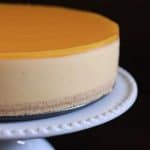
No-Bake Mango Cheesecake Recipe
Servings: 12
Ingredients
For the base:
- 8 oz Graham crackers or any biscuits (see notes)
- 7 tablespoons Butter melted
- 1 tablespoon Milk if needed
For the filling:
- 2¼ cups Cream cheese softened
- 1 cup Heavy cream Cold
- 2 cups Mango puree or pulp (fresh or canned)
- 11.6 oz White chocolate melted
- 2 tablespoons Lemon juice
- Lemon zest from one lemon
- 1 teaspoon Vanilla extract
- 14 g Gelatin powder
- 70 ml Cold water for the gelatin
For the topping:
- 10 g Gelatin powder
- 50 ml Cold water
- 300 g Mango puree or pulp (fresh or canned)
- 3 tablespoons Sugar
- 100 ml Water
Instructions
- Make the crust: Crush the biscuits into fine crumbs using a food processor or a ziplock bag. Add melted butter and mix until the texture resembles wet sand. If the mixture feels too dry, add 1 tablespoon of milk.
- Press firmly into the bottom of a 23cm (9-inch) springform pan. Chill in the fridge while preparing the filling.
- Prepare the mango puree: If using fresh mango, blend until completely smooth. Measure and divide into: 500g for the filling and 300g for the topping. Set aside.
- Bloom the gelatin: In a small bowl, combine gelatin with cold water and let sit for 10 minutes until fully bloomed.
- Make the filling: In a large bowl, beat cream cheese until smooth and lump-free. Add cold heavy cream and whip until soft peaks form.
- Melt the white chocolate in short bursts in the microwave, stirring until smooth.
- Add melted white chocolate (make sure it's not hot), 500g mango puree, lemon juice, lemon zest, and vanilla. Mix until fully combined and silky.
- Temper the gelatin: Melt the bloomed gelatin (about 10–15 seconds in the microwave). Gradually mix a few tablespoons of the cheesecake mixture into the gelatin, then pour it back into the main bowl. Mix well.
- Pour the filling over the crust and smooth the top. Place in the fridge while preparing the topping (or chill briefly to set slightly).
- Make the mango topping: Bloom the gelatin (10g + 50ml water) for 10 minutes.
- In a saucepan, heat 300g mango puree, sugar, and water until the sugar dissolves. Remove from heat and stir in the bloomed gelatin until fully melted.
- Let the mixture cool to room temperature (important), then gently pour over the cheesecake.
- Chill: Refrigerate for at least 6–8 hours, preferably overnight, until fully set.
Video
Notes
- Mango: Use ripe, sweet mangoes for the best flavor. If using canned puree, choose high-quality, unsweetened pulp (like Alphonso). Avoid watery mangoes, they can affect texture.
- Crust texture: Different biscuits behave differently. After mixing the crushed biscuits with butter, the mixture should resemble wet sand. If it feels too dry, add 1 tablespoon of milk at a time and pulse until you reach the right texture. This helps the crust hold together nicely after chilling.
- Gelatin: Always bloom gelatin properly and never add it directly hot into the mixture; this can cause lumps. Tempering is key for a smooth, creamy texture.
- Cheesecake Texture: This cheesecake is designed to be stable and sliceable, so the texture is slightly more on the firm, gelatin-set side (great for warm weather). If you prefer a softer, creamier texture, you can reduce the gelatin amount by about 20–30%.
- Storage: Store in the refrigerator for up to 4 days, covered. You can freeze it (without the topping for best results), then thaw overnight in the fridge before serving.