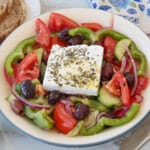
Greek Salad Recipe
Learn how to make authentic Greek salad (Horiatiki) with juicy tomatoes, feta, olives, and the simple dressing used in Greece.
Servings: 4
Calories: 318kcal
Ingredients
For the salad:
- 4 large Tomatoes cut into wedges
- 1 large English cucumber or 2-3 Persian cucumbers, cut into thick half-moons
- 1 Green bell pepper thinly sliced into rings
- ½ Red onion thinly sliced
- ⅓ cup Kalamata olives pitted
- 2 tablespoons Capers optional but traditional on many islands
- 1 block Feta cheese about 7oz (see recipe notes)
For the dressing:
- 3 tablespoons Olive oil
- 2 tablespoons Red wine Vinegar
- 1 teaspoon Dried oregano
- Salt to taste
- Black pepper to taste
Instructions
- Make the dressing: In a large serving bowl, whisk together the olive oil, red wine vinegar, dried oregano, salt, and black pepper until well combined.
- Prepare the salad: Add the tomatoes, cucumber, red onion, green bell pepper, olives, and capers (if using) to the bowl. Toss gently until everything is evenly coated.
- Finish the salad: Place the block of feta on top of the salad. Sprinkle the feta with a little extra dried oregano, then drizzle another tablespoon or two of extra virgin olive oil over the feta and the salad.
- Serve: Serve immediately with plenty of crusty bread to soak up the flavorful mixture of olive oil and tomato juices left at the bottom of the bowl.
Video
Notes
- Tomatoes: Since tomatoes are the star of this recipe, use the ripest, sweetest ones you can find. Vine-ripened tomatoes are ideal; cherry tomatoes are also a great choice.
- Thick cuts: Don't chop the vegetables too small. Authentic Greek salad (Horiatiki) is a rustic village salad, so large tomato wedges, thick cucumber slices, and chunky vegetables are traditional.
- Capers: Capers are optional. They're commonly added to Greek salads on many islands, while other regions leave them out, so both versions are authentic.
- Feta cheese: For the best flavor and texture, use a full-fat block of Greek feta, preferably made from sheep's milk or a blend of sheep's and goat's milk. Avoid pre-crumbled feta if possible, as it's usually drier and less creamy.
- Make ahead: You can chop the vegetables a few hours in advance and refrigerate them. Prepare the dressing separately, then toss everything together and add the feta just before serving for the freshest texture.
- Storage: Greek salad is best enjoyed fresh. Leftovers can be stored in an airtight container in the refrigerator for up to 1 day, though the vegetables will soften and release more liquid over time.
Nutrition
Calories: 318kcal | Carbohydrates: 16g | Protein: 11g | Fat: 25g | Saturated Fat: 9g | Polyunsaturated Fat: 2g | Monounsaturated Fat: 12g | Cholesterol: 50mg | Sodium: 943mg | Potassium: 664mg | Fiber: 4g | Sugar: 7g | Vitamin A: 2002IU | Vitamin C: 52mg | Calcium: 331mg | Iron: 2mg