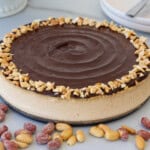
Creamy Peanut Butter Cheesecake Recipe
Creamy baked peanut butter cheesecake topped with rich chocolate ganache – the ultimate dessert for peanut butter lovers.
Servings: 14
Calories: 565kcal
Equipment
Ingredients
For the crust:
- 7 oz Graham crackers or any biscuits that you like
- 6 tablespoons Butter melted
- 1 tablespoon Milk
For the cheesecake:
- 3½ cups Cream cheese softened
- 1 cup Sugar
- ¾ cup Natural peanut butter
- 4 Eggs
- 1 teaspoon Vanilla bean paste or extract
- pinch Salt
- ¼ cup Heavy cream
- ½ cup Sour cream (read notes)
- 1½ tablespoons Cornstarch
For the topping:
- 100 g Dark chocolate or semi sweet
- ½ cup Heavy cream
For decoration
- Chopped peanuts
Instructions
- Preheat the oven & make the crust: Preheat the oven to 325°F (160°C). In a food processor, pulse the graham crackers into fine crumbs (or place them in a zip-top bag and crush with a rolling pin). Add the melted butter and pulse to combine. Press the mixture firmly into the bottom of a 9-inch (23cm) springform pan. If the mixture feels too dry, add 1 tablespoon of milk and pulse again.
- Bake the crust: Bake for 7–8 minutes, then set aside to cool.
- Reduce oven temperature to 300°F (150°C).
- Make the cheesecake batter: In a large bowl, beat the cream cheese and sugar until smooth. Add the peanut butter and mix until fully incorporated. Add the eggs one at a time, mixing just until combined; do not overmix. Add vanilla, sour cream, heavy cream, salt, and cornstarch. Mix on low speed until smooth.
- Bake in a water bath: Wrap the bottom and sides of the springform pan with aluminum foil to prevent leaks. Pour the filling over the crust and smooth the top. Place the pan into a larger roasting pan and fill it with hot water halfway up the sides.
- Bake at 300°F (150°C) for 50–65 minutes, or until the edges are set and the center jiggles slightly. Read recipe notes.
- Cool and chill: Turn off the oven and leave the cheesecake inside with the door closed for 1 hour. Then, cool at room temperature for another hour. Refrigerate for at least 4 hours, preferably overnight.
- Make the topping: prepare the chocolate ganache, chop the chocolate and place it in a heatproof bowl. In a small saucepan, bring the heavy cream to a gentle simmer, then pour it over the chocolate. Let sit for 1 minute, then stir until completely melted.
- Pour over the chilled cheesecake and spread evenly. Chill for 15–20 minutes until set.
- Decorate (optional): Sprinkle chopped peanuts around the edges before serving.
Video
Notes
- Crust Texture: The amount of butter can vary depending on the brand and type of biscuits used. Start with 6 tablespoons (90g), but if the mixture feels too dry, add a bit more butter or up to 1 tablespoon of milk. You’re aiming for a texture similar to wet sand—one that holds together easily when pressed.
- Peanut Butter: Use natural, unsweetened peanut butter with a smooth consistency. Avoid chunky, sweetened, or stabilizer-heavy varieties, which can affect the texture and flavor of the filling.
- Sour Cream Substitute: For the creamiest results, stick with full-fat sour cream. If needed, you can substitute with full-fat Greek yogurt, though it may slightly alter the tang and richness.
- Cornstarch: Cornstarch helps thicken the filling and prevent cracks. If you’re out, you can substitute with the same amount of all-purpose flour.
- Water Bath (Optional but Recommended): A water bath helps the cheesecake bake gently and evenly, creating a smooth, ultra-creamy texture while reducing the risk of cracking. If skipping the water bath, consider placing a pan of hot water on a lower rack to introduce steam.
- Baking Time Awareness: Ovens vary, so start checking the cheesecake at 45 minutes. The edges should be set while the center remains slightly jiggly. Baking can take anywhere from 45 to 70 minutes, depending on your oven and pan.
- Storage Tips: Store the cheesecake (topped or plain) covered in the fridge for up to 5 days. For longer storage, freeze the cheesecake without topping for up to 2 months. Thaw overnight in the refrigerator before adding the ganache and serving.
- Egg Tip: Always crack eggs into a separate bowl first. This way, if any shell falls in, you can remove it easily before adding the eggs to your cheesecake batter.
- Topping Options: Don’t like chocolate ganache or want more peanut flavor? Try peanut butter ganache: melt 80g white chocolate with ⅓ cup (80ml) warm heavy cream, then mix in ¼ cup (60g) peanut butter until smooth.
Nutrition
Calories: 565kcal | Carbohydrates: 36g | Protein: 10g | Fat: 43g | Saturated Fat: 22g | Polyunsaturated Fat: 3g | Monounsaturated Fat: 13g | Trans Fat: 0.2g | Cholesterol: 137mg | Sodium: 395mg | Potassium: 272mg | Fiber: 2g | Sugar: 24g | Vitamin A: 1223IU | Vitamin C: 0.1mg | Calcium: 105mg | Iron: 2mg