Basbousa Recipe (Semolina Cake)
Servings: 12 yields
Ingredients
For the Cake:
- 1½ cups 270g Semolina
- ½ cup 65g Plain Flour
- ¾ cup 150g sugar
- 1 cup 90g desiccated/shredded coconut
- ½ cup 115g Butter, melted
- 3 eggs
- 1 teaspoon Vanilla extract
- 1 cup 230g Plain yogurt/Sour cream
- 1 teaspoon Baking soda
- ¼ teaspoon Salt
- Almonds blanched or regular
For the syrup:
- 1½ cups 300g Sugar
- 1½ cups 360ml Water
- 1 teaspoon Rose water/orange blossom
- 2 tablespoons Lemon juice
Instructions
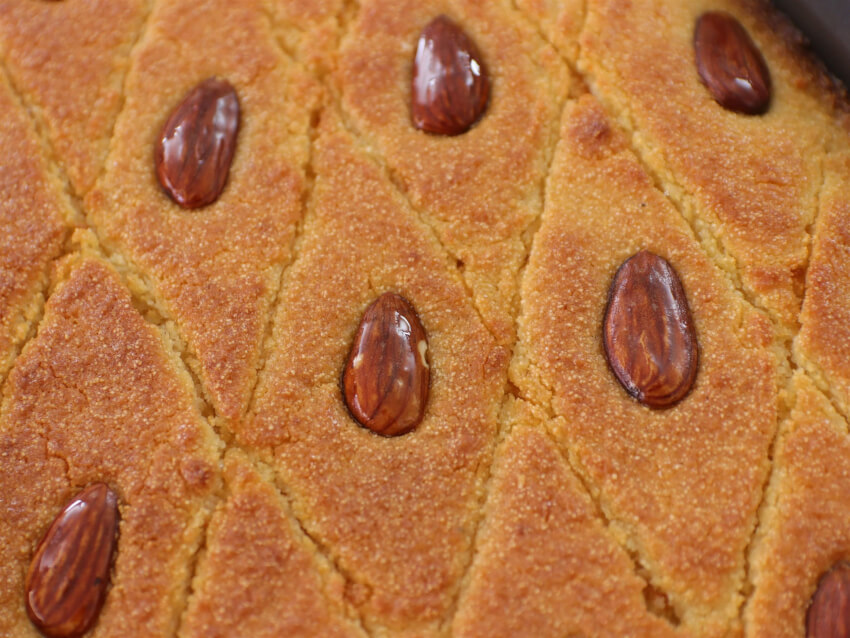
- DIRECTIONS1. Preheat oven to 180C (360F). Grease an 9x9-inch (23cm) or a 9-10” (23-26cm) round cake pan with butter. 2. In a large bowl beat egg with sugar until light and pale. Add melted butter, vanilla extract, yogurt, and beat on low speed until incorporated. add semolina, flour, coconut, baking soda and salt. Mix until combined. 3. Transfer the mixture into the pan and spread evenly. Cut a diamond or square design in the cake with a butter knife. Place an almond in the center of each diamond. 4. Bake for 35-40 minutes or until golden brown. 5. Meanwhile make the syrup: in a small saucepan place water and sugar, place the saucepan over medium-high heat until boils. Reduce the heat to medium-low, add lemon juice, rose water and simmer for 10 minutes. 6. Cut the cake again along the pre-cut lines and pour the syrup over the cake while the cake is still hot. Let cool before serving.Want more delicious recipes like this one? Subscribe to our newsletter for exclusive updates, mouthwatering recipes, and inspirational recipes straight to your inbox.
 FAQs
FAQs
Can I use something other than semolina for Basbousa?
Traditional Basbousa recipes call for semolina for its unique texture. However, fine cornmeal or a mixture of cornmeal and all-purpose flour can be used as a substitute, though the texture and flavor will differ slightly.How do I prevent my Basbousa from becoming too dry?
To prevent Basbousa from drying out, ensure you use enough syrup and pour it over the hot cake as soon as it comes out of the oven. The hot cake absorbs the syrup more efficiently, resulting in a moist dessert.What makes the syrup for Basbousa unique?
The syrup for Basbousa often includes flavors like rose water or orange blossom water, adding a distinctive floral aroma that complements the sweetness. The syrup should be made just before the cake finishes baking so it can be poured over the hot cake.Can I make Basbousa without coconut?
Yes, you can make Basbousa without coconut. While coconut adds a chewy texture and rich flavor, omitting it won’t drastically affect the structure of the cake, and you can increase the semolina slightly to adjust.How long can I store Basbousa?
Basbousa can be stored in an airtight container at room temperature for up to 3-4 days or refrigerated for up to a week. Ensure it is well-covered to prevent it from drying out.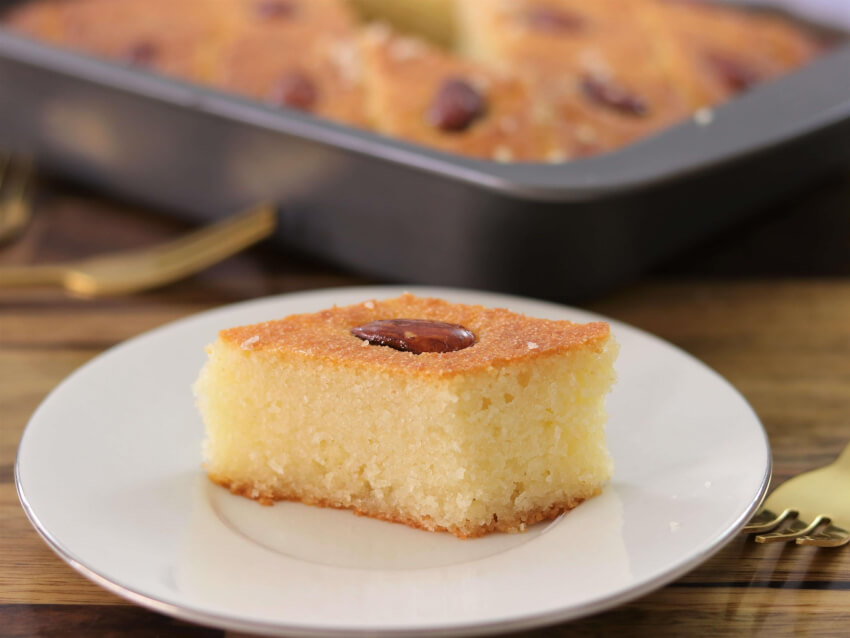
Is there a vegan version of Basbousa?
Yes, to make vegan Basbousa, replace the butter with a plant-based alternative, use a vegan yogurt or simply water, and substitute the eggs with a vegan egg replacer or more baking soda and vinegar to help the cake rise.How do I know when Basbousa is perfectly baked?
Basbousa is perfectly baked when it has a golden-brown color on top and the edges pull slightly away from the sides of the pan. A toothpick inserted in the center should come out clean or with a few moist crumbs.Can I freeze Basbousa?
Yes, Basbousa freezes well. Wrap the cake slices individually in plastic wrap and store them in a freezer-safe container. Thaw at room temperature before serving. Syrup-soaked Basbousa should be eaten within a month for best taste.How can I add nuts to my Basbousa?
Nuts like almonds or pistachios can be added to Basbousa by sprinkling them on top before baking or embedding them into the cake after the initial cutting, before it goes into the oven.What is the best way to cut Basbousa?
The best way to cut Basbousa is to pre-cut the cake into diamonds or squares before baking. This helps in even absorption of the syrup and creates a beautiful presentation.Can I make Basbousa without eggs?
Yes, eggs can be omitted for a denser Basbousa. Increase the baking soda slightly, and ensure your batter has enough moisture from other sources like yogurt or milk to compensate. Additionally, using a binding ingredient like flaxseed meal or chia seeds mixed with water can also substitute for the binding properties of eggs. But remember: without eggs, the cake may be denser and less fluffy.What kind of semolina should be used when making basbousa?
For making Basbousa, it's best to use fine semolina. Fine semolina is ground more finely than coarse semolina, which results in a smoother texture in the final cake. This fine grind absorbs the syrup well, ensuring that the Basbousa is moist and has a tender crumb. Using fine semolina also helps achieve the characteristic dense yet soft texture that Basbousa is known for. Coarse semolina can be used as well, but it will give the cake a grainier texture, which might be less desirable depending on personal preference. Some recipes might mix a little bit of coarse semolina with fine semolina to introduce a bit of textural contrast, but generally, fine semolina is the preferred choice for classic Basbousa recipes.What Country is Basbousa Originally From?
Basbousa is originally from Egypt, where it is a traditional dessert enjoyed widely across the country. This sweet, syrup-soaked cake has roots in Egyptian cuisine and has become popular throughout the Middle East and other regions. Often associated with hospitality and special occasions, Basbousa is a beloved treat in Egyptian culture and beyond, known for its delightful texture and rich flavors.What is semolina?
Semolina is a coarse, purified wheat middling of durum wheat mainly used in making pasta and bread. It has a pale yellow color and a slightly earthy flavor. The granules of semolina are larger than that of regular wheat flours, which helps create a firmer texture in foods. Semolina is particularly popular in Mediterranean and Middle Eastern cuisines, not only for pastas but also for a variety of baked goods, porridges, and desserts like Basbousa, where its ability to absorb flavors and maintain structure under wet conditions is highly valued.